Home Blog Page 292

Zaka hyena attack survivor narrates ordeal

…‘If only I could get my hands back…’

Emmanuel Chitsika

After the horrific hyena attack that left her with both palms amputated in Zaka district of Masvingo, Muchanyara Munodya has spoken of her wish that, if by any chance of fate she could get back her hands she could work for her young family as usual without bothering anyone.
Her words are not only heartbreaking, but reflect how much the bizarre attack has altered her life and that of her family-an incident that speaks so much about how grave human-wildlife conflict has become.
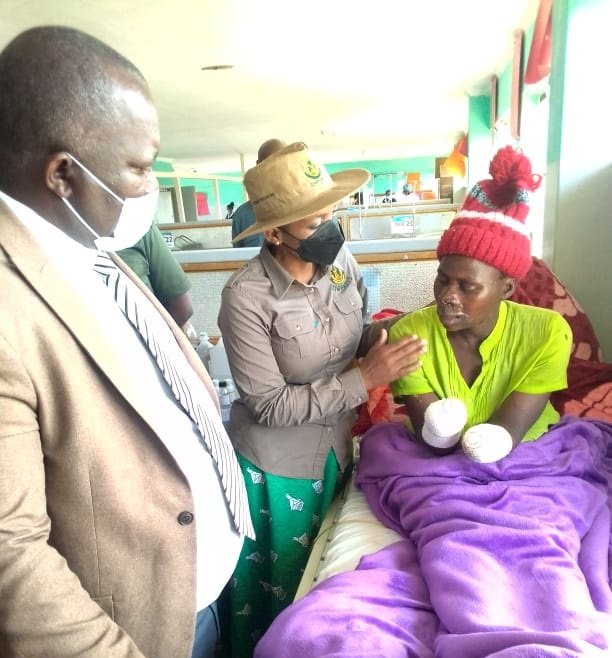
Speaking from her hospital bed at Masvingo Provincial Hospital on August 3 where she got a US$ 2 000 donation from government, an emotional Munodya narrated how the attack has changed her life negatively as she had no other alternative source of livelihood than working using her hands.
“Kutaura kudai ndinonzwa kunyara kupakiswa chikafu nemumwe munhu sezvo ndanga ndajairira kuzviitira zvinhu namaoko angu. Pamwe pacho ndinotoona sekuti ndava mwana mucheche asingagone kuzviitira zvinhu zvake anotoda kubatsirwa (Right now as I speak from this hospital bed, I am being spoon-fed each time I get a meal. At times I feel like am reduced to a kid who needs assistance from elderly to do some activities. The situation is a bit embarrassing for me as I am not used to that kind of a life. I feel like it is shameful for someone of my age to be spoon-fed.)
“I am yet to accept my situation and believe it is normal. I am someone who is used to using my hands for my livelihood and that is why one of my wishes as I recover from this attack that if ever I am going to have my hands so that I work for my young family,” she said.
She went on to explain how she used to go about her household chores as well as gardening as a source of livelihood which now might turn to be a thing of the past after the dreadful incident in which the marauding hyena attacked her.
“My main worry right now as I lay in this hospital bed is how I am going to go about my life after losing my hands which I have always depended on to earn a living. My heart is painful that someone like myself who has been using hands to work on my own, how I would go about my farming activities.
“I am forever grateful to all those who have chosen to stand and offered me and family the much needed help. I appreciate the helping hand shown by government by donating cash, Minister of Provincial Affairs and Devolution (Ezra Chadzamira) for pledging to pay hospital bills as well as Clemence Chiduwa (deputy minister of Finance and Zaka MP) for his timely intervention soon after the attack. He (Chiduwa) also made sure my youngest child (who was less than three weeks during the time of attack) got something to eat and milk for her upkeep.
“Even if you check my records, I have never suffered from a high Blood Pressure after this attack because of the help me and my family are getting from people from all walks of life. I feel loved by the nation and am grateful. The church stood with me during this time of need. I am positive, I would make it after this horrific event but only if I could get an alternative pair to use as hands,” she added.
It was during the night when Munodya heard his husband Robert Murove screaming after going out to investigate what was taking place at their kraal and got attacked by the spotted hyena. In a bid to save her loved one, she was attacked by the hyena which also went on to attack her father-in-law.
Murove said her brave ten year-old son rescued her parents by throwing a metal iron sheet which scared the animal and it sped off.
Gender Commission, Maboleni community unmask sexual exploitation issues

… As child marriages continue to escalate

Tinaani Nyabereka

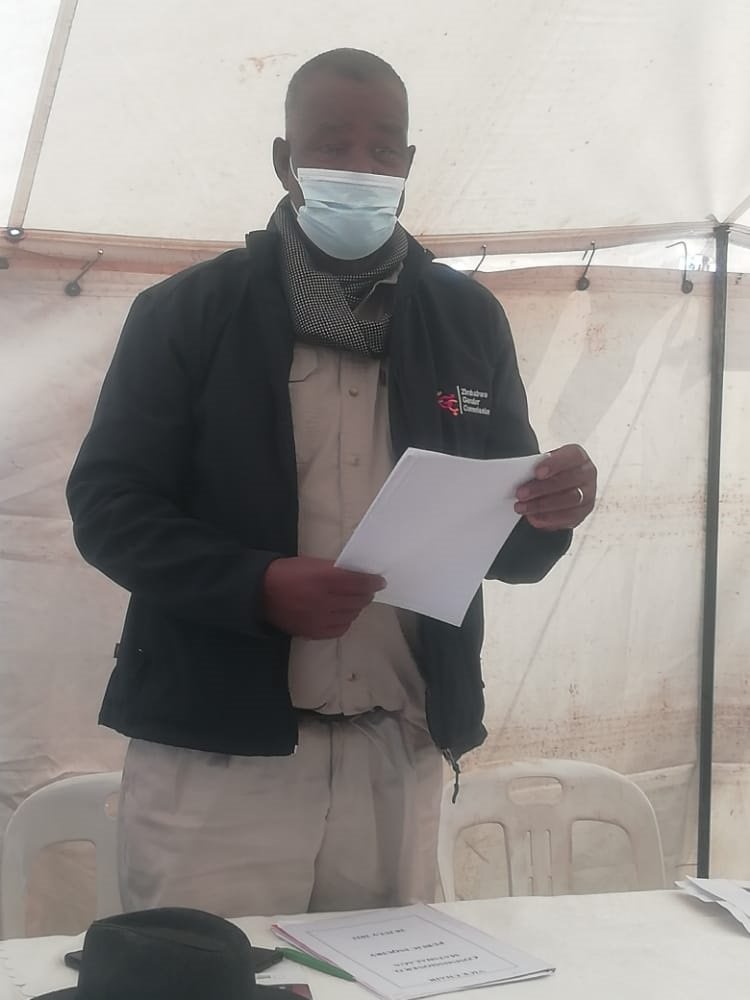
Maboleni – The Zimbabwe Gender Commission (ZGC) last week engaged Maboleni community in Lower Gwelo, where it conducted a stakeholders’ inquiry on sexual exploitation issues affecting the area.
The engagement also focused on abuse of young girls including those in marriages.
For many years, cases of sexual exploitation have been experienced and gone unreported in the country due to fear and lack of strong legal frameworks both at workplaces and the community, a move which has led to some perpetrators going unpunished and victims suffering in silence.
Speaking at the event, ZGC vice chairperson Obert Matshalaga said purpose of the inquiry was informed by the death of a 15 year- old Anna Machaya in July last year whilst giving birth at an Apostolic church shrine in Marange and was buried secretly at the shrine without the consent of her parents and proper burial procedures.
“The national inquiry is coming against a background of high prevalence of child marriages, sexual exploitation and abuse of young girls in the country, particularly within the Apostolic sect which is a cause for great concern for the commission.
“This inquiry is a milestone step towards pooling efforts that will immensely contribute to the eradication of child marriages and sexual exploitation of young girls. Through this process, we will be hearing submissions from members of the public on the extent of the problem in their communities,” he said.
Matshalaga further said the inquiry which started in Harare early this year will be shared across various media channels with the outcome to be presented to Parliament.
“The outcome of this public inquiry will be a report directed to Parliament and other duty bearers for implementation in terms of Section 7 of the Zimbabwe Gender Commission Act (Chapter 10:31) where the report will give recommendations on both public, legal interventions and other practical measures to curb child marriages,” he said.
Zimbabwe Statistic Agency (Zimstat) however confirmed that the levels of child marriages remain unacceptably high in Zimbabwe as shown by the 2019 multiple indicator cluster survey results.
According to the 2019 Multiple Indicator Cluster Survey (MICs), 32.6 percent of girls were married before the age of 18 with Midlands province statistics standing at 30.4 percent out of the national average of 32.6 percent.
Further analysis however revealed a rural-urban divide in child marriages where rural girls are twice more likely to be married before the age of 18 than their urban counterparts.
Matsalaga further highlighted that poverty, poor economic situation, social media, peer pressure and child-headed families are some of the major causes of child marriages.
“Poverty, economic challenges and peer pressure are the leading factors of child marriages. The Covid-19 pandemic is also among other humanitarian situations which worsened the situation as during the lockdown period cases of child marriages escalated.
“This inquiry is supported financially and technically by the United Nations Development Programme (UNDP), the United Nation Women and under the spotlight initiative which is a global partnership to eliminate all forms of violence against women and girls being funded by the European Union (EU),” he added.
A Maboleni villager Ronald Moyo said cases of child marriages were being fuelled by illegal mining activities in the area as young girls were being lured by money and goodies.
“The girl child is in trouble. Illegal gold miners are using money and goodies to capture young girls.
Due to poverty and hunger, young girls can’t resist.
“Early child pregnancies are the order of the day in our community, we tried to engage the police as a community but it’s not working,” Moyo said.
Meanwhile government last week pledged to ensure safe working spaces for workers and to mitigate sexual harassment at work.
Public Service and Social Welfare Minister Paul Mavima launched the Public Service Sexual Harassment Policy 2022 in Harare as the country was experiencing a spike in sexual harassment cases at workplaces.
The development however resulted in the International Labour Organisation (ILO) calling on corporates to eliminate sexual harassment and gender-based violence at work.
“For many years, sexual harassment in the workplace has been experienced but there was no specific policy or guidelines to prevent this vice. Some perpetrators went unpunished and victims suffered in silence,” Mavima said.

Neromwe Chieftainship on fire

…As Chingoma house claims chieftaincy belongs to their family

Beatific Gumbwanda

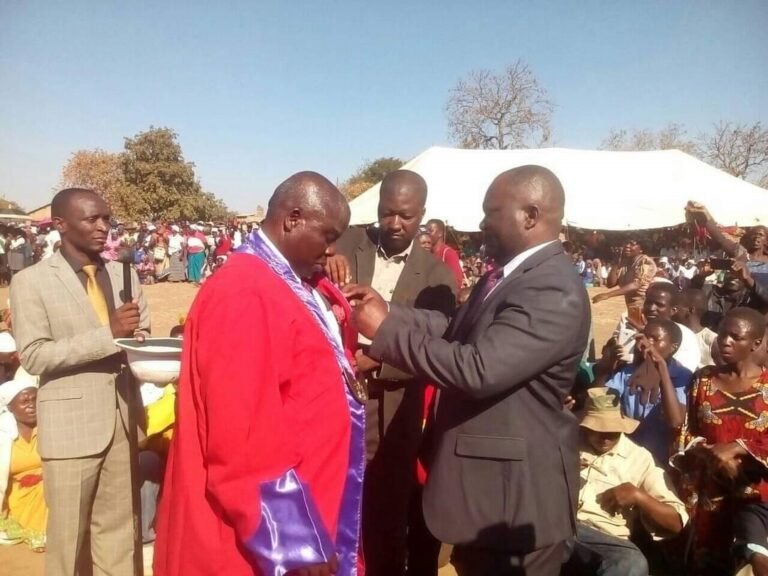
CHIREDZI-Chief Neromwe born Clemence Madzingo who was nominated to be the new chief in 2017 followed by his subsequent installation in 2019 after government deemed it necessary to resuscitate the chieftainship seems to be facing an in-house resistance following another family claiming the chieftaincy.
The chieftaincy which became extinct in 1946 after their territory was declared a European territory seems to be facing an internal revolt after Chingoma family wrote to the national Chief’s council seeking the relocation of the chieftaincy from the Chanyururwa to Chingoma family.
In a letter dated July 28, 2022, Chingoma house argued that Chanyururwa family to which the current Chief belongs has no links to the Neromwes in terms of family lineage as they are of the Gumbo totem.
“We are calling for the relocation of the Neromwe chieftainship that was given to the Chanyururwa house on July 31, 2019, which was represented by Clemence Madzingo of the Gumbo totem.
“We are of Chingoma house and of the Ndoro totem, residing at Romwe mountain area, residence of the Ndoro totem people since the time Mambo Pfupajena gave this land to Neromwe who at that time was crowned chief of the area.
“We are the rightful owners of this land and chieftainship and we request the attention of the Chief’s council to consider our situation as we have much evidence on this issue,” wrote the Chingoma family.
Chief Neromwe did not respond to questions sent to him by this publication.
Neromwe chieftainship was abolished nearly ten decades ago after their area, which lies between Chiredzi River to the east, Mutirikwi and Runde Rivers to the south and west as well as Musiwidzi River to the north, was seized and declared a European area before government in 2015 decided to resuscitate it.
When the chieftainship was abolished in 1908, the Chanyururwa family were reigning and government decided to resuscitate it in 2015, with the selection done in 2017.
The Romwe clan reached a consensus that the chieftaincy be renewed in the same family, which now seems to have not gotten well with others, especially the Chingoma family which is now lobbying for relocation of the chieftaincy to their family.
Chieftainship families include the Chingoma, Kurera and Chanyururwa families.
The installation of Neromwe Chieftaincy was marred by resistance from the Tshovani people whose chieftainship was threatened as Neromwe was given four of Tshovani’s wards leaving behind only three.
Other local chiefs including Gudo joined Tshovani in the protest by boycotting the installation ceremony.

HOCIC spearheads poverty reduction in communities, targets OVCs

Branton Matondo

Zvishavane- With poverty percentages reaching levels of high magnitude especially during the Covid-19 epoch, a Non-Governmental Organization (NGO) Hope of a Child in Christ (HOCIC) has taken the initiative of assisting and changing marginalized communities by initiating community based projects with the aim of combatting orphans and vulnerable children (OVC) with the right skill set.
HOCIC has been in the mix for 27 years having laid its foundation back in 1995.
In an engagement with media and various stakeholders on a Peer to Peer platform week under the efforts to eliminate all forms of Violence Against Children, HOCIC Project Officer Gabriel Hategekimana said the organization has already motioned a five staged strategic plan that seeks to curtail poverty crisis in low point places. He said target is mainly focused on orphans and vulnerable children (OVCs).
“HOCIC poverty reduction strategies are targeted at assisting OVCs through directly reaching them through food assistance. Whilst this is a mitigating strategy of poverty, we understand its sustainability challenges hence the food security and livelihoods programme intends to ensure and strengthen resilience building through nutrition gardens where we integrate Water Sanitation and Hygiene through community water provision.
“HOCIC is about to turn national when it comes to outreach programmes which have covered disadvantaged communities as far as Bulawayo, Umguza, Matobo, Umzingwane selected Bulawayo and Midlands peri-urban are some of the places the organization has initiated life community driven projects.
“There are nine gardens dotted around these places. Disadvantaged women and youth have found a green leaf out of the initiatives a move that has seen participants receiving empowerment,” he said.
He added that women in these effected areas have since become household heads through a packaged plans meant to conjure development.
“For the past five years, our Self Help Group Approach (SHGA) intervention has established successful village internal savings and lending where groups of women have established income generating activities where their household incomes have improved.
“They have realised sustainable incomes through small businesses and some have wise investments such as Crèches, supply shops with wares and are involved in a variety of economic activities. These are aiming a litany of poverty reduction interventions we are implementing,” added Hategekimana.
The organisation is guided by its strategic plan 2020 to 2025 which has five thematic areas namely food security and livelihoods, women economic empowerment, life skills and education support, psycho-social support and public health and nutrition.
An estimated 42-66 million children have and continue to fall into extreme poverty as a result of the global pandemic this year, adding to the estimated 386 million children already in extreme poverty in 2019.
However, recent findings have revealed that ,Poverty, Income, Consumption and Expenditure Survey (PICES) in 2020 highlight that COVID-19 imposed restrictions, including lockdown measures have negatively impacted on Zimbabwe social fabrics including increase of extreme poverty shrinkage of sources of income (46%), reduced food sources and security (47%) and its acolytes such as school dropouts, child sexual violence and GBV.
Orphans and vulnerable children (OVC) have also been at the centre of HOCIC projects as the latter has taken the humanitarian initiative of assisting OVC’s but HOCIC calls for the media to chip in and spread the community gospel.
According to a report carried out by the organisation, OVC’s in Zimbabwe have spiked. The investigation indicates that death of parents due to HIV /AIDS, immigration and displacement, disability and poverty.

2296 register to vote in July in Masvingo

TellZim reporter

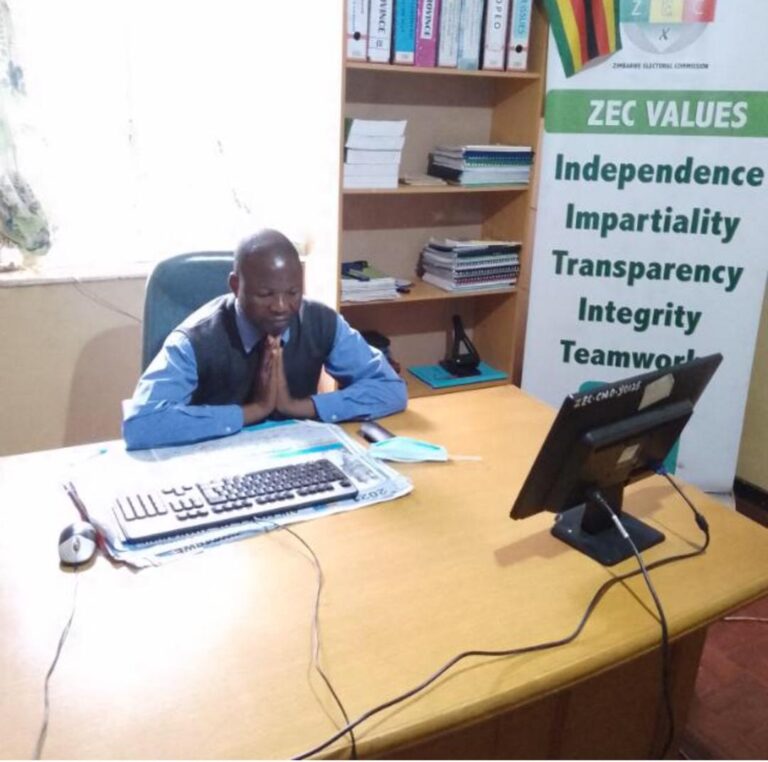
A total of 2 296 new voter registrants were recorded during the month of July in Masvingo according to statistics released by the Zimbabwe Electoral Commission (ZEC) provincial office.
ZEC Deputy Elections Officer Maxwell Ncube confirmed the statistics on August 2, 2022.
“The figures are going up of course because when I went through the statistics, those for the month of July were much higher as compared to the previous month that is June. The percentage increase is around 64.1 for initial registrations but transfers rose sharply with 198 percent during the month of July,” said Ncube.
He said these transfers are within the province though some few voters would be moving out due to other reasons like transfers by employers.
“Some people are transferring from one point to the other within the province though in some cases we have had cases of transfer out of the province. Though these cases maybe few, some of them are prompted by transfers at work. Usually teachers are among those moving from one province to the other.
“The transfers are not limited to a particular timeframe for now but that will be done two days after proclamation of the election date by the President,” he added.
Ncube also said the delimitation process is yet to be embarked on though he said the inspection and clean-up of the voters’ roll has been done to pave way for the exercise.
“As for delimitation, we were on the clean-up and inspection of the voters’ roll to ensure that every voter is at the right polling station and constituency to which he/she belongs so that we come up we come up with actual statistics when we announce the statistics for the province, we can be able to give the correct figures,” Ncube added.
Of the new registered voters 1 207 are men while 1 089 are women. On the transfers list, a total of 2 157 voters among them 1 190 female and 769 men were recorded.
In June, 1 398 people registered to vote with 779 males and 619 females. From a total of 723 transfers, 365 were men while 358 were women.

Climate Change effects fueling HWC, food shortages-Rwodzi

Tellzim reporter

The deputy minister of Environment Climate, Tourism and Hospitality Industry Barbara Rwodzi has said the increasing growth of animal population in the country and growing demand for food is one of the major drivers behind Human-Wildlife Conflicts (HWC) in the country.
Speaking during a visit to Masvingo Provincial Hospital to the victims of the Zaka hyena attack, Rwodzi said the increase in cases of HWC has become a cause for concern and thus the need to come up with a policy that addresses such issues.
“This year alone, the country has lost about 40 people to these conflicts. It is something so worrying not only for Zimbabwe but the whole continent more so Southern Africa region which is home to a large population of wildlife. We are working on a policy as government after the realization of the ever increasing cases of HWC on a regular basis. Right now we are waiting for a policy that is being worked on at ministerial level that seeks to address the challenges.
“Our country is home to a bigger population of the continent’s wildlife population which has led to animals attacking people’s sources of food while at the same time human beings are also attacked. These setbacks come at a time people are suffering from the effects of climate change on food production and animal attacks on food sources is worsening matters.
“During the rainy season, we have cases of crocodile and hippopotamus attacks which we have always been used to. Right now the unusual cases are presenting themselves like lion, elephant and hyena attacks which is a sign of how our animal population is growing,” said Rwodzi.
She however said there is need to strike a balance on the way forward on how best these conflicts can be resolved since animals are an important part of the ecosystem.
“Our animals are an important part of the environment and thus the ecosystem, so we need them. How best can we survive together is the question? Our communities are important to us but how best can we move forward sustainably after encountering challenges like these?
“In November we are going to present our case to Convention of International Trade in Endangered Species (CITES) which has blocked our intention to trade in ivory as a way forward because such proceeds can be channeled towards solving problems like these,” she added.
Government donated the sum of US$ 2 000 to the two victims (a couple of Robert Murove and Muchanyara Munodya) while the Minister of State for Provincial Affairs and Devolution Ezra Chadzamira pledged to settle hospital bills for the couple.

AFZ hands over state-of-the-art Neromwe clinic

Beatific Gumbwanda

CHIREDZI-The Air Force of Zimbabwe (AFZ) recently handed over state of the art Neromwe Health Centre in Chief Neromwe’s area, which was completed three years after his installation in 2019.
The hand-over event was attended by Chief Neromwe and neighbouring Chiefs Gudo and Chilonga as part of Zimbabwe Defence Forces (ZDF) week-long dedication to help communities prior to the Heroes and Defence Forces holidays set for August 8 and 9.
The AFZ pledged in 2019 to construct a Rural Health Centre in Chief Neromwe’s kingdom after their plight in accessing health services became public knowledge though it was derailed by the effects of Covid-19 as most of their partners were not able to help.
In his address, AFZ commander Air Marshal Elson Moyo said they did not take time to mobilize resources after they found out that the nearest clinic to the community was almost 80 kilometres and thus difficulty to access for pregnant mothers and those seriously ill.
“The Air Force of Zimbabwe was made aware of the plight of the Neromwe community here in accessing health services mainly because the nearest clinic was located more than 80 km from the community. Without waiting to ascertain the availability of resources, the Air Force of Zimbabwe made a commitment to construct a clinic for the community based on the spirit of ‘ubuntu’ as the organization is part of the community, hence we have a moral responsibility to assist the disadvantaged and underprivileged within our society,” said Moyo.
He said the handover came in a community assistance week which precedes the Zimbabwe Defence Forces day celebrations as it helped them strengthen ties with the communities they serve.
“This handover of the clinic to Neromwe community is being held during the week dedicated by the ZDF to assist communities across the country. The community assistance week precedes the ZDF day celebrations and it is an opportunity for us to renew our unbreakable ties with the communities where we all come from. The ZDF will forever remain a people’s force committed to serving the people of Zimbabwe,” he added.
The official handover was graced by the Minister of State for Masvingo Provincial Affairs and Devolution Ezra Chadzamira as well as two Chiredzi Chiefs Gudo and Chilonga.
During the installation of Chief Neromwe, all Chiredzi Chiefs boycotted the event as they stood in solidarity with the aggrieved Chief Tshovani over territorial disputes hence their boycott was believed to be a sign of bad blood among the traditional leaders in question.
The Air Force of Zimbabwe left its medical team to assist the community during this community assistance week while the Premier Services Medical Aid Society (PSMAS) left a donation of eight hospital beds including maternity beds and some other necessary furniture needed at the clinic.

2022 marks end of Prof Mthuli’s budget hoax

…As minister resorts to supplementary in mid-term budget and economic review

Emmanuel Chitsika

The Zimbabwe Coalition on Debt and Development (ZIMCODD) says the supplementary budget presented last week by Minister of Finance and Economic Development Professor Mthuli Ncube marks an end to what they refer to as the ‘budget surplus hoax’ that has characterized his tenure as finance chief since appointment in 2018.
In a statement released on July 29, 2022, ZIMCODD said the mid-term budget and economic review is presented at a time the country is under siege from severe Zimbabwean dollar exchange rate depreciation against the United States Dollar.
“The year 2022 marks the end of Prof Ncube’s budget surplus hoax as he has tabled a Supplementary Budget for the first time since his appointment as Treasury chief in September 2018. The Treasury is requesting additional spending of ZW$ 929.9 trillion on top of the approved budget of ZW$ 969.3 billion putting spending projections for the January to December 2022 fiscal year at ZW$ 1.9 trillion.
“A supplementary budget was inevitable as ravaging ZW$ depreciation had significantly eroded the real value of the 2022 approved budget from US$ 8.4 billion (US$1: 115.42) in January to US$ 2.6 billion (US$1: 370.96) as of end of June. It is also worrisome to note that despite a tightening economy that has plunged 40 percent of the population into extreme poverty, a paltry 3.4 percent of ZW$ 929.3 billion additional spending is earmarked for social welfare,” read part of the ZIMCODD statement.
The statement went on to call for urgent address to the root causes of the problems while also expressing displeasure over the manner in which the gold coins issue has or is handled.
“It is our position that without addressing the root causes of current currency volatility, the announced supplementary budget is inadequate to keep citizens out of poverty.
“While the gold coins introduction is a noble idea, it only works efficiently in an economy where there is total respect for basic economic principles. However, by selling gold coins at an overvalued interbank rate (a gap of over 90 percent between official and parallel rates), government has introduced a huge arbitrage avenue that only enables the rich and few connected few to fatten their pockets at the expense of the poor majority.
“Zimbabwe, a net importer facing acute foreign currency shortages amid rising global inflation and ballooning cost of borrowing cannot afford to sell the precious yellow metal at a discount,” added the statement.
ZIMCODD presented a cast of measures which they feel the mid-term budget and economic review missed out and could have been incorporated.
“The mid-term budget and economic review failed to address the public’s expectations of some bold measures to cushion vulnerable groups, strengthen the ZW$ and subdue chronic price inflation.
“Closing leakages caused by corruption and illicit financial flows, reducing Reserve Bank of Zimbabwe interference in foreign exchange rate markets by completely floating the ZW$ exchange rate will help subdue burgeoning parallel market exchange premia while also liberalizing or doing away with the foreign currency auction system that is promoting rent seeking behaviors like selling foreign currency below its true market value,” said the statement.
The review comes barely two months after Prof Ncube sought parliamentary pardon following an unsanctioned spending by the treasury while he was on record declaring surpluses for the preceding years.
With all the declared surpluses signaling economic growth, the nation was surprised as to how the minister would preside over an overspending under such a boom.

Gutu woman murders husband over traditional beer customers

Valentine Makufa

A traditional beer drinking binge ended fatal when a 50-year-old Gutu woman allegedly killed her 51 year-old husband for chasing away the former’s beer customers at their homestead in Mawire village under Chief Gutu.
The incident occurred on July 28 before Simbarashe Kufakunesu succumbed to the injuries sustained during the alleged assault by wife Mirika Joni on July 30 at Gutu Mission Hospital.
Masvingo Provincial Police Spokesperson Inspector Kudakwashe Dhewa confirmed the incident and urged members of the public to amicably resolve matters.
“People should not resolve issues under the influence of alcohol,” he said.
It is alleged that on July, 28, the couple was selling traditional beer at their homestead when Kufakunesu got drunk and started dancing with his drunken customers.
All of a sudden the deceased became violent, started pouring beer on customers and chasing them away.
Kufakunesu’s actions did not go well with Joni who tried to stop him resulting in a misunderstanding which resulted in Kufakunesu picking up an axe with the intention of hitting his wife but she took the axe and the two wrestled for the axe as the husband tried to re-possess it.
Joni picked a farm brick and threw it at her husband hitting him on the right ribs.
She went on to hit him several times on the forehead with the brick and Kufakunesu sustained a swollen forehead.
Some villagers intervened and stopped the fight.
Kufakunesu started vomiting and complaining about his right ribs on July 29 and was taken to Gutu Mission Hospital for treatment.
His condition deteriorated on July 30 around 0030 hours and he died.
A police report was made the same day.
The body was taken to Gutu Mission Hospital mortuary awaiting post mortem.

CCC Councillors join gravy train

…From slippers to D4D in 5 months

Brighton Chiseva

MASVINGO – After the 26 March by-elections in which the then newly formed political party Citizens Coalition for Change (CCC) romped to victory in Masvingo Urban which had four vacant wards, the social media was awash with stories of how a CCC candidate who wore slippers defeated a ‘moneyed’ Zanu PF candidate who drove a Discovery among his fleet of posh vehicles.
The situation was a David and Goliath situation for the ward 3 seat where the unpopular CCC candidate Rocky Kamuzonda defeated Zanu PF’s Taurai Mudzviti who was known for his flamboyancy and splashing money on Election Day.
Besides being humble and coming from CCC, many people believed that Rocky was the best candidate who related well with their social needs unlike Mudzviti who was accused of looking down upon people.
An almost similar situation was in ward 4 where CCC’s Alec Tabe squared off with Richard Mudyavanhu who is also well resourced like Mudzviti.
However, barely five months after election, Kamuzonda and Tabe are already driving top class vehicles, a development that has shocked many and raised the electorate’s eyebrows, who are now alleging that the two could have been involved in some shoddy deals at council to get money within that short period.
Kamuzonda is driving an Isuzu twin cab while Tabe has a Toyota Hilux single cab.
Some people allege the new councilors were paid off to be part of the SIMBI Steel Makers deal which torched a storm recently with residents questioning the sincerity of council in giving the company such a huge piece of land while they were failing to develop the smaller one they already have.
However, one councilor dismissed the allegation saying they had already finalized the deal when they got in and they could not question anything about the deal.
“They couldn’t have been paid by SIMBI for the agreement because when they came in we had already sealed the deal so they were not better positioned to question it,” said the councilor.
The councilor however said the reason for the change of life style is that they were given residential stands in Rhodene and they sold them to improve themselves.
“You see when you become councilor, people expect you to help them in many ways, if there is a funeral people, expect the councilor to chip in with money, food among other things, so if you don’t have resources it will be hard.
“They bought cars so that when they arrive at functions they will look presentable and appealing. They vote for you knowing you are poor but once you get in they expect you to help them financially,” said the councilor.
The issue of stands however holds much water but others still suspect that there was corruption somehow saying the Urban Councils Act stipulates that a councilor should get two stands; one residential stand in his ward and a commercial stand which can be near or in the Central Business District (CBD).
The new councilors however allegedly got stands in Rhodene (ward 9) instead of wards 3 and 4.
Another contentious issue is that the Act also stipulates that that privilege should be given to councilors serving a full term, when they get into office during a general election not a by-election.
One resident union representative said they were shocked to see the two councilors driving such vehicles within the short period of time they have been in office, which shows there could be something fishy going on in council corridors.
Contacted for comment, Masvingo Mayor Councilor Collen Maboke said he was not furnished on any development pertaining to the awarding of stands to the new councilors and said he only heard it from the streets.
“I am not aware of the development, I wasn’t informed of the councilors being given stands and I am sure the housing director will furnish us,” said Maboke.
On the awarding of stands, Maboke said procedurally councilors should be given stands in their respective wards depending on availability and if there are no stands then they can get one from any other location but there is no clear regulation that regulates the value or size of stand they should get.
“They should get stands in their wards depending on the availability of stands. However, there is no clear regulation on the size and value of the stands they should get. However, what I know is that they pay 40 percent of the actual value of the stand,” said Maboke
He then referred questions on the issue of whether it’s permissible for councilors who get in office through by-elections and would not serve a full term, to the Town Clerk.
Masvingo Town Clerk Engineer Edward Mukaratirwa said the matter is a policy issue and the mayor was better positioned to comment on the matter.
“That one is a policy issue and the right person to comment on that is the Mayor. All issues relating to policy and councilors themselves are the mayor’s responsibility or the ministry,” said Mukaratirwa.
When contacted for comment, Kamauzonda rubbished the allegations of having been bribed nor sold his residential stand.
He however confirmed having bought a stand in Rhodede at 40 percent and he has already paid for it.
He went on to say he bought the Isuzu twin cab from his close relative at a very cheap price and a convenient payment plan.
“I once owned two cars before and currently the one I am driving I bought it from a close relative who gave me a very conducive payment plan that is how I afforded the car. I got my residential stand in Rhodene which I paid 40 percent of the actual selling price.
“I used to do mining and get a lot of money at some point from there so I can afford to drive. I also have a kombi that is plying from Runyararo West to town and people don’t know and that is why they are surprised to see me driving this car,” said Kamuzonda
On his part, Tabe scoffed at the allegations and said nothing has changed in his lifestyle and since he has been driving a car since 2013.
He said he is a dealer and has been saving some money for some time saying he and that has allowed him to buy his latest car.
“Being a councilor is a part time job, I am a dealer and that is what I do most of my time. I started driving in 2013, had two cars which are currently down but have been saving for some time until I bought this car. I bought it at a cost that I cannot even compare to my daily earning.
“We could not have been bribed by Simbi or council over that deal, we found the deal already done and we questioned some of the things until we got to understand, the matter is yet to be finalised by council but everything is above board. I dont take bribes, I work on my own and the money I get from there is enough to buy me a car,” said Tabe