Home Blog Page 814

Women Breaking Barriers – An insight into radiography with Penelope Mutize

0

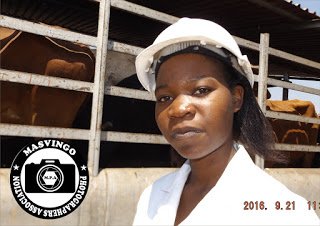
A radiographer (or medical imaging technologist) is a trained health professional who works with cutting edge technology to produce X-rays, CT (computed tomography) scans, MRI (magnetic resonance imaging) scans and other medical images to assist clinical radiologists and other doctors diagnose, monitor or treat a patient’s injury or illness.
From humble beginnings at Murehwa High School, Mutize says she never knew about radiography until she chose Physics, Biology and Chemistry as her combination at ‘A’ Level.
“If you don’t have women in the specialty, then you don’t have role models for medical students to look to and that creates a limitation,” says Mutize who is currently the only female radiographer in Masvingo province.
Radiographers have a very thorough understanding of the body’s structure, how it is affected by injury, and the causes and effects of disease.
The radiographer performs the medical imaging on the instructions of the radiologist. The radiologist then interprets the images the radiographer has taken and communicates the results to the referring doctor.
“If you don’t have women in radiology, then you’re losing the perspective of women in terms of both research and teaching, as well as the perspective of the patient as a woman,” Mutize says.local
Women Breaking Barriers – Get some colourful graphic designs from Beverlyn Mukayi

0

Mukayi orks in Harare and is a product of Chinhoyi University of Technology (Cut) who values her job because graphic designs help to make an organisation recognisable by using a variety of media to communicate identity for advertising and promotional purposes. Examples are fonts, shapes, colors, images, photography, animation, logos, and billboards.
“Being a graphic designer is more than just a profession, it’s a way of life. People who are drawn to design as a career are usually intensely visual. This carries forward into what they are inspired by, how they do their research, and where they get their ideas once they become graphic designers. Whether you can draw or not, you need to learn how to use certain design software, and use it well. Corel Draw and Adobe Creative Suite are the most widely used software,” says Mukayi.
Mukayi is proud to be one of the very few graphic designers available in the country but she wants to see more young female talent getting into the field..
The Nike “Swoosh”, one of the world’s most recognizable logos was created by a woman, Carolyn Davidson in 1971, then a graphic design student at Portland State University in USA .The Nike logo was derived from the Greek mythological goddess (Nike) as one of her wings.The ideology was that the Goddess Nike was actually a symbol of victory.
“That’s a hint on the power of graphic designers,” says Mukayi, who carries credit for many works being used by the corporate world in Zimbabwe and South Africa.local

Women Breaking Barriers -With Nyevedzo Chingandu, pipes will never leak

0

Carole Nyevedzo Chingandu is a plumber doing the job she enjoys. She says it is fulfilling doing what one likes and she encourages other young ladies to take up the profession as there are surely very few women in her trade.
“Think of toilets; people can’t do without them. It’s true that there are icky moments in this trade, but it’s all worthy the effort. These days most women actually work in new construction projects and they don’t endure conditions any more difficult than other trades,” says Chingandu.
A 25-year-old single mother, Chingandu fell pregnant at 18 and the father to her son refused to take responsibility. Since then, she has been doing a refocus and has defied the odds to become productive and inspirational to other women.
A second year plumbing and drain laying student at Harare Polytechnic, Chingandu is one of the key people who had a hand in the construction of Great Zimbabwe University (GZU) School of Hospitality and Tourism as well as the Robert Mugabe School of Education campus in Masvingo.
She says she would like her story to inspire other women in similar circumstances not to give up.
“I am aware that in most cases, society is ready to write you off in terms of what your potential is,” she says.
Chingandu, therefore, urges young girls to behave responsibly such that they do not encounter then same pitfalls she once found herself in.local

Women Breaking Barriers – Who does not know ANZ’s Annie Mpalume?

0

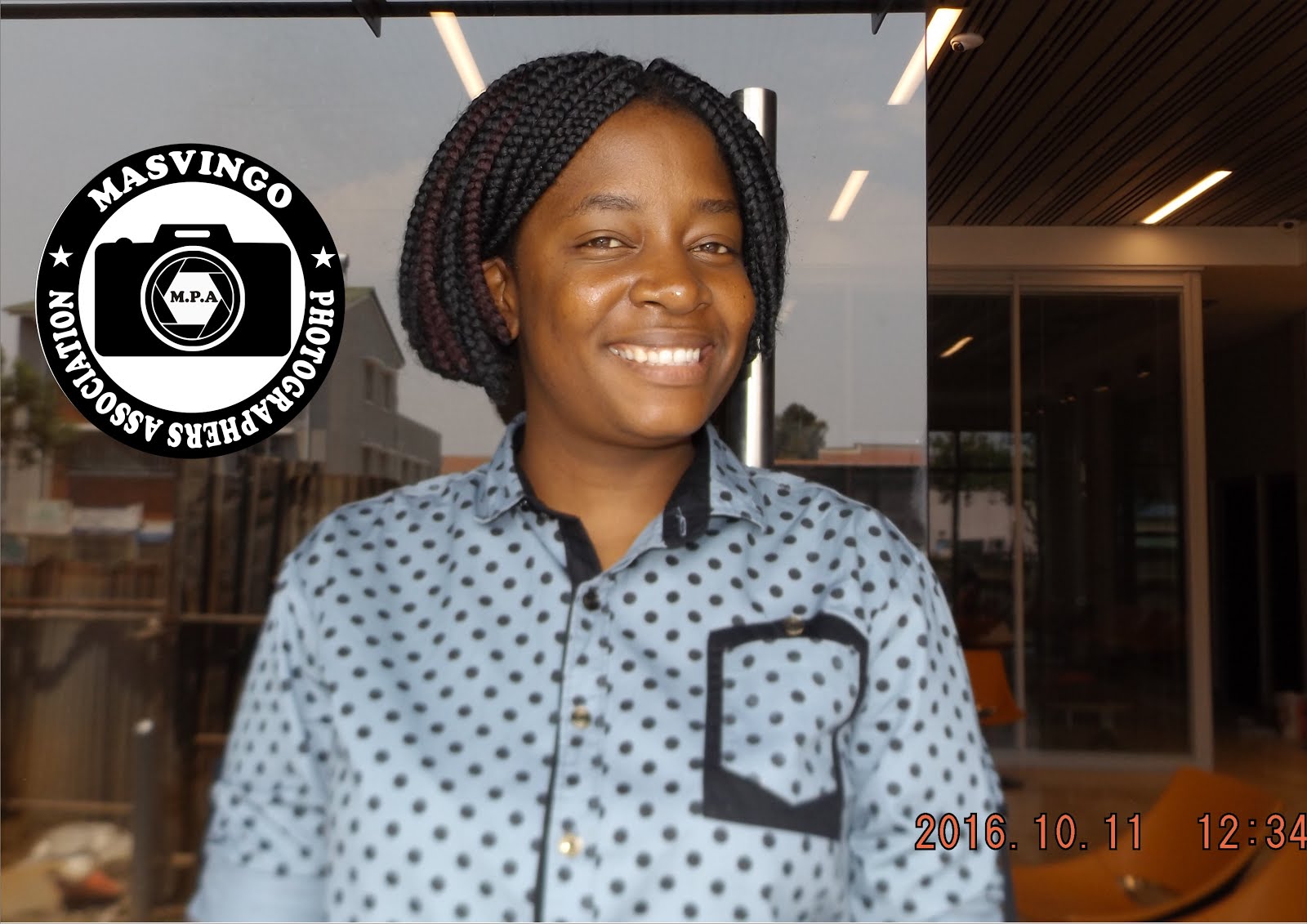
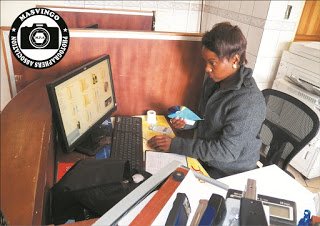
Photography is largely a male dominated profession and Annie Mpalume is one of Zimbabwe’s first finest female photojournalists; she is Chief Photographer for the Daily News.
Women have made significant contributions to photography since its inception and Mpalume is one such strong woman who has stood her ground in the profession.
With so many picture-taking gadgets on the market today, it is a big challenge for professional photographers and, according to Mpalume, only real photographers can protect their profession.
Mpalume is also a member of Zimbabwe Association of Female Photographers (ZAFP) who has participated in many joint photo exhibitions with various themes together with other women from the same organisation.
She says she has seen a lot in her profession and her advice to upcoming female photographers is that they should stay focused and know their worth as well as what they want to achieve in the field of photography lest they get carried by the wind and fail to make any impact.local

Women Breaking Barriers – Food will be tastier with Matinhira

0

Sharon Matinhira is a third-year food science student at Masvingo Poly Technical College. She says working with food has always been her childhood passion.
Africa faces many critical challenges, chief among them raising the quality of its human resources, accelerating economic development and improving its people’s well-being.
Urbanisation and growing per capita incomes will translate into greatly increased demand for processed foods, high value foods (dairy, meat and fresh fruits and vegetables).
Matinhira, who did her second year industrial attachment at Montana Carswell Meats in Masvingo, says she wants to use her skills to contribute to food security.
“The agribusinesses emerging to meet this growing demand will require food scientists with expertise in modern food production and food safety technologies. At the same time, evidence shows that dietary changes and accompanying lifestyle changes are driving a rapid nutrition transition.
“I gained a lot of exposure in terms of meat production, inspection and processing at Montana Carswell Meats. I would like to have my forth year industrial attachment at a dairy institution so that by the time I finish my five year programme, I will have a better understanding of both sectors,” says Matinhira.
Africa is changing rapidly and so are the challenges. Across the continent, the population continues to grow at roughly 3 percent per annum and is expected to double to 2 billion people by 2050.
According to UN Habitat by 2030 more than 50 percent of Africans will live in cities. As a result, Africa’s food consumption patterns will change dramatically over the coming decades.local

Women Breaking Barriers – Kapfumvuti makes waves at GTel

0

The mobile phone’s technical field is completely male dominated with women mainly visible as sales personnel, receptionists and admin assistants, etc.
There is a high demand for expertise in the electronics sector yet not enough women in Zimbabwe have the requisite skills. The lack of such skills in the female population directly impacts on the economy and the advancement of the country.
Sarudzai Kapfumvuti, who is a product of National University of Science and Technology (Nust), is not pleased by the market trend of hiring mainly male technicians.
Kapfumvuti works for GTel in Harare and is one of the few women who have defied the odds and made her mark.

“Generally, organisations tend to hire males as there is a misconception that they are able to repair things better than females but his is not true,” says Kapfumvuti.
Lots of service personnel available are largely male; thanks to rigid cultural norms that puts more faith in male children than females. These deep-rooted cultural convictions make many women reluctant to pick up the screwdriver.
Masvingo province has a population of approximately1.3 million in its seven districts but not even a single woman could be found in the mobile phone repair business.
“You cannot be what you don’t see” probably best explains the absence of women in the field but Kapfumvuti is evidence that women can fix things too.
She encourages more women to take up the trade as there are great opportunities for technicians in the mobile phone industry and other electronics-related sectors.
“High school isn’t an easy place to be but if you get through it, so many wonderful things await beyond that,” says Kapfumvuti.local

Chiredzi banana flea market stinks on

0

Paida Mukono

CHIREDZI –The stinky Banana flea market in ward six has raised the ire of residents who accuse council of not doing anything to bring order, clean up the place and provide reliable refuse removal services.
Takunda Macheka, a resident who lives close to the market, said he is disturbed by the levels of filth at the fruit and vegetable market.
“Council should do something because it’s getting worse. Rotten fruits are dumped anywhere and the place has become one big stink. It’s a breeding ground for mosquitoes and all sorts of things,” said Macheka.
Chiredzi Residents Rate Payers Association (Chirra) secretary Munyaradzi Chindowe said council has to put more bins and provide all the necessary services to make sure sanity prevails at the market.
“Council should be pro-active rather than always trying to react to problems on the ground. They should have seen it coming but they didn’t. Now it seems out of hand,” said Chindowe.
The overcrowded market has seen vendors leaving designated areas of trade to get closer to customers and the place has been described by many residents as a potential health disaster area where cholera can break out anytime.
Fruits and vegetables are now haphazardly sold from any point that traders think is more strategic.
No comment could immediately be obtained from council officials.local

Tongaat still committed to Zim despite threats

0

Beatific Gumbwanda

CHIREDZI – Sugar grower Tongaat Hullet it is committed to help government develop 25000 hectares of irrigated farmland despite continued politically-motivated attempts to seize vast parts of its productive land, the company’s corporate affairs and communications manager Adelaide Chikinguru has said.
The company intends to make full use of Tokwe Mukosi Dam to increase the participation of indigenous farmers in agriculture.
 “As an initial step to give impetus to the Tokwe-Mukorsi project – a project of national importance – Tongaat Hulett proposes the early development of some 17 000 hectares under sugar cane for out-grower farmers with cane being delivered to the existing two mills,” said Chikunguru.
She said more than 8 000 people will be employed at the plantations which the company intends to develop for out-grower farmers to complement its current programme to develop 4000 ha under the Kilimanjalo Project set for over 200 new farmers.
“The new sugar cane development project has a potential to resettle a further 850 new out-growers and generate direct employment for about 8 000 Zimbabweans.
“Tongaat Hulett proposes to kick start the project through the development of 2 000 ha under Phase One for out-growers. However, a total of 25 000 hectares can be developed for crop production around the Tokwe – Mukorsi project,” Chikunguru said.
Currently the company has a milling capacity of cane grown from 75 000 ha but it is only servicing the existing 45 000 ha.
Chikunguru said the development will double the current number of out-grower farmers.
Asked about the progress made in the implementation of the Kilimanjalo Project, Chikunguru said 200 ha have already been developed since 2014 and the remainder would be finished by 2019.business

EU Launches Comic and cartoon competition to promote EU-Zim relations

0

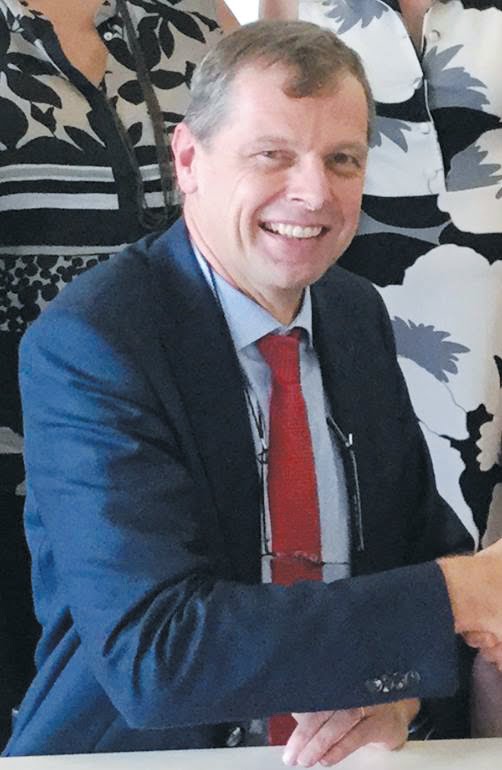
EU Ambasador Philippe Van Damme

THE European Union Delegation to Zimbabwe has launched a cartoon and comic competition titled ‘Same, same but different – ZimEUrelations’.
The competition which was launched this week by the European Union Delegation to Zimbabwe is open to any Zimbabwean who is below the age of 35 years.
Participants will share their inspiring ideas and answers of what Zim-EU relations mean to them.
“If you are a cartoonist, comic artist or just someone who has got a nick with the pen, let us hear from you: What are your thoughts  on the topic, on the relations, on the future?” reads part of a statement issued by the European Union Delegation to Zimbabwe on Thursday.
The European Union Delegation to Zimbabwe said participants can either drop off entries at the front desk of the European Union Delegation to Zimbabwe in Harare located at EU House, No. 1 Norfolk Road, Mt Pleasant in Harare or send entries by email to: DELEGATION-ZIMBABWE-COMPETITION@eeas.europa.eu
The European Union Delegation to Zimbabwe said the deadline for the submission of entries for the competition is 28 April 2017.
The winner of the comic and cartoon competition, who will be chosen by a local and international jury, will get a professional tablet and have his work exhibited during celebrations to mark Europe Day in May. There will also be prizes for the first and second runner up.
More details about the comic or cartoon competition can be accessed on the European Union Delegation to Zimbabwe’s webpage: <https://eeas.europa.eu/delegations/zimbabwe/23288/same-same-different-eu-launches-comic-cartoon-competition-zim-eu-relations_en>.
Those with questions about the competition can also send an email to: DELEGATION-ZIMBABWE-COMPETITION@eeas.europa.eu.local

Chivhu ‘mother of all potholes’ gone

0

Elliot Jinjika

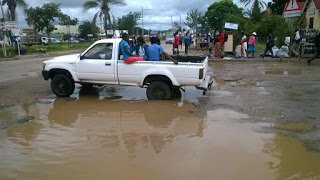
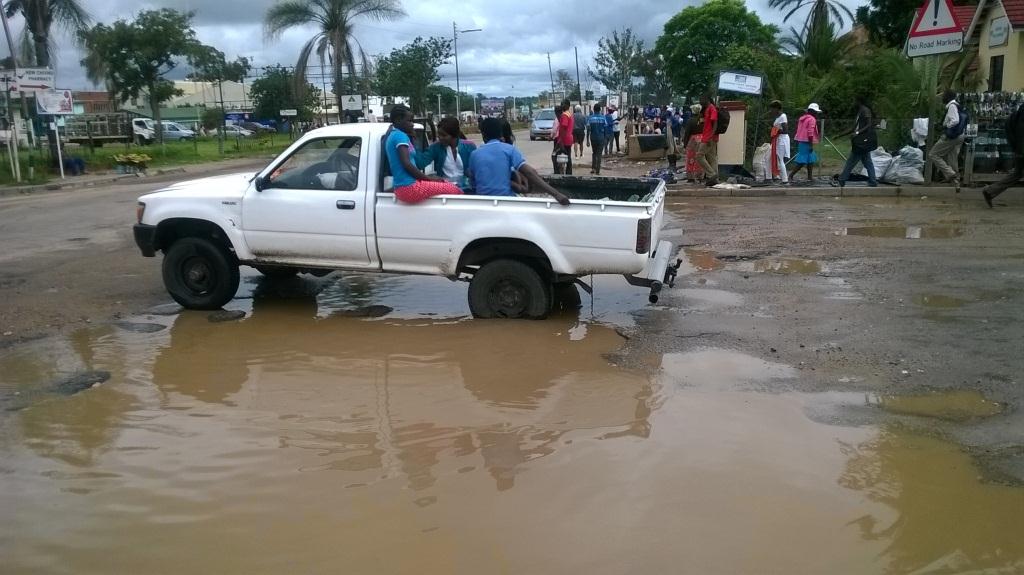
CHIVHU – After several weeks of inaction, The Chikomba Rural District Council (RDC) has finally plugged the giant pothole at the intersection of the main road from Harare to Masvingo and Murambinda road.
Motorists who spoke to TellZim News criticised council for taking too long to fix the pothole that had become a grave danger to motorists.
“We feel relieved that we can now drive freely as the menace is gone but we are equally disappointed that a whole council would ignore something dangerous for that long. We also doubt that the job was done properly because in the past, we have seen newly resurfaced roads being washed away in no time,” said one kombi driver.
The pothole, and many others, developed during the incessant rains that pounded Chivhu and most other parts of the country in February.
Council has however been criticised for turning a blind eye to the deplorable state of roads in the town.local