
By TellZim Reporter
MASVINGO – Masvingo City Council has finalized a new 20-year Master Plan aimed at
transforming the provincial capital into a “densified, resilient home” with equitably distributed
services and high-quality infrastructure by 2045, with the city positioning itself as a world-class
metropolitan centre aligned to Zimbabwe’s Vision 2030.
The Master Plan replaces the outdated 1993-2002 operative plan that had guided development
for 32 years, with only 48.2% of its 54 proposals implemented. The review, led by planner
Kudzai Chatiza and The Development Governance Institute, was adopted after 11 focus group
discussions, 30 key informant interviews, and surveys of 478 households.
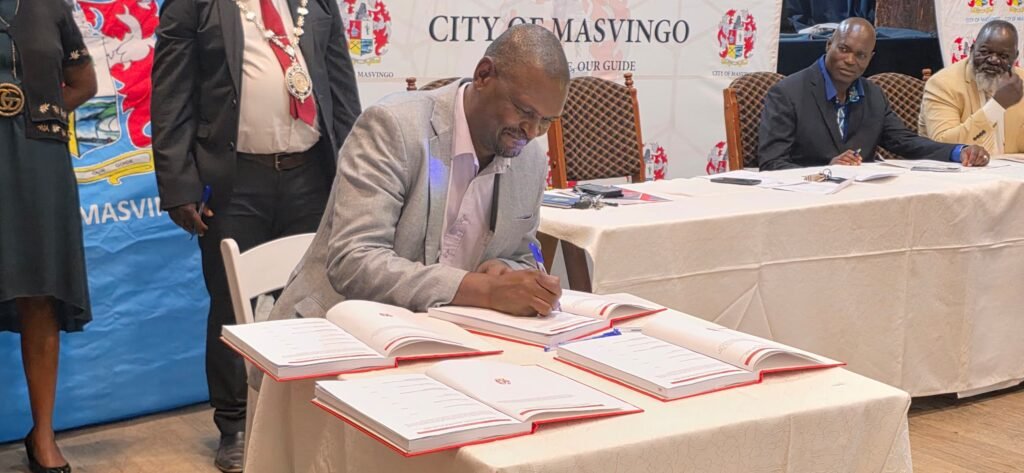
Speaking at the Master Plan signing ceremony, Masvingo Mayor Alec Tabe said the plan was
not just a document but a testament to the city’s commitment to inclusive, participatory, and
network governance where no one and no place has been left behind.
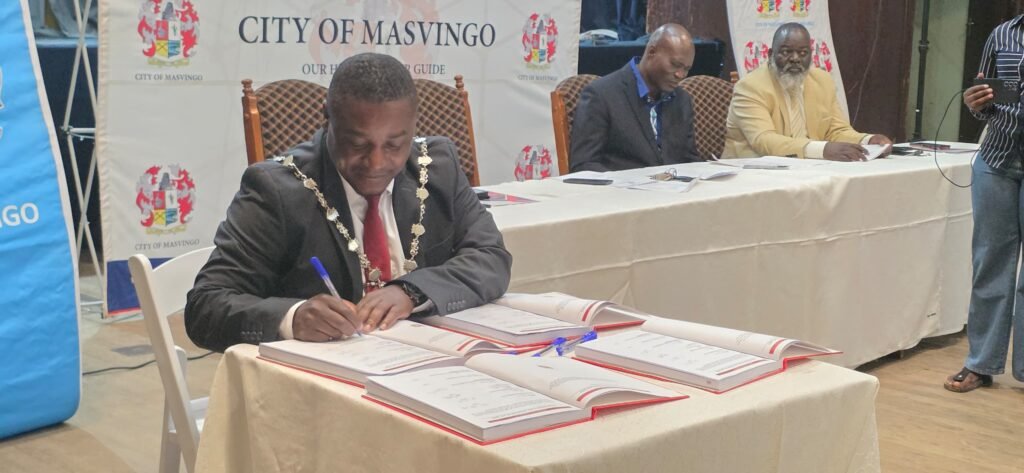
“We have engaged meaningfully with all our stakeholders, including vulnerable community
groups, whose voices are represented here today. Your presence is a powerful reminder that
inclusive development is not just policy but practice,” said Tabe.
He committed on behalf of the Council to implement the provisions diligently and review them
timeously, adding that lower-level plans such as local development plans and priority plans
would be prepared for some provisions. He also appealed for strengthened partnership with
residents, ratepayers, and stakeholders, calling on them to pay their bills and provide feedback to
ensure the Council remains responsive and accountable.
“I also call upon the government regulatory agencies to continue exercising their development
and compliance oversight roles with integrity and fairness to safeguard our collective interests,”
said Tabe.
He urged the business community to prepare for the 2026 Sanganai/Hlanganani World Tourism
Expo, which will be held from September 9 to 12, saying the City would be flexible regarding
operating hours during the Expo period.
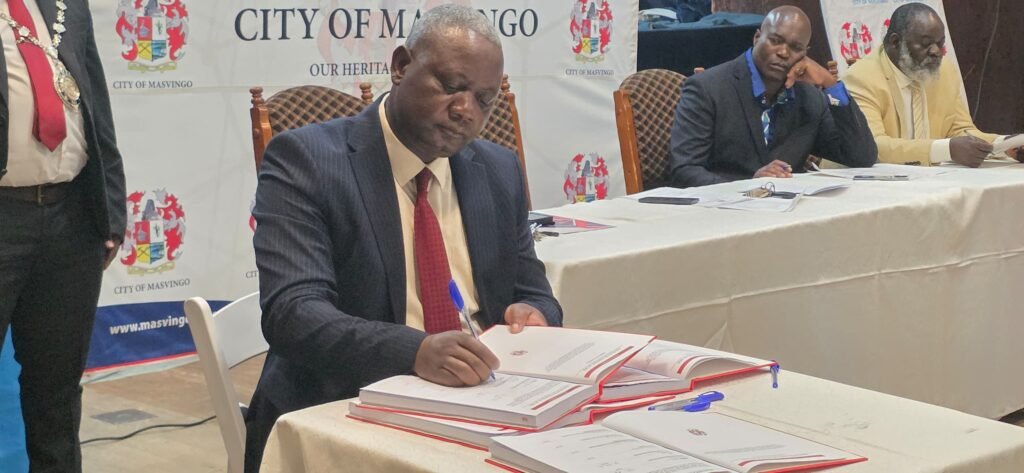
With a 2022 population of 90,286, the plan sets four strategic objectives: Spatial Governance
Excellence, Sustainable Economic Development, Urban Resilience, and Municipal Capacity.
Council says the city must deliver specialist health, education, financial, and tourism services
befitting a provincial capital and gateway to Great Zimbabwe, Lake Mutirikwi and Tugwi-
Mukosi Dam.
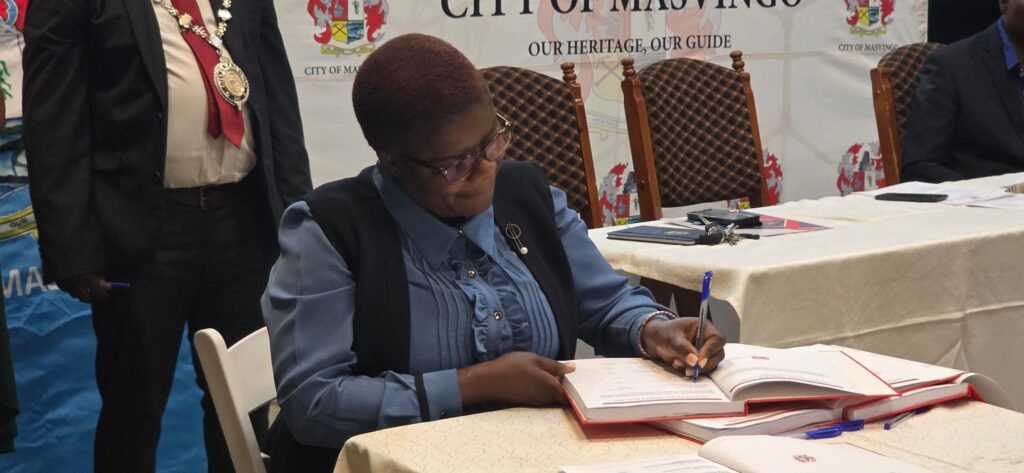
Key challenges identified include limited developable land within the unchanged city boundary,
with only 10-20% remaining for horizontal growth. The city faces a housing deficit of 1,109
units against a waiting list of 3,150, mostly for high-density housing. Infrastructure gaps in
water, sewage, roads and waste management were also flagged, alongside a congested CBD with
no district or regional shopping centres and subdued operations in the heavy industrial area.
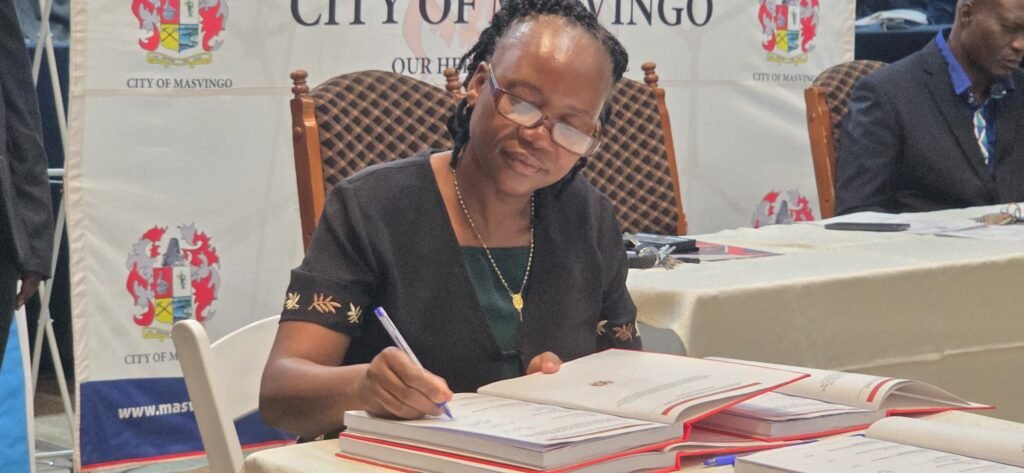
To address land shortages, the plan proposes densification, regeneration of ageing areas like Old
Mucheke, and vertical growth in the CBD. It introduces three boundaries: a de jure boundary
with new commercial, light industrial and green corridor zones including a tourism precinct off
Shagashe Game Park; a de facto services boundary to cover peri-urban areas like Victoria Ranch
and Clipsham; and a co-management zone with Masvingo Rural District Council for orderly
metropolitan growth.
Economic proposals focus on reviving manufacturing, formalizing the 87% services-dominated
economy, and creating a commercial corridor linking Mucheke Bus Rank to the CBD. Other
initiatives include establishing an integrated commercial node with a shopping mall, city bus
rank and railway station, and promoting a “Made in Masvingo” business culture.
On resilience, the plan calls for cleaning the Mucheke and Shagashe Rivers, erecting flood
barriers in Old Mucheke, expanding renewable energy use, and restocking Shagashe Game Park.
In health, Council proposes an infectious diseases hospital, two new polyclinics, and finalizing
the shift to the Cambria landfill. Education and social infrastructure targets include 6 new
primary schools, 2 secondary schools, and 50 multi-purpose community facilities.
Infrastructure upgrades will prioritize road widening on Mutare Road, connecting Victoria Ranch
to potable water, extending trunk sewers, and hydraulic modeling of the water network.
Financing will rely on an incremental and blended model of improved revenue collection,
intergovernmental fiscal transfers, private investment, and development aid.
Implementation will be phased over the short, medium, and long term, with immediate focus on
statutory plans for the city centre, heavy industry, and commercial centres, plus capacity building
through a standalone City Planning Department and Council Committee.

