
Home Blog Page 116

New lithium smelting plant for Bikita Minerals

By Beverly Bizeki

As calls to have locals benefit from natural resources through beneficiation of minerals increase, Sinomine owned Bikita Minerals has revealed its intentions to have a new lithium smelter plant in Masvingo Province.
This was revealed by Sinomine Manager Xuadong Gong during the tour of the mine by Mines and Mining Development Parliamentary Portfolio Committee who said the company had intentions to keep investing in the country and plans for the smelter, which cost US$500 million, were already underway.
“Despite ongoing fluctuations in the prices of lithium globally, Sinomine has plans to keep investing in Zimbabwe with a projected new lithium smelter to be constructed at Lake Mutirikwi for the benefit of the communities in the mining area,” said Gong.
Parliamentarians who visited the mine queried the mine officials on why the company did not sub-contract local transporters for them to benefit as well. Gong said it was difficult to find local transporters with the handling capacity which is why the company opted for international transporters.
“Some products should be sent to the final customer in pallets and such handling capacity is not easy to find locally. The previous owners of the mine also used foreign trucks although 50 percent are local,” said Gong.
“All of our contractors get paid after reaching a milestone but it is only the local contractors who get paid first as they do not have capacity so we pay them first and they do the work. In some instances the local contractors after getting paid, quit before meeting their obligations,” said Gong.
Bikita Minerals Finance Manager, Amanda Makausi said plans for the new smelter were at an advanced stage with the feasibility study under way.
“Before introduction of the beneficiation policy by government, our phase two investment plan and expansion of the mine was to have a smelting plant to produce lithium sulphate, a further value addition to the product we are mining here.
“Feasibility studies are underway and we expect to invest at least US$400 to US$500 million, a project which we believe is going to change the face of Masvingo province and we are committed to increasing the provincial GDP,” said Makausi.
Makausi however said they were facing challenges in logistics as the company had a shortage of containers to transport lithium products to the port for shipping which is why it resorted to using flatbed trucks and 1 tonne bags.
“The reason why we use flat back trucks and pack our products in 1 tonne bags is because there is a huge shortage of containers. We would have loved to containerise at the mine and take products to the port but there are no required containers in Zimbabwe,” said Makausi.
She went on to say the mine had another challenge of taking a longer route to Beira as they could not use Birchenough Bridge due to the bridge’s weight limitations although they had plans to construct a new one.
“The other challenge that we face in terms of logistics is that the Beira route is shorter but we have to take a longer route. From here we go via Chivhu since we cannot use the Birchenough Bridge because of its weight limitations.
“It is against that background again that as Bikita Minerals being a responsible citizen, we would like to construct a new Birchenough Bridge. We have signed a Memorandum of Understanding with the ministry of transport, conducted a feasibility study and the designing of the bridge is underway. We would like the support of the committee on mining in getting benefits that accrue from that proposed public private partnership agreement. We have plans to set aside about US$40 million to construct that bridge which is to benefit the whole country,” said Makausi.
Bikita Minerals is one of the biggest lithium producers in the region. The company has since grown its capacity over the past two years after Sinomine took over with investments worth about US$200 million.


Zaka RDC Chair spends night in cells after ZACC arrest

… As feud between CEO, council chair rages on

By Richard Mukwenya

Zaka Rural District Council Chairperson Fungai Maregedze had to spend a night in police cells after she was nabbed by the Zimbabwe Anti-Corruption Commission on Wednesday October 02 on several charges of criminal abuse of office.
Maregedze appeared before Masvingo Magistrate Elizabeth Hanzie who remanded her out of custody to November 05 after the complainant failed to show up for the initial appearance and her docket was yet to be transferred to Masvingo Court.
Prosecutor Ruvimbo Makoni said the state was applying for the transfer of her docket, which was also not available in court, from Harare.
Contacted for comment over the matter Zaka RDC Chief Executive Officer (CEO) David Majaura said he was not aware of Maregedze’s arrest.
However, sources said he was there when the incident took place and was advised to inform the Ministry of Local Government and Public works which he did through a letter which was later leaked to TellZim News.
The letter was addressed to the permanent secretary in the Ministry of Local Government and Public Works dated Oct 02 and signed by Majaura.
“I write to notify your office that, Zimbabwe Anti-Corruption Commission team visited our offices on 01/10/2024 and interviewed management and some councilors including the council chairperson who was interviewed today 02/10/2024.
The ZACC team have just reported to me that they are arresting the council chairperson,” read the letter.
Maregedze has been at cross roads with the local authority CEO David Majaura.
The two have a record of accusing each other for undermining other’s authority.
Sources said a team from the parent ministry visited Zaka RDC and did own investigations where they recorded some anomalies on the part of the council chairperson.
The results were presented but the council chair refuted them resulting in another team being sent to the local authority this week. After completing the two day investigations, an arrest was made.
“A team from the ministry was assigned to do investigations at Zaka RDC and the results were presented to the council chair and CEO during a meeting where all council chairpersons and mayors as well as CEOs and town clerks were invited. That’s when the two were shown results which implicated Maregedze.
“She then disputed the results and went on to insult the minister accusing him of sending a biased investigating team and that is how the second team came and they established the same results resulting in Maregedze’s arrest,” said the source.
Other sources said the feud between her and Majaura emanated from the fact that her husband who is Zanu PF Zaka District Coordinating Committee Chairperson and Zaka South MP Clemence Chiduwa wanted control at the local authority and was using his wife to push a factional agenda.
Chiduwa influenced his wife, Maregedze’s entrance into council on women’s quota ticket and eventually became council chairperson ahead of elected councilors.
“She failed to yield desired results as Majaura refused to be bent and that’s how the plot to ouster him (Majaura) started. Initially they wanted to push for Zaka District Development Coordinator (DDC) Memory Dhliwayo to be CEO until someone whispered in Maregedze’s ear that she actually qualifies to be the CEO herself.
“So she is fighting for her own supper, Majaura’s ouster will give her a chance to be at the helm of one of the poorest local authorities in the Province,” said the source.
She went on to write letters to the parent Ministry complaining over clashes with Majaura whom she accused of hindering development in the district and blocking her and other councilors from executing their duties.
In one letter dated 20 May 2024, the council chair said since her council had assumed office in August last year, they had met several stumbling blocks in the execution of their work and was seeking guidance as the issues were affecting service delivery.
“I am humbly making this submission to you Hon Minister seeking relief and guidance on several issues that are impeding service delivery and having a direct negative bearing on service delivery and my performance contract as chairperson of Zaka RDC,” reads part of the letter.
She also said council management was misinforming the responsible ministry about councilor’s interference in order to avoid scrutiny and being held to account.

Businesswoman launches gospel album

By TellZim Reporter

After years of success in business, Beatrice Ngilazi (nee Shava) who runs Arlytatim Hardware is now sharing her musical gift with the world, unveiling her debut gospel album, ‘Great God’, a testament to her faith and talent on Friday October 11.
A trailblazing businesswoman, Ngilazi is breaking new ground with the release of her debut album, inspiring listeners to find strength in faith at Alliance Church in Masvingo.
The multi-talented, Ngilazi, who is a teacher by profession and has two singles prior to the album said it featured ten tracks with a gospel message.
“The main message in the album Great God is that of our Lord Jesus Christ being the Great God, the supreme King over all.
“No collaborations were done in the album and the songs are, Kunyangwe zvikaoma sei, Moyo wangu rumbidza Jehova, Adonai great God, Ngoni dzake, Hakuna umwe wakaita saJesu, Ndinomutenda, Mwari baba, Rumbidzwai Jehova, The unchangeable God and Shongwe Yedu,” said Ngilazi.
Ngilazi said her favorite track on the album is Shongwe Yedu which praises God as a pillar of fire and cloud, leading his children through and through, as He did with the children of Israel.
The Mberengwa-born artist said she had a passion for singing for the Lord Jesus Christ from a tender age and draws inspiration from South African gospel singer Hlengiwe Mhlaba.
Guest performances during the launch will be done by Worshipper Larry Gunda and Worshipper Wedzerai, both gospel ministers.
The album launch show will start from 5:30pm and admission.

Accelerating Decentralisation & Community based mental health care services: Key to sustainable Development

0

By Francis David Nsiyaludzu

A Nation with a good bill of health serves as a good predictor of increased productivity and a cornerstone for sustainable development. Zimbabwe, a country that has recently promulgated plans for transition to an upper middle class by 2030, could fully achieve this goal by giving priority to citizen health among other initiatives. In the face of a growing need for mental health services due to a plethora of factors and chief being the insurgent scourge of drug and substance abuse, it would be prudent to consider accelerating decentralisation of mental health services and expanding community-based mental health interventions that advocate for all levels of disease prevention.
The Zimbabwe National mental health policy (1999) articulates several key objectives. It highlights the benefits and significance of decentralisation of mental health services as one way of increasing access to metal health services, particularly in rural areas where mental health services are limited. Notable reports and desk reviews have shown that, Zimbabwe has a shortage of human as well as health care facilities for mental health. There is an estimated 18 psychiatrists (17 of them in Harare) or approximately 0.1 per 100,000 population. There are 917 psychiatric nurses (6.5 per 100,000) and 6 psychologists (0.04 per 100,000) There are only two psychiatric hospitals, two psychiatric inpatient units, and seven outpatient mental health facilities functioning in Zimbabwe.(WHO,2020)
Decentralisation of mental health services therefore, implies a collective commitment towards the structural as well as human resource mobilisation and towards the disbursement of responsibility and functions within the various levels of care. The current status quo that reflects a considerable shortage of both human and material resources, is an urgent call for routing towards decentralisation and ramping up of community –based mental health care services. This service paradigm could effectively reduce the country’s global burden of mental health, increase social -functionality and productivity.
A 2010 research conducted by Mangezi & Chibanda (Mental Health in Zimbabwe) points to a community- based approach as one of the several approaches that can assist to disburse mental health services. Devolution of mental health services through the expansion of Community –based mental health interventions would serve to increase access to care, domesticate mental health services, fight stigma, empower local communities, demystify mental illness, build mental health literacy, and promote the overall mental well-being of communities at grassroots level. This approach also serves to significantly reduce fiscal spending on the overall health –bill by actively promoting de-institutionalisation of patients and reducing the burden of care by the few health care workers and facilities in the sector.
The Zimbabwe National Mental Health Policy (1999) articulates clear and smart objectives that seek to comprehensively address mental health. It is the blue print towards achieving these set objectives. However, from a community practitioners’ perspective, one sustainable approach towards mental health care would be to prioritise and hasten prevention initiatives at community level, accelerate and pragmatise the process of decentralisation, increase community participation and instituting community- based mental health care. Investing in community –based mental health care initiatives, like day care centres, half-way homes, hostels, resettlement schemes, vocational training centres, community forums, awareness raising and health promotions among other initiatives as espoused by the policy can significantly mitigate mental health issues across communities. These community based initiatives will serve to rehabilitate patients, prevent relapse and entrench prevention at community level. This also augments service efforts that remain centralised and limited to few major urban centres. While commendable initiatives in the mental health sector continue to be pursued by our Government, like the decentralising of mental health services in some major urban centres, instituting the mhGAP training program for health workers at primary care facilities, refurbishment of some mental health facilities at central hospitals, building partnerships with civic organisations and other private players, accelerating the establishment of widespread community- based mental health services and facilities remains pivotal and can expedite and widen access to services at sustainable cost. Several civic organisations and other non –health sectors, bear witness to the efficacy of community –based mental health services and psycho-social support as a means to localise and ground services within communities. A community-based approach could be an effective and sustainable model for mental health care in the medium to long term. It is an approach that seeks to address, not only the presenting mental health issues, but also conduits attention to the root causes at an ecosystems level.
It therefore, remains prudent to move quickly in establishing community-based mental health initiatives at a macro-scale and in fulfilment of policy aspirations. The policy aspires for a decentralized service and integrated mental health services that are firmly established at all levels of care to satisfy the needs of the general public. (Mental Health Policy (1999). Developing a workforce that is intellectually and physically sound is essential if we are to reap the full benefits of our endowed country. Advocating for prevention-driven and community- based mental health initiatives that are global can be cost –effective and foster sustainable socio-economic development.

Francis David Nsiyaludzu is a Community Psychology intern and registered with the Allied Health Practitioners Council of Zimbabwe. Also a Researcher in areas of Youth and adolescent behaviour, offender rehabilitation and an Educator. Currently working as a Child Safeguarding Officer for the Catholic Diocese of Gokwe.

1 year later, government yet to pay registry workers

By Beverly Bizeki

Government is still to pay Civil Registry contractors who were used during the identity documents registration a year after the work was done.
The victims have since written a letter, which is circulating on social media, to the Minister of Finance and Economic Development Professor Mthuli Ncube querying the ministry’s position on their unpaid allowances.
“We are a group of employees from the ministry of home affairs/civil registry department. We upto this date have not been paid what is duly ours, a year after embarking on the vital national mobile registration programme. Please note that the money was supposed to be used during the exercise, common sense and a clear un-schizophrenic psych will tell you that we are deeply in debt as a result of financing this crucial programme.
“Kindly respond to the following questions honourable- When are you going to pay us our June-July allowances? What is stopping us from being paid for the work we did a year ago? ,” reads part of the letter.
Masvingo District Registrar Lawrence Mapara said he was not aware of the matter and referred the reporter to the provincial registrar Sithembeni Chitsa who asked the reporter to submit her questions in writing.
However, sources who spoke to this publication on condition of anonymity for fear of victimisation raised concern over the delays in payment saying.
“We were supposed to get US$120 per day for mobile workers while those working from the office were supposed to get US$60 per day. We have not been paid since 2023 for June 15 to July 31st 2023,” said the source.
The money is supposed to be around US$2 400 for the minimum paid worker.
This incident is not the first one as government took time to pay transporters who provided service during the 2022 census as well as during elections.
Government recently torched a storm on social media after government through the Ministry of Lands, Agriculture, Fisheries, Water And Rural Development entered into a contract with Blackdeck Livestock and Poultry Farming valued at US$87 757 168 for supply and delivery of over 600 000 goats over a period of five years in which the suppliers were given an advance payment of US$40 million implicating its directors Moses Mpofu and Mike Mpofu.

EX-footballer scouts for rural talent

0

By Rangarirai Shanyurai

Former Caps United football star Albert Manyevere is on a mission to scout for untapped talent in the rural areas of Madzivadondo, Chivi through his newly formed Alman Sports Academy.
The former footballer is giving back to the community, scouting untapped talent and bridging the gap between urban and rural football, offering opportunities to undiscovered athletes.
The Alman Sports Academy which was founded in 2024 focuses on identifying rural talent in Madzivadondo, Chivi mainly under-16 players and below.
In an interview with TellZim News, 58 year old Manyevere said the academy’s goal was to unite individuals with passion for sports, noting the abundance of young talent in rural areas often overlooked by traditional talent scouts who focus on urban regions.
He emphasized the importance of nurturing talent, steering youth away from drug abuse, and providing opportunities for personal and national growth.
“I’ve come across lots of young talent in my rural home but talent seekers mainly scout in urban areas. Looking back at my school days I’m sad to see how some bright students got caught up in drug and substance abuse and missed their chances in football.
“The academy’s mission is to promote, nurture and enhance talent while discouraging drug and substance abuse to unlock their earning potential and contribute to the country’s prosperity.
“The academy aims at uniting individuals with passion for sports and develop them to be professionals” said Manyevere.
Manyevere said the academy is a group of male and female soccer players and encouraged individuals in various sporting activities are encouraged to join them.
“At the moment we are inviting athletes in different sports to come forward, enabling us to nurture and promote their skills. Currently we utilize facilities at Mudadisi Primary and High Schools for training purposes,” said Manyevere.
Manyevere added that he sees himself and his teammates running one of the most successful rural academies.
“Within the next five years, I want to make a difference in the lives of young rural people through the academy. God willing, I see my teammates and I running one of the most successful academies in Zimbabwe. My ambition is driven by passion to empower rural youth through sports, fostering talent, discipline and character,” he said.
Manyevere said the coaching leadership consists of Farai Mamombe, Lucy Hamani, Morris Chinenyanga and Rangarirai Gava and they were looking for partners, promoters and sponsors .
Chinenyanga said the focus of the youth academy was on nurturing talent and creating a select few players who will leave a lasting impact in history. He said this involved identifying, developing young players through a collaborative process involving parents and academy members.
“Youth academy is not about a mass production of players, it is about nurturing talent producing few players that will make history. The important thing is to identify few players and nurture them to become big players.
“The academy primarily requires young players. We plan to have a meeting involving parents and academy members to discuss the necessary procedures. These young players are under supervision while residing with their parents, so parental awareness is crucial due to potential consequences.
Despite risks in football, our academy continues to grow, facing financial challenges in supporting players. We have established a unique philosophy within the academy that must be adhered to,” said Chinenyanga.
Manyevere was born on December 7, 1966 and attended his education at Pfumo Primary and Zengeza 1 High School in Chitungwiza. His football journey started with the division 1 team called Siso Bushbucks in 1988 when he was 22 years old. In 1989 he was spotted by Sunday Marimo Chidzambwa and joined CAPS United.

Beekeeping training center open doors in Zvishavane

By Tinaani Nyabereka

Zvishavane – A newly established Palawani Beekeeping Training Center based in Zvishavane recently opened its doors and is set to unlock significant economic value by providing employment and enhancing the skills of youths and small-scale bee farmers in the region.
The training centre is expected to train more than 200 farmers, contributing to rural development and aligning with the government’s Vision 2030 goals.
Speaking at the official opening of the centre last week, Palawani Lakeworld Resort Chairman, Munyaradzi Hwengwere, said Zimbabwe had unique natural resources and if utilized well could attract more international markets.
“Through our engagement with ZimTrade, we have identified honey from Zimbabwe as a highly exportable commodity. This center will serve as a hub for our communities to collaborate with us, increasing productivity and targeting export markets,” said Hwengwere.
Chief Technical Director at Bees Honey Company, Welcome Bhila said beekeeping in Zimbabwe’s was a transformative programme that could boost the agricultural economy.
“The initiative is poised to transform beekeeping into a viable commercial venture for small-scale farmers, enhancing their livelihoods while also promoting environmental sustainability.
“Bees are crucial not just for livelihoods but for the environment as well. With climate change and environmental conservation being global concerns, we are incentivizing communities to embrace beekeeping, which supports both biodiversity and sustainable agriculture.
“Globally, bee population face challenges from habitat loss, pesticide use, and climate change, therefore as Zimbabwe our beekeeping sector presents an opportunity for rural communities to engage in sustainable practices that address these environmental and economic growth.” Said Hwengwere.
He said the project seek to enhance entrepreneurship, creating employment opportunities, and supporting agricultural development in the marginalized areas.
The center will also promote sustainable agricultural practices through hands-on training equipping local farmers with essential beekeeping skills.

Musara, Chikwanda boundary wrangle goes on

By Meditation Mposi

Chiefs Musara and Chikwanda boundary dispute is still on with the two Chiefs’ subordinates clashing at a funeral recently and the matter was heard at Masvingo Magistrate’s court.
The incident involved one of Chief Musara’s aides, Langton Gozo and Alois Chikwanda who is from the Chikwanda clan.
Alois was dragged to court for impersonating Chief Chikwanda after he gave a speech at a funeral on behalf of Chief Chikwanda in Chief Musara’s area.
Alois appeared before Magistrate Cathrine Tafira on September 30 and pleaded not guilty before he was acquitted
It was a state’s case that on August 15, 2024 there was a funeral in Musara Village under chief Musara.
Gozo and Chikwanda both attended the funeral and during proceedings, when it was time for the chief to speak, Gozo who was standing in for Chief Musara wanted to address mourners but Chikwanda stood first and addressed as Chief.
He threatened to assault the complainant and insulted him saying he would chase Gozo from the area.
In his defense, Chikwanda said there was already a conflict between Chief Chikwanda and Chief Musara and he had an issue with Chief Musara not Gozo whom he said he never saw at the funeral.
He went on to claim that the director of ceremonies said since Chief Chikwanda was not there, he would represent him as he is from the same clan.
The dispute between Chief Musara and Chief Chikwanda rages from 2013 when Musara was declared chief by the late former President Robert Mugabe and since then, there have been clashes between their people.
Sometime in 2015 Chief Chikwanda was warned and asked to respect the boundary and resuscitation of the Musara Chieftaincy.
In 2018, Chief Musara was appointed substantive chief by the High Court and Chief Chikwanda disputed the decision saying ward 13 fell in his area.
Sometime in 2022, Chief Musara dragged Chief Chikwanda’s aide for undermining his authority. The aide was said to have blocked Chief Musara’s representatives from delivering speeches at funerals saying the area was not Chief Musara’s hence he had no right to speak.
The incident is not peculiar to Musara and Chikwanda, the same happens in Murinye and Mugabe areas where the two clash at funerals.
Charumbira and Bere also clash at funerals since the resuscitation of Bere and Nemamwa chieftaincy.

Boarding house fire destroys 13 students’ belongings

By Rangarirai Shanyurai

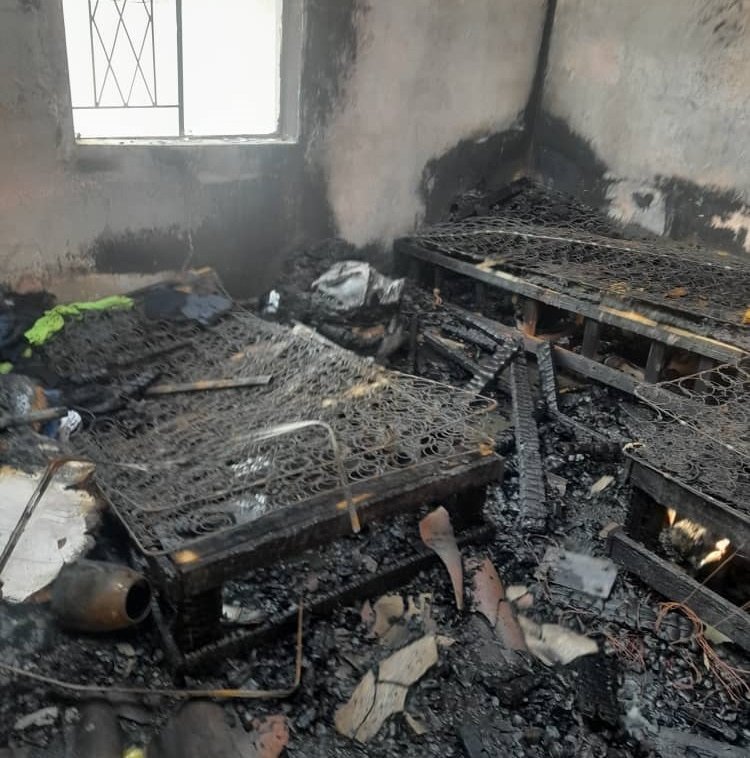
Thirteen students from Great Zimbabwe University (GZU) belongings were destroyed after an electrical fault sparked fire at Appleseed boarding house near Yeukai shops in Mucheke on September 27, at around 1900 hours.
According to a GZU Student Representative Council (SRC), thirteen girls from Yeukai boarding house lost everything in a tragic fire and the university had since provided temporary shelter and meals for the victims.
“Thirteen girls from a boarding house in Yeukai have lost everything in a devastating fire. It is truly heart-breaking to see our friends in such a difficult situation. During this challenging time, the university is providing them with temporary accommodation and meals as they await to go to a new boarding house. However, they need our support more than ever.
“I want to express my deepest gratitude to those who have donated food and clothes. Your kindness and generosity are a beacon of hope for these girls in their time of need. For those who have not yet had the chance to contribute, we kindly urge you to consider helping. Every donation, no matter how small, can make a significant difference. As stated in Acts 20:35, “It is more blessed to give than to receive.” Let us come together as a community to support our fellow students,” read the post.
The owner of the boarding house, Godknows Mugondo confirmed the incident and said they suspect the fire was a night spark from the sockets.
He said GZU Vice Chancellor Professor Rungano Zvobgo promised to attend to the victims’ needs and some of the students had already been taken to Mucheke Campus for accommodation.
“GZU has requested to take the victims to Mucheke Campus and we acceded to their request though we were in the process of transferring them to another boarding house in Runyararo West. We have provided them with blankets and they are going to get what they had at the previous boarding house.
“There are also plans by the University for the students to recover academic documents that were destroyed by the fire. We made a police report indicating the documents were destroyed,” said Mugondo.
He said he had spoken to Masvingo City Mayor, Alec Tabe who is also the ward 4 councillor and local Member of Parliament, Martin Mureri who also promised to mobilise help for the 13 students.
“I contacted the Mayor Tabe and MP Mureri and they both promised to help mobilise for assistance” he said.

School head steals, buries two tonnes of maize

By Beverly Bizeki

A school head at Gomba Primary School in Gutu has left the community devastated after she buried two tonnes of maize meant to feed learners at the school after keeping the maize for four years.
The head, Varaidzo Tazvivinga is said to have kept the maize until it went bad since 2020 while school-going kids who were supposed to benefit from it were going hungry.
Gomba Primary School Development Committee (SDC) Chairperson Samson Chidya confirmed the incident and said upon being asked why she had buried the maize, Tazvivinga said it was attracting rats to the fowl run where it was being kept.
“The maize was brought to the school in 2020 for the school feeding programme but classes were later disturbed by Covid-19 lockdowns and children stopped coming to school. We had used only about a tonne and the remainder was kept at the school,” said Chidya.
He said the head later told them that the remainder was supposed to be taken back to the Department of Social Welfare since it had not been used, with the school being asked to raise funds for its transportation back, which the parents resisted.
“We then suggested that since the school had poultry projects, we could use the maize for those projects as we had two batches of chickens. We went on to use some of the maize there but I later heard that the school head had told the SDC vice chair about wanting to dig a compost pit at the school. Little did we know that it was meant for burying the much needed food,” said Chidya.
He went on to say the head hired someone who dug the compost pit and buried one tonne intending to bury another tonne the following day but the contracted guy told other villagers who then informed other parents.
Contacted for comment, the school head Varaidzo Tazvivinga said she could not comment, saying she was not allowed to speak over the phone before dropping the call.
“We are not allowed to speak over the phone,” said Tazvivinga.
Gutu District Schools Inspector (DSI) Ronald Muganhu said he was yet to establish what had transpired at the school as he had only came across the story on social media.
“I have only seen the story on social media and I am yet to establish how authentic it is thereafter we can do our own investigations,” said Muganhu.
“The matter came to light after the man who was contracted told other parents at a beer binge that he had buried maize at the school and will bury some more the following day. The concerned parents then notified Chief Mazuru.
Other sources who spoke to this publication said the school head is believed to have tried covering up for taking part of the maize for personal use without authorization after parents enquired about the maize.
“It was alleged that she had been using the maize to feed her own poultry project, hence burying the maize,” a local villager said.
Headman Mazuru born Mukandatsama Mazuru condemned the school head’s conduct and said it was retrogressive equating it to an indirect act of murder considering the drought-induced food scarcity.
“What the head did is totally unacceptable and this did not sit well with us as a community. Some families have no food but she had guts to bury maize in a compost, ndiko kutiurayira vanhu uku (that is like killing people).
“The government is helping vulnerable families yet someone is destroying grain. I do not know where this places her job as a teacher and school head because she is supposed to be looking after these children
“The maize could have been distributed to children from vulnerable families and this could have served the purpose, the worst part is that her answers were not satisfying when we asked her. Our plea is for the ministry to give us another head as we cannot be working with someone like this,” said Mazuru.
Gutu East ward 13 councilor Theresa Dhehwa said the head was supposed to have agreed with parents on what to do with the grain before it went bad.
“We saw the maize that had been buried in a compost and it had gone bad and could not be used neither for cooking nor poultry feeds. The school head should have sat down with the SDC to come up with a way forward.
“She probably wanted to clear the room in which the maize was stored because it was no longer edible, even the sacks in which the maize was stored had been worn out and this was probably because of rats,” said Dhehwa.
Gomba Primary has an enrolment of about 650 learners and according to some sources the school had received about five tonnes of maize. Learners are said to have had meals for a few days from the same programme.
The government and other development partners are currently on a drive to maintain high enrolment in schools against the ongoing El Nino drought by supplying food to schools in vulnerable communities.
According to the Department of Social Welfare, Gutu District had an allocation of about 480 000 tonnes of maize and has already received about 65 000 tonnes of maize meal which has been disbursed to some of the primary schools in the district. Gomba Primary had however not received its allocation of the maize at the time of writing as schools are still in the process of receiving their allocations.