Home Blog Page 17

Professor Arthur Mutambara to launch new AI book in Masvingo

0

By Brighton Chiseva                                                              

Masvingo city is abuzz with anticipation as Professor Arthur Mutambara, former Deputy Prime Minister of Zimbabwe and a leading voice on artificial intelligence in Africa, prepares for a two-day intellectual engagement in October, bringing a message of urgent technological adoption tempered with strategic caution.

On October 6, 2025, Prof. Mutambara will launch his latest book, “Deploying AI to Achieve the UN Sustainable Development Goals,” at the Civic Centre’s Charles Austin Theatre at 1900 hours.

The event, which is free and open to the public, will be followed by a public lecture the next day at Great Zimbabwe University titled “Why and How Africa Should Embrace the AI Revolution” from 10:00 AM to 12:30 PM at the Moot Court, Herbert Chitepo Law School.

Speaking to TellZim News Prof Mutambara said key takeaways from the Public Lecture were understanding why it is called an AI Revolution and that Africa was not guaranteed to benefit from it.

“The key takeaways are that attendees would understand why it is called the AI revolution, It is not guaranteed that Africa will benefit from the Revolution, the continent must prepare and the details of the preparations,” said Prof Mutambara.

He also said people will understand the potential applications of AI in Africa, dangers and risks of AI to the continent.

Commenting on the significance of these events to TellZim News, Media lecturer and researcher Dr. Last Alfandika expressed particular excitement about Prof. Mutambara’s engagements.

“As a researcher in Journalism, Media and Communication, I am particularly excited about Prof. Mutambara’s forthcoming book launch on October 6 at Charles Austin Theatre and the public lecture to be held the following day at Great Zimbabwe Law School on artificial intelligence.

“His focus on deploying AI to achieve the United Nations Sustainable Development Goals is both timely and relevant, especially for Africa. The continent is at a crossroads: while we face pressing developmental challenges, we also have a unique opportunity to leapfrog by embracing emerging technologies,” Said Dr. Alfandika.

Dr. Alfandika emphasized the transformative potential of AI beyond mere economic metrics.

“What I find most compelling is not just the promise of AI for economic growth, but also its potential to transform communication, health, education, agriculture, and governance in ways that directly impact ordinary people,” said Dr Alfandika.

However, the media scholar also stressed the importance of contextualized AI adoption saying its adoption should be rooted in ethics and inclusivity.

“The conversation about AI in Africa must be rooted in ethics, inclusivity, and our own contextual realities. We need to ensure that AI adoption empowers communities, protects human dignity, and reduces rather than widens inequalities,” he said.

He said attendees at the public lecture can expect crucial insights into Africa’s AI future, including understanding why this moment constitutes an AI revolution, recognizing that Africa’s benefit isn’t guaranteed, learning specific preparations the continent must make, exploring AI applications tailored to African contexts, and understanding the unique dangers and risks AI presents to the continent.

“Prof. Mutambara’s engagement is therefore important as it opens up a critical space for dialogue about why and how Africa should embrace this revolution, and how our institutions, universities, and policymakers can align AI with the continent’s development aspirations,” said Dr. Alfandika.

In his new publication by Springer Nature, Prof. Mutambara makes a compelling case for global AI adoption, stating: “The staggering, unprecedented and transformative power of Artificial Intelligence must be harnessed to address socio-economic and political problems worldwide.”

While acknowledging the genuine risks presented by the technology, the former Deputy Prime Minister emphasizes that “prioritising these prospects is far more important than being consumed and overwhelmed by the potential risks, vulnerabilities, and uncertainties. He insists that“Artificial Intelligence must be utilised to enhance the quality of life for all Earth’s inhabitants,” calling for “relentless determination, laser-like focus, and unwavering effort” to achieve this global ambition.

The book provides a comprehensive framework for how AI can accelerate achievement of all 17 UN Sustainable Development Goals, while addressing critical concerns about digital imperialism, data colonialism, and technological exclusion that particularly affect emerging economies. Prof. Mutambara puts “a premium on decoloniality in AI systems and democratizing AI technology” throughout his work.

With Prof. Mutambara’s unique combination of governmental experience and technological expertise, both events promise to provide thought-provoking insights for students, academics, policymakers, and technology enthusiasts alike, offering a platform to explore how Zimbabwe and Africa at large can harness artificial intelligence for sustainable development while navigating the technology’s complex challenges.

Nearly half of Zim adult population overweight and obese

0

…Masvingo leads with shocking 55.6%

By TellZim Reporter      

MASVINGO – Shocking statistics from the recently released Zimbabwe Livelihood Assessment Committee (ZimLAC) 2025 Urban Livelihoods Assessment Report have revealed that 49.5 percent of Zimbabwean adults aged between 18 to 59 years were overweight or obese, with Masvingo Province recording an alarming 55.6 percent prevalence rate, the highest in the country.

According to the report, “Nationally, 49.5 percent of adults aged 18-59 years were overweight and obese. Masvingo (55.6 percent) had the highest proportion of adults who were overweight and obese.

Having excess fat deposits in the body leads to serious health consequences such as cardiovascular disease (mainly heart disease and stroke), type 2 diabetes, musculoskeletal disorders like osteoarthritis, and some cancers (endometrial, breast and colon).”

The statistics for Masvingo Province show a worrying increase from 54.9 percent in 2024 to 55.6 percent in 2025, indicating a growing health crisis in the province.

 Nationally, 45.5 percent of adults were classified as having normal weight, marking a slight increase from last year’s 44.8 percent. However, 5.0 percent were rated as underweight, a marginal decrease from last year’s 5.2 percent.

Women topped the statistics for obese women nationally with 27.4 percent while men accounted for 6.1 percent. Women also accounted for 30.7 percent of overweight adults within the same age range of 18-59 years while men accounted for 23 percent.

Only 38.5 percent of women had a normal body mass index while men had 61.9 percent.

While Bulawayo has the highest proportion of people with normal weight at 47.7 percent, the province also recorded the highest number of people with below normal weight at 7.4 percent, highlighting the complex nutritional challenges facing different regions.

Obesity has become a growing public health crisis globally, with statistics showing that about 880 million people worldwide were obese in 2022. World Health Organisation (WHO) data indicates that one in eight people across the world were living with obesity, while 2.5 billion adults were overweight in 2022.

The public health crisis has also become a concern among children, with an estimated 35 million children under the age of five years affected globally. In Africa, the number of overweight children is said to have increased by 12.1 percent, mirroring the troubling trend seen in Zimbabwe.

The rising trend of overweight and obesity in Zimbabwe, particularly in Masvingo Province, highlights the urgent need for comprehensive public health interventions and awareness campaigns to address this growing health challenge before it escalates further.

Challenges being faced by the Government in recruiting and retaining talented staff

0

By S Zangairai

People are the greatest assets on which competitive advantage is built, whether in the public or private sector. In the words people have become inimitable assets, meaning that their skills cannot be imitated by competitors. Talented employees or high caliber employees are the most valuable asset of any organization. Finding the right people and putting them at right jobs is the most important challenge for any organization, and the government is not spared either. This is supported by the concept of Human Resource planning which entails that the human resource requirement is forecasted. It involves functions like, recruitment, selection, induction etc. That being said, the main thrust of this article is to discuss the challenges being faced by Zimbabwean government in recruiting and retaining talented employees. Practical examples of government ministries and departments shall be provided as a way of bringing a clear picture of the ensuing challenges. A theoretical and conceptual framework of the challenges shall be provided in the discussion especially the PESTILE challenges which have proved to be the major ones. The discussion shall be guided by the processes of recruitment through the systems approach.

I feel that I would not have done justice to my presentation if I don’t define these key words, recruitment and retention. I define recruitment as the process of searching prospective employees and stimulating them to apply for jobs in the organization. Its aim is to increase the number of applicants and the unsuitable ones are automatically eliminated in the selection process. Though the function of recruitment seems to be easy, a number of factors make performance of recruitment a complex one.  Some of the recruitment objectives include; to attract people with multi-dimensional skills and experiences that suits the present and future organizational strategies, to infuse fresh blood at all levels of the organization, to develop an organizational culture that attracts competent people to the company and to search or head hunt people whose skills fit the company’s values. Retention, simply put, is the ability of an organisation to retain its employees, or keeping staff in which the organisation has invested.

Challenges of recruiting and retaining talented employees in the Public Sector

The challenges of attracting and retaining talented manpower exists in all sectors of business activity, be it consultancy, manufacturing or the service sector, with each sector developing its own perspectives based on its experiences. A sharing experience from the companies in the engineering, chemicals, pharmaceuticals, consumer goods, consultancy and information technology sectors revealed that though the challenges of attracting and retaining talent in such a range of companies differed in the intensity and type, a common thread seemed to link the divergent spectrum. The impact of the attraction/retention strategies could be presented in the form of eight vertices i.e., work culture, job/career, team, compensation, titles, golden handcuffs, individual, values etc. There is no mantra to retain the talent. It is important to capture the knowledge and talent in the organization by having the systems of documenting. The organization must have to leverage the urge of employees to learn as a powerful retention tool.

The critical role of talented employees in government includes leveraging of knowledge for attaining objectives of productivity and competitiveness of a national economy through social capital competitiveness, leveraging knowledge for improving internal processes, formulation of sound government policies and programs and efficient public service delivery for increased productivity. Hiring talented individuals is critical to an organization’s success. But in order to hire the most talented, they must first be recruited. Recruiting employees can be a challenging task, so recruiters have to make important decisions, including whom to target, what message to convey and how to staff recruitment efforts. If not done correctly, an organization’s recruitment efforts can produce job applicants who are unqualified, who lack diversity or who may decline job offers. These same applicants may be prone to turnover if hired. A poorly designed recruitment process can miss attractive job candidates, including those who work for competitors.

Challenges being faced by the Zimbabwean government range from manmade to natural and this have resulted in the government failing to attract the required skills hence compromising the quality of service in all government institutions. According to Ncube and Maunganidze (2014), ‘militarization of parastatals and public enterprises as well as local authorities is one of the challenges that has contributed to failure of attracting talented people in the government leading to the creation of a culture of patronage, corruption and looting. As a result of this, it seems most organisations are headed by incompetent, unqualified and inexperienced staff. (ZBC, Air Zimbabwe, NSSA, NRZ, local authorities, GMB; just to mention a few). Qualified and talented employees without a military background therefore are neglected hence affecting the performance of the departments. If government was not ‘militarising’ positions, it could have  been attracting talented employees such as those heading companies like Econet, Mimosa, Barclays bank, Stanchart, etc, which are led by talented, competent and qualified employees.

Another challenge faced by the government is liquidity crunch bedeviling the economy. The true facts are that the government is financially crippled to attract the best talent on the market. Zimbabwe experienced an economic downturn over the past decades, which impacted negatively on the wellbeing of the population.  The economic downturn therefore meant less revenue generation and decreased funding for most government programs. The escalating economic challenges peaked from year 2008 resulting in huge staff turnover and brain drain of specialists in the government service. In order to rehabilitate the country from the economic downturn, an inclusive government was formed in 2009.  One of its immediate tasks was “Getting Zimbabwe Moving Again”. Within a few weeks, the new Government launched the Short-Term Emergency and Recovery Programme (STERP) as a strategy for rehabilitating the country. However all these measures have failed to market the government’s working environment since it failed to attract the required talented employees.

To be continued next week!

Zimbabwe smallholder farmers set to enter global markets

0

By Virginia Njovo

Over 350 smallholder farmers in Masvingo, Manicaland, and Matabeleland South are set to access global markets through an initiative linking irrigation schemes with private sector buyers, financiers, and technology providers, sharing opportunities for contract farming and value chain integration.

Supported by the Government of Zimbabwe through the Ministry of Lands, Agriculture, Fisheries, Water and Rural Development, the Green Climate Fund (GCF), and the United Nations Development Programme (UNDP), the ongoing programme aims to open doors for farmers to expand beyond local trade, boost incomes, and build climate resilience.

Climate Resilience Livelihoods (CRL) project manager Rungano Benza told TellZim News that the ongoing dialogue between the private sector on the global stage and smallholder farmers would benefit farmers in improving their livelihoods.

“These dialogues are a vital step in connecting smallholder irrigation farmers with private sector buyers, financial institutions, and input suppliers. By linking production with profitable markets, we are ensuring that farmers can sustainably increase yields, incomes, and resilience.

“More than 350 participants are expected across the three provinces, including irrigation management committees, local leaders, extension officers, and private sector partners ranging from insurers, banks, and microfinance institutions to input suppliers, off-takers, transporters, and climate-smart technology companies,” said Benza.

In a press statement released recently, UNDP said the initiative also aims to deliver benefits to both parties.

“By strengthening links with buyers, financiers, and technology providers, smallholder farmers will gain access to profitable markets, improve their irrigation practices, and adopt climate-smart technologies.

“This will boost yields, increase incomes, and enhance food and water security while ensuring women farmers are fully included in new opportunities. Beyond the farms, the programme will foster stronger value chain integration, create jobs, and establish long-term business partnerships that contribute to resilient livelihoods and inclusive economic growth,” reads part of the statement.

UNDP supported farmers in Zvinyaningwe Irrigation Scheme in Masvingo Rural and Pikinini Jamwanda in Mwenezi, among other schemes under the Building Climate Resilience of Vulnerable Agricultural Livelihoods in Southern Zimbabwe Programme.

In July this year, farmers in Masvingo District gathered at Makoholi Research Institute, where they networked with private sector players in the province, who are believed to be crucial in breaking marketing barriers.

No inputs for Peri-urban farmers this year

0

… As pfumvudza programme targets 3 million rural farmers

By TellZim Reporter

Zimbabwe is targeting assistance for three million rural farmers in the 2025 summer cropping season with inputs, while peri-urban farmers have been excluded from this year’s programme.

This was revealed by the Ministry of Lands, Agriculture, Fisheries, Water and Rural Development Permanent Secretary, Prof. Dr. Obert Jiri, in a statement ahead of the summer cropping season, which he said is anticipated to be better than the previous season.

“This season we are focusing on four programmes, with Pfumvudza targeting 3 million households. This year there will not be any support to peri-urban farmers, so it is predominantly for the rural beneficiaries,” said Prof. Dr. Jiri.

Prof. Jiri said the ministry was ready for the farming season, with both seeds and fertilizer available.
“Under the Pfumvudza programme, the government is ready; we have all the seeds in the country, and some of the seeds have started to be moved to our usual Grain Marketing Board depots.

“In terms of fertilizer, we have carry-over stock from last season, and it is available for farmers. We are also working with suppliers to ensure that we do not have shortages and do not delay in terms of delivery,” he said.

He implored farmers to adopt agro-ecological tailoring to ensure success, with farmers in regions four and five, as well as other parts of region three, encouraged to consider growing traditional grains. Those in regions one and two can grow maize, although they are also urged to consider traditional grains.

“We are following agro-ecological tailoring, where we are saying in regions three, four, and five, we are putting predominantly traditional grains. Farmers must grow what is appropriate for that region. In regions one and two, maize should be the predominant crop, but we also encourage those farmers to consider growing traditional grains because they do well,” he said.

Prof. Jiri also stated that farmers who honored the government’s request to return 10kg of grain would be given top preference in the distribution of inputs, in recognition of their commitment.

“Farmers who benefitted last year and have given their 10kg appreciation to His Excellency become the priority in terms of getting Pfumvudza inputs, of course after doing their holing out and mulching. Those dedicated and thankful farmers should get priority. It is all systems go as we wait for the start of the season,” said Prof. Jiri.

The country is anticipating a better season, with normal to above-normal rains expected.

NAC trains Masvingo Journalists on ethical GBV and HIV reporting

0

By Andrew Zhou

Masvingo – The National AIDS Council (NAC) of Zimbabwe recently took a proactive step toward strengthening responsible journalism by hosting a one-and-a-half-day workshop for journalists in Masvingo Province.

The event, held on September 19 and 20, 2025, at Glenlivet Hotel, brought together representatives from twelve media houses across the province.

The workshop was aimed at enhancing their capacity for sustainable and positive reporting on gender-based violence (GBV), sexual harassment, and HIV-related issues.

Through interactive sessions, local journalists were equipped with up-to-date knowledge, ethical guidelines, and inclusive terminology to improve coverage of sensitive social issues affecting communities nationwide.

Speaking during the session, NAC Masvingo Acting Provincial Manager Munyengetero Masunga emphasized the media’s vital role in shaping public opinion and influencing behavioral change through responsible reporting.

“Journalists are powerful partners in the fight against HIV and gender-based violence. Accurate, sensitive, and stigma-free reporting can encourage survivors to seek support, challenge harmful cultural norms, and inform the public about life-saving services,” said Masunga.

The workshop featured expert presentations from a range of stakeholders, including the Ministry of Information, Publicity and Broadcasting Services; the Ministry of Health and Child Care; the Zimbabwe Republic Police’s Victim Friendly Unit (VFU); Musasa Project; Zimbabwe Association of Church-related Hospitals (ZACH); and the SASA Project.

ZACH Programs Officer Precious Kahungwa stressed the importance of avoiding sensationalism, victim-blaming, or justifying violence when reporting on domestic violence and sexual harassment. She outlined the legal framework for addressing GBV and highlighted the need for survivor-centered reporting.

“Stories must highlight the root causes of GBV such as gender inequality and harmful gender norms rather than merely focusing on the incidents themselves. Misinformed reporting can re-traumatize survivors or even compromise investigations. Journalists need to balance the public’s right to know with respect for survivors’ dignity and confidentiality,” said Kahungwa.

A key part of the workshop involved introducing participants to evolving terminology related to HIV and GBV. Trainers emphasized that outdated or stigmatizing language can perpetuate discrimination and misinformation.

Masvingo Provincial Information Officer Rodgers Irimayi urged journalists to take their learnings back to their newsrooms and champion ethical and sensitive reporting on GBV and HIV.

“The way stories are told can either perpetuate harm or inspire positive change. We are counting on you to be the voice of reason and responsibility. I encourage you to implement what you have learned here, giving GBV and HIV survivors a voice through helpful reporting,” said Irimayi.

Participants welcomed the workshop, noting that it would enhance their professionalism and the quality of information shared with the public and pledged to apply the knowledge gained.

The workshop concluded with a collective commitment from participating media houses to adopt guidelines on survivor-sensitive reporting and to work closely with stakeholders like NAC and Musasa Project in raising awareness about GBV, sexual harassment, and HIV.

The initiative underscores NAC’s ongoing mission to foster a supportive environment where communities, government, and the media work hand-in-hand to combat gender-based violence and HIV-related stigma across Zimbabwe.

 By investing in journalists’ skills and knowledge, the council hopes to ensure media coverage drives informed dialogue, supports survivors, and promotes healthier, more equitable communities.

Rubaya family’s farming venture shines in Chivi North

0

By Andrew Zhou.

CHIVI – The Rubaya family of Chivi North Ward 4 has emerged as a beacon of innovation and resilience in one of Masvingo’s driest districts, after successfully hosting a field day to showcase their thriving family Village Business Unit (VBU) recently.

Scores of villagers, local leaders, and agricultural extension officers gathered at the Rubaya homestead last week to witness the family’s wide-ranging farming techniques, which have significantly improved food security in their community. The event highlighted how a small-scale farming initiative can inspire transformation in an area traditionally known for drought and food shortages.

From a humble bucket watering system to a sophisticated drip irrigation network, the Rubayas demonstrated how they were using modern farming methods to combat water scarcity and ensure consistent crop production.

Visitors toured their lush vegetable gardens, which are now a reliable source of fresh produce for nearby households and markets as far as Zvishavane.

Acquliner Paradza Rubaya said they started farming using the bucket system and later on shifted to the drip irrigation system after drilling a solar powered borehole using the business proceeds. The produces are being sold to the local market in the community and as far as Zvishavane markets.

“We started our farming using the bucket system using the water from the well and later on shifted to drip system after drilling a solar powered borehole. We are selling our produces to the community and to other outside markets like Zvishavane.” said Rubaya.

In addition to horticulture, the family has diversified into poultry, goat, sheep, and cattle farming enterprises that improve food security in the dry Chivi area and income generation for the family.

“We realized that relying on one farming activity was not enough. By combining horticulture with livestock production, we can feed our family, earn a living, and easy food shortages during tough times. Diversified farming also helps us in reduction of animal supplementary costs since we are now using crop residues as supplementary feeds.” Noted Rubaya.

Pithias Rubaya, Gogo Rubaya, underscored the need for livestock farmers in dry regions to adopt dehorning system as a way of adapting to harsh climatic condition in Chivi district. He explained that the practice helps reduce injuries among cattle and improve survival chances during dry season.

Dehorning cattle in dry areas is important as it helps the animals to cope better with the harsh conditions we face here in Chivi. It also prevent injuries. Farmers also should avoid milking so as to improve the growth rate for their calves and to improve birthrate among the livestock.” Said Pithias.

Speaking at the field day, Ward 4 Mudadisi area, Agricultural extension officer Stanley Mpfumo, who praised the family for setting an example of climate-smart farming in a challenging environment. He emphasized that the Rubaya family business was one of the best individual business unit in the area and the family heeded the advice and knowledge they got from local extension officers.

 “The Rubayas have shown that with proper planning and commitment, even dry regions like Chivi can achieve food security .This business unit is one of the best business unit here in ward 4 as it has a diversified farming system from livestock to horticulture production,” said Mapfumo.

Community members also lauded the family’s initiative, noting that their produce, ranging from fresh vegetables to free-range chickens, had reduced the need to travel long distances for food supplies.

The Rubaya family sells their harvest both locally and at Zvishavane markets, generating income that has helped them reinvest in farming equipment and expand their operations. Their success has encouraged other villagers to adopt similar techniques, with several pledging to start implementation of diversified farming.

Ward 4 Councilor Elphas Runoinda applauded the Rubayas for their contribution to local development and highlighted that theirs was the first individual village business unit to host such a field day in the ward..

“What this family is doing goes beyond farming, it is about community empowerment. Their business unit is a model for others in Chivi North to emulate. The family listened to the extension officers to practice farming as a business. We have two more individual village business unit here in the ward and other four for the whole ward.”said. Runoida.

With their innovative approach and commitment to sustainability, the Rubaya family had not only improved their own livelihood but also demonstrated that hard work, unity, and modern farming practices can transform even the harshest of environments. Their efforts are a reminder that food security in rural Zimbabwe is possible when communities take charge of their own development.

Masvingo schools cultivate food security, digital learning through agriculture

0

By Andrew Zhou

CHIREDZI – Schools across Masvingo Province are increasingly turning to agriculture as a powerful tool for institutional development and community resilience, with Chigwedziva High School in Chiredzi South emerging as a leading example through its successful poultry, horticulture, and maize production projects.

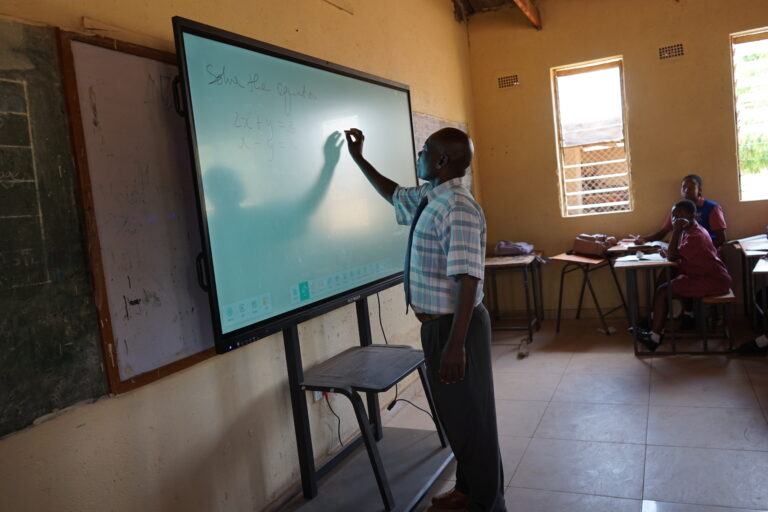
The school has established a model for agricultural innovation, where its egg-producing poultry project has become a cornerstone of an income-generation strategy that funds technological advancements. The proceeds from the sale of eggs, vegetables, and maize have been used to upgrade facilities, most notably facilitating the installation of Starlink internet services.

The deputy head of Chigwedziva High School, Benjamin Machuwaire, highlighted the multifaceted benefits of the initiatives. “We recently harvested beans that will be used in the school feeding programme, which helps boost attendance. The income has also allowed us to install Starlink and cover the monthly subscriptions, significantly improving learning in this digital era,” said Machuwaire.

The agricultural projects extend beyond funding, directly addressing local food security. Agriculture teacher Ruben Baloyi, who supervises the poultry project, explained its broader impact.

“Our poultry project is more than just egg production; it is teaching learners valuable farming skills while providing affordable eggs to families in our community. The revenue goes straight back into improving the school, and Starlink is a major achievement made possible by this work,” said Baloyi.

Another agriculture teacher, Benjamin Manzanga, who oversees horticulture and maize fields, noted that the gardens have become a lifeline for the area and a source of employment.

“We grow a variety of vegetables for local sale, and our maize production supports both the school feeding program and nearby households. This work is crucial for food security in a drought-prone region. We have also created jobs for two local community members who monitor the garden and poultry,” said Manzanga.

The school’s efforts have garnered strong community support. Happy Bennet, a local villager and chairperson of the School Development Committee, praised the initiative for reducing food shortages and providing practical skills.

“The children are gaining practical skills in poultry and crop farming. We are now buying fresh eggs and vegetables right at our doorstep, which saves us the cost of traveling to Chiredzi town,” said Bennet.

Nyikavanhu High School in Masvingo District is also contributing to the agricultural revival, despite facing significant challenges. Located in Ward 29 under Chief Nyajena, the school focuses on horticulture but relies on rain-fed maize production due to limited water sources.

Agriculture teacher Joyce Munongo detailed the constraints mainly water supply that limits the school’s potential.

“Water shortage is our major challenge here. We use ZINWA water and have a solar-powered borehole for supplementary irrigation, but its capacity is low. This has forced us to focus mainly on horticulture and use rainwater for green mealies. Despite this, our students are learning resilience and innovation through farming,” said Munongo.

The efforts of Chigwedziva and Nyikavanhu High Schools underscore a growing trend where educational institutions are leveraging agriculture to combat hunger, enhance education, and uplift their communities, demonstrating that innovation and commitment can yield prosperity even in challenging environments.

Gutu Chief forces villagers to fund late chief’s memorial, police toilets

0

By Brighton Chiseva

Villagers in Chief Chimombe’s area of Gutu find themselves caught between a rock and a hard place, forced to contribute towards the late chief’s memorial service and tombstone unveiling, while also being levied for the construction of toilets at Bhasera Police Camp.

The dual demands have sparked outrage among community members who are already grappling with a harsh economic environment that has seen most households struggling to meet basic needs.

Chief Chimombe was not available for comment but one of his aides and messanger Rodger Marozhe, confirmed thaa the chief had indeed requested contributions from the villages. He, however, downplayed the demand, stating that participation was voluntary.

“Chief Chimombe is not forcing anyone to contribute. He only asked those who are able to participate in the Manyaradzo (memorial ceremony) for his late father. So each village is requested to pay US$12. Some of the contributions are also meant for the construction of toilets at Bhasera Police Station,” said Rodgers.

Gutu District Development Coodinator  (DDC) Chiedza Tafirei could not be reached for comment and her cell was not reachable and at times went unanswered.

However, Masvingo Permanent Secretary in the Minister of State’s office Dr Addmore Pazvakavambwa said he wanted to get facts on the ground to before commenting on the matter.

‘I will get in touch with relevant authorities to establish the facts. I cannot say what is happening is wrong or right before getting the correct information on what is on the ground. We may say its unfair but that could be the tradition in that area, so I have to establish that first and get back to you,” said Dr Pazvakavambwa.

Disgruntled village heads who spoke to TellZim News said each village under Chief Chimombe’s jurisdiction was been instructed to contribute US$5 plus a six-pack of Chibuku Super beer for the memorial ceremony of the late chief, while also raising separate funds for toilet construction at the local police camp.

“This is unbearable we are being drained from all directions. We are supposed to collect council taxes, now the chief’s office wants money for a tombstone and police toilets from the same villagers who also need to pay school fees among other monetary requirements. Where are we supposed to get all this money when the villagers can barely afford decent meals,” said one village head.

The demands come at a time when many families in the area are struggling to make ends meet amid rising prices of basic commodities and agricultural inputs. Several villagers expressed frustration at what they termed “never-ending contributions” that have become a burden on already stretched household budgets.

Another village head said the demands were creating acrimony between them and their subjects who feel that the leaders are part and parcel of the scheme to milk them.

“Villagers are now turning against us, between the council taxes, clinic fees, school development committee contributions, and now these new demands, they now feel we are part of the problem,” said another village head.

Sources said the Chief was once removed from the same position by his late father after allegations of misusing and abusing villagers. They allege that he once asked for five dollars again to construct the chief’s court when he was acting on his then old father’s behalf.

He was later removed from the post and was replaced by a female cousin who was not from the clan and that angered fellow clansmen who removed her replacing her with the former since he is the oldest son to the late chief.

“The same chief who failed to account for previous contributions for the community court now wants more money. How can we trust him with our money when previous projects remain unfinished,” said one villager

However, villagers dispute the voluntary nature of the contributions, with some fearing victimization if they fail to comply. “When the chief’s office asks for money, it’s never really optional. Those who don’t contribute risk being sidelined when they need assistance with documents or disputes,” revealed one villager who preferred anonymity.

Local councillor for the area, Tinashe Mupindu, acknowledged the villagers’ concerns. “While community development is important, we must be mindful of the economic burden on our people. I urge all authorities to consider the timing and necessity of such contributions,” Mupindu said.

The economic pressure on villagers is compounded by multiple mandatory payments including property taxes, development fees, and educational levies. Many households report having to choose between meeting these obligations and purchasing basic food items.

A teacher at a local school, who spoke on condition of anonymity, confirmed the impact on families. “We see children coming to school without proper uniforms or books because their parents have to prioritize these various contributions. It’s creating a difficult situation for both parents and schools.”

The pattern of repeated financial demands has raised questions about accountability and transparency in the handling of community funds. Previous projects, including the stalled community court, remain fresh in villagers’ memories, creating skepticism about new initiatives.

As the debate continues, the villagers of Gutu face the difficult choice between fulfilling their traditional obligations to the chieftainship and meeting their families’ basic needs in an increasingly challenging economic environment.

The Madyira chiefs council is expected to appoint a substantive chief soon, though villagers remain skeptical about whether this will bring any meaningful change to their current predicament.

An Open Letter to Big Brother Strive Masiyiwa 

0

Dear Big Brother Strive Masiyiwa 

Zimbabwe  is  home to visionary figures who have risen to global prominence, and you, my brother Strive Masiyiwa, stand tall among them. Your recent $720 million decision to build five Artificial  Intelligence (AI) factories across Africa is commendable and ground breaking, but it leaves many Zimbabweans, myself included, with a bittersweet feeling: Why is Zimbabwe not part of this transformative initiative? 

As the founder of Cassava Technologies, you have been a source of inspiration for decades. You built Econet Wireless into one of Africa’s largest telecom groups and expanded into fields like cloud computing, fintech, and artificial intelligence. We Zimbabweans are immensely proud of your achievements, but, as the old adage goes, “charity begins at home.” It is only natural for us to question why your latest venture excludes Zimbabwe—the very soil that nurtured your dreams and talents. 

Why Zimbabwe Needs You Now  Strive.

Zimbabwe is grappling with a myriad of challenges like any other developing country: unemployment, technological stagnation, and economic instability, among others. Our youth, in particular, are desperate for opportunities to unlock their potential and contribute meaningfully to the nation’s development. Brother Strive, by investing in AI infrastructure in Zimbabwe, you could empower thousands of young minds and enable them to become global players in the digital economy. 

Our National ICT Policy emphasizes the need to embrace information and communication technology (ICT) as a driver of development. However, without the necessary infrastructure to support innovation, this vision risks remaining a distant dream. Imagine the transformative impact of an AI factory in Zimbabwe: jobs would be created, researchers would access cutting-edge tools, and startups could thrive without relying on costly overseas outsourcing. 

Your leadership and resources could help Zimbabwe bridge the gap between aspiration and achievement. By prioritizing your homeland, you would help move Zimbabwe from step one to step two, aligning with our Vision 2030 goals of becoming an upper middle-income economy. 

The Role of a Big Brother 

You have earned your place on the global stage, but with great success comes great responsibility. Zimbabwe continues to look up to you as a guiding light. However, your decision to prioritize other African countries over Zimbabwe feels like a missed opportunity to play the role of a big brother. Yes, your mission to empower the African continent as a whole is noble, but Zimbabwe’s unique challenges require urgent attention from Zimbabweans,you inclusive my brother.. Local talent is brimming with ideas, yet the country lacks  the infrastructure to turn those ideas into reality. By establishing an AI factory in Zimbabwe, you would not only address unemployment but also inspire a new generation of innovators who could propel Zim to global heights. 

While I personally appreciate that the   AI factories also built in part by Cassava Technologies aim to provide local AI infrastructure in major African markets  and are also expected to bolster Africa’s position in the global AI arena and reduce dependency on overseas countries , big brother Strive,,the same facilities could also  be used to  reduce Zimbabwe’s dependency especially on neighboring countries since we are informed of the construction of  your first AI factory already in progress in South Africa. My heart personally bleeds on the thinking of Zimbabweans playing beggar and refuge game to  access ‘’their  own resource  produced by their own Strive‘’ from a neighboring country.

A Call to Revisit Your Decision 

Your vision for a “Sovereign AI Cloud” that allows African countries to host and run their own AI systems locally is ground-breaking. But Zimbabwe must be part of this vision. I urge you, as a fellow Zimbabwean and a senior educationist, to revisit your decision and consider adding Zimbabwe to your list of countries for AI factories. Investing in Zimbabwe’s digital future will yield immeasurable returns—not just for the country but for the continent as a whole. 

Your decision to exclude Zimbabwe is also a reminder of the work we must do as a nation to create an environment that attracts investment. But it is equally a call to you to remember your roots and the dreams of millions of Zimbabweans who look up to you. 

Zimbabwe Deserves the Best 

Brother Strive, Zimbabweans have been the backbone of the Econet economic empire, supporting it from the ground up. It is only fair that Zimbabweans be seen to benefit directly from this success. While we appreciate your corporate social responsibility efforts, shown especially by promoting education in Zimbabwe, now is the time for you to again plough back and thank your kinsmen in style. Zimbabwe should not come as an afterthought—it should be your foremost priority. After all, home is sweet home, and Zimbabwe deserves nothing but the very best from one of its brightest sons-Strive.

Moving in Line with Global Standards 

As we strive to achieve Vision 2030 and move in line with global standards, we need leaders like you, Brother Strive, to lead the charge. Zimbabwe’s future depends on the contributions of its sons and daughters. You, Strive Masiyiwa, have the power to transform Zimbabwe into a hub of technological innovation.  Let this be a gentle but firm reminder: Zimbabwe needs you. We look up to you as one of our own, and we hope you will answer the call to prioritize your homeland. Together, we can achieve greatness. 

With respect and hope,

Aleta Makomeke

Opinionist and Senior Educationist.

aletamak@gmail.com