Home Blog Page 22

Rejected by ex-wife, man drinks petrol, sets self-ablaze

0

By Ndinatsei Mavodza

CHIVI – A 35-year-old man from Madamombe Village, Edwell Mukuza, died after setting himself on fire following an emotional confrontation with his ex-wife, casting a shadow over the local community.

Masvingo Provincial Police Spokesperson Inspector Kudakwashe Dhewa confirmed the incident, which occurred in Muzvidziwa Village on September 26, 2025, around 5 PM.

“I confirm the death of Mukuza, who died after setting himself ablaze over a misunderstanding with his ex-wife on September 26, 2025,” said Insp Dhewa.

The tragedy unfolded when Mukuza, accompanied by his friend Aldo Zengeya (31), visited his ex-wife to collect his belongings. Upon arrival, he found her waiting outside with his bags already packed.

Distraught by the encounter, Mukuza reportedly hugged his ex-wife and asked why she hated him so deeply. He then requested privacy, asking Zengeya to step away.

In a sudden turn, Mukuza drew a knife and attempted to attack his ex-wife, who managed to block the assault and escaped. Zengeya intervened and retrieved the knife.

Mukuza then rushed to his vehicle, retrieved a five-liter container of petrol, doused himself in fuel, and ingested some of it. Before anyone could stop him, he ignited the fuel with a cigarette lighter, leading to fatal burns.

Police were notified after Mukuza had already succumbed to his injuries. His body was taken to Chivi District Hospital for a post-mortem examination as investigations continue.

This incident highlights a growing concern over suicide linked to domestic conflicts in the province, underscoring the urgent need for mental health support, counseling services, and proactive community interventions to address underlying emotional crisis.

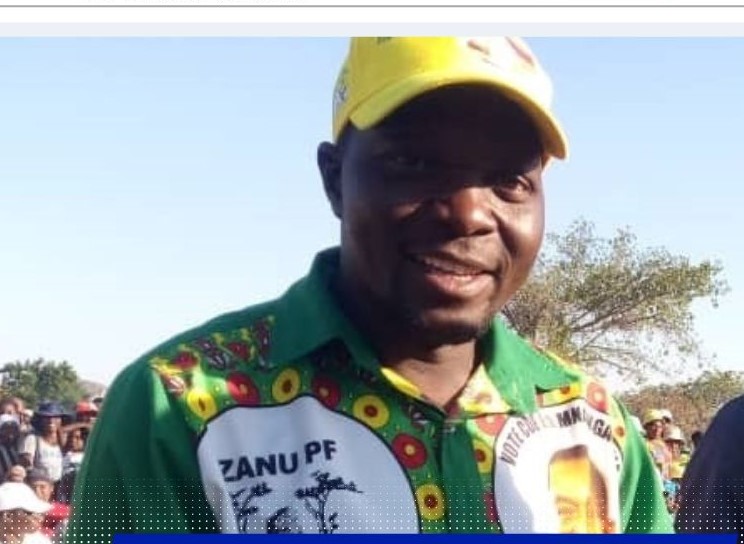
Army recruits only Zanu PF supporters- Major General Tapfumaneyi

0

By Brighton Chiseva

ZAKA – In a revealing address that has cast the Zimbabwe National Army’s recruitment policies in a distinctly political light, Major General Walter Tapfumaneyi openly declared that the military systematically excludes opposition supporters from enlistment, prioritizing instead those from ZANU PF-aligned families.

Speaking during the ZNA Masvingo Province Traditional Leaders’ Day at Chief Nhema’s homestead, Maj. Gen. Tapfumaneyi detailed a vetting process that explicitly considers political affiliation as a key criterion for military service.

“We conduct background checks to determine if your family supports Musangano (ZANU PF) or is among the lost (opposition). The ruling party, led by President Mnangagwa, is ZANU PF. If you flock with the lost, you will be recruited when they come into power,” said General Tapfumaneyi.

The senior army officer justified the approach saying there was noone would go hunting with a neighbors’ dogs whose traits he does not know implicitly characterizing opposition supporters as unreliable for military service.

“The ruling government is led by President Mnangagwa’s ZANU PF party, so we don’t want to lie to each other. If you go hunting, you cannot use your neighbour’s dogs; they may end up dining with the hare that you are hunting. So if your family is among the lost, you will get into the army when the lost gets into power,” he said.

The Major General, who previously served as the Deputy Director-General of the Central Intelligence Organisation (CIO) and as Permanent Secretary, played a key role in the 2023 general elections as the head of the Forever Associates Zimbabwe (FAZ),  an organization that monitored polling stations amid opposition allegations of electoral interference. His recent return to army leadership position underscores his continued influence within the country’s security apparatus.

The general also took time to acknowledge and thank the ZANU PF leadership in Masvingo Province, noting that they supported the army very well, further cementing the perceived political alignment of the military institution.

At the same event, Masvingo Provincial Affairs and Devolution Minister Ezra Chadzamira acknowledged Tapfumaneyi’s crucial role in ensuring ZANU PF’s victory in the 2023 elections, praising his dedication to the party’s success.

Minister Chadzamira highlighted the army’s role in national development, noting their involvement in constructing bridges, schools, and clinics, as well as providing medical services. He framed these initiatives as part of President Mnangagwa’s programs, emphasizing that the Commander-in-Chief of the Zimbabwe Defence Forces was the driving force behind these efforts.

“The army used to stay in barracks but now they are seen aiding the communities through constructing bridges, clinics, schools among other things. They also do outreach programmes where they bring health services to the communities for free,” said Chadzamira.

The Minister also provided historical context for the army’s relationship with traditional leaders, tracing it back to biblical times where there were rulers and the army, asserting that such collaboration was essential for national development.

Minister Chadzamira also announced the imminent distribution of presidential inputs, warning community members against selling farming inputs for beer money.

“The presidential inputs will be distributed soon, so we urge you to plant and use the fertilizers. Do not sell the inputs at the shops to get money for beer,” said Chadzamira.

The host, Chief Nhema, born Rangarirai Bwawanda, expressed gratitude for the army’s engagement with traditional leaders, acknowledging the importance of this collaboration for nation-building.

Chiredzi School learners write exams in Zaka

0

By Beatific Gumbwanda

In a stark illustration of infrastructural challenges in the district, Zvamagamba Primary School, a satellite institution under the Chiredzi Rural District Council, is currently conducting its Grade 7 examinations at Dekeza Primary School in the neighbouring Zaka District.

The school’s status as an unregistered examination centre was highlighted just a few weeks ago during a tour of developmental projects organized by the Chiredzi Rural District Council.

During that tour, Chiredzi RDC Chairperson Aspect Mashingaidze urgently called on the school’s management to initiate the ZIMSEC registration process to secure the institution’s autonomous developmental future. 

Despite this call to action, the situation remains unresolved, forcing learners to sit for their exams elsewhere.

The predicament is not unique to Zvamagamba. During the recent Full Council Meeting, Chiredzi RDC Chief Executive Officer (CEO) Ailes Baloyi reported that almost 32 schools across the district were still writing examinations at other, established centres while they await registration with the Zimbabwe Schools Examination Council (ZIMSEC).

“Twenty-two schools have qualified for registration, which will reduce walking distances for learners during examination periods. For example, Chilotlela Primary School in Ward 12, Justin Chauke Secondary School in Ward 11, and Marambakuzara Primary School in Ward 12 are among those schools,” said Baloyi.

However, the path to registration is fraught with obstacles. ZIMSEC requires schools to meet specific standards, including proper school buildings, adequate staff housing, a reliable potable water source, and approved sanitation facilities. 

A core challenge is that many of these schools continue to operate and enroll leaners despite not yet meeting these essential infrastructure benchmarks.

When contacted for comment on why many schools were not registered, Chiredzi District Schools Inspector (DSI) Micho Hove deferred to the individual schools, stating that each had its own unique circumstances. 

“Thank you for reaching out. You may contact the concerned centre to find out why they are not yet a registered ZIMSEC centre,” Hove stated.

The list of unregistered schools is extensive, including Zvamagamba, Zinevi, Nyabogwe, Crown Range, and over two dozen others, spanning both primary and secondary levels.

In a recent development aimed at improving its chances of registration, Zvamagamba Primary received more than 300 bags of cement from Chiredzi North Member of Parliament, Roy Bhila, earmarked for the construction of teachers’ houses. Such interventions highlight the community and political will to resolve the problem, but also underscore the significant resource gaps that many schools still face.

Bikita residents demand sewer system, serviced stands in 2026 Budget

0

By TellZim Reporter

Residents of Duma in Bikita have called upon the Bikita Rural District Council to prioritize developing a proper sewer reticulation system and servicing residential stands in its 2026 budget.

During a recent council budget consultation meeting, the Bikita Residents and Ratepayers Association (BIRRA) emphasized the urgent need for these essential services. BIRRA representative Komberi Mungazi warned that the absence of both sewer infrastructure and clean water poses serious health risks to the community.

“Our request to council is to consider the provision of a clean water system and proper sewer reticulation in Duma. These are essential to safeguard public health. Council should also ensure that stands are fully serviced before they are sold, to prevent the continuation of these challenges,” said Mungazi.

In a separate interview with TellZim News, an anonymous resident echoed these concerns, revealing that only limited areas in Duma have access to clean water and sewer systems.

“Only the houses built in the 1990s and early 2000s, particularly in the old Duma location and the area near the chief’s hall, were properly serviced. About three-quarters of the new stands in Duma still lack these basic amenities,” the resident said.

The resident explained that most people rely on unregulated wells and Blair toilets, creating severe risks of groundwater contamination.

“We dig our own wells if the water table is accessible, then build Blair toilets at the back of our homes. Some residents have managed to drill boreholes, while a few get water from ZINWA’s temporary lines. But the situation is alarming as people can be drinking contaminated water, because there is no regulation on the placement of wells and toilets,” said the resident.

Residents are now appealing to the council to take decisive action in the upcoming budget to address these long-standing service delivery gaps, which they say have been neglected for too long.

The issue of parceling out unserviced stands has become common among many local authorities and land barons. Masvingo’s Victoria Ranch suburb residents recently submitted a petition to the Parliament of Zimbabwe, calling for an urgent investigation and intervention into the deplorable state of social service delivery in their area, which also lacks basic infrastructure including piped water, sewer systems, and refuse collection services.

Residents rely on boreholes which are not regularly testedand eco-san toilets that have become unsanitary and dysfunctional. The petitioners urged Parliament to treat the matter with urgency and compassion, given the humanitarian and constitutional concerns raised, and to establish a Parliamentary Portfolio Committee Inquiry into the developmental status of Victoria Ranch and similar settlements nationwide. They also called for immediate interventions to provide clean water, sanitation, refuse collection, borehole testing, and road grading.

Junior High Robotics Team Steals limelight at Masvingo Agricultural Show

0

By TellZim Reporter

Junior High School’s robotics team wowed judges and visitors at the just-ended Masvingo Agricultural Show, taking first place in the robotics display category with a trio of impressive, tech-driven projects, all developed by form one learners.

The team, part of the school’s Artificial Intelligence, Robotics, and Programming Club, showcased projects that tackle real-world problems using cutting-edge technology.

Club patron Harmony Nyamhunga Mlambo applauded the learners for their innovation and focus.

“At Junior High School, we do not just teach,  we train learners to build solutions using robotics and software. Our motto is ‘Catch them young.’ Science is endless, and our learners are constantly improving their projects,” said Mlambo.

The winning projects include a Robotic Medical Assistant designed to assist surgeons during operations and can carry medical tools, respond to voice commands, and follow a doctor using an ESP32 camera — mimicking human vision.

““The Robotic Medical Assistant  is a robot created to assist medical specialists when performing surgery. The robot is responsible for assisting them to carry medical equipment during operations and this means that there is no need to have nurses around the doctor. Nurses can now do other tasks while the robot does the same tasks. The robot is made up of different components, for example an ESP32 camera that can act as a normal human eye, allowing the robot to follow the doctor wherever he is. There is a microphone that will allow the doctor to give instructions to a robot. The robot can decode the instructions and do exactly what it is instructed to do. It has some wheels so that it can move from one point to the other and an obstacle avoidance sensor so as to avoid accidents while moving. Both the Judges and the Minister were impressed seeing Form 1 being creative and innovative to such an extent,” said Mlambo.

The second project, Mediconnect, a mobile application which delivers accurate medical information and personalized support to patients particularly designed to assist folks in rural communities where access to medical services might be a challenge.

“Mediconnect is a mobile application software designed to help our community with accurate medical information and personalized support. The application communicates with the server that acts as the information hub. This application is important especially in rural areas where people might  not have money to buy medicine from pharmacies.

“It has a comprehensive medical database with reliable wealth information about various diseases and their treatments. It provides suggestions for home remedies for example if someone is suffering from influenza, the mobile application can suggest home remedies for the patient. This application has a voice recognition system to assist those who cannot write and read and there is also a language translator which converts one language to the other for instance English to Shona so that the elderly can understand and use the mobile application,” said Mlambo.

The third project, Point Rush, is an innovative environmental app that uses geo-location and camera tech to detect litter hotspots. Users earn points, convertible to real cash,  by cleaning up those areas. A smart before-and-after image system verifies clean-ups before awarding rewards.

“The system can detect areas where there is litter using the Geo Location camera. Users of the system can get points after picking litter and those points are converted into real cash. For one to install the application on his/her phone, they should pay a subscription fee which will be channeled towards rewarding those who are picking litter from the environment. The system can actually supervise whether litter has been picked up or not. It uses a GeoCamera to detect where litter is and also to capture areas after litter has been picked up. It compares the 2 pictures before awarding points,” he said.

Professor Arthur Mutambara to launch new AI book in Masvingo

0

By Brighton Chiseva                                                              

Masvingo city is abuzz with anticipation as Professor Arthur Mutambara, former Deputy Prime Minister of Zimbabwe and a leading voice on artificial intelligence in Africa, prepares for a two-day intellectual engagement in October, bringing a message of urgent technological adoption tempered with strategic caution.

On October 6, 2025, Prof. Mutambara will launch his latest book, “Deploying AI to Achieve the UN Sustainable Development Goals,” at the Civic Centre’s Charles Austin Theatre at 1900 hours.

The event, which is free and open to the public, will be followed by a public lecture the next day at Great Zimbabwe University titled “Why and How Africa Should Embrace the AI Revolution” from 10:00 AM to 12:30 PM at the Moot Court, Herbert Chitepo Law School.

Speaking to TellZim News Prof Mutambara said key takeaways from the Public Lecture were understanding why it is called an AI Revolution and that Africa was not guaranteed to benefit from it.

“The key takeaways are that attendees would understand why it is called the AI revolution, It is not guaranteed that Africa will benefit from the Revolution, the continent must prepare and the details of the preparations,” said Prof Mutambara.

He also said people will understand the potential applications of AI in Africa, dangers and risks of AI to the continent.

Commenting on the significance of these events to TellZim News, Media lecturer and researcher Dr. Last Alfandika expressed particular excitement about Prof. Mutambara’s engagements.

“As a researcher in Journalism, Media and Communication, I am particularly excited about Prof. Mutambara’s forthcoming book launch on October 6 at Charles Austin Theatre and the public lecture to be held the following day at Great Zimbabwe Law School on artificial intelligence.

“His focus on deploying AI to achieve the United Nations Sustainable Development Goals is both timely and relevant, especially for Africa. The continent is at a crossroads: while we face pressing developmental challenges, we also have a unique opportunity to leapfrog by embracing emerging technologies,” Said Dr. Alfandika.

Dr. Alfandika emphasized the transformative potential of AI beyond mere economic metrics.

“What I find most compelling is not just the promise of AI for economic growth, but also its potential to transform communication, health, education, agriculture, and governance in ways that directly impact ordinary people,” said Dr Alfandika.

However, the media scholar also stressed the importance of contextualized AI adoption saying its adoption should be rooted in ethics and inclusivity.

“The conversation about AI in Africa must be rooted in ethics, inclusivity, and our own contextual realities. We need to ensure that AI adoption empowers communities, protects human dignity, and reduces rather than widens inequalities,” he said.

He said attendees at the public lecture can expect crucial insights into Africa’s AI future, including understanding why this moment constitutes an AI revolution, recognizing that Africa’s benefit isn’t guaranteed, learning specific preparations the continent must make, exploring AI applications tailored to African contexts, and understanding the unique dangers and risks AI presents to the continent.

“Prof. Mutambara’s engagement is therefore important as it opens up a critical space for dialogue about why and how Africa should embrace this revolution, and how our institutions, universities, and policymakers can align AI with the continent’s development aspirations,” said Dr. Alfandika.

In his new publication by Springer Nature, Prof. Mutambara makes a compelling case for global AI adoption, stating: “The staggering, unprecedented and transformative power of Artificial Intelligence must be harnessed to address socio-economic and political problems worldwide.”

While acknowledging the genuine risks presented by the technology, the former Deputy Prime Minister emphasizes that “prioritising these prospects is far more important than being consumed and overwhelmed by the potential risks, vulnerabilities, and uncertainties. He insists that“Artificial Intelligence must be utilised to enhance the quality of life for all Earth’s inhabitants,” calling for “relentless determination, laser-like focus, and unwavering effort” to achieve this global ambition.

The book provides a comprehensive framework for how AI can accelerate achievement of all 17 UN Sustainable Development Goals, while addressing critical concerns about digital imperialism, data colonialism, and technological exclusion that particularly affect emerging economies. Prof. Mutambara puts “a premium on decoloniality in AI systems and democratizing AI technology” throughout his work.

With Prof. Mutambara’s unique combination of governmental experience and technological expertise, both events promise to provide thought-provoking insights for students, academics, policymakers, and technology enthusiasts alike, offering a platform to explore how Zimbabwe and Africa at large can harness artificial intelligence for sustainable development while navigating the technology’s complex challenges.

Nearly half of Zim adult population overweight and obese

0

…Masvingo leads with shocking 55.6%

By TellZim Reporter      

MASVINGO – Shocking statistics from the recently released Zimbabwe Livelihood Assessment Committee (ZimLAC) 2025 Urban Livelihoods Assessment Report have revealed that 49.5 percent of Zimbabwean adults aged between 18 to 59 years were overweight or obese, with Masvingo Province recording an alarming 55.6 percent prevalence rate, the highest in the country.

According to the report, “Nationally, 49.5 percent of adults aged 18-59 years were overweight and obese. Masvingo (55.6 percent) had the highest proportion of adults who were overweight and obese.

Having excess fat deposits in the body leads to serious health consequences such as cardiovascular disease (mainly heart disease and stroke), type 2 diabetes, musculoskeletal disorders like osteoarthritis, and some cancers (endometrial, breast and colon).”

The statistics for Masvingo Province show a worrying increase from 54.9 percent in 2024 to 55.6 percent in 2025, indicating a growing health crisis in the province.

 Nationally, 45.5 percent of adults were classified as having normal weight, marking a slight increase from last year’s 44.8 percent. However, 5.0 percent were rated as underweight, a marginal decrease from last year’s 5.2 percent.

Women topped the statistics for obese women nationally with 27.4 percent while men accounted for 6.1 percent. Women also accounted for 30.7 percent of overweight adults within the same age range of 18-59 years while men accounted for 23 percent.

Only 38.5 percent of women had a normal body mass index while men had 61.9 percent.

While Bulawayo has the highest proportion of people with normal weight at 47.7 percent, the province also recorded the highest number of people with below normal weight at 7.4 percent, highlighting the complex nutritional challenges facing different regions.

Obesity has become a growing public health crisis globally, with statistics showing that about 880 million people worldwide were obese in 2022. World Health Organisation (WHO) data indicates that one in eight people across the world were living with obesity, while 2.5 billion adults were overweight in 2022.

The public health crisis has also become a concern among children, with an estimated 35 million children under the age of five years affected globally. In Africa, the number of overweight children is said to have increased by 12.1 percent, mirroring the troubling trend seen in Zimbabwe.

The rising trend of overweight and obesity in Zimbabwe, particularly in Masvingo Province, highlights the urgent need for comprehensive public health interventions and awareness campaigns to address this growing health challenge before it escalates further.

Challenges being faced by the Government in recruiting and retaining talented staff

0

By S Zangairai

People are the greatest assets on which competitive advantage is built, whether in the public or private sector. In the words people have become inimitable assets, meaning that their skills cannot be imitated by competitors. Talented employees or high caliber employees are the most valuable asset of any organization. Finding the right people and putting them at right jobs is the most important challenge for any organization, and the government is not spared either. This is supported by the concept of Human Resource planning which entails that the human resource requirement is forecasted. It involves functions like, recruitment, selection, induction etc. That being said, the main thrust of this article is to discuss the challenges being faced by Zimbabwean government in recruiting and retaining talented employees. Practical examples of government ministries and departments shall be provided as a way of bringing a clear picture of the ensuing challenges. A theoretical and conceptual framework of the challenges shall be provided in the discussion especially the PESTILE challenges which have proved to be the major ones. The discussion shall be guided by the processes of recruitment through the systems approach.

I feel that I would not have done justice to my presentation if I don’t define these key words, recruitment and retention. I define recruitment as the process of searching prospective employees and stimulating them to apply for jobs in the organization. Its aim is to increase the number of applicants and the unsuitable ones are automatically eliminated in the selection process. Though the function of recruitment seems to be easy, a number of factors make performance of recruitment a complex one.  Some of the recruitment objectives include; to attract people with multi-dimensional skills and experiences that suits the present and future organizational strategies, to infuse fresh blood at all levels of the organization, to develop an organizational culture that attracts competent people to the company and to search or head hunt people whose skills fit the company’s values. Retention, simply put, is the ability of an organisation to retain its employees, or keeping staff in which the organisation has invested.

Challenges of recruiting and retaining talented employees in the Public Sector

The challenges of attracting and retaining talented manpower exists in all sectors of business activity, be it consultancy, manufacturing or the service sector, with each sector developing its own perspectives based on its experiences. A sharing experience from the companies in the engineering, chemicals, pharmaceuticals, consumer goods, consultancy and information technology sectors revealed that though the challenges of attracting and retaining talent in such a range of companies differed in the intensity and type, a common thread seemed to link the divergent spectrum. The impact of the attraction/retention strategies could be presented in the form of eight vertices i.e., work culture, job/career, team, compensation, titles, golden handcuffs, individual, values etc. There is no mantra to retain the talent. It is important to capture the knowledge and talent in the organization by having the systems of documenting. The organization must have to leverage the urge of employees to learn as a powerful retention tool.

The critical role of talented employees in government includes leveraging of knowledge for attaining objectives of productivity and competitiveness of a national economy through social capital competitiveness, leveraging knowledge for improving internal processes, formulation of sound government policies and programs and efficient public service delivery for increased productivity. Hiring talented individuals is critical to an organization’s success. But in order to hire the most talented, they must first be recruited. Recruiting employees can be a challenging task, so recruiters have to make important decisions, including whom to target, what message to convey and how to staff recruitment efforts. If not done correctly, an organization’s recruitment efforts can produce job applicants who are unqualified, who lack diversity or who may decline job offers. These same applicants may be prone to turnover if hired. A poorly designed recruitment process can miss attractive job candidates, including those who work for competitors.

Challenges being faced by the Zimbabwean government range from manmade to natural and this have resulted in the government failing to attract the required skills hence compromising the quality of service in all government institutions. According to Ncube and Maunganidze (2014), ‘militarization of parastatals and public enterprises as well as local authorities is one of the challenges that has contributed to failure of attracting talented people in the government leading to the creation of a culture of patronage, corruption and looting. As a result of this, it seems most organisations are headed by incompetent, unqualified and inexperienced staff. (ZBC, Air Zimbabwe, NSSA, NRZ, local authorities, GMB; just to mention a few). Qualified and talented employees without a military background therefore are neglected hence affecting the performance of the departments. If government was not ‘militarising’ positions, it could have  been attracting talented employees such as those heading companies like Econet, Mimosa, Barclays bank, Stanchart, etc, which are led by talented, competent and qualified employees.

Another challenge faced by the government is liquidity crunch bedeviling the economy. The true facts are that the government is financially crippled to attract the best talent on the market. Zimbabwe experienced an economic downturn over the past decades, which impacted negatively on the wellbeing of the population.  The economic downturn therefore meant less revenue generation and decreased funding for most government programs. The escalating economic challenges peaked from year 2008 resulting in huge staff turnover and brain drain of specialists in the government service. In order to rehabilitate the country from the economic downturn, an inclusive government was formed in 2009.  One of its immediate tasks was “Getting Zimbabwe Moving Again”. Within a few weeks, the new Government launched the Short-Term Emergency and Recovery Programme (STERP) as a strategy for rehabilitating the country. However all these measures have failed to market the government’s working environment since it failed to attract the required talented employees.

To be continued next week!

Zimbabwe smallholder farmers set to enter global markets

0

By Virginia Njovo

Over 350 smallholder farmers in Masvingo, Manicaland, and Matabeleland South are set to access global markets through an initiative linking irrigation schemes with private sector buyers, financiers, and technology providers, sharing opportunities for contract farming and value chain integration.

Supported by the Government of Zimbabwe through the Ministry of Lands, Agriculture, Fisheries, Water and Rural Development, the Green Climate Fund (GCF), and the United Nations Development Programme (UNDP), the ongoing programme aims to open doors for farmers to expand beyond local trade, boost incomes, and build climate resilience.

Climate Resilience Livelihoods (CRL) project manager Rungano Benza told TellZim News that the ongoing dialogue between the private sector on the global stage and smallholder farmers would benefit farmers in improving their livelihoods.

“These dialogues are a vital step in connecting smallholder irrigation farmers with private sector buyers, financial institutions, and input suppliers. By linking production with profitable markets, we are ensuring that farmers can sustainably increase yields, incomes, and resilience.

“More than 350 participants are expected across the three provinces, including irrigation management committees, local leaders, extension officers, and private sector partners ranging from insurers, banks, and microfinance institutions to input suppliers, off-takers, transporters, and climate-smart technology companies,” said Benza.

In a press statement released recently, UNDP said the initiative also aims to deliver benefits to both parties.

“By strengthening links with buyers, financiers, and technology providers, smallholder farmers will gain access to profitable markets, improve their irrigation practices, and adopt climate-smart technologies.

“This will boost yields, increase incomes, and enhance food and water security while ensuring women farmers are fully included in new opportunities. Beyond the farms, the programme will foster stronger value chain integration, create jobs, and establish long-term business partnerships that contribute to resilient livelihoods and inclusive economic growth,” reads part of the statement.

UNDP supported farmers in Zvinyaningwe Irrigation Scheme in Masvingo Rural and Pikinini Jamwanda in Mwenezi, among other schemes under the Building Climate Resilience of Vulnerable Agricultural Livelihoods in Southern Zimbabwe Programme.

In July this year, farmers in Masvingo District gathered at Makoholi Research Institute, where they networked with private sector players in the province, who are believed to be crucial in breaking marketing barriers.

No inputs for Peri-urban farmers this year

0

… As pfumvudza programme targets 3 million rural farmers

By TellZim Reporter

Zimbabwe is targeting assistance for three million rural farmers in the 2025 summer cropping season with inputs, while peri-urban farmers have been excluded from this year’s programme.

This was revealed by the Ministry of Lands, Agriculture, Fisheries, Water and Rural Development Permanent Secretary, Prof. Dr. Obert Jiri, in a statement ahead of the summer cropping season, which he said is anticipated to be better than the previous season.

“This season we are focusing on four programmes, with Pfumvudza targeting 3 million households. This year there will not be any support to peri-urban farmers, so it is predominantly for the rural beneficiaries,” said Prof. Dr. Jiri.

Prof. Jiri said the ministry was ready for the farming season, with both seeds and fertilizer available.
“Under the Pfumvudza programme, the government is ready; we have all the seeds in the country, and some of the seeds have started to be moved to our usual Grain Marketing Board depots.

“In terms of fertilizer, we have carry-over stock from last season, and it is available for farmers. We are also working with suppliers to ensure that we do not have shortages and do not delay in terms of delivery,” he said.

He implored farmers to adopt agro-ecological tailoring to ensure success, with farmers in regions four and five, as well as other parts of region three, encouraged to consider growing traditional grains. Those in regions one and two can grow maize, although they are also urged to consider traditional grains.

“We are following agro-ecological tailoring, where we are saying in regions three, four, and five, we are putting predominantly traditional grains. Farmers must grow what is appropriate for that region. In regions one and two, maize should be the predominant crop, but we also encourage those farmers to consider growing traditional grains because they do well,” he said.

Prof. Jiri also stated that farmers who honored the government’s request to return 10kg of grain would be given top preference in the distribution of inputs, in recognition of their commitment.

“Farmers who benefitted last year and have given their 10kg appreciation to His Excellency become the priority in terms of getting Pfumvudza inputs, of course after doing their holing out and mulching. Those dedicated and thankful farmers should get priority. It is all systems go as we wait for the start of the season,” said Prof. Jiri.

The country is anticipating a better season, with normal to above-normal rains expected.