Home Blog Page 21

Teenager dies after falling from electric pole

0

By Ndinatsei Mavodza

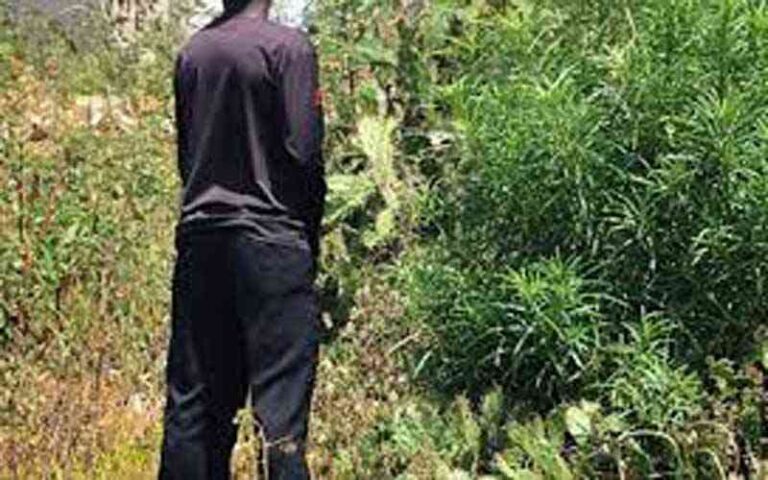
ZAKA – The community of Chisara Village in Zaka is in mourning following the tragic death of 14-year-old Joseph Chisasa, who succumbed to head injuries after falling from an electric pole.

Masvingo Provincial Police Spokesperson, Inspector Kudakwashe Dhewa, confirmed the incident, which occurred on October 4, 2025, around 1:30 PM.

Reports indicate that Chisasa was walking to visit his aunt with his 12-year-old brother when he suddenly climbed the electric pole and fell. His younger brother recounted that after the fall, Chisasa cried out in pain, was unable to stand, and began crawling.

The younger sibling immediately ran to alert nearby relatives, who rushed the injured boy to Mashoko Mission Hospital.

Tragically, Chisasa was pronounced dead upon arrival. A subsequent police examination revealed that he had sustained severe head injuries from the impact.

Inspector Dhewa urged parents and guardians to maintain close supervision of their children to prevent such accidents.

“We advise members of the public to avoid climbing trees, poles, and rooftops without safety harnesses, as it is dangerous,” said Inspector Dhewa.

This incident follows the recent drowning of two teenagers in Gutu, serving as another painful reminder of the need for constant vigilance to protect children from preventable accidents.

Man dies after slime collapse at mine in Mashava

0

By Ndinatsei Mavodza

MASHAVA – A 25-year-old miner, Talent Zamuchiya, died in a tragic accident at Cambrine Mine 21 in Mashava after being buried under a collapsing load of slime while loading rocks into a cyanide tank.

Masvingo Provincial Police Spokesperson Inspector Kudakwashe Dhewa confirmed the incident, which occurred on October 5, 2025, around 10 a.m.

“I confirm the death of Talent Zamuchiya from Chiteka Village, Rusape, who died in a mining accident that occurred on October 5, 2025, around 10am at Cambrine Mine 21,” said Inspector Dehwa.

Zamuchiya’s work involved loading rocks into tanks containing cyanide, a highly toxic chemical used to separate gold from ore.

Reports indicate that on the day of the incident, Zamuchiya arrived later than his colleagues, who had already completed their daily targets and left the site. While he was working alone, loading rocks into the tank, a mass of slime, a residual byproduct of gold processing, suddenly gave way and buried him completely.

Around noon, another worker arrived and noticed a hand protruding from the slime. Colleagues rushed to dig him out, but he had already died.

Police and mine management attended the scene, and his body was taken to Masvingo General Hospital for a post-mortem examination.

Inspector Dhewa urged mine operators to prioritize safety measures to prevent such incidents.

“Safety should not be a slogan at the workplace but must be practiced in real time to save lives and properties. Those in the mining industry are encouraged to adhere to safety protocols,” he said.

The incident comes barely exactly a month after a 30-year-old from Matsena Village under Chief Mpapa, Mwenezi died in a devastating mine shaft accident at Mahlasela Mazuruse Mine in Mwenezi.

The incident occurred on September 6 around 5 pm while the deceased Rushmore Matsena was being lowered into a 28-meter deep shaft in a bucket when the rope suddenly loosened, causing him to fall to his death.

Earlier this year, 3 people died at Boss Mine in Mashava after a mine shaft collapsed while the workers were underground.

Shock as 70-year-old Gutu man takes his own life

0

By Ndinatsei Mavodza

GUTU – The Gutu community was plunged into mourning and disbelief after a 70-year-old man from Gomba Village took his own life, in a tragic incident that casted a shadow over the entire district.

The now deceased Johnson Gama, was found dead on October 3, 2025. By passerby’s who were going to church

Masvingo Provincial Police Spokesperson Inspector Kudakwashe Dhewa confirmed the incident to TellZim News and said Gama left his home on October 2 to search for his lost cattle and returned.

“He successfully recovered the animals and returned home, but later left again without informing anyone of his whereabouts. His grandson was reportedly the last family member to see him alive around 8 PM that evening,” said Inspector Dehwa.

Inspector Dhewa expressed deep concern over the increasing suicide cases in the region, particularly among men, and urged community members to seek support during difficult times.

“Suicide is never an option. People should learn to share their challenges so that they can get assistance rather than resorting to suicide,” Dhewa emphasized.

Tragically, in the early hours of October 3, women en route to a Masowe apostolic church service discovered Gama’s body hanging from a Muora tree.

Police investigations confirmed he had used a wire to hang himself and the reason for his decision to end his life is yet to be established.

The body was transported to Gutu Mission Hospital for post-mortem examination as authorities continue to investigate the circumstances surrounding his death.

This incident follows another recent tragedy in Chivi, where a man died by suicide after being rejected by his former wife.

These consecutive cases highlight urgent need for enhanced mental health support and intervention strategies, especially for men in rural communities facing emotional distress.

VISET calls for decent work, formal recognition of informal traders

0

By TellZim Reporter

As the world commemorated World Decent Work Day on October 7, the Vendors Initiative for Social and Economic Transformation (VISET) issued a powerful statement urging the Government of Zimbabwe to prioritize the protection and formalization of informal economy workers, whose contributions to the national economy remain overlooked and undervalued.

In the statement, VISET highlighted the persistent challenges that informal workers face, including lack of formal recognition, limited market access, and inadequate social protection. The organization emphasized that the precarious nature of their work not only undermines their dignity but also heightens vulnerability to economic shocks and disasters.

The call comes against the backdrop of recent devastating fires that swept through trading areas in Mbare and Glenview Area 8, destroying merchandise and livelihoods. These incidents, VISET noted, underscore the urgent need for robust support systems and safety measures to protect traders from losing their means of survival.

“It is essential that the government invests in fire prevention and support mechanisms to ensure that traders in these vulnerable communities can sustain their livelihoods without the fear of losing everything to unforeseen disasters,” read part of the statement.

VISET further advocated for the formalization of the informal economy in line with the International Labour Organization (ILO)”s Recommendation 204, which encourages nations to adopt policies facilitating the transition from informality to formality. 

VISET said such measures would empower workers by enhancing their access to essential services, social protection, and growth opportunities.

“Creating pathways for informal workers to join the formal economy is a crucial step toward fostering inclusive economic development and ensuring that every worker can secure their rights and create a better future for themselves and their families,” read part of the statement.

The organization called on the Government of Zimbabwe to take decisive action toward ensuring decent work for all, particularly those in the informal sector. Key recommendations included implementing policies that promote formalization, improve market access, and establish comprehensive social protection systems.

The appeal resonates with many vendors and informal traders across the country, who continue to seek greater recognition, security, and inclusion in Zimbabwe’s economic framework.

Malipati agri-hub receives approval from Chiredzi RDC

0

By Beatific Gumbwanda

The Chiredzi Rural District Council (CRDC) has approved the Malipati Agri-Hub value addition project, an initiative spearheaded by the non-governmental organization SAT Wild.

The project aims to benefit the local community by promoting innovative livelihoods, agriculture, value chains, and community-led conservation, despite facing some opposition from other NGOs.

This came out during a recent full council meeting at Chiredzi RDC where the Chief Executive Officer Ailes Baloyi presented his third-quarter report, highlighting the Agri-Hub’s benefits across agriculture, tourism, and digitalization.

“SAT Wild is doing remarkable work in Malipati and is on track to establish a strong local economy. They are responsible for the Bosman Community Camp, a notable community camp in Gonarezhou National Park, as well as the Manjinji Pan,” said Baloyi.

He added that plans are underway to establish a value addition plant and that the community is already benefiting from the project.

“A value addition plant will soon be established, and community members have already started earning profits through the harvest of various cash crops, including maize, sugar beans, and sorghum. Additionally, vocational training centres will be set up,” Baloyi stated.

The approval follows a series of droughts that prompted the Malipati Community Development Trust (MCDT) to seek assistance from Sustainable Agricultural Technology (SAT Wild).

Together, they are developing a US$650,000 irrigated agri-hub and processing centre. The community has contributed land in Malipati for the project, linking it to broader environmental restoration efforts.

SAT, a Zimbabwean NGO with a history of implementing innovative solutions in agriculture and conservation, entered into a Public-Private Community Partnership with MCDT and the Chiredzi RDC.

The collaboration aims to address chronic poverty, food insecurity, and recurrent crop failures in the area, which is classified as Natural Region 5, a zone characterized by a dry climate and prolonged droughts.

The Agri-Hub project has been allocated 300 hectares of existing community fields, with the first phase piloted on 34 hectares. The phase includes a 34-hectare pivot irrigated by a 45 kW abstraction pump from the Mwenezi River, supported by a 45 kW solar array. The infrastructure also comprises a 3-kilometre, 315 mm mainline, a 960 m x 250 mm gravity feed pipe connected to a night storage dam, and a community resource training centre, workshop, and staff accommodation

Chiredzi School leaners write exams in Zaka       

0

By Beatific Gumbwanda

In a stark illustration of infrastructural challenges in the district, Zvamagamba Primary School, a satellite institution under the Chiredzi Rural District Council, is currently conducting its Grade 7 examinations at Dekeza Primary School in the neighbouring Zaka District.

The school’s status as an unregistered examination centre was highlighted just a few weeks ago during a tour of developmental projects organized by the Chiredzi Rural District Council.

During that tour, Chiredzi RDC Chairperson Aspect Mashingaidze urgently called on the school’s management to initiate the ZIMSEC registration process to secure the institution’s autonomous developmental future.

Despite this call to action, the situation remains unresolved, forcing learners to sit for their exams elsewhere.

The predicament is not unique to Zvamagamba. During the recent Full Council Meeting, Chiredzi RDC Chief Executive Officer (CEO) Ailes Baloyi reported that almost 32 schools across the district were still writing examinations at other, established centres while they await registration with the Zimbabwe Schools Examination Council (ZIMSEC).

“Twenty-two schools have qualified for registration, which will reduce walking distances for learners during examination periods. For example, Chilotlela Primary School in Ward 12, Justin Chauke Secondary School in Ward 11, and Marambakuzara Primary School in Ward 12 are among those schools,” said Baloyi.

However, the path to registration is fraught with obstacles. ZIMSEC requires schools to meet specific standards, including proper school buildings, adequate staff housing, a reliable potable water source, and approved sanitation facilities.

A core challenge is that many of these schools continue to operate and enroll leaners despite not yet meeting these essential infrastructure benchmarks.

When contacted for comment on why many schools were not registered, Chiredzi District Schools Inspector (DSI) Micho Hove deferred to the individual schools, stating that each had its own unique circumstances.

“Thank you for reaching out. You may contact the concerned centre to find out why they are not yet a registered ZIMSEC centre,” Hove stated.

The list of unregistered schools is extensive, including Zvamagamba, Zinevi, Nyabogwe, Crown Range, and over two dozen others, spanning both primary and secondary levels.

In a recent development aimed at improving its chances of registration, Zvamagamba Primary received more than 300 bags of cement from Chiredzi North Member of Parliament, Roy Bhila, earmarked for the construction of teachers’ houses. Such interventions highlight the community and political will to resolve the problem, but also underscore the significant resource gaps that many schools still face.

Building Zimbabwe Together: A Call for Unity, Reason, and Constructive Solutions

0

In recent public discourse, there have been thoughtful reflections on Zimbabwe’s challenges and the urgent need for national renewal. While these conversations rightly highlight the tremendous potential within our nation and call for collective action, it is crucial that we complement this vision with practical, actionable strategies. Moving forward requires us to transcend divisive rhetoric and focus instead on building collaborative frameworks that channel our collective energies toward tangible solutions. The path to rebuilding Zimbabwe demands more than identifying problems—it calls for a shared commitment to implementable actions that unite rather than divide us, grounded in both optimism and pragmatic approaches to our nation’s development.

A Call to Speak with One Voice.

Zimbabwe’s challenges are undeniable, but what will not solve them is perpetuating a narrative of division through the blame game. The piece, while insightful, risks falling into this trap by echoing sentiments that may alienate rather than unite. As Zimbabweans, we must acknowledge that no single group or individual can carry the burden of national renewal. Rebuilding Zimbabwe requires a collective effort, guided by unity, shared purpose, and a willingness to appreciate the strides already made in some areas, especially rural areas while identifying where work still needs to be done.

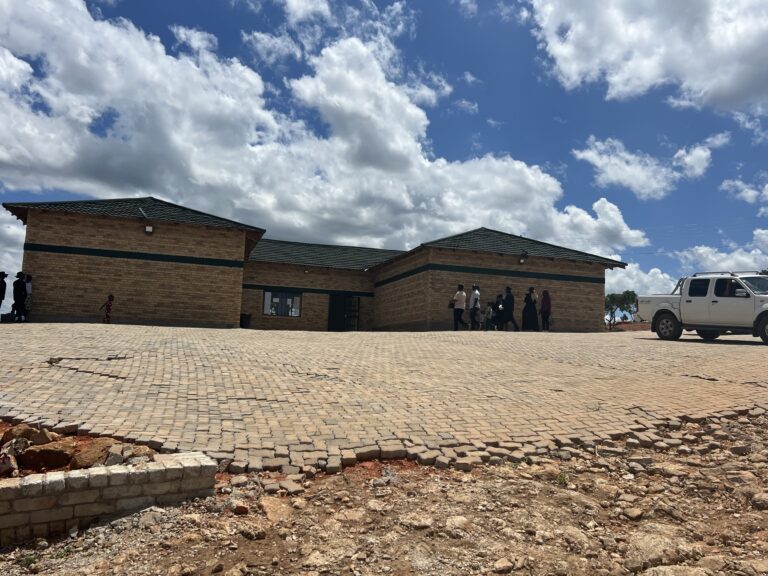
While the diasporic perspective given in the discourse provides valuable insights and fresh ideas, it tends to miss the tangible progress being made on the ground-in Zaka District. Striking the right balance between critique and constructive engagement is essential for fostering unity and progress. Making an assessment from a diasporic perspective and diasporic experiences, may make it difficult for one to fully appreciate some of the notable infrastructure developments taking place in rural Zimbabwe — under the devolution program. While challenges remain, significant progress has been made in improving social services and infrastructure, particularly in Zaka District. In any case, Zaka District is not merely about Jerera growth point, as the anecdote suggests. It is a diverse district with a rich rural heartbeat, supported by on-going development projects that are transforming lives. Under the devolution program, there have been commendable achievements in the social services sector in Zaka District- The construction of Murerekwa, Tovane, Machiva, Benzi ,Chinyazvivi ,Njiva and Benzi clinics, which are improving access to healthcare for rural communities as well as the construction of Gumbire Primary School, providing more children with access to education-the list goes on. Ongoing efforts to upgrade infrastructure and improve service delivery are in progress-see Jerera Primary school, Mazhara Government Primary School, Vutete Primary School, Chipezeze Secondary school -the list goes on.

These developments are not mere tokens — they represent the commitment of a local authority, the Zaka District community and the Zimbabwean government to address long-standing challenges. While there is still much to be done, these examples show that progress is possible when resources and efforts are aligned toward shared goals.

The article focuses heavily on the problems Zimbabwe faces offering little in terms of concrete solutions. This is where constructive dialogue must take center stage. Rather than emphasizing what has gone wrong, we must ask: “What can we do, collectively as Zimbabweans, to address these issues?” 

For instance, if Jerera growth point is in disrepair, what specific solutions does one propose to improve the Jerera infrastructure-to improve Jerera, the face of Zaka District? How can we as Zimbabweans, those in the diaspora inclusive, mobilize resources, networks, and expertise to support local development initiatives? Zimbabwe needs actionable ideas, not just criticism or comparisons to other nations. The article rightly highlights the potential of the Zimbabwean diaspora as a “reservoir of ideas, networks, and moral imagination.” However, this potential must be channeled into tangible contributions. The diaspora can play a pivotal role in areas such as – investing in local infrastructure projects through public-private partnerships (PPPs); mentoring young people and fostering innovation in agriculture, technology, and entrepreneurship as well as advocating for Zimbabwe’s re-engagement with international partners to unlock opportunities for growth and development. 

It is not enough to point out the challenges from afar — Zimbabweans in the diaspora must actively participate in finding solutions to Zimbabwe’s problems. As an educationist and community leader, I have seen firsthand the power of constructive dialogue in driving progress. Zimbabwe’s path to renewal must be built on reason, not emotions; solutions, not slogans. Blame will not take Zimbabwe forward — only unity and action will. It is vital that we, as Zimbabweans, avoid falling into the trap of perpetual criticism without offering alternatives. We must recognize that progress, while slow, is being made. We must also challenge ourselves to contribute meaningfully to the areas that still require attention. Ultimately, Zimbabwe’s challenges are not the responsibility of one person, one political party, or one group. They are the responsibility of all Zimbabweans, regardless of political affiliation, location, or status. Whether at home or in the diaspora, we all have a role to play in shaping a better future for our nation-Zimbabwe-let us do it!

The call for renewal is an important one, but it must be rooted in unity, reason, and a clear vision for the future. Let us move beyond the blame game and focus on building a Zimbabwe that works for everyone. Let us recognize the progress that has been made, however small, and build on it with pride, confidence and courage, determination and positivity. Zimbabwe’s story is not yet finished. Together, we can write the next chapter — one of responsibility, confidence, zeal, hope, resilience, and shared purpose.

By Aleta Makomeke

M. Ed Tec; MSc. Governance and Leadership.

Senior Educationist, community leader and opinionist.

Disclaimer: The views expressed in this article are my own and do not necessarily reflect those of Zaka Rural District Council or any other organization I am affiliated with. 

Mwene Webhawa’ humour :Woman beds minor (12) she met in a bar

0

By TellZim Reporter

In the past few weeks, a Tiktok video of a man warning bar owners ‘Mwene Webhawa’ against entrtaining minors in their premises, went viral across Zimbabwe with many tiktokers turning the clip into a trending joke.

He said if any minor was found in a bar, they were going to arrest the bar owner (Mwene weBhawa)

However, behind the humor lied a serious truth that has now hit home in Masvingo where  concerns over children frequenting adult spaces have turned into a police case involving alleged child abuse after a 33 year old Masvingo socialite had sex with a minor whom she met in a bar watching football.

Allegations are that on September 25, 2025, the accused, Madeline Mangezi was drinking beer at Yeukai bottlestore at around 2000 hours raising questions how the bar owner allowed such youngsters in the bar.

The complainant was watching television in the same bottle store. Mangezi bought the complainant some beer and they started drinking together.

Mangezi then asked the complainant later to have sexual intercourse with her for a short time to which he conceded. The two drove off in Mangezi’s car to a bushy area in Target Kopje where they had consensual sex once without protection.

After the act, Mangezi asked the complainant to pay US$10 for the sex. The two then later spent the night in Mangezi’s car. Mangezi then dropped the complainant at Mbudzi Business Centre the following day.

The complainant however went home at around 1700 hours on the same day, after which his mother interrogated the complainant and she was told the truth.

The matter was then reported to the police after which he was referred to Masvingo Provincial Hospital for medical examinations.

Chief Chilonga demands action on delayed Chilonga Bridge

0

..Fears for another rainy season of isolation

By Beatific Gumbwanda

CHIREDZI – Chief Chilonga has voiced deep frustration over the official silence surrounding the stalled construction of the Chilonga Bridge, warning that his community faces renewed isolation and danger with the new rainy season approaching.

The Chief, born David Ben, raised the issue during a Chiredzi Rural District Council Full Council Meeting held recently, expressing dismay that the critical project was not being discussed.

“I am saddened that I have not heard anything about the construction of Chilonga Bridge during the presentations. We must continue to advocate for the construction of this bridge, even if it seems off-topic.” Said the Chief

The urgency stems from the complete collapse of the original causeway across the Runde River in March of this year, which succumbed to heavy, relentless rains. This is not an isolated incident, as the Chilonga crossing has been a perennial problem for over a decade, frequently washing away and leaving communities stranded.

The bridge is the primary lifeline connecting thousands of residents in the Chilonga area to Chiredzi Town. Without it, access to essential services is severed, cutting people off from the District Hospital, banks, agricultural markets, and the National Registry office. The human cost has been tragically high over the years, with several lives lost as people attempted to cross the flooded river during the rainy season. The existing structure is narrow and low-lying, making it prone to flooding and forcing villagers to use unsafe boats to cross.

Faced with government inaction in the immediate aftermath of the March collapse, the community, as they have done many times before, took matters into its own hands. Between April and May 2025, locals mobilized their own resources, contributing labour and materials like stones to construct a temporary, makeshift bridge. This stopgap solution allowed for precarious passage but is unreliable and unsafe, especially with more rain forecast. This cycle of community-led repairs highlights a pattern of despair where residents exhaust their own limited resources to build temporary structures, only to see them destroyed again the following season.

In response to Chief Chilonga’s concerns, Chiredzi RDC Chairperson Aspect Mashingaidze offered an explanation that has become familiar to the community. He assured the Chief that the community had not been ignored, but the project was stalled in the tender process.

 “The issue lies with the tendering process, contractor bids have been significantly above the government’s expectations, and no one has been willing to retender with a reasonable cost. That is what is currently holding up the project,” Mashingaidze explained.

Earlier this year, Chiredzi Central Member of Parliament, Ropafadzo Makumire, asked the Minister of Roads and Infrastructural Development, Felix Mhona, to update the house on the government’s plans. Minister Mhona indicated that significant work, including planning and designs, had to be carried out, prolonging the timeframe.

A site five kilometres downstream from the causeway was identified but will require substantial foundations, with the bridge length projected at 500 meters.

“Detailed designs of the superstructures are at an advanced stage and will be complete by mid-June 2025,” said Mhona. “Thereafter the bills of quantities and engineer’s estimates or budget will be prepared due to the limited internal capacity to undertake detailed foundation, which is the substructure designs by the Department of Roads, which is in the process of retooling its soil testing laboratories. The projected cost for the new Chilonga Bridge is USD 72,000,000.00 and will be included in the work program and budget for 2026.”

He said the planning was time-consuming due to the weak soil types in the area, which were not strong enough to support the proposed bridge loads. “It is important to point out that bridge projects are special by their nature and that they involve a number of processes in planning and design stages,” Mhona explained. “The site selection process had to be carried out a number of times… Due to the fact that this process involves both topographical and geotechnical surveys to be carried out before the actual design of river works, substructures and superstructures can be embarked on, it has taken some time for this project to be implemented.”

However, these justifications offer little comfort against the backdrop of past promises. Government officials have pledged a permanent bailey or concrete bridge as far back as 2021, following another tragic drowning, yet these assurances have consistently failed to materialize.

As the skies darken with the promise of more rain, the people of Chilonga are left hoping that a permanent solution is found before the river rises once more, breaking another temporary link and threatening both their livelihoods and their lives.

HIV prevalence declines in Masvingo Province

0

By Andrew Zhou                               

MASVINGO – Masvingo Province has recorded a notable decline in the number of people living with HIV over the past four years, according to recently released data from the National AIDS Council (NAC) Monitoring and Evaluation office.

The figures reflect substantial progress in the province’s HIV response, though officials emphasize the need for continued focus on vulnerable populations.

During a recent data presentation, NAC’s Masvingo Provincial Monitoring and Evaluation Officer, Munorwei Munyikwa, highlighted that the positive trend reflects the success of collaborative efforts between NAC, the Ministry of Health and Child Care, and other HIV/AIDS partners. He cautioned, however, against complacency.

“The reductions we are observing demonstrate that our combined interventions such as prevention of mother-to-child transmission, antiretroviral therapy scale-up, and behavior change programmes are yielding results. Still, the disproportionate burden on women, especially young women, calls for intensified and targeted efforts,” Munyikwa stated.

He noted that with the decline recorded across all age groups, the province was moving closer to achieving the UNAIDS 95-95-95 targets, which aim to ensure that 95% of people living with HIV know their status, 95% are on treatment, and 95% achieve viral suppression.

“We have already reached the 95-95-95 goals, and our new target is 97% so that by 2030, we see few to no new infections in the province,” Munyikwa added.

The data reveals that in 2020, a total of 147,729 people of all ages were living with HIV in Masvingo. By 2024, this number had dropped to 140,419—a reduction of 7,310 individuals. NAC attributes the decline to improved access to antiretroviral therapy (ART), widespread community awareness programs, and effective prevention strategies.

Despite this progress, a gender breakdown reveals persistent disparities. In 2024, 84,998 females were living with HIV, compared to 55,421 males, underscoring the continued feminization of the epidemic.

Adults aged 15 and above remain the most affected group, with 132,328 people living with HIV in 2024, down from 134,615 in 2020. Among them, women continue to represent the larger share, with 80,973 females affected compared to 51,355 males.

Encouragingly, the most productive age group (15–49 years) showed a significant decline, falling from 104,477 in 2020 to 93,416 in 2024. Analysts note that this trend indicates reduced new infections among the working-age population—a crucial factor for sustaining community livelihoods.

Declines were also observed among young people and adolescents. The number of youths (15–24 years) living with HIV dropped from 14,092 in 2020 to 12,938 in 2024, while the figures for adolescents (10–19 years) decreased from 12,670 to 10,284 during the same period.

Significant progress has also been made among children. In 2020, 13,115 children (0–14 years) were living with HIV, but by 2024, the number had fallen to 8,091—a reduction of 5,024. The most dramatic decline was observed among infants (0–4 years), where cases nearly halved, dropping from 2,531 in 2020 to 1,357 in 2024.

Despite these gains, health experts stress that barriers such as stigma, gender inequality, and limited access to health services in rural areas continue to hinder further progress.

Moving forward, the NAC plans to strengthen community testing, support treatment adherence, and expand youth-focused prevention campaigns to ensure the downward trend in HIV prevalence continues.