Home Blog Page 20

Education for Profit: The Cost of Commercializing Education in Zimbabwe

0

In Zimbabwe, education is slowly shifting from being a fundamental social service to a profitable business venture.Education has become a lucrative business venture with pupils increasingly seen as customers and the private players in some cases prioritizing profit over quality education.What was once a societal responsibility has now become the playground of private players, with schools mushrooming in both urban peri-urban and rural areas. While this development has increased access to education indeed, it raises significant concerns about equity and quality in a country striving to achieve Sustainable Development Goal 4 (SDG4) and uphold the principles of Education for All (EFA).

The proliferation of private schools and colleges in Zimbabwe is creating a two-tier system. This growing commercialization threatens to entrench a two-tier education system, one for the privileged and one for the underprivileged-raising critical questions about the future of education in Zimbabwe. This scenario undermines Zimbabwe’s constitutional commitment to education. Section 75 of the Constitution of Zimbabwe guarantees every citizen the right to education, obliging the state to ensure that basic education is free and compulsory. The growing divide in education quality has far reaching implications for Zimbabwe.

The government has introduced programs like the Basic Education Assistance Module (BEAM) .BEAM was introduced to aid orphans and vulnerable children and ensure they access learning opportunities. However, the growing trend of commercialization undermines these efforts, as private schools often prioritize profit over equitable and quality education.  While proponents of private education argue that it fosters competition, innovation, and better infrastructure, the downside is glaring. High tuition fees charged by some private schools exclude children from underprivileged backgrounds, especially in rural areas and farms, where many still drop out of school. This creates a two-tier system, where the wealthy enjoy quality education while the vulnerable are left behind.  Such disparities not only hinder social mobility but also perpetuate cycles of poverty. If quality education is reduced to a privilege for the few, Zimbabwe risks creating a society where the gap between the rich and the poor becomes unbridgeable. This has potential to undermine the country’s development as a whole, as a well- educated population is the bedrock of economic growth and social progress.

The proliferation of private schools raises the question- Who qualifies to own and run schools in Zimbabwe? Education is not just a business; it is a service that shapes the nation’s future. School ownership should not be open to anyone with financial resources but should be restricted to individuals and organizations that meet strict criteria, including demonstrated commitment to educational excellence and adherence to government standards. Allowing unqualified individuals or entities to run schools risks turning education into a commodity, where profits take precedence over student welfare and learning outcomes.  When education becomes a business, children are seen as customers rather than learners. This approach erodes the core values of education, which should prioritize critical thinking, creativity, and the holistic development of individuals. Commercializing education undermines its role as a fundamental human right. It fosters inequality, diminishes teaching quality, and shifts the focus from students’ needs to financial gain. In rural and farming communities, where dropout rates remain high, commercialization exacerbates existing disparities. 

In rural setups, despite government efforts like the Early Warning System (EWS)—designed to track and retain dropouts—education remains inaccessible for many. This is due to socio-economic challenges and, to some extent, the lack of a robust legal framework to hold parents and guardians accountable for failing to send their children to school. 

A call to Action::Learning from International Best Practices

To address these challenges, Zimbabwe can draw lessons from successful international education systems:

   Countries such as Germany and Finland have laws that make education compulsory for all children. Parents and guardians who fail to comply face legal consequences, including fines or community service. Zimbabwe must strengthen its legal framework to ensure parents and guardians who neglect their duty are held accountable. 

   In Brazil, community schools in rural and underserved areas have proven effective. These schools integrate local culture, train teachers specifically for rural settings, and involve community members in decision-making. Zimbabwe could adopt this model to bridge the urban-rural education gap.

  In India, Private Public Partenerships (PPPs) have been used to expand access to education. Governments partner with private entities to build schools and provide resources, while keeping tuition fees affordable for low-income families. Zimbabwe could adopt Public –Private –Partnerships (PPPs) to improve infrastructure in rural areas without overburdening parents with high fees.  To address these challenges, stakeholder engagement is crucial. If engaged, Public-Private Partnerships (PPPs) have the potential to offer a potential solution to improve education quality while ensuring inclusivity. By bringing together government, private entities, non-governmental organisations (NGOs) and community leaders, PPPs can mobilise resources, enhance infrastructure and improve teacher training and curriculum development. However, these partnerships must be carefully managed to prioritize national development over profit. The government should establish clear frameworks to regulate private education providers and ensure that their operations align with constitutional and developmental goals. Transparency accountability and equity must guide these collaborations to avoid further marginalizing vulnerable groups.

  In South Korea, robust monitoring and evaluation systems are in place to ensure schools meet national standards. Schools that underperform are supported with resources to improve .Zimbabwe could establish a similar system to ensure both public and private schools align with national educational goals. 

   Finland, known for its world-class education system, emphasizes teacher professionalization.. Introducing a Teachers’ Professional Council in Zimbabwe would ensure the teaching fraternity adheres to high ethical and professional standards, improving the overall quality of education.  In Zimbabwe, the teaching profession remains unregulated, unlike doctors and nurses, who are governed by professional councils. This gap leaves teachers vulnerable to exploitation and compromises the quality of education.  The gap also leaves the teaching profession also very vulnerable to not- worth individuals. A Teachers’ Professional Council would regulate teacher qualifications, enforce ethical practices, and uphold standards of professionalism. Without such a body, private institutions may prioritize cost-cutting measures—such as hiring unqualified teachers or even employing those discharged from service by the government—over the delivery of quality education.  How can Zimbabwe expect to achieve high educational standards when the very individuals responsible for shaping the minds of future generations are not held to the highest professional standards?  The demands of the Teacher Professional Standards (TPS) should be reinforced for the private schools. Teachers who commit serious offences like improper association, engaging in Satanism, rape, murder and embezelment of funds should be blacklisted and also be deregistered. They should not be left to find refuge in private institutions, let alone be left to introduce own private schools.

To address these challenges, Zimbabwe must take bold steps to protect education as a social service: 

  • Introduce laws to enforce compulsory education and hold parents and guardians accountable for failing to send children to school. 
  • Regulate the teaching profession to ensure only qualified and ethical individuals are entrusted with educating Zimbabwe. 
  • Set strict guidelines to ensure only individuals and organizations committed to educational excellence can run schools. 
  • Establish Public Private Partnerships to   strengthen public schools by improving infrastructure, training teachers, and providing adequate resources to reduce dependence on private education.  The number of government owned schools should increase .The quality of education at a government owned school should equate or surpass the operations and standards of a private school.
  •    Zimbabwe should learn from successful education systems worldwide to create a more equitable and sustainable education framework. 

Education should not be a privilege for the few but a fundamental human right for all. Zimbabwe’s future depends on a well-educated population, and this can only be achieved by prioritizing access, equity, and quality over profit. The government, private players, and communities must work together to create an education system that leaves no one behind—whether in urban areas, rural areas, or farming communities. Only then can Zimbabwe realize its commitment to SDG4 and EFA Goals by ensuring that every child has the opportunity to thrive and education remains a social service. 

By Aleta Makomeke                                                                                                  

Opinionist and Senior Educationist

Disclaimer: l write in my own capacity, the views expressed in this article are my own and do not represent those of my employer or any organization l am affiliated to.  

Chilonga’s irrigation scheme paralyzed by water access

0

By Beatific Gumbwanda

The Chilonga Irrigation Scheme, situated along the perennial Runde River, remains non-functional primarily due to difficulties in accessing water, standing in stark contrast to the 19 other flourishing irrigation schemes in Chiredzi District.

While the other schemes are helping communities mitigate the effects of climate change, Chilonga has been inactive for years. 

Its sole water source, the Runde River, has been affected by siltation, preventing the scheme from operating. This comes after the district experienced erratic rainfall in the past year, which made functional irrigation essential for food production.

Chiredzi Agricultural Extension Services Zone 2 Fungai Plaxedes Jeke confirmed the sad development saying Chilonga was the only scheme facing such challenges.

“We have 19 functional schemes, including Malikango, Tshovani, Rupangwana, Fungai, Dendere, St. Joseph, Gudo Pools, Nyangambe Main, Nyangambe Village 3, Magogonogwe, Manjinji, Manyeredzi, Syphon 1, Tatanga, Labamba, Moyochena, Gutsaruzhinji, Mangandife, and Watershed. 

Only Chilonga is non-functional due to water issues. We are looking into ways to assist in rehabilitating the scheme,” said Jeke.

Jeke emphasized the critical role the operational schemes play in the district wing to its location which receives less rainfall.

“The schemes allow communities to grow crops throughout the year, ensuring a consistent food supply. These crops generally survive mid-season dry spells and periods of low rainfall, making it easier for communities to access food,” said Jeke.

Chiredzi District Development Coordinator (DCC) Lovemore Chisema concurred with Jeke, citing siltation as a major challenge.

 He outlined several issues, including the high cost of electricity for pumping water and the need for regular excavations to ensure water reaches the pump stations.

“The government is aware of the challenge, the water authority is also aware, and efforts are being made to address the problem. We call upon other private players willing to partner with the farmers to address the challenge and revitalize the scheme to come foward,” said Chisema.

Rise above petty political differences, embrace technology – Prof Mutambara

0

By TellZim Reporter

Former Deputy Prime Minister Professor Arthur Mutambara has urged government and political parties in Zimbabwe to emulate foreign nationals and put aside political or personal differences and embrace technology for the development of the country.

Speaking during a public lecture at Great Zimbabwe University recently, Prof Mutambara urged political powers to unite for the development of the country giving example of how the United States of America President Donald Trump had to put aside his differences with Elon Musk and embraced Grok 4 in the US Defence Department.

“When Grok 4 came it was very interesting, it came out when Trump and Elon Musk were fighting for those that remember they were beefing and miffing and then Elon Musk produced Grok 4 then Trump and the Defence Department saw the power of Grok 4 and said forget Elon, forget your fight with Trump here is US$100 million take it and give us Grok 4 for the army. They forgot about their differences and the defence department gave Musk a US$100 million chalk.

“What are we doing in Zimbabwe? Please can you rise above your petty political differences, your petty personal differences and embrace technology and embrace good ideas to push the country forward. Learn from Elon Musk and Trump to push the country forward,” said Prof Mutambara.

Prof Mutambara also urged the country to take advantage of other key figures in technology development like Strive Masiiwa.

“Billionaire Strive Masiyiwa has come together with Verdia, to bring the GPUs into South Africa, Kenya, Ghana into Egypt not Zimbabwe. Tell us GZU why is your billionaire ignoring you, why don’t you reach out to your billionaire? Are you dramatizing the need to rise above any differences and embrace technology to drive this country to the Promised Land? Learn from Elon Musk and Trump,” he said.

He also urged those in technology to understand other concepts working with AI such as data analytics and blockchain.

“Do not embrace AI in isolation, it is part of an ecosystem of technologies, what we call transformative technologies. AI sits on digital, without digital and data there is no AI. so you need to make sure you understand the role of mobile telephoning, digital transformation, big data analytics, cyber security, blockchain. As you pursue AI make sure you start block chain, it is a revolutionary technology on its own. Understand AI as part of an ecosystem,” said Prof Mutambara.

Prof Mutambara launched his book titled  ‘Deploying Artificial Intelligence to Achieve the UN Sustainable Development Goals: Enablers, Drivers and Strategic Framework’ which focuses on the need to deploy Artificial Intelligence to achieve the 17 UN Sustainable Development Goals (SDGs) at Charles Austin Theatre in Masvingo on Monday.

MP Makumire delivers on promise with new school

By Beatific Gumbwanda

CHIREDZI – Chiredzi Central, Member of Parliament Ropafadzo Makumire, has delivered on a key election promise with the construction of Gozonya Secondary School in Hippo Valley Section 27, bringing quality education closer to a community where children previously faced a 30-kilometre daily walk to the nearest secondary institution.

The completion of the school, funded through the Constituency Development Fund (CDF), was announced during a public dialogue organized by TellZim News where Makumire detailed how he had allocated part of his 2024 CDF allocation to address the educational needs of his constituents.

The new school is expected to end the arduous daily journey local children faced to reach Mleme Secondary School.

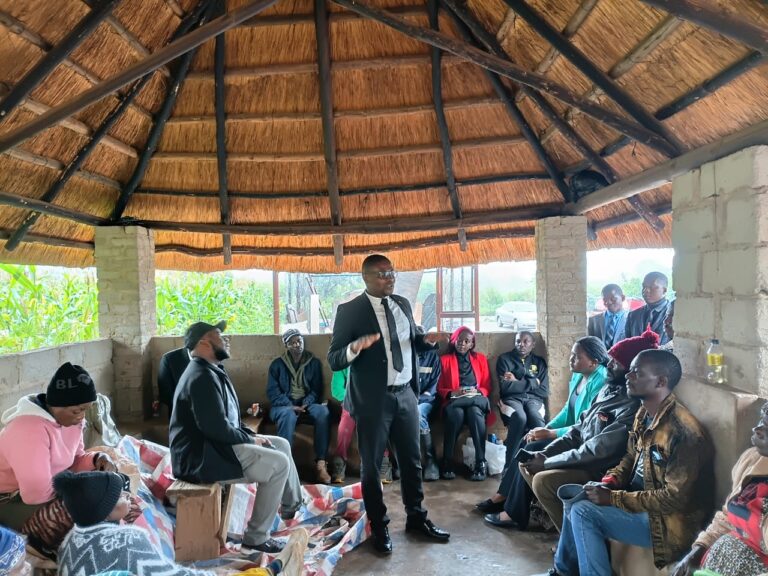
“We have successfully completed the construction of Gozonya Secondary School, which includes a new block and roofing for the existing structure built in 2016. Both blocks have been plastered, and we are currently installing window frames. We will soon reach out to the community to raise funds for the school’s furniture,” said Makumire.

The MP confirmed that the project included a solar-powered borehole to ensure reliable water supply and expressed optimism that the school would welcome its first learners in 2026.

He also said he anticipated to hand over the completed facility to the Chiredzi Rural District Council by the end of this year.

Chiredzi Central was among the constituencies that received an allocation from the ZWL 1,300,000 CDF, with portions dedicated to both Gozonya Secondary School and the construction of Melbourne Government Primary School in the newly developed Melbourne Park Residential estate.

While the school construction represents a significant achievement, the dialogue also revealed ongoing community concerns about healthcare services. Residents expressed dissatisfaction with the state of local medical facilities, urging Makumire to investigate the availability of free medication in public hospitals.

Tizirai Mazuruse, a community member, voiced the collective frustration saying they pay for a stamp at hospitals but cannot get any medication.

“Nowadays, we only pay US$9 for the stamp at public hospitals, which often lack even basic supplies like bandages. We are also being charged for blood, despite having donated multiple times,” said Mazuruse.

He appealed to the MP to follow up with the government, noting that patients were often referred to private pharmacies for medications despite paying hospital fees.

“As a repeat blood donor, I find it troubling that I must pay for blood if I need it after donating so many times,” said Mazuruse

The completion of Gozonya Secondary School marks a significant step in addressing educational infrastructure gaps in the constituency, even as healthcare concerns emerge as another priority area requiring legislative attention and government intervention.

Man kills wife, torches 3 family homesteads

0

Brighton Chiseva

A Masvingo family was plunged into tragedy and utter destitution after a 33 year old man allegedly murdered his wife with an axe before systematically setting fire to three family homesteads, reducing all possessions to ashes and leaving eight school children without any belongings.

Police have since launched a manhunt for Morgen Gwazira, an artisanal miner, who disappeared after committing the heinous crime in Machingambi Village, Gwanha area, on October 12.

the man who murdered his wife and set ablaze three family homes

Acting Masvingo Provincial Police Spokesperson, Assistant Inspector Masauso Patinyu, confirmed the incident, which occurred in Ward 13 of Chief Mugabe’s area.

“Police have launched a manhunt for the suspect who escaped after killing his wife and torching three homesteads. Anyone with information on his whereabouts should report to any nearest police station

According to police accounts, the incident began around 10 AM when Gwazira, while seated with his wife Liliosa Gwenhamo (34) and their four children in a kitchen hut, allegedly struck her on the head with an axe, killing her instantly.

He then proceeded to douse the hut with petrol. Preliminary reports indicate he initially intended to set the hut alight with himself and the children inside. However, when he went outside to ignite the fire, the children managed to escape.

one of the homes before the fire

Gwazira is then alleged to have dragged his wife’s body outside, piled firewood on it, doused it with petrol, and set it alight. He subsequently moved to his uncle’s nearby homestead and, finding it unoccupied, set three houses on fire. He then proceeded to his father’s homestead and set another three houses ablaze, in addition to a pigsty, killing three pigs, before disappearing into a nearby mountain.

Close sources suggest a history of volatile behavior, stating that Gwazira had previously damaged property at his father’s residence while speaking incoherently. The source indicated that his mother, who heard the initial argument on the day of the incident, fled over fears for her safety based on this past conduct.

The arson attacks resulted in the total destruction of property across the three homesteads. The affected families lost all their possessions, including clothing, furniture, and critical documents such as national identification cards and birth certificates.

Eight school children from the households are reported to have lost all their educational materials, including uniforms, books, and stationery. The family of the suspect includes four children, the eldest of whom had recently completed Grade Seven examinations.

The family is currently appealing to the public for assistance with basic necessities, including food, clothing, and school supplies. Those willing to assist are directed to contact Local Councillor Sarah Munemo on 0772816260 or TellZim News on 0719355808.

One of the homes after the fire

VYTT Properties joins fight against breast cancer in Gutu

0

By Courage Dutiro

As global breast cancer rates continue to climb, VYTT Restaurant, a member of the Vittony Properties group in Gutu, launched a local campaign in recognition of Breast Cancer Awareness Month this October.

The restaurant, known for its traditional meals and catering services, initiated its awareness drive through a special event held on October 3, 2025.

One of the directors Nyasha Mpofu explained that in honor of Breast Cancer Awareness Month and aligned with their focus on traditional organic cuisine, they organized ‘Pink Friday’ to help raise awareness in the Gutu community.

“As October is known for Breast Cancer Awareness and our restaurant promotes organic traditional meals, we decided to contribute to the cause. We hosted ‘Pink Friday,’ inviting health professionals to educate our clients. Breast cancer awareness isn’t just about wearing pink, t’s about acting today for a healthier tomorrow,” said Mpofu.

The initiative comes amid growing concern over breast cancer rates. A February 2025 Lancet study projects a 38% increase in new cases and a 68% rise in deaths by 2050 if current trends continue.

One Gutu health professional Queen Chigaba who participated in the event, emphasized the importance of regular self-examinations.

“I am grateful to VYTT Restaurant and Butchery for bringing this vital Breast Cancer Awareness event to Gutu. I encourage women to take control of their health through regular breast self-examination, looking at and feeling each breast for possible lumps, distortions, or swelling. Knowing what’s normal makes it easier to detect changes,” said Chigaba.

She also stressed the importance of regular screenings, saying early detection significantly improves outcomes.

“My message to women is to get screened frequently. If detected early, cancer can be managed effectively, unlike when it has spread. It’s not wise to seek treatment only when one is already bed-ridden,” she said.

In Zimbabwe, breast cancer ranks as the second most common cancer in women after cervical cancer.

One attendee praised the event’s impact saying she had been empowered with knowledge and would spread the message.

“This event was incredibly important because I learned so much about breast cancer. I will now play my part in raising awareness within my community.”

The campaign represents a significant step in bringing crucial health education to Gutu, demonstrating how local businesses can contribute to important public health initiatives.

CHIRRA clash with Chiredzi council over school minibus use

By Beatific Gumbwanda                                

CHIREDZI – A dispute has erupted between the Chiredzi Residents and Ratepayers Association (CHIRRA) and the Chiredzi Town Council over the alleged misuse of Tshovani Primary School’s recently acquired minibus, purchased with parent-funded contributions.

The vehicle, originally intended exclusively for school activities such as educational trips and administrative duties, is now reportedly being used by the Council for municipal work.

This has sparked frustration among parents and residents, many of whom already face regular challenges with local authorities as they engage in informal trading to support their families.

In a formal complaint directed to the School Development Committee (SDC), seen by TellZim News, CHIRRA Secretary-General Emmanuel Matimba questioned the Council’s actions and called for greater accountability.

“When the vehicle was purchased, it was explicitly stated that it would be used for school purposes. However, it has come to our attention that the vehicle is being used by the Council for their own business, which deviates from its intended purpose,” said Matimba.

He said the local authorit had its own fleet of vehicles and argued that commandeering school property betrays the trust and financial contributions of parents.

“There has been a growing outcry from the community. We believe it is essential to address these concerns and ensure transparency in the use of school resources,” he said.

Contacted by TellZim News for comment, Chiredzi Town Council Public Relations Officer Kudzai Chimusoro refuted claims of misuse.

She said the minibus was temporarily requested to support an ongoing property survey being conducted across the town.

“It’s not that we are abusing the school’s minibus. We only requested it for use during the property survey. All our fleet is currently occupied with the same exercise, including our own council minibus,” said Chimusoro.

She added that the Council was providing fuel for the vehicle and that it was securely parked at Council offices after daily use.

“Everything being done is above board. We love that school and we provide every assistance they require,” she said.

Chiredzi Town Council, which also oversees operations at Chiredzi Polyclinic and is completing the construction of a new clinic in Makondo Location, maintains Tshovani Primary as the only school under its direct jurisdiction.

Chief Nhema accused of extortion in Zaka business dispute

0

By Brighton Chiseva

ZAKA – A Tsigo Village businessman, Kudakwashe Zhangare, claims that Chief Nhema born Rangarirai Bwawanda and his messengers confiscated property thousands of dollars from his shop at Sokutamba Business Center in Ward 14, demanding US$100 for operating a shopping centre in the area without the traditional leader’s approval.

Zhangare, who established the pole-and-mud shop in 2022 after consulting local village heads, said he had followed due process by engaging Councillor Boas Museki and obtaining permission from the Zaka Rural District Council (RDC).

Zhangare claims the centre was created to serve villages including Tsigo, Chiwawa, Rwezuva, Mabva, Njenjere, and Tadzivirirwa, where residents previously travelled long distances for basic goods.

“The village heads advised me to involve the councillor, which I did. I was directed to Zaka RDC, presented my case, and was allowed to operate while awaiting formal regularization,” Zhangare explained.

He had since begun upgrading the structure and business was thriving until Chief Nhema allegedly demanded US$100, claiming the businessman had established the centre without his knowledge.

 While Zhangare was still gathering the money having raised US$75, the chief’s messengers reportedly raided his shop, confiscating a snooker table, fridge, groceries, door frames, and doors.

“My wife called the chief to enquire after they had confiscated the goods, but he denied receiving the goods and said he would investigate,” Zhangare said.

Contacted for comment by TellZim News, Chief Nhema said he was not home and had no enough knowledge about what happened. He asked the reporter to get in touch over the weekend where he will be home and have got more information.

“I am not home, get in touch over the weekend I would have gone home and I can then answer you,” said Nhema.

One of the messengers who was alleged to be part of the messenders only identified as Burari, admitted awareness of the incident but denied involvement saying it was his colleagues who had done the operation.

“I was not there. I just heard about it. Come on Saturday, and I will show you my colleagues who went there,” he told TellZim News, though he declined to name those responsible when pressed.

The incident has raised concerns among locals about the challenges faced by small-scale entrepreneurs operating in rural areas, where traditional authority and local governance often overlap, sometimes leading to conflict and uncertainty.

Bikita installs pioneering traffic lights at Nyika Growth Point

0

By Staff Reporter

BIKITA – In a landmark development for rural infrastructure, Bikita Rural District Council has installed traffic lights at the intersection connecting the Mutare-Masvingo Highway to Nyika Growth Point, potentially becoming the first rural local authority in Masvingo Province to implement such urban-style traffic management.

The pioneering initiative, confirmed by Bikita RDC Chairperson Thomas Mataga, comes as a direct response to the alarming frequency of accidents at the busy junction.

Mataga explained that the council had observed persistent challenges with motorists navigating the intersection, particularly those traveling along the highway and others entering or exiting the growth point.

“We have witnessed numerous accidents at this intersection where motorists were failing to give way to each other. This traffic light system is a safety measure implemented using council resources to protect both drivers and pedestrians,” said Mataga.

The council is not stopping at traffic lights in its road safety campaign. Mataga revealed that plans were underway to install speed humps several hundred meters from the intersection near Gwindingwi High School, where speeding vehicles have endangered learners.

Additional safety measures are also planned along the highway near Rupare Secondary School and Mandadzaka Primary School, where learners regularly cross the road and face similar risks from fast-moving traffic.

The introduction of traffic lights has drawn positive reactions from road users, including self-described pirate taxi driver known as Gidza, who acknowledged the development’s significance despite its potential impact on his quick passenger pick-ups.

“Though it might slow us down as pirate taxis who usually rush to pick up passengers, this is a noble development that guarantees safety for all motorists and pedestrians. Who would have imagined that a rural growth point like ours could have traffic lights typically seen in urban areas?” he said.

The installation represents a significant step in modernizing rural infrastructure and addresses critical safety concerns while setting a new standard for traffic management in provincial growth points.

Masvingo registry halts ID replacements amid receipt book shortage

0

By Brighton Chiseva

MASVINGO – The Masvingo District Registry Office allegedly suspended the replacement of national identity cards for the past week due to a critical shortage of official receipt books required for processing the US$10 replacement fee, TellZim News has learnt.

Multiple sources confirmed they were turned away when attempting to replace the crucial documents, with one frustrated applicant revealing that only individuals possessing the older green identity passbooks were being served for upgrades to the new plastic cards.

“I went there intending to replace the ID that I lost, and it was urgent because I wanted to apply for a job vacancy. I was informed that since Monday, October 6, they had not been processing replacements,” said the source

When contacted for comment by TellZim News, Masvingo District Registrar Lawrence Mapara could neither confirm nor deny saying he was not allowed to speak to the media.

“I am not allowed to speak to the media, you are closer to the offices, you can come and see for yourself what is happening,” said Mapara.

However, an internal source confirmed the disruption in services, attributing the problem to logistical challenges involving fuel.

“It’s true, we have not been issuing replacements since Monday. The office ran out of receipt books, and I understand there’s no fuel available to collect new stock from the head office in Harare,” said the source.

This is not the first time the registry has faced operational challenges. The office has previously experienced similar disruptions, including fuel shortages for generators during power outages.

“The registry has repeatedly been plagued by administrative hurdles like fuel shortages for generators, especially during electricity cuts. Even when well-wishers offer to assist with fuel, bureaucratic government procedures prevent such interventions,” the source added.

The registry office was also among several government buildings that endured prolonged power disconnections after the Department of Public Works failed to settle prepaid electricity accounts. The situation was only rectified following media exposure of the issue.

The current suspension of ID replacement services continues to inconvenience citizens who require the vital documents for various transactions, including employment applications, banking services, and access to other essential services.