
Home Blog Page 248

Inflation plunges in January 2023: Is RBZ doing it right now?

By Zvikomborero Sibanda

The Reserve Bank of Zimbabwe (RBZ) usually announces its monetary policy statement (MPS) in February of every year. A monetary policy is a list of actions to be taken by a country’s central bank to influence how much money is in the economy and how much it costs to borrow. It is implemented through various tools including inter alia the adjustment of interest rates, trading of government securities, and altering the amount of money circulating in the economy. This policy’s primary objectives are to manage inflation or unemployment and maintain currency exchange rates and financial market stability.
As such, the success of a central bank is generally measured by the prevailing level of price inflation and currency performance. The latest statistics from Zimbabwe National Statistics Agency (ZimStat) show prices massively cooling off in January 2023. In annual terms (January 2022-January 2023), the inflation rate as measured by the all-items Consumer Price Index (CPI) came in at 229.8% relative to 60.61% recorded in January 2022. The January 2023 annual inflation outturn is 14 percentage points lower than the 243.8% realized in December 2022 and the lowest in seven (7) months. ZimStat statistics also showed that from a month-on-month perspective, the price inflation rate in January 2023 was 1.1% shedding 1.3 percentage points on the December 2022 rate of 2.4%.
ZimStat time series data shows that the monthly inflation rate for January 2023 is the lowest outturn since September 2018. In that September, it was recorded at 0.92% before it however jumped to 16.44% in the following month when austerity measures such as the 2% tax were introduced. After mounting by 14.31% on average in the first half of 2022 from 5.34% in January to 30.7% in June, the monthly inflation rate is falling ever since save for December. It decelerated to 25.6% in July and had now closed January 2023 at 1.1%. Buoyed by this increased moderation of price growth, authorities through the 2023 national budget statement are projecting monthly inflation to average 1-3%.
The late Milton Friedman who popularized the theory of monetarism posited that the antidote to price inflation was higher interest rates, which in turn reduces the money supply. Consequently, prices will fall as people would have less money to spend. In short, Friedman argued that inflation is always and everywhere a monetary phenomenon. As such, authorities should not rapidly increase the money supply as this is counterproductive by fuelling inflation. There is a wide consensus that the increase should be gradual to circumvent higher unemployment rates. Theoretically, this would help establish a Goldilocks economy -a period of stable economic growth where inflation remains low and RBZ does not feel the need to increase interest rates.
From the foregoing, Zimbabwean experiences surely validate the monetary theory. Excessive money supply growth is the major culprit causing ZWL deterioration and its resultant pass-through effect on inflation. For instance, RBZ statistics show a staggering reserve money supply growth of 170%, 113%, and 38% in 2019, 2020, and 2021 respectively. During this 2019-2021 period, ZWL lost about 10.7% of its value on average per month. In response, both annual and monthly price inflation grew at an unsustainable rate averaging 339.3% and 11.6% per month respectively.
As for 2022, annual inflation raged havoc in the first half mounting from 60.61% in January to close June at 191.7% as monthly prices upscaled at an unsustainable 14.31% on average. According to its 2023 Monetary Policy Statement (MPS), it is RBZ’s increased financial tightening that helped cool down inflation in the second half. For instance, it revealed that both local and foreign currency statutory reserves constituted 90% of total reserve money as of the end of December 2022. As such, since these statutory reserves are locked up in RBZ vaults and therefore unavailable for on-lending by banks, their increase helped reduce the money supply in circulation. The MPS also indicated that excess bank reserves –ZWL balances at RBZ– declined from around ZW$14 billion in 2021 to less than ZW$100 million by end-December 2022 thus signifying further tightening of liquidity conditions.
The foregoing highlights from the 2023 MPS confirm my view that the Russia-Ukraine war was not the significant driver of exchange rate and price volatility in Zimbabwe. Massive ZWL depreciation since its re-introduction in 2019 and subsequent accelerated price growth is highly linked to the increased money supply. To curb these volatilities, this column has been calling for tight monetary targeting to attain sustainable ZWL liquidity growth in the system.
Taking the 2023 MPS at face value, these are the actions the Bank confirms to have taken in order to arrest price instability. This is enough evidence that going forward RBZ should maintain sustainable levels of ZWL liquidity in the system to help achieve a Goldilocks economy. Sustainable liquidity growth is the one that keeps parallel market exchange rate premia within conventional threshold levels of between 0-20%. In simple terms, money supply growth in the economy should move in tandem with the rate of growth of economic activity in the real sector.
Nevertheless, as I alluded to a fortnight ago, 2023 is going to be a challenging year for monetary policymakers. The desired Goldilocks economy only comes when fiscal and monetary policies are complementary. This year, Treasury is expected to experience an unsustainable budget overrun due to the upcoming harmonized elections. Election seasons are highly distortionary as political pressures increase the possibility of fiscal policy slippages and reversals. Studies have shown that incumbent governments facing re-election tend to display dovish spending tendencies as political goals are prioritized at the expense of the long-term health of the general economy and the welfare of citizens.
More so, apart from harmonized elections, Zimbabwe will likely continue to face prolonged load-shedding hours for most of 2023 as the usable water level in Kariba Dam remains significantly low and forex shortages will constrain production at existing old thermal stations which frequently breakdown. As such, power shortages at a time prices of electricity substitutes like fuel are expected to remain elevated will balloon production costs and subdued activity in the real sector thereby worsening the already high cost of living. As the West now starts considering supplying Ukraine with heavy and advanced weapons, the Russia-Ukraine war will likely shift to a whole new level with serious global risk. The disruptions to supply chains induced by the war and ensuing global inflation exert disproportionate impacts on developing nations like Zimbabwe which are perennial net importers. In addition, there is a possibility of a severe trade war between the US and China as the former had already instituted rules prohibiting the sale of advanced semiconductor chips to Chinese customers.
The 2023 environment poses a monetary policy-making dilemma as the need for a contractionary stance to cool inflationary pressures may be overshadowed by the expansionary fiscal stance driven by election-linked spending. Cognizant of this, it is likely going to be a daunting task for RBZ to keep the average monthly inflation rate at 1.5%. Therefore, next week this column will analyze if the policy actions proposed in the 2023 monetary policy are adequate to boost ZWL appeal and arrest macroeconomic instability.

Zvikomborero Sibanda is an economic analyst and an astute researcher. He writes in his personal capacity. He can be contacted via email:

bravosibanda@gmail.com
Twitter: @bravon96

Gutu women bemoan lack of maternity facilities

Theresa Takafuma

Women from the Chipara area under Chief Makore in Gutu have lamented the lack of accessible maternity services as local health care centers do not have adequate facilities to cater for them.
Pregnant women end up walking long distances to access prenatal and antenatal care, as the available health centers are mostly private and unaffordable for the rural folk who have to part with certain amounts of money in order to be assisted by qualified midwives.
In an interview, Miriam Magoga, a woman from Chipara Village said they go to a private clinic at Guni, and have to pay maternity fees to be attended to, and the only other option is to trek to Cheshuro or Nerupiri Rural Health Centre which are very far away.
“To register your pregnancy you have to part with US$20, and when you go to deliver you then pay another US$15, which is hardly affordable for most of us. This then leads to women giving birth at home because the options are equally difficult.
“The other issue is that at the clinic there are no perinatal care services and for us to have our babies immunized we have to go to the nearest clinics like Nerupiri which is many kilometres away,” Magoga said.
Another woman, Jessica Matara, who recently gave birth at the private clinic at Guni said it was difficult to access water when she went to give birth there, and people had to walk about 5km to fetch water for her to use.
“The challenge at the clinic is water and people had to walk nearly 5km to access water. The other problem is that you have to buy your own injections. After giving birth you are told to go to Cheshuro Rural Health Centre which is over 20km away and you can imagine how it is for a woman who has just given birth.
Hilda Chipara, from the same area said local clinics do not assist first time mothers, those with pregnancy complications and women who have had multiple births.
She said for first time mothers in the area it then becomes difficult especially if they do not have money, making them vulnerable to birth complications, birth injuries, even deaths.
“Our local clinics do not accept mhandatsva (new mothers) and that leaves them with little to no option but to resort to home births. At Cheshuro they do that because they say if you have complications they do not have transport to ferry you to a bigger hospital.
“They also do not have waiting homes so it then becomes difficult if a woman gets into labour to walk all the way to the health center in that condition, as there is no transport,” Chipara said.

Chibi High receives 2nd Secretary’s Merit award

Colleen Chitsa

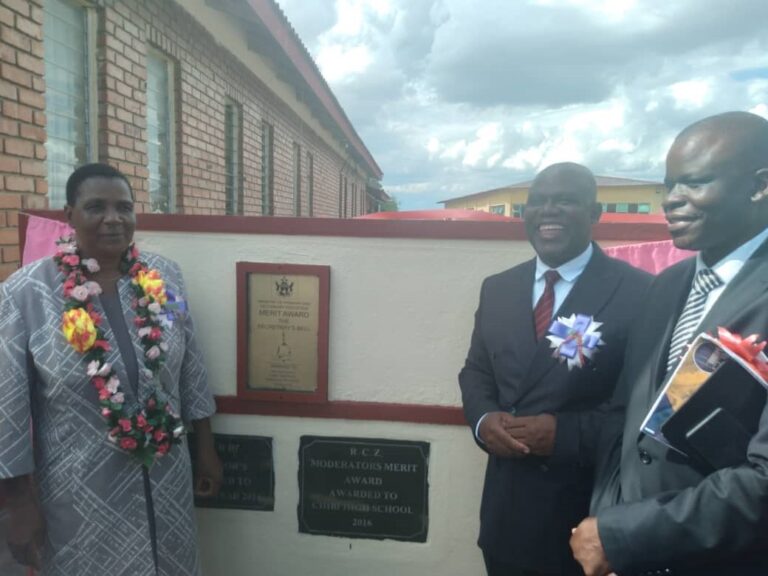
Chibi High School was recently honored with the 2019 Ministry of Primary and Secondary Education Secretary’s Bell merit award for the second time.
The award is given to the school that would have excelled better than others in the province in provision of top notch education, infrastructural development, implementation of government policies as well as good results and Chibi High School was ranked the best in 2019 in the provincial secondary category.
The 2019 award was presented by the MoPSE Permanent Secretary Tumisang Thabela who praised the school for being a model school which others should emulate.
“Chibi High School is a good example of what government expects of a school and this secretary’ award means you are fulfilling government’s strategies and vision in human capital development.
“I observe with grand contentment and satisfaction that the school is striving to achieve excellence by distinguishing itself in the educational realm in providing high quality service delivery and this is why you deserve this award,” said Thabela.
She applauded the school head Raymond Ndega for the hard work, devotion and dedication that he had shown to transform Chibi High School in to an excellent sanctuary of education.
“Mr Ndega joins a number of other heads who we call champion heads because they champion government’s policies as we have seen how he created a child friendly environment, steady pass rate and how he is trying to create job ready leaners.
“When a school succeeds, it is years of work by a leader who is motivated, enthusiastic, wide researcher and is able to lead by example by pulling a team of teachers, partners and parents to work together with the same goal in mind,” she added.
Ndega said he was humbled by the honor and lauded collective efforts from stakeholders who stood by him.
“It is an honor to receive the secretary’s bell award and we as a school are motivated even more to continue raising the school’s flag up high.
“I want to thank all stakeholders for the huge support that you continue to give the school. It takes a great deal of team work to build the name of a school,” he said.
As part of the award package, the school received 40 students’ tablets; teachers’ laptop, a projector and an interactive board while the headmaster received a tablet of his own and a certificate.
To add on to the award, the Zimbabwe Foundation for Education with Production (ZIMFEP) gifted the school with 100 day old roadrunner chicks and two pigs (male and female) for the school projects.
Edutech Zimbabwe also added to the school award with 35 students’ tablets and 5 WiFi hotspots to be established around the school.
Chibi high won the same award in 2012 and is also a holder of two R.C.Z Moderator’s award for 2014 and 2016.
Due to Covid-19 restrictions, the award ceremony could not be held since the time the school was recognized in 2019.

Putting food on the table herculean task for Chivi South young mothers

…As climate change effects take toll

Emmanuel Chitsika

With the realities of climate change and its effects taking toll on humanity worldwide, young mothers in Chivi South constituency of Masvingo province have not been spared as they face acute food shortages due to unpredictable rains.
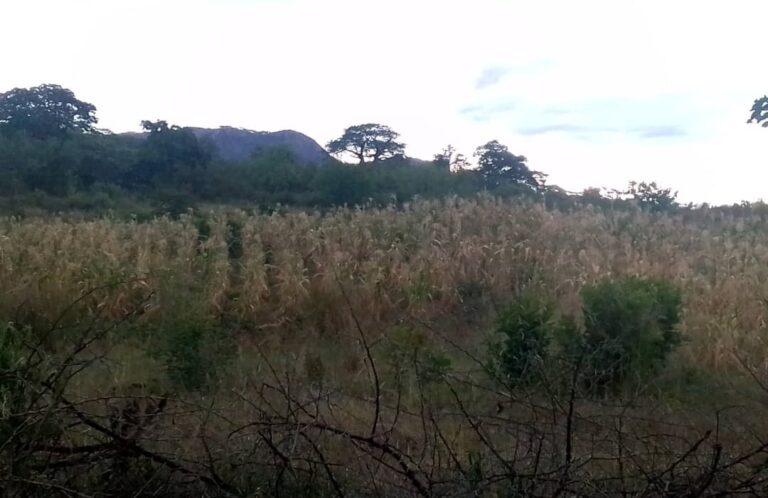
Located at the heart of the semi-arid ecological farming region 4 just to the north of Mwenezi district, the area has witnessed persistent droughts resulting in death of cattle while in terms of crop production, the district rarely records good harvests though farmers in the area continuously cultivate crops like groundnuts, round nuts, maize as well as drought tolerant varieties like rapoko, sorghum and millet.
The completion of the country’s biggest water body in Tugwi-Mukosi dam was poised to bring with it some notable changes in as far as weather patterns are concerned but climate change seems to defy the odds as 2022-23 cropping season has and continue to face challenges like moisture stress due to excessive dry spells the district has experience. The ensuing challenges point to challenges like food insecurity which has become a common feature forcing most families to rely on buying maize or mealie meal.
Without any reliable sources of income to sustain their families and any other related agricultural activities like gardening (in times of drought), young mothers face daunting tasks as they seek to provide food on the table for young families.
The first batch of crops planted under climate proof agriculture Pfumvudza suffered at the hands of the searing heat and some maize crops written off.
Young women are left with no option than joining the ‘great trek’ to Runde River to pursue gold panning in the crocodile-infested river which has become a common habitat for most families since the popular devastating 1992 drought.
“Our crops are almost written off because of the impending drought. The maize crops we planted way back in October are wilting and this year seems not to be that good for us as a community because hunger is knocking at our doors.
“But if we fail to harvest any crop we will have to pack our bags ‘totoinda kwaRunde kuZungura’ (we will go to Runde river for gold panning),” said one young mother.
Unfortunately for these young mothers, the droughts have at times coincided with election periods which have witnessed the politicization of food distribution by the ruling Zanu PF as a way of luring voters. The young mothers are relegated down the societal hierarchy as the older members of society are given first preference at the expense of the former.
Social Welfare food schemes have also eluded this section of the population despite the fact that some of their spouses working in neighbouring South Africa would have long forgotten part of their responsibilities to fend for their families.
“As for us young mothers, we are not even considered when it comes to food distribution even that from government. We have since discovered that such welfare schemes are meant for the elderly members of this community despite the fact that some of them have children well up there and the people who recommend beneficiaries will always consider old people while neglecting young people some of who are in dire need of such help.
“We don’t know how these traditional leaders and councillors recommend people for food aid because we have seen needy members of society being left out of these schemes. Our situation has been worsened by the fact that we will not be able to use our gardens for vegetable production as the dams won’t be able to sustain that,” said another source.

Masvingo youth produces environmental film

Theresa Takafuma

A Masvingo film production initiative, Afrinac Films is working on an environmental awareness film called Purpose in Pain which will be ready for premiere in March 2023.
The film focuses on the causes and effects of pollution and the positive impact of engaging in waste management starting at household level.
The film director Ngoni Chinovava said the film is a composition of acting, music and poetry, with the inspiration coming from his love for a clean and safe environment for all.
“As a filmmaker I decided to take my part in creating awareness through film. I am just taking my part in making the world a better place.
“To the Masvingo community, all I can say is correcting and protecting the environment is everyone’s responsibility. Let us safeguard the future of our environment,” Chinovava said.
The project started in September 2022, where the film crew did the script research and development, after which the preproduction started in November going into December 2022.
Filming then started on December 10 2022 through January 3 2023 when the crew took a break and will resume on February 4. The film is being shot in Masvingo, but featuring award winning cast from Poor Cousins as well as some local actors.
“The cast is on point as we engaged Khulekani Ndlovu who also starred on Poor Cousins and is also the main character on the drug abuse film which features Ammara Brown called Shingai.
“It also features Masvingo acting veterans Michael Banda, Denise Rusoso (also known as Maya), Tawanda Muzvanya and Calvin Severa,” Chinovava said.
Chinovava said on the film’s completion, people should expect a Zimbabwean story that will have a place on international film platforms.
At a time the world is grappling with climate change effects, calls for every sector to contribute in raising awareness on the issue have increased, with young people now playing their part through arts.

Mutendi Primary School scoops Primary level Merit Award

Brighton Chiseva

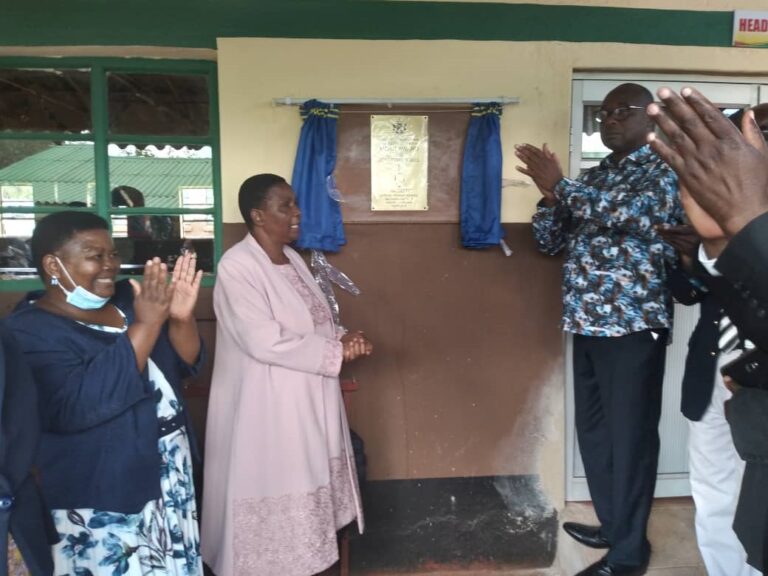
MASVINGO – The Zion Christian Church led by Bishop Nehemiah Mutendi’s Mutendi Primary School was presented with the 2019 secretary’s Merit Award at a colorful ceremony held at the school on Feb 02 2023 for its outstanding performances in different categories to the satisfaction of the ministry adjudicators.
The award was supposed to have been presented in 2020 but could not due to the Covid 19 induced lockdowns which affected all facets of life.
Presenting the accolade, Permanent Secretary in the Ministry of Primary and Secondary Education (MoPSE) said the school had worked hard to deserve such recognition and urged the school to maintain or do more and never to slide down from the pace it set for itself.
She said the school worked hard to fulfil government requirements, which is one of the most critical issues that the ministry looks at before awarding the secretary’s bell.
“The Secretary’s Merit Award is a quality control and supervisory tool that recognizes schools of excellence as models that others can emulate. Through this award, we recognize achievements by pupils, teachers, parents and school administrators,” said Thabela.
Thabela took the opportunity to share the ministry innovations and policy guidelines that include Foundation Learning which is aimed at strengthening foundation literacy and numeracy where infant stage learners who cannot read will not qualify for the next level.
She also talked of Zimbabwe Early learning Assessment, Mobile Science Laboratories, Curriculum review and Green and Blue schools where schools put in place mitigatory measures against effects of climate change.
The school head Geofry Muchokoti said the award came as a result of collaborative work between the school, parents as well as a supportive responsible authority which supports the school in all aspects.
“We worked hard to get this accolade; there was a unity of purpose between staff, pupils, parents and our supportive responsible authority. We have state of the art boarding village, good and educative signage at the school and this all contributed to this achievement.
He said the school was running a number of agricultural projects which has the school producing most of the food to feed the boarders from their produce.
The award comes with the Head’s Tablet and certificate of excellence, 40 tablets for pupils, projector, electronic interactive board, teacher’s laptop and a plaque in lieu of the Secretary’s Merit Award
Masvingo North MP and Deputy Minister of Agriculture Davies Marapira promised the school a fish pond.
Zimbabwe Foundation for Education with Production (ZIMFEP) gifted the school with 100 day old roadrunner chicks while former student Brian Mudumi donated three laptops for teachers, and 10 tablets for learners.
He also pledged to pay fees for five talented but underprivileged learners from each grade as well as facilitate the learning of Chinese language at the school.

Council illegal parking head ache continues

…As bus operators resist directive to leave town

TellZim reporter

Masvingo Urban councillors have expressed concern over the continued defiance by bus operators who have and continue to defy the local authority’s directive to use Mucheke bus rank and desist from use of illegal pick and drop points in the Central Business District (CBD).
Speaking during a full council meeting held on January 30, 2023 at the Civic Centre, councillors quizzed management led by Acting Town Clerk Vitalis Shonhai on why the resolution to drive buses out of the CBD was not being enforced.
Shonhayi however promised that management would employ other ways to enforce the resolution though he admitted the authority is facing strong defiance from the transport operators.
“On the issue of implementing that resolution concerning buses, we face some form of resistance from the transport operators, so we are trying to embark on a multi-sectoral approach where we would like to work with partners like Zimbabwe Republic Police (ZRP), Vehicle Inspection Department (VID) among others to solve the matter,” said Shonhayi.
Mayor Collen Maboke said there was no need for council to continue engaging those ‘errant’ operators but clamping those illegally parked vehicles is the best way to go.
“We have a resolution in place concerning these transport operators and the best way to go is to resort to use of clamps and fine those found wanting so that sanity can be restored in the CBD. There is no need to worry over resources to enforce that because we just need to use the clamps we already have,” said Maboke.
Ward 10 councillor Sengerayi Manyanga weighed in urging council to even approach the Minister of Provincial Affairs and Devolution Ezra Chadzamira to help them ensure compliance on part of transporters is realized.
He added that getting those transporters out of town would also help get rid of illegal vending in the CBD as people would be attracted to the rank.
“We should just make use of those clamps and impose stiffer penalties for example US$ 200 in case of a bus being clamped for illegal picking and dropping offences and that would deter the transporters from using the CBD.
“There is need to ensure that all buses use Mucheke rank so that if the rank is doing well and so will be the activities of the local authority,” said Manyanga.
The move by council to drive commuter buses and other vehicles out of town seems to have hit a brick wall as Chevron hotel, Pick n Pay and Croco Motors among others continue to be used by those operators despite the fact that there are no ablution facilities at those areas thereby presenting a health hazard.

Danger looms in Sakubva as footbridge goes unattended

Branton Matondo

Mutare- Parents with school-going children, community stakeholders, People with Disabilities (PwDs) and residents have expressed worry of an impending disaster over the sorry state of Sakubva footbridge connecting Old Townships and National Railways of Zimbabwe (NRZ).
Concerns over a rust eaten base and absence of supporting bars have raised questions on the accountability of responsible authorities.
The footbridge is used on a regular basis by residents who come to and from town and Chikanga.
A resident from Sakubva, Tafadzwa Chidare said children often run on the bridge which has not only developed depressions at the base but has no side support bars.
“Council should act now. City fathers should not react when a disaster occurs. Such structures are important because they are used every day. Sometimes you doubt before crossing the bridge showing the level of dilapidation,” said Chidare.
Another resident Memory Chihohwa from Old Townships said there is need to build a completely new bridge.
“I am one of the people who use the bridge on a daily basis. There is need to completely construct a new bridge, one with proper standards and that is a bridge which is safe for children, the elderly and people with disabilities,” said Chihohwa.
Contacted for comment, Mutare Central Constituency Member of Parliament Innocent Gonese told this publication that the issue is under discussion and it is one of the priorities this year to revamp public structures for easy access.
“The issue of people with disability was raised on access to public places. So that’s one thing we are definitely going to look at, in particular issues pertaining to footbridges. We will do an assessment and map a way forward. It’s an issue of concern since the bridge is used by residents from Sakubva,” said Gonese.
People with Disability (PwDs) champion Rutendo Makamure recently called for the local authority to prioritize restructuring of the footbridge for easy accessibility.
Mutare Residents and Ratepayers Association (MRRA) Programmes Director David Mutambirwa also said children’s lives were at risk.
“We are very concerned with the neglect by City fathers with regards to Sakubva footbridge. School children and members of the public are at risk particularly during the rainy season as they cross Sakubva River to school in Chikanga and vice versa. Residents who cross the same river to Sports field Market place are equally at risk. We implore council to seriously pay attention to the bridge,” said Mutambirwa.
The issue was raised during council’s budget consultation meetings across 19 wards within Mutare but the city fathers are yet to respond to the issue.
Residents also raised the same issue at a community engagement meeting held at Moffat Hall on the December 8, 2022 citing that council public structures are beyond repair.

Masvingo City Council to install 1.6 MW solar power plant at Bushmead

Courage Dutiro

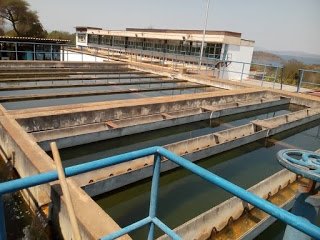
Masvingo City Council has approved the proposal to construct and install a 1.6 Mega Watts solar power plant as an alternative power supply at the city’s Bushmead Water Works.
The development was revealed in the Finance and General Purposes Committee minutes of January 23, 2023 which shows that council has approved the construction of a US $ 5 122 000 power plant.
“The proposal to construct an alternative power supply at the Bushmead Waterworks at a cost of US $ 5 122 000 be approved,” read part of the minutes.
The local authority has agreed on the installation of a solar power plant following the feasibility study done by The Design Team Consulting Engineers.
The report also shows that the proposed 1.6 MW solar power plant has a running cost of US $ 14 760 per year.
“It was noted that the most suitable alternative was construction of a 1.6 MW solar power plant with running costs of US$ 14 760 per year compared to a 2.5 MVA Generator with a running cost of US $1 208 566. 80,” read part of the minutes.
The proposed solar power plant constitutes invertors; panel and battery bank but excludes overhead line construction.
Council is however yet to identify sources of funding for the project states part of the minutes.
The move by council to construct an alternative power plant is welcomed as the country is currently facing a power crisis following the announcement made by government late last year that water levels at Kariba dam had decreased to the extent that power generation had to stop under the instruction Zambezi Water Project.
Masvingo city has at times experienced water supply cuts to residents as a result of persistent power cuts by the power utility Zimbabwe Electricity Supply Authority (ZESA).
Some of the resolutions made at Cop 27 also support the use of solar power as a source of energy following the trends displayed in climate change.

HRDs anxious about incarceration after effects

0

Theresa Takafuma

The prolonged incarceration of vocal opposition leader Job Sikhala has raised fears in human rights defenders who are also anxious about their health being tampered with during long jail stays.
Activists Makomborero Haruzivishe and Pride Mukono who have been incarcerated several times have said they are worried they may be going the same route as late political activist Patson Dzamara as they are experiencing symptoms related to colon cancer.
Dzamara was brother to journalist and activist Itai Dzamara who disappeared in 2015, and the younger Dzamara succumbed to colon cancer in 2020, raising speculation that his health might have been tampered with during his several arrests.
Mukono, who has been arrested several times related to his activism recently revealed that he is presenting symptoms associated with colon cancer, which is making him suspect that he may be a victim of slow poisoning due to his activism.
“The symptoms I am currently having started after my release from prison in 2019 and I received treatment then and it went away. However from November 2022 I started noticing that I was having the same symptoms as in 2019.
“These included slight pain aches in the lower abdomen and some blood clots in my waste. I initially thought this would go away but it didn’t hence I sought medical attention and I fear this could be colon cancer,” Mukono said.

Pride Mukono

Mukono also said the targeting and arresting of human rights defenders as well political activists on frivolous charges exposes them to the state’s whims that may include food poisoning or otherwise.
“An example is that of my good friend and fellow activist Patson Dzamara who was injected with an unknown substance which I strongly believe is linked to his untimely death.
“It is therefore clear that as human rights defenders and activists we are being targeted by the state for elimination because of the work we do. It is unfortunate and deeply disconcerting for the State to use its machinery to suppress citizens who are exercising their fundamental rights and calling for a responsive and accountable government,” Mukono said.
Haruzivishe also said he had a scare after experiencing the same symptoms soon after his release, which recurred in the past few months.
“I also had some issues; vomiting with blood traces in my early days soon after release and also traces of blood in the past few months which are worrying because one of my co-accused Patson Dzamara experienced the same in 2016/17 soon after we were released from jail.
“We ignored it as it happened inconsistently, only to get worse in 2020 after which he went for blood tests and was diagnosed with stage 4 cancer of the colon,” Haruzivishe said.
Haruzivishe said the thoughts that they may be dying slowly were traumatic, saying he hoped that he and Mukono do not have colon cancer.
“My second co-accused Pride Mukono is also having these symptoms on a serious scale and I hope it’s not cancer of the colon. What has been most worrying is I’m having the same symptoms (blood traces after stool) but on a minor scale.
“I hope Pride and I will be able to have, and also pass our blood tests and cancer screening. This will put our minds at ease because the lingering thoughts that we may be slowly dying are traumatic,” Haruzivishe said.
He added that as someone who has been arrested 37 times and sleeping in police cells for the same number of nights as well as being jailed 13 times exposed to eating cold foods, irregular diets as well as malicious ploys behind bars.
“My problem is I have been arrested 37 times. That’s 37 times sleeping in police cells and getting jailed 13 times. I tried my best to guard my food but the margins of error are high,” Haruzivishe said.
The continued jailing of political activists and human rights defenders has been condemned by local, regional and international human rights bodies.
Sikhala, who has been behind bars since June 2022 was recently reported to be appealing to court after his medication was reportedly confiscated by prison officials, compromising his health.