Home Blog Page 270

The sky is the limit!

Beverly Bizeki

Disability does not mean inability, so goes the saying and the same can be said of one Masvingo woman who defied all odds and attained a doctorate degree despite being visually impaired.
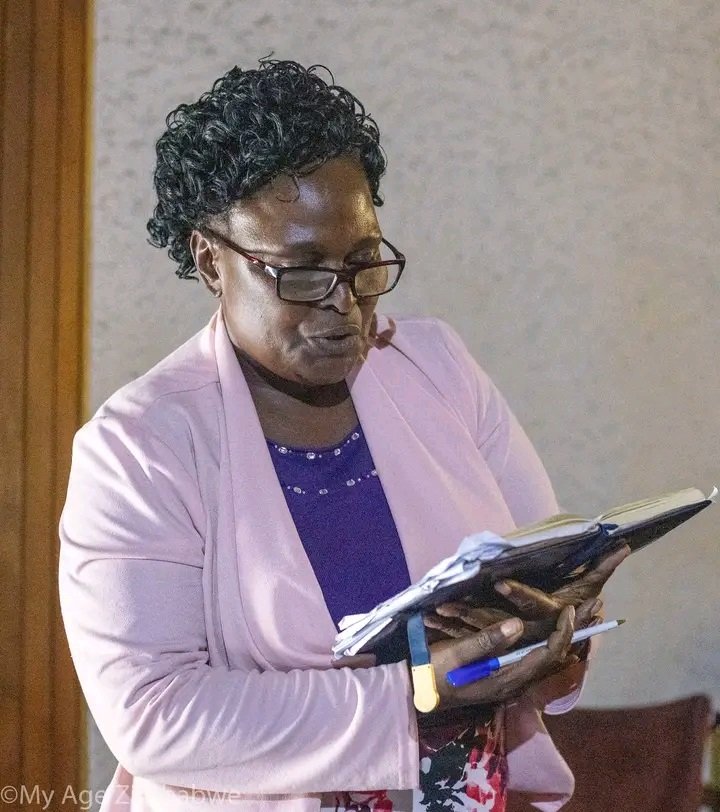
In what could be one of the many firsts for women in Zimbabwe, a visually impaired 52 year-old Dr Farisai Mlambo recently attained the PhD with the University of South Africa.
Dr Mlambo, who became visually impaired at the age of 6 after contracting measles has fought her way up to achieve higher educational qualifications despite facing many challenges like internet connectivity as well as lack of special devices used by visually impaired people.
“Getting foreign currency at times was not easy as I was paying for my own school fees but luckily for me, UNISA chipped in and offered me a bursary twice.
“One of the biggest challenges I have faced is getting underrated because of being a female especially one living with a disability as people tend to look down upon me and thus underestimate my capabilities,” said Dr Mlambo.
Covid-19 as well did not spare Dr Mlambo as she also had to endure a fractured leg thus slowing down her studies though she did not withdraw but soldiered on.
For Dr Mlambo, intrinsic motivation played a greater part in pushing her to study as she desired to achieve that which other females could achieve ruling off the fact that she is visually impaired.
“If anyone is capable of doing anything, then I can do it too even though I am a female who is visually impaired. My husband also played a greater part in motivating me financially and socially, it helped me a lot.
“I strongly believe that one day I can be able to achieve something that people who do not have a disability cannot because I believe I can be anything like a dean of a faculty or even a professor,” added Dr Mlambo.
Dr Mlambo’s husband, Tawanda Mlambo said there were instances when friends were an impediment as they discouraged her doubting her ability to pursue further education.
“People often discouraged my wife advising her that pursuing such studies requires someone who is independent and can work on their own unlike her who requires assistance,” said Tawanda.
Dr Mlambo became blind when she was in grade 1 at Gundekunde Primary School in Zvishavane and had to later on transfer to Copota School for the Blind in 1984 to 1992.
In 1993 she had to take drop out for a year as most schools did not accept visually impaired students for Advanced level but was later on admitted at Gutu High School from 1994 to 1995.
In 1996, Dr Mlambo took up temporary teaching whilst awaiting going to college.
From 1997 to 1998 Dr Mlambo trained as a secondary school teacher at Hillside Teachers’ College in Bulawayo and was deployed to teaching in 1999.
She had her first Bachelor’s degree in Education specializing in English at Solusi University in 2005 on block release to balance work and education.
“I once worked at Mutero and Cheninga then Copota where I was stationed since 1999,” said Dr Mlambo.
She moved from Copota to Morgenster Teachers’ College in September 2012 where she worked as a lecturer up to 2019.
Dr Mlambo is not only passionate about studying but also has an interest in sports and boasts of having plenty of gold medals for training Paralympics.
“I also participate in Paralympic games and was a coach for athletic games in which I am certified for training visually impaired students,” said Dr Mlambo.
In 2013, Dr Mlambo furthered her studies by taking up a Masters of Languages specializing in English with Great Zimbabwe University (GZU) where she graduated in 2015.
Dr Mlambo began to study towards her doctorate in 2016 thus has been continuously studying.
“I am always furthering my studies and already working on becoming a professor with about five published articles so far,” she said.
People are still in the habit of underestimating the ability of visually impaired people in taking up responsibilities which is a challenge for her.
“People are sometimes just skeptical when dealing with people with disabilities.
Some people living with disabilities face challenges on issues to do with marriages but for Mlambo it’s a different case as she has been in school most of the time as I was already in her life.
“Our families never raised any concerns when we wanted to get married as is the case with most people who want to get married when they are both visually impaired,” said Tawanda.
Dr Mlambo also revealed that people have a tendency to trust the assistant of a visually impaired person more than the one executing the duties although she was able to overcome by way of explaining and showing people her capabilities.
Her thesis was ‘Challenges faced by visually impaired students in English language at Ordinary level’.
Currently Dr Mlambo is a lecturer at GZU.

Cholera outbreak looms in Lowveld

TellZim Reporter

A cholera outbreak is looming in the Lowveld after reports of several people testing positive to the disease since November 4 2022.

Masvingo Provincial Medical Director Dr Amadeus Shamhu confirmed that he had received a report indicating one positive case and was yet to confirm with the district officials for an update.

“I only received a report for one case and I am yet to get an update from the district office,” Dr Shamhu said.

He promised to give more detail once he spoke to the Chiredzi district health officials in half an hour but his cellphone went unanswered until the time of publishing.

Chiredzi District Medical Officer Dr Brian Dhlandlara said he could neither confirm nor deny as it was beyond his mandate, saying the publication could contact the PMD’s office.

Sources however revealed that there were now 10 contact cases at Colin Saunders Hospital in Triangle who tested positive on November 4 as contact cases of the index case who is admitted at the hospital.

It was also reported that there were children among those who tested positive.

Chief Neromwe reprimands villagers over child labour

…as CACLAZ launches a continuous programme on social-psycho support

Beatific Gumbwanda

CHIREDZI-Chief Neromwe born Clemence Madzingo recently launched a probe through his village heads to call out parents of children who are filling potholes in exchange for money along Chiredzi-Jerera highway in ward 17, his area of jurisdiction.
Chief Neromwe labelled the practice a form of child labour which traditional leaders, government and various Non-Governmental Organizations (NGOs) have made great strides to put to an end.
Speaking during the launc on behalf of Chief Neromwe, Joseph Matumba said their motive is to establish the names of parents of children who are filling potholes along the highway in exchange for money.
“I have been seeing children along the highway filling potholes for money. I then summoned councillors and village heads to establish the parents of those children who are doing that. It is another form of child labour, where parents are making a living through these children,” said Chief Neromwe.
He also welcomed the initiative from Coalition Against Child Labour in Zimbabwe (CACLAZ) and urged them to extend their charity into educating the girl child to focus on education more than marriage, which is causing a lot of marriage failures and abuse.
“A long time ago, young girls were being married to elderly people as it was part of our culture, which we nowadays need to do away with. This programme that you initiated for us is very good but we also need you to go an extra mile by encouraging these girls that you brought back from school to learn diligently.
“They should also be taught that education is their first husband and everything will then follow afterwards,” he added.
CACLAZ Projects Officer Esnath Ngandini said the programme they launched to promote children’s rights should be an on-going process even if their organization fails to fund for 2024.
“All present government departments, especially the Department of Social Welcome should be able to take this programme forward, whether CACLAZ is there or not in order to strengthen self-esteem in vulnerable children,” said Ngandini.
CACLAZ, a children’s rights organization with the thrust of reducing child labour through the provision of free, full-time, compulsory, quality education to all the children in Zimbabwe last week launched a continuous system on psycho-social support which is aimed at strengthening self-esteem of the vulnerable children in Chiredzi District at an event held at Kushinga Primary School in ward 7.

ZIMSEC fraudster denied bail

0

Beverly Bizeki

A 26 year-old Masvingo man masquerading as a Zimbabwe School Examinations Council (ZIMSEC) official was this week denied bail when he appeared before Masvingo Magistrate Conceptor Ngwerune for allegedly defrauding desperate ZIMSEC certificate seekers and leaking 2022 Ordinary and Advanced level examinations.
Kudakwashe Betserai is accused of fraud and contravening section 35(a) and (b) of the ZIMSEC Chapter 25:18 for unlawfully gaining access or revealing contents of any examination material.
It is the state case as presented by prosecutor Tichaona Chakavarika that the accused defrauded different desperate and unsuspecting ZIMSEC duplicate Ordinary and Advanced Level Certificate seekers.
It is alleged that sometime in February 2020, Betserai approached Econet Wireless Zimbabwe and registered a simcard in the name ZIMSEC Mutare which he used to activate Ecocash and WhatsApp accounts and advertised that he had the capacity to replace lost certificates at a replacement fee of US$ 150.
The matter came to light after victims of the scam realized that Betserai became evasive after receiving the money and stormed ZIMSEC Security and Loss Control manager James Nyabonde’s office in Harare demanding for certificates or a refund to the surprise of the complainant.
The accused is also alleged to have fraudulently obtained an Econet Simcard and activated Ecocash and WhatsApp accounts which he used to distribute ZIMSEC 2022 Ordinary level Mathematics Paper 2, English Paper 1 and Science Paper 2.
The sources from which he got the papers from are yet to be established.
The State said the accused reportedly defrauded more than 50 people using the method and is highly likely to interfere with state witnesses if granted bail.
Betserai is said to have received varying amounts from victims into his Ecocash, Mukuru.com and Innbucks accounts.
A team from Criminal Investigation Department (CID) Commercial Crimes Division in Masvingo recovered an iPhone 6 and Vodafone handset which contains an Econet Simcard used to receive some Ecocash payments and also ZIMSEC O Level papers with indications that it had been forwarded to several beneficiaries.
Betserai was remanded in custody to November 15, 2022.

Exam-cheating Mushandike High pupil gets suspended sentence

0

Lydia Koto

An 18 year-old pupil from Mushandike High School, Edwin Kwenda was given a wholly suspended 4 months prison sentence by Masvingo Magistrate Phillip Makondo on November 1, 2022 after pleading guilty to charges of possessing a leaked ZIMSEC Combined Science paper 2 examination question paper in his cellphone.
The state case as presented by prosecutor Nixon Chamisa was that on October 24, 2022 at around 0900 hours, Kwenda entered the examination room with his cellphone in pocket.
While the examination was underway, Kwenda’s cellphone rang and invigilator Doreen Mazvuru took the cellphone and opened the gallery only to discover that there was an Ordinary Level ZIMSEC Combined Science paper 2 (tallying with the one being written) handwritten screenshot with answers.
Mazvuru took Kwenda’s cellphone and let him continue with the examination.
The matter was reported to the police leading to Kwenda’s arrest.
Kwenda pleaded guilty to the allegations saying his intention was to pass the examination.
Makondo sentenced the pupil to a wholly suspended four months prison term on condition that he does not commit a similar offence over the next five years.

New Zimbabwe to UK mass migration: A mixed bag of opportunity and heartbreak

It is not many months ago since I found myself writing to the UK government on behalf of the diaspora community following deportations en masse of Zimbabweans. Some people had lived in the UK for all their adult lives, and many were approaching their old age. Separation with family is such an excruciatingly painful process, that to one who has not had such experiences, it’s quite easy to trivialise it, and make such humorous caricature of men with ‘shangani’ bags. The man with a ‘shangani’ bag is someone’s father, someone’s lover, brother and so on. I have had such a traumatising experience of helplessly attempting to console big men breaking down, sobbing like little children, faced with the deportation prospects.
Former Zimbabwean President Robert Mugabe warned us about migration challenges, but what alternative did he provide for us? Many left because of his policies, and anti-opposition cruelty. Fewer people left the country during the colonial rule than during his reign, and even greater numbers are leaving today due to his legacy, which leads in essence to the real reason for this article. Mugabe’s legacy has been the main “push factor” for population migration from Zimbabwe. Migration labour movements are often explored from “Push and Pull” factors as equal forces. A theory which was first coined by Ravenstein of England in the 19th century. The theory’s assumption is that international migration is the result of a combination of reasons that incite or force a person to leave a country of origin (push factors) and reasons that draw a person to a particular destination country (pull). In my submission, I believe that the Zimbabwean situation has been more “push” than the pull effect. UK has always existed, with even much easier conditions for people to emigrate from Zimbabwe to UK, a situation which many of our political elders (themselves) took advantage of to come to the UK for studies. I deliberately chose to describe them as political elders and not leaders for two main reasons, age, and the fact that a greater number of them are perceived as mis-leaders in the country, reasons which have caused the mass emigration of the citizens, including in some cases their wives, husbands, and children.
I recall around early 2000, a time before my emigration journey to UK. There was only one theme which dominated discussions wherever you met people, whether in the ‘holy’ circles of churches, at those who enjoyed their pass time with “holy drink”, or even at workplaces. You would just hear that so and so has left for UK, surprisingly they just left without warning, or a word, even to their close relatives. I believe there were examples of some who left without informing their wives nor children. It was a common occurrence to just discover in the morning, that a colleague has not turned up for work. I heard of many cases where some just abandoned company cars at the airport. They did not bother to handover any work or materials which belonged to their employment. One would wonder whether it is just a Zimbabwean way of things to be so secretive, even when people are doing same things (could sharing notes not increase prospects of success?). People are not even comfortable to share information about their health conditions, simple things like blood pressure and diabetes, where you can learn ways to manage your conditions from each other. What are the reasons? Some attribute this attitude to spirituality and fear of witchcraft, some believe that it jinxes your chances, some believe that people can betray your trust and phone the UK authorities to “grass” you about your prior arrival and about the falsehoods you intend to present as the reasons for your visit. Some just fear the embarrassment which comes with deportations in case they are refused entry.
This continues throughout the journey and settlement in the UK though, surprisingly. On arrival we were coached by those who arrived before, if you are that lucky to have someone so generous, in some cases unlucky, because some of the coaching and knowledge was extremely detrimental. We were taught to use false names to secure employment, and false documents were an easy reach, “just your pocket”. Some of the compatriots pretended to be from other countries other than Zimbabwe, not sure why any other poor country in Africa could be a better association option than Zimbabwe. Meanwhile Nigerians, Congolese and many other nationals were travelling to buy Zimbabwean passports to come to the UK to claim Asylum. Each fellow Zimbabwean you met pretended to have everything in order. No one would tell you about claiming asylum, but Home Office records state that an estimated 20 000 people from Zimbabwe claimed asylum in the UK at the beginning of year 2000. Who are those 20k people then? Maybe they are not Zimbabweans, it could be other nationals who took advantage of the Zimbabwean political meltdown, because every Zimbabwean I met then, claimed they had work permits, or they were students at universities/colleges. If they were students though, they must have been unique students.
They never seemed to miss a work “shift” (as we called it), and they worked very long hours, contrary to UK law which allows students to only work 20 hours a week. If they really had work permits also, in early 2000 work permits were for higher skills jobs, why were these people working 60 hours a week in factories and care jobs? At what point did they work in their specialised fields which they got the permits for?
Fast forward – 20 years later, UK Home Office announces deportations of failed asylum seekers to Zimbabwe. You begin to hear of detentions and, “on the run” of very close compatriots. Some eventually braved it and reached out to their communities for support, however, some chose to face deportation than to seek help and support from their communities, not sure if this is the wisest way of dealing with problems and challenges. Even those who later came out to seek help, I would like to believe that their situation could have not reached the deportation stage if they had opened up and shared their problems with their communities in time. In Shona they also say, “benzi bvunza rakanaka” (meaning , everyone has the potential to give helpful advice, just ask, do not look down upon anyone). Many came to the UK through the asylum route, and there is nothing embarrassing about it. They have legitimised their stay and are now very productive UK citizens, and government are very aware of that, hence the reason they have extended yet another opportunity to take more people from Africa. Zimbabwe is leading on this exodus.
A new wave of movements to UK has resumed since “Brexit” (a term used to describe UK withdrawal from the European Union). And compatriots are using again, the same “modus operandi” Everything is done quietly. Nothing was learnt from the early 2000 movements. We hope not to have a repeat of the 2021 deportation lamentations. The current movements have taken a two-way process of “hush tones”, an environment so dangerous for exploitation of each other. The Zimbabweans who have already settled in the UK have seized the opportunity to deal with the labour market deficit in the UK, a great idea, and as usual, we all do the same thing, but with cards close to our chests. Again, not sure if it’s induced by the same fears such as those of 20yrs ago, like witchcraft and so on. Society has a tendence to name their children after great events, I would not be surprised to hear of some youngsters called COS in a few months (Certificate of Sponsor, a document that I am also desperately looking for on behalf of my loved ones). Most people in Zimbabwe and other parts of Africa are looking for this golden document. Many are selling homes to purchase this document which is sold by the prospective employers in the UK. This document is supposed to be for free to the employees under UK immigration law (1971 Immigration Act), hence its literal meaning “certificate of sponsor”. It means the employer is the sponsor, the reason why the employer applies for the employment sponsor licence from the Home Office. However, if you are Zimbabwean, you really understand, “the nothing for free” statement. There is no need for much labouring with details around this, unless you want to make more enemies than friends in my society. When you ask friends that run the care companies about these COSs, the information you get is so sketchy, even information to also register a similar business is not easily shared. We have coined a statement, “that’s a Zimbabwean way anyway”, so, is it surprising? In Zimbabwe also, friends and relatives are busy running around chasing for COS quietly, they do not tell anyone, in case the witches catch wind and jinx things as usual. The problem though, just as in early 2000, the episode does not go without victims. The pains and the joys of social media, it’s not regulated, you just wake up to very traumatic wailing of victims without warning. Victims just pope up on your Facebook without discretional warning, it doesn’t matter your nervous disposition to handle such content. The secretive “opportunity environment” is the breeding and hunting ground for scammers. They maximise; asking for divine and ancestral spiritual intervention does not help once you have been duped.
Current Zimbabwe and other Sub-Saharan African countries UK migration a potential Windrush Scandal again in UK?
Many historians describe Windrush Generation as a group of people, who collectively acquired their name from the Ship HMT Empire Windrush, which ferried the people from the Afro Caribbean Islands to come to work in the UK post Second World War. While one strand of the Windrush narrative relates to the arrival of the actual ship, another strand constructs Windrush as a metonym which stands for all who arrived in this time frame, thus, period between late 1940s up until around 1962. The moment of arrival captured by the Windrush has become a symbol for all those occasions when any other black people became part of the British nation.
The way the Windrush generation were treated despite their immense contribution to revive the UK post 2nd world war economic decline, and their subsequent battle to claim legitimacy as UK residents and citizens has consequentially far-reaching devastating effects on how the labour market participation of black people is perceived in UK. The treatment of the Windrush generation has created a residual stereotypical image of generations of African descent as an underclass labour force, often necessary for poor quality jobs, who can be discarded when their need is no longer required. There is also fear that history may repeat itself with the contemporary SSA new labour migrants arriving in the UK, particularly in the social care industry, where the government has embarked on a massive drive to recruit staff from abroad to fill mounting shortages following Brexit. There are already shocking reports of challenges being faced by the arriving migrant workers under the schemes, thereby fueling fears of the Windrush reproduction.
Recent media and other independent organisation reports cite poor regulation as the main challenge, which is leading to the migrant workers facing long delays in their visa renewal application process, causing rent arrears, homelessness, employment and health issues to the victims. The Guardian recently reported that migrant workers seeking to extend or formalise their immigration are given a status called 3C while they wait for the Home Office to process their application. The purpose of section 3C, 1971 Immigration Act leave, is to prevent a person who makes an in-time application to extend their leave from becoming an overstayer while awaiting a decision on that application and while any appeal or administrative review they are entitled to is pending (Home Office, 1971 Immigration Act). Although their right to work is protected, they however, have no documents to evidence their status, which then creates challenges with employers and landlords. Employers are afraid of the increased penalties if they fail to conduct adequate immigration status checks in line with immigration policy changes from 2012. The changes have made it harder for anyone without documentary proof of their valid immigration status to access healthcare, benefits, driving licences, bank accounts or mobile phone contracts. While unexpected legal changes caused problems for people from the Windrush generation, who ended up unable to prove their legal status in UK, The recent Guardian report raises concerns that, the new group of migrant workers are now facing similar difficulties because of this 3C status and this could lead to same Windrush outcomes.
The section 3C challenge is that it does not extend leave where the application is made after the applicant’s current leave has expired. The 3C leave application is also a complicated legal process, which requires expert legal applications, attracting substantial costs, thereby presenting challenges for these migrant workers. We are already aware that, a majority of our people migrate for low-income jobs such as social care jobs, and other jobs which attract little local market demand due to the level of remuneration and conditions of service. This, therefore, compounded with migrant workers’ limited understanding of UK laws, and support networks, result in many failing to extend their visas within required time frames, which then presents a wave of illegal migrants in the country. There are also high risks associated with employer compliance issues which are not of the migrant workers’ own responsibility, such as rogue employers and agencies who are reportedly extortionately charging applicants exorbitant fees for the certificate of sponsors (COS), anecdotal reports are that charges are ranging from £5k-£10k. The law states that, evidence that the person paid someone to provide the document, and that person was not authorised to accept such payments is grounds enough for withdrawal of the 3C leave. This is a situation which the migrant workers are reportedly trapped in, as they have to purchase these expensive COSs due to lack of choice induced by considerable pressure from lack of opportunities in the home countries, whether conscious or unconscious of the legal implications.
Furthermore, anecdotally, some recruiting employers are people who previously worked in the sectors, at operational levels, not even at middle management levels, or just team leader. They have serious challenges of skills and knowledge deficiencies of the policies, regulations, and organizational management in the industry. Again, because of the fear of “witchcraft”, these employers do not ask for help within time from people closer to them. They then make some errors which then result in the Home Office, and other regulatory bodies such as Care Quality Commission (CQC) revoking their operational licenses. The Home Office gives the migrant workers just 60 days to find an alternative sponsor to issue them out a new COS when the company they worked for has lost the license. This time frame to get another COS is very little, resulting in these employees becoming overstayers without valid visas. Bearing in mind that in that little window, getting another job requires a lot of procedures, such as references, new criminal record checks, some employers prefer you to start by working for them before they can apply for a new COS, meanwhile your 60 days are ticking, no guarantee that they will apply for the COS for you. Once you have become an overstayer, the UK immigration law is very punitive. You get banned for 10 years. To add salt to injury, these migrant workers would have uprooted their entire family, which impacts on children attending schools. Who is prepared to go back to Zimbabwe after you have managed to escape the evils of poverty and the gallows of misrule? How many illegal immigrants are going to result from this situation? Windrush scandal is an understatement.
There are widespread reports of revocation of sponsor licenses among many Zimbabwean community companies currently. Some companies are even losing the licenses before the people they recruited from Zimbabwe, and other parts of the world have managed to set off. Once this happens, the recruited employees’ visas are revoked, or refused, if they were not already granted/processed, despite the fact that they would have paid extortionate illegal COS fees. This is causing unprecedented pain, heartbreak, and community disintegration. In any company or work environment, there are likely to be disagreements naturally between employers and employees, however, unfortunately, when a sponsor licence has been revoked in our communities, the suspicions between the employer and the employees become so dense. Employers then suspect that those employees they had bad relations with reported them to the authorities. The entire community gets at loggerheads. It snaps all the already naturally strained fibres that hold communities together. But who facilitates the company which they work for to shut down, particularly when it impacts on them as well? Anyway, who knows, people make meaning from their experiences? It’s a complex working environment for both employers and employees. There is no data protection, some employers can just wake up on social media telling the whole wide world that they have lost the licences, and their entire stock of staff have no work permits, the same applies for employees. Your work-related hardships are for public consumption on either party, employer, or employee, because of the community connectivity. Is this current work opportunity in UK a real opportunity or just another Shangani bag heartbreak brewing? Will it create the same Windrush Scandal residual effects?

Let’s draw some comparisons between the Windrush Generation and the new labour migrants from SSA

The Windrush generation felt a profound affiliation to the UK, and they travelled with immense hopes and expectations of cultural acceptance and economic advancement. The New labour migrants from Africa are not only imagining a connection with the land of UK and its white indigenous inhabitants, they also have a deep reconnection fantasy with their brother, sister, uncle, aunt who left them home some few decades ago. To their unbelievable shock, the cultural distance that has grown in between them is unimaginable. Africans in the UK, who settled earlier are now whiter culturally than the white themselves, that, even intra family, there are massive gaps depending who is acculturing faster than the other, is it father, mother or children? They are not acculturating at the same rate. The new African migrant worker is now living with his very close relatives, but distant by time and geography. You must have a temporary shelter while you wait to get on your feet and independent, it does not matter you are now in your 50s and set in your ways. You must adjust and comply with the norms and values of people you live with. You have a flimsy familiarity with the problems of your relatives, and you kind of knew before you came. You always heard about their telephone calls reporting their “on and off”, lifestyle, however, it’s a different ball game when it’s a live drama in your face. You are caught in the middle. It’s easy to become a victim of circumstances depending which side of power in the house your actual relative is, wife or husband, in some cases children are even more powerful than their parents, they are now in their teens and twenties but living at home.
In the same fashion with new African migrants, the Windrush generation were also escaping from high unemployment, low wages, and chronic lack of opportunity at home. They came to fill the UK labour market challenges following 2nd world war economic decline. African migrants are also coming to deal with post Brexit labour Market Challenges, compounded with economic crisis due to Ukraine war, and the recently passed COVID pandemic. However, although the Windrush generation presented cheap labour benefits opportunity, they brought with them some unintended consequences to the United Kingdom’s homogenous community. It is widely acknowledged that their arrival marks a challenge to the sociological solidity of the national narrative. The Windrush has created a national narrative of the presence of migrants considered unassimilable to the old conception of national identity of Whiteness. Windrush is the most recognized migration period of black people who trace their origin to Sub Saharan Africa, and the repeated inscription of the Windrush across various cultural forms does not only respond to a history of complex migrations and mobilities, but to a need to recognize this event as a revolutionary rupture in a national identity imagined as homogeneous. Gendering it to all male immigrants, even when many historians and writers acknowledge that these migrants also included women and children was purposefully crucial in constructing these immigrants as a threat to the white monocultural society. I am very keen to see how the indigenous UK white middle class are going to respond to this unprecedent new influx of black people in not-so-distant future. To put things into perspective, the home office figures are presented below:

Table 1. Work visa applications and outcomes, by nationality, in the year ending June 2022 – (Home Office Immigration Statistics)
Nigeria, Zimbabwe and South Africa are now in the top ten countries supplying labour force to the UK. Of course, India and Philippines will always be the top global suppliers, nothing new. Thanks to Brexit, UK’s labour market demands have shifted attention towards Africa. Despite Zimbabwe’s population size, it is just number 6 below United States by a very small margin. Amongst the top 10 countries, Zimbabwe is the country with the smallest population, but has very high numbers of migrant workers leaving for UK.

The rate of SSA migrants coming to work in the UK has dramatically risen in the year 2021/2 as demonstrated on figure1. The figures for 2022 just by June are almost equal to the figures of 2021. Presenting a potentiality to double the 2021 figures by the end of the year.

Figure 1. Total work visas granted for SSA migrants 2010-2022 (Home Office statistics data tables, year ending 2022).
What should we do as a Zimbabwean/SSA diaspora community to reduce the likelihood of the 2021 Shangani bag deportations repeat, and potential “Windrush scandal” problem among our communities? You do not want to be always reactive, but proactive to address the problems before they happen. Currently there is a huge leverage potential for negotiations with the UK government to push them to adjust some of their policies that impact on the labour market participation of new SSA migrants. UK is clearly in dire labour force shortage, and anything that promotes sustainability of labour market participation of the new migrants is an open table invitation. Brexit has reinvigorated Britain’s re-engagement with the world beyond Europe, particularly its former colonies. The special relationship that Britain has with its former colonies was clearly neglected due to the UK’s EU membership which had supposedly diverted British attention solely to its near European neighbours. The EU membership continued to hold back Britain’s stronger trading links with SSA. So, the sudden turn to recruit large a number of workers from SSA is a clear demonstration of the recovery of this relationship. The UK Zimbabwean, and its SSA diaspora community counterparts should now engage the government about the challenges faced by both the black employers and employees in sustaining the labour market engagement. The SSA governments should also join hands in these negotiations, than waiting for just deportation engagement of their citizens in return for bribes and aid. There is also issues around international crime which require urgent attention. The international recruitment process is making communities vulnerable to scammers and there must be robust bilateral engagements to police the recruitment environment to apprehend the scammers. The employers and employees should also make closer networks to deal with their challenges and have some internal or intra community mechanisms for conflict resolutions. There is no need to always resort to mainstream institutions, whose main agenda is largely to sink your efforts. This is a lifetime opportunity which our communities can maximise on if well managed. However, it can also be another source of community disintegration, pain, and heartbreak if not well managed. I always say we are our refuge; our safety is in each other.

Written by
Chris Goshomi
PhD Candidate
Politics and International Relations.

Research Focus, Sustainable labour market participation of generations of African descent in UK
(The writer writes in his personal capacity. Any views contained in this article are not necessarily the newspaper’s views.)

Chitima management committee under fire over funeral contributions

TellZim reporter

There was drama at Chitima flea market on October 31, 2022 as traders clashed with the committee overseeing the trading place with the former accusing the latter of misappropriating funeral bereavement proceeds amounting to US$ 162.
The traders accused the committee chairperson Godfree Mudhumo of deliberately delaying with more than three weeks to disburse funds raised following the death of Panashe Tavengwa whose husband MaxWilliam Chizheve is a trader at the place.
However, Mudhumo refuted the claims which he rubbished as part of cheap politicking against his leadership at the flea markets and said the necessary channel was followed though he was surprised to note that the beneficiaries were declining the bereavement fund after burying their loved one.
“As part of our work, we have policies that we follow if one of our members is affected by an eventuality like death in this case. It only happened that by the time our executive finished collecting the funds, the bereaved family had already gone to the deceased’s resting place and we could not give them the contributed money in time.
“However, all those accusations are part of politics against the executive I lead from some traders with hidden agendas. I am a regular traveller who is always away from the flea market but I had to leave the contributed money with my deputy so that when they come back, they can get it.
“To my surprise I was told that the beneficiaries had rejected the funds asking why they were delayed and only released after the funeral. We then made the necessary communication to address the issue but that is when people gathered. I feel there was nothing amiss on the manner we handled the funds,” said Mudhumo.
Obey Marashwa who is a brother-in-law to Chizheve had a different version of the story as he accused the management of deliberately delaying the disbursement saying it was a plot to frustrate the bereaved and diverting the funds to personal use.
“As the bereaved family, we were surprised that the money collected on October 3 had to be surrendered on October 31 after traders had gathered at a meeting organized by one of the losing candidates in the elections that ushered in Majoni-led executive.
“We felt the executive was trying to frustrate the bereaved family by employing delaying tactics so that the case would die a silent death and the funds diverted elsewhere. The family instructed me to collect the money, but the executive declined insisting Chizheve should collect on his own leading to the flash demonstration by traders who demanded their money back,” said Marashwa.
He also alleged that the executive demanded contributions from traders purportedly to buy sanitizers during the peak of Covid-19 era but they never bought anything since traders were restricted from trading.
Tavengwa is reported to have been buried at their rural home in Bikita.

2022 Mayor’s Christmas cheer fund launched, businesses donate

Beverly Bizeki

The 2022 Mayor’s Christmas cheer fund launched earlier this week saw various businesses in the city donating an assortment of goods towards the cause.
Prominent Masvingo real estate agent Great Zimbabwe Realtors donated various groceries towards the initiative.
Masvingo Junior council team also donated various clothing items and OK Zimbabwe also pledged to donate groceries.
Great Zimbabwe Realtors donated 20 kg rice, 20 kg sugar, 20 kg flour, 24 litres cooking oil, 100 rolls of tissues and 18 kg macaroni.
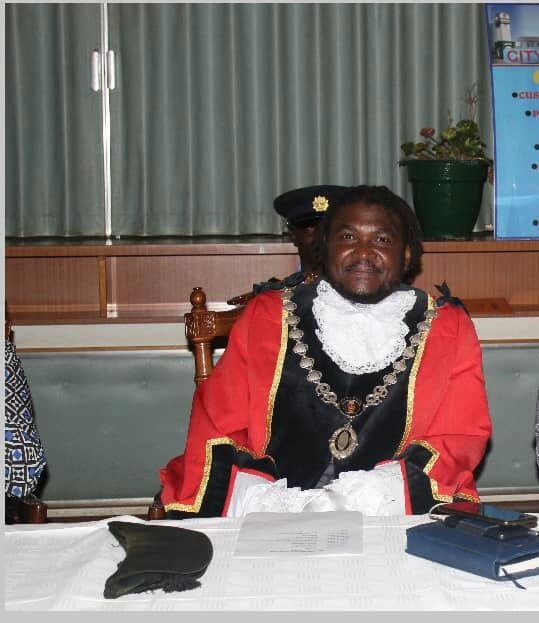
Masvingo City Mayor Collen Maboke launched the programme at Masvingo Civic Centre on November 2, 2022.
Maboke urged the city to give a hand in this donation to show love to the less privileged especially during the festive season.
“Despite the harsh economic conditions, we can be able to put smiles on the less privileged if we work together in giving what we have,” said Maboke.
Other donations were made in cash with the total amounting to US$ 110 and ZW$ 131 000.
Pledges amounting to ZW$ 230 000 and US$ 10 were also made at the launch.

Man kills brother for encroaching into his land

Tinaani Nyabereka

Gokwe- A man was killed by his brother after confronting him for encroaching into his land while ploughing in an incident that took place on October 31, 2022.
It is alleged that Ruyamuro Matsaukirwa (42) of Matsaukirwa village under Chief Chireya was working on his field when his elder brother man Jongwe Matsaukirwa (49) of same village approached him and asked why he was encroaching into his field.
That led to a misunderstanding between the two which degenerated into a fight.
Jongwe snatched a machete from Ruyamuro and struck him once on the chin.
Ruyamuro however managed to disarm his brother and struck him on the back of the head before he died on the spot.
A report was made to the police and the suspect was arrested and will appear in court this week.
Jongwe’s body was ferried to Gokwe North District Hospital.
Midlands Provincial Police Spokesperson Inspector Emmanuel Mahoko has since appealed to members of the public to respect life.
“The police are urging members to respect sanctity of life. This incident could have been avoided by involving third parties,” he said.
Cases of gruesome murders continue on an upward trend in the Midlands province with machetes, axes and knives being the most used weapons in such killings.

11 suspects in court over killing of Taurai Takawira

0

Lydia Koto

Eleven suspects from Mushandike Resettlement Area in Masvingo appeared before Masvingo magistrate Conceptor Ngwerume on November 5 facing allegations of murdering Taurai Lovemore Takawira who went missing on September 30 2022 in circumstances linked to power wrangles between Chiefs Bere and Charumbira.

The 11 will appear in court again on November 14 for the continuation of trial.

The accused are Shelton Samuel (50), Nogo Zicheche (61), Moleon Mbengo (46), Eriya Kwangwari (72), Elfas Mudhenge (72), Brighton Madzivire (29), Vunganai Makono (63), Ratiel Muvingi (82), Winterton Chirove (64), Aquilla Muzenda (57) and Paul Clever Munankopa (71).

The state represented by prosecutor Tinotenda Makoti said on September 30, the three village heads namely  Takawira, Mike Wengedzai Matambanadzo and Luckson Sinamai under Chief Bere were at village 17A Mushandike Resettlement Area, Masvingo clearing a piece of land allocated to Sinamai by Chief Bere.

While clearing the land, the accused came to Sinamai’s land and assaulted the three.

Sinamai and Matambanadzo managed to escape leaving Takawira (who was not feeling well) behind at the mercy of the now accused people.

Takawira was never seen nor returned home from that day until November 3 when his decomposing remains were seen by Gilbert Gomorera in the grazing lands when he was looking for his cattle.

Gomorera went to report to the police leading to the arrest of the suspects.

Prior to the discovery of the remains, eight of the 11 accused were once arrested by the police and charged with assaulting Matambanadzo and Sinamai while Bere clan members continued the search for Takawira.

Chief Bere’s spokesperson Adnos Chikomo said as a clan they still maintain the death of Takawira is motivated by the power wrangles between Chiefs Bere and Charumbira.

The area under contest near Bhati area is now supposed to be legally under the jurisdiction of the recently resuscitated Bere chieftaincy while the Charumbiras to whom the land belonged before the reinstallation of Bere are reluctant to relinquish it.