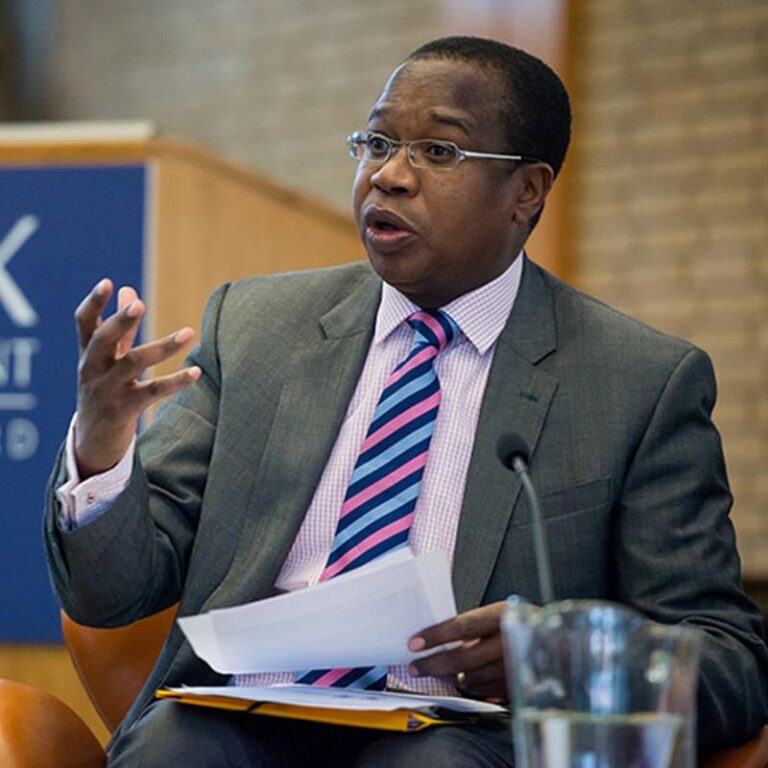
Bernadette Chipembere Tamba is a dynamic and multi-talented leader with a strong background in agribusiness, gender advocacy, and local governance. She is a seasoned sugarcane farmer and Director of Rhinocane Investments, bringing extensive experience in sustainable agriculture and women-led agribusiness. Her commitment to community empowerment is reflected through her work as the Founder and Director of Women and Girls Matters Development Trust, a grassroots initiative advancing gender equality, women’s rights, and development in the Lowveld region. Bernadette served with distinction in Chiredzi Town Council from 2001 to 2013, including a term as Deputy Council Chairperson, where she championed service delivery and women’s participation in local governance. Her leadership extended nationally and continentally through roles in the Forum for African Elected Women and as Deputy Chairperson of the Women in Local Government Forum, where she advocated for inclusive leadership and policymaking. She has received advanced training in grooming, leadership, and public service from various organizations, including Gender Links, where she was mentored by Priscilla Maposa and Colleen Lowe Morna, Women in Politics Support Unit (WIPSU), Urban Council Association of Zimbabwe (UCAZ), and Zimbabwe Local Government Association (ZILGA). Additionally, she has been trained by the Urban Institute, Ministry of Women’s Affairs, Plan International – Chiredzi Office, and has received grooming and presentation training from Faith T. Bhebhe, as well as finance and management training from Tandi Mulovane. Bernadette is also part of the ZimTrade “She Exporter” Class of 2024, a testament to her commitment to women’s economic empowerment and export readiness. She is also the founder of Ladies Dream Trips, a wellness and appreciation initiative that curates travel experiences for hardworking women—from the fields to boardrooms—celebrating their contributions to society. With a legacy rooted in service, empowerment, and enterprise, Bernadette continues to inspire and lead by example, fostering resilient communities and uplifting the voices of women and girls across Zimbabwe and beyond.
The doctrine of in loco parentis, which entrusts teachers with the care and well-being of their pupils, is being severely tested as A 43-year old Mwenezi’s Choruvonga Primary School teacher, Emmanual Chikati, recently arrested on six counts of indecent assault and rape involving three minor girls. The shocking case has raised questions about the vulnerability of students in the classroom and the limits of teacher-pupil relationships as the community grapples with the harsh reality of teacher-student abuse. Chikati who reportedly sexually abused three minors on different occasions was not asked to plead to the six charges when he appeared before Mwenezi Magistrate Tafadzwanashe Marowi, on July 4, who remanded the accused to July 16, 2025 where he will appear at Chiredzi Regional Court for trial. The State case as presented by prosecutor Leonard Chimombe is that between the month of February to May this year, Chikati allegedly sexually abused three minors aged 12, 13 and 14 on different occasions. Chikati, who is a the victims’ class teacher is said to have called the minors in his office on different occasions where he reportedly propose love, fondle their breasts and made the minors suck his private parts before threatening them not to tell anyone. At one point Chikati is said to have showed one of his victims pornographic material from his phone before slightly inserting his organ into the minor while in his office. The matter came to light after Chikati reportedly punished one of the minors for absconding a Saturday lesson. After punishment, the victim told others that the real root of the punishment was failure to visit the office for the regular abuses not the absconding the lesson. This led to the other victims to open up as well leading to Chikati’s arrest.
Bernadette Chipembere Tamba has made history by becoming the first female chairperson of the Zimbabwe Sugarcane Development Association (ZSDA), outshining her former lecturer, Professor Munashe Shoko, in the elections held recently. Tamba won with 63 votes followed by Professor Shoko who garnered 45 votes and Darlington Moyo with two votes at the organisation’s second Elective Annual General Meeting held at Mkwasine Country Club since its split in 2019. Professor Munashe Shoko is Tamba’s former lecturer at Great Zimbabwe University (GZU)’s department of Agriculture and Natural Science where she did a certificate in Sugarcane Farming. Gabriel Tondhlana, who served as the Secretary General during the last board, decisively defeated Jameson Mbiri with 76 votes to 38. Solten Financial Managing Director Saul Chin’anga, who was the Secretary for Information and Publicity, was elected vice chairperson after garnering 67 votes against Ezra Makaza’s 37 votes and Martin Chaza’s who got 10 votes.
Effort Mtombeni retained his position as treasurer after beating Nelson Muhawu with 86 votes to 22, while veteran journalist and sugarcane farmer George Maponga was uncontested to replace Chin’anga as Secretary for Information and Publicity. Speaking before the election, outgoing Chairperson Elisha Tamirepi urged members to maintain a unified purpose and to empower farmers for maximum yields. “What the future holds for the Association is rooted in our past accomplishments, our current efforts, and the actions of the incoming Executive. Our goal is to enable farmers to produce over 120 tons per hectare and to diversify into profitable ventures. “With the new executive taking over, we look forward to completing our stand construction and expanding the Association’s tillage unit. I encourage the newly elected team to build on the work done by the previous committee in order to further the interests of the entire Association,” said Tamirepi. In her acceptance speech, Tamba promised to enhance representation and assured farmers that the Zimbabwe Sugarcane Development Association (ZSDA) will undergo significant changes. Tamba and team will face several challenges, including the establishment of a new mill in Mkwasine and the construction of Mkazi Dam in Mkwasine.
Zimbabwe’s ballooning public debt, now estimated at over US$21 billion, poses a serious threat to the country’s ability to achieve its Vision 2030 goals, the Zimbabwe Coalition on Debt and Development (ZIMCODD) has warned. Speaking at the opening of ZIMCODD’s seventh edition of the annual debt conference in Mutare recently, Executive Director John Maketo said unless bold reforms were made to ensure debt sustainability, the country risks mortgaging its future development and sovereignty. “If Vision 2030 is to be realized and not remain a poetic aspiration, then debt sustainability must become a national covenant. No loan should be contracted without scrutiny. Institutional and legislative reforms must become urgent priorities,” said Maketo. Maketo called for Parliament, the Auditor General’s office, and civic platforms to play more active roles in overseeing public debt. He also demanded the immediate alignment of the Public Debt Management Act with the Constitution to strengthen legal safeguards against unsustainable borrowing. He said ZIMCODD’s proposed roadmap to debt sustainability includes enhanced domestic resource mobilization, sealing illicit financial flows, and promoting citizen engagement in economic governance. “We must commit to harnessing our own wealth from minerals to digital economies and seal illicit financial flows that robs us of development. We must engage SADC and the African Union to push for Pan African Debt Audit Mechanism and climate justice financing frameworks,” said Maketo. He emphasized that citizen participation, including the involvement of academia, youth, and faith leaders was central to reshaping Zimbabwe’s debt narrative. “Let us not merely beg for debt relief. Let us organize for debt justice, mobilize for equity, and legislate for sustainability invoking the Pan-African ideals of Kwame Nkrumah. Maketo urged Zimbabwean authorities to adopt a bold, sovereign approach to global engagement. “The shifting geopolitical order from a unipolar to a multipolar political and economic order presents Zimbabwe with opportunities to leverage on. The approach at the global stage is that we must enter into engagements not with bowed heads but with bold hearts and clear plans. We have all seen that when push comes to shove, the world retreats into self-serving interests, each country for itself, the camouflage of debt, trade and aid vanishes. We cannot rely on debt and aid anymore without high risks,” he said. ZIMCODD board chairperson Rosewita Katsande, in her opening remarks, described the conference theme, ‘Sustainable Debt Management Towards Vision 2030’, as both timely and urgent. “Our debt crisis deepens inequality by diverting resources from the poor, stifles private sector growth due to high borrowing costs, and threatens currency stability, with 97 percent of our debt denominated in foreign currency,” she said.
A former street kid turned popular airtime vendor in Masvingo town has been convicted of fraud and theft after duping two unsuspecting victims out of over $1,600. However the court is now faced with a challenge – determining the age of the convicted conman, Ronald Macheme, through a dental examination before sentencing. Ironically, Macheme’s rise to notoriety as a successful vendor had inspired many young street kids to follow in his footsteps, seeing him as a role model who had seemingly escaped the hardships of street life. The matter was heard by Masvingo Magistrate Caroline Tafira who convicted Macheme on both counts but is yet to pass the sentenced, pending determination of his age by a dentist since he had no birth certificate of national ID to prove that he was 20 as he claimed. The court heard that on May 11, Macheme convinced Ecocash agent Nickson Kwirirai to send $1,250 to two different accounts, claiming that the money was urgently needed by a popular businessman, Allan Sibanda. Kwirirai trusted him because he had occasionally seen him with the businessman. Little did he know that he was being played. While on the run for the first case, Macheme struck again on May 31, duping cellphone dealer Etienne Makotose out of four cellphones valued at $360. He promised to deliver the phones to a client who would pay immediately, but never returned with the money. Makotose had trusted him because they had done similar deals in the past. Both cases were reported to the police who launched a man hunt and investigations led to his arrest in Gutu on July 06. Only one phone was recovered after Macheme disappeared and the total value stolen was US360, with US$95 recovered. When brought to court, Macheme confessed to using the trust he had built with the victims to deceive them. He also told the court that he had spent the money enjoying himself in lodges and hotels among other things. Precious Takuva prosecuted.
David Mukuze is a shining star in Zimbabwe’s football firmament. The 19-year-old goalkeeper from Mufakose High School has been making waves in the Premier Soccer League (PSL) with his exceptional skills and poise between the posts. In an impressive display of talent and determination, Mukuze made headlines recently as he helped Triangle United FC secure a remarkable draw against Scotland FC in the Premier Soccer League (PSL). The match, held at Triangle United’s Gibbo Stadium, saw Mukuze take center stage. Despite being one of the youngest players on the field, he showcased exceptional skills and poise, upsetting Scotland’s efforts to secure a win. Mukuze’s defensive prowess and quick counterattacks were pivotal in keeping the score level, much to the delight of the home crowd. In an interview with TellZim News, Mukuze shared his experience during his first PSL match against Scotland FC. “Before the game, I was nervous since it was my first time behind posts, and I was facing big players like Khama Billiat and Walter Musona, so I had a lot of pressure. As soon as I got into the ground, the people who supported me instilled confidence, courage, and strength in me as they cheered and called my name, ‘Starra.’ That gave me faith that I could do it, and indeed, I did it,” said Mukuze. Mukuze’s rise to stardom has been nothing short of meteoric. From humble beginnings in Zaka to becoming a key player for Triangle United FC, his journey is an inspiration to many young footballers in Zimbabwe. With his impressive performances, Mukuze is proving that age is just a number, and talent and determination can take you to great heights. He was born in Zaka, where he spent his early life. He relocated to Triangle in Grade 2 and attended Kyle Primary, where his sporting interest was discovered, not in soccer, but in volleyball. Mukuze shared his football history and where he got the inspiration to excel in sport. “I started playing football at the age of 13 when I played social football in the Mufakose residential area and later joined Triangle United U19, playing in Division 2 at the age of 14. I was called for trials at Triangle United FC’s senior team by Coach Jairos Tapera at the age of 15 in 2022 but failed to join the team because of age. I spent the whole year training with the team till 2023 mid-season when I signed the contract with the new Coach Thubani Sibanda. “I used to play volleyball at primary level to an extent that I played National Association of Primary Heads (NAPH) games twice in 2018 and 2019 but later changed my interests to soccer. I got my inspiration from Chris Mverechena, who was playing for Triangle United FC as a goalkeeper by that time, and he made me love soccer and wished me to play soccer. I then started training as a goalkeeper at home and school,” said Mukuze. Mukuze said he balanced his life off the pitch well and credited the support he received from his teachers, family, and the school. “As an Advanced Level learner doing Arts, I balance football and my academics well, giving credit to my teachers who take me for extra lessons from around 19:00 hours to 20:00 hours after my training, and this allows me to balance both sport and academic life. “I also receive maximum support from my family, who motivate me and buy football requirements like kits and boots. From school, they provide moral support; for example, all teachers and my peers from Mufakose came to see me play my first game against Scotland FC,” said Mukuze. He urged youths of his age to stay focused, believe in themselves, and stay away from drugs. “Being a sportsman, you must be physically fit so that you can last long. Taking drugs affects perfomance. The fact that I want more endurance is why I don’t get involved in drugs and other harmful substances,” he said. Triangle United FC goalkeeper’s coach, Brito Gwere, said he was given the opportunity to play when he was young, and that made him believe in Mukuze’s ability. “I played as a youngster, so I give young talented players like Mukuze the opportunity to showcase their ability and skills on the pitch. On the game against Scotland FC, we had a challenge of injuries from other goalkeepers, so we had no option other than to allow him into the first 11 and he proved his ability to handle big games. We motivated him and gave him words of encouragement that he was going to be a good goalkeeper for that match,” said Gwere. Mufakose High head coach, Aaron Chagweda, said he was happy with Mukuze’s performance and how it intertwined with behavior off the pitch. “I can confidently say that Mukuze is a humble and disciplined young lad who is driven by a unique propensity to excel. He has shown remarkable growth and dedication beyond his years. It did not take me time to select him as my team captain for the under-20 boys team. His commanding voice on and off the pitch reverberates with wisdom, and to me,” said Chagweda. Mufakose High Head, Severino Bvunyenge, said Mukuze was a source of inspiration to his fellows and as he embarked on his journey, the school was there to support him. “As head and transformational team leader, it brings me great pride to recognize the remarkable journey of our learner, a goalkeeper whose talent, dedication, and discipline have set him apart as a rising star in the world of sport. “His performance on the field is nothing short of inspiring, a true testament to what focus and hard work can achieve. What sets him apart is his humility, respect for others, and willingness to keep learning. We celebrate not only his sporting excellence but also the positive role model he has become for all learners at the school. As a school, we are proud to walk with him on his journey and look forward to witnessing his rise to stardom,” said Bvunyenge. Not to be outdone, Mufakose SDC chairperson Nicholas Gubunje added his voice saying every parent would be happy to see his children succeed in any aspect and said the school would continue supporting him and all other leaners to reach their potential zenith. “It is every parent’s joy to witness the success of children, but for David, it gives us a promising, prosperous and great motivation not only for him, but for the rest of learners at our school. Commitment and hard work will always produce excellence as exhibited by David. He has proven beyond reasonable doubt that, the sky is always the limit. He has made us proud by raising to stardom in the earliest stages of his life. We will continue giving necessary support for such great strides not only for him, but for the rest of our learners,” said Gubunje. Mukuze’s team, the Sugar Sugar Boys as Triangle United FC is affectionately known as, sits at number 15 with 18 points, 4 wins, 6 draws, and 9 losses.
Triangle Goalie and Mufakose High School Head Severino Bvunyenge
The recent declarations of national hero status for the late Dr Sydney Gata and liberation war hero status for Colonel Claudius Makova have sparked controversy, highlighting the complexities of Zimbabwe’s hero recognition system. While Dr Gata, a former Zimbabwe Electricity Supply Authority (ZESA) boss, was accorded the highest honor and buried at National Heroes Acre, Makova, a distinguished liberation war veteran and military leader, was denied the same privilege. Colonel Makova’s life was a testament to his unwavering dedication to his country and his people. Born with a sense of purpose, he joined the liberation struggle in 1977 under the Chimurenga name George Tichaitora Muchadura, crossing into Mozambique to fight for Zimbabwe’s freedom. Several war veterans from Masvingo Province who spoke to TellZim News on condition of anonymity for fear of victimization said Makova equally deserved to be declared a national hero. The war veterans said it was however not surprising that he was left out because he had no strong political connections with the current government considering that at some point he left Zanu PF to form Zimbabwe People First with former vice president Joice Mujuru. “This did not come as a shocker, we know he deserved but he had no political connections because of his links to Zimbabwe People First and Joice Mujuru,”said one war veteran. Another said real heroes were being sidelined in many aspects while they are alive and after death as witnessed by the honour given to Colonel Makova. “Several comrades were denied that status and many are being left out even on other important programmes while they are alive, so we liberated this country and that was that, our contribution is no longer valued,” said another veteran. On the other hand, President Emmerson Mnangagwa declared the late ZESA boss Sydney Gata a national hero status and was buried at the national shrine while Colonel Makova a distinguished war veteran and military leader was denied the same privilege although he was conferred liberation war hero status and got a state assisted funeral at his farm in Mkwasine, Chiredzi. The two declarations sparked controversy, highlighting the complexities of Zimbabwe’s hero recognition system. A proud son of Bikita, hailing from Chief Ziki’s area, Colonel Makova’s roots deeply influenced his commitment to the nation’s struggle for independence. His military journey took him to Tanzania, where he underwent initial training, and later to Nachingwea training camp, where he honed his skills as an instructor. Furthering his military education, Colonel Makova was sent to Romania in 1979, where he completed advanced military training in 1982. Upon his return home, he was integrated into the Zimbabwe National Army and commissioned as a Lieutenant on July 22, 1983. Throughout his illustrious military career, Colonel Makova rose through the ranks with distinction, becoming Captain in 1984, Major in 1990, Lieutenant Colonel in 1994, and finally, Colonel in 1995. He served in various capacities, including Public Relations Officer, Officer Commanding Shows and Displays, Deputy Director of Public Relations, and Director of Public Relations. Colonel Makova’s commitment to personal development was evident in his academic pursuits. He earned a Higher State Certificate in Public Relations, a Higher Certificate in Marketing, an Intermediate Diploma in Journalism, a Diploma in Personnel Management, and a Bachelor of Science in Psychology from the University of Zimbabwe. His selfless service to the nation was recognized through numerous awards, including the Liberation Medal, Independence Medal, and 10-Year Service Medal. Though he may not have been accorded the national hero status that many felt he deserved, Colonel Makova’s legacy speaks for itself. His life was a shining example of patriotism, dedication, and service. His contributions to our nation’s history will never be forgotten. Makova later served as a Member of Parliament for Bikita West, where he focused on community development, building schools and clinics. His dedication to service and sacrifice earned him a reputation but failed to make it to the national shrine. On the other hand, Dr Gata was a prominent figure in Zimbabwe’s energy sector, serving as the boss of the ZESA. During his tenure, ZESA faced significant challenges, including power outages and financial struggles. Gata’s tenure at ZESA was marked by challenges and controversy. Despite the parastatal’s struggles to provide reliable electricity to the nation, Gata’s contributions were deemed worthy of national hero status. Born on December 17, 1946, in Marondera, Gata’s known role during the liberation struggle is that he and the late Reverend Ndabaningi Sithole allegedly formed the militant “Group of 59,” to resist the oppressive Smith regime. He participated in anti-colonial demonstrations, including protests that targeted white farmers’ property. After Independence, he became the first black General Manager of the Electricity Supply Commission (ESC) in 1983 and was responsible for restructuring of Zimbabwe’s power sector, overseeing the unbundling of ZESA into various subsidiaries. However, for the past two decades, Zesa has been failing to provide power and the country was facing major black outs during the time he was at the helm. Many believe that the honor was simply because of strong political connections as evidenced by the fact that he was the only executive chairperson a position specially created for him since there are no other executive chairperson in government parastatals. The disparity in recognition between Gata and Makova’s contributions highlights the politicization of hero status in Zimbabwe. However, if joining Zimbabwe People First was the reason why Makova failed to get national hero status it then exposes government hypocrisy since Ambassador John Mvundura did the same but got the hero status. Mvundura was a businessman and politician who served in various roles, including as a member of parliament. His contributions to Zimbabwe’s economy and politics were recognized with a national hero status, despite being one of Mujuru’s deputies at People First. As Zimbabwe celebrates its heroes, it is essential to reflect on the values and principles that underpin heroism. Should hero status be reserved for those who have made tangible contributions to the nation, or should it be influenced by political allegiance? The stories of Colonel Claudius Makova and Dr Gata serve as a reminder that true heroism is often complex and multifaceted, and that recognition should be based on merit, not politics.
What was meant to be a peaceful book launch for opposition politician Job Sikhala turned chaotic on Friday (July 11, 2025) when Zanu PF youths disrupted proceedings in the public shouting at guests and throwing away books that were meant to be sold at the launch. Among those that were identified is Esau Mutanho who drives the Masvingo West Constituency vehicle for the Member of Parliament, Ezra Chadzamira who was seen in the video forcefully taking the books and throwing them into the crowd. However, there have been concerns that Mutanho’s unruly behaviour may tarnish the good image of Chadzamira who is also Masvingo Minister of State for Provincial Affairs and Devolution. The chaos erupted as guest of honour at the event, opposition politician Mathew Takaona delivered his speech reflecting on Job Sikhala’s struggle and the regime which triggered the youths into disrupting the gathering as a meeting to mock the ruling party. Masvingo Provincial Police Spokesperson Inspector Kudakwashe Dhewa said police records showed that no such report had been made. “Our record shows that no one came to the police station to report such a case,” said Insp Dhewa. “I am not aware of this case and I will have to find out and get back to you,” said Inspector Dhewa. Asked for a comment, Sikhala said the author of the book, Munyaradzi Angero Savanhu had attempted to make a report at Masvingo Central but the police allegedly refused to take note of the matter citing that they had to consult the District Police Officer first. He said they were going to take legal action this coming Monday (July 14, 2025). “The author of the book and one of the event organiser’s went to report the matter to the police today (July 12, 2025) but surprisingly they were told that the police could not take the report without consulting the Dispol first. We realised that we were wasting our time, we have never seen this kind of policing. We are however going to take legal action against the people that disrupted the event,” said Sikhala. Sikhala said prior to the event he had not received any threats but had however noticed that he was under surveillance from the time he left Harare to the book launch on July 10. “I was being trailed and was under surveillance from Harare throughout the journey. In Masvingo I noticed that two vehicles were following me from the time I arrived even when I went to Caravan Park during the day but we did not care much about it because we thought they just wanted to see what was going on,” said Sikhala. Savanhu confirmed and said they had lost 200 copies of the books and 150 copies of his other books that were meant to be sold at the event. “We went to report that our event was disrupted and our books taken forcefully at around 0600hours but they refused to take our report and said we would have to wait until 0800hours with. We were told that the matter must be reported to the DISPOL first. We could not wait any longer to make the report because we suspected that something was fishy and feared that we could even get arrested, under such circumstances you suspect a lot of things. “We wanted the matter to be addressed and for compensation because we lost many books. There were 200 copies of the book Footprints in the chains: The Life of Job Sikhala and 150 from the other books that I have written. We had not sold anything when the disruption happened,” said Savanhu. Some sources who spoke to this publication however said the violence was organised by a senior ruling party official who was present at the book launch in a Fortuner and drove off after the disruption.
N.B Views and opinions expressed in the article below are solely the owner’s and do not represent any organisation
By Dr Nicholas Aribino
At the material time of writing this opinion piece a gamut of contractors in Zimbabwe who have been involved in numerous capital projects like construction are complaining bitterly about the government of Zimbabwe having failed to pay them for the work that they have done. The contractors are having challenges with respect to meeting the employment costs for their workers and cannot at the same time have money for their statutory obligations because of the government’s inability to pay them. It is the intention of this opinion piece to go down the rabbit’s hole regarding national projects in Zimbabwe. A project is an ephemeral intervention that is timeous. Timeous in that it has a start date and end date. A project in another speak, is explained also in terms of boundaries, and these boundaries speak to geography (location), budget and scope. Scope, time and budget are critical traits of a project that should feed into one another underpinned by the objectives of the project. Any misalignment between scope, time and budget will compromise quality. Scope, time and budget put together constitute the compass of a Project Manager. Over and above having the iron triangle (scope, time and budget), a Project Manager should also approach a project as both an art and a science. It is an art because it involves working with diverse teams with different skills-set and epistemic values and a science in that it involves processes and procedures that need to be adhered to in order to meet the success goals of the project. A construction project for instance is overwhelmed with risks from design to completion, hence its initiation, planning, implementation, monitoring and evaluation cannot be successfully done without taking into account different project management knowledge areas like project integrated management plan (boundary spanning), project quality management plan, project procurement management plan, project scope management plan, project stakeholder management plan, project time management plan, project communication management plan, project human resources management plan, project finance management plan and project risk management plan, among other project knowledge areas. These project management knowledge areas are conspicuous by their absence in the way projects are undertaken in Zimbabwe. For example, we are made to understand that the Mbudzi interchange missed its completion timeframe which was the first quarter of 2024 because of court cases involving people who were going to be affected by the disruptive nature of the project (Zimbabwe Independent, June 6-12, 2025). These people wanted the correct value of their properties for compensation purposes. A tooth-pick analysis of this argument shows that from the initiation and planning stage of the project there wasn’t stakeholder engagement. Pursuant to the above argumentation, if the primary stakeholders, those who were going to be affected by the project had been engaged as informed by the stakeholder theory in project management, there was surely going be no delays because of protestations from affected stakeholders. Project management requires transparency, communication and accountability between and among all stakeholders. In project management, accountability should not be optional. In Zimbabwe accountability is unfortunately optional. For example, while procurement procedures are a sine-qua-non when undertaking national projects as dictated by the Procurement Authority of Zimbabwe (PRAZ), the construction, mining and health sectors are exempted from the scrutiny of PRAZ. The project procurement management area in this case is selectively applied in Zimbabwe, and in the process the citizens of Zimbabwe are bamboozled and left wondering as to who the risk owners for project outcomes are. Any project that is undertaken either at micro or macro level should come with a risk register that considers risk identification, analysis, risk responses, monitoring and control, risk owners, categories of risks, risk values, likelihood (probability) and severity of risks. A risk analysis and management plan ought to be integral to any project implementation, and this risk analysis and management plan should anticipate both internal and external risks and deal with primary and secondary risks. In the case of Zimbabwe, internal risks may be associated with tender-preneurship, lack of beneficiary (stakeholder) contact monitoring, bureaucratic webs that eat into timelines of the project, having square pegs for round holes (employing people without the right skills-set for the project), regulatory shifts and external risks may be defined according to external factors like political, economic, social, technological, ecological, legal and globalisation (PESTELG) underpinning the project. Zimbabwe is not an island onto itself; it is bound to be affected by geoeconomics and geopolitics. For example, trumponomics has affected the humanitarian and health projects in Zimbabwe through the withdrawal of USAID from the international scene and the Russo-Ukraine war has had a tectonic shift in the focus of development finance as more and more physical, material, financial and human resources are being channelled towards this war-effort. The essence of project financial management plan in Zimbabwe given PESTELG cannot be ignored, hence the need for any national project to work with historical and inflation adjusted figures as a way of cushioning projects from both national and global shocks. When projects fail to meet their end-dates, they cease to be projects, they graduate into routines which may become cash cows for some shadowy figures behind those projects. The Zimbabwean government should build into its strategic plans project planning and management as a pillar for staff development. Every government employee at a national level who engages in any project should be conversant with the life cycle of a project and project stakeholder management. Projects may be timeous or ephemeral, but they leave permanent footprints in the locations in which they are undertaken. Square pegs for square holes and round pegs for round holes for project success.
(Dr Nicholas Aribino- Is a student of Project Planning and Management at the Zimbabwe National Defence University (ZNDU). These are his own views)
The emergence of Artificial Intelligence (AI) in the business world is sparking a radical overhaul of established corporate practices and the reformation of organisational management structures. This integration marks the beginning of a new era in which AI becomes essential to steering management tactics and generating innovative avenues for efficiency. The profound influence of AI on management routines marks a pivotal transition in the principles of business leadership and administration. This shift calls for a fresh examination of the time-tested management theories and models that have historically guided organisations. These intellectual constructs have remained steadfast through constant waves of change, providing a reliable foundation for organisational leaders to base their decisions upon throughout the contemporary era of commerce. While these frameworks have undergone incremental changes to align with the evolving needs of various periods and business environments, their fundamental principles have demonstrated notable resilience. However, the integration of AI into the business environment necessitates a rethinking of these long-established management theories. While their underlying importance remains robust over time, the overlay of AI’s advanced capabilities requires a creative reapplication of these theories, reshaping them to fit the new realities introduced by AI. Elton Mayo’s pioneering work at the Hawthorne Works in the 1920s revealed the significant impact of attention to employee needs on improving performance. His approach highlighted the importance of employee participation in decision-making, fostering autonomy, and acknowledging the importance of workplace social dynamics. The integration of AI in the workplace offers the potential to enhance Mayo’s principles by relieving managers of routine tasks, thereby giving them more opportunities to concentrate on the well-being of their teams. This change could lead to a deeper personal connection with team members, a greater recognition of their successes, and stronger support systems developed through a more empathetic approach. In this context, I’ve recognised that while management theories might still be relevant, their reinterpretation is indispensable. We must consider how these theories can serve as a framework for new models, considering AI not merely as a tool but as a fundamental aspect of our business philosophy and strategy. We are in a thrilling era where age-old management theories intersect with the tide of the digital revolution. The imperative to integrate these realms is immediate, presenting both challenges and a wealth of possibilities. In honouring the time-tested insights of management pioneers while embracing the boundless opportunities offered by technology and AI, we find ourselves at the dawn of a transformative period in management. Here, the wisdom of the past merges with the innovation of the future to forge businesses that are robust, flexible, and deeply attuned to human needs. In majority of today’s workplaces after the workers and job processes are put in place, the managers of the company stay involved and provide supervision to each worker to ensure the job is done in the best way to suit the organization goal. This is very important. Just because a department is designed to be efficient does not prevent workers from falling back into bad work habits. The first principle of Taylor’s Scientific Management state that work should be divided between managers and workers. The mangers apply management principles to planning and supervising the work, and the workers carry out tasks. This theory has been utilized in most modern organization and has led to an increase in production and also takes some of the pressure off the management. Relevance of Classical School Of Management to Present Day Management Practices My view is in support of Mullins who opined that current management approaches tend to reinforce rather than weaken the traditional approaches. For instance, the scientific method focuses on production efficiency processes, employee motivation through performance related pay and the observance of strict principles. This view is strengthened by the current strategic management which stresses the importance of considering internal processes as a way of remaining competitive in this global challenging business environment. Again, Total Quality Management (TQM) is in line with the scientific model when it singles out production processes as well as the importance of ensuring efficiency and effectiveness of production processes. This internal approach of scientific management model has been extrapolated to include various other business processes and functions. For example, organisations conduct marketing campaigns while at the same time ensuring that the process is as economical as possible. The effect of such campaigns makes sure that organisations realise value for money as the end result. Moreso, the resource based view and the system theory strengthens the scientific theory by emphasising the importance of processes and their coordination in the organisation. This is a result of the improvements on traditional model where organisations are viewed as a collection of systems that must be synchronised so that signs may operate efficiently. This traditional school mainly put focus on production processes while present day management view all organisational functions as an important part of the system. The aspect of proper recruitment also resonates with present day management practices where organisations are interested in recruiting qualified and highly talented people that will perfectly execute their duties with rare and unimitable skills. For instance, the development of scientific personality tests in addition to oral interviews further enriches the requirement of the scientific management outlook. My academic journey and professional experiences have underscored a crucial lesson: transforming management theories is not merely an academic exercise but a practical necessity. It is an ongoing process of adaptation that requires continuous learning, critical thinking, and an openness to change. As I continue to spearhead transformation efforts, I am reminded that the essence of effective management lies not in the rigidity of old paradigms but in the fluid integration of timeless principles with the innovative spirit of the present. This is the path to forging management practices that are efficient, productive, and responsive to the needs of a rapidly evolving world. The future of organisational management is a symbiotic blend of human and artificial intelligence, a hybrid workforce where AI supports and extends human capabilities. Management theories will not only continue to evolve with AI. Still, they will become more dynamic, fostering environments where the strategic understanding of human leadership synergises with the analytical prowess of AI to lead to unprecedented levels of organisational success. This new era of management will be characterised by the unparalleled potential for quality enhancement, efficiency, and adaptability, ensuring that organisations remain resilient and competitive in an ever-evolving business landscape. In summary, the classical management was not only important in the past, but also continues to be important in present day management practices. Successful management requires an appreciation of the fundamental concepts of effective management techniques and principles. To gain such an insight and to manage efficiently and effectively, managers need to develop an acknowledgement of past management principles, models and theories. The 19th century saw the need for growth in formal management forcing organisations to have a system to guide managers in an attempt to improve productivity and efficiency of workers. The classical theories have their basis on a pyramid, hierarchical structure and autocratic management, clear chain of command and short span of control. Despite their criticism as an outdated model, classical theory still is the leading school of thought and most prevalent kind of management practiced in today’s business structures.
Shadreck Zangairai is a Human Resources Practitioner, for feedback email: shadreckzanga@gmail.com, +263772939877/713068365. Disclaimer: The information contained herein does not serve as alternative to legal advice. The author do not accept any liability for any damages or losses suffered as a result of actions taken based on information contained herein.