Home Blog Page 357

MDC Alliance trio granted bail

0

Fredrick Moyo

Three Movement of Democratic Change Alliance (MDC A) activists arrested on January 17 2022 for convening a meeting without notifying the Zimbabwe Republic Police (ZRP) have been granted ZW $5 000 bail at Masvingo magistrate court.

Alec Tabe, Vigisai Nerupandai and Alaika Time were arrested failing to notify the authority that they were convening a meeting and violating Covid-19 regulations.

Human Rights lawyer Martin Mureri of Matutu and Mureri legal practitioners confirmed that the trio have been granted bail and have been asked not to interfere with witnesses.

“They have been granted ZW $ 5 000 bail each and they are set to appear in court again on February 24, 2022 and they are not supposed to interfere with witnesses,” said Mureri.

He also said that the charges are malicious as the arrested people were not the organisers of the meeting and they are not from the ward where they were arrested in.

“There is nothing like that. The charges do not hold water because there is no convener of the meeting between them. The arrested people do not belong to the ward they were arrested in,” said Mureri.

MDC Alliance Masvingo provincial spokesperson, Derrick Charamba said the arrest was unprofessional as people are campaigning and it is during election time.

“The conduct is very unprofessional. Once the elections dates are announced, there is no need to notify them that we are holding a meeting. They are just overzealous and we do not need them. It is election time and people are campaigning and we will continue with our ward consultations,” said Charamba.

The opposition party has on record accused law enforcement agents of being partisan in executing their duties and applying the law selectively.

Supreme Court judge bemoans shortage of office space, high court judge

Brighton Chiseva

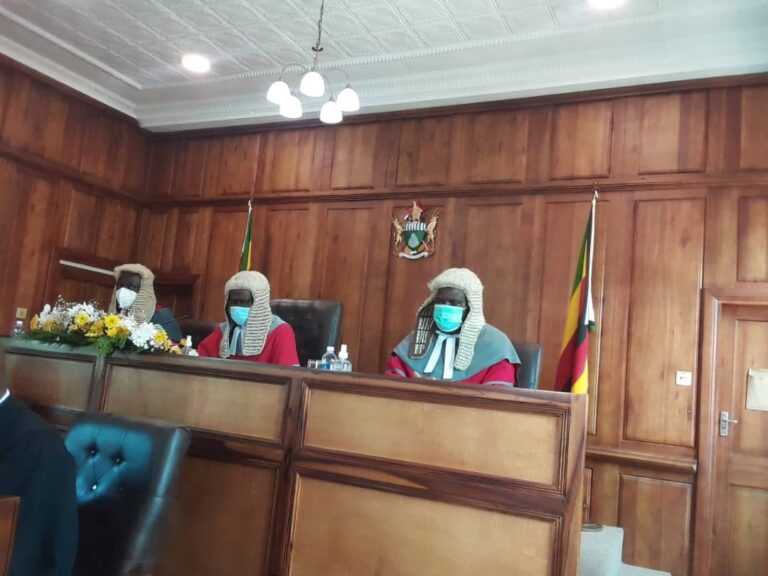
Supreme Court Judge Justice Paddington Garwe has lamented shortage of office space and Judges at Masvingo High Court saying the two matters needed urgent attention.
Justice Garwe was officiating at the official opening of the 2022 legal year at the Masvingo High Court on January 10.
He said the court building was small and the Judicial Services Commission (JSC) was aware hence the need to follow up so that the matter gets attended to.
“I am aware that Masvingo High Court building is small and there is a serious shortage of office space. At some stage there will be need for the expansion of the court premises so that the court can fully discharge its mandate.
“This is a matter I believe the JSC is fully aware of but, out of abundance of caution, I will also ensure that the extent of the problem is once again brought to the attention of the commission so that the matter can get some priority,” said Justice Garwe.
He went on to say the High Court also had a shortage of judges and is being manned by only two judges with the third one having been transferred to Harare.
“An unfortunate development is that one of the three judges who were manning the Masvingo High Court has now been transferred to Harare. This, sadly, means considerable pressure on the two remaining judges who must continue to deal with all the civil and criminal cases, as well as criminal reviews. One hopes that the situation will be addressed shortly so that the court can continue to operate normally,” said JusticeGarwe.
He said it was his hope that the shortage of one judge will not lead to the increase in number of outstanding cases.
“The judges have been working hard and I hope that the temporary loss of one judge will not see a rise in outstanding cases in the High Court,” he said.

Mwenezi man found hanging after 3 months missing

0

Cephas Shava

A 20-year-old man who was missing since November last year had his remains found hanging from a tree in Mwenezi East’s Zhanje Mountain on January 9, 2022.
Henry Shoperai of Tsumele village under Chief Neshuro whom family members had given up on after a prolonged search had his remains found after a passer-by stumbled onto his hanging skeletons.
Ward 5 Cllr Tinashe Yingi confirmed the incident to TellZim News saying the deceased’s relatives have already identified the body.
“The man is said to have left his homestead on the pretext that he wanted to change his forex at Ngundu Business Centre, but never returned until he was found hanging in Zhanje Mountain recently,” said Yingi.
Shoperai’s close relative Sikoliwe Taperesu told TellZim News that they managed to identify their relative through his cellphone and clothes.
“He left homestead sometime in November on the pretext that he was going to Ngundu, but from then we never heard of his whereabouts. While we were looking for him, his cellphone used to ring without answering before it later went unreachable,” said Taperesu.
This is the second case of suicide in Mwenenzi after a 13 year-old also hanged himself after a misunderstanding with his mother.

Judicial Service Commission embraces technology to enhance efficiency, rule of law

Rutendo Chirume

The Judicial Service Commission (JSC) is set to adopt the use of technology in 2022 as a way of delivering world class justice services that builds on the work undertaken in previous legal years in an effort to develop and enhance an efficient justice system.
Justice Paddington Garwe unveiled the theme of 2022 legal year on January 10 whilst officiating at the opening of 2022 legal year at the High Court of Zimbabwe in Masvingo.
The theme of 2022 legal year will be “use of technology to enhance efficiency and the rule of law in the judiciary”.
During his address Justice Garwe talked about how the use of new technology is intended to enhance access to justice and productivity in the justice system and make tasks easier.
“The use of technology is intended to enhance access to justice and productivity in the justice system. This year will therefore see a paradigm shift from traditional processes and modes of operation of the courts towards a more digitalized system. In addition to this, technology will make tasks easier to complete and more importantly reduce time taken to file processes with court registries and expedite the operations of court registries. Thus technology will significantly shorten time taken to file processes,” said Justice Garwe.
He also added that use of technology will enhance efficiency which is the main goal in the legal framework because inefficiency has disastrous effects on the administration of justice.
“Efficiency as a goal is anchored in the legal framework to which reference has just been made and the strategic plans of Judicial Service Commission. This is a collective goal of all members of the judiciary, member box staff and other stakeholders in the justice delivery system. We must approach 2022 with collective goal of efficiency in mind. A judicial system that is characterized by inefficiency is anathema to good governance and has deleterious effects on the administration of justice. It subverts the rule of law,” said Justice Garwe.
He also added on how technology will enhance efficiency during this era of corona virus pandemic and mentioned latest development in the judiciary like the Integrated Electronic Case Management System (I.E.C.M.S) which is a web- based electronic tool that will rely on the management of a case filed in a court and can also be known as e-filing.
“Technology can make legal services accessible to all. In this era of Covid-19 this development will surely enhance efficiency. It is convenient, with regards to all the restrictions that nation has experienced which include limitations on travel and prohibition of gatherings,” said Justice Garwe.

2022, the year to revive the classroom: ARTUZ

0

Branton Matondo

Kwekwe– Amalgamated Rural Teachers Union of Zimbabwe (ARTUZ) has moved in to lobby for the restoration of education parity by the government.
The union indicated that 50 percent of prospective Ordinary level pupils were unable to sit for examinations, while 60 percent of students in Bulawayo province alone dropped out before sitting for their final year examinations.
Addressing teachers and parents during all stakeholders engagement meeting in Kwekwe last week, ARTUZ president, Obert Masarure said it was high time education gets democratized and respected or else teachers will drop tools and hold placards.
“We are tired of employers who act like Father Christmas, employers who surprisingly in the absence of dialogue dictate terms and conditions for our comrades.
“Our education system is in tantrum because there is lack of democracy. As a union, we have gathered reports where prospective school heads are given the seat just because they have churned the slogan,” said Masaraure.
He further criticized Cecilia Alexander’s management at Apex Council saying her conduct was more of a perennial dictator who does not know how to handle teachers’ issues.
“One Cecilia Alexander does not respect the grievances of our fellow comrades. She has perennially turned the office into her own,” added Masarure.
He further advised all teachers to head to the salary camp in Harare and gather in their numbers for the final decision from the council.
Highlighting on the progress of the Continuous Assessment of Learning Activities (CALA) programme, Masarure said that both of them are not realistic and they do not respond to the status of our students.
“CALA programmes are supposed to be continuous meaning that a student is assessed consistently from form one to the final year. However, students compiled practical assignments in two weeks and then results are compiled in the same space,” Masarure added.
A petition compiled by union representatives in Midlands was passed to former Member of Parliament for Mbizo constituency, Settlement Chikwinya in which they were directly airing out their grievances.
“We are worried about the massive spreading of Covid-19 in schools, angered by slave wages, failure to receive invigilation allowances, infuriated by the 12% budget allocation.
“Teachers labelled their grievances as chief hindrances to education,” read the petition.
In his remarks, Chikwinya said the Zimbabwean education system was being haunted by the dual system of examinations.
“Most of the judiciary, executive and legislature members have children who study abroad or study locally but embracing Cambridge curriculum.
“As long as there is a dual system dictating the examination platform, your employers will approach your grievances minimally or not approach at all because there is no emotional attachment. Government should advance ZIMSEC and the local education system so that it meets international standards.
“Shun fear, participate in constituency platforms and invigorate engagement so as to enhance chances of influencing decisions for a better cause. We have Constituency Development Committees (CDCs) in various constituencies across the nation. Teachers should participate in those and influence key decisions for the betterment of their profession,” he added.

Civic Society groups lament shrinking civic space

0

…as the third cycle of the Universal Periodic Report approaches

Thabiso Nxumalo

As the third cycle of the United Nations’ Human Rights assessment of Zimbabwe’s human rights situation set for January 26, 2021 approaches, civic society groups have bemoaned the shrinking civic space in the country.
In a letter submitted to the United Nations Human Rights Council by civic groups led by Zimbabwe Lawyers for Human Rights (ZLHR), National Association of Non-Governmental Organisations (NANGO), Zimbabwe Human Rights NGO Forum (the Forum) and Women’s Coalition of Zimbabwe (WCoZ), civic groups claimed that government is shrinking their space by introducing bills that seek to undermine their human rights works.
“Civic space continues to shrink at an alarming rate, proposed new laws such as amendments to the PVO Act and Criminal Law (Codification and Reform) Act (Criminal Code), and the “Patriotic Bill”, will undermine the work of human rights defenders and NGOs, especially those working on governance issues,” reads part of the letter.
Civic groups wrote that the government of Zimbabwe is interfering with genuine charitable work in a bid to control and tighten grip on them and thus recommend that the Private Voluntary Organizations (PVO) Act be amended in a way that empowers the regulator to be independent.
“Further, the latest proposed legislation including amendments to the PVO Act/ Criminal Law code and a law on patriotism are major issues of concern, the government of Zimbabwe desires to amend the PVO Act to tighten the regulation framework under the pretext of implementing recommendation 8 of the Financial Action Task Force, yet the recommendation acknowledges the need for governments to desist from adopting disproportionate measures thus interfering with genuine charitable work.
“We recommend that, the government of Zimbabwe amends the PVO Act to empower the regulator to be independent, effective and representative of the PVOs operating in the country and should abandon as well as discourage the enactment of a law on patriotism as existing laws are adequate to preserve the integrity of the state and promote its foreign and international image,” added the letter.
The United Nations Periodic Review (UPR) of human rights is done by the United Nations Human Rights Council every five years to assess human rights obligations and commitments of member states.
Zimbabwe was last assessed in 2016 and both government and civic society organizations submit their observations on human rights to the United Nations Human Rights Council.
This assessment comes just three months after United Nations Special Rapporteur for Human Rights Alena Douhan visited the country to get a first-hand assessment on the impact of sanctions on human rights.

The scourge of cervical cancer: when religion seems futile

Rutendo Chirume

For many women who would have reached menopause, life is presumably expected to be characterized by happy moments with achievements of their last children together with grandchildren, but for 52-year-old Liliosa Bunye of Gutu South life became a bitter pill to swallow when cervical cancer drew a dagger on her, ultimately taking her life only two years after the first symptoms.
With the month of January being Cervical Awarenes Month, Bunye’s family gathered at Mukweshe Village in Magombedze area, Gutu laying her down on her final resting place, a tragedy that pierced through many hearts.
It all started in 2020 with continuous bleeding and severe abdominal pains but due to Lilliosa’s religious conviction, she attributed her situation to witchcraft and generational curses since her older sister also died under the same worrisome condition a decade ago.
She therefore consulted different white garment churches and even shaved her long black hair and became a full convert and a devotee of the Johanne Masowe sect, all in hope that her predicament will get better.
Unfortunately such efforts hit a brick wall as her condition further deteriorated without any improvement.
When her siblings and family members realized that her condition was deteriorating despite the prayers and special rituals she received from prophets, they decided to try other options.
After six months of excruciating pain, Liliosa was taken from Mukweshe village to Parirenyatwa Group of Hospitals, where she got diagnosed with cervical cancer and told that it was on its third stage hence she should start chemotherapy as soon as possible even though it was a bit too late.
Being on the third stage meant the cancer cells had spread widely and at its advanced stage meaning the suggested medical treatment would only contribute a mere 20 percent chance of recovery.
Liliosa’s family however went ahead with the treatment and hoped that one day she would become a hero who would have survived cancer, but as the doctors had said, it was too late when they learnt she had cancer and along the way she succumbed to the deadly disease. Advanced cancer requires more expensive and toxic multimodality treatments, and Zimbabwe has struggled with radiotherapy machines, which are only found at the Oncology Unit in Harare.
Cervical cancer contributes to over 25 percent of deaths of women in Zimbabwe according to statistics released by the Cancer Association of Zimbabwe (CAZ) last updated in 2017.
CAZ monitoring and Evaluation Officer Lovemore Makurirofa raised concerns over the less attention given to cancer screening due to Covid-19 but said during this month of January ,they will be doing screening and going around doing surveys and teach women about cervical cancer especially in the remote areas.
“So far we have statistics for 2017. Due to Covid-19 the backlog is very long. We have not been able to collect data or do proper statistics. However, since it is a month of cervical cancer awareness, we will be doing screening and cervical cancer awareness campaigns especially in the rural areas where most women live and are ignorant to the disease. We will also wait for February 20, when we join the world to commemorate World Cancer Day and unveil our theme and plans for the year of 2022,” said Makurirofa.
In Zimbabwe, over 5000 new cancer diagnoses and over 1000 cancer-related deaths are recorded every year.
The estimated cervical cancer screening coverage among the 15 to 49 age group in 2015 was 13%. Urban – rural disparities still exist at 21 percent in urban as compared to 7 in rural areas
According to the Zimbabwe National Cancer Registry, cervical cancer leads among malignancies in women and constituted 33.2 percent but Anecdotal evidence constructed from Department of Obstetrics and Gynecology at University of Zimbabwe College of Health Sciences suggests that many women die of cervical cancer without histological confirmation or seeking appropriate treatment meaning they will not be entered into national Cancer register.
By province from the latest statics of 2017 , Bulawayo 15.3%, Harare City 35.2%, Manicaland 5.7%, Mashonaland Central 4.4%, Mashonaland East 13.5%, Mashonaland West 7.4%, Masvingo 5.2%, Midlands 6.1%, Matabeleland North 3.1% and Matabeleland South 2.9%. The origin of 87 cases (1.2%) could not be determined.
In an effort to preach prevention and treatment of cervical cancer the world comes together in the month of January to commemorate the cervical cancer awareness.
However, for a country whose majority lives in rural areas and most are women who are at high risk of being diagnosed with cancer, these awareness are not enough as the majority do not have a chance to learn more on the disease and some are ignorant to the symptoms.
In particular a 2019 study in Zimbabwe’s Mudzi District by Lovemore Makurirofa and others in a report titled BMC Public Health revealed that lack of knowledge and incorrect beliefs about the risk of developing cervical cancer is a major undoing.
The study showed that majority of respondents did not know about Human Papilloma Virus (HPV) screening, or visual inspection of the cervix using aceticacidor. Most people believed they were not at risk of developing cervical cancer and 81.7 % of the respondents had not undergone cervical cancer screening
The impact of Covid-19 has also reduced cervical cancer screening in Zimbabwe since financial and human resources are being channeled towards corona virus responses thus critical aspects of women’s healthy are being neglected.
Masvingo Provincial Medical Director (PMD), Dr Amadeous Shamhu encouraged women to go for screening frequently and said he does not have the recent statistics of cancer diagnosis for the province, but would check at the clinics.
“I do not have provincial cancer statistics and do not think we will be doing anything special to commemorate the cervical cancer awareness month. I will try to check with clinics if there is anything being offered there. However, I encourage women to do screening as adviced by the health department,” said Dr Shamhu.
Serina Chirume a general nurse at Parirenyatwa (though not at the oncology department) mentioned the common cervical cancer symptoms include pelvis pain, abnormal mensuration and groin pain.
“I am not working at the oncology, but as a nurse I encourage women to visit a hospital if they see symptoms like abdominal pain during sex, bleeding during and after sex, abnormality, heavy or irregular mensuration and groin pain which may include vagina abnormal discharge with a foul odor and lastly bleeding for post-menopause women is certainly a red flag,” said Serina.
Cervical cancer screening is highly recommended by the World Health Organization (WHO) to prevent invasive cervical cancer and as a result government of Zimbabwe’s screening guidelines recommend cervical cancer screenings for every three years for all women, and every year for HIV positive women.
Poor access to health services like screening has been cited as one of the major drivers behind these cancer-related deaths.
The three stages in cervical cancer intervention are primary (delaying sexual activities), secondary (screening) and tertiary involving treatment in form of chemotherapy, radio therapy as well as surgical operations.


Masvingo courts record 1149 domestic violence, 90 divorce cases in 2021

0

Brighton Chiseva

Masvingo criminal, civil and high courts in 2021 heard 1149 domestic violence and 90 divorce cases, Supreme Court Judge Justice Paddington Garwe revealed recently.
The statistics were released during the official opening of the 2022 legal year held at Masvingo High Court on January 10, officiated by Justice Garwe.
Speaking at the event, Justice Garwe said Masvingo Magistrate’s’ court carried over 20 domestic violence cases from 2020 and recorded 1129 new cases over the year 2021 bringing the total to 1149 cases.
Of that total, 1126 cases were completed leaving 23 cases that were carried over to 2022.
No reason was raised as the cause of such a high number but women organisations noted that the number of domestic and gender based violence cases was on the rise during the lockdown periods.
Other matters at the court were small claims which had two cases from 2020 and 152 new cases making them 154. Of the number, 142 were completed and 12 were left pending by closing of year 2021.
On civil matters it carried 46 cases from 2020 and received 839 new cases making a total 885. Of those 846 were completed leaving a 39 outstanding.
All in all, the court opened the year 2021 with 68 matters and received 1120 new cases. The total workload rose to 2188 cases and 2114 were competed and the backlog rose from 68 to 74.
On the same note, the High Court’s civil division recorded 90 divorce cases in 2021. The court had two outstanding cases from 2020 making them 92. 91 cases were completed leaving one case outstanding.
In total the High court civil division opened the year with 18 cases and received a total of 406 cases. They all equaled to 424. Of the total 382 cases were completed leaving 42 outstanding.
Other civil matters at the High court included ordinary chamber applications, opposed matter, trials, urgent chamber applications, civil appeals and unopposed excluding divorce.
The Magistrate court’s criminal division started 2021 with 325 pending matters and received 5203 matters. The workload increased to 5528 while 5090 cases were completed leaving the backlog at 438.
Of the total, 5199 criminal cases were recorded after carrying over 324 cases and they totaled to 5023. Of that number 5088 were completed leaving 435 cases pending.
The court also received four anti-corruption cases after carrying forward one case from 2020. Of the total, two were solved leaving three cases outstanding.
The criminal court received 967 matters. Considering that there were eleven outstanding cases, the workload rose to 978. 966 matters were completed by end of 2021 leaving 12 outstanding.
Of the total, it had 36 trials and four outstanding cases from 2021 making them 40. 30 of the cases were completed leaving 10 cases pending.
Other cases were 391 bails, 459 reviews which were all completed and 75 criminal appeals of which 73 were completed leaving two pending.
The same court started the year with three reviews and received 456 and had a total of 459 and all the cases were completed.
The court also received 13 applications which were all completed leaving no outstanding matter.
It started the year 2021 with only one court appeal and received 74 new appeals making them 75. 73 were completed leaving two outstanding.

Human wildlife conflict serious cause for concern in Zimbabwe-FaFlo Zim

Melinda Kusemachibi

FaFlo (Fauna and Flora) Zim a Civil Society Organisation aimed at promoting an ecologically rich, clean and healthy environment said the ever increasing number in cases of human- wildlife conflicts have become a cause for concern in Zimbabwe.
The remark was made by FaFlo Zim director Fidelicy Nyamukondiwa following the trampling to death of a 22-year-old woman and her six months old baby in Kushinga B village under Chief Musikavanhu in Chipinge on January 1, 2022.
“Human-wildlife conflicts and most particularly human-elephant conflicts are a serious cause for concern in Zimbabwe. The annual number of people trampled to death by elephants is disturbingly high.
“Resource competition between growing human populations and elephants is a major cause of human-elephant conflict. People end up encroaching into game reserves thereby increasing human-wildlife interactions,” said Nyamukondiwa.
He went on to say that vandalism of game reserve fences are the major driver of human-wildlife conflict and at most there is no compensation for the victims.
“Vandalism of game reserve perimeter fences by villagers and sometimes late responses to emergency situations by authorities also contribute to the rise in human-wildlife conflict fatalities.
“The gap in our wildlife legislation is that there is no room for compensation for human and wildlife victims or their families. We are still using a colonial piece of legislation which is archaic and requires urgent amendment,” said Nyamukondiwa.
However, Nyamukondiwa said his organisation suggests some possible practical solutions to curb the conflicts.
“The responsible authority should erect or repair vandalised perimeter fences. At FaFlo Zim we are encouraging people to construct what are known as beehive fences.
“Again, ZimParks should be adequately funded so that they can immediately react to distress calls. ZimParks and other key stakeholders should do more awareness campaigns to educate people living in areas where human-wildlife conflicts are prevalent,” said Nyamukondiwa.
Manicaland provincial police spokesperson Assistant Inspector Wiseman Chinyoka confirmed the Chipinge incident that happened on January 01, 2022 resulting in the death of two people.
Circumstances on the issue are that Shylet Muyambo (22) and her six months-old child Remind Serengwana were trampled to death by an elephant on New Year Day in Kushinga B village on way from her sister Charity Muyambo’s (25) place in the same village.
At around 1800hours they had left Charity’s homestead heading to their home and on their way, they came across an elephant which attacked them after which they sustained deep cuts on the stomach.
Charity Muyambo and her husband Simbarashe Kumbula (27) heard the noise of the trumping elephant and went to investigate only to find the two lying lifeless on the ground.
The issue was reported at Chisumbanje police station that same day before the bodies were taken to St Peter Mission Hospital for postmortem.
In the past years, there have been reports of wildlife trespassing into communities and wreaking havoc on people’s properties.
In December 2021, two men from Chiredzi, one a fish poacher and a game scout were attacked and killed by a buffalo.
In 2020, a 35 year-old woman was gored to death by a stray buffalo while fetching firewood in the bush in Chibuwe.
According to World Wide Fund for Nature (WWF), human-wildlife conflict is ‘any interaction between humans and wildlife that results in negative impacts on human social, economic or cultural life, on the conservation of wildlife populations, or on the environment’.

CRDC outlines five year strategic plan

Beatific Gumbwanda

Chiredzi Rural District Council (CRDC) is currently embracing the government’s National Development Strategy 1(NDS1) aimed at creating an upper middle income economy by 2030 by investing into life changing developmental projects in Health, Agriculture, Education and road infrastructure networking sectors.
In their 2022 vision, CRDC are making strides in the procurement of road maintenance equipment as well as promoting the learning and teaching of Science and Technology in some of their old schools, TellZim News can report.

Road infrastructure and maintenance

Among a number of life-changing developmental initiatives they are targeting to complete in 2022 is road construction as they are procuring a Motorized Grader as well as a Tipper to add to their road equipment fleet which will enable them to maintain roads in their area of jurisdiction.
In an interview CRDC Chief Executive Officer, Ailes Baloyi, said they have a five year strategic plan which is in line with the NDS1 and Vision 2030 with some of their aims being reflected by their 2022 budget which is accommodating projects aimed at uplifting people’s lives.
“We have a number of major projects which we are planning to achieve this year in various sectors. We are carrying over a project from 2021 where we are planning to procure a motorized grader and a tipper for road construction and maintenance.
“We have a lot of damaged roads due to these excessive rains, so we need to repair them. Over coming three months, we need to employ a qualified Civil engineer to help in road construction,” said Baloyi.

Health

CRDC will this year commission three Rural Health Centers in Gwaseche (ward 7), Rusununguko ward 32 and Turkey Heart in ward 28 as well as Romwe clinic which they are partnering with the Air Force of Zimbabwe.
“We are expecting to commission three clinics this year, though we are still doing some touch-ups on waste management and painting but we are definitely going to commission them this year.
“We have Gwaseche in ward 7, Rusununguko in ward 32 and Turkey Heart in ward 28. We also have Romwe clinic that is being constructed by the Airforce of Zimbabwe where we chipped in with assistance in form of borehole drilling,” said Baloyi.

Education

Baloyi also said they are planning to construct two science laboratories this year at two of their biggest schools which are Alpha Mpapa in Chikombedzi and Hanganani in ward 25.
“We now need to promote the teaching and learning of science and technology as we have budgeted to construct two science laboratories at two of our old schools which are Alpha Mpapa High School and Hlanganani,” added Baloyi.

Water and sanitation

Council has also moved to upgrade water and sanitation to one of its oldest growth points, Chikombedzi which is being serviced by a single borehole at the shopping centre as they have begun consulting the Zimbabwe National Water Authority (ZINWA).
“We also have one of our growth points which is not developing at a pace that we desire like Chikombedzi. We are currently working with ZINWA to have a piped water scheme at the growth point as this is dragging construction of stands due to lack of water. Imagine using one borehole at the growth point. So we need to work on the water issue at Chikombedzi.
“At Rupangwana again in ward 4 (Save) there is no water but we have Save River flowing down into Limpopo River with its water not being utilized. So we need to enable it to grow faster by connecting water and this will also benefit ward 3 which is just across the road.
“At Resettlement areas there is a disaster. We need to work hand in glove with them in drilling at least a single borehole in each compound. There is also need to complement their effort of paying the rates we are giving them,” said Baloyi.
He also highlighted that there was need to utilize vast rich lands and water bodies that serve the district by establishing a new irrigation scheme of about 50-100 hectares, as they have already identified a flat land in ward 15.
“Food security is also key priority. We need to establish a medium irrigation scheme in order to utilize the vast water bodies in the district in order to fight hunger. We already have identified an area with flat lands in ward 15 which is suitable for that,” he said.
In 2022, CRDC is going to step up their stakeholder engagements in order to tap more ideas from residents that will help develop the district at large on a quarterly basis.