Home Blog Page 5

Four Zaka Schools Receive Starlink Kits to Boost Learning Connectivity

0

By Staff Reporter
ZAKA – Four schools in Zaka district, three primary schools and one secondary school
recently received Starlink internet kits, a development that recipient school heads say
will significantly enhance the learning environment.
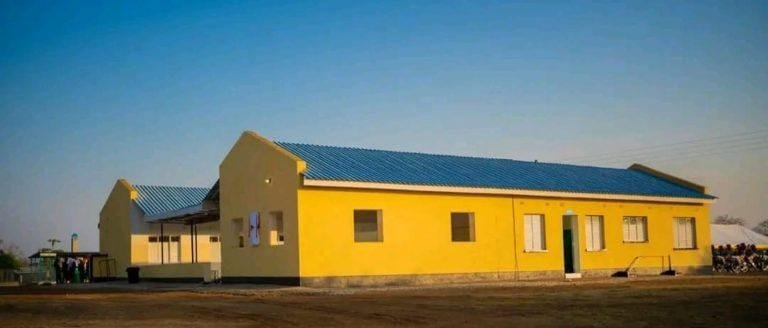
The beneficiaries are Baramanza Primary School, Gondo Primary School, Chivingwi
Primary School, and Rusere High School.
Zaka North legislator Ophias Murambiwa, who facilitated the Starlink kits, said he had
appealed to the Ministry of Primary and Secondary Education for connectivity support
for all schools in his constituency but only received four kits so far, with hopes of
securing more.
“The motive was that we saw these schools were behind in terms of connection. Moving
with the national vision of leaving no one behind, I saw it fit to distribute them in that
way. If we get more, they will also go to needy schools. Nowadays, connection
enhances education for research and ICT learning so there is need for every school to
be connected,” said Murambiwa.
He said he made another application to the Ministry of ICT recently and was waiting for
a response, anticipating that more kits would be secured to ensure all schools are
connected.
Baramanza Primary School head Sevias Matanda said the Starlink kits would enhance
connectivity for teachers to conduct research, enabling them to keep updated with
current affairs and the ever-changing trends in education and syllabuses.
“Teachers can now easily download syllabuses, guides and other materials which we
used to print. They can now do reseaches that would enrich their knowledge that they
would impart to their pupils,” said Matanda.

Chivingwi Primary School head Edmore Nhopi thanked Murambiwa for the initiative,
saying the Starlink kits arrived at the right time as the school had been facing serious
connectivity challenges.
“The Starlink have come at a right time when we were struggling with connectivity. The
connection will enhance both learning and teaching at the school,” said Nhopi.
Gondo Primary School head Obina Munangwa expressed gratitude on behalf of the
school and the community, saying the kit would help teachers conduct research and
allow learners to do research and learn ICT.
“The Starlink will also help the community, as those who want to use the network will be
allowed,” said Munangwa.
Zaka district has some of the remotest areas in Masvingo province, with most parts of
Zaka North being mountainous. Some areas are difficult to access for mobile network
coverage, making it hard for locals even to use mobile data to access internet services.

St Joseph Tongoona High cultivates skills and income through Agriculture

0

By Tadiwa Shunje
ZAKA- St Joseph Tongoona High School is transforming education through practical agriculture projects
that are equipping learners with life skills while generating income to support the school operations.
Located a few kilometers from Jerera Gowthpoint, the school has embraced farming as a key part of its
learning system with pupils actively involved in fish farming, piggery, crop production and poultry.
The school Head Of Department for practicals and agriculture teacher Never Mukuhudzi said the school
runs a fish pond stocked with bream which they harvest every three months and sold to the staff and
local community.
“We run a fish pond with breams where we normally harvest every three months and sell them to the
staff and locals,” said Mukuhudzi.
The piggery project has 61 pigs which Mukuhudzi said were sold live at various stages while others are
slaughtered and sold to the staff and the surrounding community as well.
Crop production is another major focus area, the school manages two plots that were under maize
production and a garden where tomatoes and various vegetables are grown.
Mukuhudzi said these projects were not only meant for food and cash production but were mainly
,meant to provide hands-on learning opportunities for learners where they gain practical agricultural
skills that prepare them for life after school.
“If you go in Jerera Growth Point, a number of people who are running poultry projects are our former
leaners who are using the knowledge they got here,” said Mukuhudzi.
The Deputy Head, David Chipezaya said they used sustainable agriculture where the projects
complement each other. He said they conserve water by creating a system where they drain nutritious
water from fish ponds to the garden promoting water.
“To save water, when we want to put in fresh water in the fishpond, we pump out the water to our
garden. This means we don’t waste water. We use a water pump to drain water from the fish pond and
use it to water our garden,” said Chipezaya.
He said money generated from the agricultural produce sustained school operations and the school
does not solely relies on fees and said the school was paying a loan that they borrowed to buy a bus and
the proceeds from agriculture were coming in handy.
“Funds generated from the agricultural projects are reinvested into the school, supporting sports
activities and infrastructure development, this approach reduces reliance on school fees and
strengthens the school’s ability to sustain its operations.
We are currently paying the bus loan but the gap is not felt much because we are still able to do other
basic monetary requirements,” said Chipezaya.

St Joseph Tongoona High scoops two rural schools awards

0

By Staff Reporter
ZAKA – St Joseph Tongoona High School, located a few metres from Jerera Growth
Point in Zaka, has scooped two prestigious awards, one at national level and another at
provincial level, recognising its outstanding academic performance in 2025 .
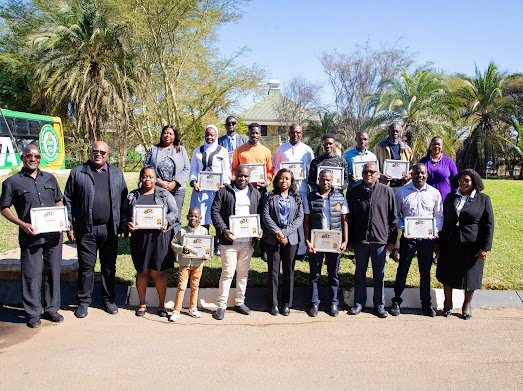
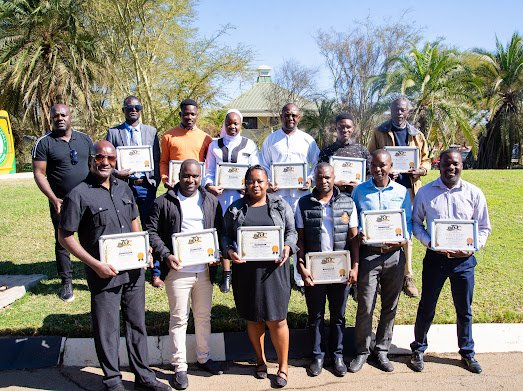
The school was named the Best Rural Secondary School at Advanced Level nationally,
and also the Best Rural Day School with the highest number of 15 points at Advanced
Level at provincial level.
The awards were organized by by the Ministry of Primary and Secondary Education and
were presented by Vice president Kembo Mohadi.
The school has maintained a 100 percent pass rate at Advanced Level for three
consecutive years 2023, 2024 and 2025 demonstrating a clear pattern of excellence.
School head Mapiye Magara said he was elated by the recognition, which he attributed
to cooperation among learners, teachers, parents and other stakeholders.
“We are proud of the recognition, and that speaks volumes about what we do as a
school. The awards are a result of a combination of measures in place that help us get
better results.
“We have a dedicated staff and well-disciplined learners. We have a supportive SDC
and the parents are always behind our success stories,” said Magara.
He said the school had dedicated members of staff who maintain discipline, and that
was behind the outstanding results that saw the school scooping the two awards, each
coming with a shield, certificate and cash prize.

The school’s senior lady, Norliwe Jange, said St Joseph Tongoona was a model for
discipline, as a palisade fencing ensures that learners are always within the school
premises.
She said being close to a growth point, learners might be tempted to sneak out, but that
was unheard of since anyone who wants to leave requires a pass.
She also highlighted measures in place to protect the girl child to make sure that they
are always in school and that was one of the reasons behind good results.
“Even if a girl is on her monthly periods at school, we have spare uniform to change if
she messes up her clothes. We also have a mattress and painkillers for relief, which
allows girls not to miss any school time because of menstruation,” said Jange.
She added that cases of learners getting pregnant at school were very few, and those
few served as a learning curve for others. The affected girls managed to write their
exams and had time to educate their peers about the dangers of getting pregnant while
still at school.
Deputy Head David Chipezaya said the school was moulding responsible learners, with
no cases of drug abuse, which has become a menace in Zimbabwean schools.
“We are proud of the environment we have created, and these awards are a testament
to the hard work and discipline of our learners and staff,” said Chipezaya

Mother, five children perish in traffic accident

0

By Staff Reporter

The Easter holidays have started on a devastating note after a mother and her five children perished in a horrific head-on collision along the Harare-Masvingo Highway on Thursday (March 2) morning.

Police confirmed that the fatal accident occurred at around 9:50 AM at the 246-kilometre peg near Masvingo when a Toyota Corolla and a Mercedes-Benz truck collided. Sources allege the victims were Lilian Maranda Mujuru (40), the mother who was driving the vehicle, and her five children and the family was travelling from Harare to Zvishavane when tragedy struck.

According to police reports, the woman reportedly lost control of the Toyota Corolla, causing it to veer into the opposite lane where it was hit by the oncoming haulage truck. The truck was heading in the opposite direction towards Harare.

National police spokesperson Commissioner Paul Nyathi confirmed that all six occupants of the Toyota Corolla died instantly at the scene.

The victims have been identified by their next of kin as Lilian Maranda Mujuru (40), Nokutenda Mujuru (15), Makanaka Mujuru (13), Ronald Junior Mujuru (11), Rufaro Shalom Mujuru (7), and Kayden Mujuru (3).

Their bodies were taken to the Masvingo Provincial Teaching Hospital mortuary for post-mortem examinations.

Police have extended their deepest condolences to the bereaved family and have urged all motorists to exercise extreme caution on the country’s roads during the holiday period. This accident marks a grim start to the Easter and Independence holidays, highlighting the ongoing dangers on one of Zimbabwe’s busiest highways despite recent road safety campaigns.

Age saves teen convicted of six counts of aggravated indecent assault

0

By Ndinatsei Mavodza
MASVINGO – Age saved a 13-year-old boy has from custodial sentence after being
convicted of six counts of aggravated indecent assault involving minor boys. He pleaded
guilty to all charges.
The teenager appeared before Masvingo Regional Magistrate Innocent Bepura on March 23,
2026 facing six counts of aggravated indecent assault involving boys under the age of
eighteen.
The court heard that the offenses occurred between July 2025 and September 2025 on school
grounds. According to court records, the acts amounted to anal sexual intercourse.
Magistrate Bepura sentenced him to six years in prison but suspended the sentence on
condition that he commits no crime of a sexual nature in the next five years. He further stated
that it was only because of the offender’s young age that the court had spared him from
immediate imprisonment.
The defence lawyer had asked for leniency, arguing that his client was still young and in
Form Two. He further noted that the teenager had attributed his conduct to his tender age,
stating that he was an “inexperienced juvenile who acted out of youthful exuberance.”
The court also heard that the boy had since received intensive counselling from a Child
Protection Officer. His father, who serves in the Zimbabwe Prisons and Correctional
Services, had been actively involved in the rehabilitation process.
It was also noted that outside the court, the teenager now faces discrimination from
classmates and the wider community, with some labelling him using derogatory terms.
In Zimbabwe, aggravated indecent assault is a serious offence under the Criminal Law
(Codification and Reform) Act. Across the country, a number of cases of adults in positions
of authority abusing children have been recorded, but cases involving a juvenile offender are
less common.
Child protection experts note that such cases require a different approach than adult cases, as
juvenile offenders themselves are often influenced by their environment and circumstances.
Under Zimbabwe’s Constitution in Section 81, it is noted that children under eighteen shall
not be detained except as a measure of last resort. As such, this principle prioritises
rehabilitation over punishment for juvenile offenders where possible.
The Children’s Act further provides that when deciding on appropriate outcomes for juvenile offenders

One third of Rujeko D residential stands to be allocated to Council workers

By Yvonne Mangani

Masvingo City Council has announced plans to allocate one-third of residential stands in the Rujeko D extension to municipal workers, a decision officials say was aimed at rewarding long-serving staff and reducing housing insecurity among council employees.

This came out during the recently held full council meeting when Mayor Alec Tabe announced that the workers who were getting the stands had already paid for them.

“There are council workers who have served for a long time. So we need to ensure that those who serve our city have decent and secure housing,” said Tabe.

Ward 9 Councillor Bernard Muchokwa questioned the criteria that was going to be used to select the beneficiaries and whether they were going to pay.

Responding to Muchokwa, Tabe said the workers who were going to benefit had already paid for the stands.

“We should have the history of this scheme first before we argue. There are some people who had paid for these stands, so it should be clear that these are not free, and some of them had died before the scheme existed,” said Tabe.

Ward 10 Councillor Sengerayi Manyanga said those who had paid and died should also get their stands.

“Even those who paid for these stands and died before getting them, their next of kin should come and get those stands which they had paid for. They should benefit from where they were working,” said Manyanga.

Villagers take charge to stop gully threatening Tugwi Mukosi Dam

By Staff Reporter
MASVINGO – Villagers in Village 1, Ward 22 in the Mukosi area of Masvingo District have
taken matters into their own hands, joining forces to reclaim a severely degraded gully that was
threatening their access to the main road, water sources, and a nutrition garden, while also
causing siltation in the country’s largest inland water body, Tugwi Mukosi Dam.
The rehabilitation work is being supported by the Environmental Management Agency (EMA) in
collaboration with the Global Environment Facility 7th Replenishment (GEF-7).
On March 25, EMA officials, along with representatives from various government departments
and local authorities, toured the site to assess the progress.
During the tour, it was noted that the gully had been developing at a high speed and was cutting
off residents from accessing essential services. Locals admitted that the gully had started on
everyone’s watch but was ignored at first until it became a serious challenge, prompting
intervention from their councilor Peter Marambir.
One resident Rosemary Musara said residents said crossing into the village with vehicles or
scotch carts had become nearly impossible.
“We have our children who work outside and are buying cars. They were not able to reach here
because of the gully. We had the labour but we had no resources or expertise, and we got that
through EMA,” said Musara.
Another villager, Daford Fushai, explained that the gully originated from the Musogwesi River
metres away from its current location, starting around 2013. He said cyclones worsened the
situation until EMA arrived with resources.
He added that villagers now gather stones from a nearby mountain, while Masvingo Rural
District Council provides a tractor to transport the stones to the site.
Village Chairperson Simon Marambire said the community had responded positively when
called upon to contribute their labour.
“When we were called, we heeded. Our people are hard workers and we are doing this work
willingly because it is for our own benefit,” he said.
He also expressed gratitude to their councillor, Peter Marambire, for taking their concerns to
higher offices. He made an appeal for fencing material to protect the newly planted vetiver grass,
which he said was being eaten by cattle, potentially disturbing the rehabilitation process.
Speaking during the visit, Masvingo Provincial EMA Manager Milton Muusha said the problem
was not unique to the area but was widespread across Masvingo and the country at large. He said
the area falls within the catchment of Tugwi Mukosi Dam, the country’s largest dam and a major
investment for irrigation.

“As EMA and other partners, we surveyed the catchment to find challenges, and one of the ones
we identified was this issue of gullies and soil erosion. So we saw it fit to work and address this
problem so that the dam will have a long lifespan,” said Muusha.
He added that the Mukosi community was among those actively working to address such
challenges, which was why other districts were being brought to the area to learn and implement
similar interventions in their respective areas.
EMA Environmental Officer Wilfred Muchono said when they first assessed the site, they
examined how the gully was developing and its catchment area.
“We discovered that the gully’s catchment area was 60 hectares, and one of the major causes of
its rapid development was that some people had extended their fields into the water chain. We
engaged the leadership and managed to revert to the original pegs,” said Muchono.
He further explained that they also found no contour ridges in the area, which allowed runoff
from the fields.
“We managed to develop 10 contour ridges in the area which hold water and direct it to
designated waterways. By the time the water gets there, its speed would have reduced.
“Before we worked here, we started by addressing the upstream areas. So far we have managed
to work on 47 hectares, and we are left with 13 where we will create stone checks to reduce
runoff. We also need to create half-moons to deal with water coming from the mountain,” he
said.
Conservation specialist Innocent Gono from the Department of Mechanisation said the gabions
installed at the site would stop the gully from developing further.
“The gully will not develop from here. After that, we will work on closing the gully by putting
silt traps in the gully bed and work on it for several years until we close it,” said Gono.

My Age Africa escalates youth SRHR, mental health awareness to Masvingo

0

By Simon Masore
MASVINGO – My Age Africa, A youth-led organization recently held a youth awareness Programme in
Masvingo aimed at addressing issues of sexual and reproductive health and Rights, mental health and the
empowerment of young women.
The event, brought together students, youth leaders, civil society organizations and local authorities to
discuss the challenges affecting adolescents and young people and to promote access to Sexual and
Reproductive Health and Rights (SRHR).
Speaking during the engagement, My Age Africa executive director Onward Chironda said the
organization’s new strategy focuses on strengthening youth participation through policy advocacy and
dialogue with key stakeholders.
“Our new strategy focuses on young people. We are using policy advocacy and dialogues to ensure that
young people are heard and that the right communication strategies are in place,” said Chironda.
He emphasized that the organization prioritizes youth-centered approaches to ensure that young people
are empowered in their daily lives.
“Young people must be at the center of care. We want them to be empowered in their daily activities and
to achieve this we engage different stakeholders and service providers so that young people can access
knowledge, services and wellness programs,” he said.
Chironda added that the organization was also actively advocating for policy reforms that improve access
to health services for young people.
“We want to make sure that young people have services that help them. We are proud to say that we have
participated locally and nationally in the processes around the amendment of the Health Bill,” he said.
He went on to say the organization was also involved in disaster risk management programmes, working
with various government ministries.
“Last year we worked with several ministries to strengthen disaster risk management, including the
Ministry of Public Service, Labor and Social Welfare, the Ministry of Health and Child Care and the
Ministry responsible for disaster risk management,” he said.
Chironda also highlighted the organization’s efforts to strengthen its sustainability through internal
fundraising initiatives.
“We have also focused on strengthening the organization itself by generating our own resources. We
established 263 Media, which provides media services such as podcasts, live broadcasts and
documentaries,” he said.

“Last year we managed to generate about US$15 000 in revenue for the first time in 10 years. After some
organizations withdrew their funding contracts, this has helped us sustain the organization,” he added.
Chironda also raised concerns about gender equality and gender-based violence (GBV), saying more
work is needed to protect the girl child.
“Government commitments must remain centered on the girl child, especially in addressing gender-based
violence and ensuring young women have the support they need,” he said.

On sexual and reproductive health issues, Chironda said there was a need to increase awareness among
young people about HIV prevention and contraceptive options.
“Young people who go to seek condoms are very few compared to those who seek morning-after pills.
There is a need for more education so that young people can make informed choices,” he said.
He also addressed misconceptions around safe abortion laws, encouraging young women to seek accurate
information on reproductive health.
“We need to address misconceptions around safe abortion and ensure that women understand family
planning and birth control so that we can build a healthy generation,” Chironda said.
My Age Africa Capacity Building Agent Obedience Mazenge presented an overview of a mental health
project aimed at strengthening advocacy for mental health funding.
“Despite recognition of mental health within Zimbabwe’s National Health Strategy (2021–2025),
financing remains fragmented and is often subsumed under broader non-communicable disease
allocations,” Mazenge said.
He revealed alarming statistics highlighting the scale of the problem.
“About 0.2 percent of the health budget is allocated to non-communicable diseases, while 64 percent of
children experience violence and one in three girls experience sexual violence,” he said.
Mazenge said the organization’s goal was to push for improved funding for mental health services in
Masvingo.
“Our goal is to improve domestic funding for mental health and ensure increased mental health services in
Masvingo City by December 2026,” he said.
“We are also advocating for the creation of a dedicated mental health budget and formal communication
platforms that allow young people to access counselling and information,” he added.
He said the project would include policy brief development, youth community dialogues, engagement
meetings with civil society organizations, policy dialogues with policymakers and media engagement.
Masvingo City Ward 9 Councilor Bernard Muchokwa said the city council was, however, making efforts
to support youth development initiatives.
“As Masvingo City Council we have many sectors to focus on, including mental health for young people.
We also fund youth activities such as sports. For example, we support football teams with about US$3
000 affiliation fees, which shows that we care about young people,” he said.
Muchokwa, however, urged youths to actively participate in council meetings to voice their concerns.
“The challenge is that young people do not attend council meetings where they can share their concerns.
The last time we held a meeting at Mucheke Hall, only primary school pupils attended,” he said.
Meanwhile, My Age Africa also launched a free counselling hotline called SARU (0808617), which
offers support and information on sexual and reproductive health and mental health.
The organization also provides emotional support through its WhatsApp line 0782 450 853, where young
people can access counselling services and information.

Masvingo faces growing threat of fake and unsafe products

0

By Ndinatsei Mavodza
MASVINGO – Masvingo has been identified as one of the provinces most exposed to
counterfeit and unsafe products due to its strategic location along the North-South trade
corridor.
Masvingo lies along the North-South trade corridor, a major route connecting South Africa,
Zimbabwe, Zambia and the Democratic Republic of Congo (DRC).
The corridor is a key path for moving goods and boosting trade in the region, which also
makes the province an entry point for counterfeit and unsafe products.
Speaking during the World Consumer Rights Day commemorations held at Urban Lifestyles
Hotel on March 18, Minister of State for Masvingo Provincial Affairs and Devolution Ezra
Chadzamira said the province’s proximity to South Africa, one of Zimbabwe’s key trading
partners, makes it particularly vulnerable to the penetration of fake and substandard goods.
“The selection of Masvingo as a venue for this important event is no accident or coincidence.
Masvingo’s strategic location on the North-South corridor and proximity to South Africa, one
of our key trading partners guarantees a wider reach to a diverse audience. This is especially
critical in light of the prevalent risk of counterfeit products in the region,” said Chadzamira.
Chadzamira warned that the growing presence of counterfeit products poses a serious threat
to both consumers and local industries.
He added that counterfeit goods not only compromise consumer safety but also undermine
economic growth by weakening local industries and innovation.
“Counterfeit goods weaken local industries, stifle innovation and compromise the integrity of
our manufacturing sector,” said Chadzamira.
The Consumer Protection Commission (CPC) chairperson Respina Zinyanduko also raised
concern over the situation in Masvingo, warning that the province remains vulnerable to
smuggling of unsafe products.
“Masvingo has not been spared from these business malpractices and is more prone to
smuggling of unsafe products from our neighbouring countries,” she said.
Zinyanduko added that the commission ws working with law enforcement agencies including
the Zimbabwe Republic Police (ZRP) and the Zimbabwe Revenue Authority (ZIMRA) to
curb the problem.
The World Consumer Rights Day commemorations ran under the theme “Safe products,
confident consumers,” with stakeholders calling for increased vigilance, stronger
enforcement and greater consumer awareness to combat the growing threat.

Over 2,900 Businesses Prosecuted for Consumer Rights Violations

0

By Andrew Zhou
​MASVINGO – The Consumer Protection Commission has been cracking down on bad
business practices. Since 2025, 2,905 businesses were prosecuted for selling expired,
counterfeit, or substandard goods, and 634 more have already faced action in 2026.
The announcement was made by Consumer Protection Commission Chairperson
Respina Zinyanduko during World Consumer Rights Day commemorations at Urban
Lifestyles Hotel, Masvingo on March 18, 2026.
Zinyanduko revealed that the commission’s enforcement department had been working
tirelessly to clean-up the marketplace.
“We have been working tirelessly with our partners the law enforcement agents and the
Consumer Council of Zimbabwe to clean up all counterfeit products which are in the
market”. Said Zinyanduko.
According to the statistics released, 2,271 businesses were prosecuted in 2025, while
634 have already been brought to book in the first quarter of 2026. The 634
prosecutions already recorded in the first quarter of the year demonstrates the
commission’s increased pace on consumer protection.
“We have managed to prosecute a total of 2,271 businesses in the year 2025. These
businesses were selling dangerous, expired and counterfeit goods. This year a total of
634 have already been prosecuted for the same offences”. Noted Zinyanduko.
​The Chairperson emphasised that the commission would not tolerate businesses that
compromise the health of citizens by offloading adverse products into Zimbabwe’s
market.
​“The Commission remains resolute in its mandate to protect consumers from
unscrupulous business actors. We have scaled up our inspections across the country to
ensure that no one is above the law. These 2,905 prosecutions serve as a clear
message that selling expired, counterfeit, or substandard goods is a high-risk venture
that will result in the full wrath of the law being applied”. Said Zinyanduko.
​The Consumer Protection Commission urged the public to remain vigilant and continue
reporting retailers who fail to adhere to safety and quality standards as the commission
continues its nationwide crackdown.