Home Blog Page 55

Masvingo SMEs urge SAZ to expand outreach efforts

By Virginia Njovo

Masvingo-based Small to Medium Enterprises (SMEs) have called on the Standards Association of Zimbabwe (SAZ) to intensify its outreach and share more information on the standardization process, citing a widespread lack of awareness among entrepreneurs.
The appeal was made during a recent training session hosted in Masvingo by Building Bridges for Global Markets. The event brought together entrepreneurs, stakeholders, and representatives from various organizations focused on promoting collaboration, knowledge-sharing, and empowering SMEs for global competitiveness. Participants discussed market challenges and explored opportunities for growth.
Stakeholders expressed concern over SMEs’ lack of necessary knowledge to engage in the process. A Sales Advisor at Masvingo Nyaradzo Life Assurance, Descent Moyo urged SAZ to take its message beyond urban centers.
“Every entrepreneur here wants their products to have a SAZ stamp, but they don’t have knowledge on how to navigate the process, even if they have the potential to compete in global markets. It is critical that SAZ comes out of its comfort zone and reaches the countryside where real entrepreneurs are based,” said Moyo.
Lloyd Kaserera of Miracle Training College Vocational in Buhera echoed these sentiments, highlighting some of the obstacles SMEs face in adopting standards.
“Resource constraints can hinder the development and implementation of standards. Resistance to change, where people may resist new processes fearing increased workload, and a lack of awareness among some SMEs regarding the benefits of standardization or how to implement it effectively, are also significant obstacles,” said Kaserera.
SAZ Marketing and Business Development Representative Thubelihle Nyoni, explained that standardization was a structured process designed to ensure quality and consistency.
“Standardization refers to the process of establishing and applying rules and guidelines to ensure consistency and quality across products, services, and processes,” said Nyoni.
She underscored the benefits of standardization for SMEs and addressed common misconceptions, including the belief that standardization is only applicable to large corporations and that it hinders creativity.
“Standardization ensures reliability and quality, builds customer trust and loyalty, facilitates market access and competitiveness, enhances innovation, and improves risk management. It also improves efficiency, regulatory compliance, enhances quality, and reduces costs. It is not mandatory for every product to undergo standardization, but the process is open to all, including small businesses. There are no limitations,” she said.
Participants also got training on digital marketing, with a focus on how to leverage online platforms to promote their products effectively.

Zimuto High shines at 2025 ZITF

By Tatiana Mhararira

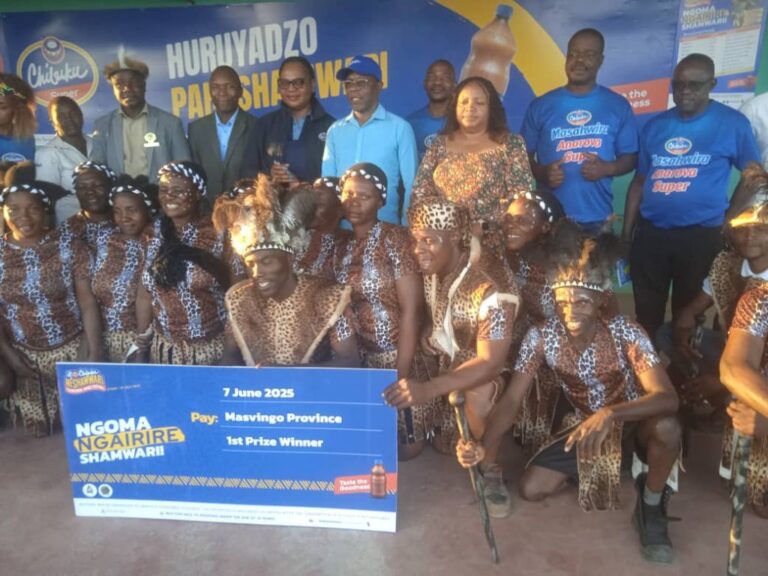
Reformed Church in Zimbabwe run Zimuto High School’s drum majorettes stole the spotlight at the 65th Zimbabwe International Trade Fair in Bulawayo with their outstanding performance that captivated the audience and earned them four top awards.
The team’s stunning performances marked by synchronized movements and flawless baton twirling left a lasting impression and their vibrant uniforms reflecting the schools spirit were praised for creativity and attention to detail.
The four awards which were earned by Zimuto High were second best drum majorettes squad following Msitheli high which was the best, second best uniform with the gold medal given to Founders School.
Another award was third best overall team inspired by their school motto ‘Tinokwirira’ which works in motivating the learners to excel to the top with the first and second award given to Msitheli and Zengeza 1 high respectively. The last award was third best sub leaders the first and second awards given to Zengeza 1 High and Msitheli high respectively.
Speaking to TellZim News Zimuto High head Langton Chikaka said they were happy for the recognition saying the awards were for the first time in their history.
“We are elated by the show of good performance by the learners and we are forever indebted to the trainer’s efforts that made us get these awards for the first time although we have been perennial participants at ZITF,” said Chikaka.
Zimuto high also displayed a smart navigation kit for the visually impaired at the Ministry of Primary and Secondary Education (MOPSE) exhibition stand. The kit comprises of three active components namely a walking stick, navigation spectacles and Global Positioning System (GPS) module.
The cutting edge technology has got a motion sensor which detects obstacles in the movement process, it has a moisture sensor which detects water bodies, and the navigation spectacles detect written texts and convert them into audible and the GPS module helps to locate the exact location of the visually impaired individual in case of an emergency.
Learners from another RCZ run school Pamushana High unveiled a smart car park system designed to streamline parking and integrate modern technology into everyday life at the ZITF.

SolidarMed brings Adolescence health clinic to Chiredzi

By Beatific Gumbwanda

CHIREDZI- With rampant growth in suicidal issues as well as drug and substance abuse among the communities, SolidarMed, in partnership with the Zimbabwe National Family Planning Council through its Adolescence Heath Project, recently brought a health clinic for the youth In Chiredzi.
The clinic was brought to Tshovani Stadium, where mental health screening, adolescence reproductive health, family planning, HIV and Aids testing and counselling was being done for free.
In an interview with TellZim News SolidarMed Project Officer Tawanda Magara said the organisation in partnership with ZNFPC and the Ministry of Health wanted to help adolescence with correct information about Sexual Reproductive Health as well as substance abuse.
“Today is a Youth day, where we are partnering with ZNFPC and the Ministry of Health and Child Care to educate the adolescence about issues of Sexual reproductive health (SRH), drug and substance abuse through mental health screening to avoid suicides caused by anxiety and relationships as this age is very delicate,” said Magara.
Magara said issues of drug and substance abuse had reached a certain level in Chiredzi as drug peddlers were using injections.
“This programme will also help the adolescence on the dangers of drugs as drug peddlers here in Chiredzi are now using injections to drug youths, where they later in turn draw blood of an injected individual in order to drug others, which is now spreading blood related diseases like HIV and Aids,” said Magara.
One adolescent and Peer Educator, Tatenda Ganduri said the program was very beneficial to their age, especially on issues to do with drug and substance abuse, mental health as well as Sexual Reproductive Health issues.
“This programme is beneficial to the youths who are deeply embedded into drug and substance abuse as well as sexual reproductive health. There are experts in those tents educating us on issues to do with sexual reproductive health as well and mental health issues, condomising as well as abstinence issues,” said Ganduri.
SolidarMed is a dynamic organization with a vision of engendering quality health care in disenfranchised communities through its partnership with the Ministry of Health and Childcare and supports the national health strategy in Masvingo province through locally embedded projects in the field of HIV/TB care, Maternal and Neonatal Health, and Non-Communicable diseases.

ZISMIWU promises to fight THZ retrenchment

By Beatific Gumbwanda

CHIREDZI – As the World celebrates International Workers Day, sugar industry employees are reeling in agony following the company’s massive retrenchment exercise, leaving most workers uncertain about their future.
However, the Zimbabwe Sugar Milling Industry Workers Union (ZISMIWU) wowed to fight against the retrenchment exercise that was meant to offload almost 1000 workers from its workforce, TellZim News can report.
In an interview with ZSMIWU Secretary General, Retired Caption Faster Gono ahead of May Day, he indicated that the retrenchment exercise was flawed saying it did not corroborate with the current statutes of labor as it was impromptu and will cause a lot of psychological distress, financial strain, career uncertainty, loss of identity as well as impact on health and well-being.
“The company made a lot of profits during the colonial period when our forefathers were enslaved and forced to work on these estates. Most of the existing infrastructure was constructed for free by our fathers, making the company enjoy the massive profits they have today.
“We cannot allow a repeat of the pre-colonial period, there should be no discrimination whatsoever when treating the employees when it gets to their benefits,” said Gono.
ZISMIWU Administrator Chido Ushe said this year’s Workers Day was extraordinary considering the challenges they had faced which she said was different from yester years.
“We have been having challenges since then, but this year has been a little bit challenging. We are currently engaging different leadership to help deal with the current situation and, together with the Sugar Production Milling Workers Union of Zimbabwe (SPMWUZ), we have challenged the retrenchment process in court.
“The notice of the retrenchment indicated that it was an intention, but they had already begun serving notices of termination to employees. The process was not done properly and we will fight till the end,” she said.
Over the years, ZISMIWU has celebrated the Day in all the THZ Estates in Hippo Valley, Triangle, and Mwenezana
Every year in May, the world celebrates International Workers Day to honor the hard work and contributions of workers across industries.
It also serves as a reminder of the importance of workers’ rights and the need for fair employment practices.

Chivhu-Roy Road claims one life

0

By Rangarirai Shanyurai

A 29 year old man from Harare died in a fatal road accident at a 53 km peg along Chivhu-Roy Road when his vehicle rammed into a white Forfeit line truck trailer that was parked in the road after a mechanical fault.
Masvingo Provincial Police Assistant Spokesperson Assistant Inspector Masauso Patinyu confirmed the accident to TellZim News and urged drivers to be cautious while on the road.
“I confirm the accident that occurred at the 53 kilometre peg along Chivhu-Roy Road where the driver of a Mercedes Benz, Casper Mushonga (29) who resided in Glenview, Harare died upon admission at Chivhu General Hospital.
“I advise all motorists to ensure their safety and that of other road users by pulling off the road when they experience a mechanical fault with their vehicles,” said Patinyu
Circumstances are that on April 26 at around 1830 hours Mwamba Mukoka (49) who resides in Rujeko C, Masvingo was driving a white Forfeit line truck towing a trailer towards Chivhu with one passenger on board. The truck developed a mechanical fault at at 53 km peg along Chivhu-Roy road and he parked in the lane while waiting for maintenance.
Mushonga who had two passengers on board rammed into the stationery trailer. The two passengers were injured and all were taken to Chivhu General Hospital where Mushonga died upon admission.
Mushonga had a fractured right leg and head injuries. The passengers sustained serious head and chest injuries and were admitted on serious conditions.

World Press Freedom Day: Embracing AI’s Role in Journalism

By TellZim Reporter

Media Institute of Southern Africa (MISA) Zimbabwe held its World Press Freedom Day commemorations under the theme ‘Reporting in the Brave New World – The Impact of Artificial Intelligence on Press Freedom and the Media.’
In his welcome remarks MISA Zimbabwe National Chairperson Passmore Kuzipa delivered a compelling speech highlighting both the opportunities and challenges presented by the integration of AI in the media sector.
Kuzipa emphasized the important moment for Zimbabwe to reflect on its progress in adopting AI as a tool for socio-economic development, aligning with the country’s mantra of ‘Leaving no one and no place behind.’
“A well-resourced and tech-savvy media plays a crucial role in ensuring socio-economic development and safeguarding citizens’ rights to access vital information, which fosters transparency and accountability,” said Kuzipa.
Kuzipa pointed out the transformative potential of AI in journalism, particularly in enhancing investigative reporting and content creation. He however, warned of the significant risks associated with its use.
“While AI can improve reporting, it also brings ethical challenges, including the amplification of misinformation, suppression of dissent, and the potential marginalization of smaller media outlets,” he said.
Kuzipa raised concerns about deep fake technology, which is capable of producing realistic yet fabricated images and audio, underscoring the need for vigilance as trust in media sources hangs in the balance with the traditional media landscape is changing as big tech increasingly controls access to audiences.
“Search engines and social media platforms, now at the forefront of AI development, are reshaping consumption patterns and blurring the lines between entertainment and news,” he explained, citing the negative impact on funding for investigative journalism as audiences gravitate toward quicker, less expensive content.
The chairperson highlighted the complex intersection of AI and press freedom in Africa, where challenges such as limited access to AI resources and technologies and the dominance of Western models exacerbate inequalities between large media houses and smaller community-based outlets.
To address these disparities, Kuzipa said stakeholders needed to address areas such as AI’s dual role in journalism, ethical governance of AI as well as legal and regulatory reform.
“Stakeholders need to address issues such as AI’s dual role in journalism that is understanding how AI can enhance content creation while managing the risks of misinformation and algorithmic bias, ethical governance of AI: Developing global frameworks that uphold human rights and press freedom in the deployment of AI tools.
“There is also need to consider legal and regulatory reform by revising existing laws, especially those related to copyright and defamation, to meet the challenges posed by AI-generated content,” he said.
As traditional media faces transformation and social media reshapes news consumption patterns, Kuzipa reiterated the urgent need for vigilance against misinformation and the preservation of journalistic integrity. He called for new regulations to tackle pressing issues such as deep fakes, algorithmic bias, and the accountability of AI systems.
The call to action is clear: as Zimbabwe embraces the digital age, it must do so while safeguarding its commitment to press freedom and the truth.

Chilonga Bridge: Community goes indigenous, fill gap with stones

By Beatific Gumbwanda

CHILONGA – The Chiredzi community is facing a dire situation after the Chilonga Bridge collapsed, disrupting access to essential services.
The bridge’s collapse has forced villagers to resort to makeshift solutions, such as using stones to fill the gap, highlighting the government’s neglect of infrastructure
The Chilonga Bridge, which spans the Runde River, is narrow and low-lying, making it prone to flooding during the rainy season. This has led to villagers using unsafe boats to cross, resulting in loss of life. The community has been left stranded, with limited access to vital services
Following the collapse last month, community in Chiredzi South have converged to temporarily address the problem by filling up the void left with the causeway with boulders to create a temporary but dangerous pathway for movement while waiting for authorities to address the situation.
Chilonga Bridge, which crosses Runde River was swept away on March 12, 2025, severing a critical connection between Chiredzi Central Business District and Chiredzi South constituency following the critical warning by Chiredzi Civil Protection Unit (CPU) on closure of the causeway in February, who had anticipated its collapse.
The Bridge plays a pivotal role in the district’s development, providing the shortest route from Chiredzi Central to Maputo through the Sango Border Post.
It is also a gateway for Chiredzi South Constituency to access various services including Chiredzi General Hospital, banks, the National Registry Office as well as the Grain Marketing Board.
TellZim News visited the Causeway last week, where the community led by one Henry Mukono and Chiredzi South Member of Parliament, Joel Sithole have joined hands to create a temporary pathway by filling the void left by the collapse of the causeway with boulders.
The two provided fuel and food and other essentials to the people working at the bridge.
Speaking to TellZim News, Sithole said the causeway, which was constructed on a temporary basis since the collapse of Chipinda Bridge, was embedded with sand inside, so they were filling it up with stones to create a temporary pathway for the community to use.
“We are working in conjunction with construction companies who fetch river sand in Runde River to transport boulders which we are piling in the nearby mountain to fill up the void left. We give them fuel to do that and we are progressing very well,” said Sithole.
Chiredzi Central Member of Parliament, Ropafadzo Makumire who also visited the site highlighted the need for Minister of Transport, Felix Mhona, to make a site visit and see how people were crossing the river which might make it easier for the government to give the bridge the urgency it deserves.
“This is worrisome seeing how the community is crossing this river, which is dangerous. I have crossed the river using the home made canoes in order to understand the challenges these people are going through and was told there is a Hippopotamus close by, which might overturn the canoes.
“I think we need to continuously raise the issue up so that the Minister will personally come down here and assess the situation,” said Makumire.
Chilonga Bridge was constructed as makeshift after the collapse of Chipinda Bridge in 2000 after it was swept away by Cyclone Eline.

Missing woman’s body found floating in dam

0

By Tatiana Mhararira

The body of a missing woman from Masvingo was discovered floating in Tirivanhu Dam, Victoria Ranch, by a man who had gone fishing on April 26, 2025.
Masvingo Acting Provincial Police Spokesperson, Assistant Inspector Masauso Patinyu, confirmed the incident to TellZim News and said investigations were ongoing.
“I confirm the incident in which Rutendo Jimu’s body was found floating in Tirivanhu Dam. Investigations are still underway to determine the cause of death,” said Patinyu.
On the given day at around 0900 hours, a man from Victoria Range went fishing at the dam. About 150 metres from the bank, he spotted a body floating in the water and alerted the Zimbabwe Republic Police (ZRP).
The ZRP Sub-Aqua Unit was dispatched the following day, April 27, 2025, and successfully retrieved the body. Upon inspection, no visible injuries were found. Police noted that the clothing matched the description of a person reported missing earlier.
Relatives were informed and later identified the body as that of Jimu. It was subsequently taken to Masvingo Provincial Hospital for a post-mortem.

GZU wins bronze medal at ZITF

By Tatiana Mhararira

Great Zimbabwe University (GZU) scooped a bronze medal at the just ended Zimbabwe International Trade Fair (ZITF) for being one of the best Zimbabwean education and training exhibitor.
The university secured third place out of more than 50 exhibitors in the higher and tertiary category, which included 20 local and international universities, 10 teacher colleges, 10 polytechnics, and various other training institutions.
Speaking to TellZim News, GZU Information and Public Relations Officer Anderson Chipatiso said the award came after a long period since they last won at ZITF.
“This achievement marks a significant milestone for GZU, marking a decade since the university last received such recognition. As Mark Batterson said, “The day we stop dreaming is the day we start dying.” With that in mind, the university will continue to innovate and introduce new initiatives for the benefit of students and the community,” said Chipatiso.
Chipatiso said GZU won because of its outstanding exhibition at its stand which he said was outstanding..
“This achievement was a testament to the hard work and innovation that set GZU apart in a highly competitive field. The GZU exhibition was dynamic and impactful, highlighting the entire food ecosystem, from the field to the shop where products are commercialized. The stand brought to life the concept of Education 5.0, aligning with the Vision 2030 Industrialization and Commercialization agenda. This approach was in perfect harmony with the 2025 ZITF theme.
“Additionally, the exhibition showcased the university’s commitment to cultural reclamation, particularly in the dry lands agricultural sector, promoting small grain mealie meal as an ideal, sustainable diet. The demand for the product was overwhelming, with stock selling out quickly, requiring restocking by midweek,” said Chipatiso.
He also said the GZU stand displayed some of the products manufactured from the tertiary institution.
“The exhibition also featured various medicinal innovations, including hypertension beverages, diffusers, vaporubs for colds and flu, as well as oils and bath salts designed to alleviate arthritis and muscle pain.
One of the major highlights was the introduction of three varieties of Wezhira wines, available for tasting. Stakeholders provided valuable feedback that will contribute to further refining of the product before its full commercialization,” he said.
Chipatiso said the institution ran a promotion of free application for its next intake that also contributed to the third place as an institution that promote education to many.
“In addition to these innovations, GZU took the opportunity to run a special promotion, offering free applications for the August intake. Many prospective students took advantage of this initiative, further boosted by advertisements for the newly launched certificate and diploma courses for the August 2025 intake. Applicants are encouraged to apply, with scholarships also available for eligible students who possess an offer letter for the August intake.
“The GZU stand was not only an exhibition of innovation but also a showcase of the university’s magnificent infrastructure and its vibrant campus radio station, which captivated visitors and students alike,” said Chipatiso.
GZU students from the School of Natural Sciences excelled at the two day 2025 ZITF Innovators Forum Pitch competition where they attained fourth position out of 115 entrants.

The main implications of state or neoliberal corporatism on employment relations

0

By Shadreck Zangairai

Deregulation of wages and salaries: – Before Neoliberalism, the Zimbabwean government used to determine minimum and maximum wages and salaries for each industry. Neoliberalism however advocated for free industry or enterprise based collective bargaining through NECs and Works Councils. This saw the removal of State Corporatist controls on wages. Collective bargaining structures tended to favour management whose salaries are individually negotiated and workers grew impatient which led to recording of more strikes and stay away in 1996. The major implication was that most Workers Committees and Trade Unions were not good in negotiating which saw salaries lagging behind the costs of commodities. The gap between most managers and employees kept on widening. Employers on the other hand were helped since they could pay workes based on productivity as opposed to a one size fits all approach. Income got eroded nearly every time affecting the worker’s purchasing power. Most employees left the Zimbabwean Companies for greener pastures mainly South Africa and Britain often referred to as the brain drain.

Decentralisation of disciplinary issues to the Works Council and NECs: – Neoliberalism decentralised disciplinary procedures to enterprises and industry with the individual Companies and industries being encouraged to formulate own Codes of Conduct for use in disciplinary hearings. The major implication was that those who authored most Codes did not understand the environment in which the Code would be used and most offences covered in various Codes left room for various interpretations. There were also notable cases of Codes of Conduct being implemented by untrained personnel and gross violation of the principle of natural justice. This impacted on the industrial climates.

Deregulation of the Labour Market: – Neoliberalism brought about labour flexibility. It saw labour laws being amended in the name of market flexibility. The major call for flexible labor markets, in particular the freedom of entrepreneurs to hire and fire workers at will and to reorganise work as needed; and, for some, the need for the free mobility of labor within and across countries. This weakened Trade Unions. Introduction of concepts such as commitment has seen the emergence of job creepers, individualism which eroded worker collectivism. Since 1990, a number of retrenchments have been happening, casualization of labour and colleges have been churning out graduates with low uptake of these graduates in industry. The keenly felt impacts of ESAP upon workers and their families led the 1990s to become ‘a decade of unprecedented industrial and social action’ to borrow Bond and Saunders’s assertion.

Deindustrialisation of the economy: – The cumulative impact of liberalism and economic crisis has led to serious poverty and hardship for the majority of the Zimbabwean population leading to the informalisation of the economy. The Zimbabwean economy has been deindustrialised and a new economy has been formed called small to medium enterprises (SMEs). These were formed in response to closure of companies, unemployment. Employees in this sector are largely non-unionised since recruitment based on nepotism since most SMEs are family entities. Other positions are filled with personnel recommended from friends whose conduct is mainly driven by need to keep good friendship. There has been harmony in some case since these are unitary institutions. According to Harvey (2007, Trade Union numbers have been on the decline mainly driven by informalisation of the economy.

Cutting of government subsidies: – The government removed subsidies on most basic commodities, including large cuts to the health and education budgets (McCandless 2011). This saw prices of commodities going up to unaffordable levels thereby giving rise to continued call for wage reviews in line with the inflationary thresholds. Workers began to push for other benefits such as medical aid cover, funeral cover and in some cases companies began to pay school fees benefits as part of salaries. Companies without these benefits remained with a challenge to retain key talent.

Deregulation of investment: – Neoliberalism penned doors to foreign direct investment. However, with the continued industrial unrest, investment in Zimbabwe did not increase as anticipated. The labour cost remained being viewed as much on the high. With a few companies operating, employees continued to feel like being taken for granted.
Deregulation of price controls: – Neoliberalism advocated for removal of price controls. This led to prices being subjected to market competition. With local industries competing with outside countries with different platforms altogether, local products became more dear from time to time prompting local people to go for cheap imports. This paralysed local industries thereby leading to organisations restructuring, reducing labour complements through retrenchment (Saunders 2001). In 2007 and 2008 when government instituted price controls led by Masimirembwa, shop shelves became empty and people survived on imports mainly from Botswana and South Africa.

Multiplicity of Trade Unions: – Neoliberalism has advocated for multiplicity of Unions in the name of Union democracy. This has divided employees and weakened their strength based on numbers (Gwisai 2009). To the employer, union democracy has brought a lot of work since there is need to deal with one union in deducting union dues etc.

Based on the above discussions, it can be widely accepted that the turn from paternalistic ideology by the Zimbabwean government to neo-liberalistic inferences had a lot of negative implications on employment relations than positive. I discussed the main implications of neoliberal corporatism on employment relations in the Zimbabwean context. Such inferences are still felt in today’s industry hence the continued industrial unrest which is unpronounced.

Disclaimer: Shadreck Zangairai is a Human Resources Practitioner, for feedback email:
shadreckzanga@gmail.com, +263772939877/713068365. The information contained herein does not serve as alternative to legal advice. The author do not accept any liability for any damages or losses suffered as a result of actions taken based on information contained herein.