Home Blog Page 67

Businessman Mutangiri acquitted of dam construction charges

0

….ZINWA humiliated in court as state failed to produce critical evidence

By Meditation Mposi

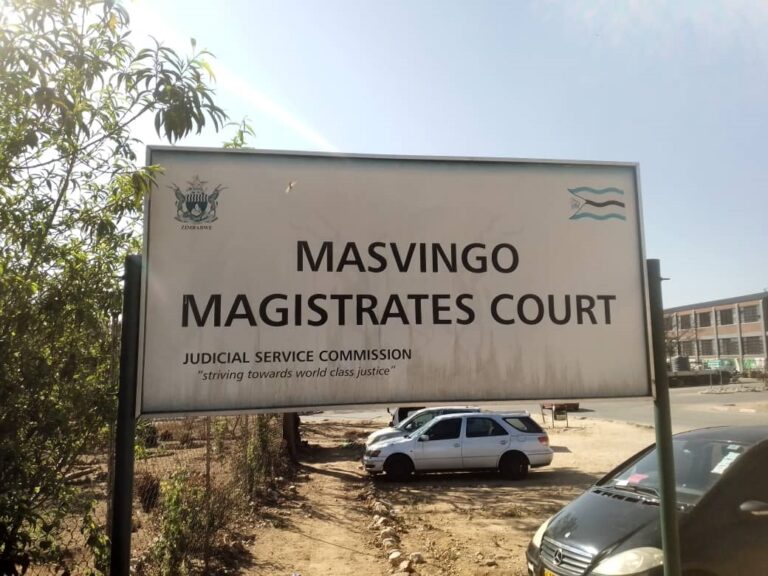
Prominent Masvingo Businessman Philemon Mutangiri who owns Riverton Academy was on February 7, 2024 acquitted by a Masvingo Magistrate after he had been arraigned for possessing three dams without permits and denying authorities access into his Riverton Farm

Mutangiri who was represented by Tabana and Marwa Legal Practitioners from Harare pleaded not guilty when he appeared before Magistrate Franklin Mkwananzi and was acquitted on both charges.

It was the State’s case as presented by Prosecutor Ruvimbo Makoni that on October 24, 2024 Zimbabwe National Water Authority (ZINWA) River Inspector Tungamirai Chireshe went to Riverton Farm where Chiredzi River starts for an inspection and was allegedly denied access by Mutangiri.

He went back to work and reported what had happened and the matter was reported to the police. The officials from ZINWA were then given police officers to accompany them to Riverton farm. Upon their arrival at the farm Mutangiri directed them through the farm.

Chireshe noticed an old dam and two newly constructed ones and asked for a permit which Mutangiri failed to produce. He therefore concluded that Mutangiri constructed the dams without the required design and failed to acquire permits.

In his defense, Mutangiri through his lawyers said he was not the one who constructed the dams but just inherited them from the previous owner.

Chireshe failed to present his credentials to the court to show that he was truly a river inspector or even provide a letter from ZINWA after being challenged to do so in court.

He failed to find the coordinates of the farm on the map which was presented as exhibit one and was asked on how one could have permits for things that do not exist.

The map was drawn in 1980 and it belonged to Penhalonga in Manicaland so the map could not give enough evidence on existence of the dams in Mutangiri’s farm.

The state also failed to call an eye witness who was present during the construction of the dams. None of the witnesses visited Riverton Farm prior to October 24, 2024 to prove that before the dams never existed.

 In passing judgment, the magistrate said the Water Act states that a person who construct a dam is the one who is supposed to approach civil engineers for design.

He said the statute goes to whoever constructed the dams and the demands were upon the constructor, not the person who found them already constructed and the witnesses failed to provide their credentials.

“The state failed to elaborate whether the accused inherited the dams or he constructed them. Also, the credentials of the witnesses were not well explained therefore, their evidence could not be relied upon to say whether he had skills as a river inspector or not,” said Mkwananzi.

The important information which the court wanted to hear was who exactly built the dams and when.

“The witnesses rubbished the idea of who constructed the dams and this was the entry level. Defence did not deny the existence of the dams and the question was who built the dams and why.  Second witness was a Security Officer and his evidence could not carry much weight.

“On the second count of the authority being denied access into the farm, it was just a conversation between two people, the witness and the accused. The lawyer silenced the witness on the phone records and the court was not even favored with the accused’s phone number,” said Mkwananzi.

Truck driver arrested with 34 tonnes smuggled rice

0

By Amos Nyanzero

Masvingo Provincial Police Spokesperson Inspector Kudakwashe Dhewa confirmed the arrest of 40-year-old Evans Singo from Tongwe Village, Chief Sithaudzi, Beitbridge for smuggling 34 tonnes of rice from South Africa.

“I confirm the arrest of Evans Singo, a Scania Truck Driver for smuggling 34 tonnes of white rice from South Africa. Members of the public are encouraged to adhere to the laws that govern the importation of goods in the country. In the same vein, Police in Masvingo is on high alert to curb cross boarder crimes,” said Dhewa.

Dhewa told TellZim News that on February 7, 2025 Singo was driving a Scania Truck loaded with 34 tonnes of white rice from South Africa. At around 1000hours at the 146km peg along Masvingo-Beitbridge road, Police Officers who were on a motorised patrol blitz intercepted Singo and asked for declaration forms which he failed to produce leading to his arrest.

In a separate incident, on February 8, 2025, the police arrested a Mandipi bus driver for smuggling groceries and other goods after intercepting the bus that was travelling from South Africa to Chiredzi without declaration forms.

Masvingo Provincial Police Spokesperson Inspector Kudakwashe Dhewa confirmed the arrest of Sanangurai Nango (49) to TellZim News, and said the police suspected the bus, coming from South Africa going to Chiredzi had smuggled goods.

They intercepted the bus at 107 km peg at around 2100 hours along Masvingo- Beitbridge road and discovered that the bus was carrying smuggled groceries from South Africa.

The groceries included Dragon energy drinks, Mayo yoghurts, chicken cuts, engine oil, Sasko flour and other food items and the driver was requested for custom declaration forms, but he was unable to produce them leading to his arrest.

A TOOTH-PICK ANALYSIS NEEDED FOR THE DRC CONFLICT

0

N.B Views and opinions expressed in the article below are solely the owner’s and do not represent any organisation

By Aribino Nicholas

Trying to understand the anatomy of the conflict in the DRC is like asking blind people to define an elephant. The feedback that the blind people will get and share after their tactile experiences of the elephant would be diverse. Their phenomenological experiences of the elephant will depend on their sensory inputs and a common definition of an elephant may be too difficult to reach. The conflict in the DRC is a gargantuan problem that resembles an elephant before the blind people. It is the intent of this opinion piece to try to float the writer’s own understanding of the conflict in the DRC.
The DRC is a vast African country that is a former colony of Belgium. This country is filthy rich in terms of mineral wealth. The DRC is a multi-tribal society. Extant literature says that there are 250 linguistic groups in the DRC. From the foregoing, the unspoken message is that the DRC needs leadership teaming that can work towards the unification of its diverse citizenry. Governance in the DRC should be organised around the trinity of diversity, inclusion and equity, hence the need for boundary spanning or connective work between and among state and non-state actors, state security and human security, the legislature, judiciary and the executive. The instability in the DRC has been attributed to Rwanda as the monolith of the rebellious group, M23 and the Rwandan president has been labelled a gangster and a Putin of Africa by the apologists of the Kinshasa administration. The Rwandan president, Paul Kagame has on several occasions in response to the accusations made against him thrown back the kitchen sink to those leaders that have labelled him a trouble cause. Barbed comments have been exchanged between and among those who side with Kinshasa and those aligned to Kigali. President Kagame has stoutly argued that it is folly to associate him with the M23. Arguably, Paul Kagame attributes the emergence of the M23 to misgovernance in the DRC that is characterised by ethnic inequalities, unequal distribution of the national cake and presidentialism. Kagame argues that Rwanda and the DRC are both neighbours by history and geography because of colonialism that demarcated them. Pursuant to the historical and geographical polemic, Kagame argues that in both countries there are Hutus and Tutsis, and the government of the DRC is not treating the latter as legitimate citizens of the DRC and to him that has given birth to the M23.
Listening closely to Kagame, one gets a feeling that the problems besetting the DRC are both internal and external. They are internal in terms of a leadership crisis, and they are external in terms of the history of colonialism. Taking an extended look at the DRC, one finds that there are a lot of ungoverned spaces in this country (internal problem). Ungoverned spaces create a fertile ground for lawlessness and terrorism. There are areas in the DRC where you do not find any administrative footprint of the Kinshasa government. Over and above that, the DRC last had its population census in 1984. This is indeed poor governance, because without any disaggregated data of citizens in the DRC how does the government deploy resources across the country? The DRC government is not in touch with its own people in terms of service delivery and this, according to the Human Needs Theory is a recipe for conflict. Between 1998 and 2001, the DRC government operated without a national budget, everything was done according to presidential decrees. During this epoch (1998-2001) the president’s authority went unopposed, unchecked and unmonitored. Upon its independence in 1960, the DRC only had less than 10 university graduates implying that those entrusted with state power were ill-equipped to manage this vast country as they did not have the statecraft for governance. There is also stinking corruption in the DRC where you find a predatory state that thrives on a princeling system. It should be borne in mind that conflict is embedded in political, social and economic structures and these structures are manned by top-dogs that are responsible for the production and distribution of resources. The way these resources are distributed can either make or break a country. In the absence of redistributive justice, pockets of protestation are bound to emerge.
The DRC has plenty of mineral wealth but painstakingly it is one of the poorest countries under the sun. The mineral wealth which is said to be worth USD 24 trillion has attracted regional and international looters who go there in the name of peace making, peacebuilding and peacekeeping. At the time of writing this opinion piece there is a security traffic jam in the DRC which is meant to fight off M23. The million-dollar question is: Is military intervention the solution to this conflict? In any effort to bring about conflict resolution, it is important to inquire into the structural, behavioural and attitudinal conditions conducive to the conflict-this is indeed Kagame’s concern. Furthermore, there is a need to ask who the actors, spoilers and objects are in a conflict and the dynamics emerging from the conflict. There seems to be very little expenditure of effort in trying to understand the context of the fight in the DRC as seen by the recommendation for military intervention. Military intervention can just bring either negative or frozen peace, not positive peace. Good leaders should look for causes of war and conditions for achieving peace, rather than studying military strategies to win the war. Sun Tzu, a military thought leader also advises that a good war is won without going to war. To our African leaders that have met in the Eastern and Southern parts of Africa to resolve the DRC conflict, it is worth noting that weapons are instruments of ill-omen and that the structure of society results in conflict. Let these leaders from both geopolitical blocs advise and advise accordingly the government of the DRC to treat its citizens with respect and dignity. A country cannot successfully fend off conflict if its security and capacity are too weak to include all its citizens in its governance fabric.
In conclusion, state managers in Africa should learn to depersonalise state power so that when they meet to resolve conflicts in Africa, they can therefore be less statist and be more concerned about human security in their approach. AU and its subregional groupings should strengthen their early warning mechanisms to prevent these unnecessary wars and conflicts in Africa.

Albino Trust launches spectacles initiative

By Virginia Njovo

The Albino Trust of Zimbabwe has embarked on a ground breaking initiative to help vulnerable communities through subsidising spectacles for individuals in need, offering them for free to people with albinism and the elderly.
The elderly will also be given reading glasses for free in a move aimed at promoting visual health and inclusivity bridging the gap in access to affordable eye care services addressing the unique needs of people with albinism, the blind and senior citizens.
Speaking to TellZim News at Civic Centre during an outreach programme, Albino Trust of Zimbabwe Executive Director Bruce Nyoni said the programme was there to improve inclusivity and reduce stigma in society.
“We are committed to improve inclusivity in societies as everyone in need affords the spectacles, our spectacles used to be US$100 but they are now going for US$50 dollars only whereas consultation is five dollars.
“These charges only applies to able bodied people whereas the old and other less privileged get the services for free,” Nyoni said.
He said they had partnered with local authorities across Zimbabwe to offer discounted eye examination and other services.
“The Trust has partnered with local authorities across the nation where they are offering discounted eye examinations and spectacles, making these essential services more accessible to those in need,” said Nyoni.
During the outreach, people were given white canes (walking sticks), sunglasses, reading glasses as well as talking wrist watches and the beneficiaries expressed their gratitude saying the programme helped improve vision and enhanced quality of life.
Desire Muketiwa of Ward 6 in Masvingo expressed his happiness after getting sunglasses, a white can and a talking watch.
“I am happy as a person who is blind, I am grateful for this gesture as it improves my confidence as well as minimize accidents. I can now walk alone without my helper as I can feel the ground with my new walking stick,” said Muketiwa.
Nyasha Cheure from Mapanzure area in ward 19, who is visually impaired, said owning a talking watch was a dream come true as he wanted it but could not afford.
“I was in need of these in my life but had never imagined myself with a talking watch or this kind of sunglasses,” said Cheure.
76-year-old, Tatenda Musingarambwi who was among 140 elderly beneficiaries who got reading glasses from Albino Trust in Masvingo said she was thankfull as her vision was fading.
“I am grateful with this programme since my vision was fading, I was struggling to read on my own I regard this as empowerment as I am now capacitated,” said Musingarambwi.

Masvingo City turns down businessman Moyana liquor licence application

0

By Staff Reporter

Residents leaving close to Hillside Extension shops might breathe a sigh of relief after businessman Jerry Moyana’s request for a liquor licence to operate at the shopping centre was denied by the local authority, citing that the 40 percent threshold of bottle stores allowed for a business centre had been reached.
This was revealed in council Health, Housing and Environmental Services Committee minutes dated January 6, 2025 where it was noted that it was illegal to operate a bottle store and butchery as he is already operating a butchery.
“The application for a liquor development permit by Jeremiah Moyana to operate a bottle store on Stand Number 28116 Hillside Extension Masvingo be turned down on the basis that the 40 percent threshold for bottle stores allowable at a business centre had been reached,” reads part of the minutes.
Council also cited that Moyana could not be granted a liquor licence as he was granted a butchery licence which cannot be operating together with a bottle store. It was also noted that Moyana had no liquor store room at the premises. Hillside Extension Business Centre has become one of the popular business centres as it is home to the famous San Siro leisure spot owned by businessman Taurai Mudzviti, known as Bucho.

Masvingo City to purchase motorbikes for councilors

By Meditation Mposi

Masvingo City Council has resolved to buy councilors motorbikes, which will facilitate their movement in their respective wards.
The local authority will spend approximately US$30 000 to purchase 12 Honda 125cc motorbikes for the 12 councilors.
This was revealed in the Finance and General Purpose Committee meeting held on January 2025.
“A proposal was presented to buy Honda 125cc Motorbikes for Councilors at an average price of USD2 500 for each councilor which translates to USD 30 000 excluding His Worship the Mayor who has an official vehicle for use on official business,” read the minutes.
It was also resolved that the motorbikes will come at a loan basis where the loan will be recovered over the period of their term of office.
“It was reported as per circular from the Ministry of Local Government and Public Works dated September 26 on councilors allowances and perks, councilors were to be availed with a five year motorbike loan facility.
“The circular clarified that Council would purchase motorbikes and recover the money from councillor over the period covering their term of office,” read the minutes.

Masvingo City Council considers revival of Shagashe game park

By Tatiana Mhararira

Masvingo City Council is set to work on the revival of Shagashe game park for it to be a tourist attraction for the people in Masvingo and around.
This was revealed in the Finance and General Purposes Committee minutes dated January 21, 2025 where council considered to resuscitate the game park.
It was revealed that there was a company which had interests to collaborate with city council to resuscitate the game park.
“It was reported that Byron Fundira of Mhukahuru investments had expressed interest to collaborate with the City of Masvingo to revive Shagashe. A meeting was held with the investor on November, 2024 followed by a visit to the site,” read the minutes.
“It was reported that Mhukahuru Investments was running similar operations in South Africa and Darwendale where the investor was leasing a Zimbabwe Parks and Wildlife Management Authority on a 25 year lease. The Darwendale facility offers accommodation, conferencing, outdoor activities including game viewing,” read part of the minutes.
Shagashe game park is located 4km from the city centre along the Harare-Masvingo highway and consists of three subdivisions with a total area of 278 hectares. The park is bound west by Masvingo Harare road and East by Shakashe river.
The park used to be home to various game including antelope, giraffe, bucks, kudus, tsetsebe, impala, zebra and various bird species such as owls and kingfishers.
Works to revive the game park requires fencing around its entire perimeter, reconstruction of the viewing platforms, repairs to the reception, ablution facilities, drilling few boreholes and also connecting Municipal water to the premises from nearby off take points.

Zvishavane council commissions new cemetery

By Tatenda Sibanda

Zvishavane – Town Council has ruled out the expansion of its two cemeteries that have reached full capacity, and instead commissioned new sites for cemeteries as part of the municipality’s long-term urban development strategy.
Speaking to TellZim News, Zvishavane Town Council Chairperson Councilor Takarangana Keta said the local authority commissioned a new burial site at Four Miles Cemetery in Mabhula saying all required infrastructure had been acquired to enable the construction of the cemeteries.
“We commissioned a new site for the establishment of two cemeteries and this is being done under the local authority’s urban term development strategy. In a few months to come we expect to commence operations on one of the sites and have it working probably by end of year to early next year.
“All requisite infrastructure and amenities have been put in place to ensure compliance with municipal standards,” he said.
He said the decision was in strict adherence to the Cemeteries Act [Chapter 5:04], which provides statutory guidance on the establishment, governance, and regulation of public burial grounds.
“The Act mandates local authorities to oversee cemetery management, including their establishment, closure, and transfer of oversight to designated trustees.
“Zvishavane Town Council’s approach aligns with best practices in urban land use planning, ensuring that burial infrastructure remains sustainable while maintaining spatial efficiency in a rapidly developing municipality,” he said.
A local resident Jacob Nyoni Shava told Tellzim News that the development was most welcome as cemeteries were an important infrastructure which a town cannot operate without and urged the local authority to offer graves at an affordable price.
“We are happy to hear about this decision were two other cemeteries are set to be established. It shows that council is focused towards the growth of the city and also knowing that the population is increasing and death is something which comes any time.
“However my plea is that, we need affordable graves as a community because we cannot afford some of the charges. We have the elderly in our community who do not have the means to get money but they also need the service,” said Shava.

Masvingo City to procure two more refuse trucks

By Richard Mukwenya

Masvingo City Council is set to add two more refuse trucks to its fleet of service vehicles in order to improve refuse collection.
This was resolved in a full council meeting held on January 6, 2025 where it was noted that council will buy two 12 Cubic Metre Refuse Trucks at a cost of US$180 000.00 each.
“This would avoid over usage of one truck thereby prolonging the vehicles life span,” the minutes read.
Council has been for some time now collecting refuse in the wee hours of the morning until evening, risking breakdown of the available refuse trucks due to overworking.
Town Clerk Engineer Edward Mukaratirwa however noted that the trucks on break down were not old but the municipality workshop was failing to maintain them. Council resolved that the matter be put on abeyance and the Director of Engineering Services alongside workshop staff will work on maintaining and repairing the existing fleet and prepare a report to the Committee.

Anti-ED faction blocks CEO appointment in Bikita

By Brighton Chiseva

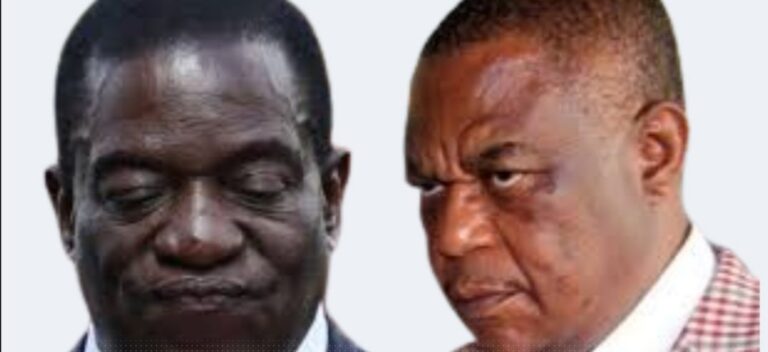
BIKITA – The dispute over the appointment of the new Bikita Rural District Council (RDC) Chief Executive Officer (CEO) has exposed tensions between a faction linked to President Emmerson Mnangagwa and another associated with Vice President Constantino Chiwenga.The decision to appoint Archbald Ncube, former Chibi RDC Human Resources and Admin officer, as the substantive CEO is being contested by councilors, who are insisting that they do not want him at the local authority despite him being appointed by Local Government Minister Daniel Garwe.Zanu PF Bikita district is said to be a Chiwenga faction stronghold, with the power struggles between the two factions coming to the fore when Bikita RDC council chairperson Timothy Mataga blocked the appointment saying councilors and other stakeholders were against the appointment of Ncube.Mataga claimed that Ncube ranked number two during interviews for the post which was left vacant following the death of Peter Chibhi who committed suicide following a string of corruption and abuse of office cases.The District Zanu PF structures are aligned to Chiwenga faction, save for a few like Bikita South and West MPs Energy Mutodi and Daniel Nhatiso Makusha, whih has seen Ncube’s appointment hitting a wall.A councilor from Bikita, Brighton Mushekwa, was verbally fired from the party by Mnangagwa loyalist and national youth executive vice chair John Paradza for refusing to chant the ED2030 slogan.In a letter seen by TellZim News dated January 2, 2025, directed to the Council Chairperson, the Garwe approved the appointment of Ncube as the new council CEO.“I have approved the appointment of Ncube with effect from the date of appointment as the substantive CEO for Bikita RDC in terms Section 66 (1) of the Rural District Councils Act chapter [29: 13]. In the event that he declines, the offer should be extended to Savory Chikomwe and should all of them fail to fill the vacant post for some reasons, the post should be re-advertised,” reads the letter.Mataga however went on to write his own letter, allegedly after being influenced by Zanu PF structures in the district, dated January 21, expressing displeasure over the appointment of Ncube.“On behalf of Bikita RDC, I write to object the appointment of Archibald Ncube as Chief Executive Officer. When interviews were conducted the candidate who scored the highest mars was Arnold T Mtuke who is the current acting Chief Executive Officer. Council sat and resolved to have him appointed as the substantive Chief Executive Officer and our resolution was duly forwarded to you. “The resolution to appoint Arnold T Mtuke was based on his performance during his period as acting CEO from March 2024 to date and his performance in the interviews. As the council Chairperson for Bikita RDC, I am convinced that Arnold T Mtuke can take the RDC to new heights hence my objection to the appointment of Archbald Ncube,” reads part of the letter.Sources however said Bikita District Development Coordinator (DDC) Bernard Hadzirabwi went to Bikita RDC on Monday February 3 to introduce the new CEO but the council chair refused saying those who had voted him had instructed him not to allow Ncube to take over as CEO.The sources further said Mataga said some Zanu PF members in the district including retired general Engelbert Rugeje and Anna Rungani had instructed him against accepting Ncube.“Mataga said he was instructed by Zanu PF leadership in the district not to allow Ncube to take over as CEO. DDC Hadzirabwi called some party members including the Provincial Chair Robson Mavhenyengwa who said they should continue with the minister’s instruction but he refused,” said the source.Contacted by TellZim News on January 7, Mataga maintained the council’s position saying they were not told why their preferred candidate was not appointed and they would stand by the resolution unless the Minister insists.“We want the minister to explain to us why the person whom we recommended failed when he was number one during the interviews. We where shocked that number two and three were nominated and our candidate was not even mentioned,” said Mataga.Asked if he was instructed by Zanu PF members not to allow Ncube to take over as CEO, Mataga simply said it was not only the party but several stakeholders.“Not only Zanu PF, a number of our stakeholders here are against that and they want Mtuke to continue unless the Minister insists or explain to us why he chose Ncube over Mtuke,” Mataga said.Other sources said Mtuke had since written a letter declining the nomination by council to continue as CEO.Mataga however said he had not seen the letter and only heard about it from the DDC and said it did not make sense though for him to write a letter declining an offer that he was not directly given.“I didn’t see any letter, I only heard that from the DDC; how could he have written a letter declining an offer that we had not given him? Who was he responding to? We never wrote a letter to him with the offer so it does not make sense,” said Mataga.In the alleged letter leaked to TellZim News dated January 31, Mtuke said he was not interested in the post saying it was in the best interest of Bikita people for peace and unity to prevail.“Allow me to take this opportunity to state my disinterest in the CEO’s post for Bikita RDC. I am grateful for the faith and trust the council and other stakeholders have in my capabilities but it is in the best intrest of the people of Bikita that peace and unity prevails to further the development agenda of the district. I pray my humble submission will be acceptable,” reads the letter.Efforts to get a comment from Mtuke were futile as his cell was not reachable by the time of writing and Ncube on the other hand said he could not comment on the matter to the media.Zanu PF Provincial Chairperson Robson Mavhenyengwa told TellZim News that he had summoned the councilors so he could hear the matter.He said the councilors were Zanu PF and the party formed the government so they could not be seen opposing what had been done by the government.“We as Zanu PF cannot oppose what has been done by a government minister because the government is Zanu PF so we cannot be seen disputing what has been done by our government.“I have since called the councilors so that I hear their case so I will furnish you after I have a meeting with them,” said Mavhenyengwa.