By Brighton Chiseva
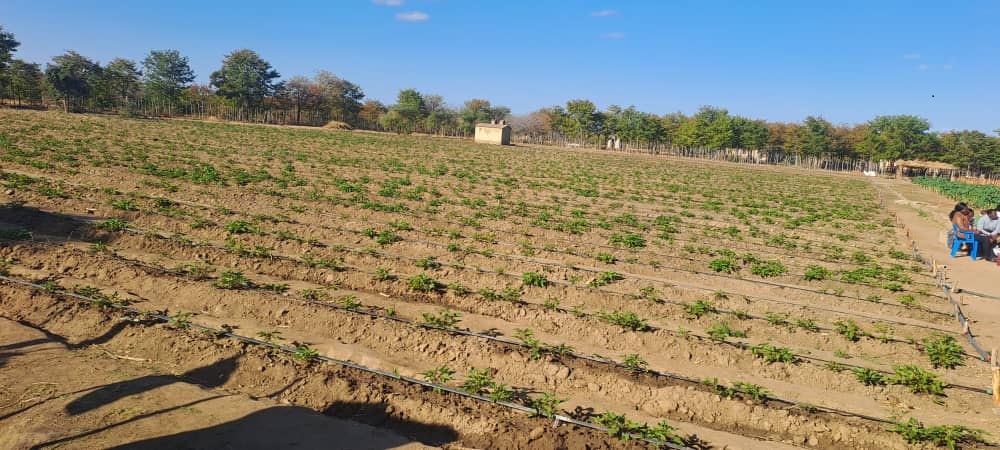
Who would have thought that sweet potatoes (Mbambaira), typically grown under natural rainfall, could thrive under drip irrigation? Yet, in Mahlaba Garden, Mazvihwa area, Zvishavane, this innovative approach is revolutionizing the way the community grows its crops.
Located in a region plagued by water scarcity, the garden’s 75 members, mostly women, have adopted drip irrigation to cultivate sweet potatoes, a cash crop that promises to bring sustenance and prosperity.
The story of Mahlaba Garden is one of resilience and determination. Initially divided into two separate gardens, the community realized that one garden’s reliance on a small dam was depleting the water source for cattle.
In a wise decision, the two gardens merged, opting to use borehole water for irrigation. This not only conserved water for livestock but also ensured a steady supply for the garden.
The garden’s journey began with nutrition crops like covo, cabbages, peas, carrots, and tomatoes among others, which met the community’s nutritional needs.
However, realizing the need for cash income, they introduced cash crops. Green mealies were the first cash crop, yielding an impressive income of over US$1,000.
This initial success paved the way for the current sweet potato project, strategically timed to target a ready market when the commodity is scarce. By using drip irrigation, the community is able to conserve water, a precious resource in this arid region.
The garden is diverse, with sections dedicated to germinating watermelons, maize, a larger portion of sweet potatoes and the other section with vegetables, tomatoes, peas and carrots.
On July 29, the garden hosted a successful field day, winning over US $800 in competitions against other local gardens. The event brought together stakeholders who shared ideas and goods with the community.
The guest of honor at the event, Norman Mugiya who is Ranaka Group of companies Director and was represented by the companies’ manager Shame Katongo, commended the collaborative work between the farmers and Agritex officers, noting its positive impact and donated a Jojo tank and a 400m pipe to aid in irrigation, further supporting the garden’s growth.
“I am impressed by the work being done here, the collaboration between the farmers and the extension workers,” said Katongo
He expressed the organisation’s interest in partnering with the garden saying they would provide goods like school stationery, inputs, and chemicals at discounted rates for bulk purchases, saving farmers transportation costs and benefiting from economies of scale.
Ruswa Holdings representative Itai Vandirai urged the community to approach new markets to avoid competition from the traditional markets where they supply direct to organizations that require their produce.
“We need to target markets that are not the traditional ones like fruit and vegetable markets but approach new markets like private clinics, lodges, and hotels which may need fresh garden produce for their clients, said Vandirai.
Agric 24, an Agri-shop based in Zvishavane, also participated in the field day. Agric 24 had a working relationship with the garden, having supplied drip kits and installed them for free.
Manyira school head, Anthony Mugiya, emphasized the importance of consuming nutritious food grown in the garden to prevent health challenges related to nutritional deficiencies.
“Some of the produce may not be tasty to others, but they have to be eaten for their benefits just like bitter medication, we take it for our health, so we should do the same with food,” said Mugiya.
He introduced a new slogan, ‘Murimi chaiye anodya zvaanoda panguva yaanoda, asi munhuwo zvake anoti chamuka inyama’ which means ‘A real farmer has a choice, chooses what to eat and at what time, but a nobody will eat anything that comes along their way.”
The garden operates under the slogan ‘Kana tiri pano tinodzidza, tadzokera tinoita’ meaning here we learn, when we get back we implement.” This reflects their commitment to applying knowledge and skills to achieve success.
Local Agritex officer who work with Mahlaba garden Owen Chikava commended the work by farmers saying the garden had become a source of employment for others.
“The garden has become a source of employment, providing jobs for two security guards. More importantly, it has ensured food security and nutrition for the community, with surplus produce sold to cover fees and other expenses,” said Chikava.
He said one of the garden partners had led them to the Prison and Correctional Services in Zvishavane wehere they got the sweet potato seed for free on an agreement that the prison services will get the seed back during rainy season.
The garden’s impact extends beyond economics; it has also reduced gender-based violence by empowering women to earn their own income and manage their finances.
As the community looks to the future, they plan to expand their operations, introducing fisheries, broilers, and layers to boost cash production.
Mahlaba Garden led by Chairperson Sikhanyiso Maturure is a shining example of what can be achieved through determination, innovation, and community spirit.
By embracing new approaches and working together, the community is securing a brighter future for themselves and their families.