
By Beverly Bizeki
My Age Africa has launched a three-month health programme, Shield, aimed at improving
access to healthcare for communities affected by the October 5 hailstorm that devastated
parts of Masvingo.
The Shield programme aims to bring essential health services closer to affected communities,
particularly those struggling to access healthcare after infrastructure damage and disruptions
to essential services.
Speaking at the programme’s inception meeting in Masvingo on November 5, My Age Africa
Programmes Lead Wadzanai Dzimwasha said the initiative was developed in response to the
disaster-related health challenges faced by the communities.
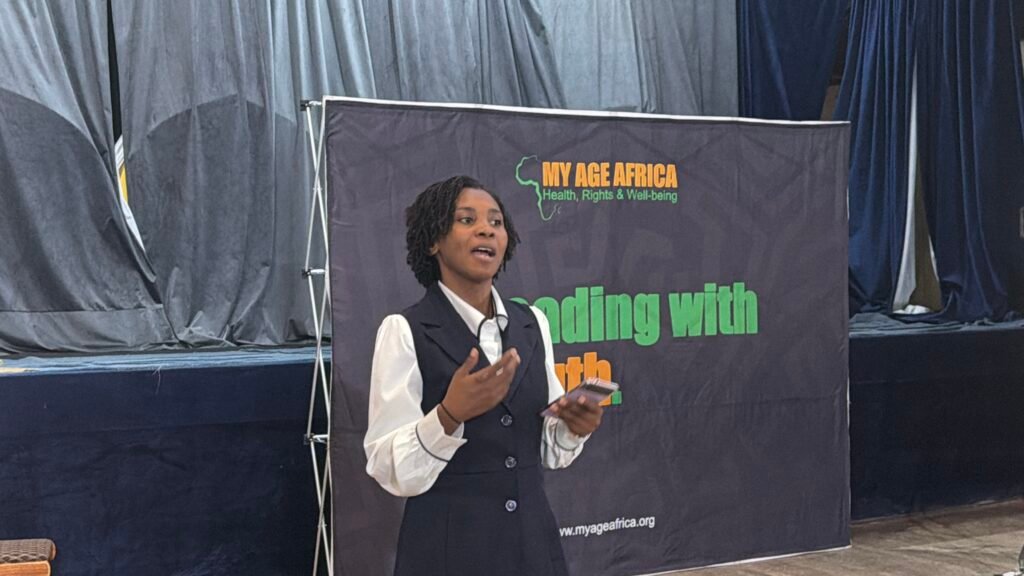
“After the natural disaster that happened on October 5, we engaged with some of our donors
supporting the health component of disaster management and came up with the Shield
project, which seeks to bring services closer to the people.
“Usually, when a disaster strikes, the focus is on infrastructure, while the health component is
often overlooked. We are therefore conducting community outreaches to bring health services
closer to people,” said Dzimwasha.
Dzimwasha said the programme will be conducted together with stakeholders such as City
Health, Zimbabwe National Family Planning Council, the Victim Friendly Unit and other
stakeholders to ensure that health is not forgotten.
She said the aftermath of the hailstorm, particularly prolonged power outages, had disrupted
infection prevention measures, cold-chain storage and emergency obstetric care.
She added that families in affected communities were also facing increased risks of gender-
based violence (GBV), unintended pregnancies and interruptions to maternal healthcare.
Masvingo District Nursing Officer (DNO) Shorai Mumhure said affected women and girls
needed basic hygiene supplies, including sanitary pads, soap, buckets and dishes, while also
highlighting the need for reproductive health services and psychosocial support.
“As we went through the aftermath of the hailstorm, we discovered that things like buckets
were destroyed, so women and girls need essentials such as buckets, dishes, pads and soap.
“Victims also need other services such as STI screening and syndromic treatment, antenatal
care, sexual and gender-based violence support, referrals to counselling, police and legal
services, basic post-rape care, addressing the sexual and reproductive health needs of men
and promoting male involvement,” said Mumhure.
The hailstorm damaged several health facilities, including the maternity wing at Runyararo
Clinic, Masvingo Provincial Hospital and Rujeko Clinic, further highlighting the need to
strengthen healthcare services in affected communities.
The programme targets 11 700 people, representing 18 percent of the 67 500 people affected
by the disaster.
It will cover urban and rural Mucheke, Rujeko and Victoria Ranch through a combination of
mobile and static clinics.

