
Home Blog Page 106

Accelerating Decentralisation & Community based mental health care services: Key to sustainable Development

0

By Francis David Nsiyaludzu

A Nation with a good bill of health serves as a good predictor of increased productivity and a cornerstone for sustainable development. Zimbabwe, a country that has recently promulgated plans for transition to an upper middle class by 2030, could fully achieve this goal by giving priority to citizen health among other initiatives. In the face of a growing need for mental health services due to a plethora of factors and chief being the insurgent scourge of drug and substance abuse, it would be prudent to consider accelerating decentralisation of mental health services and expanding community-based mental health interventions that advocate for all levels of disease prevention.
The Zimbabwe National mental health policy (1999) articulates several key objectives. It highlights the benefits and significance of decentralisation of mental health services as one way of increasing access to metal health services, particularly in rural areas where mental health services are limited. Notable reports and desk reviews have shown that, Zimbabwe has a shortage of human as well as health care facilities for mental health. There is an estimated 18 psychiatrists (17 of them in Harare) or approximately 0.1 per 100,000 population. There are 917 psychiatric nurses (6.5 per 100,000) and 6 psychologists (0.04 per 100,000) There are only two psychiatric hospitals, two psychiatric inpatient units, and seven outpatient mental health facilities functioning in Zimbabwe.(WHO,2020)
Decentralisation of mental health services therefore, implies a collective commitment towards the structural as well as human resource mobilisation and towards the disbursement of responsibility and functions within the various levels of care. The current status quo that reflects a considerable shortage of both human and material resources, is an urgent call for routing towards decentralisation and ramping up of community –based mental health care services. This service paradigm could effectively reduce the country’s global burden of mental health, increase social -functionality and productivity.
A 2010 research conducted by Mangezi & Chibanda (Mental Health in Zimbabwe) points to a community- based approach as one of the several approaches that can assist to disburse mental health services. Devolution of mental health services through the expansion of Community –based mental health interventions would serve to increase access to care, domesticate mental health services, fight stigma, empower local communities, demystify mental illness, build mental health literacy, and promote the overall mental well-being of communities at grassroots level. This approach also serves to significantly reduce fiscal spending on the overall health –bill by actively promoting de-institutionalisation of patients and reducing the burden of care by the few health care workers and facilities in the sector.
The Zimbabwe National Mental Health Policy (1999) articulates clear and smart objectives that seek to comprehensively address mental health. It is the blue print towards achieving these set objectives. However, from a community practitioners’ perspective, one sustainable approach towards mental health care would be to prioritise and hasten prevention initiatives at community level, accelerate and pragmatise the process of decentralisation, increase community participation and instituting community- based mental health care. Investing in community –based mental health care initiatives, like day care centres, half-way homes, hostels, resettlement schemes, vocational training centres, community forums, awareness raising and health promotions among other initiatives as espoused by the policy can significantly mitigate mental health issues across communities. These community based initiatives will serve to rehabilitate patients, prevent relapse and entrench prevention at community level. This also augments service efforts that remain centralised and limited to few major urban centres. While commendable initiatives in the mental health sector continue to be pursued by our Government, like the decentralising of mental health services in some major urban centres, instituting the mhGAP training program for health workers at primary care facilities, refurbishment of some mental health facilities at central hospitals, building partnerships with civic organisations and other private players, accelerating the establishment of widespread community- based mental health services and facilities remains pivotal and can expedite and widen access to services at sustainable cost. Several civic organisations and other non –health sectors, bear witness to the efficacy of community –based mental health services and psycho-social support as a means to localise and ground services within communities. A community-based approach could be an effective and sustainable model for mental health care in the medium to long term. It is an approach that seeks to address, not only the presenting mental health issues, but also conduits attention to the root causes at an ecosystems level.
It therefore, remains prudent to move quickly in establishing community-based mental health initiatives at a macro-scale and in fulfilment of policy aspirations. The policy aspires for a decentralized service and integrated mental health services that are firmly established at all levels of care to satisfy the needs of the general public. (Mental Health Policy (1999). Developing a workforce that is intellectually and physically sound is essential if we are to reap the full benefits of our endowed country. Advocating for prevention-driven and community- based mental health initiatives that are global can be cost –effective and foster sustainable socio-economic development.

Francis David Nsiyaludzu is a Community Psychology intern and registered with the Allied Health Practitioners Council of Zimbabwe. Also a Researcher in areas of Youth and adolescent behaviour, offender rehabilitation and an Educator. Currently working as a Child Safeguarding Officer for the Catholic Diocese of Gokwe.


1 year later, government yet to pay registry workers

By Beverly Bizeki

Government is still to pay Civil Registry contractors who were used during the identity documents registration a year after the work was done.
The victims have since written a letter, which is circulating on social media, to the Minister of Finance and Economic Development Professor Mthuli Ncube querying the ministry’s position on their unpaid allowances.
“We are a group of employees from the ministry of home affairs/civil registry department. We upto this date have not been paid what is duly ours, a year after embarking on the vital national mobile registration programme. Please note that the money was supposed to be used during the exercise, common sense and a clear un-schizophrenic psych will tell you that we are deeply in debt as a result of financing this crucial programme.
“Kindly respond to the following questions honourable- When are you going to pay us our June-July allowances? What is stopping us from being paid for the work we did a year ago? ,” reads part of the letter.
Masvingo District Registrar Lawrence Mapara said he was not aware of the matter and referred the reporter to the provincial registrar Sithembeni Chitsa who asked the reporter to submit her questions in writing.
However, sources who spoke to this publication on condition of anonymity for fear of victimisation raised concern over the delays in payment saying.
“We were supposed to get US$120 per day for mobile workers while those working from the office were supposed to get US$60 per day. We have not been paid since 2023 for June 15 to July 31st 2023,” said the source.
The money is supposed to be around US$2 400 for the minimum paid worker.
This incident is not the first one as government took time to pay transporters who provided service during the 2022 census as well as during elections.
Government recently torched a storm on social media after government through the Ministry of Lands, Agriculture, Fisheries, Water And Rural Development entered into a contract with Blackdeck Livestock and Poultry Farming valued at US$87 757 168 for supply and delivery of over 600 000 goats over a period of five years in which the suppliers were given an advance payment of US$40 million implicating its directors Moses Mpofu and Mike Mpofu.

EX-footballer scouts for rural talent

0

By Rangarirai Shanyurai

Former Caps United football star Albert Manyevere is on a mission to scout for untapped talent in the rural areas of Madzivadondo, Chivi through his newly formed Alman Sports Academy.
The former footballer is giving back to the community, scouting untapped talent and bridging the gap between urban and rural football, offering opportunities to undiscovered athletes.
The Alman Sports Academy which was founded in 2024 focuses on identifying rural talent in Madzivadondo, Chivi mainly under-16 players and below.
In an interview with TellZim News, 58 year old Manyevere said the academy’s goal was to unite individuals with passion for sports, noting the abundance of young talent in rural areas often overlooked by traditional talent scouts who focus on urban regions.
He emphasized the importance of nurturing talent, steering youth away from drug abuse, and providing opportunities for personal and national growth.
“I’ve come across lots of young talent in my rural home but talent seekers mainly scout in urban areas. Looking back at my school days I’m sad to see how some bright students got caught up in drug and substance abuse and missed their chances in football.
“The academy’s mission is to promote, nurture and enhance talent while discouraging drug and substance abuse to unlock their earning potential and contribute to the country’s prosperity.
“The academy aims at uniting individuals with passion for sports and develop them to be professionals” said Manyevere.
Manyevere said the academy is a group of male and female soccer players and encouraged individuals in various sporting activities are encouraged to join them.
“At the moment we are inviting athletes in different sports to come forward, enabling us to nurture and promote their skills. Currently we utilize facilities at Mudadisi Primary and High Schools for training purposes,” said Manyevere.
Manyevere added that he sees himself and his teammates running one of the most successful rural academies.
“Within the next five years, I want to make a difference in the lives of young rural people through the academy. God willing, I see my teammates and I running one of the most successful academies in Zimbabwe. My ambition is driven by passion to empower rural youth through sports, fostering talent, discipline and character,” he said.
Manyevere said the coaching leadership consists of Farai Mamombe, Lucy Hamani, Morris Chinenyanga and Rangarirai Gava and they were looking for partners, promoters and sponsors .
Chinenyanga said the focus of the youth academy was on nurturing talent and creating a select few players who will leave a lasting impact in history. He said this involved identifying, developing young players through a collaborative process involving parents and academy members.
“Youth academy is not about a mass production of players, it is about nurturing talent producing few players that will make history. The important thing is to identify few players and nurture them to become big players.
“The academy primarily requires young players. We plan to have a meeting involving parents and academy members to discuss the necessary procedures. These young players are under supervision while residing with their parents, so parental awareness is crucial due to potential consequences.
Despite risks in football, our academy continues to grow, facing financial challenges in supporting players. We have established a unique philosophy within the academy that must be adhered to,” said Chinenyanga.
Manyevere was born on December 7, 1966 and attended his education at Pfumo Primary and Zengeza 1 High School in Chitungwiza. His football journey started with the division 1 team called Siso Bushbucks in 1988 when he was 22 years old. In 1989 he was spotted by Sunday Marimo Chidzambwa and joined CAPS United.

Beekeeping training center open doors in Zvishavane

By Tinaani Nyabereka

Zvishavane – A newly established Palawani Beekeeping Training Center based in Zvishavane recently opened its doors and is set to unlock significant economic value by providing employment and enhancing the skills of youths and small-scale bee farmers in the region.
The training centre is expected to train more than 200 farmers, contributing to rural development and aligning with the government’s Vision 2030 goals.
Speaking at the official opening of the centre last week, Palawani Lakeworld Resort Chairman, Munyaradzi Hwengwere, said Zimbabwe had unique natural resources and if utilized well could attract more international markets.
“Through our engagement with ZimTrade, we have identified honey from Zimbabwe as a highly exportable commodity. This center will serve as a hub for our communities to collaborate with us, increasing productivity and targeting export markets,” said Hwengwere.
Chief Technical Director at Bees Honey Company, Welcome Bhila said beekeeping in Zimbabwe’s was a transformative programme that could boost the agricultural economy.
“The initiative is poised to transform beekeeping into a viable commercial venture for small-scale farmers, enhancing their livelihoods while also promoting environmental sustainability.
“Bees are crucial not just for livelihoods but for the environment as well. With climate change and environmental conservation being global concerns, we are incentivizing communities to embrace beekeeping, which supports both biodiversity and sustainable agriculture.
“Globally, bee population face challenges from habitat loss, pesticide use, and climate change, therefore as Zimbabwe our beekeeping sector presents an opportunity for rural communities to engage in sustainable practices that address these environmental and economic growth.” Said Hwengwere.
He said the project seek to enhance entrepreneurship, creating employment opportunities, and supporting agricultural development in the marginalized areas.
The center will also promote sustainable agricultural practices through hands-on training equipping local farmers with essential beekeeping skills.

Musara, Chikwanda boundary wrangle goes on

By Meditation Mposi

Chiefs Musara and Chikwanda boundary dispute is still on with the two Chiefs’ subordinates clashing at a funeral recently and the matter was heard at Masvingo Magistrate’s court.
The incident involved one of Chief Musara’s aides, Langton Gozo and Alois Chikwanda who is from the Chikwanda clan.
Alois was dragged to court for impersonating Chief Chikwanda after he gave a speech at a funeral on behalf of Chief Chikwanda in Chief Musara’s area.
Alois appeared before Magistrate Cathrine Tafira on September 30 and pleaded not guilty before he was acquitted
It was a state’s case that on August 15, 2024 there was a funeral in Musara Village under chief Musara.
Gozo and Chikwanda both attended the funeral and during proceedings, when it was time for the chief to speak, Gozo who was standing in for Chief Musara wanted to address mourners but Chikwanda stood first and addressed as Chief.
He threatened to assault the complainant and insulted him saying he would chase Gozo from the area.
In his defense, Chikwanda said there was already a conflict between Chief Chikwanda and Chief Musara and he had an issue with Chief Musara not Gozo whom he said he never saw at the funeral.
He went on to claim that the director of ceremonies said since Chief Chikwanda was not there, he would represent him as he is from the same clan.
The dispute between Chief Musara and Chief Chikwanda rages from 2013 when Musara was declared chief by the late former President Robert Mugabe and since then, there have been clashes between their people.
Sometime in 2015 Chief Chikwanda was warned and asked to respect the boundary and resuscitation of the Musara Chieftaincy.
In 2018, Chief Musara was appointed substantive chief by the High Court and Chief Chikwanda disputed the decision saying ward 13 fell in his area.
Sometime in 2022, Chief Musara dragged Chief Chikwanda’s aide for undermining his authority. The aide was said to have blocked Chief Musara’s representatives from delivering speeches at funerals saying the area was not Chief Musara’s hence he had no right to speak.
The incident is not peculiar to Musara and Chikwanda, the same happens in Murinye and Mugabe areas where the two clash at funerals.
Charumbira and Bere also clash at funerals since the resuscitation of Bere and Nemamwa chieftaincy.

Boarding house fire destroys 13 students’ belongings

By Rangarirai Shanyurai

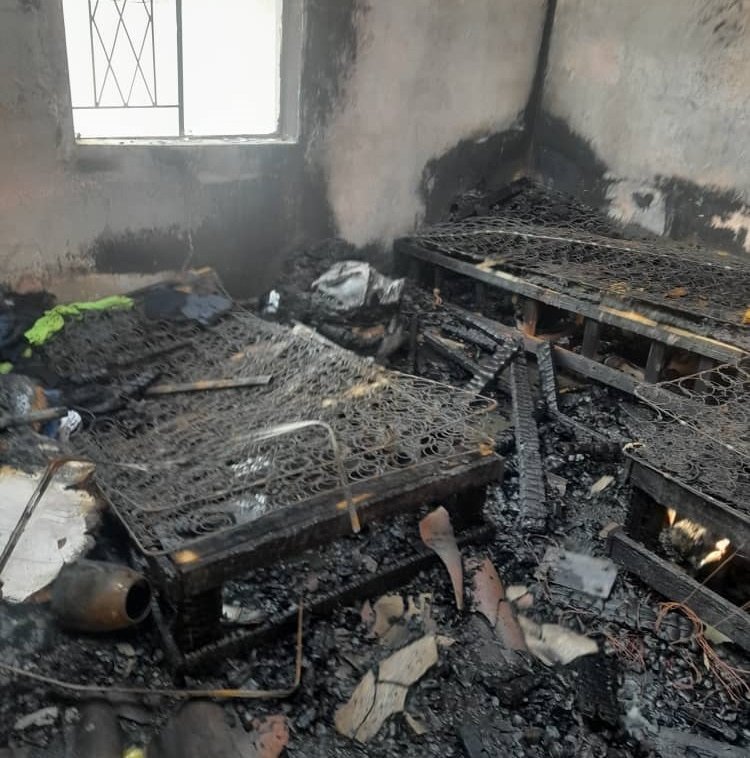
Thirteen students from Great Zimbabwe University (GZU) belongings were destroyed after an electrical fault sparked fire at Appleseed boarding house near Yeukai shops in Mucheke on September 27, at around 1900 hours.
According to a GZU Student Representative Council (SRC), thirteen girls from Yeukai boarding house lost everything in a tragic fire and the university had since provided temporary shelter and meals for the victims.
“Thirteen girls from a boarding house in Yeukai have lost everything in a devastating fire. It is truly heart-breaking to see our friends in such a difficult situation. During this challenging time, the university is providing them with temporary accommodation and meals as they await to go to a new boarding house. However, they need our support more than ever.
“I want to express my deepest gratitude to those who have donated food and clothes. Your kindness and generosity are a beacon of hope for these girls in their time of need. For those who have not yet had the chance to contribute, we kindly urge you to consider helping. Every donation, no matter how small, can make a significant difference. As stated in Acts 20:35, “It is more blessed to give than to receive.” Let us come together as a community to support our fellow students,” read the post.
The owner of the boarding house, Godknows Mugondo confirmed the incident and said they suspect the fire was a night spark from the sockets.
He said GZU Vice Chancellor Professor Rungano Zvobgo promised to attend to the victims’ needs and some of the students had already been taken to Mucheke Campus for accommodation.
“GZU has requested to take the victims to Mucheke Campus and we acceded to their request though we were in the process of transferring them to another boarding house in Runyararo West. We have provided them with blankets and they are going to get what they had at the previous boarding house.
“There are also plans by the University for the students to recover academic documents that were destroyed by the fire. We made a police report indicating the documents were destroyed,” said Mugondo.
He said he had spoken to Masvingo City Mayor, Alec Tabe who is also the ward 4 councillor and local Member of Parliament, Martin Mureri who also promised to mobilise help for the 13 students.
“I contacted the Mayor Tabe and MP Mureri and they both promised to help mobilise for assistance” he said.

School head steals, buries two tonnes of maize

By Beverly Bizeki

A school head at Gomba Primary School in Gutu has left the community devastated after she buried two tonnes of maize meant to feed learners at the school after keeping the maize for four years.
The head, Varaidzo Tazvivinga is said to have kept the maize until it went bad since 2020 while school-going kids who were supposed to benefit from it were going hungry.
Gomba Primary School Development Committee (SDC) Chairperson Samson Chidya confirmed the incident and said upon being asked why she had buried the maize, Tazvivinga said it was attracting rats to the fowl run where it was being kept.
“The maize was brought to the school in 2020 for the school feeding programme but classes were later disturbed by Covid-19 lockdowns and children stopped coming to school. We had used only about a tonne and the remainder was kept at the school,” said Chidya.
He said the head later told them that the remainder was supposed to be taken back to the Department of Social Welfare since it had not been used, with the school being asked to raise funds for its transportation back, which the parents resisted.
“We then suggested that since the school had poultry projects, we could use the maize for those projects as we had two batches of chickens. We went on to use some of the maize there but I later heard that the school head had told the SDC vice chair about wanting to dig a compost pit at the school. Little did we know that it was meant for burying the much needed food,” said Chidya.
He went on to say the head hired someone who dug the compost pit and buried one tonne intending to bury another tonne the following day but the contracted guy told other villagers who then informed other parents.
Contacted for comment, the school head Varaidzo Tazvivinga said she could not comment, saying she was not allowed to speak over the phone before dropping the call.
“We are not allowed to speak over the phone,” said Tazvivinga.
Gutu District Schools Inspector (DSI) Ronald Muganhu said he was yet to establish what had transpired at the school as he had only came across the story on social media.
“I have only seen the story on social media and I am yet to establish how authentic it is thereafter we can do our own investigations,” said Muganhu.
“The matter came to light after the man who was contracted told other parents at a beer binge that he had buried maize at the school and will bury some more the following day. The concerned parents then notified Chief Mazuru.
Other sources who spoke to this publication said the school head is believed to have tried covering up for taking part of the maize for personal use without authorization after parents enquired about the maize.
“It was alleged that she had been using the maize to feed her own poultry project, hence burying the maize,” a local villager said.
Headman Mazuru born Mukandatsama Mazuru condemned the school head’s conduct and said it was retrogressive equating it to an indirect act of murder considering the drought-induced food scarcity.
“What the head did is totally unacceptable and this did not sit well with us as a community. Some families have no food but she had guts to bury maize in a compost, ndiko kutiurayira vanhu uku (that is like killing people).
“The government is helping vulnerable families yet someone is destroying grain. I do not know where this places her job as a teacher and school head because she is supposed to be looking after these children
“The maize could have been distributed to children from vulnerable families and this could have served the purpose, the worst part is that her answers were not satisfying when we asked her. Our plea is for the ministry to give us another head as we cannot be working with someone like this,” said Mazuru.
Gutu East ward 13 councilor Theresa Dhehwa said the head was supposed to have agreed with parents on what to do with the grain before it went bad.
“We saw the maize that had been buried in a compost and it had gone bad and could not be used neither for cooking nor poultry feeds. The school head should have sat down with the SDC to come up with a way forward.
“She probably wanted to clear the room in which the maize was stored because it was no longer edible, even the sacks in which the maize was stored had been worn out and this was probably because of rats,” said Dhehwa.
Gomba Primary has an enrolment of about 650 learners and according to some sources the school had received about five tonnes of maize. Learners are said to have had meals for a few days from the same programme.
The government and other development partners are currently on a drive to maintain high enrolment in schools against the ongoing El Nino drought by supplying food to schools in vulnerable communities.
According to the Department of Social Welfare, Gutu District had an allocation of about 480 000 tonnes of maize and has already received about 65 000 tonnes of maize meal which has been disbursed to some of the primary schools in the district. Gomba Primary had however not received its allocation of the maize at the time of writing as schools are still in the process of receiving their allocations.

FC Wangu Mazodze criticized for appointing 8-year-old as team manager

0

By Courage Dutiro

In a shocking move that has sent ripples through the football community in the country, a Masvingo-based ZIFA Eastern Region Soccer League (ERSL) Division One team, FC Wangu Mazodze has sparked controversy after appointing an 8-year-old as assistant team manager.
On September 27, 2024, the team appointed club owner’s son Richardell Mazodze to the position of assistant team manager, a development which has been described by some football professionals and soccer fans as a joke and utter madness in the football world.
FC Wangu Mazodze president Clive Gohodzi (Sibbs), said he had more appointments like that to come and said he had appointed him as the new assistant manager so that he could be groomed by the current team manager.
“We focus on our junior policy as much as we do on our players. Similarly, I appointed Richardell Mazodze to learn from our current team manager, and I believe his parents will feel motivated to groom him in the same footsteps.
“I am the appointing authority of FC Wangu Mazodze, and the vision is to brand our club differently from other clubs. I have more appointments to come and this will give us a chance to market our club as we strive for promotion to the premiership,” said Gohodzi.
The role of an assistant team manager involves a wide range of responsibilities, including coordinating team schedules, building relationships with players, and assisting with scouting and recruitment.
Masvingo United team manager Fidelis Nyahwai said it was unreasonable to think that someone of that age could execute the duties of an assistant team manager.
“That one is a joke, to be an assistant team manager, one must have certain qualifications so that in the absence of coaches he or she can do some of the duties.
“The only reason this is happening is because the child’s father owns the team. Even though he has the power to make such decisions, it’s obvious that someone of such age cannot handle the responsibilities of an assistant team manager,” said Nyahwai.
The ERSL Division One rules and regulations as amended in 2O24 states that no technical member shall be allowed to sit on the technical bench without the following requisite qualifications.
“The rules and regulations stipulate that the head coach must hold a CAF (B) coaching certificate, the assistant coach must hold a CAF (C) coaching certificate, the goalkeeper’s coach must hold a Level 2 or Goalkeepers’ certificate, the team manager must hold a Football Administration certificate or at least a Level 1 coaching certificate, and the team medic must hold a Sports Medicine or Red Cross Certificate,” reads part of the ERSL Division One rules and regulations.
Moses Muravu, a football fan, said people should not overlook the fact that this young boy is still developing mentally, it is inappropriate for him to lead a team at such a young age and does not have the necessary qualifications to be an assistant manager in Division One.
“We cannot overlook the boy’s psychological development. It is inappropriate for him to lead the team at such a young age.
“Moreover, he does not meet any requirements for one to be an assistant manager of a team in Division One. They are just putting the beautiful game of football into disrepute all in the name of being owners, that is unacceptable,” said Maravu.
ERSL administrator, Fungai Munyoro-Chingaira said they evaluate the technical staff of the teams based on their qualifications.
“We accredit technical members of teams based on qualifications, we do not have his credentials in our books yet,” said Chingaira.
Despite the criticism, club owner and father to Richardell, Dr. Richard Wangu Mazodze said he has no doubt about his son’s abilities due to the team’s size.
“It came to me as a surprise when president Sibbs appointed him to the position but I don’t doubt his capacity. He has been involved in the running of family businesses from a young age, and I believe he is capable of managing the team’s affairs due to its small size,” said Mazodze.
He also made it that his United States of America (USA) based son, whose age he prefers not to disclose, has been financially supporting the team from his pocket since the start of the season.
“He has been funding the team from his pocket since the beginning of this season and leadership is not geographical,” he said.
As if that is not enough, the team also on October 2, 2024 appointed another one of his sons, Richard Wangu Mazodze Junior as the team’s Chief Legal Officer.
Richard Junior is said to be a second year law student at one of the Ivy League Universities in the United States where he also plays college football.

Maranda High beach volleyball team scoops silver

0

By Tatiana Mhararira

Mwenezi’s Maranda High beach volleyball team under 17 girls won a silver medal after losing to Rusununguko High that scooped gold at the recently held National Association of Secondary Heads (NASH) national tournament at Dendera High in Mashonaland East.
The team secured a ticket to the finals after winning against all teams in group stages only to lose in the finals and received US$50 and medals for participants.
The doubles team comprised of Lerratho Ruterera and Ottilia “Otto” Chandinofira who were coached by Nkosilathi Chandavengerwa and his assistant coach Morrison Magwaza.
Chandinofira received Best Attacker in the under 17 girls’ category.
Speaking to TellZim News, Chandavengerwa said he was impressed by the performance of his team which reached finals.
“I am happy with the performance that my team showcased and played in the finals, Masvingo defied all odds and scooping the second position at national level is a great achievement.
“The players’ performance this year paved way to better performance next time after having identified my team’s loopholes. The challenges we faced will help us as we prepare for next year’s tournament,” said Chandavengerwa.
Maranda High beach volleyball team under 17 boys and under 19 girls fell in the semifinals and failed to proceed to the finals.
Last year Maranda High which is Masvingo beach volleyball provincial champions lost in the finals and set for the second position.

Marital struggles of women living with HIV: navigating stigma, health and emotional challenges

Perpetua Murungweni

What was meant to be a happily ever after for Tendai crumbled down on her when her sister disclosed her HIV status to her husband putting an end to their marriage.

Tendai Sande (not her real name) (28) from Mutare in Bocha Marange, Mukuni division farm was born HIV-positive, and her mother passed away when she was just nine months old leaving her to be raised by her mother’s siblings.

‘I didn’t know about my condition until it was revealed to me when I grew up and was told to take my medication religiously which I followed. When I finished my A -Levels I moved to Harare to live with my siblings and this is when I met my first husband.

“My first marriage ended after eight months, I was young and scared to reveal my status to my husband. We did not go for testing, I didn’t know the proper steps to follow. My husband later learnt about my status and we decided to get tested together and that was the end of our marriage,” Tendai said. 

She said her husband chased her away and threatened to sue her for not disclosing her status.

“Luckily, he tested negative and I was not pregnant, however I had to start again. Stigma from relatives and friends grew, but there was nothing much I could do but to move on with my life,” added Tendai.

Her second marriage seemed promising, but when her husband discovered her secret, he chased her away.

“After almost 3 years, I found myself in love again, I repeated my first mistake of not disclosing my status, right now I regret that if I had told him the truth he could have accepted me the way I was.

“After 10 months of dating, he paid my bride price (lobola). I couldn’t tell him because I feared losing him again, however, I took my medication in secret. One year passed, and I got pregnant with my first child. When booking for maternity, my husband found big tablets and asked what they were for and I lied that they were for my pregnancy but he was not satisfied,” said Tendai.

According to Tendai her husband later sought advice from his uncle who advised him to visit the clinic.

“He suggested we got tested together, I could not refuse and this is when all hell broke loose. That’s how he learnt about my status, again he was lucky he tested negative,” she said.

She was later chased away.

Tendai now has accepted her fate, and now lives happily as a single mom.

“I gave birth to an HIV-negative son, who is now in grade three. I do not think I can remarry again after what I went through. Nowadays I am focusing on issues to empower myself and my son. I have since joined a support group in my area where I am being empowered,” she added.

Sarah Sithole (22) from Sikato farm in Masvingo also faced stigma from her in-laws.

“I got pregnant in high school and eloped with my boyfriend to his family’s house. My boyfriend knew that I was HIV positive and he did not have any challenges with that and I took my medication freely,” she said.

She however said her mother in law discovered about her status when she accompanied her for antenatal visits and it did not go well with her to the extent of telling everyone about her status, she however decided to leave the marriage.

“I hope one day I will find a family that will accept the way I am, if it means I am going write to those radio programs looking for someone with the same status as I definitely I would do that,” she added.

Nyaradzai Munyoro Family and Marriage Counsellor said she has witnessed a number of marital struggles which people living with HIV face.

“People living with HIV face numerous marital struggles, including internal conflicts, interpersonal challenges and societal stigma. These struggles encompass fear of transmission, guilt, anxiety, emotional distancing, disclosure fears, rejection, social isolation, strained relationships, in-law rejection, family planning concerns, childcare worries, financial strain, and caregiver burden.

However according to Munyoro individuals can cope through open communication, education, support groups, counseling, self-care and stress management.

“Serodiscordant couples face more challenges than those who share the same status because most individuals fear to disclose their statuses they are worried about judgment, rejection, or abandonment. Others struggle with adherence to antiretroviral therapy (ART), taking medication irregularly due to fear of being judged or concerns about transmitting the virus to their partner,” Munyoro said.

Munyoro said despite the challenges these people face, with the aid of counseling some of them conquer their struggles.

Zimbabwe National Network for People Living with HIV (ZNNP+) National programmes manager, Tonderai Mwareka said HIV positive people within the marital space face many challenges.

“Being HIV positive at times perpetuates gender based violence because there will be accusations and counter accusations of who could have brought the virus. So when you look into those things, the marital set up is the one that I think needs education so that couples disclose to each other, and discuss their issues.

“At times its easy when a man is HIV positive and the women is not but on the other hand if it is a woman who is HIV positive and the man is not it brings about a lot of challenges within the marital setup because of our society which is patriarchal in nature,” he said.

Mwareka said there is need to support people to disclose to their spouses or partners in a mutual or more respective way.

“If people disclose to each other normally we have what we call undetectable equals untransmutable. Evidence shows that if someone is HIV positive and that person is taking his or her medicines religiously the person is adhering to his or her treatment normally the virus is suppressed and once it is suppressed it is inactive and once it is inactive the chances of transmitting the virus to your partner even if it is unprotected sex normally the chances are close to zero so people need to be educated and know about that” Mwareka added.

He said quite a number of serodiscordant couples have children who are HIV negative.

“So we need to address this stigma around HIV/AIDS. Nowadays it is no longer like a death sentence, it’s like a chronic issue that can be managed once one adheres to his or her medication,” said Mwareka.

He however encouraged HIV positive people to join support groups which helps in navigating relationships.

HIV – related stigma remains an issue in Zimbabwe. In 2022, the HIV Stigma Index report for Zimbabwe found that 70% of people with HIV had experienced stigma due to their HIV status.

UNICEF report shows that in 2021, 11, 58% translating to an estimate of 1,3million people in Zimbabwe are living with HIV and AIDS. About 72,100 were children 0 to 14 years and 77,300 adolescents aged 10 to 19.

UNICEF Zimbabwe country program 2022 to 2026 report shows that of the Zimbabwe’s population of 15 million, 54% are under the age of 20, 1/3 of all new HIV infections are in Adolescents and Youth People (15-24yrs).

“Stigma prevents adolescents accessing HIV/sexual reproductive health services and there is limited space for meaningful participation of adolescents in decision-making,” reads part of the report.

ZIMPHIA 2020 research found that 86.8 percent of adults living with HIV were aware of their status and of those aware of their status, 97.0 percent were on antiretroviral treatment. Among those on treatment, 90.3 percent achieved viral load suppression.