Home Blog Page 112

Chiredzi assailant kills two sisters

0

By Rangarirai Shanyurai

In what could be one of the most heartrending incidents, two sisters from Munorwei Village, Chief Gudo in Chiredzi died one after the other in hospital after they were stabbed by a man from the same village over an undisclosed matter on September 1, 2024 while coming from Checheche Business Centre.
Masvingo Provincial Police Spokesperson Inspector Kudakwashe Dhewa confirmed the death of the two sisters, Marurumwei and Itai Sambana from Musarevana Village, Ndali in Chiredzi as well as the arrest of Misheck Mutende in connection with the murder case.
“I confirm the death of Marurumwei and Itai who were stabbed to death by Mutende over an undisclosed issue. We urge members of the public to solve disputes peacefully and encourage individuals to refrain from carrying weapons,” said Dhewa.
Circumstances are that at around 1800 hours on the day in question, Marurumwei and Itai were coming from Checheche Business Centre together with Elizabeth Mavhu (31) when Mutende followed them.
Mavhu left the two sisters lying along a footpath, drunk and after about an hour she heard voices crying for help and rushed to the scene. She saw one Disperse Mukwama (22) wrestling Mutende who was holding a knife and the two sisters lying unconscious.
Mavhu managed to disarm Mutende and some villagers came to help with a scotch-cart to assist the two sisters. The two were taken to Sangwe Clinic for medical examination where it was noted that they had sustained swollen heads. They were both transferred to St Peters then Parirenyatwa Hospital for medical attention.
Unfortunately, on September 6 at around 0730 hours Itai passed away, followed by Marurumwei the next day.
Mutende was later arrested by Chikombedzi police.

Masvingo out standing cops honoured

By Rangarirai Shanyurai

Zimbabwe Republic Police (ZRP) in Masvingo Province has honoured its outstanding cops by awarding 36 officers for hard work and diligence at a ceremony held at Phoenix Club on September 11, 2024.
The awards, which were presented by Officer Commanding Masvingo Province Commissioner Crispen Charumbira honored cops who displayed exemplary leadership, courage, and commitment in upholding law and order in the region.
The categories included Station of the Year Award that was scooped by ZRP Muchakata, General Awards, Police Constabulary Category and Women’s Networking Award that went to Sergeant Majekwa from Chiredzi.
The cops received recognition for their outstanding work in solving high profile cases like armed robbery, murder, theft of cars and unlawful entry during the year 2024. They received certificates, cash and t-shirts during the event as a token of appreciation for their performances.
The awards were sponsored by Solten, a Microfinance Organisation based in Masvingo but has branches around the country.
The award ceremony was attended by senior police officers, Solten Finance, Old Mutual among others.
Speaking at the ceremony, Ascom Charumbira said the gathering was a moment to honor remarkable accomplishments of exceptional police officers and to appreciate collaborative endeavors of the police force in partnership with the community.
“We have gathered to recognize the exceptional achievements of our outstanding police officers and acknowledge the collective efforts of our police service working together with the community
“We are exploring ways in which we could reduce crime and the partnership between police and members of the public helps in achieving the national vision 2030.
“Crime induces fear in the society and no investor will want to invest in an area with high crime rates. I am proud to say that Masvingo Province is safe for investment as shown by the dedication of our fellow police officers,” said Charumbira.
He said ZRP was making steps to deliver its mandate in line with its 2024 monitoring theme, ‘ZRP for peace and towards security national development’.
“We will not fail in providing security services for our communities. We are working diligently to establish a supportive environment that aligns with our theme and national targets
“The community’s ongoing support and involvement in policing are essential to realizing the presidential vision of collective nation-building. The active partnership and dedication of community members in various Community Policing Initiatives demonstrate their commitment to this cause,” Said Charumbira.
He thanked Solten Finance for supporting the event and urged officers to maintain the good work they were doing.
“We have gathered here today courtesy of Solten Finance. The financial institution has wholeheartedly gone all the way to support police activities and initiatives to motivate our members to continue delivering best practices in their work. I applaud such moral initiatives and I extend my profound gratitude to all who were involved in the exercise. It was not an easy accomplishment as they had to go through different difficult stages and processes to select the winners,” said Charumbira.
Business Against Crime Forum (BACFOZ) Vice Chairperson Saul Chin’anga who is also Solten Director said as one of the most prominent microfinance firms in Zimbabwe, they sponsored the event to promote police efficiency so that businesses operate in a peaceful environment.
“We are doing our business knowing that the operating environment is peaceful because we have efficient police. That is why we are one of biggest microfinance Zimbabwe with 23 branches,” said Chin’anga.

Teachers queue with villagers for water at 2 am

…. report late for work everyday, at times without bathing

….learners at risk as there is no portable water at school

By Brighton Chiseva

ZAKA – Teachers at Mukwirimba Primary School in Zaka have to queue from 2am everyday for water from an unprotected well, which is their only source, with three other villages.

Both learners and teachers from the school have their health hanging by a thread as the school has no portable water forcing learning activities to delay almost on daily basis as the teachers have to fetch water for domestic use from the unprotected well.

Sometimes the teachers have to return from the water point which is a few kilometres away from the school without the precious liquid, forcing them to report for duty without bathing due to water challenges, as they often get the chance to fetch the water only after 6am despite queuing for hours.

The school borehole, which used to be their water source is said to be pumping rusty water that cannot be used for any domestic use.

School head Matorevhu Haruzivishe confirmed the situation but could not comment further saying he was not allowed to speak to the media.

“Yes we have a water crisis here and we are trying our best to address the situation. However, I cannot comment further as we are not allowed to speak to the media,” said Haruzivishe.

Zaka District Schools Inspector Samson Chidzurira also confirmed the situation saying he saw a post on social media and went on to enquire from the school. He said he was going to refer the matter to the water and sanitation subcommittee and the school would be added to a list of those that require assistance once resources are availed.

Mauta Village Head Musiiwa Mauta in whose village the school is located confirmed the sad reality and called for immediate action from authorities saying if the situation persists, the school may be forced to close.

“Last week Friday, teachers reported for work around 9 am and they had failed to get water from the well. The well is overwhelmed because three villages are using the same water point so there is competition and they are forced to wake up around 2 am to go queue at the well.

“The school borehole which villagers also relied on is pumping rusty water that is not fit for human consumption,” said Mauta.

He went on to say that the problem started last year and some teachers had their valuables stolen from their quarters after they had gone to the well in the wee hours.

 He said three villages with a combined number of 140 households relied on the sole water point.

“The problem is a result of the low rainfall we have been receiving over the past years. Last year teachers from the same school lost cellphones and laptops to thieves who broke into their houses after they had gone to fetch water around 3 am.

“The well is currently watering three villages namely Mauta, Mauto and Tafirei with a combined total of 140 households excluding the teachers and their families. We call for the authorities to immediately intervene and save the situation before we record a disaster because the alternative source is Turwi River bordering Zaka and Bikita districts, which is about 5 kilometers from the school,” said Mauta.

A villager, Menford Mukodzi who also stays near the school said the situation was heart-rending as learners were being forced to bring water to school for drinking, and those who cannot end up drinking the rusty borehole water.

“Learners have to carry water to school and at times they fail because there will be none to carry from home. As kids at times when they are thirsty they end up sneaking during lessons and drink the rusty borehole water; we are worried over their health,” said Mukodzi.

One teacher who spoke anonymously said the situation was unbearable for villagers and worse for teachers whom he said at times spend more time at the well only to return home with empty buckets.

“People are struggling and the situation is even worse for us. We go to the well very early only to find a long queue of buckets from villagers and at times we return without any water as we will be rushing to get to work on time. At times we are forced to report for duty without bathing,” said the teacher.

Ward 5 Councillor Livison Makwanye who lives a few kilometres from the school said he was not aware of the situation and said he only got to know about it when  TellZim News posted it on social media platform X.

“I am not aware of the situation. I only got to know after your post and people started asking me about it. I have since tried to get hold of the school head but he is not reachable,” Makwanye said.

Zaka North MP Ophias Murambiwa who chairs the Parliamentary Portfolio Committee on Education also said he was not aware of the situation at the school but promised to look into it to find possible solutions.

“I wasn’t aware of the situation at that school and I’m only learning about it from you. I will enquire and see how best we can help them. However, that situation is not unique to that school as most schools have the same situation in Zaka North,” Murambiwa said.

Mukwirimba is located in a mountain range and usually receives normal to above-normal rainfall. The area also has a lot of indigenous Mukute, Mushuku and Muchakata trees which are synonymous with marshy areas. Due to the El Nino-induced drought however, the area received low rainfall leading to the water table going further down.

Masvingo female boxing judge shines in Zambia tournament

0

By Perpetua Murungweni

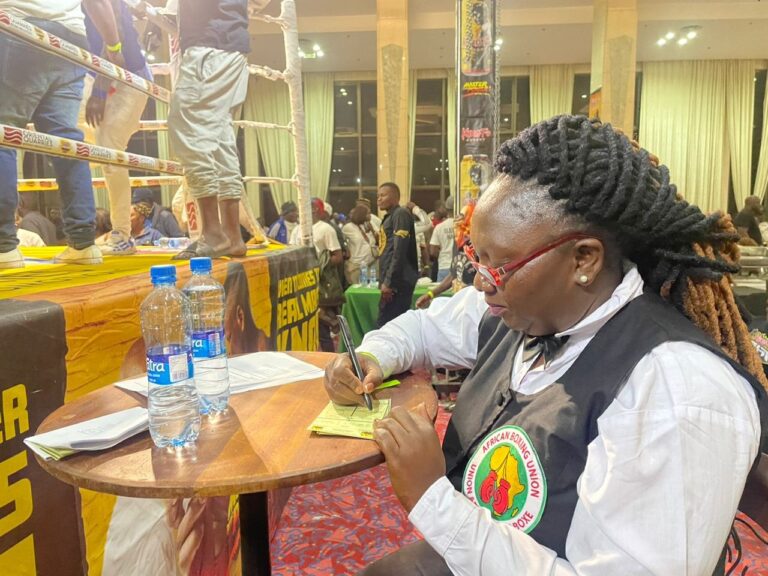
A female boxing judge, who is also a teacher from Masvingo made history when she officiated at the prestigious Zambia Boxing Tournament which took place on August 17, 2024, as the only female judge.
Speaking to TellZim News, Tambudzai Gloria Dera said she was very excited to be one of the judges who officiated the tournament as it validates her hard work.
“The opportunity meant the world to me as it validates my hard work and dedication as well as expanding my horizon.
It broadens my perspectives in the boxing field.
“I am also happy that I was able to represent my country and other female judges worldwide, demonstrating our capabilities as a country as well as personal growth by adapting to new environments, challenges and fighters, further refining my judging skills,” said Dera.
Dera is 40 years old, married with 3 kids, and a high school teacher at Mutonhori High School in Zaka where she started as a boxing coach in 2015.
She then attended a coaching session in Bulawayo by Manny Fenendes from South Africa and in 2022 she attended a WBC and ABU convention in Vic falls where she graduated to be an International judge.
“Through this tournament, I’m hoping to break all stereotypes by showing that women can excel in male dominated fields like boxing. Through demonstrating professionalism, expertise and impartiality in judging. This opportunity has given me a chance to share knowledge and experience with other judges as well as addressing and overcoming gender biases in sport,” said Dera.
“I am also learning a lot of things from other boxers, coaches and ring officials. Team work and collaborating enhances creativity and a sense of accomplishment. Working with others exposed me to new skills, knowledge and experiences helping me to grow both personally and professionally,” said Dera.
Dera said other women who want to venture into boxing should remain neutral and believe in themselves.
“Women who want to do boxing have to remain neutral and believe in themselves; they don’t have to be intimidated by the male dominated industry. They need to stand up and break barriers, be prepared for criticism, develop a thick skin and learn from constructive criticism,” Dera added.

CBAP donates maize seed to RCZ congregants

By Meditation Mposi

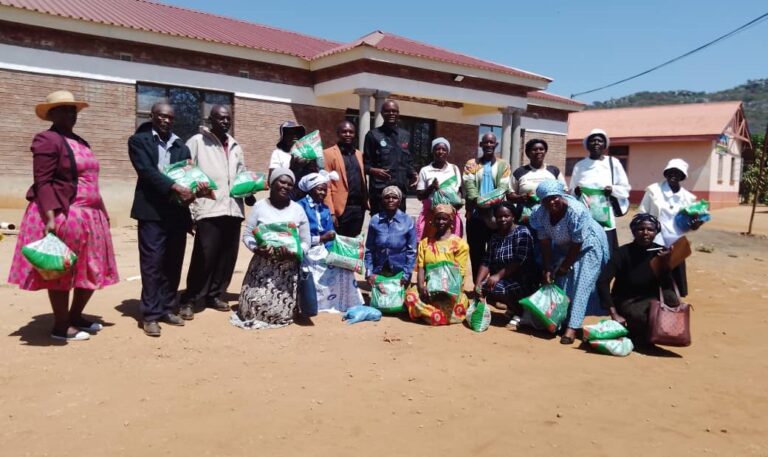
Reformed Church in Zimbabwe (RCZ) congregants from Pamushana and Mutsambwa communities in Bikita and Zaka recently received maize seed donations from the Community Based Aid Programme (CBAP).
Speaking during the distribution, CBAP Director Samuel Mhungu said the donation was a component of a project where congregants were empowered so they can feed their families and give to the needy.
“The maize seed distribution is a component of a diaconal project where congregants are empowered with seeds to assist them during the farming season. Upon harvesting, the congregants keep some of the produce to themselves and donate some to the vulnerable members of the society including the aged, the sick and the disabled.
“Maize seed distribution is multipurpose in that it empowers individuals who receive the grain as well as the church and the community and is part of the economic empowerment intervention to the Reformed Church in Zimbabwe congregants to improve living standards of the vulnerable in society,” said Mhungu.
He said apart from maize distribution, CBAP had poultry projects for community members in which beneficiaries were given startups and would plough back into the community.
“Apart from the maize seed distribution, we do poultry projects where we give congregants initial startups so that they can sell and re-invest into the project and give some to vulnerable members of the society” said Mhungu.
One of the beneficiaries from Pamushana, Jenipha Tofarasei expressed his gratitude and said the maize seed was beneficial to the locals as they prepare for the farming season.
“We thank CBAP for the maize seeds as we are preparing for the farming season. When we harvest and get about ten to twelve bags of maize, we donate at least two bags to the vulnerable and keep the remaining to ourselves. The programme always come at the right time and we are grateful,” said Tofarasei.
Another congregant from Mutsambwa, Benson Mugombi said he was elated by the distribution programme which he said helps to ensure food security.
“I am impressed by the maize seed distribution by the CBAP; it helps the church and the community in terms of food security. We also have a garden which was funded by CBAP where we grow some vegetables and watermelons which we sell to generate income and give some to the vulnerable people in our communities,” said Mugombi.
A total of 70 people benefitted from the two congregations with each getting a 5kg bag of Pioneer or Seedco 555.

Boreholes drying up in Masvingo rural

By Tatiana Mhararira

Five boreholes in the Mbeva area, Masvingo rural have dried up leading to water shortages for the villagers in the area for several months now.
The drying up boreholes are located in Mudare, Zano, Gwinyangwi, Muzakwatira and Machokoto areas and that has led to water challenges in the village.
The El Nino induced drought has contributed to the drying up of boreholes, with villagers opting to use water from unprotected water sources.
Speaking to TellZim News, ward 14 councilor Misheck Nzvinginya confirmed the issue and said the drying up of boreholes has caused villagers to travel a distance to access water.
“The dried boreholes has caused villagers to travel long distance to get water.
The water table has decreased due to El Nino so people are finding it hard to access water from their usual sources.
“Villagers are struggling to get water. They move to people with boreholes to get safe water to drink,” said Nzvinginya.
Nzvinginya said their area has one solar powered borehole which many fail to access and they appeal for more solar powered boreholes.
“Our area has one solar powered which is at Mapa and not all villagers can access it. We appeal for more boreholes so that everyone can have water at their door step,” said Nzvinginya.
One of the villagers, Noah Machote said they were facing a serious water crisis as a community.
“The water challenge has become a serious problem and we have failed to access clean water to drink as a village. Moving a distance to get water is a problem,” said Machote.
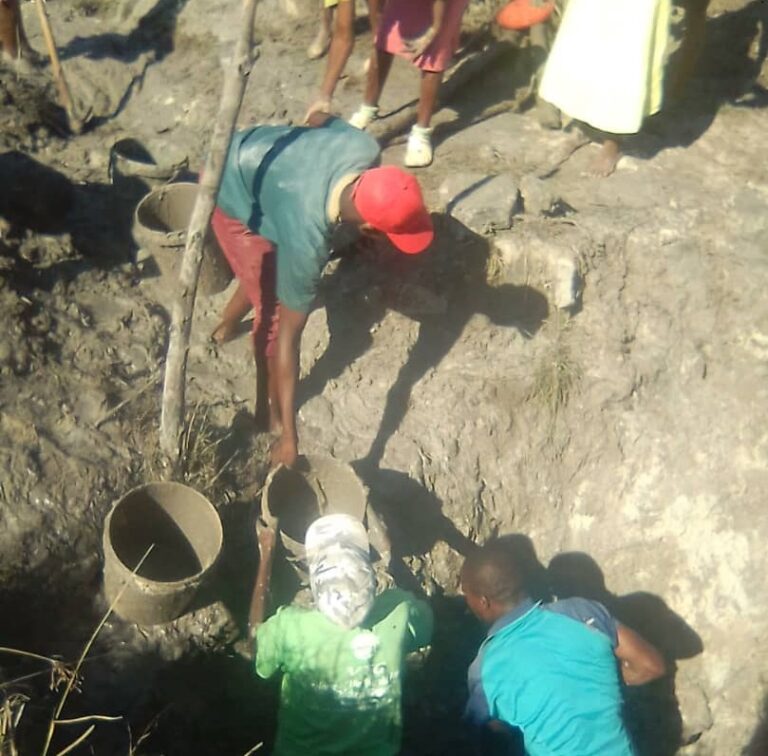
One of the unprotected water sources is about 1,2 meters deep and the villagers has used stones to allow users to access the well which has reached a level of coming out as a mixture of water and mud.

Partitioned mall retail units take over Zimbabwe

….as 600k Zimbabweans own retail cubicles in CBDs across ten towns-Research
…..We can’t wish away informal economy takeover-Analysts

By Perpetua Murungweni/Beverly Bizeki

Over 600 000 Zimbabwean entrepreneurs across ten towns now ply their trade from partitioned mall retail units, a situation that has marked the death of departmental and hyper stores in the country, much to the benefit of property owners, real estate investors and tax collectors.
In a research conducted by liberal thinktank COMALISO, lettable partitioned mall retail entrepreneurs have taken over most Central Business Districts (CBDs) across the country, responding to property owners who convert shops into retail cubicles generally not more than 20square metres.
In Masvingo CBD, departmental stores such as Meikles, Tsungai, Truworths, Clicks among others have long been closed, with the properties now partitioned into these small informal retail units.
Government and other commercial buildings like Great Zimbabwe University Heritage Centre, (now Dzimbahwe Mall) ZimParks Building, Kyle House, Mutangiri Building, Victoria Hotel and ZimPost Building now follow the same model.
Attracting this breed of entrepreneurs are new buildings that include Commercial Centre, MUSA Enterprises, Masvingo Trade Centre, Sunrise Mall, among others in Masvingo town.
Masvingo’s Tsungai Complex which is one of the biggest spaces letting out partitioned retail units has about 310 cubicles with spaces averaging US$80 rentals upstairs while spaces downstairs cost about US$110 per month.
The Zimbabwe Statistics Agency (ZimStats) says almost 86 percent of Zimbabwe’s adult population is into informal trade, an indication of decimating formal industry, and according to COMALISO, wishing away these mall retail units, which it called Lettable Partitioned Mall Retail Units (LPMRUs) is mere delusion.
“To hallucinate that this is a passing phase and that departmental stores like Haddon and Sly, H.M Barbours, Meikles, Bradlows will resurrect is nothing but self-delusion,” reads part of COMALISO’s press statement.
Analysts have said that through necessary support, the informal sector can drive economic growth, if only government could come up with policies that regulate taxation, insurance and access to capital.
Economist Collen Jonasi said the informal sector could help eradicate unemployment if properly regulated, however adding that taxation of the informal sector makes it detrimental to the economy, and with a lot of tax evasion by these entrepreneurs, government does not benefit much to a thriving informal sector.
“Informal sector activities are difficult to integrate into the formal economic activities because these people do not want to pay taxes yet tax is one of the major revenue sources for government and since the informal sector is very illusive it then becomes difficult to tax,” Jonasi said.
The informal traders themselves brought up what they said was double taxation by Zimbabwe Revenue Authority (ZIMRA), because at ports of entry when they are importing goods for resale they pay customs duty, and are required again to pay an additional monthly tax for each retail unit, which they said perpetuates smuggling and tax evasion.
“I find the taxing system burdensome as we are expected to declare our goods at ports of entry while at the same time, you have to pay tax at the end of the month. I think this contributes to the continuous smuggling of goods through borders,” said one trader.
Tsungai Traders Association Chairperson Simon Mungate bemoaned the economic environment in the country which he said was influential to the operating conditions for most traders.
“The economy in Masvingo is largely based on the existence of tertiary institutions that form a fair part of our market. Business was viable when the economy was performing well but now that the economy is not doing well, business only peaks during civil servants’ pay days and when tertiary institutions open.
“We have access to bank loans but the interest rates are quite high for us. New traders also find it difficult to access loans due to either lack of collateral in form of stock or the backing of the association hence they get smaller amounts than required. The payback period is short because paying back in a period of six months is not always favorable,” said Mungate.
Economic analyst Professor Talknice Saungweme said more could be done to equip the informal traders with skills, so they can diversify into manufacturing and other trades, other than just selling imported goods.
“They lack skills and the country needs to take a holistic approach in terms of trying to equip these young people with skills through programs like vocational training, while they are also given space,” Prof Saungweme said.
Research conducted by World Bank Groups, shows that there is little growth in the private sector and this is due to a limited number of quality jobs. Only 33 percent of workers in Zimbabwe receive a salary, well below peers in the region and globally suggesting a limited share of quality jobs despite workers possessing relatively higher skills.
Moreover, competition from informal firms has tended to lower the productivity of formal firms by around 24 percent on average, compared with firms that do not face such competition.
The apathy of economic growth in Zimbabwe, via the formal sector, since the 1980s and more so after the introduction of ESAP in 1991, has led the informal sector to become a key producer of goods and services, becoming a safety net for the jobless. The sector curbs poverty, promotes the concept of self-reliance and inevitably contributes to the economic growth of the country.

Human wildlife conflict: hippo kills fisherman

By Meditation Mposi

As cases of human-wildlife conflict continue to soar, a fisherman from Monyoroka Village in Triangle recently died after being attacked by a hippopotamus at Mutirikwi River in Triangle recently.
The matter was confirmed by Masvingo Provincial Police Spokesperson Inspector Kudakwashe Dhewa who encouraged members of the public to avoid fishing in crocodile and hippo infested areas.
“I confirm the death of Felix Chitokisi (34) who was killed by a hippopotamus while fishing. We encourage the public to avoid fishing in places infested by crocodiles and hippos,” said Dhewa.
Circumstances are that on August 24 Chitokisi went to Mutirikwi River for fishing with his two friends. On arrival, they started fishing at different points but they could see each other.
One of Chitokisi’s friends Calisto Chiwenga (57), saw a hippopotamus coming from the water charging towards them and alerted his friends. They all ran away in different directions going back to the village.
Upon arrival in the village, Chiwenga and the other friend noticed that Chitokisi had not yet arrived.
They mobilized other villagers and went back to the river to search for Chitokisi but could not find him.
The next day they returned to the river to continue with the search and found Chitokisi’s body floating in the water. His body was injured with cuts on the stomach, arms and back.
As human population continues to grow, agriculture and infrastructure development, continues up the ladder and climate change impacts continue to be felt, cases of human wildlife conflict are becoming more frequent.
In 2023, a Zaka couple and their son were left badly injured after being severely attacked by a clan of hyenas in Bota communal lands. Robert Maroyi was mauled on the face and head while his wife Muchanyara Munoda was mauled on the hands and lost both palms.Their son Rwatiringa Maroyi was also attacked and sustained injuries.
In 2020, it was reported that twenty people died after being attacked by wild animals across the country, while several others were injured.
Most of the fatalities were recorded in communities near wildlife habitats where animals increasingly come in contact with humans after straying in search of water and food while in some cases animals stray from their habitats as people vandalize perimeter fences of such areas.
Communities in wildlife rich areas around Chiredzi District have been living between a rock and a hard place due to constant battles with animals that encroach into their villages in search of food and water destroying their crops resulting in hunger and starvation among people.
Speaking in parliament in September, Masvingo Senator Sam Chapfudza highlighted the ballooning elephant population which has surpassed Hwange National Park’s carrying capacity by a significant margin.
According to Chapfudza, the elephant population in Hwange had gone up from 15 000, the designated limit to a staggering 65 000. This overpopulation has resulted in elephants venturing outside the parks boundaries, destroying crops and endangering villagers.
He lamented the tragic loss of life caused by these encounters, leaving children orphaned and families shattered.

Chief exposes Zanu PF

…“We are not allowed to install opposition members as village heads”

Brighton Chiseva

ZAKA – Chief Bota born Tafirenyika Bwazvo of Zaka recently exposed how Zanu PF interferes in the selection of traditional leaders saying they were ordered not to install village heads or headmen who do not support the ruling party.
Bota was speaking on the sidelines of an ongoing wrangle for Manyetu village headship following the death of substantive village head Isau Manyetu in March this year.
Bota is accused of fleecing the warring parties some money promising both contenders the post, a development that has delayed the installation of a new village head.
Asked for a comment on the matter, Bota denied having been paid by either side but said they had agreed to appoint one of the late village head’s sons who was loyal to the ruling party than the other faction led by the deceased’s brothers and aligned to the Citizens Coalition for Change (CCC).
“They are lying, I have never asked them for any cent, infact when I went there, they never gave us fuel money as they are supposed to do.
“We chose the village head who is son to the late and is loyal to Zanu PF, the other faction is aligned to CCC so we cannot choose someone who does not tow the ruling party line. They are the ones who lie that I asked for money from them whereas they did not give me anything,” said Bota.
Asked if they chose village heads on party basis, Bota said they were told by Zanu PF leadership that they were not supposed to install leaders who supported the opposition party.
He also said the person they had installed apart from supporting Zanu PF was also the rightful heir according to their family tree and had his brothers’ blessing since he was not the eldest son.
“We cannot appoint someone who is not Zanu PF; we had a situation here when we appointed another village head from Nhenjana. The eldest member of the family was appointed but (Zanu PF provincial) chairman Mavhenyengwa asked me why we had installed someone who was not Zanu PF.
“Fortunately the guy had just returned to Zanu PF but the chairman didn’t know, so these are the situations that we try to avoid. We also used their family tree and the one who was installed argued that the village belonged to his father and does not include his father’s brothers who were now claiming authority.
“Though the one who was selected is not the eldest son, he has his brothers’ blessing and they all agreed to appoint him since he is the one who stays in the area,” said Bota.
Contacted for comment, Mavhenyengwa denied ever calling Bota over the appointment of village heads and said that was the responsibility of the chiefs and the District Development Coordinator (DDC)’s office.
“We as a party are never involved in the selection of traditional leaders. We simply work with the one who is there. The Chief and DDC are responsible for that and they do it following their tradition.
“I don’t have Chief Bota’s contact number, so there was no way I could have called him. I only used to have the late acting chief’s number,” said Mavhenyengwa.
The wrangle is between the late village head’s sons who fronted Solomon Manyetu to take over the reins following their father’s death.
However, the late village head’s brother Trymore Masipiki is challenging Solomon’s ascendency saying he is the one who should take over.

Man rapes, impregnates cousin

0

By Rangarirai Shanyurai

A 27-year-old man from Chivi recently appeared before Masvingo Regional Magistrate Bishard Chineka facing charges of raping his female cousin.
Chineka remanded the accused person (name withheld to protect victim) in custody for continuation of trial on October 5, 2024.
It is the state’s case as presented by Prosecutor Liberty Hove that the accused who is a cousin to the complainant proposed love to the complainant sometime in April this year, which she turned down.
On June 6, at around 1230 hours the accused went to the complainant’s homestead knowing that her parents were not around and that she was with her young brother and grandmother.
The accused found the complainant in the kitchen while she was alone cooking then followed her to the bedroom where she had gone to collect soya chunks that she wanted to cook.
He followed up on his proposal but the complainant denied. He blocked her from going out of the bedroom, closed the door and raped her.
After the incident, the accused threatened to assault the complainant if she revealed the matter to anyone.
The complainant later told the accused person that she had missed her period, after which the accused’s wife later learnt about the pregnancy and informed the minor’s parents.
The complainant’s mother reported the matter to police on July 8 leading to the arrest of the accused.