Home Blog Page 151

Bikita Minerals FC promoted to PSL after long suspense

0

Decide Nhendo

Bikita Minerals FC was finally crowned Eastern Region Soccer League (ERSL) champions of 2023 which means they get a ticket into Zimbabwe Premier Soccer League (PSL) following a judgment by ERSL disciplinary committee handed down on March 14 over a dispute between the Lithium Boys and Tenax FC.
Many soccer fans in the Eastern region were in suspense waiting for the judgment over the matter that was dragging for too long having started on November 20 when ERSL published that Bikita Minerals were ERSL 2023 champions.
Initially, the case between the two sides started last year when Tenax FC finished on the top of ERSL but the decision was rescinded after Bikita Minerals complained that Grayham FC had violated game rules in their encounter.
The ERSL went on to crown the Lithium Boys as champions after granting them three points from their match against Grayham whom they had accused of using an ineligible player. However, the celebrations were short-lived when Tennax appealed to ZIFA which nullified Bikita’s promotion and the matter dragged on for about two months with Bikita finally winning the battle.
In the hands of the ZIFA Appeals Committee, the case went for nearly two months without a solid ruling until a fortnight ago when the ruling referred the matter back to the Bikita vs Grayham case which advised the ERSL to constitutionally sit and appoint a disciplinary committee to work on the matter where Grayham was found guilty.
‘The defendant is found guilty as charged. The match which was played under protest between Complainant and Defendant is forfeited. The Defendant is declared to have lost 3-0 since the goal difference at the end of the match was less favorable to Complainant,” reads part of the judgment.
Bikita FC and Grayham FC were both part of the top four teams that played champion decider matches on Nov 18 2023 and ERSL management ordered the matches to be played on the same date, to commence at the same time to avert match-fixing.
At the hearing, that is where ERSL was found guilty of failing to convene a disciplinary hearing in terms of rule 16 of ERSL rules and regulations as Zifa managed to find out that ERSL executives met in Mutare on November 25 2023 and that’s where they finalized on their capacities to award Bikita FC 2023 ERSL championship citing use of unregistered player by Grayham FC in their deciding match, instead of forming a disciplinary committee to deal with the matter.

A CURRICULUM IS NOT LIKE A CUP OF COFFEE

0

NB- Views expressed in this column are solely his, and are not associated with the publication

By Aribino Nicholas

Developing a school curriculum is not like making a cup of coffee which is instantaneous, rather it is a multidimensional, multifaceted and complex process that calls for all hands to be on deck. A new curriculum should reflect a process of engagement from both distal and proximal stakeholders of the government through the Ministry of Primary and Secondary Education. Any curriculum that comes without a process of interactive justice is bound to suffer tissue rejection at the point of service delivery and also on the plane of commerce and industry. Curriculum development and implementation are not like an immunization jab, they are processes that should be dynamic, context specific, complexly intersectional, gender sensitive and pregnant enough to address the disparate needs, rights and aspirational values of a people in a society and in society. This writer has been motivated to write this opinion piece against a background of a newly introduced Heritage Based Education Curriculum 2024-2030.
The time span for the Heritage Based Education Curriculum is only six years. What has informed the introduction of this new focus? Did the government carry out any impact evaluation to enable it to gather information to necessitate the transition from the Continuous Assessment Learning Activities (CALA) to the Heritage Based Education Curriculum 2024-2030? If evaluations were made, to what extent did they take into account cross cutting issues like gender, environment, global storms like climate change, citizenship education, peace education and disability? The above questions would then help to infuse into the new curriculum a balanced educational diet for all and sundry. The introduction of CALA met with stout resistance from key stakeholders like parents and civil society organisations that have a focus on education. The government did not give a hoot about the concerns that were raised by an array of stakeholders regarding CALA. When CALA came through, learners did not have the envisaged opportunities for research and development in areas of their predilections as projects were done by teachers for a fee and in every town young people with an eye for opportunities opened offices for CALA, as they would do projects for students. CALA did not benefit students in anyway, the 30% for CALA that was to be infused into the examination profile for students was, by and large a mark coming from street smart people.
With the introduction of the Heritage Based Curriculum 2024-2030, one wonders what the success goal of the government here is because in a period of six years what is there to measure? Performance measurement of the curriculum should be bench-marked against educational life cycles; from Early Childhood Development (ECD) to Grade 7, form 1 to form 4, form 5 to form 6 and ultimately the extent to which the graduates are employable nationally, regionally and globally or the extent to which the graduates can have expanded capabilities for innovation and industrialization. The life span of this new curriculum would take a child who is in Early Childhood Development at the material time to grade six by 2030. Would this time span provide a sound national measuring scoop for the desired educational outcomes? My thinking is that a national curriculum just like a constitution is a living document that should now and again be looked at in the light of shifting political, social, economic and environmental circumstances. Still with that understanding of a living document, a curriculum should be evaluated against an educational life cycle that gives a national outlook. Developing new curricula for Africa in general and Zimbabwe in particular should afford all stakeholders to look through the window for the ideas and ideas that they cherish and for Africa in-toto, Agriculture as a compulsory subject should stand out like a diamond in a coalfield given that African economies are largely agro-based.
New curricula for Africa should also prize gender studies, peace and citizenship education right from the outset (ECD level). Africa is a continent that is awash with civil wars that are arising from intolerance based on political repression, uneven distribution of resources, tribal, regional, and religious lines. There is a need for the embracement of one another as Africans first before we identify ourselves with our countries of origin. Children should be exposed to gender studies from the level of ECD unlike a situation where students start to learn about Gender Studies in colleges or universities. Although introducing Gender Studies may be problematic for those who wield political and patriarchal power because of its capacity to challenge the existing allocations of power, resources and also its capability to question cultural norms, there is a compelling need to conscientize children right from their formative years on the importance of co-existence between and among boys and girls.
The Heritage Based Curriculum 2024-2030 should be more than a slogan for our country, it should reflect time lines that would help Zimbabwe to do an impact evaluation tied to the national values and aspirations that cover intersectional issues discussed in this opinion piece.


ICAPA engages Masvingo leaders on women’s rights

0

By Beverly Bizeki

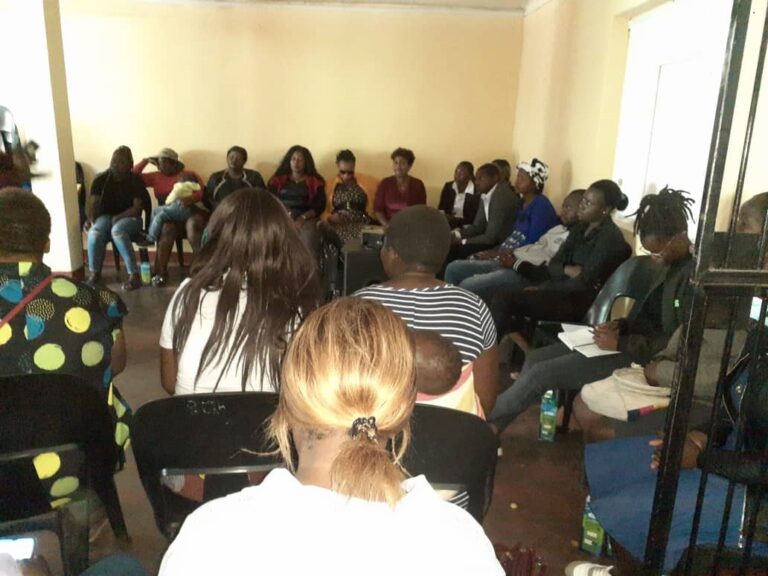
Institute of Creative Arts for Progress in Africa (ICAPA) recently engaged women from Masvingo to discuss issues affecting women’s rights and their participation in politics and discuss possible solutions that can be drawn to address their plight.
Speaking at the event held at Harvest House Church, ICAPA Masvingo Coordinator Jonah Wakurawarerwa said the main idea was to bring together women with influence in societies to discuss issues affecting women’s rights as well as enlightening them on such.
“The programme is aimed at engaging influential women in societies and the programme will be rolled to political parties to ensure women’s rights are observed in all places. The programme is a continuation of various efforts by the organisation to enlighten women on their rights and comes after the citizen’s charter which focused on unpacking the Zimbabwean law in native language,” said Wakurawarerwa.
Harvest House International Church Pastor Sandra Hlomayi said the programme was one that dealt with women’s issues from the core including challenging them to pursue careers in politics and any other positions often tipped for men.
“We have had a chance to discuss challenges that women face in the political field and in life generally. Many women have been encouraged and challenged to understand and know their rights,” said Hlomayi.
One of the challenges raised by the attendees, Gilbert Mutubuki was the lack of men’s participation in women’s empowerment.
“There is need for us to rope in men when we do women’s rights programmes so that they too are enlightened on what it means to have women in higher positions. Most men think that women who rise to higher positions in politics are of loose morals or are lesser than their male counterparts but these are just myths that need to be debunked and allow men to support female counterparts,” said Mutubuki.
Another attendee Maryanne Manasidze said it was time that women learn to stand up for each other when one rises to power be it in society or in politics.
“It is high time that women start supporting each other. When one of us rises to a position of power, it is best that we support her for the greater good of womanhood. Some women fear to get into the playing field because of fellow women attacking us because in most cases because of the pull her down syndrome which is not good,” said Manasidze.
The programme is one of the many that is targeting to promote women’s participation in politics due to the low numbers of women in political positions. In Masvingo City Council where most of the attendees of the programme fall under, there is only one woman who was elected through the ballot that is ward 1’s councilor Sabina Chikwangwani with the other one, Shantiel Chiwara having been recalled.
The other three are councilors got in through proportional representation.

Urban local authorities top 2023 direct procurement stats

By Beverly Bizeki

Procurement Regulatory Authority of Zimbabwe (PRAZ) has raised alarm over the 2023 purchasing methods statistics in which urban local authorities topped direct procurement methods with over 70 percent.
According to PRAZ, the figure is worrying if Zimbabwe is to achieve its Sustainable Development Goals (SDGs).
According to statistics released by the regulatory board, city councils came top in direct procurements for USD purchases which amounted to US$106 612 141 out of a total of US$139 047 412.07 spent under this purchasing method in 2023 which translates to about 76 percent.
Of the 44 019 procurements made last year, urban local authorities accounted for 12 581 purchases, however, statistics for the ZWL purchases, the authorities used RFQs a purchasing method in which an enterprise asks a set of potential suppliers to give their price quotations and stand a chance to supply or provide goods or services.
PRAZ Chief Executive Officer (CEO) Clever Ruswa said the statistics were not pleasing and urged local authorities to use other methods of purchases for sustainability.
“Section 30 of the Public Procurement and Disposal of Public Assets Act gives the procurements methods to be used with the default being competitive tender which speaks to the objectives of the Procurement Act. Competition enhances farness and value for money but if one is going for direct procurement they are closing out all other players unnecessarily and the aspect of value for money is not realized.
“We allow direct procurement when necessary for instance in emergencies such as Cyclone Idai and Covid 19 and as a regulator we postponed all these other procedures but any other procurements which are not of proprietary nature we encourage competitive procurement. Unfortunately the statistics availed by this board shows that most of the urban local authorities are going for direct procurement which is not very ideal for sustainability,” said Ruswa.
In his speech Ruswa said the procurement practices they were urging local authorities to adopt had benefits such as realizing economies of scale, reducing costs, and increasing quality of goods and services procured.
“The procurement practices which we are encouraging you to do, play a pivotal role in achieving economies of scale, enhancing transparency, and fostering collaboration among local authorities.
By pooling your resources and expertise, you can leverage your collective strength to negotiate better deals with suppliers, reduce costs, and increase the quality of goods and services procured. This approach also promotes consistency and standardization, ensuring that best practices are shared across all local authorities, leading to improved overall performance,” he said.
Ruswa also urged local authorities to embrace the eProcurement system set by government to enhance fairness and competition in the procurement landscape.
“The electronic Government Procurement (eGP) system is a game-changer in our quest to evolve the procurement system in Zimbabwe by delivering efficiency, effectiveness and transparency. The eGP system will streamline workflows, reduce administrative burdens, and enhance accountability. The eGP system empowers both buyers and suppliers by providing real-time access to information, facilitating fair competition, and ensuring a level playing field. Moreover, it enables data-driven decision-making, allowing PRAZ to analyze trends, identify gaps, and continuously improve our procurement strategies,” he added.
Permanent Secretary in the Minister of State’s office Dr Addmore Pazvakavambwa who was representing the Minister of State for Provincial Affairs and Devolution Ezra Chadzamira also echoed the same sentiments on the shocking statistics on direct procurement.
“Statistics given by the CEO are quite shocking to realize how much we expend through RFQs and direct procurement disregarding other ways of procurement which are more sustainable so I would like to urge all local authorities to take the advice given on board to improve the way we are doing things.
“I reckon that PRAZ is doing much more with the president launching the e-Procurement system which is the way to go so that we do away with corruption around the area. We have heard of tenderpreneurship so all this can be done away with if we do things the sustainable way not only looking at today but in the future as well,” said Dr Pazvakavambwa.
Competitive tendering is a purchasing method in which potential suppliers bid against each other to win a certain contract.

Chiredzi RDC applauds farmers’ response to development levy debt

By Decide Nhendo

Chiredzi Rural District Council has applauded response by commercial sugarcane farmers to a 21-day ultimatum they were given from February 8, 2024 to clear their land development levies debt which was reaching up to US$2 million.
Following Chiredzi RDC’s last and final meeting held with commercial farmers where the farmers were informed on council’s decision to engage debt collectors to recover over US$1.5 million of land development levies which they had not been paying since 2017, farmers responded and came to council and made plans to cover their debt.
Chiredzi RDC Chairperson, Aspect Mashingaidze said he was happy by the response which he said farmers were responsible.
“I am happy because of farmers’ response to an engagement meeting we held around February 8 concerning their debt which was reaching nearly US$1.5 million, without wasting much time after the meeting the farmers started coming to council to settle their debts making payment plans,” he said.
“They came and left what they had since most of them said they did not have money since it is off season and we managed to get around ZW$200 million and US$30 000 which we are going to use mainly on maintaining their roads since the sugarcane harvesting season is just around the corner,” said Mashingaidze.
Mashingaidze said with the little farmers have paid to council they have engaged transport department to make sure they service council graders so that in the coming two weeks they will be running as council engineers were working to establish roads that needed more attention.
“Since we promised farmers that the development levies they are paying are for development, we have asked our transport team to fix three council graders and two are already running, our engineers are already compiling total kilometers of roads that need attention,” he said
He said the payment plan was going to work with stop order facility through which a letter is going to be sent to millers like Hippo Valley Estates and Triangle and when farmers harvest their sugarcane and receive their dues from millers a certain agreed amount will be paid direct to cover development levy debt.
He advised farmers to come to council and make council aware that they have artillery and are capable of maintaining their roads so that the council can chip in assisting with their machinery or fuel as common purpose is for development.
He also said farmers with private machines like dumper trucks and graders like Mkwasine Management Committee (MMC) must write to council so that council engineers will come and access cost of labor on certain projects they want to partake on as it will help those farmers to be excused from levies because of their development vision which is also council’s vision.
“Farmers who have own private machinery like MMC in Mkwasine who are determined to maintain their roads or do any other certain developmental projects must write to council making it aware so that council engineers can be sent to access value of cost they insert on those specific projects so that they can be given discounts when they pay development levies,” he said.
Most commercial farmers were dodging their bills from 2017 up to date except for an honest few who were paying from 2014, and each farmer must pay US$ 5 per hectare of which most farmers have 20 hectares which means they will only be eligible to pay US$ 100 per year.

Deportivo FC crowned 2023-2024 Mucheke Social league champions

0

By Decide Nhendo

With three games to go, Mucheke Social League’s (MSL) Deportivo has already been crowned 2023-2024 champions as they are sitting on top by 14 points being followed by De Sisk FC who were last year’s champions.
It is week 35 with 35 games having been played and Deportivo are the champions as they have 28 wins, 7 draws and no loss collecting 91 points, on number two is De Sisk FC who have 24 wins, five draws and six losses with 75 points and on number three is Chesvingo All Stars football club which managed to collect 22 wins, nine draws and four loses with 75 points.
The bottom three consist of RCZ Dutch who have 22 points, Municipal Rovers with 19 points and carrying the table is Chiwororo FC who only managed to collect five points from 35 matches.
Morefire football club’s Allan Kurauone who is known for terrorizing the defence of opposition teams is the league’s top goal scorer with 37 goals in season 2023-2024 and is being followed by Hickoniko Victor who netted 26 goals.
Speaking to TellZim News Mucheke social league organizing secretary Radson Muzenda who is also Derpotivo FC coordinator said even though they already won the league, it was very competitive as all teams are well-built with competitive players.
Muzenda said he appreciates efforts being put in by certain individual well-wishers who are helping the league to thrive as it is playing a pivotal role in fighting social problems as well as community development.
“I thank the effort being put in by individuals like former mayor Collen Maboke, Allan Sibanda, Taurai Mudzviti and many others who are supporting teams and helping MSL to keep on running.
“These people are helping to fight problems affecting our community like unemployment, drug and substance misuse, and many other bad things harmful to people’s lives as there are more than 60 people mainly youth who managed to get employment through the social league,” said Muzenda.
Speaking to TellZim, MSL Secretary General Forbes Nota said many young talents benefitted from the league as they had a platform to showcase their talents and practise, as a result, they managed to be scouted by teams playing professional soccer.
“From this league, we have so many young talents who managed to realize their potential and as a result, they rose and are now playing for teams in Division 1 like FC Wangu Mazodze and some in premier soccer league like Bikita Minerals FC.
He also said season 2022-2023 champions DE Sisk FC did not get a trophy because of a lack of sponsorship and he called for the Masvingo community to chip in with anything they think can help to give to 2023-2024 champions.
He also said teams participating in MSL must keep on maintaining a good attitude as they were doing as the league is meant to bring people together to share ideas and opinions they think are helpful to the community.
“I insist that clubs in our social league must keep on upholding good behaviour and discipline as they have shown this season. This helps people in the Masvingo community to come together cordially for the betterment of the city.

Missing Great Zimbabwe University security guard found dead in Mucheke River

0

By Bright Zhou

A Masvingo man residing in Mucheke A who had gone missing after a fishing adventures body was found floating in Mucheke River by police on March 1, 2024.
Masvingo Provincial Police Spokesperson Inspector Kudakwashe Dhewa confirmed the incident and said investigations to establish the cause of death were underway and urged members of the public to value the sanctity of life.
“Investigations are still in progress and I urge members of the public to value the sanctity of life,” said Dhewa.
It is alleged that on February 28, 2024 at around 7.00am Misheck Muwandi went on a lone fishing adventure at Mucheke River.
On that very same day at around 2100 hours his wife Monica Chikava (40) tried to call him but his phone was unreachable She waited for him but he did not come back home.
The following day Chikava told Muwandi’s relatives that he was missing and a search party was organized at Mucheke River where they found his satchel along with a fishing rod.
Chikava reported the matter at Masvingo rural police station and CID detectives together with the police went to the scene where a satchel and a fishing rod were discovered near Mucheke River.
After searching, they discovered Muwandi’s body floating on top of the water and the body was retrieved.
The deceased’s body was taken to Masvingo provincial hospital for post mortem.

El Nino drought: cattle diseases take toll on Buhera

…villagers turn to Nyii for survival

By Courage Dutiro

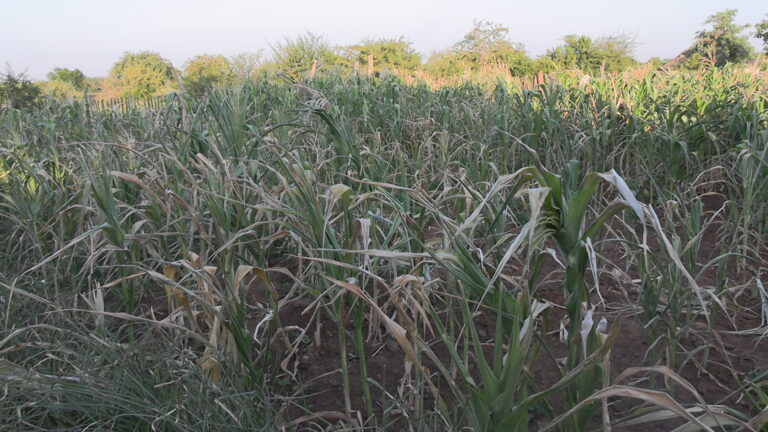
As the El Nino-induced drought threatens food security in communities, Buhera District in Manicaland which falls under natural regions four and five has not been spared as it has been hit hard by the outbreak of foot-and-mouth disease threatening to wipe off livestock, their source of livelihood.
Prolonged dry spells which caused most crops to be written off, have left villagers in the district in a state of food insecurity and the situation has forced some villagers to resort to the wild fruit Nyii (bird plum) as a source of sustenance.
Buhera Rural District Council Ward 23 councilor, Denboy Maweni said due to high temperatures and low rainfall that have characterized this farming season, crops have been left in a state of devastation, as fields are now bare, pushing the cost of a bucket of maize to skyrocket beyond the reach of many households.
“Prolonged high temperatures, coupled with dry weather have ravaged crops and pushed the price of maize beyond the reach of many households. A bucket of maize is now going for US$11 and if the situation persists the price will rise and many villagers cannot afford it,” said Maweni.
He also said while some villagers receive food aid from World Vision, those excluded from the programme struggle to put food on the table.
“Others are getting food assistance from World Vision, but those who did not have an opportunity to be in the programme are the ones who are finding it difficult to provide food for their families,” said Maweni.
Sunungurai Jori, councilor for Buhera Rural District’s ward 28, said the drought has sucked out the life of the fields forcing some villagers to resort to Nyii as a source of sustenance for their families.
“There is no longer anything in the fields, vanhu kutopona neNyii idzodzi, kutoti ukadya womwa mvura (Some are relying on Nyii as a source of food and after eating the fruit then they drink water).
“Due to crop failure others have resorted to picking and selling Nyii to feed their families. A bucket of Nyii is going for US$ 4 which is not enough even to buy half a bucket of maize and if you consider the labor one goes through to fill one bucket you will see that people are really struggling,” said Jori.
He also said besides the hunger that they were facing, they are also struggling with an outbreak of foot-and-mouth disease that was threatening their livestock.
“Apart hunger, we are battling a foot-and-mouth disease outbreak that is threatening our livestock.
“We were encouraging people to destock if the drought persists till the end of March but due to the outbreak of foot-and-mouth the idea is no longer applicable,” he said.
According to a post-cabinet briefing held on March 5 2024, the 2023 Zimbabwe Livelihoods Assessment Committee (ZimLAC) projected that 26 per cent of the country’s population would be food insecure during the period between the months of January and March.
“The nation is informed that the 2023 Zimbabwe Livelihoods Assessment Committee (ZimLAC) projects that 26 per cent or 2 715 717 of the country’s population is food insecure during the period January to March 2024.
“The registration of food-insecure people and the distribution of grain has commenced in all areas across the country’s eight rural provinces and is being led by traditional Leaders who are ably supported by Councillors and Government officials.
“The registration of beneficiaries and distribution of grain will continue unabated during the El Nino-induced drought period,” read part of the Post Cabinet briefing.

Jilted man torches mother-in-law’s house

0

By Bright Zhou

A Bikita man who resides at Nyika Growth Point appeared before Masvingo Magistrate Bishard Chineka on March 7, 2024 on charges of malicious damage to property after he burnt his ex-mother-in law’s house in a bid to get back wife.
Chineka remanded the accused person in custody awaiting continuation of trial on March 14, 2024.
The state heard that in the month of November 2023, Timoty Chinaka who is ex-husband to the complainant Sekai Mudzokora’s (49) daughter went to her place of residence looking for his estranged wife.
Chinaka, who has a child with his ex-wife had remarried after being divorced, went to the complainant’s home and demanded that she wanted his wife back.
It is alleged that Chinaka went to Mudzokora’s homestead and was told that his wife did not return home, after which he threatened to take unspecified action if Mudzokora failed to bring her daughter home.
On December 27, 2023 Chinaka visited Mudzokora’s homestead again and accused the complainant of hiding her daughter and Mudzokora reported the matter to the police as Chinaka had previously threatened to burn her house.
During the night of the same day at around 2130 hours Chinaka returned to Mudzokora’s homestead holding a torch.
Upon his arrival Mudzokora and her daughter left the homestead and sought refuge at a nearby mountain and after a while Mudzokora saw her house on fire, which also reduced the property inside to ashes.
Chinaka then disappeared into darkness and at around 2200 hours Mudzokora and her daughter left the mountain sought refuge for the night at another homestead.
The following day Mudzokora reported the matter to the police and Chinaka was arrested.
Innocent Mudzingwa prosecuted.

Two Masvingo women make it into FIFA football for school project

0

By Decide Nhendo

Two Masvingo women have made it into the recently launched Zimbabwe Football Association (ZIFA) Federation International Football Association (FIFA) Football for Schools (F4S) project where primary and secondary teachers as well as Mighty Warriors including former local team players were selected from the 10 provinces to train as master trainers.
Masvingo province has three trainers with two women Tendai Chimuriwo from Zaka District, Marvelous Masukume from Chiredzi District and one man from Mwenezi being the master trainers for the province.
The two make it to the prestigious programme in the history of football at a time when the world is commemorating International Women’s Day which is celebrated on March 8 every year and this year’s theme is ‘Invest in Women: Accelerate Progress’.
The two women have shown that females can work for community development as they take part in the male-dominated football field, moving in line with this year’s women’s day campaign theme ‘Inspire Inclusion’.
Speaking to TellZim News, Chimuriwo said the programme was going to help develop local talent as all children with a passion for soccer will be given a chance at an early age to shape their talents.
“I am excited to be part of this wonderful programme that is a long-term goal for Zimbabwean football. It is going to benefit many young children as it is meant to groom and nurture those interested in football. They are going to be taught to focus on the game at an early age from 4-14 years,” said Chimuriwo.
She also said school administrators must help with the project financially and at the same time give children with a passion for soccer moral support so they become football professionals.
The master trainers have been tasked to organize training for their districts so that Football for Schools projects roll out throughout the 10 provinces.
ZIFA through FIFA will support the training and one hundred schools per province will get FIFA-sponsored soccer balls from the expected consignment of 10 720 soccer balls.
Master trainers were trained by FIFA Football for Schools manager Antonio Buenano Sanchez from Spain and FIFA Football for Schools technical manager Alberto Giacomini from Italy.
These trainers had the golden opportunity to meet with former Warriors and Liverpool keeper Bruce ‘Jungleman’ Grobbler, Minister of Sports, Arts and Culture Kirsty Coventry as well as the Permanent Secretary in the Ministry of Primary and Secondary Education.
The project is part of the development of the sport while they target to attract the interest of budding footballers at a tender age while it also plays a part in the fostering of life skills for the young.
The trainer course for the programme has been held for more than 43 coaches from all of the country’s provinces and around 1000 schools are set to benefit from the programme.