Home Blog Page 214

Charles Austin Theatre committee to be dismissed over incompetence

Beverly Bizeki

Masvingo City Council has resolved to dissolve the Charles Austin theatre committee following allegations that there is lack of activity at the theatre since the election of committee.
The development was revealed in the Health and housing Committee minutes dated May 4, 2023 that the committee had been deemed incompetent and the need for a new committee at the theatre.
“It was reported that there was no activity going on at the Charles Austin Theatre ever since the new committee was elected into office,” read part of the statement.
The committee has been accused of pushing their political aspirations at the theatre at the expense of theatre of issues.
“It was noted that the most of the office bearers seem to have had an interest in launching their political careers than theatre issues. Some of the members have chosen to contest as councilors while some have already resigned citing lack of activity,” reads the statement.
It has also been reported the Ministry of Youth, arts, Sports, and culture together with the National Arts Council also expressed concern over lack of activities and council has resolved to dissolve the committee at the at the expiry of their term of office.
“The committee be dissolved at the expiry of their term of office end of May 2023 and an interim committee be appointed.
“The committee will be made up of people with arts and culture background and are active participants in the industry,” reads the statement.
Council has also proposed to ensure the appointment be done in consultation with key stakeholders such as the Ministry of Arts and National Arts Council.

Harsh economy pushes women to the sharp end of the stick

…the tale of Masvingo female quarry miners

Beverly Bizeki

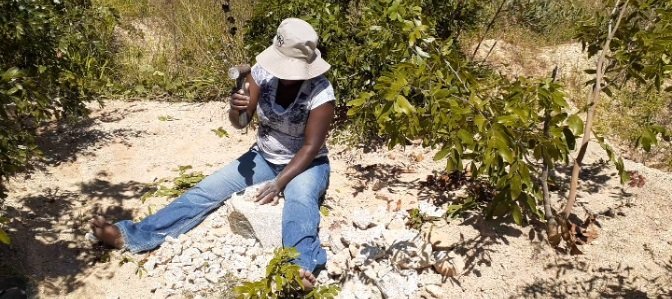
Anna Nhenga (27) of Victoria Ranch recalls the events of 2021 when she almost lost her life after an open pit collapsed on her as she was trying to unearth what has been termed the ‘bluestone’ by quarry miners in one of Masvingo’s suburbs.
“An open shaft collapsed whilst I was digging for stones underground and I almost lost my life which is why I have this scar on my ear (points at her ear). My workmates thought I was dead as half of my body had been trapped into the earth,” says Nhenga.
The sad part however is that Nhenga has not been able to make much from the over 7 years that she has spent mining quarry stones and whenever she considers leaving the trade she always finds her way back as life has not given her many options when it comes to work.
“I have five children, four of which are of school going age but I can only manage to send two of them to school and have no idea of when I will be able to send them to school,” says Nhenga.
Nhenga is one of the women that have been pushed into hard labour by abject poverty faced by many owing to the worsening economic situation in the country.
Becoming a mother at 16 with no parents or husband to support her, Nhenga says life has not given her too many options except to join others in breaking granite stones to create quarry, where she has been trading hard labour for a very few dollars.
“We try to reach a target of coming up with at least 10 buckets a day so that we can have a cubic after three days which we sell at roughly US $10 to US $12 to make a meagre US $100 on a good month where sales would be better.
“We can go for days or weeks without making any sales which is problematic as we have bills to pay every month, as we speak my landlord has given me a notice because I always pay my rentals very late,” says Nhenga.
The US $100 that Nhenga makes from selling the stones has to pay US $50 for her children’s fees, US $30 rentals and the remaining US $20 is for foodstuffs and other basic commodities.
Concilia Mugeji who has also spent the past seven years of her life breaking and selling stones for a living says motherhood in the prevailing economic conditions has pushed her to the sharp end of the stick forcing her to endure such a dangerous environment as she has to provide for her family.
“Our line of work requires lots of strength in digging and extracting stones from the ground as sometimes we use 14 pound hammers which are very difficult to use but as a mother you have to endure the weight and work to make sales,” she said.
Mugeji who is a mother of four says her line of work is male dominated and considered illegal which brings about huge challenges to her as a woman.
“Sometimes when we get clients, we ask men to help us load the quarry into the client’s vehicle and they have to charge us for that, taking part of the little money we would have made.
“Men also tend to take our loads and never pay or return the loads we would have given them,” she added.
For Mugeji, the job is heavy especially with the health challenges taking a toll on her body but she has to do it for her children one of whom is set to re-write his Ordinary Level examinations this year.
Asked why she has chosen this line of work, Mugeji said it requires little to no capital and records few losses as she can keep her ‘stock’ for as long as it takes before she gets a client.
Mugeji also says lack of equipment places them at a disadvantage as contractors often choose more refined stones unlike the ones which they often produce because they use manual equipment like hammers.
“We can go for about three weeks without making any sales because contractors often want finer products but we cannot produce such because of lack of equipment,” said Mugeji.
Because of the hard hitting economy, Mugeji who has always wished to purchase a residential stand has not been able to make much which has seen her only making enough to put food on the table for her children and hardly any to send them to school.
“I had hopes of buying a residential stand but after all these years of trying I have nothing to show for it because it’s always hand-to-mouth.
“My hopes are getting shattered now because I feel sick and I cannot continue working for long under these circumstances,” said Mugeji.
Mugeji however, wishes for better working conditions as they are exposed to all harsh weather conditions in the pits they extract the stones from.
“We wish for helpers or well-wishers to assist us in starting projects that can help sustain us as women. We are often excluded from society as we are always working in the outskirts so we are often left out of community activities as well as opportunities,” she added.

Women’s political participation remains a challenge

Perpetua Murungweni

Women seem to face a number of challenges in political participation than men. Due to economic hardships in Zimbabwe lack of economic empowerment seem to be a major drawback for women participating in politics.
Women’s economic empowerment is widely regarded as the transformative process that helps women and girls move from limited power, voices, and choices at home and in the economy to having the skills, resources, and opportunities needed to compete equitably with man in markets control and benefit from economic gains.
As economic empowerment is the ability to make and act on decisions that involve the control over and allocation of financial resources, it is prudent to give women access to income and assets which equip them with power to make decisions.
According to experts, when women are able to make decisions they can pursue goals free from the threat of violence or revenge and it helps them to fully participate in politics without challenges.
Statistics provided by the United Nations indicate that Zimbabwean women’s participation in leadership and politics remains low at 35percent in parliament, 16percent in local government and 11.5percent in Cabinet. This is due to lack of women empowerment, inadequate implementation of the Constitutional provisions and inadequate capacity of state institutions to mainstream gender in electoral and political processes.
Tendeuka Matara, who said she was nominated to contest in the forthcoming elections in her party said women usually hesitate to take part in politics because of the economic empowerment gap between men and women, with most women being less capacitated than men in terms of education and employment.
“The economic empowerment gap between men and women hinders us women from political participation; most women are less educated than men and fewer women are employed. This affects our campaigns because we do not afford resources needed to become effective leaders but if we become economically empowered we will be in a better position to compete with men in politics,” said Matara.
Women Coalition of Zimbabwe Masvingo Chapter Coordinator Blessing Mombo said economic empowerment improves women’s access to resources as they will be able to make decisions, giving them a sense of self-worth.
“Economic empowerment improves women’s access to resources. Lack of economic empowerment is a major setback for women to participate in politics. For instance lack of financial resources can limit women’s political participation given the cost associated with elections and this is where most of women lose the game especially during primary elections when they do not have financial support from their political parties.
“In primary elections women campaign using their own resources hence they cannot stand the competition as their male counterparts have a better economic base,” said Mombo.
Leah Matavire, the information officer of Community Tolerance Reconciliation and Development (COTRAD), said that economic empowerment signifies power in political discourse, and women need this power so that they effectively participate in leadership roles.
“The economic muscle in every society represents power and especially when it comes to the political discourse.
“For women to be able to effectively participate and get elected in politics there is need for them to be economically empowered, as financial resources aid the smooth flow of campaigning, mobilizing electorate and managing the hefty fees required by the Zimbabwe Electoral Commission (ZEC) for one to be registered as a candidate,” said Matavire.

Zanu PF primaries hangover still haunts Masvingo – Mnangagwa told

Brighton Chiseva

MASVINGO – The hangover from Zanu PF chaotic primary elections that were held in March are still haunting Masvingo province despite healing processes by the Provincial Coordinating Committee (PCC), President Emmerson Mnangagwa was recently told.
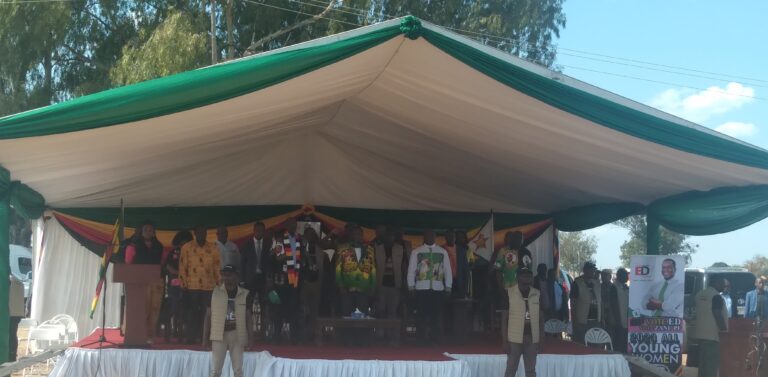
Addressing party supporters at Mucheke Stadium at an interface rally duped ‘Meeting first time voters’, Zanu PF Masvingo Provincial Chairperson Robson Mavhenyengwa told Mnangagwa that they were still facing challenges from other party members who were failing to accept the outcome of the elections.
Mavhenyengwa singled out two cases, one from Mwenezi West where Tafadzwa Masvayamwando-Shumba allegedly lost to incumbent Priscilla Zindari Moyo and will stand as an independent candidate as well as Gutu East where the George Vhengere won the primaries but was later disqualified and replaced by Benjamin Ganyiwa.
Mavhenyengwa said as a province they had done some healing processes to reconcile the losers and the winners
“As Masvingo we are united, however, we are having some problems over the recent primary elections with some who are yet to grasp how things are done in Zanu PF. There are some members who still think that going to primaries means they are the ones who should win. Some win, some lose, now some who lost are behaving like they are bigger than the party,”
“I say so because in Mwenezi West, one of our members who was in Central Committee and NCA is now standing as an independent candidate after losing. We however promise to show him that the power he had was because of Zanu PF and once you are no longer in the party, you no longer have people because they all belong to Zanu PF.
“We also have some who do not want to accept the outcome, like in Gutu East, one losing candidate is still arguing that he is the winner like he doesn’t know that if the party has declared one as the winner that’s final and tomorrow shall come and has another chance to contest again.
“However, in other areas they are accepting defeat and are coming back to work with the winners and if that continues, I want to assure you that we are going to give you all Masvingo’s 26 constituencies,” said Mavhenyengwa.
Mavhenyengwa also told Mnangagwa that cotton and sugarcane farmers were complaining over delays in receiving payments after delivering their produce and appealed to Mnangagwa to intervene.
“We have a complaint from cotton farmers in the province who are saying they are not getting payments in time from Cottco, as two months have passed now but they haven’t received their payments so we want you to know that your children are producing but there is a challenge in payments,”
“Another challenge is the usual one where the sugar processing company Tongaart Hulletts is still delaying in paying famers after delivering their cane. We once tried to solve the issue together with the Minister of State but up to now they haven’t signed agreements with famers,” said Mavhenyengwa, who is also a sugarcane farmer.
The interface was organized by Young Women for ED, one of the many forED affiliates, and was alleged to be a platform for the President to meet with first time voters who were drawn from across the country.
Also present was Mnangagwa’s Deputy Kembo Mohadi and National Political Commissar Mike Bimha.

Winter wheat target reviewed to 2100ha

Beverly Bizeki

Masvingo province has revised its winter wheat target from the set 2000ha to 2100 ha following the review of the national target by the Ministry of Lands, Agriculture, Fisheries, Water and Rural Development from 85 000ha to 90 000 ha.
Masvingo Province Agritex Acting Director Nobert Masiiwa confirmed the development and said the ministry was reviewing the target upwards.
“As Masvingo province, we have planted 1238 ha as at June 2, 2023 which is 59 percent of the target, we are expecting the plantation to keep increasing as the plantation date has also been moved to June 15 2023,” said Masiiwa.
“In terms of area planted by district, Bikita has a target of 150ha and 142 ha has already been planted, Chiredzi has a target of 220ha and they have planted 153ha, Chivi has a target of 100 ha and they have done 56ha.
“Gutu’s target is 367 ha and they have done 243 ha, Masvingo’s target is 1 100ha and 533 ha have been planted, Mwenezi has a target of 13 ha and they are yet to plant and Zaka has a target of 150h and they have done 108ha,” said Masiiwa.
Farmers have however experienced some challenges in terms of tillage services.
“Most of our farmers need tractors for ploughing, disking and rolling but unfortunately our province does not have enough tractor power but we have had a lot of support from AFC bank leasing services private tillage operators but we still have a lot of farmers who are lagging behind in terms of tillage,” said Masiiwa.
Masiiwa urged farmers with bigger farms to start registering with the ministry for leasing services.
“Our farmers are urged to go to their respective extension officers and indicate the area put under winter wheat which they need services for in terms of combining to enable us to link them with service providers.
Masiiwa also stated that they have had challenges with the quilia bird but there is now a department in the ministry responsible for migratory pests and bio security and farmers are implored to alert extension officers when they come across the pests for control.
Zimbabwe last year recorded its highest wheat production since production of the cereal in the country after harvesting 375 000 tonnes of wheat from the 80 833 hectares planted.

Midlands Agric Show on the cards

Tinaani Nyabereka

GWERU-Dates for this year’s edition of the Midlands Agricultural Show are out as the event is set to kick start on 20 July 2023.
This year’s edition is expected to attract more than 150 exhibitors, with the show running under the theme; “collaborative, integrative solutions for economic development.”
Meanwhile the official opening of the show has been set for Saturday July 22, 2023.
Speaking during a presser in Gweru recently, Midlands Show Society chairperson, Augustine Mpakurirwa said the show was crucial in giving exhibitors a rare opportunity to market their products and creating synergies.
“The show is about bringing in business people to collaborate and interact as well as sharing ideas. As the show society, we would like to urge businesses and stakeholders to work together, creating linkages and developing the country.
“We have invited music maestro, Sylvester Chizanga aka ‘Freeman’ as the guest artist at the Premier Provincial Annual Business Extravaganza alongside local artists,” he said.
This year’s edition was moved to July as the country is expected to hold harmonized elections on August 23, the dates which happened to be the traditional timeframe of the show.

Inclusivity – bridging the gap on disability

0

Beverly Bizeki

Describing his life changing moment, Robert Mapuvire is proud of the lesson he got on disability inclusive parenting which enabled him to treat his child differently after years of depriving his daughter, Delight of her rights as she is disabled.
“It has been 23 years of abusing my daughter because of ignorance; we would always leave her out on many things, even house chores as we did not even see it fit to get her a birth certificate and national ID like our other children but through learning we have been conscientized on the rights of the children living with disabilities.
“We would just ask her to sit in one place, never bothered on whether or not the weather will affect her because we thought she is disabled (akangoita muZIMCARE) and will not be affected by it,” said Mapuvire.
The programme has however enabled Mapuvire and his family to understand their epileptic daughter’s condition which they had always thought was witchcraft.
“Through meeting various stakeholders including health professionals and the Social Welfare Department who have taught us about disability we are now aware that it is not witchcraft as we had always thought because of ignorance (taingoti kana mwana akavhiringidzika toti kuroyewa uku).
“I am most grateful to our teachers, my daughter’s well-being has improved a lot, she can sweep the yard and do the dishes as we have also learnt to take her along when doing other duties like farming and we have witnessed that there is a great improvement,” said Mapuvire.
Tracy Mabhiza, the field officer for the project said there are instances of sexual abuse of children living with disabilities with most of the cases going unreported.
“Parents usually do not to report cases of abuse because most of the perpetrators are not outsiders but family members, so they cannot report because at most these are breadwinners in the families where these children come from,” said Mabhiza.
The project which is a brain child of Ministry of Public Service Labour and Social welfare in collaboration with UNICEF with funding from Government of Sweden, Government of Norway (Norad) and Swiss Agency for Development and Cooperation working with implementing partner Zimbabwe Parents of Handicapped Children Association, was implemented in August 2022 and is carried out in five wards in Chivi.
Zimbabwe National Association of Mental Health (ZIMNAMH) National Director, Ignatius Murambidzi said the project was meant to capacitate parents of children living with disability.
“The project was meant to build the capacity of the parents of children living with disabilities to be able to take care of their children and for children to promote their mental wellbeing which is why we have partnered Zimbabwe Parents of Handicapped Children Association so as to be able to reach out to the children as both have so many unmet mental needs,” said Murambidzi.

Mnangagwa preaches peace ahead of elections

Perpetua Murungweni

President Emmerson Mnangagwa preached peace ahead of this year’s harmonized elections, urging young people not to be used by politicians to perpetrate violence as he addressed a rally at Mucheke Stadium Masvingo on Friday (June 9).
Mnangagwa, who was the guest speaker at the rally organized by YoungWomen 4ED affiliate group, said he had come to the province to address first time voters.
“As we approach to 2023 harmonized elections I call upon youth and all voters to guard the peace, unity, love and harmony prevailing in our country. ‘Kuvhota hakudi mhirizhonga’. (Voting does not need violence). Zimbabwe is a mature and peaceful democratic country,” said Mnangagwa.
He urged youths not to abuse drugs and substances, but rather concentrate on developing the country.
“Young boys and girls I challenge you to remain loyal to your country; stay closely connected to your families and do not indulge in reckless and harmful lifestyle, stay away from drugs ‘nyika inotorwa makastika’ (The country will be taken while you’re drunk).
“As young people you should express your ideas and you should capacitate yourselves with life skills in keeping with the ever changing world. Also use ICTs to be innovative, to learn new skills and improve your ideas in developing the country,” said Mnangagwa.
He also said the party is committed to groom young people as there is now a youth quota in the national assembly.
“The party is advancing because of the youth and the constant conditions of youth development and employment both to create empowerment. The party is committed to grooming the young people of our country and for the first time in history we now have a youth quota in the national assembly under the Second Republic,” said Mnangagwa.
Speaking at the same event, Minister of State for Provincial Affairs and Devolution Ezra Chadzamira said under the Second Republic Masvingo province has managed to complete most of its implemented projects.
“Out of 677 projects implemented under the Second Republic Masvingo province has managed to complete 537, and we have never witnessed such in the old dispensation, we have also completed 170 projects which only awaits commissioning through the devolution funds,” said Chadzamira.
Young Women for 4ED chairperson Tatenda Mavetera thanked the President for the support he gives women through various projects.
“In the Second Republic women are being recognized through various projects, and women are given the equal chance to participate in leadership because this year there are 10 women who qualified to be MPs and also we thank you for the women’s quota,” said Mavetera.
Most 4ED affiliates were represented at the rally, including Vapostori nemaZion4ED and a number of politburo members, including party Vice President Kembo Mohadi and National Commissar Dr Mike Bimha.

Chiredzi Councils stop FLOAAI from selling ‘unserviced’ stands

Beatific Gumbwanda

CHIREDZI-More than 2000 Full Life Open Arms Africa Investments (FLOAAI) land applicants are facing a massive loss after both Chiredzi Town and Rural District Councils stopped FLOAAI from selling stands, ordering for complete servicing of 350 hectares agreed on, handing the stands over to the two local authorities before sharing and sale.
FLOAAI did a feasibility study for the 750 hectares on the remainder of Buffalo Range meant for urban expansion and was mandated to develop 350ha phase 1 and hand it over to Chiredzi Town and Rural District Councils, who are currently on a joint venture on the piece of land.
FLOAAI Director, Pastor Godfrey Nelson Madanyaya had allegedly seized the project and had been selling stands to desperate land seekers in Chiredzi while threatening the councils by name dropping President Emmerson Mnangagwa’s name as well as Minister July Moyo to be the owners of the project, while allegedly defrauding people.
Madanyaya, whose list had accrued to more than 1000 people as well as Zimbabwe Teachers Association (ZIMTA) affiliates, had been selling stands at the cost of US$20.61 per m2, with one supposed to deposit US$1500 and pay the remaining balance in instalments over a period of four years. A non-refundable fee of US$50 was requested in order to open a file with FLOAAI.
Recently, ZIMTA affiliates were physically shown their stands, which they had been directly contributing to FLOAAI through the Salary Services Bureau (SSB) but were never given offer letters to indicate ownership of the stands.
Chiredzi Residents and Ratepayers Association (CHIRRA) filed a High Court Interdict to stop the activities of FLOAAI, with Chiredzi RDC having initiated a process to terminate their MOU with FLOAAI. Chiredzi Town Council also resolved to stop the selling and complete servicing of the 350ha as agreed.
CHIRRA also petitioned the Parliament of Zimbabwe to investigate the corrupt practices of land barons on 750 hectares of land allocated to Chiredzi Town and RDC.
The 35th ordinary Full council meeting that was chaired by Chiredzi Town Council Deputy Chairperson, Ropafadzo Makumire resolved that disposing of stands be halted.
“Full Life Open Arms Africa Investments (PVT) Ltd (FLOAAI) must stop forthwith from disposing stands without seeking authority from both councils through the 750ha Housing Scheme Joint Committee. Stands should be disposed after issuance of certificate of compliance and in agreement with the stand distribution amongst parts as stated in 750ha housing scheme MOU,” read the resolution
“Furthermore, FLOAAI (Pvt) Limited is urged to complete servicing of 350 ha phase 1 project and handover the serviced project to both councils before sharing and sale thereof,” the minutes read.

Women carry a greater burden of environmental pollution

Perpetua Murungweni

Climate change negative effects which are experienced through natural hazards such as landslides, floods and hurricanes seem to burden women more, it has emerged.
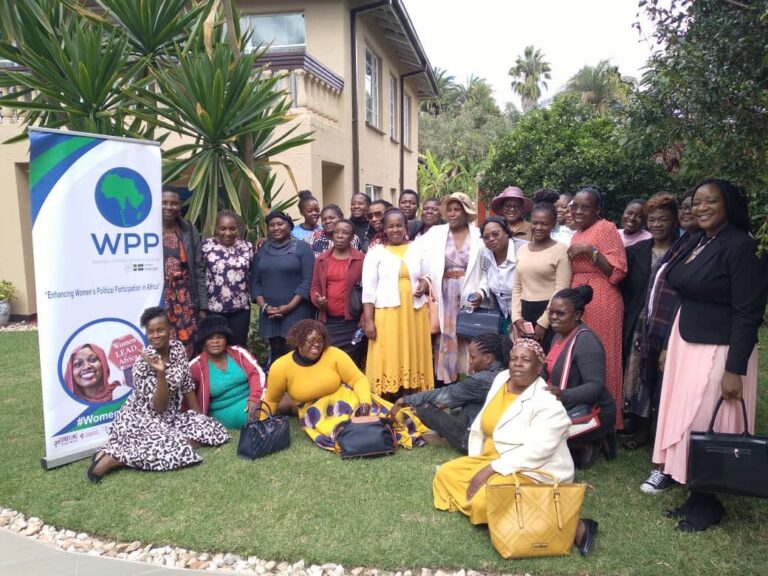
This came to light at the commemorations of World Environment Day organized by Women’s Coalition of Zimbabwe (WCoZ) Masvingo Chapter where different stakeholders were invited.
Speaking at the event Ziso Piwayi from the Ministry of Women Affairs, Comuunity, Small and Medium Enterprises said women are more affected by environment pollution than men and gave reference to 2019 cyclone Idai which was a national disaster in Zimbabwe and neighboring countries.
“Women are at risk of the negative effects of climate change which are due to environmental pollution. During Cyclone Idai most women were affected more than men.
“During the disaster, agriculture suffered heavily and this affected women especially those from rural areas who depended more on agriculture.
Women were greatly affected because they are the ones who bear the bigger burden in times of food insecurity.
“Women were displaced during the disaster and they had to start from scratch.
“During the time of displacement women were affected health wise, because they were displaced to places with poor health facilities and no water. This was difficult for women who were pregnant and those who had newly born babies to access health facilities,” said Piwai.
Joyce Mhungu of WCoZ said women in rural areas are most exposed to the effects of climate change because they are highly dependent on natural resources for their livelihood.
“Women in rural areas are most vulnerable because they are highly dependent on local natural resources for their livelihood. These women have the responsibility to secure water, food and firewood for cooking,” Mhungu said.
Mhungu also said that there is need to consider availability of resources when displacing women after natural disasters because they are the most affected with the displacements.
“After natural disasters that are caused by environmental pollution, most women are displaced to different places and in most cases these places lack water and better health facilities and there is need to consider these facilities to accommodate women who are pregnant and those who have special health needs,” said Mhungu.
Masvingo City Council gender focal person Alice Mashinge said there is need to involve men in environmental awareness campaigns as much as women are involved because they are the ones who contribute more to environment pollution.
“When it comes to climate change men are more involved in activities that cause environmental pollution such as illegal mining, cutting down of trees for firewood for selling and digging of river sand and pit sand. There is need to involve men in environmental awareness campaigns and teach them on the impact all these activities have on women,” said Mashinge.