
Home Blog Page 225

2023 Harmonized Elections: Anticipating the Politieconomics Terrain

Last week, the column highlighted the misalignment between the policy position of authorities and the actual obtaining situation. The authorities’ quest to portray a stable macroeconomy is being largely influenced by the upcoming general elections. Generally, elections in developing and fragile states like Zimbabwe are a risk to the entire economy and the well-being of the citizens. As such, this week’s column is laser-focused on the causes of election disputes and the likely risks posed by the upcoming elections.

Brief Election Overview

Zimbabwe conducts elections for public offices every five (5) years in line with Section 158 of the Constitution. Since 2008, the nation has harmonized its elections – simultaneously electing the representatives of the Parliament (National Assembly and Senate), provincial councils, local authorities, and the Presidency. President Mnangagwa is set to proclaim an election date which is constitutionally expected to be between 26 July and 26 August 2023. History shows that Zimbabwe’s elections are too perilous. Generally, the major aspect of elections is access to resources via electoral victory hence the reason they are often the object of fraught competition and conflict.

Generalized Causes of Electoral Insecurities

Electoral conflict emanates from a lack of transparency and accountability in the electoral processes leading to allegations of manipulation and fraud. This can occur when responsible election authority is deemed partisan, election procedures are not clearly defined, and vote counting and tabulation are not transparent leading to widespread allegations of vote-rigging. According to Diplomacy Network, political polarization, and ethnic tensions can also lead to disputes over election results, for example, where the outcome of an election is seen as having significant implications for the distribution of political power and resources.
Also, an election conflict can be caused by weak institutions, impunity, and a biased judiciary making it difficult to settle election disputes fairly and impartially. This happens when the judicial system is captured, incapacitated to enforce its decisions, or when politicians can exert massive influence to influence an election outcome. In addition, inadequate resources and a lack of capacity by a responsible election body may lead to logistical and technical challenges during elections. This happens when an election management body is underfunded and lacks trained personnel as well as the necessary infrastructure and technology to hold elections.
More so, socio-economic factors like chronic inflation, high unemployment, poverty, and income inequality can result in a fertile environment for voter frustration and mistrust thus limiting participation in electoral processes. Voter apathy also results in low voter turnout which affects the legitimacy of electoral results. Disunity within political parties – candidate selection disagreements and factions competing for control – can largely contribute to election insecurity and fraud allegations. Furthermore, misinformation and propaganda (spreading of false or misleading information and hate speech) play a significant role in influencing public opinion and disputing the results of an election leading to damaging conflicts.

Zimbabwe Electoral Risks

Largely informed by past experiences, the following are key likely risks posed by the upcoming 2023 harmonized elections to the government, businesses, and citizens:
1. Excessive Fiscal Spending
The election risk emanates from the politics of public spending – during an election year, government consumption increases leading to higher fiscal deficits. A granular analysis of government policy direction since the start of 2023 signals elevated fiscal spending due to rising political pressures. Treasury is set to finance unbudgeted expenditures on unproductive items like US dollar-denominated housing loans for cabinet ministers, deputy ministers, and security sector bosses. Recently, the government announced plans to pay gratuities and other unsustainable welfare programs for war veterans and acquired expensive state-of-the-range cars for chiefs and magistrates among other initiatives. This is destabilizing the government’s financial position leading to unsustainable issuance of Treasury Bills in addition to ongoing massive quasi-fiscal operations and money printing by the RBZ. Consequently, the ZWL is suffocating with parallel market exchange premia now more than 70%.
As such, there is a strong basis to question the sustainability of increased public spending aimed at shoring up incumbents’ electoral chances. The already overtaxed consumers and businesses should brace for increased and regressive taxes as it is becoming inevitable for Treasury to find ways to match revenue collections with elevated spending needs. The adverse impacts of high taxes on the general well-being of the economy and citizens, therefore, cannot be overemphasized. Typically, high taxes have repercussions on saving culture, business investment, domestic production, labor’s ability to work, consumer incomes, and poverty prevalence, among other effects.
2. Manipulation of Official Statistics
The last harmonized general elections were conducted on the 30th of July 2018 during the full dollarization period (2009-2018). This period was characterized by a stable exchange rate and affordable prices. In 2019, authorities began to implement currency reforms which culminated in the reintroduction of the Zimbabwe dollar (ZWL). However, the local unit has since struggled to maintain its value against the US dollar thereby causing chronic price inflation. With the majority largely earning in ZWLs, the ongoing excessive exchange rate deterioration and instability of ZWL prices are becoming major stumbling blocks to the political messaging of the incumbent government seeking to be re-elected.
The instability of the ZWL is fuelling rapid re-dollarization of the economy as economic agents engage in asset and currency substitution for value preservation. A 2022 survey by ZimStat shows that the economy is 78% dollarized with the balance accounted for by ZWL. This enabled authorities to ditch public dissemination of ZWL inflation metrics in favor of blended (weighted average) inflation. The use of blended metrics has managed to cut the official inflation rate in half thus painting a picture of stability. However, in reality, ZWL prices are skyrocketing in line with plummeting ZWL which has lost 45% of its value in year-to-date terms. The manipulation of official statistics to mask economic problems inhibits sound policymaking, reduces market confidence and trust, and affects the functioning of financial markets.
3. Political Violence
As alluded to earlier, Zimbabwe elections such as the 2008 harmonized elections have been largely marred by severe political violence. This is usually the case when political actors and their supporters dispute the results of elections and seek to assert their power and influence. In the current build-up to the 2023 general elections, the nation is already witnessing growing signs of violence as the major opposition party has seen most of its political rallies being barred by the police yet the ruling party is freely conducting political gatherings. There are numerous reports in mainstream media allegedly implicating ruling party supporters attacking their opposition counterparts. Also, there are allegations of increased incarceration of human rights and political activists who are reportedly being detained in prisons without a fair trial. If unabated, these ongoing events risk instigating violent protests and civil unrest which in turn scares away private sector investment generally regarded as the engine for robust economic growth and development.
4. Erosion of democratic institutions
As the elections are fast approaching, many pointers are showing that the election result to be announced by ZEC will be highly contested. For instance, ZEC is yet to avail electronic voter’s role to all political parties but evidence shows that the ruling party has already accessed private voter information such as their respective ward and mobile cellphone numbers. Also, there are legitimate questions around the delimitation report which political and legal commentators view as not done per the dictates of the supreme law of the land. All these red flags will likely undermine the credibility and legitimacy of democratic institutions, such as the electoral commission, the judiciary, and political parties. This can limit the ability of these institutions to effectively resolve disputes and contribute to a general sense of disillusionment with the political process.
5. Regressive Laws
Zimbabwe is witnessing proposals and the passage of regressive legislation such as the Patriotic Act, the Health Services Amendment Bill, and the Private Voluntary Organizations (PVO) Amendment Bill. These legislations will stifle civic engagement, a key tenet of a thriving democracy. This would also leave the poor and vulnerable groups who rely the most on support from NGOs worse off. It is well documented, for instance, that Zimbabwe’s public health care sector receives hundreds of millions of US dollars in donor support annually to reduce malnutrition in children and fight diseases like malaria and tuberculosis.
6. Deterioration of International Relations
If the upcoming general election result in electoral conflicts, it will exert a negative impact on international relations, as other countries and international organizations are less likely to engage with a country that is experiencing instability and violence. This can limit Zimbabwe’s ability to access international aid and concessional borrowing from multilateral lenders, miss on foreign tourists and foreign direct investment as well as isolation from the global community.

Zvikomborero Sibanda is an economic analyst and an astute researcher. He writes in his personal capacity. He can be contacted via email:

bravosibanda@gmail.com
Twitter: @bravon96
Bikita Minerals in massive CSR projects

Beverly Bizeki

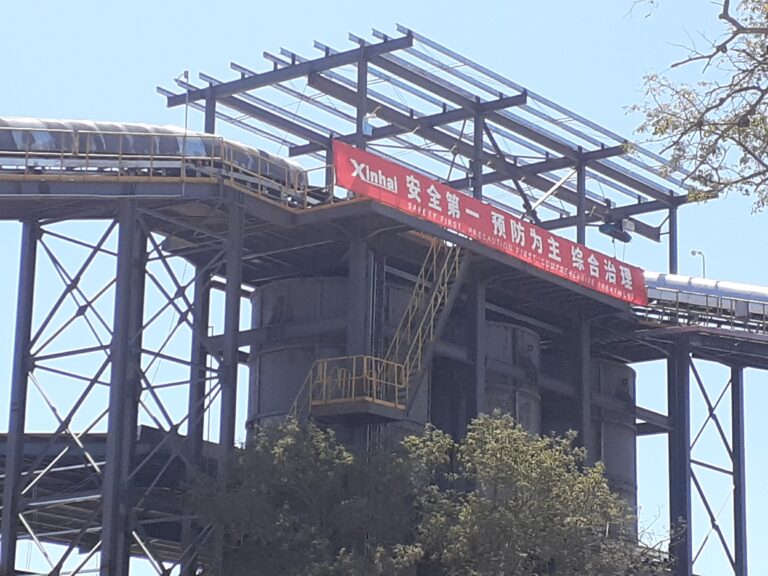
Award winning Sinomine at Bikita Minerals has continued to raise the standard of Corporate Social Responsibility (CSR) with the company picking up on projects started by the previous owner.
The company won two awards in 2022 in Responsible Investment and Social Impact Award both at South East Region and national levels.
Mine Manager David Mwanza confirmed the developments during a media tour held recently and said the company picked up projects that were being done by the previous owner.
“When Sinomine took over in 2022, the company helped in the commissioning of Shumbaimwe Clinic where the company also installed a 12.2 KVA solar system for the clinic,” said Mwanza.
Although the project was spearheaded by Domboshava community led by Chief Marozva in 2016, Bikita Minerals chipped in and donated towards the construction of the clinic until its completion and official opening on March 30, 2022 under the CSR programme.
The clinic which benefits 22 villages has three staff quarters which also benefit from the solar system installed at the clinic and a functioning tap water system from the two tanks installed at a nearby mountain which serves the clinic and a nearby school.
Mwanza said the company provided its workers with construction materials for building their own homes.
“We have been on the record for assisting our employees with quarry stones for construction purposes but have only stopped for a little while for further beneficiation and will resume after processing again,” said Mwanza.
The company is on record for drilling seven boreholes, five for Masvingo West Community and for ward 22 in Bikita.
Finance Manager Amanda Makausi revealed that the company is on record for having US$ 2 million set aside for the corporate social responsibility in the construction of a new 132 KV power line from Tugwi-Mukosi to Bikita Minerals although the project is still at its infancy.
“This year alone, we are going to spend US$ 2 million towards rural electrification of communities surrounding the mine as we are constructing a line (power line) from Tugwi-Mukosi to Bikita Minerals whereby the community will be taken on board and get employed in clearing the route,” said Makausi.

‘Facts remain sacred for media during elections’

TellZim Reporter

Journalists and media practitioners around Zimbabwe have been reminded of the need to value facts when preparing news articles for public consumption especially during elections.
The call was made by veteran journalist Cris Chinaka in Harare on April 24 during a training workshop for journalists drawn from various media outlets across the country.
Chinaka said it was imperative for journalists to always adhere to the profession’s ethics that is being factual, truthful and accurate as that is the only way to build trust in their audiences.
“Facts remain sacred during elections. Facts are what will distinguish traditional journalism from social media when it comes to election reporting.
“During seasons like election times, journalists and the media fraternity get challenged to prioritize facts and thus every one of you is required to dwell on facts in every report you may compile for the general public,” said Chinaka.
He also urged journalists to be innovative and come up with relevant ideas that address societal needs in the communities they serve.
“Journalists’ roles are to come up with ideas on areas that need to be fixed and that is part of the media’s primary role in ensuring development and accountability,” he added.
Chinaka also urged journalists to remain professional that is sticking to their professional codes of conduct and thus executing their duties effectively.
The journalists were further taken through the tips of what constitutes enough election reporting coverage that is mapping (broader appreciation of the national map, constituencies and wards), numbers (demographics, polling numbers, officers and even stations), historical context of the nation’s polls, personalities (parties and individual politicians involved) as well as processes involved during elections.
Journalists were also taken through an appreciation of the use of mobile journalism during elections and after by trainer Privilege Musvanhiri.

Budding artists welcome MARODO initiatives

TellZim Reporter

Budding music artists from Masvingo urban who got recording contracts from a programme initiated by Masvingo Root of Development (MARODO) last weekend (April 22) have expressed gratitude to the organization as they say the initiative will help develop their careers.
Some of the artists from the total 17 who made it to the contract awards after the screening process said the programme would help uplift their careers through being able to record their songs which could not have been possible due to the harsh economic conditions in the country.
Kennedy Ganda whose stage name is ‘KennyGizzy 99’ an Afropop and jazz genre artist expressed happiness after making it into the basket.
“I am very happy for getting the opportunity to showcase my talent like I did today. I am hopeful the contract will help afford me a chance to interact with experts in the music industry while at the same time recording my work.
“This is the kind of help I was looking for considering that I am a young artist who still has a lot more to learn as I grow my musical career. Right now I have a strong belief that this chance may unlock more opportunities and can use it as a launch pad for my musical journey going forward,” said Ganda.
Another female artist, 24 year-old Ashleigh Zingoni (Afro pop) said she will now be able to record her musical works courtesy of MARODO recording contract.
“I am delighted upon being chosen among the final 16 and will be able to record my work from the contract we are given by MARODO. Recording has always been expensive for us as artists and we could not be able to visit studios with our works.
“I hope to live up to the billing in terms of the challenge that lies ahead as we work and that is when it comes to activism through music. On behalf of all young people who thronged Mucheke hall today, I would like to thank the organization for affording us the opportunity we have for so long been waiting for,” said Zingoni.
Emmanuel Mangwarira whose stage name is Luvante (dancehall) said now that artists have been given recording contracts, they were going to come up with finer pieces of work unlike in the past.
“I am very grateful to the recording contract. There is a lot of talent in us as young people but we always face challenges when it comes to recording expenses and MARODO has come to our rescue.
“We are going to ensure that we put an extra effort and hard work to justify why we got selected into the final 16. I can promise that since we are going to be aided in our recording, we will come up with improved quality music,” Mangwarira said.
MARODO founder Acknowledge Mawere expressed happiness over the turn out and how the youthful artists exhibited their talent and the message they packaged.
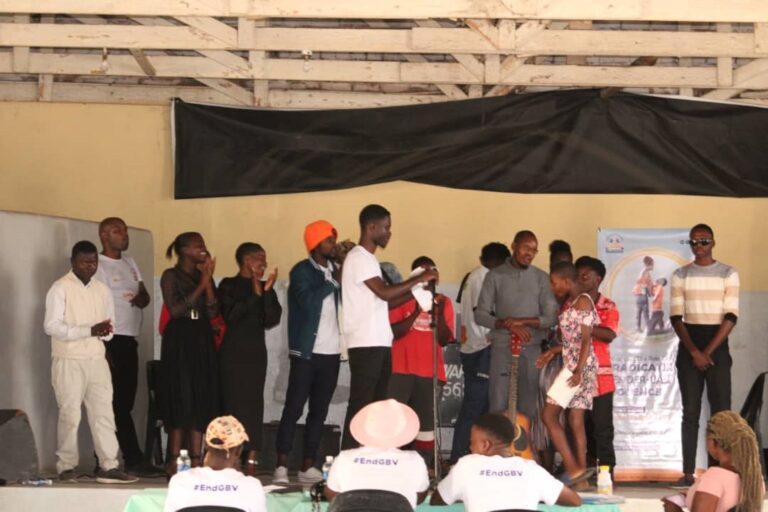
“We were super impressed by the turn-out both from the audience and artists. We had over 55 artists and what was interesting was the smart/clean lyrical content they delivered to the audience. “The various songs composed were in support of our theme ‘NoToGBV’ as well as shunning drug and substance abuse.
“The short listed candidates would get training in music advocacy covering topics like music writing, entertainment law, advocacy, gender, marketing and content monetization from trainers with vast knowledge about the industry probably starting from next week,” said Mawere.

Zim education transforming at snail pace–MoPSE

Brighton Chiseva

Permanent Secretary in the Ministry of Primary and Secondary Education Tumisang Thabela has said transforming the education system to suit the everyday life Zimbabwean situation was moving at a snail pace, far less than anticipated.
Thabela who has been on record saying the education system was still divorced from the current situation said steps were being taken towards achieving the desired results but the pace was not as fast as they anticipated.
Speaking during a media engagement workshop organized by MoPSE in Darwendale recently on curriculum review, Thabela said they were receiving a lot of feedback on the curriculum review process, a development that shows the ministry is in the right direction.
“We are receiving a lot of feedback on curriculum review. However, change is difficult to accept, that is why we still have challenges. We are doing teacher training and capitation but it takes time to adapt. Some people are not comfortable to use ICT so we still have a long way to go,” said Thabela.
In a move aimed at aligning and transforming the education sector with the Zimbabwe’s everyday life, the Ministry of Primary and secondary education introduced Continuous Assessment of Learning Activities (CALAs).
Since their inception however, CALAs have brought a huge burden on all stakeholders involved, who are learners, teachers and parents.
Parents have been complaining for some time that they are the one doing CALAS on behalf of their children who are finding it difficult to do most of the tasks that they are required to do.
Since the activities contribute 30 percent to the total examination mark, parents are then forced to do the work on behalf of their children and those who cannot have resources end up paying teachers to do them.
On the other hand, teachers are also complaining that many of them are yet to grasp all the concepts involved in teaching and monitoring of CALAs and that the work that needs to be done is too much for one teacher since most classes have more than the standard teacher-pupil ratio.
This has opened a window for teachers to be involved in unscrupulous means of earning extra cash through charging pupils to help with CALAs.
The pupils on their part are also complaining that the work required is too much and some of the things needed are beyond their reach hence they are forced to fork out money to buy some of the requirements as well as transport to where they can get the material needed.
Thabela however, said parents should not pay for CALAs saying there should not be any cost attached to the doing of CALAS and teachers are aware of that.
She said teachers should give CALAs that can use locally available resources not those that would require parents to fork out money to buy materials.
“Parents should not pay for CALAs either to the teacher to help their children or to buy requirements. They should be done at zero cost and teachers are well aware that they should give tasks that need locally available resources unless they go out for educational tours,” said Thabela
She also warned parents against doing the work for their children but rather assist.
On the issue of awarding more marks to CALAs owing to the labour, resources and time needed for them to complete them, Thabela said they were still engaging relevant authorities to look into the matter.
“As we are doing the curriculum review, we are going to liaise with ZIMSEC and other stakeholders and look into the issue of reviewing marks.
She also said the competence-based curricular was being overshadowed by Higher and Tertiary Education’s 5.0 philosophy saying they will engage stakeholders and the media to promote it so that people understand what it is all about.
Speaking at the same event, the Ministry’s Director of Information Taungana Ndoro said they were in a process of decentralizing access to information especially to the media which he said was key in giving vital information to stakeholders.
“We are working on something to do with decentralization of access to information and soon information will be found at provincial offices,” said Ndoro.
On the issue of parents paying teachers for CALAs and conducting of extra lessons, Ndoro said parents were the ones to blame since they are the ones paying teachers saying they should shun such practices and report to the relevant authorities.

Good Deeds donates food hampers, clothes to underprivileged

Tinaani Nyabereka

Gweru- City Council last week received food hampers and clothing donation from the Good Deeds Network as part of the organisation’s social corporate responsibility.
The donations, meant for the underprivileged were handed over to the municipality by Good Deeds Gweru coordinator Cosmas Nemutenzi in partnership with Gweru Lions Club.
“It is our singular honour in partnership with Lions Club to donate these food hampers and clothes to the City of Gweru as part of the organisation’s corporate social responsibility. We hope the donation will have an impact and contribute to the Mayor’s Cheer Fund,” he said.
Receiving the donation on behalf of the local authority, Gweru Deputy Mayor Edson Kurebgaseka expressed gratitude towards to Good Deeds.
“It is my singular honour to welcome the Lions Club and Good Deeds representatives to the City of Gweru. It is a privilege to have you here as you handover your donations to us.
“On behalf my council, I wish to express my sincere gratitude towards Lion Clubs and Good Deeds for this gesture of good will as this donation could not have been timelier than now.
“Many seem to forget that there are those who stay within our communities who are in dire need of help and this gesture reminds us of their apparent need. As a local authority, we try to raise funds in cash and pledges which are aimed at helping the underprivileged families and orphans in Gweru.
“However our help is never enough, so donations and contributions done by organisations such as you are greatly appreciated,” he said.
Kurebgaseka however encouraged other organisations and independent parties to work hand in hand with local authorities.
“We encourage you as organisations out there not only to improve service delivery but in areas of philanthropy as well.
“Your generosity means everything to us and to the community we serve,” he added.

Safety of journalists, freedom of expression under siege – Misa Zimbabwe

Courage Dutiro

As the world marks the 30th World Press Freedom Day, Media Institute of Southern Africa (MISA) Zimbabwe Chairperson Golden Maunganidze in a press statement said the safety of journalists and freedom of expression faces an onslaught from ‘enemies of a free press’.

This year’s May 3 commemorations are running under the theme Shaping a Future of Rights: Freedom of expression as a driver for all other human rights.

In his speech for the 30th world Freedom day, Maunganidze said the shrinking of press freedom space is a drawback on other human rights.

“In celebrating this year’s World Press Freedom Day (WPFD), UNESCO notes that media freedom, the safety of journalists and freedom of expression has been under attack, thereby impacting the realisation of other human rights,” said Maunganidze.

Maunganidze also said this year’s anniversary is an equally important event for Zimbabwe which is going to hold its harmonized elections on a soon to be proclaimed date.

“It is also an equally important event for Zimbabwe which will be holding its general elections, of which freedom of expression (online and offline), media freedom and access to information are vital in assisting citizens in making informed decisions and choices,” he said.

He added that deepening and entrenching freedom of expression and media freedom in Zimbabwe, as provided for under Section 61 of the Constitution, will go a long way in ensuring that citizens enjoy other rights enshrined in the Bill of Rights.

In 2022, the country witnessed an increase in the number of journalists that were assaulted, threatened and harassed at political gatherings and rallies, while others were also barred from covering national events.

In other cases, journalists face unlawful arrests and assaults by police while conducting their lawful professional duties.

He also said after holding nationwide engagements in partnership with the Zimbabwe Republic Police (ZRP) and MISA Zimbabwe’s alliance partners under the auspices of the Media Alliance of Zimbabwe, no reports have been recorded of media violations.

10 mo baby in urgent need of cancer treatment

0

Tinaani Nyabereka

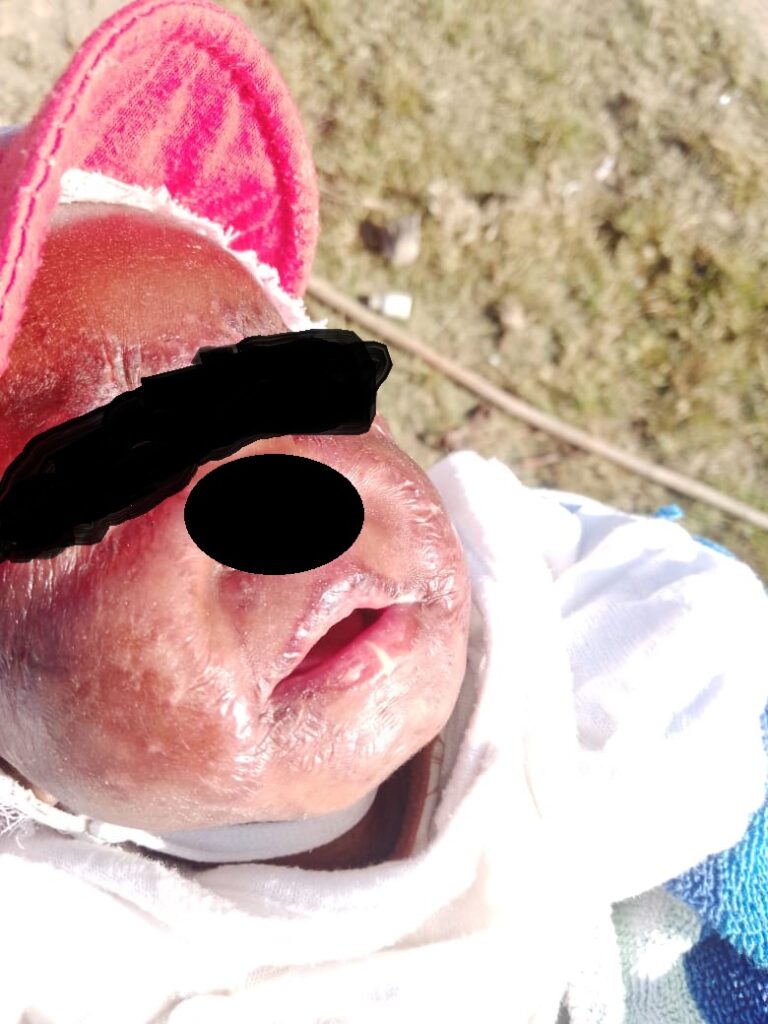
Chivi– A ten-month old baby from Chivi in Masvingo is in dire need of financial assistance to undergo an emergency cancer treatment.

Tanyaradzwa Dhuve has reportedly gone for three days without feeding due to his deteriorating health condition, with Chivi District Hospital requesting US$ 200 dollars to partially attend to her situation.

The baby’s caretaker Beauty Shangarai is appealing to well-wishers and the corporate world for help to save the young life.

Makadii Zimbabwe, mwana wamuri kuona anonzi Tanyaradzwa, ari kuda rubatsiro, abatwa chirwere chegomarara). (How are you Zimbabwe? The child you are seeing is Tanyaradzwa Dhuve and is in dire need of financial assistance to undergo cancer treatment).

“The baby has not been taking milk for the past three days as US$ 200 is needed to clean her body and acquire drips so that she can eat. She is required to be taken for further medical attention at Parirenyatwa Group of Hospitals in Harare. The baby also needs milk to complement her food supplies,” she said.

Those willing to assist Beauty Shangarai can get in touch with her on the contact details below:

Mobile Number: 0779976217 (Innbucks & Ecocash)

Name: Beauty Shangarai

ID : 83-237338R-83

Junior High appoints new, experienced deputy head

Tellzim reporter

Junior High School (JSH) has shown its continuous quest towards provision of quality education to its learners following the appointment of well-seasoned educationist Munyaradzi Mataruse.

Mataruse with a wealthy experience in the education circles was appointed to the position on May 1, 2023 to join the ambitious school located in the leafy suburb of Rhodene in Masvingo.

Announcing the appointment, JSH Director Noah Marima said the school is excited on the joining on board of an experienced administrator.

“I am pleased to announce the appointment of Mr Munyaradzi Mataruse as the deputy head effective May 1, 2023. Mr Mataruse brings a wealth of experience to Junior High School. He joins us from Riverton Academy where he held various administrative positions over the past 16 years.

“Mr Mataruse joined Riverton Academy in 2008 and rose through the ranks from the position of teacher, Head of Department (HOD) Sciences, Senior Master and most recently deputy head and Head of Cambridge examinations,” said Marima.

Mataruse has two decades in the education field according to Marima where the former is well-travelled which points to his experience.

“Before joining Riverton, taught at Churchill High School where served from the year 2003-05. From 2006-08, he was at Mutare Girls High as the HOD Sciences.

“Please join us in welcoming Mr Mataruse to JHS. We wish him every success,” added Marima.

Among his professional qualifications, Mataruse holds a Bachelor of Science with the University of Zimbabwe (UZ), Masters of Science with Bindura University of Science Education (BUSE), MED (Chemistry) again with BUSE.

New highs for Bikita Minerals

… As mining company eyes US$ 1 billion revenue in 2024

Beverly Bizeki

Sinomine owned Bikita Minerals has reiterated its aim to achieving new highs ever since the Chinese takeover in February 2022 which has marked a notable increase in revenue and productivity with the mine targeting US$ 1 billion revenue in 2024.
With the coming in of the new Spodumene Quartz Intergrowths (SQI) expected to be complete by July this year, the company is targeting to increase the revenue as well as number of employees.
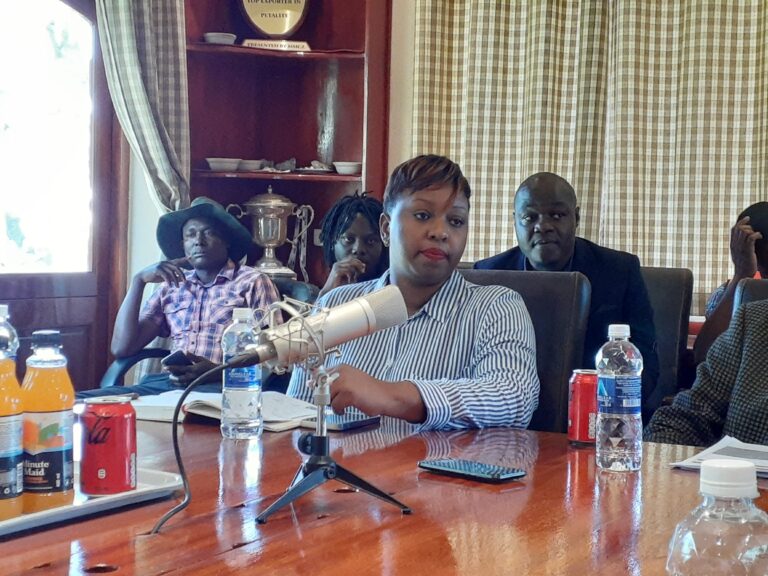
Speaking during a media tour of Bikita Minerals on April 25, 2023, Bikita Minerals Finance Manager Amanda Makausi said the company has made notable improvements ever since the company changed hands with the company now being one of the biggest contributors of tax in Masvingo province.
Makausi said the company was targeting the revenue to increase to US $1 billion in 2024.
“When Sinomine took over in February 2022, we were producing plus or minus 2 500 tonnes per month and our prices were around US$ 500 per tonne. As at March 2023, we are producing plus or minus 10 000 tonnes a month and the price of Petalite has since increased due to the world market and we are selling our petalite at US$ 2 500 per tonne,” said Makausi.
Makausi highlighted that the company’s revenue has also increased from the pre Covid-19 era where the company would record plus or minus US$ 25 million annually to US$ 25 million per month.
“Our revenue is US$ 25 million per month. Pre-Covid 19 era we were doing approximately US$ 25 million annual revenue but in 2022 we recorded our sales of US$ 47 million and in 2023 we are projecting around US$ 750 million depending on the commissioning of the new plants. From 2024, we will be looking at US$ 1 billion annual revenue,” said Makausi.
The company has also recorded increases in taxes as the rate of employment and investments are ongoing.
“In terms of taxes, in 2022 we were averaging around US$ 50 000 per month in terms of employment tax but now we are contributing to around US$ 150 000 per month with a lot of indirect tax which comes in because of a US$ 200 million investment taking place in terms of expansion of the existing Petalite plant and the Spodumene plant,” explained Makausi.
Mine manager David Mwanza said the company is headed for growth since the Chinese takeover in 2022 with an increase in employment.
“In February 2022, the company had 343 employees but the number has increased to 660 as at March 2023 with the number expected to increase to 1 500 upon completion of the Spodumene plant anticipated in July,” said Mwanza.
Mwanza also said the company provides a production bonus to its workers on a monthly basis.