
Home Blog Page 226

Zim losing millions through unregulated cross-border money transfers

TellZim Reporter

Treasury is losing millions of potential foreign currency remittance taxes through operations of unregistered and unregulated international money transfer agents who have penetrated the financial services sector, across the breath and length of Zimbabwe.
An investigation on this trend has established that unregulated money transfer agents are operating in all the country’s major cities and towns while others have established offices in growth points.
The investigation, done over a month by the reporter, masquerading as a client looking for convenient ways to receive money from relatives outside Zimbabwe confirmed the existence and operations of informal money transfer agents in Masvingo that move money across the borders of Zimbabwe, bypassing the formal banking system.
The companies have offices in many other areas in Zimbabwe, with treasury losing potential revenue in both direct and indirect taxes.

How it is done
While unmediated, cross-border money transfers are not a new thing, the practice is growing rapidly and is now a preferred choice of moving money by people who are discouraged by the scrutiny in some cases, and charges, imposed by formal institutions such as banks and international money transfer agents.
Public trust is also growing, because the agents are giving out money instantly.
The trend has grown significantly lately, buttressed by its accommodation of homeward remittances by undocumented clients in countries like South Africa, Mozambique, and Botswana, who are otherwise constrained by the demands of formality.
Zimbabwe National Statistics Agency (ZimStat) 2022 October figures show that there are over 700 000 Zimbabweans living in South Africa alone, with only 178 000 (25percent) having work permits.
Another ZimStat report, First Quarter 2022, states that the number of formally employed people in Zimbabwe is around 900 000, which translates to 10percent of the working-age population estimates, signifying the dwindling of the formal working space.
A lot of Zimbabweans have crossed the borders into neighbouring and far-off countries, searching for greener pastures.
The upside of this is that it has grown the forex remittances base considerably. Official Reserve Bank of Zimbabwe (RBZ) figures show that the 2022 remittances value was pegged at over USD1.5 billion, up from USD1.4 billion in 2021, but the figures only account for remittances made through the official regulated channels.
The formal banking systems have failed to accommodate undocumented Zimbabweans outside the borders as clients for remittances, and this has emboldened and expanded the informal money transfer sector based on the use of the “hawala” system.
The hawala system allows for an informal transfer of funds from one person to another without the actual movement of money, permitting anonymity as it requires no documentation.
Arthur (not real name) is a 25-year-old who regularly receives money from his brothers in South Africa through Instant Express Transfers, a Masvingo money transfer company that has offices in the CBD and Pretoria, South Africa.
He says the system is very convenient and more accommodating than the formal channels.
“My brothers are not documented in South Africa, they are border jumpers so they cannot send money home through Mukuru. The queues are not as long. I know there are inherent risks but it is balanced out when you consider convenience,” Arthur said.
The system allows for an exchange of money without passing through the banking system or financial bodies and is prohibited in many countries including the US, Pakistan, and India among others.
In Zimbabwe’s case, unregistered money transfer companies have become hawala operators, with offices at home and abroad, mostly in South Africa and Mozambique.
They offset balances between the different offices across the borders, without money passing through the official national payment system.

Laws being broken
A lot of unregistered money transfer companies are facilitating the unregulated expatriation of funds by withholding potential funds to Zimbabwe, in direct contravention of the Reserve Bank of Zimbabwe (RBZ) Act [22:15], the National Payment Systems (NPS) Act [22:43], and the Exchange Control (EC) Act [22:05]. Statutory Instrument 145 of 2017 The EC Act [22:05], which criminalize the unauthorized movement of funds to and from Zimbabwe, with such transactions categorized as “illicit”.
The statutory instrument defines “illicit transactions” as the “illegal transfer/export of foreign exchange and/or assets from Zimbabwe and/or offshore retention of foreign exchange and/or assets due to Zimbabwe, without relevant regulatory authorizations”.
Paragraph 4(7)(k) of S.I.145/2022 speaks to the operations of unregistered money transfer companies that use the hawala system by defining illegal expatriation as “…retention of funds offshore which were supposed to be received in Zimbabwe or which were not sanctioned by Exchange Control or provided for in current Exchange Control policy.”
It then seems that with more accountability and better treasury systems, the value of remittances could be much higher and contribute more to the national fiscus.
The unregistered money transfer companies have managed to grab a sizeable market share from mainstream players like Mukuru, World Remit, and Access Forex among others by offering instant transfers and quicker service times for those who are willing to take the inherent risk in no-mainstream transactions.
Lynn (not real name) is an agent for Instant Express Transfers. Her office has a desk and three chairs only, and she does all her transactions on a mobile phone which she then records in a counter book.
“The process is very simple; the system is instant. Once the sender hands over the cash to our agent in South Africa, they are given a receipt number which they then forward to you here. The same receipt number is also sent to my WhatsApp for reference then you can collect your money,” she tells this reporter.
According to Lynn, her office in Masvingo CBD is just one of Instant Express Transfers` over 20 branches around various urban centres and growth points, where they facilitate transfers to and from South Africa as well as locally.
“Our branches are many. Some around Harare, Bulawayo, Beitbridge, Jerera, Nyika, Gutu, and other places – there are 23 branches,” she said.
Several other money transfer agents in the CBD alone work the same way as Instant Express Transfers, with more being at the busy Exor cross-border bus termini on the city outskirts along the Masvingo-Beitbridge highway.
Silvia (not real name) works for one of these agents in the CBD. She reveals her company has “runner-shops” which provide the cash used to settle receipts of transferred amounts locally without the need for the cash to be sent from South Africa.
“We have shops that bring in good money locally, so we easily pay recipients here. The cash deposited in South Africa is then used there to buy “runner” orders for our shops here because things are cheaper there,” she said.
The same system is used by another agent located at Guni House in Masvingo, which has offices at Bosman bus terminus in Pretoria and in Johannesburg.
The system has become very popular to the extent that even registered cross-border transport companies now operate money transfer services, albeit without requisite licenses.
A popular logistics company runs a backroom office in the CBD which deals with money transfers only and has little to do with transport.
The unregulated hawala system that is commonly practiced by these money transfer companies prejudices the government of revenue as it circumvents both the RBZ and the ZIMRA systems.
Cross-border money transfers are not exempted from the Intermediated Money Transfer (IMMT) Tax payable to ZIMRA, determined by Statutory Instrument 92 of 2022 (S.I. 92/2022) at 4%. S.I. 92/2022 states that “…The intermediated money transfer tax chargeable in terms of section 36G of the Taxes Act shall be calculated at the rate of —…(b) zero comma zero four United States dollars or part thereof on every United States dollar transacted for each transaction on which the tax is payable.”
Silvia claims that their company handles transfers of large amounts and volumes of foreign currency for their clients.
“We can handle over US$3 000 per day as the cumulative figure, but such volumes are usually during month-end days. Our daily average is roughly 30 to 50 transactions which give between US$2 000 and US$2 500,” she said.
If a person in South Africa sends money to a relative in Zimbabwe through the formal channel, the 4percent IMMT tax is activated and becomes collectible by the government.
Commenting on the issue, finance expert and senior lecturer in the Banking and Finance Department at Great Zimbabwe University, Dr Rabson Magweva said the losses can only be calculated by the volumes of transactions.
“The net loss is 2percent transactional cost multiplied by the volumes that are being pushed,” Dr Magweva said.
He also said government losses may be difficult to quantify but they are real.
“When remittances are made through the formal banking channels, it means that the government receives IMMT tax, and effectively this means increased inflows and a wider tax base. This implies that the use of informal unregulated remittances aids tax evasion and shrinks the tax base,” said Dr Magweva.
He said some of the lost value cannot be quantified directly in monetary terms, but has long-reaching effects on the value of money in Zimbabwe.
“Our statistics become unreliable because of unrecorded transactions pushed through the informal operations of the unregistered money transfer companies, and these implications affect the formulation and implementation policies, for example, inflation or exchange rate policies, they are likely to be ineffective. Receivers of money from the informal hawala usually go directly to the black market, thus fueling the parallel market and affecting the exchange rate as well,” he said.
South African-based economist and researcher, Onias Mugowo said that these unregulated agents violate both local and international laws.
“When the cross-border transactions contravene both national and international laws, they can be considered to be either illicit financial flows or money laundering, depending on their volume and purpose,” Mugowo said.
The unregistered transfer agents are also indirectly prejudicing the government of collectible taxes as their operations reduce the market share and profits of mainstream companies.
By law, all companies must be registered to operate in Zimbabwe so they can pay appropriate registration, licensing fees, and requisite security deposits with the RBZ as contained in the operational guidelines for Authorised Dealers with Limited Authority (ADLAs) – money transfer agencies and Bureaux de change (2021).
RBZ governor Dr John Mangudya did not respond to calls while the RBZ public relations department did not respond despite asking for questions in writing.
Follow-up phone calls were made to the PR department, and they indicated that they were waiting for response and clearance from the Financial Services Unit (FSU) and the Exchange Control Unit.

Ignorance, negligence, poverty behind poor vital events registration: Chiefs

Brighton Chiseva

“Touts (Mahwindi) should have a rude speaking contest with nurses and the winner should contest with civil registry employees”.

This is one of the many jokes often shared on social media that portray the treatment civil registry employees give clients at all centres, a development which results in long queues that often force people to abandon acquiring of birth and death certificates midway.
This brings in the question of whether late registration of births and deaths in Zimbabwe is a result of these inefficiencies, where the system fails to help people with special cases or it is just the reluctance of people who should prioritize getting the documents.
The Constitution of Zimbabwe together with other international statutes which Zimbabwe conforms to, stipulate that every citizen has a right to citizen registration which is having national identity documents like birth certificate or national identity card.
The question however remains unanswered but the truth of the matter is that the civil registry people often contribute to people’s failure to get the required documents in time.
Constitutionally, every birth should be registered within forty eight days while death should be registered within 30 days but recent statistics released by Zimbabwe Statistical Agency (Zimstat) from the 2022 national population and housing census indicated that more than 900 000 which translates to more than 21.1 percent of youth between 16 and 34 having no identity documents.
From the statistics, a total of 442 659 children were under one year on the census night nationally and of these, only 20.5 percent of them had birth certificates. In rural areas, 15 percent of the children under one year had birth certificates while 30 percent of their counterparts in urban areas had birth certificates.
A total of 1 308 157 persons aged between 5 and 20 years had not acquired birth certificates during the census period.
On death registration, of the 120 070 deaths that were recorded during census, 78 384 deaths which constitute 64.7 percent were registered. 30.3 percent were unregistered while 5 percent had unknown registration status.
Death registration is higher in urban areas which has 82.8 percent while rural statistics are lower with 56.8 percent.
Of these, 78 percent did not have birth records while the remainder had birth confirmation records.
However, there are a number of people who have no records at all; they have no IDs and they cannot be accounted for through the use of civil registry data.
According to Zimstat, Vital Statistics provide basic demographic and health data needed to inform policy planning and assist in monitoring progress towards attainment of government programmes and Sustainable Development Goals (SDGs).
Birth and death registration are key sources of demographic data for socio-economic development and population control in developing countries and are used to produce fundamental demographic and epidemiological measures that are needed in national planning across multiple sectors like education, labour and health.
A number of traditional leaders who spoke to this reporter said a number of issues like poverty; ignorance and requirements needed for vital statistics registration were behind poor registration especially in rural areas.
Senator Chief Nhema born Rangarirai Bwawanda of Zaka said the major challenge on birth registration was lack of knowledge among the general public coupled with accessibility as well as requirements needed for one to get a birth certificate.

Chief Nhema

He said there was need for massive education on the importance of documents as some people believe it is just needed for voting and other things of that sort.
“People don’t know the importance of having a birth certificate or a national Identity card. Right now we are going for elections, that’s when you hear people rushing to get IDs. To them it’s only important for voting and nothing else.
“Another challenge is that of requirements needed for birth registration, especially if it’s late. People are required to bring witnesses to get a birth certificate or ID. That is very dissuading. Imagine you are here in Zaka, one of the witnesses is in Harare another is somewhere else, and so there is cost of transporting those people,” said Nhema.
Though government is working on modalities to empower Chiefs to be able to issue notification records of birth and death for those who are born or die outside health institutions, Chief Nhema said that alone was not enough, saying authorities should allow traditional leaders to recommend people for birth and death registration even for other people who would have failed to acquire them in time due to different reasons.
“The authorities should allow us to write recommendations for anyone in my area because we know them. The questions that are asked when applying for these documents are just too much. We have people whom we give a place to live coming from Gokwe and when they want to go for ID or birth registration, they are asked to get a letter from a Chief in Gokwe but I know the person, I should be allowed to help,” said Nhema.
The same was echoed by Joseph Mutubuki, the Matigimu village head in Zaka who said the requirements were too much for aliens.

Joseph Mutubuki

He said he had a situation of a man named Lucas Kumbuya in his village who had been staying there for more than thirty years but could not get a birth certificate or a national ID because he was originally from Mozambique.
“We have a current situation of a man who has since given up his quest to acquire a birth certificate or national ID. He has been living in my village for more than 30 years but all efforts to help him get these documents were in vain,” said Mutubuki.
Kumbuya narrated his story saying it was emotionally affecting him since his wife is now representing his family on all issues that require an ID.
“I was born in 1972 in Mozambique and migrated to Zimbabwe in 1980. He went to Muchechetere in 1982 doing cattle herding as a job, after which he went to Muzondidya area in 1987 before his boss migrated to Mutubuki village which is next to Matigimu. In 1991 he got married and had his first born in 1992. He travelled back to Chambuta Refugee Camp, Tongogara in 1993 and came back to Matigimu village in 1994 and was given land by the late village head Taitos Mutubuki.
“I now have six children who all bare their mother’s surname; it mentally affects me, to think that I have children who cannot be called by my name. However, I am grateful that at least they have these documents. Another issue that affects me is that I cannot exercise other rights like voting, I cannot represent my family even on aid distribution, with my wife always doing that on behalf of the family, a development that makes me feel less manly,” said Kumbuya.
Chief Chitanga born Feleni Chauke said the major reason for late registration of births and deaths was a result of distance to access the services especially in rural areas.He said government should ensure that as a temporary measure, mobile registration blitz should become a permanent feature on the civil registry calendar saying it should not be done towards election time alone while permanent solutions are being put in place.
“The issue of distance affects registration of births and deaths especially here in Mwenezi. The registry centre is far away for a number of communities and because of poverty, people tend to give priorities to immediate challenges like buying food.
“So the registry department should do more mobile registration exercises all year round and make sure that people are aware of the visiting days before they come, then with resources permitting more permanent solutions must be put in place like further decentralizing from the district registry offices,” said Chitanga.
Chief Murinye real name Ephias Munodawafa agreed with Chitanga saying poverty was a major hindrance in terms of death registration saying a number of people in rural areas have no estates that may require court administration hence once one dies, they bury and forget that children may need to use the death certificate at some point.

Chief Murinye

“Poverty in rural areas affect people when it comes to registration of death certificates, once a person is buried and has nothing that may require court administration then that’s it. Many people have an unwritten wills where people know how the estate will be distributed and in that case they don’t see any reason for registering a death certificate,” said Murinye.
On birth certificates, Murinye said failure to register a birth certificate was a clear sign of negligence on the part of parents saying birth certificates were a prerequisite for any birth in the country.
“Failure to register a birth is a clear sign of negligence from parents, birth registration is very important and should be equally be prioritized like any other basic needs. The government do decentralized registration blitz but some still fail to get births for their children. Some even fail to send kids to school and that is the same way they fail to get birth for them. However, this has a bearing on children who sometimes struggle to get the documents when they need to use them and in some cases the parents would have died,” said Murinye.
On his part, Chief Mugabe born Matubede Mudavanhu said he passed a decree in his area where every child should have a birth certificate within two weeks of being born and village heads are there to enforce that decree, failure of which the village head will be answerable.
“Laws differ from Chief to Chief but I urge my colleagues to replicate what we in Mugabe area do to make sure that people register birth certificates as early as possible. In my area, we have a policy which requires every birth to be registered within two weeks. For enforcement of this, village heads are in charge and if a birth occurs and the deadline is not met, then the village head will be answerable,” said Mugabe.
Chief Ndanga real name Wilson Makono said the Zimstat and the civil registry should avail such statistics to them as traditional leaders so that they can see how they can help to maximize vital statistics registration.
He said poor registration was pure lack of awareness on the importance of registering births and deaths saying more need to be done to conscientise people on the importance of acquiring the documents.
“People don’t know the importance of these documents that is the reason why many are reluctant to get them. A number of people now have funeral policies and they get burial orders before burying their loved ones, however, after burial they ignore getting a death certificate,” said Nyanga.
Those with unusual cases however still face a mammoth task at registry centres as the procedures to acquire the documents through the right channel become deterrent, leaving them at the mercy of corruption and being frustrated just to be registered in the national system, a basic right.

Mkwasine farmers purchase motorized grader

Beatific Gumbwanda

CHIREDZI- In a move that will ease transport challenges, Mkwasine farmers recently purchased a state of the art motorized grader.
Ever since Tongaat Hullet Zimbabwe (THZ) seized operations in Mkwasine Estates in 2006 following the allocation of all sugarcane plots in the area to A2 farmers during the land reform programme, the new farmers have been struggling to transport their produce to mills and loading zones due to poor road networks which used to be serviced by THZ.
With the continuous deterioration of infrastructure in Mkwasine Estates due to vandalism and lack of renovations coupled with bad roads, in 2019, farmers in Mkwasine embarked on a developmental structure called Mkwasine Management Committee (MCC) aimed at improving infrastructure including roads in Mkwasine Estate using contributions from farmers.
Speaking during the commissioning of the motorized grader at Mkwasine Country Club recently, MMC Secretary General Blessing Mahwerera said the purchase of the US$ 130 000 motorized grader was motivated by high costs involved in contracting independent companies to refurbish their roads.
“We initially had an agreement with Chiredzi Rural District Council (CRDC) to repair roads at a cost and we were supposed to repair close to 57 kilometres. Only 34 km were graded. We also invited companies to bid for 105 kilometres, with the least bidder calling for US$ 421 000 which we even failed to get 10 percent of it for the works to start.
“We then came up with an idea to raise funds to purchase our own grader, which we are witnessing today and it will go a long way in developing our roads and avoid cane spillage, which was sucking farmers day in day out,” said Mahwerera.
Chiredzi District Development Coordinator (DDC) Lovemore Chisema who was the guest of honour at the occasion applauded farmers for coming together to develop their environs as nobody was going to do so for them.
“This is a very good initiative as envisaged with the National Development Strategy 1 (NDS1). Nyika Inovakwa Nevene vayo, nobody was going to come and develop your area as it is your sole mandate. Yes, people talked a lot but now they have seen the value of their money. You now have the power to bid for works in various companies as you now boast of owning a yellow machine.
“We heard a lot of speculation from farmers that you are misusing their money. These allegations should be evidence based because anyone anywhere can say that. I am happy that I have witnessed that you were spending the money but for the goodness of farmers,” said Chisema.

Stay away from drugs – Miss Independence Chiredzi urges youth

Courage Dutiro

As cases of drug and substance abuse are on the increase in the country, recently crowned Miss Independence Chiredzi 2023 has called upon young people in the sugar cane town to shun drug and substance abuse.
Paidamoyo Mayanga (21), who is the current Miss Independence Chiredzi and a Great Zimbabwe University (GZU) student said it is an honour to have been crowned the inaugural Miss Independence Chiredzi.
“I am blessed to have won the title of Miss Independence Chiredzi 2023. It’s an honour which comes with a huge responsibility that I’m ready to partake,” said Mayanga.
She urged young people in Chiredzi to shun away drug and substance abuse as well as contributing towards community development.
“As Miss Independence Chiredzi 2023, I would like to encourage all youth in Chiredzi and beyond to participate in community-building activities.
“I encourage all young people to stay away from drug and substance abuse as it brings nothing but emotional, mental, physical and financial problems into our lives,” said Mayanga.
The inaugural Miss Independence Chiredzi was organised by ‘ENDLESS: A BRAND OF FAITH’ and it ran under the theme ‘Origin’.
Nyaradzo Mhere (24), Adiola Marumbu (18) were crowned 1st and 2nd princesses respectively, while Tanatswa Gava (19) was voted Miss Personality.

ZCTU challenges NSSA to prioritize right to safe working environment

Perpetua Murungweni

Labour movement Zimbabwe Congress of Trade Unions (ZCTU) has called upon National Social Security Authority NSSA to prioritize the right to a safe working environment as it is the custodian of occupational safety and health at work places in the country.
Speaking during the World Day for Safety at work commemorations held at Masvingo Civic Centre, ZCTU president Florence Taruvinga expressed concerns over the continued intimidation of employees in workplaces by their employers and called upon NSSA to prioritize the right to safety as well as health of workers.
“The continued injuries that are happening at workplaces are not because workers are not following procedures, but it’s because of the serious intimidation of workers to speak out on issues that affect them.
“Employers are not playing their role of providing and maintaining a safe and healthy environment and it becomes inevitable for workers to protect themselves from injuries and maintain a safe working environment as we have employees that are using safety clothing that they were given five years ago,” said Taruvinga.
She said workers suffer at the workplace due to serious safety deficits at companies around the country singling out Chinese owned companies as biggest perpetrators.
“There are serious safety deficits in these Chinese-owned companies and we are calling for NSSA to protect the citizens and workers in Zimbabwe because the Chinese have loosely become the owners of this country and doing what they want to the environment and workers,” said Taruvinga.
She said ZCTU recognizes statutes that are in Zimbabwe, follow and act accordingly but the Chinese investors disregard the statutes and are getting away with it.
She vowed that if they (Chinese) continue doing the same, the labour organization is compelled to act.
“ZCTU is an organized labour organization that recognizes the statutes that are in Zimbabwe and as citizens of the country. We follow and act accordingly to what governs us and if Chinese investors continue to disregard the statutes particularly the labour act and workers’ rights in Zimbabwe and continue to loosely do it without anyone taking them to task, we will act accordingly. I urge you all to put our hands together to stop this.
“While we all understand and totally agree that accidents can happen anytime anywhere, it is still our responsibility as workers and employers to ensure that we take steps to reduce risks of accidents and maintain a safe working environment,” said Taruvinga.
Zimbabwe Federation of Trade Unions (ZFTU) General Secretary Kenius Shamuyarira also urged NSSA to conduct safety inspections at all work places by visiting workers from across the nation who will speak on these issues.
“NSSA should inspect safety conditions and safeguard health of employees at all work places, and this can be done by visiting or holding events like these at work places and being on the ground where the issues raised are found. There are a lot of workers and employers who really speak to these issues and by doing that, you will be assisting the mantra of seeking to achieve the upper middle income society by 2030 for all Zimbabweans,” said Shamuyarira.
Deputy Minister of Public Service, Labor and Social Welfare Lovemore Matuke also urged employers to adhere to the Labour Act and ensure a healthy and safe environment for its workers and failure to do so will attract a stiff penalty.
“Today government is sending a strong warning to all those who do not adhere to issues related to safety and health an act of commissions and omissions that comprises the safety and health of workers by stakeholders will certainly attract stiff penalties by the State in accordance with the provisions of the laws of Zimbabwe,” said Matuke.
NSSA Board chairperson Merjury Chinyemba said through commemorations, the organization seeks to encourage, support and boost the need to continuously create safe and healthy culture.
“Through the World Day for Safety and Health at work commemorations the NSSA seeks to encourage support and boost the need to continuously create safety and healthy culture, thereby reducing work-related accidents injuries and deaths,” said Chinyemba.

CWGH commemorates World Health Day, World Immunisation Week

Beverly Bizeki

For 22 year-old Netsai Shoko (not real name) accessing health services in her neighbourhood for free is something she appreciates as it serves her money for travelling and paying for the services.
Shoko, who is afraid of letting her mother know that she is sexually active and is on contraceptives, is happy that the Community Working Group on Health (CWGH) has brought some of these services closer to home, sparing her the hustle of having to go to the clinic to get the injection.
These are some of the challenges that young women and girls face when accessing Sexual Reproductive Health services; fear of being judged by parents and close relatives especially when they are not married.
As the world celebrates World Immunisation Week slated for April 24 to 30, this year the week was celebrated under the theme ‘the big catch up’ and the CWGH Masvingo chapter combined the celebrations with the World Health Day celebrated on April 7 under the theme ‘Health for all’.
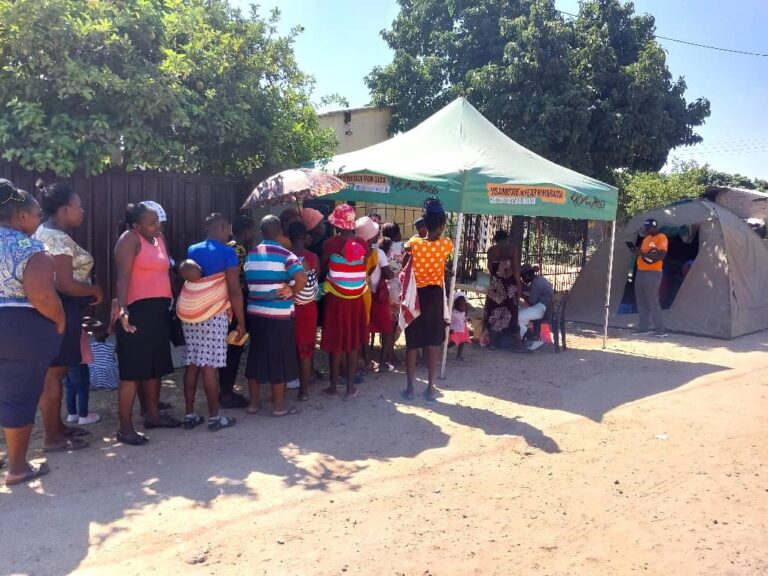
The celebrations were held in ward 3 Masvingo Urban where residents had access to various health services including Covid-19 vaccination, family planning services and HIV testing.
CWGH Masvingo chairperson Entrance Takaedza said the group had partnered with the Ministry of Health and Masvingo City Council in spreading information and providing health services to residents.
“As we have gathered here to commemorate the World Health Day and World Immunisation Week, we are pleased by the huge turnout of residents to get the Covid-19 vaccination and other health services for free.
“Our community monitors trained by CWGH are into researching about vaccines and other diseases affecting our communities so as to better inform the government on issues concerning health in the communities for policy making,” said Takaedza.
Ward 3 councillor Rocky Kamuzonda expressed gratitude to CWGH and other partners for bringing health services to the residents.
“I am grateful for various stakeholders who have brought their services to locals for free which is a helpful exercise for those who cannot bring themselves to seek medical attention,” said Kamuzonda.
According to a report by the World Health Organisation (WHO) in April, the goal of the immunization week is to get more people protected from vaccine preventable diseases.
“2023 is our global opportunity to catch-up on lost progress in essential immunization. We need to reach the millions of children who missed out on vaccines, restore essential immunization coverage to at least 2019 levels, strengthen primary health care to deliver immunization and build lasting protection in communities and countries.
“The goal of World Immunization Week is for more children, adults and their communities–to be protected from vaccine-preventable diseases, allowing them to live happier, healthier lives,” read part of the report.

‘Technocrats sleeping on duty’

…Councilors blame management over failure to implement resolutions

Tinaani Nyabereka/Yeukai Munetsi

Gweru- City Council management has come under fire from the local authority’s councillors who continuously accuse the technocrats of ‘sleeping on duty’ due to their failure to implement council resolutions
The outcry by the councillors has been heard in council chambers several times as they blame management for dragging its feet over key service delivery issues.
The recent saga involving the service vehicle which was taken by suspended Town Clerk Vakayi Douglas Chikwekwe sparked debate, with councillors accusing management of failing to implement resolutions over the said vehicle.
Another area of concern was the installation and repairing of new traffic light where councillors expressed disappointment over delays in the installation of the lights.

Service vehicles

Gweru Mayor Hamutendi Kombayi during a full council meeting held last week questioned Acting Town Clerk Livingstone Churu and Chamber Secretary Tapiwa Murerwa over delays in repossessing the vehicle.
He further accused council management of acting in a way which sabotages elected councillors from fulfilling their mandates.
“The act shown by the suspended Town Clerk is theft. We passed a resolution to suspend him without pay as council, so why can’t modalities be put in place to recover that car since February 2023?
“To date nothing has been done and we don’t even have an RRB number from the police and Zimbabwe Anti-Corruption Commission (ZACC) case number; what’s happening from management’s side?
“At this moment, let me call upon the Chamber Secretary and the Human Resource manager to go to the police and report accordingly. We want proper documentation, we want the RRB number from police and the Anti-Corruption case number to be presented before this meeting ends,” Kombayi said.
Ward 3 councillor Martin Chivhoko said probably management was afraid of confronting the suspended town clerk on the matter.
“I want to ask management, what is happening? We passed the resolution to have the car returned but up to date nothing has been done. As management you seem to be afraid to confront the suspended Town Clerk. We are eager to know what’s really happening,” Chivhoko said.
According to council minutes, Chikwekwe was supposed to have been given a brand new Toyota Fortuner SFX vehicle worth over US$ 80 000 when he was still the Chamber Secretary.
The vehicle, according to Chikwekwe, was not bought hence he was supposed to surrender the council vehicle once he received his allocated car as council was supposed to buy him a vehicle worth US$ 83 000.
“Council is yet to deliver my car which was approved by the Cabinet. Surprisingly, they want to cry over this low value car,” he highlighted.
Tracing back on most of Gweru Council officials who were dismissed, Vakayi Chikwekwe is not the first to exit council with a vehicle as three more council officials took vehicles as part of their contractual benefits.
The three officials include suspended Director of Housing Services Shepherd Tigere, former director of Engineering services Robson Manatsa and former Town Clerk Elizabeth Gwatipedza who was dismissed without her benefits for gross incompetence.

Traffic lights

Ward 15 councillor Trust Chineni who is the chairperson of Environment Committee said issues of lighting were stagnant in terms of progress.
“Yes, as council we passed the resolution to light up all our streets, but some areas still are lagging behind. Also on the issue of traffic lighting, we said we are going to install new lights and leave Zhang’s Emobuild traffic lights project like that.
“We still await to hear management’s decision as they promised to look into it as soon as possible. The biggest question is when will the project be implemented as cars continue to pose danger to pedestrians?” Chineni queried.

Woodlands dumpsite

Ward 3 councillor Doubt Ncube expressed concern over the Woodland dumpsite saying the given timeframe had lapsed while residents continued to live in danger.
“I seek to understand the issue of dumpsite. How far has management gone in addressing that issue?
“People of Woodlands are in danger. We last heard that commitment was being made over moving the dumpsite, so when is it going to be moved for the safety of the people?” said Ncube.
Mayor Kombayi however threatened that the issue of the dumpsite was part some directors’ contract performance as failure to implement will see some packing their bags.
The woodlands dumpsite was supposed to be moved by 2022 after council promised to move the site to pave way for the construction of Mkoba 21, but to date nothing much has been done as financial constraints continue to affect the project.
“Where have we gone with issue of the dumpsite, can we have answers on the matter as we have had timeframes to move the site.
“Health and housing department (point at director of Health), what have we done so far. If there is nothing done yet, just know that when we go out, we go with you (directors) who are failing to work with times frames. Remember implementation of resolutions is part of your performance based contract so be warned. We now have the power as council to dismiss over incompetence,” he said.

Residents

Ward 5 resident Tungamira Zvakarehwa Mashanda said checks and balances on both sides in councils through establishing effective accountability and transparency mechanisms was crucial.
“I can say both councilors and management never take residents seriously, which is seen in the number of projects or resolutions that go unimplemented at the expense of residents. It’s not a one sided thing, rather there is sabotaging of each other from both sides of council.
“As residents, we say now that we are caught in between the fight, we need to vote for councillors who understand how to work in harmony with others going forward.
“Management must know that assuming an office at council as a technocrat comes with a prize to deliver to the people. As residents, we can still act and remove incompetent technocrats from office,” he said.

Zanu PF election rigging exposes Chiwenga faction in Masvingo

…Provincial executive compromised

Brighton Chiseva

MASVINGO – Zanu PF factional tussles are far from over with the recent primary election rigging exposing the Chiwenga faction which is being fingered in Gutu East primary election dispute which saw the winner being disqualified and the second contender emerging the winner.
There are two main factions in Masvingo, with one aligned to vice president Constantino Chiwenga and the other one aligned to President Emmerson Mnangagwa.
The Chiwenga faction fronts provincial chairperson Robson Mavhenyengwa and a number of members of the provincial executive while the other faction is allegedly led by the Minister of State for Provincial Affairs and Devolution Ezra Chadzamira.
Mavenyengwa and former National Political Commissar and politburo member retired army general Engelbert Rugeje and other provincial party stalwarts in the province are being accused of manipulating the process that turned George Vhengere’s win to Benjamin Ganyiwa who had won to come second in the election.
The faction was trying to consolidate power by imposing loyal candidates in all constituencies hence the disqualification of Vhengere.
Through politburo members aligned to it, the Chiwenga faction is alleged to have influenced the “disqualification” of Vhengere to pave way for Ganyiwa who is a Chiwenga loyalist.
Vhengere is said to have been disqualified on the basis that his transfer was unprocedural though they had cleared him in the first place even though the same executive had accepted him.
Though Vhengere refused to comment on the matter saying he was not authorized to speak to the media over such matters, sources privy to the on-goings said Gutu East could be one of the areas where reruns are looming as it was discovered that Vhengere’s disqualification was unwarranted and a result of factional politics at play.
Vhengere was disqualified on allegations that his transfer was not done properly despite having been read in Provincial Coordinating Committee (PCC) and PEC meetings and having been allowed to contest in the first place.
“What happened is that, Vhengere transferred from Mashonaland East to Masvingo a year and some months ago. His transfer was read in the PCC and PEC together with Maone Vheremu (also from Mash East) and one Rundare who won a council seat in Ward 12 and had transferred from Harare.
“Vhengere submitted CVs to contest in primary elections and was recommended by both the province and Politburo. He contested against Benjamin Ganyiwa (who came out 2nd), who was later declared the party representative, Mafios Mlambo, Maone Vheremu, Christopher Marusho and Chibamu. He won the first round of elections though some centres were alleged not to have voted,” said the source.
Sources further said while people were waiting for the proclamation of results, the National Political Commissar Mike Bimha pronounced that George Vhengere was disqualified because his transfer papers were not done properly and Ganyiwa who came out 2nd will represent the party.
Vhengere’s team went on to appeal to the party structures and investigations are still being contacted while Vhengere never got official communication on his disqualification nor the outcome of the investigations questioning how he was disqualified last minute when all along he was allowed to contest.
Other sources claim that Ganyiwa was named heir to the office by sitting MP Berita Chikwama and said he paid some money to Chikwama and other provincial members who thought it was a outright win for them.
The outgoing Chikwama is said to have been telling people that she is stepping down and is leaving Ganyiwa in her place, a development that angered locals who felt that they could choose own leaders.
Ganyiwa donated a number of grinding mills in the constituency and brought some buses though they were not in good shape but went on to lose to Vhengere because of his alliance to Chikwama who is unpopular in the constituency.
Locals questioned the logic behind the alleged disqualification saying it was not possible for someone to transfare from another province together with another candidate to submit CVs and is vetted, goes on to contest elections, wins then the issue of transfer is raised.
However, contacted for comment, Rugeje said he knew nothing about the allegations and could not comment on anything to do with the primary elections.
“I know nothing about what you are saying, and I can also not comment on primary elections, you can contact the national PC or spokesperson,” said Rugeje.
Zanu PF provincial Chairperson Robson Mavhenyengwa poured down water on the possibilities of a rerun in Gutu East saying the MP issues were done and dusted and reruns if there are any, will be for councilors only.
“We are sitting down as the province tomorrow (Sat April 29). If there are any reruns, we will discuss that tomorrow. However, we can only have reruns in council elections not parliamentary, that one was done and dusted,” said Mavhenyengwa.
On why Vhengere was disqualified Mavhenyengwa despite his executive having recommended Vhengere and recived his transfer, referred questions to the Political Commissar and National Spokesperson Christopher Mutsvangwa.
Provincial spokesperson Pepukai Chiwewe also said he was not privy to Gutu East issues and added that they were yet to receive communication on areas likely to have reruns in the province.
“I am not sure about the issues in Gutu East, what I know is the winners were announced by the Politburo and that is what we work with as a province. On reruns, I am not sure if we have any in the province. We did not have any contested issues as a province and we had our inter-district meetings where winners were announced. However, if there is any, we will know in our next PCC meeting,” said Chiwewe.
The Gutu East is one of the many constituencies where elections were not done properly with the Chiwenga faction seeming to be in control of the election.
In Masvingo Central, after having discovered that their candidate had won in their strongholds, they went on to avoid elections in other centres which their major rivalry Phainos Makwarimba had an upper hand.
In Masvingo South, a similar situation happened with a number of centres being said to have not voted at all.

Chiredzi, Mwenezi declared cholera hotspots

Courage Dutiro

Six cholera victims were reported to have been hospitalized in Masvingo province as of April 26, 2023, with Mwenezi and Chiredzi districts being among the cholera red zones in the country.
On the above-mentioned date, the province recorded the highest number of care cases followed by Midlands which had four hospitalized while Manicaland had two patients admitted in Mutasa district.
A situational report released by the Ministry of Health and Child Care (MoHCC) on April 26, confirmed that Mwenezi and Chiredzi were among those districts that recorded cholera cases in the country.
“As of April 26, 2023, 17 cases are hospitalized. These are admitted at: Beitbridge District Hospital CTC (3) in Mat South Province, Mutasa (2) in Manicaland Province, Mwenezi District (4), Chiredzi (2) in Masvingo province and Chirumhanzu (4) in Midlands province and BRIDH (2) in Harare province,” read part of the report.
The report also revealed that Masvingo province had 3 cumulative suspected cholera deaths and a single death.
Masvingo Provincial Medical Doctor (PMD) Dr Amadeus Shamhu said it is still difficult for him to comment on what could be the main reason behind such cases in those two districts because there is currently no district which can be said to be more prone to cholera than others.
“It is still difficult to comment before a proper tracking investigation is taken to find out where the index cases are from. No district in the province is more prone to cholera than the other. As of now, all districts are equally prone. In most scenarios there is a history of travel in cholera cases, for instance some people could have contracted the disease from gatherings in other areas,” said Dr Shamhu.
The first cholera case in Masvingo province was recorded in Chivi district and it is said the case had a history of travel from the Beitbridge zone.
In Manicaland province Buhera, Chimanimani, Chipinge, Mutare and Mutasa districts have been labelled as red zones.
Since its first recorded case in Chegutu town on February 12 this year, the acute diarrhoeal infection disease has been recorded in nine provinces of the country as of April 26 and 115 laboratory-confirmed cases have been reported.
Besides causing havoc in Zimbabwe, the disease has also been reported to be taking lives in 14 African countries with the neighbouring Mozambique on the list of the most ravaged ones.
Masvingo and Manicaland provinces are on the border lines of Zimbabwe and Mozambique.
According to a report released in March 2022 by the World Health Organization (WHO) Cholera is a diarrhoeal disease that can kill within hours if untreated.
The report also states that a global roadmap to 2030, with a target to reduce cholera deaths by 90percent was launched in 2017.
On April 26, 2023, MoHCC said the acute diarrhoeal disease had 4 laboratory-confirmed deaths and 14 suspected cholera deaths three months later from the first recorded confirmed death.
In a report released by WHO on December 2, 2008, Zimbabwe had recorded more than 400 cholera deaths from August 2008 as confirmed by the MoHCC.
“As of December 1, 2008, the Ministry of Health in Zimbabwe has reported a total of 11 735 cholera cases with 484 deaths since August 2008, affecting all provinces in the country,” reads the WHO report.
According to a report released by Medecins Sans Frontieres (MSF) in October 2018, Zimbabwe officially declared cholera outbreak an emergency on September 12, after the disease wreaked havoc again in the country 10 years from the previous outbreak.

Zim politicians sipping from same mug

Ladies and gentlemen, events in East Africa’s Sudan are not pleasant at all as blood is spilt in the streets of Sudanese capital Khartoum with Africans at each other’s throats. Shame, who is breeding these civil wars for I have a strong feeling that the remote is somewhere overseas than in Africa, forgive me for going that far but ka saMai moyo wekubereka unopedzisira wadzimba. Yaa news filtering nekuno kuChitima is that Russia’s deadly Wagner which is wreaking havoc in Ukraine is involved in the conflict in Sudan where thousands of fellow Africans are trapped while the Europeans are organizing evacuation missions to save precious lives of their kith and kins, shame on them. Why and how would these people with ulterior motives and agendas sponsor conflicts between Africans only to fulfil the myth that the continent is home to famine, hunger and civil wars among other things. Europe is engulfed in proxy wars between the world’s bullies masquerading as Super Powers and why involve the continent in their murky issues as such.
Nxaaa, regai ndisiyane nenyaya dzekwevamwe and focus on our own troubles, so let me tell you kuti 1 million inonyorwa sei, Unobhara Ziro, wobhara Ziro, wobhara Ziro, wobheka koma, ahh kkkkk, if I could vote twice or thrice, I would vote out this clown we call our president. What is it with this guy maCDEs, I curse myself when I think that at some point I envied that guy when he was being victimised by our late Uncle Bob who was supposed to rule even vari pachikomo pavakazotadza kuenda kkkk. But zvataiitirwa nana Dr Amai, haa sometimes ndomboti Jenarari vakagona, nana Chipanga and this guy, Hamandishe wekuti Jah Love hachisi chinhu. Ndozoona what they brought about I begin to think kuti dai takangorega Gire wacho akatora maybe it was going to be better than what we are seeing. The RTGS which was once bragged to be the best in Africa is crumbling kunge matamba against the US$.
Do you think this guy will ever think of proclaiming the date for the 2023 harmonized elections which others would prefer to call watershed polls or is just thinking of zeros nekubheka Comma kkkk. He thinks tingatadza kunyora 1 million isu taigona kunyora matrillion in 2008. Hameno kuda that is the new way to counter inflation. Chete anything is possible muZimbabwe and ukanzwa votaura pamaRally chibva wazivawo kuti there is substance to it nyamba havangovhumuki ka vaya chero varova dzemuGreen House dzodhaka dziya vaite sei icho chaiva chikafu chana mukoma in the liberation struggle which birthed the new black majority bondage by a few fellow blacks.
Ladies and gentlemen, why has this whole issue of choosing prospective councillors, MPs, Senators and or even presidents been shrouded in mystery and controversy with quite a number of suspicious activities pointing to rigging and manipulation being on the rampage? I am beginning to realize that the way these political parties chose or elect their candidates is similar but what differs is the terminology involved with some calling it Primary while others prefer Candidate selection. In both cases, there are processes involved which if one takes a closer look at would realize how the ordinary voter be it the Cell or is a citizen coz CCC is yet to talk of structures all point to the same conclusion that the choice of the leaders of those very political parties. Kkkk nhasi zvangu chazviparira nemaNerorists, havadi kutaurwa pavanoresva kkkk, hanzi ingotaurai zveZanu chete, manje in ndiri gentlemen handivanze. Imi, Yellow C way of choosing candidates is exactly the same neZanu PF yacho nxaaa. It reminds me of the yester years when Nero was organizing secretary weMDC during the late Tsvangirai’s leadership would say ‘Chiitiro cheZanu icho chinja’ and then he would be referring to anyone disputing the general consensus. After Forever Zimbabwe Associates (FAZ) believed to be a Civic Society Organization (CSO) while at the same time a company owned by the cheap nylon-clad guys did their rigging well, the results instead of being announced at respective polling stations as has been the norm, were stopped from being announced before they are rallied to the Politburo and Bimha nechikomba chaMonica assumed total control over the results. After that akazobuda achisviniwa semasese e7 malanga kkk. As if that was not enough, CCC as the biggest opposition could not be outdone by their rivals and their selection also followed similar steps which saw the prospective candidates nominated going for further scrutiny in Harare just like what ZANU PF did. Yaa vakafanana vanhu ava and vanoratidza kuti vakamwa pazamu rimwe not knowing kuti raMbuya Nehanda here or nderani but vakayamwa pane rakafanana. In all cases, the ordinary voter’s choice is in doubt especially when the results are withheld and one won’t even know if there may be cases of manipulation on the final outcome and thus their input will be insignificant to say the least.
Right, let me tell you ladies and gentlemen, we are actually on our own, these politicians vatori kubasa, they are working for their families vachitogadzira nhaka while we cry. Hakuna hurumende inokudiridzira garden, kana mange musingazivi, that’s the honest truth. Kana muchifunga kuti ndonyepa let’s change the government in August muone, yeah asi izvo zvakanakawo we need new thieves, new liars, new gold mafias kkk, I can imagine team dzana Chibaya from Midlands dzichiita takeover the Machete gangs kkkkk, mirai muone kana muchiti ndonyepa. Imagine Chibaya otomuka ari Mudha haayas.
Before I go zvangu kunokanga maputi, let me hasten to say, ndange ndichitamba zvangu CCC and Zanu PF are never the same. But zvikafamba mushe tingangoenda kumaelection tisisina first lady. Yes I mean it, I heard all is not well in the first family and recently the Croc was locked nana Tsano for the whole night in company of the twins and Dr Amai who had gone to Bulawayo kuZITF had to rush back kkkkk. Remember Dr Amai has the support yevakomana and I am sure we are on another petticoat government. Haa chatakatadzira vekumatenga chikuru sure.
Anyway, winter is coming, those with extra clothes, jerseys and blankets should wash them nicely because soon I will be calling for you to bring them, of coz not kuno kuChitima, I will tell you soon where to bring them so that I distribute them to the needy. We should spare a thought for our loved ones who are underprivileged in our societies and give them kwete kuita pillow yemaJuzi in this era. Ndopega pandaidira Mphoko ipapa, aidai aakutomhanya mhanya nemaIncubators totodziirwa zvedu mudzimba umu kkkk. Iye akazodiiko nemwana wake uya aida Tinashe Mugabe, Mboko Imbok!!!