
Home Blog Page 227

So Rich Yet So Poor-A Chronicle of Trade Injustice in the Cotton Farming Industry, Case of Gokwe

By John P. Maketo

My family part of Maketo-Chokuwa clan migrated from Zimuto in Masvingo. The migration was influenced by a combination of push and pull factors, mainly the search for fertile soils and farming land. I was born and grew up in Gokwe South, Nyamhunga village under Headman Ngomeni in Chief Sai area, an agro-ecological region 3 & 4 area with low annual rainfall amounts and incessant seasonal droughts. Cotton farming became the main economic activity, not because of choice but by default as the climate is not conducive for other cash crops. As early as Grade 1, I became engrossed in the 10-months cotton far2ming cycle. The labour started with tilling the land, planting, weeding, cultivating, multiple spraying, picking, baling, selling and finally residue clearing. I will briefly detail experiences on each of the farming stages. Land Tilling –this was an arduous or laborious process starting in the dry season periods around August/September as dry tilling. The muddy clay soils favourable for cotton farming become sticky once the rains fall, so the best time is before the rains. Dry tilling is not an easy task using an ox-drawn ploughs. To beat the sun heat, my father would wake me up around 2 am to go into the fields and ‘work’ would continue up to until about 6.30 am during school days and up to 8.30 am during holidays. During school days, it was routine to go into the fields first before going to school at any stage of the cotton farming cycle. In one of the fateful nights, tired and sleep walking while in front of the cattle, I was awakened by a sharp horn thrust into my left ribs. The scar remains visible to this day. One of my uncles decided to awaken me by heating the cattle with a shambok. In turn the beast extended the pressure to a 6-year old walking in front of it. Weeding – Weeding starts as early as 2-3 weeks after germination and is repeated until the crop has outgrown any weeds. To get a good grade, the cotton must be harvested in a clean field. Growing up in the late 1980s and 1990s, the use of herbicides was not popular. In fact, I would confidently say it was an unknown agricultural practice in my area. If there were any that knew about herbicides, they probably could not afford to buy them. Best known to us was weeding with hand hoes (kusakura nebadza). Cotton is labour intensive, a few could afford hired labour (maricho) and many relied on free family labour. As mentioned earlier, child labour was and I suspect still is a key enabler in cotton farming. A good number of my age-mates dropped out of school or repeated severally in order to provide cotton farming labour. This was more so the case for girls. ‘Famous’ cotton producers in the area were families with several children (free labour). The more the children and wives one had, the better one was able to produce a larger harvest thereby a motivation to marry many wives and bear more children. In the mornings, standard 4-lines were pegged for each of us in the family before going to school. We were deprived of rest and normal school life as other children in other parts of the country, only for a promise of Christmas goodies after harvest, and often this never came through. Cultivating Spraying -cotton is prone to pests and diseases at different growth stages. From as early as three weeks after germination, pests such as aphids begin to attack the crop until splitting of the cotton balls. And the spraying journey begins and is repeated for 5 to 6 times. The labour involved fetching water from straining distances and the actual spraying using a 16 litre or 20 litre knapsack sprayer. I suspect my sustained back-ache started during these childhood days of farming labour. With no awareness of chemical handling, the exposure to chemicals was damaging. I recall several sleepless night due to skin itching after exposure to chemicals like Karate, Rogor. Some of the chronic effects of regular exposure to Rogor are headaches, dizziness, nausea, stomach cramps, sweating and diarrhoea. The effect is determined by how you have been exposed to the chemical. Cotton picking started as soon as the crop balls started to whiten. More and more bending of the back will follow as picking is repeated up to 3 times or more until the field is clear. Collective labour initiatives like “humwe” would save the day for young people in the area an opportunity to socialize while at work. Baling-after picking, packing the cotton in bales would be another task in waiting. At some point I remained the only ‘man’ at home with my grandmother and aunties. Kutsika bhero was clearly cut out for me and again, its labour intensive. The idea of earning much weight in every bale and supposed higher revenue engrossed people to pounds on their bales and use all sorts of tricks like watering. Selling– our nearest selling point was Manoti growth point (approximately 25 km away). It is a 6 hour journey using an ox-drawn cart. The queues at the depot would be stretching hundreds of metres already on arrival. Sometimes we could return home a day after or very late at night. In the late 1980’s to 1990’s, the then Cotton Marketing Board (CMB), now rebranded to Cotton Company of Zimbabwe (COTCO) would send farmers cheques via Post Office school private bags two months after selling of the crop. The payment waiting period was agonising, households got into debts in anticipation of uncertain pay-out amounts that often disappointed and also gave rise to domestic violence. COTCO enjoyed the monopoly and exploited thousands of rural small holder cotton farmers. The coming in of a competitor in the name of Cargill with its popular ‘cash ipapo ipapo’ changed the practice and injustice of delayed payments by CMB. Nevertheless, producer prices remained largely unfair and tilted to favour cotton merchants and processors. To secure a threshold of producers, and lure farmers from going to the new player in the industry, Cargill (popularly referred as mainini then), COTTCO (maiguru) began to contract farmers and giving them inputs like seeds, fertilizer and chemicals. A process known as contract farming which creates a dependency syndrome and entrenched farmers into a vicious cycle of debt-trap. Due to poverty induced by low producer prices condemning farmers to perennial borrowers, COTTCO retained a significant threshold of farmers that remained ‘loyal’ and supplying the white gold to the company. Unbeknown to farmers was the fact that inputs were unfairly priced above market average and all amounts owing were deducted at source such that whatever remains for the farmer was never sufficient to buy inputs for the next season. As a result, many remained bound to contract farming. Clearing –you would almost think the labour is over, but around July/August, the remains of the bushy cotton crop remain an eye sore in the fields and in preparation for the next planting season this residue has to be cut down one by one with a hoe put on fire. This is my journey in cotton farming, and that of many ‘Gokwerians’ and other cotton producing communal areas in Zimbabwe. Tonnes and tonnes of cotton have been produced from Gokwe over the years yet livelihoods remain unchanged. I have witnessed people sinking into poverty year after year. Meanwhile, cotton companies have flourished, secured assets and investments at the expense of the hard-working poor. Some facts about cotton trade in Zimbabwe: cotton farming in the dry regions of the country has been a significant response to adverse effects of low rainfall and climate change. Cotton, the second most important cash crop in Zimbabwe (after tobacco), is grown on average plot sizes of about one hectare in the summer rainfall growing season (November to April). Cotton is grown in four main regions of the country that are hot and receive rainfall of between 400 mm and 600 mm per annum. The central and north-western parts of the country in the Midlands province covering areas in Gokwe South and North, are where the bulk of cotton production takes place. The northern part of the country in parts of the Mashonaland Central province around Muzarabani, Mahuwe, and Mushumbi. The south-eastern part of the country is in the Lowveld, Manicaland and Masvingo provinces covering areas around Checheche, Mwenezi and Chiredzi and Binga in the Zambezi Valley of the Matabeleland North province. Over 200,000 small scale farmers–with an average family size of 6-10 people (at least 1.2 million people) are mainly dependant on cotton production for their basic subsistence in Zimbabwe. Small-scale farmers account for 95 percent of the cotton output. The farmers are not heavily mechanized and depend on rainfall to produce the crop. Zimbabwe produces an average of 300 million kilogrammes of high quality cotton lint annually of which 70-80% is exported. Zimbabwe is earning an average of 109 million per year between 2010 and 2021, and in 2022 the country pocketed US$ 88 million from cotton export. Domestic consumption of cotton lint by spinners is low and the bulk of cotton lint is exported to South Africa, Mozambique, Zambia. Child labour is rife in cotton production. Contract farming has created a dependency syndrome that facilitates the exploitation of cotton farmers by cotton companies. Over time, I have always pondered on these critical questions: While cotton is an undisputed significant foreign currency earner for the country, like tobacco, cotton farming regions are also consistent in marking some of the poorest, neglected and least developed regions of the country. Years of toil in cotton fields have not changed standards of living for the farming communities. Is this a policy design or strategy? Is government blind to the fact? Or is business thriving under the conditions? Why is it impossible or difficult to also remunerate (fully or partially) cotton farmers in foreign currency denomination as is the case with other producers of export products like tobacco and gold? In the life of the 9th Parliament, combined Gokwe South and Gokwe North, had 9 representatives in the House of Assembly and 2 representatives in the Senate. In the past five years, none of the 11 representatives voiced concern over trade injustices in the cotton production and marketing value chain. Some of these hold cabinet positions or are in high ranks of the ruling Zanu PF party – Hon, Paul Mavhima, Hon Owen Ncube, Ambassador Victor Matemadanda key among these. Other former cabinet ministers include Flora Bhuka and Jason Machaya. What baffles one’s mind is whether the underdevelopment of Gokwe is a leadership failure and lack of representation or market driven strategy to exploit millions of lives for profit gains? Or is it a combination of both–the political economy of under development? With the reality of climate change dawning on us – why has the government of Zimbabwe not shifted focus to strategically support drought tolerant crops in dryer regions of the country like Gokwe and encouraging cotton production through rewarding producer prices? The emphasis of corporate accountability and corporate social responsibility placed on mining companies–is it by design that cotton extracting companies have been spared from this requirement? Similar standards set for marketing and selling of minerals like diamond – Kimberly certification process, should be applicable to cotton marketing. Cotton contracting companies should be seen to be promoting among other things – fair labour practices, fair market practices including competition, environmental protection and sustainable local economic development. Child labour is rampant practice in Gokwe. Many children particularly school going age girls have lost education opportunities to support family cotton production ambitions with little to no remuneration. The road network is appalling and in deplorable conditions and many areas inaccessible during the rainy season. Schools infrastructure also leaves a lot to be desired and travelling distances remain very straining for conducive learning conditions. Same applies to primary health care institutions with only one referral hospital serving a population of over 350,000 people in the district. Agriculture is an extractive industry, pressure groups such as Publish What You Pay Coalition (PWYP) should also focus on industry players to see their contributions and lack thereof to local economic development. Cotton production deserves better policy attention than it gets now. The production of the crop remains an area of interest for booth government, private sector players, civil society and cotton growing communities. It remains largely debatable that, current government interventions have made the vulnerable cotton farmers improve their livelihoods under adverse climate conditions. The emancipation dream attached to the rich white gold that influence migration decisions of many households, communities and even chiefdoms from places such as Masvingo (Chief Jiri), Shurugwi, Chirumhanzu, Zimuto, Chivi among other places in the early to mid-60s remains elusive. For many in Gokwe, it remains a ‘resource curse’ scenario. So rich, yet so poor!

John P. Maketo is the Programmes Manager, Zimbabwe Coalition on Debt and Development (ZIMCODD) and Acting Fight Inequality
Alliance Zimbabwe Coordinator and writes in his personal capacity. John is a Public Debt Management & Economic Justice analyst and can be contacted on email: john.maketo@fightinequality.org or jpmaketo@gmail.com


Vadamburi Express promises fireworks in Nemamwa

0

Entertainment Reporter

Nemamwa residents and villagers from surrounding areas will get value for their money as Masvingo-based Sungura outfit Vadamburi Express promises fireworks during a show they will stage on April 29.
The 12 member band (all from Masvingo) fronted by Last Chirambamurivo will treat revellers for the whole night, with band manager Kudzaishe Chirobe urging music lovers to be on spot come Saturday.
“On April 29 when we descend on Nemamwa, we expect a warm welcome from the revellers whom we promise fireworks for the duration of the night. We will be in Nemamwa to do what know best and that is entertaining revellers,” said Chirobe.
He went on to say the band is not staging a show for the first time as they sometimes do live shows for them to earn a living.
“The band consists of 12 members, all from Masvingo so at times we do live shows so that we can get some money to sustain the families of the band,” he added.
Chirobe said the band began their musical journey in 2017 and released a six-track album before releasing another four-track album titled Samasimba in 2019. In 2021, they released a single track titled Ruvarangu.

Economic Instability: Authorities Are Out of Touch with Lived Realities?

0

By Zvikomborero Sibanda

In February 2023, authorities took unprecedented policy measures by shifting from reporting Zimbabwe dollar (ZWL) inflation to blended inflation statistics for policy guidance. Since the US dollar dominates in the weighting, blended metrics are showing outcomes that are completely detached from people’s lived realities. So, building up from last week, the column succinctly analyses the macroeconomic outlook including at the global and regional level to get the true picture of the obtaining situation.

Global Outlook

Global economic activity is expected to slow down from an estimated 3.2% in 2022 to about 2.9% in 2023. This is 0.2 percentage points higher than International Monetary Fund’s (IMF) October 2022 forecasts. Constraining global economic activity is increased financial tightening by major central banks to fight inflation and subdue the impacts of the Russia-Ukraine war. This is expected to exert downward pressure on global inflation to close 2023 at 6.6% from a peak of 8.8% in 2022. All else constant, the declining trend will continue in 2024 to 4.2% which is however still above pre-pandemic levels of 3.5% (2017-19).

Global GDP Projections (%)

Although adverse risks have moderated since October 2022, the balance of risks remains tilted to the downside. On the upside, a stronger boost from pent-up demand in various economies or a faster decline in inflation is plausible. However, on the downside, the Ukraine war could escalate, geopolitical rifts continue to widen risking a severe trade war, and tighter global financing costs could worsen debt distress and plunge the global economy into a financial crisis. Amid the cost-of-living crisis, the priority remains to achieve sustained disinflation. As such, fiscal support should be better targeted at those most affected by elevated food and energy prices, and broad-based fiscal relief measures should be withdrawn.

Regional Outlook

Economic growth in Sub-Saharan Africa (SSA) is projected to remain moderate at 3.8% in 2023 amid the prolonged fallout from the COVID-19 pandemic, before picking up to 4.1% in 2024. Even as the cost-of-living pressures are anticipated to moderate, the negative impact of persistent poverty and food insecurity on growth, amplified by other vulnerabilities, such as unfavorable weather, high debt, policy uncertainty, and violence and conflict is anticipated to keep the pace of recoveries subdued in many SSA countries.

Sub-Saharan Africa Growth Projections

A deeper-than-anticipated slowdown of the global economy could cause sharp declines in global commodity prices dampening growth in SSA exporters of oil and industrial metals. Global financial conditions could tighten more if global inflation pressures persist longer than expected leading to higher borrowing costs and a higher risk of debt distress in many SSA economies. The SSA food systems, already stressed by elevated costs of farming inputs and weather-induced production losses, remain particularly vulnerable to further disruptions that could lead to surging food prices and increased food insecurity.

Domestic Outlook

The government is projecting GDP growth to moderate to 3.8% in 2023, a slowdown from 4% realized in 2022 and 7.8% realized in 2021. Underlying assumptions for 2023 GDP growth include favorable rainfall patterns across the country, elevated global commodity prices, increased electricity production, a sustainable fiscal deficit of about 1.5% of GDP, a stable ZWL, and low monthly inflation averaging 1-3%.

The balance of risk to the domestic economy is tilted to the downside. On the upside, the agriculture sector is expected to perform better than in 2022 as most parts across the nation have received good rainfall patterns. Although mineral prices are likely to be subdued in 2023 due to a likely waning global demand, the mining sector is expected to anchor the economy through export earnings. The mining sector is Zimbabwe’s forex cash cow accounting for 70% of total export receipts on average per year. Furthermore, I expect increased activity in the construction sector as the government pursues the completion of ongoing projects like housing, roads, and dam construction ahead of the general elections.
On the downside, power challenges could persist at least through the first half of 2023 despite the expected coming on board of two (2) new Hwange thermal units with a combined installed capacity of 600MW. This is increasing business operating costs and fuelling the cost-of-living crisis. Also, the upcoming harmonized elections will likely subdue economic activity and destabilize the economy as the Treasury is expected to spend beyond its limits due to political pressure. Zimbabwe’s elections are usually characterized by political violence, police brutality, and violation of human rights. All these increase the country’s investment risk premium which could greatly constrain employment creation, output growth, and wealth creation.
More so, the ongoing global financial tightening is increasing Zimbabwe’s cost of accessing new borrowing lines as well as the cost of servicing its existing debts. The latest official statistics show that the nation is in debt distress as nearly 45% of US$14.04 billion external debt are arrears and penalties. With a huge debt overhang, the nation is now resorting to token payments – a mere acknowledgment of existing financial obligations. The debt conundrum has plunged the majority into poverty, collapsed the fiscal space, and is now fuelling collateralized borrowing (resource-backed loans). The debt-linked economic tightening increases the risk of social unrest as public service delivery is crowded out amid unbearable inflation and high levels of inequality.
The foregoing shows that the economy is faltering and is facing enormous risks than what authorities are trying to portray. As such, resorting to blended metrics will neither strengthen the fragile Zimbabwe dollar (ZWL) which has lost more than 50% of its value in year-to-date terms nor increase domestic production which is facing threats of increased imports as the economy is rapidly re-dollarizing. For stability to occur, authorities must come to terms with reality and implement market-driven policies and reforms to stabilize the ZWL, curb corruption and impunity, thwart illicit dealings, promote fiscal discipline, attract private investment, and improve market competition and innovation.

Zvikomborero Sibanda is an economic analyst and an astute researcher. He writes in his personal capacity. He can be contacted via email:

bravosibanda@gmail.com
Twitter: @bravon96

Mutare embraces contemporary art

0

Branton Matondo

National Gallery of Zimbabwe (NGZ) in Mutare recorded yet another successful exhibition this past Friday as digital artists from the capital under a youth driven banner Wada Collective displayed their fine canvas digital art.
For the past two months, the NGZ has proved to be moving in the right direction when it comes to improving and celebrating African driven art.
This past Friday saw Mutare witnessing a digital art exhibition pinned on the showcasing of contemporary art by a Harare based ensemble called Wada Collective made up of six digital artists.
The two hour exhibition was also graced by Dean for College of Social Sciences, Theology, Humanities and Education (CSSTHE) at Africa University Professor Girma Menelik.
Wada Collective Co-founder and Communications Officer Tamuka Chigeda said the exhibition was pinned on elevating African culture at the same time revealing various elucidations from the artists.
“The theme of Africa Beyond reflects Africa in past, Africa now and Africa in the future. Artists were told of the two words ‘Afrika Beyond’ and they were told to come up with their own interpretations. Digital art is taking off in a big way. However, the biggest limitation is the cost of data because you have to do a lot of research and designing online. You also need pictures that you can depict and a whole lot of online things that need data.
“The community is growing and at the moment we have at least 200 digital artists and the response from prospective artists is growing,” said Chigeda.
“The future is to do more in terms of advocacy. Artists need to be more visible so that their art is well known and their art travels to further locations. Artists are secretive but we are trying to advocate for artists to let the world know what they are producing so that they connect and create synergies.
“We always call for artists to attend exhibitions. Our future is to create Wada University, a perfect hub that allows artists to work on their art in a calm and professional setup.”
National Gallery of Zimbabwe (NGZ) Regional Director Elizabeth Muusha pinned her comment on moving with the times when it comes to art.
“We have been blessed to open Afrika Beyond exhibition. Afrika Beyond is an exhibition for artists from Harare. The good thing that we are noticing is that digital art is moving with times. Through digital art, we are talking about contemporary art. Africa cannot be left behind. Wada collective identified themselves as young people and complimented each other through their various talents.
“In Africa the mode of survival has become individualistic but it’s a great thing that you people have collaborated to come up with this exciting exhibition that they are also putting on sale,” said Muusha.
Kudzaishe Nyamurowa, one of the artists who showcased his pieces narrated on his concept.
“Basically there are five elements which are spirit, air, water, fire and earth but unfortunately I could not showcase water because it was a bit sensitive sexually. Things originally came from spirit to air. From air came water and then from water came fire and then earth. The reason why I chose that concept was that people nowadays are now more into yoga. Whilst in my journey of tattooing, I have noticed that most people are now into symbols because they do communicate to all these elements,” said Nyamurowa.
The most expensive piece, which was tagged at US$ 1 500 was done by Simbarashe Chikunda.
National Museums and Monuments representative Lloyd Makonya praised the exhibition.
“The exhibition was brilliant especially coming from young people. There continues to be a drive towards the emancipation of African based art in this competitive age brought about by Western art. We are happy that there is a paradigm shift towards a more Afro-centric art and interest within African knowledge,” said Makonya.

Rural women face more challenges in political participation

Perpetua Murungweni

Despite the progress that has been made in increasing the participation of women in politics in Zimbabwe, women’s participation in government at all levels, from the local to the national, remains extremely low due a number of challenges that women face.
Zimbabwe has signed and ratified a number of regional and international instruments that call for gender equality in all angles of life.
However it seems as if women from rural and marginalized areas are the most left out as they face a lot of challenges that affect their full participation in politics.
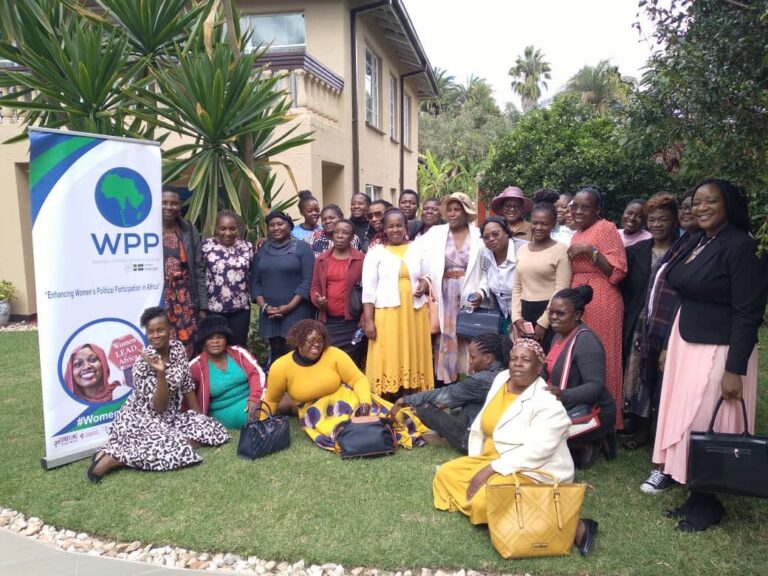
The revelation came out during an engagement meeting held by Women and Law in Southern Africa (WLSA) and Masvingo United Residents and Ratepayers Alliance (MURRA) on April 17 where stakeholders invited women participating in politics from different political parties to discuss their challenges and share ideas on how to overcome them.
Speaking during the meeting Zvarebwanashe Sungano, ward 4 MURRA chairperson cited violence as one of the major challenges that pushes away women from participating in politics, especially those in rural areas because the political environment there is not conducive for women in the space.
“Violence is one major challenge that women in the rural face and pushes them away from participating because the political environment in the rural areas is not conducive for them and they also suffer from domestic violence as their husbands might beat them trying to stop them from being politically active.
“Women are also objectified and seen as sex objects, their contributions are not viewed in any manner other than that they have slept with male leaders to attain certain positions and this has forced many of them to stay away especially those in rural areas because the women who run for public office typically attract inappropriate attention and are seen as being loose and immoral and their private lives are put under the spotlight.
“Female politicians also face gender stigma from male colleagues and are often appointed to marginal positions such as the women’s quarter where they are given seats in the Parliament that do not give them a chance to participate in policy making,” said Sungano.
She also pointed out that Zimbabwe currently has no legal framework for political parties to adhere to gender equality.
“Most women both from urban and rural areas face a lot of gender related challenges because currently Zimbabwe lacks legal provisions constitutionally that enforce gender balance in political participation,” added Sungano.
Community Tolerance Reconciliation and Development (COTRAD) information officer Leah Matavire pointed out that women in rural areas suffer from patriarchal societies more than those in urban areas and this affects their participation in politics.
“The patriarchal culture in Zimbabwe, breeds low self-esteemed women especially within local power structures and it makes it impossible for women to compete for political power and in these societies, people often see women as belonging to the kitchen, rearing children and doing household chores. Women are seen as inferior to men, not as smart or as powerful,” said Matavire.
Women in rural areas lack political education and there is poor dissemination of information, said Joyce Mhungu of Women Coalition of Zimbabwe (WCOZ).
“Women in rural areas are restricted from freedom of association because gatherings are usually prohibited by the traditional leaders and dissemination of information becomes difficult to provide political education to rural woman,” said Mhungu.
Women usually hesitate to take part in politics because of capability gaps between men and women said Tendeuka Matara a member of the Citizen Coalition for Change (CCC).
“Women are less capacitated than men in terms of education, preparation, contacts and resources needed to become effective leaders and unlike male politicians, female politicians face specific barriers that may prevent them from running for a political office, including gender stereotypes and balancing work and family,” said Matara.
Matara also called for women to come together and challenge the system that hinders women to prosper in politics and for women to support one another and those participating in politics.
“As women, we should stand up for ourselves. Let’s come together and claim our rightful positions in government, let’s support each other with all we have and those who are taking part without looking at each other’s political parties but let’s have one goal which is to increase our participation in politics,” added Matara.
Women Affairs District Development Officer (DDO) Fortune Sinamayi said the department of women affairs is there to economically empower women by giving them loans that will help them take part in politics.
“The department of Women Affairs and Social Welfare offers financial support to women by giving them loans so that they can campaign during elections and the loans are given to every woman despite their political affiliation,” said Sinamayi.

Zimbabwean workers no longer enjoy the Unity, Freedom and Work-ZCTU

0

Perpetua Murungweni

Labour movement the Zimbabwe Congress of Trade Union (ZCTU) has expressed concern over the deteriorating working conditions Zimbabwean workers found themselves working under.
In a speech released by ZCTU Secretary General Japhet Moyo to mark the 43rd Independence Anniversary on April 18, the labor board said workers are suffering from a debilitating economic malaise that had pauperised the working class.
“Our 43 year journey has seen us going through good times that we glorify and rough patches of unimaginable proportions. The hopes and aspirations that the country envisioned in 1980 have not been met and particularly for workers, we are no longer enjoying the Unity, Freedom and Work. We mark this day on a sad note as a result of the debilitating economic malaise that has pauperised the working class.
“The status of a worker has diminished in independent Zimbabwe to the extent that the older generation reminisce with nostalgia and fondness ‘the good old working days under colonialism’ when wages had value and they could develop themselves and their families from their earnings unlike today,” said Moyo.
He also indicated that today’s laws no longer protect the rights of ordinary workers.
“Workers are no longer protected by the law as was in the early 1980’s. The laws of the land are not being fully upheld to protect workers and citizens. Our working environment has gradually deteriorated from independence. Workers in the formal and informal sectors are suffering from repressive and capitalistic laws that deter them from fully exercising their rights.
“From colonial slavery, workers are now in the modern day slavery savaged by their own kith and kin that now control the means of production and their foreign investor friends. Today local workers under foreign investors particularly the Chinese are no better than the slaves of the between 1700 and 1850. It has become worrisome that our government is failing to protect its own citizens from exploitation while stifling the democratic space for trade unions and CSO’s,” added Moyo.
The labour body criticized government over failure to ensure security on part of land reform beneficiaries who are with no tittle deeds.
“Over the years, the majority of our citizens remain economically vulnerable. Beneficiaries of the land reform programme do not have title deeds and survive at the mercy of the ruling party which may strip them of the land at any instance. The same applies to rural folks who are currently being displaced from their ancestral lands to pave way for foreign investors.
“Urbanites bear the brunt of broken down infrastructure. Basic services like water, electricity, roads and hospitals are hard to come by and infrastructure is dilapidating at a frightening pace. Most urban suburbs are receiving water for less than three days a week while going for over 18 hours without electricity a day. Our roads are all decorated with pot holes and no longer navigable, hospitals are in a poor state and schools do not have adequate components for learning,” said Moyo.

Do not do CALAs for learners: Ministry

Beverly Bizeki

The Ministry of Primary and Secondary Education (MoPSE) has urged parents to support the ministry’s initiative to bring about a robust system of assessing learner progress in the Competence Based Curriculum through the Continuous Assessment of Learning Activities (CALAs) by not doing some of the work that is assigned to learners or in other cases buying the learners models.
This was revealed during a media engagement workshop for the curriculum review of the 2015-2022 framework held at the Zimbabwe Institute of Public Administration and Management (ZIPAM) recently.
Zimbabwe School Examinations Council Research Manager Francis Chirume said that the doing of CALAs by teachers and parents on behalf of learners is a gross malpractice.
“Parents who buy models for their children are hindering learner activity. CALAs are meant to bring about a generation of knowledge, application of knowledge through problem based activities hence learners must fully participate in this work to ensure originality and creativity is realized in our pupils,” said Chirume.
The ministry introduced the CALAs as part of the Competence Based Curriculum for Primary and Secondary Education in 2015.
“We are no longer teaching for competition but we have since moved to unlocking the learners’ potential through these CALAs which is why we require the full participation of learners when doing their work.
“CALAs measure competences that are knowledge, skills and attitudes acquired during the teaching and learning processes on a continual basis that is in progression,” added Chirume.
MoPSE Permanent Secretary Tumisang Tabela said the assessment framework is meant to assess skills and competences in learners and not in academics only.
“The Ministry has also introduced a new assessment framework which is fit for purpose considering that we could not continue assessing a skills and competence based curriculum using a framework meant for academics only. The new assessment model takes into cognisance pupils’ different abilities and flairs including skills, inherent talents, values and other achievements both in and out of class.
“The CALAs have thus become a key part of how we accredit the overall performance of a learner as a system. As we review the curriculum, all these aspects will also be reviewed to ensure they are in line with the educational aspirations of the country,” said Tabela.
Marks for certification are collected from Grade 6-7 that is grade 6 first term to grade 7 second term, Form 3 first term to Form 4 second term, Form 5 first term to Form 6 second term with learners expected to complete five CALAs at every level.

Ninga Dzenharira rocks Mutare

0

Branton Matondo

Norton-based Mbira ensemble Ninga Dzenharira came to the party this past Monday and Tuesday arousing fans with their innate yet amusing traditional sounds at Club Mandisa.
Ninga Dzenharira shared the stage with Tryson Chimbetu who also had good Sungura outing at the popular imbibing arena.
Ninga Dzenharira band Leader Florence ‘The Lioness Shumbakadzi’ Nyamazana appreciated the response from Mutare.
“The turnout was very good. I am so touched with how Mutare community appreciates and embrace Mbira music. It was not just a show but also a cultural tour,” said Nyamazana.
Nyamazana added that Ninga Dzenharira will be back next month.
“On May 26, we will be here at club Mandisa. The following day which is the 27, we will be at Rozvi Gazebo kwaMatongo in Dangamvura,” she added.
In an interview the band’s bass mbira player Clever Basvi showed amazement on the turn out Mutare at their show.
“Since it was our first time to play in Mutare, the turnout was amazing. For the two days, we played here people really supported the show,” said Basvi.
The band which consists of 12 members, eight males and four female members felt the support from Mutare fans.
The outfit’s backing vocalist and drum player MackAngel Culture Katsiri said he did not expect the numbers at the show also thanking Mutare for the support.
“We did not expect the atmosphere at the show. The sound system was on point and people were happy of our performance,” said Katsiri.
The group has 5 albums and few singles. For this year they have released two singles, Hope dzerombe and a collaboration Mhofu Ndakakumirira.
Mutare has so far been grabbing the attention of mbira lovers.On the 31st of March well traveled ensemble Mookomba and Mutare based outfit Ntswai Ntswai left spectators wanting more at the 300 seater Courtauld Theater.

Modern vegetable market for Chiredzi on cards

Beatific Gumbwanda

CHIREDZI-Renovations on the popular vegetable market ‘Banana Market’ in the light industrial site is nearing completion and is likely to benefit close to 500 vegetable vendors.
The works are being done by Chiredzi Town Council under the Urban Resilience Building Programme, where governments of Japan and Australia and their implementing partners World Food Programme (WFP) and Plan International injected US$ 43 000.
Chiredzi’s vegetable market, which was a ticking health time bomb due to lack of proper toilet system as well as running water has been a beneficiary from the funding set in order to improve food security and sustainable resilience capacities.
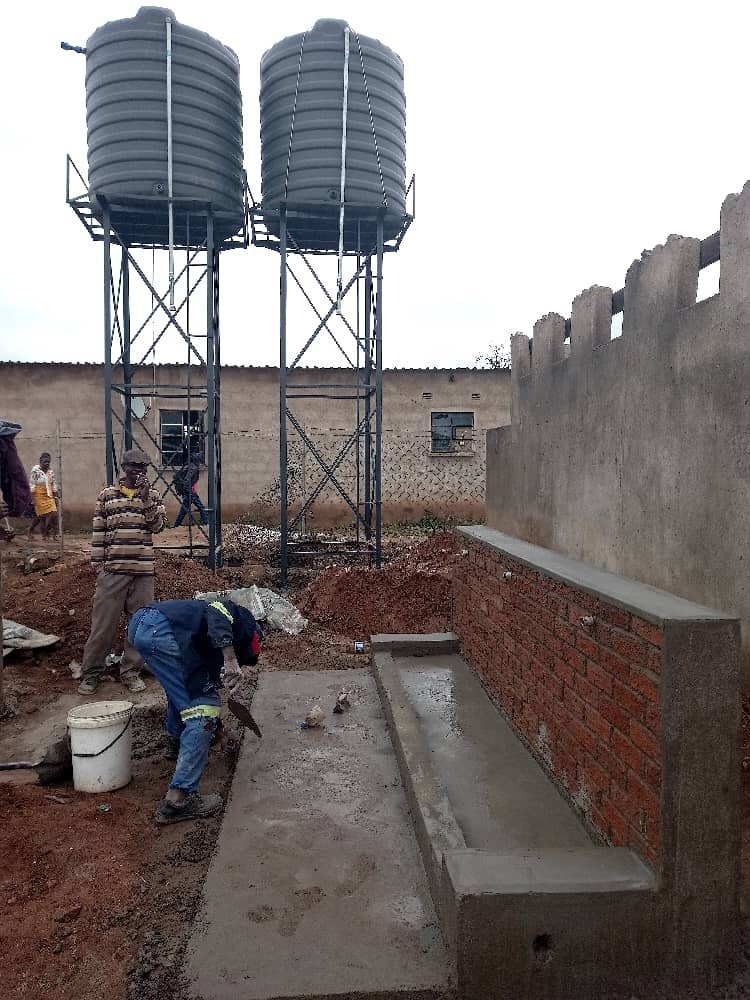
Chiredzi Town Council Acting Town Secretary Engineer Wesley Kauma said the project came at a time when the local authority was in dire need, with the funders installing a solar powered borehole as well as piped water scheme and vegetable shades that will accommodate both bulk vegetable sellers as well as retail vegetable sellers.
“We have a project called Urban Resilience Building Programme where governments of Japan and Australia are funding with the aid of their implementing partners, World Food Programme and Plan International covering eight wards in Chiredzi Town.
“The total funding is US$ 43 000 and main objective is to improve food security and sustainable resilience capacities. Chiredzi often experiences perennial droughts and of late, floods. There is also Cholera threats and Covid-19, so the programme is building resilience amongst the low income earners,” said Kauma.
The project is earmarked towards rehabilitation of the banana market, solar powered borehole and piped water scheme, poultry production, detergent production, hydroponics gardens and mushroom farming.
Engineer Kauma also highlighted that Plan International rehabilitated a market shed for vegetable retailers as well as a shed to accommodate wholesale vegetable vendors and piped water scheme.
“Plan International rehabilitated one market shed with a capacity to accommodate 150 vendors as well as a market shed for bulk vegetable sales that accommodates 50 traders. They also installed a solar powered borehole and constructed a piped water scheme including washing basin for vegetables.


“Chiredzi Town Council then constructed a new market shed and reconstructed the second shed, both with a capacity to accommodate 236 vendors,” said Kauma.
He also indicated that there are plans during the next phase of the programme to construct perimeter walls right round the markets so that trading is controlled and no person will be allowed to sleep inside the market as the premises will be locked after trading hours.
He also indicated that they intend to refurbish the existing structures and turn them into booking houses for long distance traders coming with their wares from different parts of the country.

Power cuts stress Mutare meat marketers

Branton Matondo

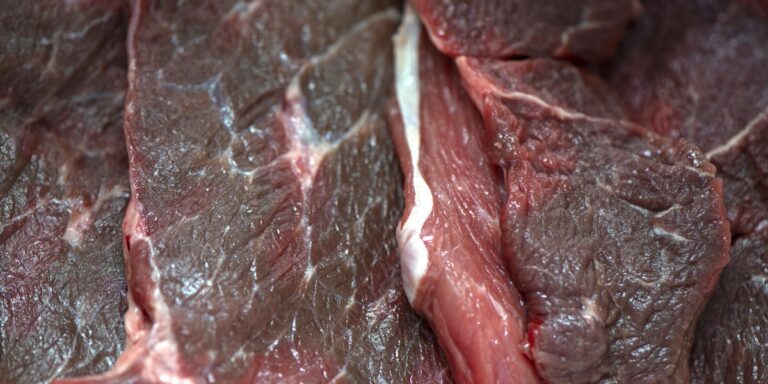
With electricity now a thing of the night and power cuts lasting 18 hours over the duration of five days a week, meat producers and retail operators from Mutare have lamented on the dread brought about by the power crisis.
Power cuts have reached a climax in Mutare since the start of the year.
The rampant power cuts crisis has not spared the meat market sector and an inquiry on the state of meat marketers in Mutare has revealed that many retailers and meat producers are forced to resort to costly measures so as to cope up with the consistent power cuts.
Medium scale fish farming project Spring Glory fish that farms, harvests and sells its Tilapia produce in Mutare Central Business District (CBD) is one of the affected meat producing strongholds in the region.
Spring Glory Fish farm Coordinator Simon John lamented on the financial stress brought about by power cuts.
According to John, who manages the leading fish farming projects in Mutasa South Constituency, farming and preservation of fish has been put at high risk by the incessant power cuts that have ravaged Manicaland and Zimbabwe as whole.
“Load shedding has affected our business especially in terms of harvesting. This has forced us to supply the product at such a low price because fish is highly perishable. There is always no power to run blast/refrigeration machines in order to preserve our fish” said John.
Following the trend of incessant power cuts, TellZim News also got in touch with owners of butchers and meat markets in Sakubva and other parts of Mutare to hear their views on how business has been fairing.
A retail owner from Chikanga identified as Chinyanga said it’s very difficult to operate selling a perishable product in such strenuous conditions.
“The situation is not only hard for us but it’s also hard for both suppliers and the customers. It’s very difficult operating a business that bases on a perishable product like meat because you need electricity 24/7 to maintain that freshness. You find out sometimes that customers no longer want to buy meat from our butchers because they fear that they will buy rotten meat,” said Chinyanga.
Johannes Murombwa said business has gone as of late and it’s difficult to bounce back using generators.
“As for me, l incurred huge losses. It becomes even worse because using generators also requires more money in terms of fuel and maintenance. So in general, we can say the situation is very tough for all those who sell meat. At times the butcher is empty because it’s very difficult to sell meat without electricity around,” said Murombwa.
Zimbabwe estimations indicate that around 1 700 megawatts are needed daily to supply electricity for the citizens but the country has failed to meet a minimum of 1 000 megawatts mainly due to dilapidated power stations like ZPC Munyati and Harare power stations.
During the start of the year, power cuts extended from three to five days a week. The turnout for March and April saw most parts of Mutare power cuts becoming a daily routine with electricity visiting for not more than five hours during midnight and early morning hours.