Home Blog Page 241

Empower women digitally-ZCTU tells govt

Emmanuel Chitsika

The Zimbabwe Congress of Trade Unions (ZCTU) has called upon the government of Zimbabwe to ensure that women are equipped with the necessary digital skills as a majority of them lag behind especially in marginalized communities.
Speaking prior to the belated commemoration of International Women’s Day set for March 11 (country wide for ZCTU), ZCTU president Florence Taruvinga said it is the duty of government to empower its citizenry especially women.
“This year’s theme (DigitALL- innovation and technology for gender equality) is relevant to Zimbabwean situation as we have more women in informal, rural communities, domestic, agriculture and or even mothers at home who are involved in care work but with no access to Information and Communication Technology (ICT) and are thus lagging behind.
“The world has gone digital and it is critical for Zimbabwe to empower its citizens,” said Taruvinga.
She went on to say government should join the band wagon to ensure equal access to ICT for both men and women and thus protecting the rights of the latter in working spaces.
“The global theme for 2023 seeks to remind governments, organizations and the global society at large to ensure equal access to ICT skills for women and men as well as protecting and enforcing the rights of working women in digital spaces.
“Zimbabwe has a law that speaks to Cyber and Data Protection Act and this is good but needs enforcement while at the same time the Act should ensure protection of rights of workers in digital spaces especially the marginalized women,” added Taruvinga.
She however took a swipe at government of Zimbabwe for failing to effectively implement laws that safeguard the rights of women.
“Zimbabwe has women’s rights in the constitution, has a Ministry of Women Affairs and Gender Commission to deal with ensuring gender equality and women empowerment. While there have been attempts to accommodate the 60 seats for women in Parliament and good laws that protect women, Zimbabwe is still lacking in enforcement of those rights.
“Women face discrimination, resistance in occupying positions of authority and Gender Based Violence,” she added.
ZCTU this year came up with own theme- ‘A year of Action: building a more equal and inclusive digital society’.
International Women’s Day is an annual commemoration slated for March 8 while the whole of March has been declared women’s month.

Vet officer tackles January disease through music

TellZim reporter

A veterinary services department officer with the government of Zimbabwe has tackled the marauding cattle disease Therioliosis or January Disease through music as way of helping conscentise farmers on the killer disease.
Masvingo South District Veterinary Extension department District Head Everet Haskes said he decided to compose the song after realizing the damage January Disease had on the national herd.
The song titled ‘Hondo neJanuary Disease’ was recorded on February 13, 2023.
“As a dedicated vet officer in Zimbabwe with farmers at heart, patriotic to his country, I was moved by the high mortality in cattle as a result of tick-borne January Disease which killed hundreds if not thousands of cattle of the national livestock.
“Having realized the menace brought about by the disease, I thought of helping farmers and my country at large by singing the song ‘January Disease’ as a measure to raise awareness to reduce the tick-borne endemic,” said Haskes.
He also said that the song saves the purpose of edutainment to the farmers as they employ ways to protect the national herd.
“The song brings about edutainment as farmers can play it hearing the name of the disease, its signs, and prevention measures as well as treatment wherever they are. As this song resonates with my field of specialty, I felt that all farmers will be eager to listen to it and get genuine help from someone like myself.
“The disease is all over the country and every farmer will draw some kind of help from ‘the master piece from the specialist’,” he added.
Haskes however said he intends to record a video for the song should resources permit while at the same time he said he drew motivation from Provincial Veterinary Director Dr Jairus Machakwa.
He also had a live performance on March 4 at Musingarabwi homestead in Chivi North during the provincial launch on war against January Disease graced by Minister of State for Provincial Affairs and Devolution Ezra Chadzamira, Chief Director in Vet department Dr Josphate Nyika and Chivi North legislator Mathias Tongofa.
The song talks of the disease’s signs, ways to prevent in dipping cattle, names of drugs to treat the disease and use of tick grease.

Residents plead for street lights

0

Perpetua Murungweni

Masvingo-Following reports of a rise in theft cases in vicinity, residents from the splashy suburb of Rhodene have expressed concerns, pleading with Masvingo City Council to install street lights to fend off criminals.
Residents said the absence of street lights has led to thieves taking advantage of the darkness to rob residents while cases of break-in at some properties have also been reported.
“We have been paying the street lighting levy for the past 12 months but there are no streets lights yet. Residents are robbed and lose their valuables to thieves who thrive in the darkness. Council should just urgently come to the rescue of residents who are now living in fear during the evening,” said one resident Aaron Ndonde.
Another resident Acqueline Kahari also expressed fear as a result of the rise in cases of theft as a result of darkness.
“We are now living in of fear of thieves and robbers as they are taking advantage of the dark streets and some are using the dark streets as hide outs to rob pedestrians,” said Kahari.
Masvingo Town Clerk Engineer Edward Mukaratirwa said plans are already underway towards implementation of street lighting projects.
He added that council has begun working on the project and they are waiting for Zimbabwe Electricity Supply Authority (ZESA)’s response since the two are supposed to work in partnership.
“As council we are working towards the project and we have made resolutions to partner with ZESA. We have signed the Memorandum of Understanding and we are now waiting for ZESA’s response,” said Eng Mukaratirwa.
Masvingo city council has proposed to introduce public lighting fee in its proposed 2021 budget, a fund which they say was to be used to repair and refurbish the public lighting infrastructure in the city.
In February 2021, Masvingo City Council confirmed that residents had already started paying the street lighting levy.
Eng. Mukaratirwa also said the project is going to be powered by both solar and electricity so that both parties (council and ZESA) will participate in the project.
“The project is going to partly solar system and partly electrical system so as to ensure that both parties will participate on the project,” said Mukaratirwa.

ZEC Masvingo ready for final voter registration blitz

Beverly Bizeki

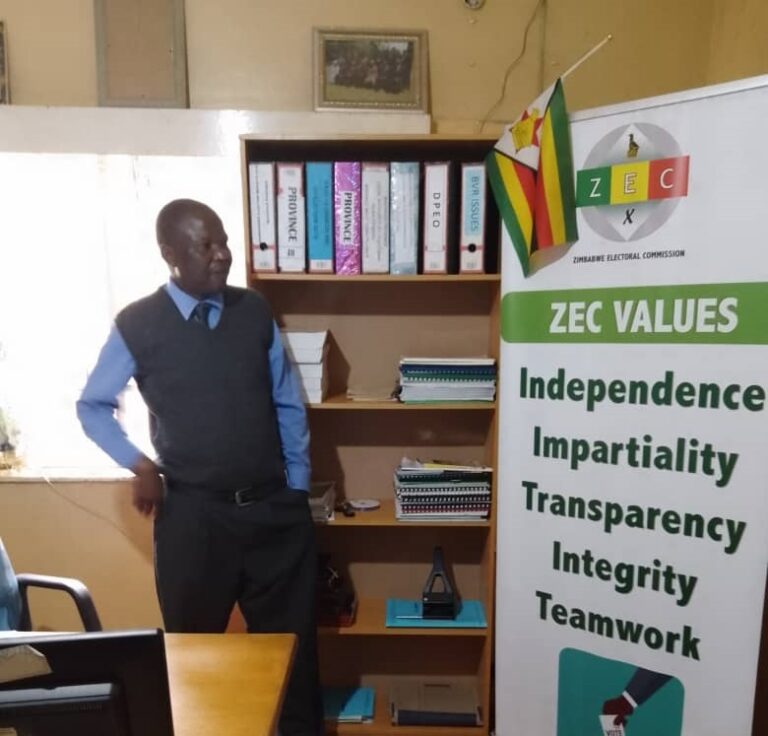
Zimbabwe Electoral Commission (ZEC) Masvingo province office said it is ready to roll out the final biometric mobile voter registration blitz slated for March 12 to 21, 2023 this year.
ZEC Masvingo Deputy Elections Officer Maxwell Ncube confirmed the development.
“We started training biometric registration officers as from March 7- 10 and they will be deployed to different stations on March 11 for the exercise to begin on March 12.
“The exercise is a more of a mop up as we have once done this kind of registration but we understand that there are some who have turned 18 after the first exercise so we are going mobile to register those who became eligible after that exercise,” said Ncube.
The commission is however yet to gazette programme itinerary as not every area is going to be a registration centre.
“We are going to have one team doing mobile voter registration in the urban area because the setup is compact. However, in rural areas because of the vastness of the wards, one team will be covering four wards so as to try and capture everyone,” added Ncube.
There is also going to be a deployment of a voter education team by the electoral management body.
“We are going to deploy a voter education team today (March 9, 2023), an advance team set to inform prospective voters about the exercise as well as requirements so as to avoid turning away people who want to register at the centers,” said Ncube.

Crisis: Masvingo runs out of condoms ?

…Risk of STIs as tertiary students return

TellZim Reporter

Shops and bars in and around Masvingo have gone for some time without Protector Plus condoms, with shop owners raising alarm over the shortage which may develop into a catastrophe as the product is the most preferred over alternatives.
Some bar owners who buy the condoms brand for resale from wholesale shops have said they have gone for nearly two months without accessing the product from wholesalers.
A bar owner who declined to be named said many of his customers shun other condom brands preferring Protector Plus, which is mainly an attitude problem leading to low uptake of condoms, therefore risking sexually transmitted diseases.
“This is really concerning. We have gone for nearly two months without accessing Protector Plus condoms from wholesalers. Mind you this is the brand of condoms most of our patrons prefer and this may cause low uptake of condoms resulting in STDs and other consequences of unsafe sex.
“Even if you go into the big supermarkets you will not get them because they are just not being distributed as effectively as before. We really hope this is temporary because it will be a catastrophe,” the bar owner said.
A snap survey in local supermarkets in Masvingo CBD indicated that the product was not on the shelves, with only one of the big local supermarkets having a few packets in stock.
A source in sexual and reproductive health circles however said that there seemed to be a defunding agenda on Protector Plus condoms, which could be influenced by either the fact that Zimbabwe is no longer a high risk country in HIV/Aids or the currently topical Private Voluntary Organisations (PVO) bill.
“Protector Plus condoms may be facing defunding and it is a nationwide problem, which can be evidenced by their shortages in shops, with a number of factors at play,” the source said.
Zimbabwe National Family Planning Council Masvingo Provincial Communications Officer Hebert Chikosi said the province had enough condoms in all their brands, attributing the shortages to distribution glitches from private players.
“I want to assure people that we have enough condoms for the province and all the brands. The shortage could be as a result of distribution glitches from our private players,” Chikosi said.
He added that they were going to have a technical working group meeting on condoms Tuesday (March 14) to address stakeholders’ issues.
“We are putting our ducks in a row to ensure that such gaps are closed. Our aim is to make our province reach a percapita condom of 12. We continue to encourage our users to correctly and consistently use condoms as they help in preventing unwanted pregnancies as well as sexually transmitted infections,” Chikosi said.
Efforts to get a comment from News Start Centre were fruitless as the phone went unanswered until the time of writing.

Mahwende promises to take Masvingo Urban seat back to Zanu PF

…as top lawyers clash on CCC ticket

Brighton Chiseva

Masvingo City Council Deputy Mayor and ward six councilor Wellington Mahwende has promised to take Masvingo Urban Seat back to Zanu PF.
The seat is currently held by Citizens Coalition for Change (CCC)’s Jacob Nyokanhete who took it on the MDC-Alliance ticket in 2018.
The seat has been changing hands over time between Zanu PF and then main opposition party MDC-T since its creation in the 2007 delimitation exercise.
In 2008 the seat went to MDC’S Tongai Matutu, in 2013 it went to Zanu PF with Daniel Shumba and it went back to opposition in 2018.
People are yet to see if the new outfit and main opposition party CCC will defend their hold on the seat or it will again go back to Zanu PF as per tradition since its creation.
With Zanu PF going on an early primary poll slated for Saturday March 18, Mahwende is likely to battle it out with Harare based businessman James Pande who has been showing interests for some time.
Mahwende, (who is nicknamed Putin) for his aggression in Zanu PF circles, major advantage over Pande is that he is a seasoned and tactful politician who managed to snatch the deputy mayor position from then MDC-Alliance’s seven councilors with only three councilors from Zanu PF.
Mahwende is youthful, has resources for campaigns, knows the terrain well and stands a better chance than his rival. Also being a resident of Masvingo urban and being the deputy Mayor, he understands the needs of Masvingo better than Pande.
In his speech at the official opening of North West Clinic in ward 3 recently Mahwende told Zanu PF Second Secretary Kembo Mohadi that the ruling party was doing tangible projects in the constituency mainly through government’s disbursement of devolution funds which have been used by council on a number of projects.
“We want you to thank the President on our behalf that in Masvingo people are seeing development. We are confident that this year, especially in Masvingo urban, people have seen development being done by Zanu PF, so we promise to fight for this seat (Masvingo Urban) to return to Zanu PF,” Mahwende said.
On the other hand, Pande is both youthful and well-resourced that he can challenge Mahwende. Pande has been doing some charity work and sponsoring sporting events just like Mahwende in Masvingo Urban.
The winner between Mahwende and Pande will have to battle it out with a CCC candidate who would have passed the selection criteria since eight names have reportedly been thrown into the ring.
Eight contenders are said to have shown interest in the seat on CCC ticket, with those including two top lawyers Martin Mureri and Masvingo City Mayor Collen Maboke.
The two are both prominent lawyers with Mureri having stood in ward 8 for the 2018 election and lost to Zanu PF’s Chiteme.
Mureri’s major advantage is that he seems to be party president Nelson Chamisa’s favorite between the two. He recently hosted a press briefing by the party’s national youth boss Takudzwa Ngadziore recently.
Another advantage is that he is a human rights lawyer who has been representing a number of opposition political victims whenever they are arrested.
However, Mureri is said to be too reserved for politics and is also entangled in CCC factional fights, a development which can affect him as it did on former Masvingo Mayor Hubert Fidze.
Maboke on the other hand has what it takes in terms of charisma, and having been a mayor, he is also a better candidate. Having been born and bred in Mucheke, he resonates well with the ‘ghetto’ where most of his votes come from.
He is known to be an avid soccer fanatic and is always mingling with people, attending every other gathering like funerals especially in Mucheke.
Maboke is also said to be a favorite for people from across the political divide, one of the reasons he won ward 2 having been voted by both Zanu PF and then MDC-Alliance supporters in 2018 on the basis of his background.
Maboke however previously clashed with Nelson Chamisa when he defied him and went on to contest for the mayoral position against Chamisa’s favorite Godfrey Kurauone.
Maboke is alleged to have liaised with Zanu PF councilors who voted for him in exchange for the deputy mayor position which was then given to Mahwende.
He was also alleged to belong to MDC-Alliance led by Douglas Mwonzora, after several attempts by Chamisa to order him to step down as mayor foiled
Other sources however said Maboke and Chamisa smoked a peace pipe some time ago and he could stand for Masvingo Urban with Chamisa’ blessing.
Maboke is also said to have the backup of ward 4 councilor Aleck Tabe who is reportedly pushing him out of council so that he could become Mayor.
Tabe is reported to be very aggressive, with others within the party saying he is power hungry that he can do whatever it takes for him to get what he wants.
Other names linked to the Masvingo Urban seat in CCC are that of ward 7 councilor Richard Musekiwa who is said to be supporting Maboke but on the other hand he still wants the seat and may contest since he is alleged to be losing support in the ward.
Ward 5 councilor Daniel Mberikunashe is also said to be contemplating throwing his hat in the ring. Mberikunashe is a close relative of Chamisa and that could work to his favor.
He however is said to have second thoughts of retaining ward 5 and become the mayor or contest in Gutu. A mature and seasoned politician having served in council for quite some time, Mberikunashe also stands a better chance.
Sam Chapfudza is also eyeing a second come back after having lost as an independent candidate in 2018.
Chapfudza commands a number of supporters especially from vendors having been a vendor himself. He is also said to be a hard worker who at some point pledged his lorry for CCC campaigns especially in Masvingo North.
Two female candidates have also named to having ambitions, namely Shirley Makausi and Margaret Chakabuda, who are said to be eyeing the same seat.
Some local CCC members are alleged to have approached Makausi to stand and it’s not clear if she has interests. Makausi is an administrator par excellence having led Ndarama High School to be the best day school in Masvingo and is also leading one of the best private schools locally. She is also neutral in provincial factional fights and could stand a better chance.
Chakabuda on the other hand is riding on her late husband and former Masvingo Mayor Femius Chakabuda’s popularity. She contested a local authority seat ward 10 in 2018 and lost to Zanu PF’s Sengerai Manyanga.
Another candidate is Michael Taderera who contested in 2018 on National Patriotic Front (NPF) and lost.
Sources within CCC also said some members approached prominent and youthful Medical Doctor Calvin Maimba to stand again and it’s still not clear if he is interested.

Of the Mugabe family misfortunes

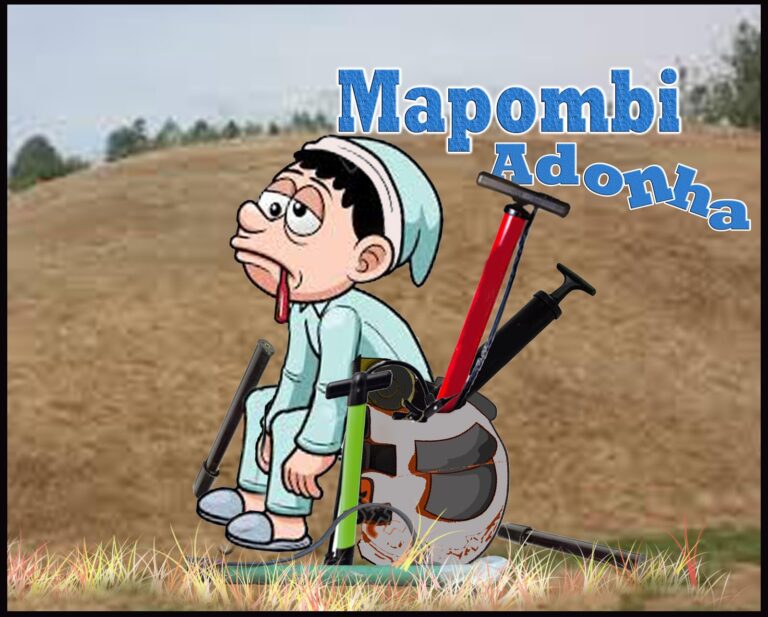
Happy women’s month to all women in Masvingo, kutanga pedu paChitima apa, the entire province, the nation, region, and the whole world. I hear Zim men are complaining kuti women have their day in their month. Women’s day mumwedzi waKurume iye Kukadzi akapfuura kkkk. That’s how important women are. We should emulate zvivindi zvakadai paelection apa. Yes pamberi nevakadzi. I mean real women kwete vese vese. Kana taakutaura zvevakadzi chaivo we mean the likes of me nana Gogo Mahofa and a few others who can stand against men. Elections are coming in August. I know most of you think kuti ariko munaJune or July kkk and you are busy asking yourselves kuti Mapombi azviwanepi. I know ladies and gentlemen, yes constitutionally they should be held between 20 and 25 August, mark my words. Musazoti Mapombi haatiudzi. Last week I told you kuti Zanu PF is going for an early primary poll vamwe vakati watanga, I am sure makazvinzwira.
It’s already dog eat dog situation in Zanu PF as they ready themselves for the early primary poll kkk. Speaking of primary elections, can I tell our good fellows from the opposition that at times it’s good to copy from your enemy, after all, even the devil himself has his strengths, why not emulating them for your own benefit? I heard the Chamisa Chete Chete (CCC) party is not going to hold primaries again this time around but will do what it termed citizen consensus kkkk. Musavharwa imi nekachirungu ako there is nothing called consensus among a constituency or ward nhema. Consensus should be among aspiring people then others agree to step down. How can you get consensus paMasvingo urban yese, imika, itai muchinyara vanhu imi. There will be imposition of candidates as usual and we are going to see double candidates and unending squabbles okusvika paelection. I see vamwe vachienda kwaTogarasei kkk vanyudzwa ipapa I tell you. Let me tell you, the issue of structures has a bearing on CCC guys, the reason there won’t be primaries is simple, without grassroot structures who will determine those who will vote at primaries? Ndopavanotyaka infiltration coz Zanu will send people to vote for weaker candidates vasinganetsi kurova pafinal kkkk. I am sure maibata kkk. Inhamo hayo asi ndoonera.
It’s a dog eat dog situation in the revolutionary party, I think they want to get time for reconciliation before elections. Vamwe copy this dhoiri, idhoiri rakanaka iri, the late legend Tuku sang this. And if CCC doesn’t copy mirai muone.
To Togarasei Mwonzora, mafaro mwena , unoguma use your last days wisely because waterloo is nearer. He is using his powers for the last time; last kicks of a dying horse are strong beware. Soo zvinenge zvapera zvemarecalls izvi vanyatsorohwa paelection. Even if he recalls all the people now there will be no by election until after the general elections kkkk.
Ladies and gentlemen with all due respect that I have for the departed ones from this ‘Mother Earth’, something has and is bothering my mind and that is how the family of the late founding president of Zimbabwe Uncle Bob and Dr Stop It is hogging the limelight all for the wrong reasons. I think someone is playing with the dead man’s spirit. He is ruling from the grave like what Dr Stop It once said. The difference is just that she said he will rule from Heroes Acre where he failed to get. I think vaya vaida kumuvhukunyura kuenda naye kuHeroes Acre vakatiparira, let that old man rest, keep his spirit down. Can’t you see we are going for elections and his spirit may cause what happened in 2002 and 2008? Why is his name always coming up imi ah.
Early warning signs are there for everyone to see; Bona is now divorcing her husband of the arranged marriage. Dai makangosiya Sam Mtukudzi izvezvi we wouldn’t be talking about this. What is in this Mugabe name asi? What’s in a name? That which we call a rose kkkk. I still remember Romeo and Juliet kkkk. The name Mugabe is everywhere, this young Bob is always in the limelight for all wrong reasons, drugs, Mjolo, MDP you name it. Ukuwo the Tinashe guy is busy mending and destroying maMarriages nema99.9 percent ake kkk. Hameno haasi kuona here basa rimwe rakamuka, he should go and test that guy who is claiming to be the old man’s son. All of a sudden kuzongobudikira where was he all along? I am sure Tinashe can ask that one. But he should not test him against Chatunga, Bob Junior kana Bona, we are not sure if those rascals are also Bob’s kids kkkk. Kana Tinashe aitadza ngaauye kuno, by just looking at him I can tell ini kkkk. But mungavenga zvenyu Garwe but nyika yambova nani. I can now say what I want. If Bob was still here I would have been ready to drink raw sewer from Mucheke River at the instruction of those guys in dark specs and cheap nylon suits. But vaigondidiikowo even now even if they want they can come ndiriko kuno kuChitima ini ndinotaura zvandoda, ndinofira kureva.
Before I go hangu kunokanga amaputi angu for lunch let me warn the opposition parties in Zim, especially CCC, the focus should be on winning the general elections not seeing the end of MDC and Mwonzora. Every vote counts, zvenyu zvekuti hee Mwonzora haana vanhu, hee Linda Masarira what what should be put to an end, unite people not further dividing them. Ndatopedza nemi so.
Ko nhaimi what happened to the Aljazira documentary rakadzikisa zvimwe zvikara kuterrace? Asi hwakangova utsi pasina moto? Chete unearthing corruption is not child’s play, unofa wakatemba apa mutemo wedu wemuno doesn’t protect whistleblowers. But then again we thought AJ was bigger than that, tozivei hedu. Asi pakambonzwikwa mudumbu vakomana. Maprofiti akatadza kuona undercover investigation ndofunga vakahwa nemidumbu kkkkk. Pakuzongoti dunderhead kureva Genarari Kedha ndopamanga moda kufarisa. Truly Bob is rolling in his grave. How can the current administration be dining and wining with white looters who even have the audacity to call our dear Genarari names? Munofarisa.
Has anyone heard from Mphoko, Welsh, Matebeleland muri kutiregerera imi. Ko Madam Khupe, where is she, this is women’s month, I think she should just come out from wherever she is hiding vomboridza mapoto zvavakamboita gwendo guya kkkkk, especially on the upcoming elections zvaimbomutsa vamwe vavete nezamu mumukanwa. Women, lets vote for fellow women wherever possible. It’s possible to vote for Linda than these other guys kkk. We have a lot of useless guys; imagine Soda Zhemu with all these black outs nxaa, baba ndevemahara vaya, kutidzosera kuStone Age apa no load shedding schedule no nothing. Haa nxaa. Mboko Imboko!!!

ZMC launches Election Reporting Manual

…as Zimbabwe girds for 2023 harmonised elections

By Noah Marima/Claudette Sunduza

The Zimbabwe Media Commission (ZMC) has launched an Elections Reporting and Peace Journalism manual (EPJM), to promote objective reporting as the country heads towards general elections this year.
The report, first of its kind in Zimbabwe and produced in collaboration with UNESCO is expected to improve the quality of election reportage in Zimbabwe and promote peace.
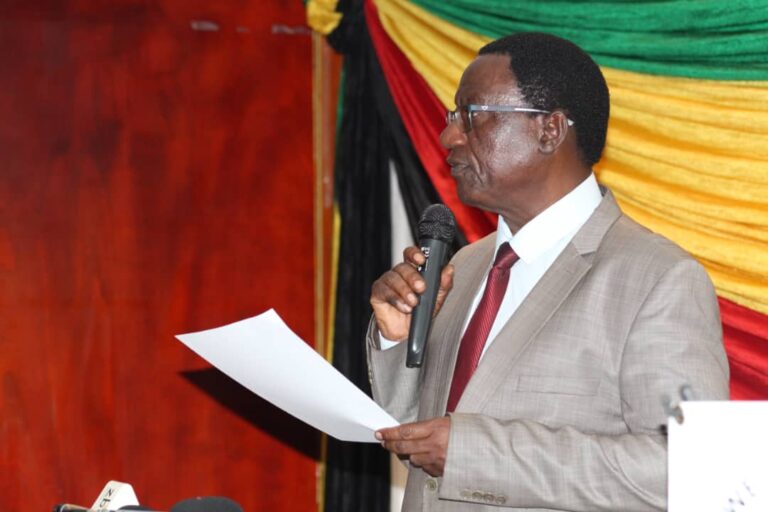
In a speech read on her behalf by the Deputy Minister Kindness Paradza at the launch, Information Minister Monica Mutsvangwa said the manual will help the media promote peace and report responsibly during this year’s general election.
The Minister said the media should “provide scrutiny on political parties and their policies, while creating a forum for debate,” said Mutsvangwa.
Minister Mutsvangwa added that the manual will also help media promote democracy, knowledge of rights and civic responsibilities.
The launch comes behind the backdrop of media being accused of fanning violence, promoting hate speech and being a political player in the past elections.
ZMC chairperson, Professor Ruby Magosvongwe, said the manual is a critical intervention aimed at equipping journalists with how-to-skills in election reporting.
“The main objective of coming up with the manual is to equip media practitioners and media houses with the necessary knowledge and skills on how to report elections to assist in the creation of a conducive environment for the holding of free and credible elections,” she said.
Speaking at the same event, UNESCO Regional Director for Southern Africa Professor Lidia Arthur Britto said the manual comes as a mitigatory measure for past mistakes.
“As a way of mitigating previous mistakes we have decided to work together with the Zimbabwe Media Commission (ZMC) to change the old reporting system and equip journalists with professional journalism skills,” Prof Britto said.
Academic and media lecturer Dr. Alexander Rusero, who was part of the team that produced the manual said elections mean a lot to a number of people.
“In Zimbabwe, elections are not only just a contest for power. They are also a sight of struggle. So, each time we venture into elections, Zimbabwe is reduced into a war zone. We are already in the war mode,” Rusero said
Dr Rusero also said the atmosphere required journalists to be sensitive and conscious that there is life after elections as much as there is life before elections.
“In the past, efforts to promote responsible behaviour during election centred only on journalists. All actors must be targeted. There is a need to capacitate firstly the politicians because journalist are just conveyers of information.
“The politician must watch his or her mouth and avoid statements that are inflammatory and or induce excitable tendencies that can promote violence, “Dr Rusero said.
Findings by media watchdog, Media Monitors, in its 2018 report titled: “Reporting on Zimbabwe’s 2018 elections”, showed that the media was partisan in covering the general election.
During the period, government-controlled media outlets carried more reports on the election promises and the election environment by the ruling Zanu Pf officials, while watering down those of the opposition.
Even though 53 political parties out of the contesting 55 were covered in the media, two parties, ZANU PF and MDC-Alliance as well as independent candidates received significantly more coverage than the other parties most of which received marginal coverage.
These three entities accounted for 79percent of the time and space dedicated to political actors.
Zanu PF commanded the lion’s share with 52% of the coverage ahead of MDC Alliance which had 20percent while independent candidates comprised 7percent.
The remaining, 51 parties shared the remaining 21percent. While many of these were clearly “briefcase” outfits that sprung up ahead of the election, there were others that represented significant minorities.
“Such coverage disregards the spirit of the Electoral Act’s stipulation of the equitable allocation of time and space to all political contestants,” the report reads.

Zim debt clearance a matter of economic importance-ZIMCODD

TellZim Reporter

A debt analyst with the Zimbabwe Coalition on Debt and Development (ZIMCODD) has commended the move by the government of Zimbabwe to continue pushing for the arrears clearance and data processing initiatives which he believes are vital for economic development.
John Maketo said the different initiatives underway where government has went on an ambitious drive to re-engage its creditors as a way of coming up with a solution to the challenge is vital to turning around the country’s economic fortunes.
“The agenda is quite clear and is to set off the current debt clearance. Since 2000, Zimbabwe has defaulted in its debt repayment and over the years, the country has accumulated arrears and penalties to the tune of US$ 6 billion.
“The more we prolong settling the debt, the more penalties we accumulate. The debt needs to be settled once and for all so that Zimbabwe is able to access new lines of credit. It may be possible to ignore these arrears like Zimbabwe did in the past but the painful thing is that we don’t have access to concessionary or cheaper loans. Of course we can borrow from somewhere but those lenders do not offer us concessionary loans as they give us loans with high interest rates coupled with stiffer terms of repayments. So this debt clearance is a matter of economic importance,” said Maketo.
He also praised government for its commitment to settling the outstanding debts for the first time since independence.
“For the first time since independence, Zimbabwe has never given subject of public debt such high prominence. Over the years, public debt has been treated as a minor issue but it’s glad that government and other stakeholders have come to the realization that public debt can be an elephant in the room with regards to economic development.
“This debt clearance is a very significant process which helps the country to reconnect with its creditors to establish a good gesture towards debt clearance which will help open up new lines of credit. If you do not clear debts, you remain ‘a debt risk’,” he added.
Maketo also said the composition of the dialogue delegation including former Mozambican President Joaquim Chissano and Africa Development Bank president Dr Akinwumi Adesina shows seriousness on part of Zimbabwe government towards the dialogue whose first chapter began in December 2022.
“The appointment of Chissano is critical in that we are not only talking of a former president of a neighboring country with liberation connections to Zimbabwe, but also an elderly statesman who has a reputable political profile. He can be of significance for Zimbabwe reaching out to its debtors and also a good political gesture that the country is ready to engage in political issues.
“The debt issue is more than an economic technicality as politics is involved in this debt question because it goes beyond repayment as it looks at land compensation to white farmers and governance issues.
“Appointment of AFDB president is also important in that Zimbabwe owes the AFDB, so seeing one of the debtors owed championing the repayment process is a good gesture for the country. More importantly, he is not only an economist or African who understands contexts or dynamics but is also a reformer with intense influence in the world of creditors. He is strategically positioned to champion the debt resolution,” he added.
He also said though the initiative to resettle debt is noble, the Second Republic should have done it earlier with sincerity and transparency in as far as debt sustainability is concerned.

Re-dollarization: Is this the right path forward for Zimbabwe?

By Zvikomborero Sibanda

Zimbabwe officially ditched its local currency in 2009 and adopted a multicurrency regime dominated by the United States dollar (US$) -dollarization reform. Dollarization is a generic term used by economists when a country substitutes its currency with foreign currency as a legal tender. In 2019, authorities reintroduced the Zimbabwe dollar (ZWL) as legal tender. However, by end of 2022, the economy had largely re-dollarized (entrenched US$ use) despite government de-dollarization efforts. This piece, the first of a series to come, seek to highlight the causes, the good and the bad of dollarization for Zimbabwe.

Status Quo

The official statistics show that the economy has largely re-dollarized. RBZ revealed that of the total banking sector deposits, 64.2% are foreign currency accounts (FCA) deposits. Also, Zimbabwe National Statistics Agency’s (ZimStat) estimates at the Classification of Individual Consumption by Purpose (COICOP) division show that in 2022 , about 76.56% of transactions were done in US$ with a balance of 23.44% done in ZWL.
The surveys by CZI, a manufacturing industry body, also established that on average domestic foreign currency sales contributed about 66% of private sector businesses’ forex earnings. By taking into account the unbanked informal sector transacting largely in cash, it is clear that Zimbabwe is now back in a multicurrency regime with the US$ at the epicenter.

Drivers of dollarization

Dollarization can be by a de facto market process or through an official government decree. Historically, nations have dollarized as part of economic reforms to infuse macroeconomic stability -the case for Zimbabwe.
During the height of 2008 hyperinflation, it became so difficult to gauge market prices to an extent that the government stopped publishing official inflation statistics with independent estimates showing monthly inflation hovering above a billion percent. Again, re-dollarization being experienced in the market now is a response to ZWL fragility and skyrocketing inflation.
When there is economic instability and high inflation, economic agents (agents hereafter) are forced to diversify and protect their assets from domestic currency devaluation risks. There are two (2) main reasons behind agents’ demand for foreign currency assets: currency substitution and asset substitution.
Currency substitution means that foreign money is essentially used as both a medium of exchange and a unit of account. Since high inflation or hyperinflation increases the cost of using the domestic currency for transacting purposes, agents will be prompted to be on the lookout for cheap alternatives.
Asset substitution entails agents’ risk and return considerations between domestic and foreign currency-denominated assets. Generally, forex-denominated assets provide insurance against macroeconomic risks.

Benefits of dollarization

Zimbabwe is experiencing debt distress. Debt distress is when a country faces challenges in paying its creditors and a debt restructuring is required. With over 80% of public debt in foreign currency, the fragility of ZWL increases debt servicing costs and propensity to default.
Economic literature posits that the immediate benefit from the elimination of devaluation risk by dollarization is the reduction in the country’s risk premium on foreign borrowing. In other words, with dollarization, interest premiums owing to currency devaluation risk will likely disappear. The elimination of the currency risks, however, does not guarantee a substantial reduction in the default risk premium on foreign currency-denominated debt.
Apart from raising borrowing costs, a currency crisis can also wreak havoc on the domestic economy. In theory, the exchange rate affects inflation, that is, a massive ZWL depreciation is likely to cause inflation to increase. Hard data shows that when the ZWL plunged by 12% on average per month in both the official and parallel markets between February 2019 and December 2022, annual headline and monthly inflation averaged 306% and 12% respectively.
While it is conceivable that dollarization won’t eliminate risks of external crises, it indeed holds the promise of steadier market sentiment. This is because the elimination of currency risk tends to limit the incidence and size of contagion episodes. Durable price stability offered by dollarization also helps clamp deepening poverty and widening income inequalities. According to the latest World Bank estimates, the unaffordable prices of basic goods in 2022 plunged about 40% of the population into abject poverty.
More so, although dollarization may make it difficult to insulate the domestic financial sector, it helps establish a sound financial sector while making economic integration of the domestic economy into the global economy much easier. The use of a common currency propels market integration as it lowers transaction costs and trade restrictions -the use of widely accepted currency reduces volatilities.
All else constant, dollarization encourages foreign companies to invest for the long-term taking advantage of stable currency which gives them a stable income stream that is not subject to frequent exchange rate fluctuations.

Risks of Dollarization

The biggest risk posed by dollarization is the loss of autonomy as the country’s monetary policy will now be dictated by a foreign country. A monetary policy is key as it helps the government manage inflation, currency exchange rates, and financial market stability. As such, losing this policy arm will constrain the government in delivering a goldilocks economy which is key in the improvement of living standards.
The relegation of monetary policy also means loss of seigniorage revenues. This is a profit a government can earn by issuing currency, especially the difference between the face value of notes and coins and their production costs. Seigniorage revenue can also relate to the interest rate central bank charges from lending commercial banks money.
Furthermore, although dollarization can eliminate the banking sector’s vulnerability to devaluation risk, it cannot avoid all sources of the banking crisis. In case of such crises, dollarization largely impairs the government’s lender-of-last-resort function thus inhibiting RBZ to respond to financial emergencies.
Typically, a central bank is the ultimate guarantor of the stability of payments and financial systems in case of a systemic bank run. While RBZ may be able to provide short-term liquidity to individual banks in distress, dollarization can make it lose the ability to deal with a sudden run-on deposit throughout the banking system.
A central bank can only undoubtfully guarantee all claims under any circumstance when it can print currency as needed. So, once this ability ceases to hold, the lender of last resort function becomes too limited.
Moreover, dollarization hurts small open developing economies like Zimbabwe by rendering their domestic companies uncompetitive. The use of a strong currency like the US$ increases the domestic cost of production since factors of production are priced in the foreign currency against regional counterparts pricing in their relatively weak currency.
The huge exchange rate differentials also make locally manufactured goods expensive in the eyes of foreigners while making foreign-produced goods cheap in the eyes of locals. This may lead to the importation of non-essential imports leading to unsustainable trade deficits.
For instance, ZimStat shows that between 2009-2018, Zimbabwe experienced a huge deficit averaging US$2.5 billion per year. In addition, dollarization in a developing country set up promotes the dumping of cheap foreign goods and the externalization of forex. Over time, this leads to acute forex shortages in the official channels and loss of employment.

Way Forward

The balance of benefits and costs of dollarization is usually two-handed. However, by reflecting on the status quo and distinguishing between short-run and long-run periods, one may establish that both dollarization and a mono-currency regime (de-dollarization) may be part of the policy package that is needed by Zimbabwe to attain durable stability. Which proposal then best suits the short-run? Which best suits the long run? This becomes the gist of next week’s column.

Zvikomborero Sibanda is an economic analyst and an astute researcher. He writes in his personal capacity. He can be contacted via email:

bravosibanda@gmail.com
Twitter: @bravon96