Home Blog Page 249

July Moyo protecting Zanu PF rot?

…As AG orders release of Chiredzi’s graft Investigation report after 7 years

Beatific Gumbwanda

CHIREDZI- Minister of Local Government, Public Works and National Housing July Moyo is facing backlash for seemingly protecting Zanu PF rot at Chiredzi Town Council since taking over from former minister Savior Kasukuwere 20 months after the latter had ordered an investigation at the local authority.
The order by Kasukuwere was reported to be at the instigation of former Member of Parliament for Chiredzi West Darlington Chiwa and was to expose the rot at the local authority as well as force marching Zanu PF former council chairperson Francis Moyo out of council.
United Chiredzi Residents and Ratepayers Association (UCHIRRA) and Chiredzi Residents and Ratepayers Association (CHIRRA) through their lawyers Chadyiwa and Associates approached the High Court of Zimbabwe demanding the release of the Investigation Report from the Ministry of Local Government, Public Works and National Housing, which was the first respondent, with Chiredzi Town Council and Alpha Nhamo being second and third respondents respectively.
A letter signed by Luckson Muradzikwa, from the Civil Division of the Attorney General’s Office on January 18 this year highlighted that the ministry had no reasons to oppose the relief being sought to release a report of the commission which was appointed to investigate Chiredzi Town Council.
”Reference is made to our notice of filing filed on the 19th of December 2022 which our clients had instructed us to file before the honorable court that they were not opposed to the relief being sought by the applicant to compel the Respondents to release the Applicant’s a report of the Commission which was appointed to investigate Chiredzi Town Council.
“Please find herein the report attached from the 1st Respondent’s Office who is our client,” read the Attorney Generals letter to Chadyiwa and Associates.
Although the report, which was released seven years after the investigation, was implicating former council chairperson Francis Moyo, Shine Plus Housing Development Trust, Inotrade Investments and council management, it was mum on the involvement of the Ministry in the parceling out of commonage stands to a shelf company belonging to Trinity Mutsetse, Inotrade Investments.
A part of the report reads: ‘Chiredzi Town Council submitted 50 high density residential stands being stand numbers 7851-7900 to the Ministry of Local Government as commonage. Following an application by Trinity Mutsetse on behalf of Inotrade Investments (Pvt) Ltd on the 14th of May 2013. The commonage stands were then allocated by the Ministry to Inotrade Investments on the 5th of February 2014 for housing development. Ordinarily, there should be an allocation memorandum drafted by the State land Management section for approval by the Permanent Secretary. In this case there was no allocation memorandum. The basis of offer could not be established as his application letter had no project proposal and proof of funding’.
From the above finding , the report did not establish the role played by the ministry in granting Inotrade Investments the 50 commonage stands without following due processes including an allocation memorandum as well as project proposal and proof of funding for Trinity Mutsetse’s company.
Though the commission established the relationship between Trinity Mutsetse and Francis Moyo leading to Justin Chauke Housing Cooperative which was once chaired by Francis Moyo taking over the project from Inotrade while turning to be the supplier of first choice in terms of services and construction materials, it did not also highlight the efforts made by the ministry in recovering the intrinsic value of the land which was initially given to Inotrade Investments.
“However, Trinity Mutsetse was financially incapable to service and develop the stands. Consequently, he roped in the Justin Chauke Housing Cooperative which is the brainchild of councillor Francis Moyo. Justin Chauke Housing Cooperative represented by the cooperative’s chairperson Stephen Goto entered into a purely supply partnership agreement with Inotrade Investments. The agreement was that Inotrade would provide the 50 stands to Justin Chauke Housing Cooperative and that in return Inotrade would become the supplier of first choice in terms of services and construction materials. The stands were then sold to 50 people who were on Chiredzi Town Council waiting list under the facilitation of Francis Moyo,” part of the document read.
The stands were sold at a cost of $60 000 and government has not yet received anything for the land intrinsic value, which raises a red flag to the Ministry’s State Land Division on why they were not making a follow up of the payment after all those years, meaning someone was also involved in this deal as the report is silent about that.
Shine Plus Housing Development Trust, which is still collecting money from the beneficiaries to its scheme in Chiredzi to date, was awarded a piece of undeveloped land in order to service 560 low density residential stands without due processes being followed like tender processes, weakening the local authority’s bargaining power, with the layout producing 629 residential stands, five institutional stands and eight commercial stands, with Shine Plus benefitting 69 stands out the 560 agreement signed by both parties,(Shine Plus and Chiredzi T C).
Council also made a verbal agreement with Shine Plus to service a much bigger proportion, with the local authority benefitting an Isuzu worth US$ 65 000 which it later gave to the late Housing Director, Gerazimosi Bambazha as an exit package, meaning it benefitted nothing from the project.
“The deduction is further strengthened by another verbal agreement between council and Shine Plus to service a much bigger portion of the same project from which council benefitted an Isuzu worth $65 000.00. It is noteworthy that council has since lost the Isuzu to the late Housing Director, Gerazimosi Bambazha. There is no submission of any commonage on this area to the Ministry,” read part of the report.
Another local company, which the report recommended to be blacklisted from being contracted by any local authority in Zimbabwe is Concord Private Limited, after it exorbitantly charged US$ 19 506.99 for the construction of a three barrel culvert of 450 mm.
The culvert, which the local authority wasn’t supposed to contract any company to construct, was funded by ZINARA at the request of residents to protect school children who were exposed to dangers of flowing sewer.
“The contracted company, Concord Private Limited confirmed having quoted US$ 19 506.99 for a three barrel culvert of 450mm.
“However, what was constructed was in variance from the initial specifications which were used to withdraw funds from ZINARA. The Town Engineer’s report to ZINARA stated that the contractor was supposed to use 900 mm concrete pipes, lined in fours in six rows. Instead, the contractor used 450 mm concrete pipes in three rows,” read the report.
The Ministry’s Engineering Department Bill of Quantity for the construction of the culvert and rates summed up to US$ 16 362.60 with the local authority being prejudiced US$ 3 144.39.

Government donates 10 wheelchairs to Masvingo province

Colleen Chitsa

Government recently donated 10 wheelchairs to Masvingo province to People with Disabilities (PWDs) in fulfilment of last year’s initiative where the province was set to receive the wheelchairs.
Speaking during the handover ceremony at Masvingo Civic Center on January 31, the Director in the office of Special Advisor to the President on Disability Macnon Chirinzepi said the president Emmerson Mnangagwa’s donation was a follow-up to last year’s Zimbabwe National Disability Expo which was held in Marondera and every province was given 10 wheelchairs.
“We conducted our disability expo last year in Marondera which ran under the theme, ‘A participatory and inclusive society which leaves no one behind’, where the President donated wheelchairs to all provinces in the country and Masvingo is the 6th province now.
“We are moving around all the provinces meeting persons with disabilities just to hear their concerns, grievances and needs in terms of issues related to disabilities that can help us review our polices relating to inclusion of PwDs,” said Chirinzepi.
He also said the main goal of the initiative was to make sure that those with disabilities and mobility challenges can move from one point to another.
“People with disabilities usually face challenges in accessing infrastructure, transport, public premises or some offices and this initiative is aimed at making sure that they can easily access those services and can be able to take part in the society.
“It is really a concern when PwDs are unable to access their services hence we are looking at accessibility even in communication formats, issues relating to Braille, sign language in our communication platforms, large print so that PwDs are not left behind,” he added.
One of the recipients, a mother with a disabled child said receiving the wheelchair had lifted a burden off her shoulders.
“It has been very difficult for me to carry around my daughter everywhere because she cannot move on her own,” she said.
Fana Gwara who also received a wheelchair was very ecstatic because he had borrowed the one he was using and it was now very old.
“The wheelchair that I was using is not even mine and it is very old so it was not easy for me to move from place to place with it,” Gwara said.

Quartet arrested for stock theft in Lalapanzi

Yeukai Munetsi

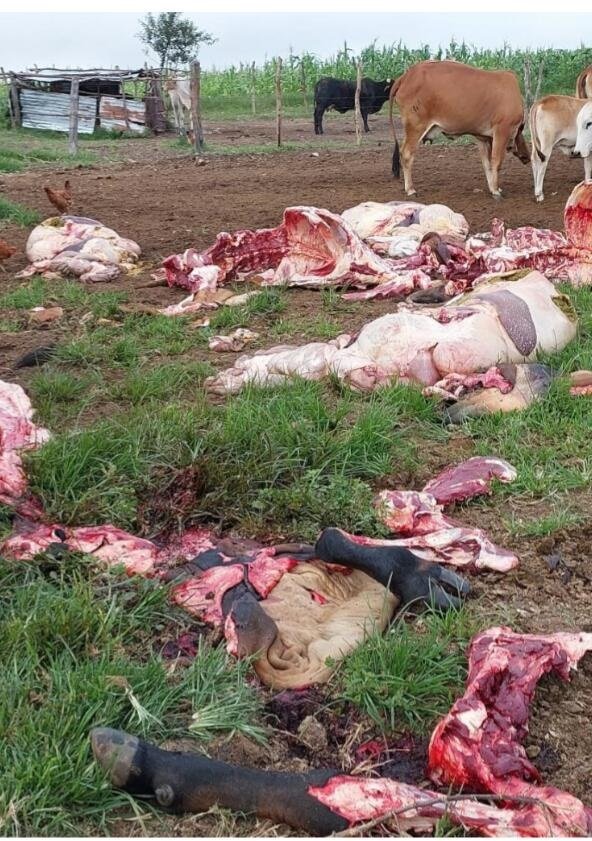
Lalapanzi- A suspected cattle rustling gang consisting of three men and one woman was recently busted by police in Lalapanzi.
The four suspects are Muruvi Muruvi (56), Evelyn Matoma (a woman, age not given), Godknows Dube (27) all of Hillview 1, Lalapanzi and Amon Mpofu (68) of village 4, Makuti.
The quartet reportedly stole cattle from Plot 29 Hillview 1 in Lalapanzi.
Midlands Provincial Police Spokesperson Inspector Emmanuel Mahoko confirmed the case.
“Zimbabwe Republic Police confirms the arrest of four suspects in connection with stock theft cases in Lalapanzi area. They were arrested during the night of January 28, 2023,” said Mahoko.
Police applauded the community for assisting them with information pertaining to criminal activities.
“Once again police would like to applaud members of the public who support police with positive information which assists in crime investigation,” he added.
Allegations are that on 28 January 2023 at around 2200 hours, Jonathan Phiri (62) of Hillview 1 in Lalapanzi was at his homestead when he heard some noise of people slaughtering a beast coming from Muruvi’s kraal.
He teamed up with his colleague and proceeded to Muruvi’s homestead and upon arrival they saw the four suspects slaughtering a beast and alerted the police.
Acting on the information, police swiftly reacted to the scene and arrested the four suspects.
Five live beasts stolen from one Mr Hwacha were recovered at the scene.
All the four suspects were taken to Mvuma Magistrate’s Court for initial remand on January 30, 2023.

Zim education still divorced from our lives -Thabela

Brighton Chiseva

MASVINGO –Ministry of Primary and Secondary Education Permanent Secretary Thumisang Thabela has bemoaned the situation in Zimbabwean schools which she said are still divorced from real life situations.
Thabela was speaking at the belated presentation of the 2019 Secretary’s Merit Award at Mutendi Primary School where she said schools were failing to meet the demands of Education 5.0.
She said schools should move away from the old education system where pupils were trained to cram bookish theories which they could not apply in real life.
“Our education system is still divorced from our lives though we have the competence based curricula, we need to teach life skills here at school not to teach theory.
“I often hear teachers complaining about Continuous Assessment Learning Activity (CALAs) but pupils do them every day without being awarded marks. I see here there are mass displays being done by learners, are you giving them marks? You want to wait to get back to class so that you give them tasks to prepare something about providing entertainment. You should give marks on these; these are actually CALAs they are doing and they do it every day,” said Thabela.
She went on to castigate schools for failing to utilize the Zimbabwe Learning Passport, a mobile application that provides free educational resources to learners, parents and educators and sticking to old ways of doing things.
“Why are you not utilizing the Learning Passport? The government has used a lot of resources to develop a number of things to transform our education but you are not using them. Failing to utilize a computer laboratory is a crime,” she said.
Tabela however commended Mutendi Primary School for having viable projects which she said help pupils acquire requisite skills.
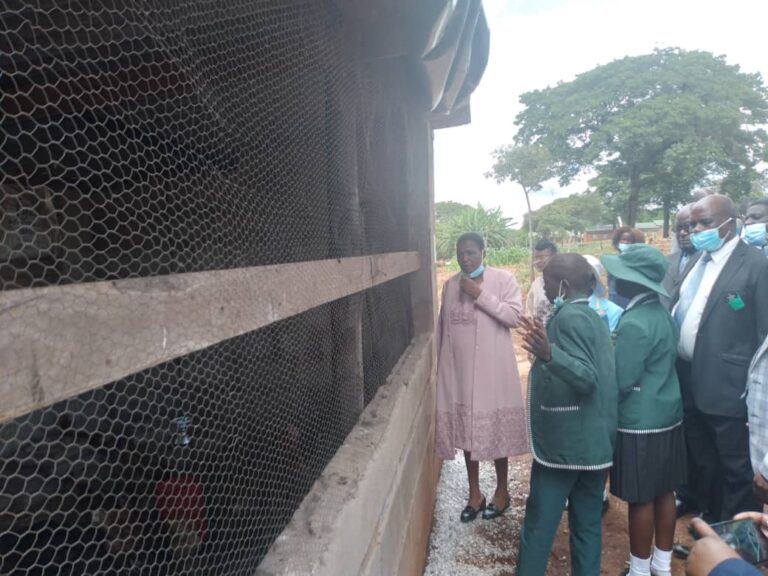
“The school has viable projects such as bee keeping, poultry, having a herd of cattle, a nutrition garden and a 5 hectare dry land for agriculture mainly for grain and beans cropping. By being involved in such projects, pupils acquire skills and competencies to sustain their lives including financial literacy for managing commercial units.
“These income generating projects are in tandem with the government of Zimbabwe’s call for schools to modernize and commercialize as espoused in the National Development Strategy 1,” said Thabela.
At Chibi High where she was handing the Secondary School category Merit Award Thabela said education that has nothing to do with people’s lives was failed education saying it has to move from making people cram to pass exams.
“The old curriculum was a failed one, people were told to remember what Bismarck said; what does knowing that Tshaka’s mother was Nandi help a child? The things we were putting energy on do not matter but acquiring knowledge is what is important.
“We cannot continue doing things the same way and claim that we are transforming. We are saying enough is enough, today’s child will not survive if what you teach them is to cram here,” she said.
She went on to challenge the school to make sure that pupils are attached to the school bakery which is thriving so that they can use that knowledge to survive after school.
Thabela also told school heads that schools should go commercial and raise money to ease financial burdens while also making sure that they have viable agricultural projects where everyone is involved.
“A government decision was made that schools should commercialize, agriculture is now compulsory, everyone should eat from his or her sweat and that means one should contribute at least to half of the food he or she eats,” said Thabela.
Reformed Church in Zimbabwe (RCZ) Education Secretary Dr Julius Witmos Mutumburanzou said their schools are already commercial but to a lesser extend saying the emphasis made by the PS is enough for them to fully implement.
“All our schools have some commercial projects and now that you have said it, we are going to fully implement it as soon as possible,” said Dr Mutumburanzou.
The competence-based curriculum at one point faced criticism after government was accused of imposing the CALA system without the consent of other stakeholders like educators while at the same time parents are skeptical of the tasks involved as schools just delegate duties to learners and as a result parents will have to fork out of own pockets to pay for their children to do CALAs.

Evicted Mpapa white farmer denied offer letter for over 32 years

…Farming equipment now in idle following eviction

Cephas Shava

Mwenezi-Former white farmer Shane Warth who in December 2022 was unceremoniously evicted from his 60 hectare plot in Mpapa area of Mwenezi East’s ward 13 has lamented that his several attempts to get an offer letter have all been in vain.
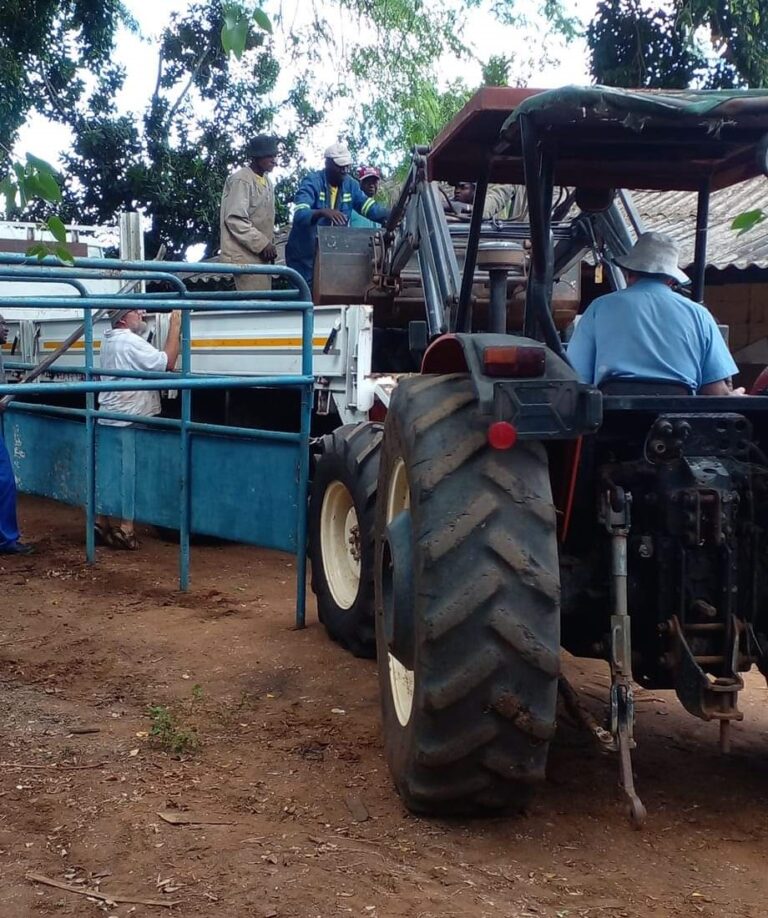
The plot that he productively utilized for 32 years and his state-of-the-art farming equipment is now lying idle at his homestead in Chiredzi following his eviction from the plot.
Warth (65), who at his evicted plot had a total of 25 permanent workers was the only farmer among 17 other Mpapa plot owners with a Centre Pivot and state-of-the-art farming equipment that made him one of the top local farmers who besides specialising in sugar cane farming also grew maize and soya beans among several other crops.
In a telephone interview, Warth told Tellzim News that having invested so much in the plot for the past 32 years; the eviction had completely ruined his life.
He said he is counting losses as he lost a considerable part of property during the eviction.
“I acquired the plot by paying for it some 32 years back and I made huge investment to ensure massive production at my plot and right now it is very painful that someone who had put absolutely nothing came over to claim ownership of the plot. The eviction had completely ruined my life. Right now my farming equipment is idle here in Chiredzi.
“Despite overwhelming evidence that I had been very productive for the past 32 years, I made countless efforts to get the offer letter at district, provincial and national levels but I was turned down in all the offices,” bemoaned Warth.
Warth’s fellow farmers at Mpapa also confirmed that the evicted farmer was indeed a star whom they relied on many farming expertise.
“We were given this land and we paid for it as it was part of pension package from Triangle Sugarcane Company where all the plot occupants used to work.
“What irks the most is that in the case of Warth’s eviction, the issue of property rights was completely ignored. We are really wondering where exactly are we going as a nation when proven progressive farmers like Warth are kicked out of their land like that and replaced by people without any track record of farming. Why don’t the government look for several vacant lands for newcomers to prove their farming skills?
“More worrisome is the fact that his yearly production regularly surpasses the rest of the farmers here. He was the only local farmer with the Centre Pivot and many of us relied on him in diverse ways,” said one Mpapa farmer who spoke on condition of anonymity.
Warth was evicted from his plot to pave way for Zanu PF central Committee member Cuthbert Muzara and one Emmanuel Chugubu who is said to be employed at a mine in Zvishavane.
One of the eviction’s beneficiaries, Muzara, told Tellzim News that he co-existed very well with Warth before his final removal.
Muzara who denied allegations of reaping where he did not sow by reportedly imposing himself on a farm where he did not contribute anything for its sustenance said he is legally occupying the plot.
“I am legally occupying the 21 hectare part of the plot that used to belong to Warth. I got the offer letter for that land which I acquired in 2017. I did not loot any of his property but I just legally occupy that piece of land.
“As for occupying the land, I started staying there in June last year and we used to co-exist very well and on several instances, I would hire Warth’s Centre Pivot to water my plot section. All the noise that came out recently was caused by his eviction from the main house and the larger plot section where my other colleague (Chugubu) has acquired an offer letter for,” said Muzara.
Initially, the Mpapa area had a total of 17 farmers of which four of them were whites but currently only two white farmers have remained while the other two were evicted.

Chiwenga faction on cloud nine

…as ED is set to gazette ZEC new delimitations, which the faction claims it heavily influenced

TellZim Reporter

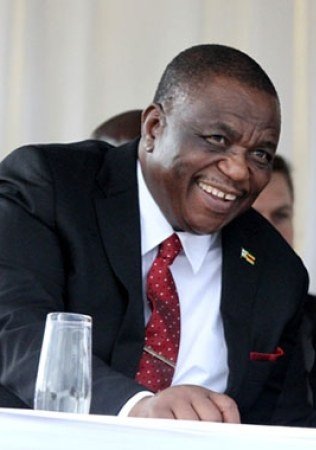
A faction allegedly aligned to the Vice President Constantino Chiwenga is said to be on cloud nine amid reports that President Emmerson Mnangagwa is expected to gazette the new electoral boundaries in the next 14 days following submission of the final report by the Zimbabwe Electoral Commission (ZEC) chair Justice Priscila Chigumba recently.
The Chiwenga faction is very excited about the development as faction members in Masvingo province claimed that they heavily influenced the final ZEC delimitation report, with Mnangagwa’s loyalists’ constituencies either neutralized or dissolved completely. Speaking to TellZim on condition of anonymity, a Chiwenga loyalist in Masvingo province said the faction managed to influence the whole process through ZEC chair Justice Chigumba and her vice, a development that did not go well with the other seven commissioners including Jasper Mangwana, who then wrote to President Mnangagwa discrediting the whole process saying they were not fully consulted.
“What I can tell you is Chiwenga is way ahead; he is already planning life after 2023 general elections because he knows that Zanu PF will win resoundingly. But his major fear is that President Mnangagwa is likely to influence constitutional amendment so that he can run for a third term. Therefore, the delimitation report was done in such a way that the opposition will certainly gain more constituencies so that Zanu PF will not have a two-third majority in Parliament thereby making it very difficult for the amendment of the constitution,” said the source.
“It is dog eat dog; the leadership is fighting to control ZEC but the truth is Chiwenga is winning. Chiwenga wants to make sure that Mnangagwa does not get a two thirds majority in Parliament because he fears that the President will influence Parliament to amend the constitution to allow him to run for a third term. Remember the constitution was already amended and scratched off the running mate which will keep Chiwenga guessing if the President will appoint him Vice President or not after the 2023 general elections,” added the source.
It might be too early to suggest that the delimitation report will favor the opposition but that is where the pointers are right now. This would mean that Mnangagwa will not succeed, in case he wants to, to influence the constitutional amendment for him to run for a third term if Zanu PF does not have a two-thirds majority in Parliament.
Some Mnangagwa faction members in Masvingo Province are already campaigning for Mnangagwa to stand as party Presidential candidate in 2028.
“They want Mnanagwa to run for another term in 2028 as they say he should be given enough time to make sure that the Vision 2030 becomes a success. The narrative is now almost everywhere and the faction members are publicly saying it even during meetings, so that is why Chiwenga moved in to stop that by influencing the delimitation report,” another party source said.
The Parliamentary Ad Hoc Committee report presented on January 13 2023 and debated on January 17 and 18 in the National Assembly raised some issues in the preliminary report, providing an annexure that detailed anomalies in certain wards and constituencies, leaving some that will likely be left as they are in the final delimitation report to be gazetted soon.
In an interview with TellZim News, Zanu PF Political Commissar Dr Mike Bimha refuted allegations that ZEC was being influenced by a Zanu PF faction, saying the party had no technical capacity to interfere with the delimitation process as it was legitimate process provided for by the constitution.
“Those allegations are baseless and are reflection of the misunderstanding of the delimitation process. The party is not involved in the process, it is done by ZEC, guided by constitutional provisions. These things are very technical and Zanu PF does not have that technical capacity to do that. These allegations are just meant to tarnish the party’s name.
“Parliament has that right to give comments on the report and of course they would have consulted their constituents and parties so that they give recommendations, which I am sure they did. The Parliamentary Ad Hoc Committee had parliamentarians from different parties and as a party we support the process that was done through the committee.
“ZEC in terms of the constitution will consider the input as they see fit. As you know, they do not have to do what was recommended; they have the right to consider and they can then say this goes, this does not, before presenting it to the President,” Bimha said.
Research Fellow of Institute for Pan African Thought and Conversation (IPATC), University of Johannesburg Dr Alexander Rusero however said the ruling party is shrinking the democratic space ahead of 2023 general elections and its influence is seen through the wanton arrests of opposition party members and human rights activists.
“If you scrutinize what is happening, Zanu PF has closed all the political space and has narrowed the democratic space. As we are speaking right now it’s as good as the CCC is banned because it is not there on the ground as each and every activity of theirs is descended heavily upon and that is a strong message of the kind of politics that we are experiencing.
“Unlike Mugabe, Mnangagwa has removed all forms of pretense to say he is a democrat or an aspiring democrat. Zimbabwe is now a full blown competitive authoritarian regime which simply needs opposition and elections to legitimize the incumbent’s hold of power. Zanu PF will not deliberately let itself be defeated in any way,” Dr Rusero added.
Some political analysts concurred with Dr Rusero saying Zanu PF is likely to win the forthcoming elections because the ruling party is using state apparatus to arrest and detain opposition leaders and human rights activists.

World Cancer Day: Closing the care gap

TellZim Reporter

Gweru- Global health institutions and communities under the leadership of the International Union for Cancer Control (UICC) have made it a tradition where they come together every year on February 4 to mark the World Cancer Day.
This year’s campaign is focused on uniting voices to act on cancer and close the care gap while the theme corresponds with the principle of the integrated approach to Non Communicable Diseases care.
Non Communicable Diseases Zimbabwe Network director Jacob Ngwenya highlighted that people with chronic illnesses could stand and fight together against common risks.
“People with cancer and other chronic conditions can stand up together against common risks like tobacco, alcohol and unhealthy diets, for better prevention. People with lived experiences can fight together for better care for multiple NCDs.
“As a person with multiple NCDs, I know how important it is to have support and medical care to get back to good health and I want this journey to be one that is less painful and more meaningful for people like me,” said Ngwenya.
Ngwenya also made a call to people with cancer and other chronic diseases to come together and amplify their voices in calling for the closing of the care gap.
“Non-communicable voices must call for NCDs prevention, treatment and care services to be readily available for everyone who needs them in Zimbabwe regardless of age, ethnicity, religion or financial status.
“Poverty mustn’t be a barrier for people with NCDs in accessing the much needed treatment, care and support. Cancer prevention must be at the core of NCDs response in Zimbabwe which through the Ministry of Health and Child Care has done extremely well in putting a cancer policy in place which we expect to be implemented to the last dot. It is very much cheaper to prevent than to treat a cancer from personal level to the country level,” Ngwenya said.
He also pointed out that some families have been driven to a vicious cycle of poverty due to NCDs like cancer compounded with the outrageous medical expenses attached to them.

We have a useless opposition

0

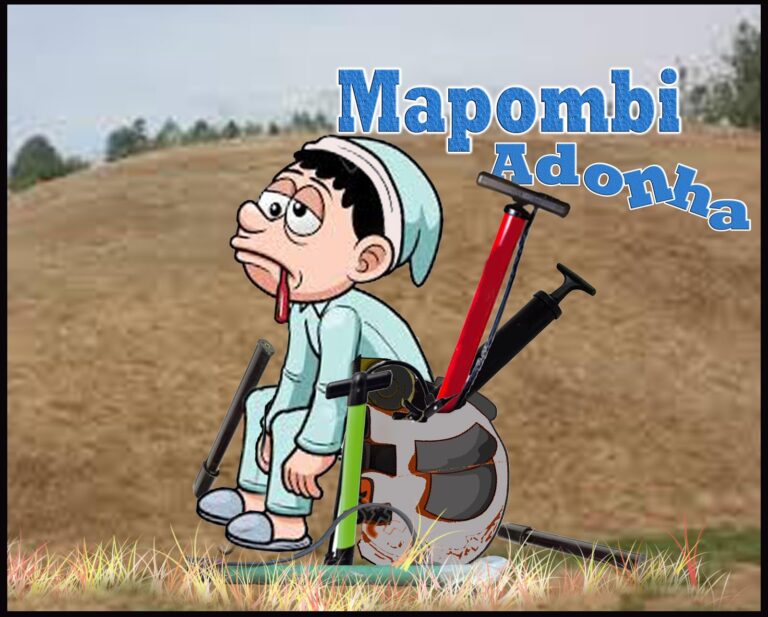
Ladies and gentlemen, let me start by saying the level of incompetence exhibited in this country by some parastatals is appalling. It does not even feel like an election year because haa, it’s just vibes mumacorridors of power umo. Mapombi is not even mad about that because she has accepted kuti vanogobvunzwa nani havo. With these powercuts we thought we were going to have at least some communication on what is going on, if not a lasting solution but haa it’s just blackouts everywhere nekuinformation kwacho. It seems as if no one is bothered about state of affairs in this country except usurping power. Munonyadzisa henyu.
I heard that it was an icecream galore kuChiefs Hall uko muMasvingo maZanu achiratidzwa mabhiza ekumhanya nawo in the next election. Kunenge kuri kumakubukasva chokwadi, hanzi chembere dzemaMucheke dzakanamwa nayo icecream kuita yekutarisa vatengerwa chingoro chose ini kuno kuchitima ndichifa nawo mabanana akaora kkkkk, seka hako Mapombi. Iyo icecream yamunoda iyi yakazopotsa yaendesa vamwe vakuru gore riya vakanoponera mhiri. Asi zvimwe ndezvimwe G40 neLacoste was something else. Drama after drama. Even Zvipfukuto and Gamatox was not that vicious but mmm Zanu yakaoma varume, climax yemafactions always marks kudonha kwemimwe mikono, regai tione kwazvinosvika but itaika muchitipa real names of those factions not those of people. We want real faction names zvinakidze not to call them yanhingi or yanhingi.
Anyway, imi vanhu veopposition tinyareiwo. What kind of opposition is so useless zvekudaro? We are barely a few months before elections but we have not heard much about what the government in waiting will do. Are you guys sure by the end of the year we will be having a new government or kungotaurawo henyu? All I hear of is Zanu this, Zanu that, ko mi muchatiitireiko nhai hurumende itsva? I even saw a detailed analysis of Zanu aspiring candidates being shared by opposition bigwigs kudoti pamwe I will see eCCC, wanei dololo. You have to tell us the horse that you’re running with on time, tojairana, and he /she gives us an elections manifesto otinyepera bho bho paine time not just kungoti zii. At least do some serious mobilization for voter registration, muchiratidzawo kuti you are actually serious about being in government. Let me tell you this, decampaigning Zanu will not do anything for you because it’s not even a secret that Zanu is incompetent. Everyone knows nyangwe kuno kuchitima zvazara kuti musangano urikuremerwa. Musi uno Vendors4ED tried to drag me into marching around town ndikaramba ini. Ndiswere ndichitambisa chiuno pakati pedhorobha mukadzi mukuru to what end? I refused ini. I may be poor but I am not mad, seeing that the 4ED outfits are just increasing by the day. I can assure you however that you may never hear of Mapombi4ED because zvawandirwa kkkkkk. One thing I know is every other 4ED grouping is in it for material benefits, link remusangano, kuda kudya too much kkkk. You all don’t love Zanu like that but it’s just that you think if you get close to power munodyawo. Chete politics is a dirty game; you might actually like this musangano wedu because I heard one comrade saying all of us, opposition included are disgruntled Zanu PF supporters and all else is confusion.
Ladies and gentlemen, now that the final delimitation report has been presented naPriscilla to ED, zvaakuchitanga kunakidza manje. If the new boundaries are anything to go by, Kedha anenge aenda nechinhu but if we go back to 2018 boundaries motongoziva kuti 2030 vanenge vachipo like he said. We know the drill ka, power inonaka iyi. It will be a clean sweep third term for ED, mark my words, ini ndiri gentleman handivanzi. The situation however ladies and gentlemen is tricky because Kedha and crew will definitely need opposition support to meet the target, neiyo opposition yedu iyoyi inenge itori zvayo neconfusion, strategy yacho inogona kuvatorera nguva kuibata but let’s wait and see. Zimbabwean politics is not for the fainthearted. Kunofiwa zvokwadi oo. Still on the delimitation report, there will be a lot of confusion especially the unlucky ones vachachinjirwa maconstituency. I say unlucky because voter education in this country idambudziko. Inenge iri tumbi tuzu chokwadi and this is a challenge to all stakeholders kuti muite basa renyu so that voters are properly educated especially on the new electoral boundaries.
I see that Zanu PF is already in election mood; infact they are always in that mood ungati pane chavanochinja. But on that note time time mutikwanire. I heard one of the Vendors4ED threatening flea market tenants near the Tsungai area in Masvingo that they all belonged to Zanu and those not from Zanu should be kicked out. If you find time please kwanai handiti. We don’t want violence isu and that’s where it all starts. That kind of threats belong in 2008 and before, not in this age. Stop it forthwith!Munopenga! Ko ivo Dr Gire where is she nhaimi ndavasuwa. She often comes out of her hiding place nekafashion statement but now mmm, vanyararisa. I last heard about the Mugabe family mazuva aya when Rob Jnr was moving around with that lunatic Pasion Java. It never ends well if you associate with madmen. If you lie down with dogs, don’t be surprised if you get fleas. I saw him ava mumabed with drips and all, unefa mukomana ukaita zvekutamba.
Opposition, handisati ndapedza nemi. I saw vanaMudzuri condemning Mwonzora the other day saying he tore the party apart. I could not believe my ears hearing Mudzuri saying MDC which was once a big party has now become a very small thing. Kkkkkkkkk, mudhara maiti zvichazodii chaizvo? What did you think was going to happen after the stunts you pulled gore riya? Zvimwe zvinosetsa chokwadi. Anyway, dzinganai dzinganai ikoko, Nero is there zvacho chichingodurura maverse kkkkk. He turned 45 recently and my advice to you hanzvadzi is that 45 is the age of wisdom. I believe the age of a midlife crisis is over now, so stop chasing clout on Twitter and put energy on the ground. Likes on Twitter do not equate to votes, I hope you know that. Beware of diaspora—inongopusha narrative but does not vote, imi muchiti mune vanhu. They will support your idea online but on the ground atova makwikwi. They don’t even encourage their folks and people they support financially to register to vote because they think those people apparently do not understand so called political discourse but miraika muone vachikavira bhora mudondo kkkk. The rural folk go out to vote and are at polling stations very early on voting day, muzvizive izvozvo imi VaChamisa.
Then another thing; please tell us about the policies you will implement when you get into power. Yes, we see the nice pictures of spaghetti roads and bullet trains but we need to know how we will get there so that we appreciate kuti surely change is coming. Tinotomada maspaghetti roads and mabullet trains but right now all we think about that is dzingori ngano dzatsuro nagudo. We need efficiency and economic growth not zvaMthuli Ncube anotitaurira zvebudget surplus isu tichikwangwaya. Hatidyi mapercent isusu, we want better life.
Let me go ndindokanga maputi angu for lunch, apa moto urikunetsa because kwakanaya, ini zvangu ini. But before I go, chati homu chareva. I hope you will take a word or two from what I have said mazvinzwa here vana Musorobhangu. Kana ED aita gazette final delimitation report mundiudzewozve so that I know kuti ndakarashigwepi, kkkkk.

Gwindingwi High dances with the elite, posts impressive A Level results

Innocent Muraiwa

Bikita- Gwindingwi High School located in Masvingo’s Bikita West Constituency has defied being left behind in as far as academic matters are concerned with the class of 2022 posting impressive Advanced level results.
During the 2022 Zimbabwe School Examinations Council, the school broke its previous record in Advanced Level pass rate after six pupils notched fifteen points while the majority had nine points and above with only four pupils scoring four points and below.
From the statistics taken among all schools in Bikita district, Gwindingwi occupies position 13 which is the best achievement it has laid down in the academic field.
In an interview, Gwindingwi High Deputy Head Rumbidzai Mutongi expressed happiness over the achievement.
“The school has this time come out with flying colours which is the very achievement it never had since its establishment. We are very pleased because as a day school, we have shown our competence in posting good results.
“We managed to do away with the setbacks endured during the Covid-19 era when our pupils failed to excel due to the harsh learning conditions associated with the pandemic which were academically frustrating and restrictive. The situation was so bad as our school lost a number of brilliant pupils who eloped for marriage while some got influenced by environmental factors in which they were living which coerced them to drop out,” said Mutongi.
Gwindingwi High School Head Dereck Muzinda said the pass rate was propelled by an initiative idea of some after school studies.
“As the school head, I exhorted pupils to take their time, reading their books soon after the school’s dismissal time for daily lessons and normally I would urge them to use the time period from 15:45 to 1800 hours for studying.
“In trying to reinforce the knowledge of pupils in their related studying areas, I purchased a number of text books for every academic level that is from form one to Advanced level so that every pupil may go an extra mile in mastering concepts and skills and the move actually helped them for we could notice the emergency of the best performing pupils who could showcase their abilities to score higher marks in Mock examinations,” he said.
Gwindingwi High Senior teacher George Pasina commended the tremendous efforts which both the school educationists and learners exerted in bringing wonderful results.
“I applaud the well focused efforts which the school educationists and learners put in place to produce good results. Solidarity is a strong weapon that can be best used to harvest good results,” said Pasina.
One parent Eustina Chibharo also expressed her compliments to the school’s teaching skills. “Gwindingwi High teachers employ higher level teaching and learning techniques which makes life easier for pupils. My child Charles Bvaure got fifteen points and I could not believe that he would make it judging from his previous performances,” said Chibharo.
Bikita district is home to high flying Pamushana High where 103 pupils scored 15 points and above in the 2022 examinations.

Volatile Zimbabwe dollar: What is the missing link?

By Zvikomborero Sibanda

In 2007/8, Zimbabwe experienced a record hyperinflation in modern economic history for a country in peacetime. The local unit was officially dumped by authorities in 2009 after it was rejected by the market as economic agents started to favour transacting in foreign currency dominated by the South African rand and the US dollar -the advent of dollarization reform (2009-2018). Although this reform relegated monetary policy arm of government, it instantly cooled inflationary pressures to an extent that the nation experienced a period of deflation.
After a decade, the government austerity measures and currency reforms which started in 2019 saw the re-branding of the ZWL, introduced through Statutory Instrument 33 (SI33) of 2019. The local unit was codenamed ‘Real Transfer Gross Settlement’ (RTGS) dollar comprising of all bond notes and coins in circulation, mobile money, and bank balances. On the first day of trading in the official interbank market early February, the RTGS dollar traded at ZWL/USD 2.50 before losing a staggering 62% of its value in only four (4) months to close June 2019 at ZWL/USD 6.60 (ZWL/USD 8.50 in alternative markets).
The continued excessive decline of the ZWL forced the promulgation of SI142 by Treasury on 24 June 2019 thus officially introducing the Zimbabwe dollar as sole legal tender for all domestic public and private transactions and settlements. It was however astonishing at the time that authorities could forge ahead with forced de-dollarization despite existence of a huge body of knowledge showing that successful de-dollarization only come when undertaken as a process not an overnight event.
Also, the deterioration of the currency was largely emanating not from the use of forex but from excessive ZWL liquidity growth in the market. For instance, the Reserve Bank of Zimbabwe (RBZ) statistics show high powered money supply popularly known as reserve money (M0) burgeoning by a mouth-watering 170% between December 2018 (ZWL3.3 billion) and December 2019 (ZWL8.8 billion).
High powered money holds the topmost position in monetary policymaking and since it is mostly currency in circulation with economic agents, it decides the level of liquidity and price level in the economy. As such, the management of high-powered money is thus very important to manage general price level.
Consequently, ZWL depreciation heavily persisted with the unit losing an average of 63% in official market before the re-introduction of fixed exchange rate regime in March 2020. By June 2020, perpetual decline of the ZWL in alternative markets influenced authorities to ditch a fixed regime in favour of the Dutch Forex Auction System. In its formative months, the auction system managed to bring sanity particularly in the alternative markets with the ZWL gaining some ground in the third quarter of 2020 (Q3:20).
Statistics show the ZWL reclaiming about 20% of lost value from an average of ZWL/USD 120 in July 2020 to ZWL/USD 100 in November 2020. The period also enjoyed a sustainable growth of money supply with reserve money growth registering a paltry 0.2% growth in Q3:20 relative 8.5% and 33% in Q2:20 and Q1:20 respectively. However, the stability was fragile as the nation returned to increased depreciation pressures in the Q4:20 partly in line with an unsustainable 47.4% jump in reserve money injected into the system.
Fast forward to 2022, currency instability remained a challenge for Zimbabwe with ZWL losing about 84.1% of its value against the USD from ZWL/USD 108.67 in December 2021 to ZWL/USD 684.33 in December 2022. In response, price inflation spiked during the same period from 60.7% to 243.8% (annual terms). Granular analysis show that apart from the unsustainable monetary aggregates, price inflation in 2022 also emanated from poor 2021/22 cropping season and the ripple effects of the Russia-Ukraine war. A 2022 World Bank report show that at 353%, Zimbabwe had the highest food inflation globally. Also, the Bank estimated that about 40% of Zimbabweans were living in extreme poverty in 2022 as disposable incomes were decimated by ravaging inflation and income disparities magnified by a tattering currency.
After a brief moderation of ZWL decline in the parallel markets and inflation growth between July-October 2022, the trend reversed course starting in November 2022 likely because of elevated government spending associated with fourth quarter bonus payments and agriculture support as well as increased general demand. The local unit slid from ZWL/USD 800 in October to close December at ZWL/USD 900. In the same vein, monthly prices upscaled by 0.6 percentage points to close 2022 at 2.4% from 1.8% recorded in November. With so many risks to the 2023 economic outlook such as high corruption prevalence, general elections, unpredictable path of COVID-19 pandemic, and unending Russia-Ukraine war, it is likely that Zimbabwe will continue being trapped in vicious cycles of currency and price volatilities.
From the foregoing, one can conclude that Zimbabwe’s economic decay and entrenchment of citizens into poverty is largely emanating from poor economic management. This reasoning is informed by the fact that the country continues to experience increased forex generation. For instance, in 2022, Zimbabwe recorded its highest ever foreign currency receipts of US$11.6 billion dollars, up by 196% from the 2021 outturn of US$9.7 billion but ZWL plummeted in both markets. Generally, forex generation is regarded as crucial in aiding currency management and building of economic resilience.

Therefore, to put the ZWL and prices on a stable path authorities should consider some of the following alternatives:

Foster fiscal discipline: Unsustainable government spending leads to increased domestic borrowing which in turn crowds-out private sector investment and growth. All else constant, a flourishing private sector is key in employment creation, infrastructure development, output growth, and wealth creation. Also, monetization of unsustainable fiscal deficits, that is, government financing itself by issuing currency or non-interest bearing liabilities like bank reserves poses real risks. The risks include potentially high price inflation and encroachment on central-bank independence.

RBZ independence: A number of empirical studies have established that the more independent (ability to make monetary policies which are not dictated by political considerations) a central bank is, the lower the inflation it allows without injuring growth and employment goals. Also, a target and operationally independent RBZ will have more credibility which is essential in reducing inflationary expectations.

Increase Official Use of ZWL: In recent months, the government has increasingly shown lack of trust in its currency as many public services have been dollarized. Yet, the government is the single largest consumer in the market. A policy shift requiring most local payments in ZWL will propel demand and use of the ZWL in the market as well as increase market confidence in the local currency.

Agriculture sector: Generally, the Agric sector is the backbone of the Zimbabwean economy as it provides employment and income for 60-70% of the population and supplies about 60% of industrial raw materials. Also, food and beverages alone constitute about 30.1% of the all-items consumer basket. As such, the current financing model over relying on state support requires a complete revamp to ensure that citizens take farming as a business and reduce dependence on state. This will promote climate-smart agriculture.

Domestic Resource Mobilization (DRM): Given her rich natural resource base, DRM will be one of the best ways of reducing Zimbabwe’s overdependence on borrowing and volatile aid. It also promote sustainable development as government fund its own development goals, finance gender-responsive public services, and reduce economic, social and gender inequalities.

Economic and Structural Reforms: The government should swiftly implement these reforms to improve competition and market price discovery. The existing public institutions require reconfiguration in terms of the quality of personnel, operational procedures, and methodologies. There is also a need to improve the quality of public taxation systems to encourage innovation and address the challenges of the poor population in the welfare state. More so, with reforms, fiscal authorities will be able to tighten public finance management systems to curb leakages from corruption and illicit transactions.

Policy Consultations and Consistency: An inclusive multi-stakeholder engagement is crucial in reviving the broken social contract between government and citizens. This helps to avoid the ineffective top-down approach to policy making which injures policy ownership by other economic agents. Policy consistency is also key in boosting market confidence and building public trust in policymakers as they become assured that authorities will not renege on their prior commitments.

Zvikomborero Sibanda is an economic analyst and an astute researcher. He writes in his personal capacity. He can be contacted via email:

bravosibanda@gmail.com
Twitter: @bravon96