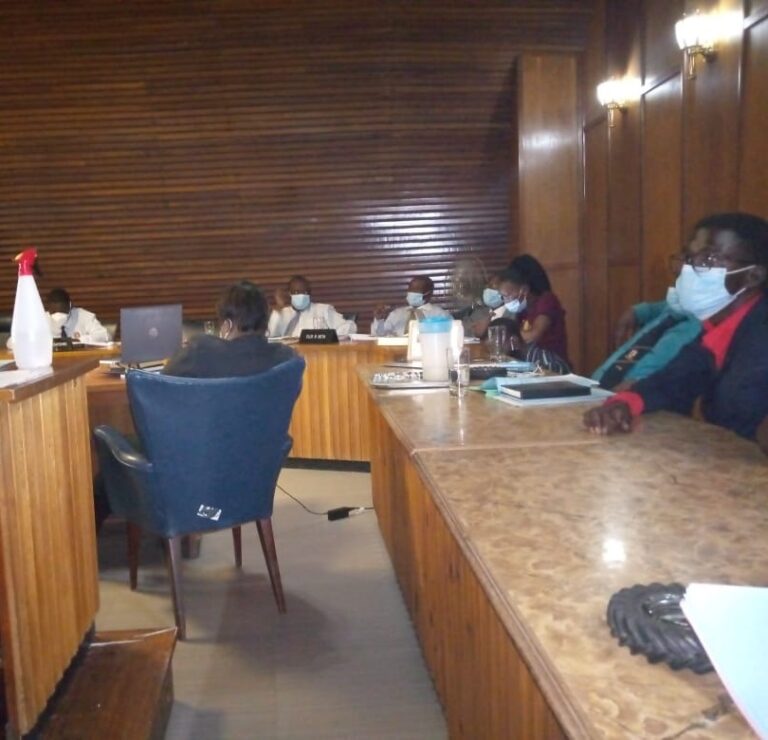
Masvingo urban ward 10 Councillor Sengerai Manyanga said Masvingo full council meetings were ‘useless’ talk shows where they come to discuss and pass resolutions that are not implemented.
This came out during a full council meeting held on December 01, live streamed by TellZim News as part of its recent resolution and partnership between the media house and Masvingo City Council.
Councillor Manyanga fumed after a proposal that the full council meeting should turn into a committee and members of the public and the media should leave the meeting.
“I think it is unfair that you chase away people from the full council meeting, they are the ratepayers so its unfair practise that we are doing here at council. It is useless to keep on doing these meetings when no resolutions are implemented.
“We agreed that we were going to build Mucheke rank but up to now there is grass and no progress being done. We agreed that there will be a revenue collection point at Exor but to no avail,” said Cllr Manyanga.
He went on to warn council management that they should take into consideration what the councillors said and implement saying they had power to hire and fire.
“You should try to listen to us councillors because you are a council worker and we can fire you at any time because you are failing to implement resolutions.
“We are not aware where you are getting such influence,” said Cllr Manyanga.
He went on to say full council meetings should be cancelled until previous resolutions have been implemented.
“I think full council meetings should be nullified until we make sure that resolutions which were passed have been followed we should nullify this meeting,” said Cllr Manyanga
He went on to accuse council managers of being late at work on daily basis and suggested that a log book be put in the Town Clerk’s office so that everyone who signs is seen by the Town Clerk.
“I come here around 8 am and sit in the car and I see most of the managers arriving after nine. The logbook should be put in the TC’s office so that everyone is seen when he arrives,” said Manyanga
Ward 8 Councillor Against Chiteme supported Manyanga saying they cannot sit for yet another full council meeting and pass resolutions when they have a backlog on implementation.
“We talked about building Mucheke rank a long time ago, but nothing has been done so far, so there is no purpose of sitting for this full council meeting if we do not implement resolutions. Today’s full council meeting should be nullified,” said Cllr Chiteme.
However, Maboke said the resolutions are not implemented yet because council was engaging in other projects.
Town Clerk Engineer Edward Mukaratirwa said the resolution about Mucheke bus terminus was still on the cards and they had a meeting with bus operators whom they urged to make use of the bus terminus.
“The Chamber Secretary and security officers had a meeting with bus operators last week in the PDC’s office, this afternoon I was informed of the follow up to that meeting concerning the parking of buses at Mucheke terminus.
“So it is not like as administration we have just paused, it is an issue that my office and Chamber Secretary’s office are pursing together with the Provincial Development Co-ordinator,” said Eng Mukaratirwa.
The resolution to build Mucheke bus terminus was passed in June and there was a Build Operate Transfer (BOT) going to be used for the construction of the terminus.
Masvingo urban councilors told the recent full council meeting that the local authority was supposed to build offices for the councilors in their respective wards.
Ward 10 councilor Sengerai Manyanga said it was noble for council to construct offices for councillors at ward centres where they would be able to meet residents who would need their services.
“Council has to build offices for us councillors so that we do not meet with people under trees or in the streets,” said Manayanga
Manyanga said such facilities would help residents to be able to access services from their councillor without having trouble in calling him/her or even ask about their whereabouts as the councillor would be found at the office.
“We as councilors, are there to hear of the problems faced by the public, therefore offices are needed so that when they want to speak to the councillor, they can go straight to office without asking about the councillor’s whereabouts so that they can speak to him/her,” he said.
He also said Masvingo council is the only council that has not built offices for councilors but also lied that they built a mobile clinic.
“Our own council is the only one that has not built offices for its councilors. You lied to the public that you build a mobile clinic that you did not,” he said
Manyanga also said there is need for the council to build a police base at Eastvale in Masvingo as there are many thieves flocking the area.
“Council has to partner the police and build a police base at Eastview because the number of cases of theft has escalated. Thieves broke into Alpha cottage and 29 rabbits were stolen,” said Manyanga
. . . as abuse of public funds increases, Masvingo city auctions bus for allegedly RTGS$20k
Kimberly Kusauka
Heads must roll at many local authorities following gross mismanagement of funds and maladminstration in general as unearthed by the Auditor General Mildred Chiri’s recent report and the oral evidence that came out during Parliamentary Portofilio Committee on Public Accounts (PAC) hearings recently.
Top council managements have appeared before PAC to answer on allegations of mismanagement of public finances and resources and the majority were found wanting.
However, what is worrying is the inaction or reluctance by the Zimbabwe Anti-Corruption Commission (ZACC) after both the auditor general’s report and PAC meetings in which one of ZACC commissioners was ever present.
Failure by ZACC to take action has resulted in residents losing trust and confidence in the whole system, with some even threatening not to pay their bills in time.
Latest and topping the list among residents’ grievances is the auctioning of council bus by City of Masvingo for allegedly RTGS$20 000 on November 13, 2021. This infuriated residents that they demanded answers from council management and that ZACC should also get involved as they suspect corruption following allegations that the person who bought the bus is linked to one senior council employee.
Masvingo United Residents and Ratepayers Alliance (MURRA) director Anoziva Muguti condemned the decisions being made at Town House saying they should always consult residents on issues that involve ratepayers’ monies.
“We were shocked and residents are not happy especially about the auctioning of the bus in RTGS. The auction was also supposed to be a public auction but it seems like the auction was private; I do not know why such a bus in good condition can be sold for that little – RTGS$20 000, that is surely a joke,” said Muguti.
Millions of dollars have been lost by councils through many leakages that include poor control systems, fraud, theft, funds misappropriation among other things which disadvantage residents who are at the receiving end of increased rates yet poor service delivery.
Most, if not all the local authorities cited in the auditor general’s report have serious service delivery issues, some of which have become perennial and require urgent attention but it seems the running of operations at these institutions is largely to blame for the sorry state they are in.
The sale of the bus by city of Masvingo was shrouded in mystery prompting a heated debate on TellZim WhatsApp groups as to what could have transpired after councillors raised the ‘controversial’ circumstance under which the bus was allegedly sold for RTGS$20 000.
Masvingo City Council Bus
Masvingo Town Clerk Engineer Edward Mukaratirwa could neither confirm nor deny the allegations but said council will carry out investigations and announce the findings to the public. Mukaratirwa said the issue was dealt with the responsible committee, the disposal committee, and the highest bidder wanted the bus for US$17000.
Masvingo Town Clerk Engineer Edward Mukaratirwa
“We engaged an auctioneer to assist us to do a public auction of those assets as per law because we dispose assets as per Public Procurement and Disposal of Public Assets (PPDPA) Act and the relevant regulations. My understanding is that the highest bidder wanted the bus for US$17000, but social media was awash with reports that the bus went under the hammer for RTGS$20000. The office of the town clerk is carrying out investigations and the findings will be made public,” Eng Mukaratirwa said.
He said they weighed the assets after finding an auctioneer and marked prices for major assets in United States $ which included the bus, old vehicles and other equipment and advertised the date for the auction November 13, 2021 following conditions that bidders pay deposits in US$.
“After identifying the auctioneer, we assessed the assets and put reserve prices on the major assets that included the bus, old vehicles and other big equipment and we put the reserve price in US$. We advertised now for the public auction to be held and set the date as the 13th of November 2021.
“So the conditions of sale were such that the bidders were supposed to pay their deposits in US$ and also that on successfully biding for any assets they were going to pay in US$,” said Eng Mukaratirwa.
However, the Town House seems to be in chaos as councillors raised the issue during a full council meeting on December 01, accusing management of auctioning assets at giveaway prices.
Councillors Sengerayi Manyanga (Ward 10), Against Chiteme (Ward 8) and Sellina Maridza (Ward 1) were all confused about the exact amount the bus was sold at as the say various figures during the full council meeting. Maridza said RTGS$24000, Chiteme said RTGS$17 000 whilst Msanyanga said RTGS$20 000. This is clear evidence that the auctioning of council assets was not as clear as the management want residents to believe.
Sengerayi Manyanga
”We want to know the exact priced for the bus because we are hearing that it was auctioned for RTGS$20 000. Residents are asking us about it and we do not have answers so can you tell us the exact price,” asked Manyanga.
How the auction ended up selling in RTGS also when it was initially agreed that all assets were to be auctioned in US$ remained a mystery – even the Town Clerk had no satisfactory answer.
“Unfortunately, along the way the auctioneer and the disposal committee changed the conditions which had been set by council in terms of collecting the proceeds and sales in US$. So when council management discovered that a meeting was held with the two and as we speak right now as the TC, I have launched an investigation in order for me to be able to get to the bottom of the issues. We want to know why the auctioneer and the committee went on to agree to auction the assets in RTGS because what the Act says is that the proceeds should be used to acquire new assets, so how are we going to do that with the said amounts in RTGS,” said Eng Mukaratirwa.
Councillor Manyanga then rendered full council meetings useless arguing that all the resolutions they make are never implemented and management sometimes do as it wishes against the decisions made by the city fathers.
Manyanga said full council meetings have since been reduced to mere talk shows with no implementation of the resolutions that would have been made.
“I think it is unfair that you chase away people from the full council meeting, they are the ratepayers, so its unfair practice that we are doing here at council. It is useless to keep on doing these meetings when no resolutions are implemented.
“We agreed that we were going to build Mucheke rank but up to now there is grass and no progress being made. We agreed that there will be a revenue collection point at Exor but to no avail. These are becoming mere talk shows and we do not know what to tell residents now because they expect quality service delivery from us. I think full council meetings should be abandoned until all the pending resolutions are implemented. We cannot continue making resolutions that are not implemented,” said Manyanga.
Councillor Manyanga also too a swipe at some management officials for coming to work late all the time saying they should shape up or ship out.
“I come here around 8 am every day and I see most of the managers arriving after nine. They are not even serious about providing quality service delivery yet they get their salaries from ratepayers’ monies. That culture must stop and I suggest that a logbook should be put in the TC’s office so that everyone logs in as he or she arrives,” said Manyanga.
In her report AG Mildred Chiri mentioned that of the 59 issues she reported, 34 related to the area of governance while 25 were related to service delivery, employment costs, procurement and revenue collection, all this relating mostly to misappropriation of ratepayers funds and resources which are supposed to be channelled towards service delivery.
Among other issues, Masvingo City Council, in the most recent Oral Evidence session by the PAC, was grilled over its lack of a proper lease register which captures all council rented properties.
In documents released to PAC, telecoms giant Econet Wireless was flagged as one of the leasees who allegedly had overdue lease issues, with some of the leases for its 16 base stations having expired, dating back to 2013, a fact that was disputed by Econet representative Engineer Kezito Makuni during the PAC Oral Evidence session who said their leases were up to date.
Service delivery in all councils is in dire state, with most of them having projects that annually appear in budgets but with little to no progress especially on water and waste management, both solid and liquid.
In Harare, most residential areas go without running water for months, at a time when officials are appearing in court for embezzling council funds while lying to residents about service delivery.
Some of these institutions award tenders to contractors who do not honour their contracts and on top of losing ratepayers’ funds, service delivery is greatly compromised.
Bindura Municipality awarded Pelgin Consulting Services a tender to supply a front-end-loader in December 2018, which they paid US$90 850 for, but it took years to be delivered, and it is still not clear if it eventually came.
That equipment could have made a bigger difference in service delivery for the local authority, but if such kind of equipment takes two years to be delivered, then it leaves a lot to be desired if ever roads are going to be repaired, among other things.
Chiredzi Rural District Council also awarded Solutions Motors, which was blacklisted by the Procurement Regulatory Authority of Zimbabwe (PRAZ) recently, a tender to supply a Toyota Fortuner vehicle in October 2019, and the local authority is now demanding a refund after the supplier failed to deliver.
Solutions Motors has outstanding issues with Mwenezi and Karoi RDCs among other local authorities, but it kept getting recommended to these local authorities despite its poor record in supplying, all pointing to dodgy dealings in tender awarding.
The Dangamvura Water Project in Mutare has become a mantra at almost every council engagement meeting, but it still remains a pipe dream as works keep stalling and resuming irregularly.
Perennial water woes bedevil Masvingo urban, and it has been reported that there is an estimated 40 percent loss in the water reticulation system, with council confirming that a large number of water meters are not working (26 percent of all Rujeko water meters are not working).
Eng Mukaratirwa said a council task team was carrying out surveys on water meters and the results will be published after they complete each zone.
“Confirmed 26 percent for Rujeko zone and at the moment we are in the process of purchasing water meters to replace the non-functional ones. As for other zones our Non-Revenue Water task team is still carrying out surveys and as they complete each zone, the results will be made public,” Mukaratirwa said.
Chegutu has the same problem, where it was reported that 80 percent of the municipality’s households did not have functional water meters, while 50 percent of water distributed from the treatment plant is lost through leakages according to the AG’s report.
Masvingo residents during recent council budget consultations complained over the continuous recurrence of the Mucheke Trunk Sewer project on the budget when the project which started some years ago is far from completion.
In the 2022 proposed Masvingo council budget, the trunk sewer project is allocated ZW$100 million from devolution funds meant for the local authority.
About US$4 million previously went down the drain on the trunk sewer project, without much having been done except for trenches that were dug and ended up being a health hazard to residents.
Having said all this, ZACC has remained a toothless bull dog as local authorities continue to plunder ratepayers’ money. Residents associations demanded heads to roll at local authorities but those with powers have remained reluctant which made them accomplices in depriving citizens quality service delivery.
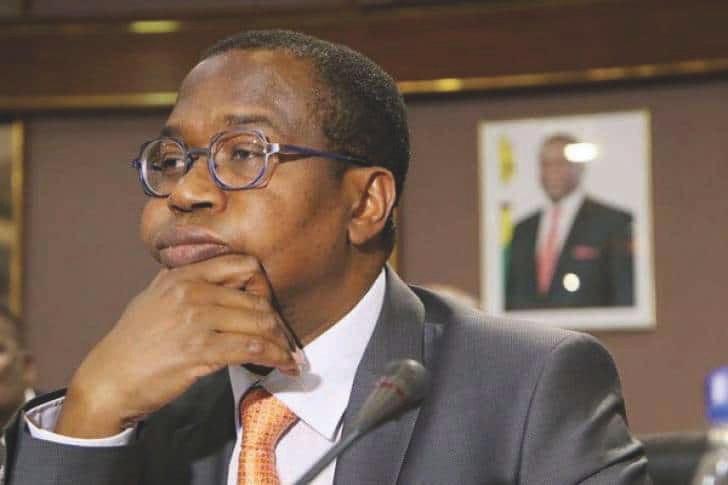
Minister of Finance and Economic Development Professor Mthuli Ncube has proved himself an ‘anti-poor hardcore capitalist’ following his proposed levy of US$50 on all imported cellphone handsets in the 2022 budget. The move has been met with disgruntlement by the general citizenry, civic society and business community as it seeks to reverse the gains made in mobile penetration so far, especially in the face of Covid-19 era where use of electronic gadgets heightened.
During his 2022 national budget presentation to Parliament on November 25, Prof Ncube proposed that US$50 is to be collected prior to the registration of every new handset that would have been brought outside Zimbabwe, with Mobile Network Operators (MNOs) now having the mandate to impose the levy on behalf of government.
“Mr Speaker Sir, whereas imported cellular telephone handsets attract modest customs duty of 25%, the funds realized, however, point to evasion of the customs duty due to the nature of items which can easily be concealed.
“In order to curb tax evasion, I propose to introduce a levy of US$50 which will be collected prior to registration of new cellular handsets by Mobile Network Providers.
“However, where duty would have been paid, the Zimbabwe Revenue Authority will provide a refund of the levy, within 30 days of receipt of payment from the mobile network operator,” Prof Ncube said.
Senators and lawmakers are reported to have rejected the proposal during a post-budget seminar, citing its retrogressive nature on the ease of doing business amongst a plethora of other critical uses of cellphones.
Since his appointment as finance minister, Prof Ncube has courted controversy through taxing policies which have been widely condemned as anti-poor, and the cellphone levy will likely further widen the preexisting digital divide that has seen poor communities being left behind in technological advancement.
Political analyst Dr Alexander Rusero said just like all the other policies by Prof Ncube, the proposal is not pro-poor together with being both elitist and capitalistic in nature, which has been the norm in the second dispensation when it comes to taxing Zimbabweans.
“A government can never prosper by taxing its people, it has never happened anywhere in the world. No government in history of the world has ever prospered through the taxation of its own people, but this is exactly the approach that Mthuli Ncube seeks to cushion government expenditure and extravagance through punishing the poor.
“This is not only a violation of the moral principle of respecting everyone but it’s a violation of the constitution, which guarantees freedom of information and it is for both hardware and software,” Dr Rusero said.
Dr Rusero also said government’s proposed shifting the burden of collecting levies to MNOs is archaic and is likely going to cause unnecessary confusion as a lot will be required for the simple process of registering a mobile gadget, which was nonexistent during the government of national unity (GNU) era.
“Our government is in the habit of creating deliberate chaos where it is uncalled for and common sense should be used. The whole idea is a reflection of a law opinion on the poor. Why subject people to all those forms of harassment, bureaucracy, paperwork for simply owning a gadget? I don’t think it is proper.
“The GNU was a progressive era in Zimbabwe, as it saw the divide between the rural and urban starting to be bridged through duty free purchases of electronic imports and now we are turning the clock back,” Dr Rusero said.
Norton legislator Temba Mliswa echoed the same sentiments and said the proposal is not feasible but retrogressive given the importance of gadgets in pushing for the digitization of education among other things.
“If anything, these gadgets must be duty free to make sure that people have access to the digitization system that is being put in place. Online schooling now is through these gadgets and not only that; there is those small (tumbudzi) phone that go for five or ten dollars but they want fifty, how did they get to that figure? I don’t understand.
“My position as a legislator is that it is totally retrogressive and does not push the Agenda 2030 middle income on digitization as it is key towards anything. Other Members of Parliament unfortunately are whipped but that’s not to say that the truth is not said, it will stick,” Mliswa said.
Mliswa said it is on the onus of Zanu PF to whip its ministers in line at their caucuses which they have but they seem not to be doing that, which then leaves them at the mercy of the citizenry when such policies are put in place.
“You cannot continue whipping people on doing bad things. You’ve got to allow Zanu PF to be able to whip their own ministers in line at their caucuses but they seem not to do that and the minister ends up coming up with policies that are not linked to the people because they don’t caucus to say which direction do we take on this, so the electorate will always come out guns blazing because it’s not a pro-poor budget,” Mliswa said.
Masvingo Urban MP Jacob Nyokanhete said the policy will most likely affect all sectors as it will trigger price increases in mobile gadgets, which will in turn affect accessibility of technology to the general citizenry.
“Personally I am strongly against it because it will make the gadgets expensive. This will then affect all efforts of making technology accessible to everyone and online education will be greatly affected.
“All the sectors are to be affected. We should emulate the likes of Rwanda where gadgets are not taxed and Rwanda has one the fastest improving technology to the extent that even our Parliamentary Portfolio Committee went there on a benchmarking visit,” Nyokanhete said.
Senator Chief Fortune Charumbira was also quoted in the state media saying the proposal had been rejected at a pre-budget seminar and was surprised to have seen it included in the budget.
This could be an indication of Prof Ncube’s adamancy on taxes, evident in the policies he has introduced since he got in office.
The Media Institute of Southern Africa on December 1 2021 released a statement where they castigated the proposal saying the push by parliamentarians to have the proposed levy scrapped should be upheld.
“MISA Zimbabwe urges the Ministry of Finance to instead work closely with the Ministry of Information Communication Technology, Postal and Courier Services, and other key stakeholders, to increase uptake in the usage of ICTs as opposed to imposing taxes and levies that widen the digital divide.
“While ownership of smartphones is one of the four pillars of meaningful connectivity, the high cost of these devices is the reason why some people do not use the internet which the African Declaration on Internet Rights and Freedoms has declared a fundamental human right,” read part of the statement.
Statistics released by online data platform Datareportal indicated that as at January 2021, there were 14.76 million mobile connections in Zimbabwe, which was equivalent to over 98 percent of the total population but with some people having more than one mobile connections, the number could be lower.
MNOs’ capacity on providing efficient mobile money services has not been the best, as some fail to refund clients who would have lost their money through unstable connections or network glitches.
If the new policy is to see the light of day, the MNOs will then have to refund those who would have provided a valid proof of having paid customs duty within 30 days, a period which is hardly feasible due to their capacity.
Minister of ICT, Postal and Courier Services Jenfan Muswere has been blasted by analysts for his passive approach on ICT matters, and many wait to see how he will react to Prof Mthuli’s proposal, which threatens the convenience of the larger part of his government mandate.
Prof Mthuli Ncube’s policies have largely been criticized for milking citizens dry through taxation, which also has seen him crediting himself for having a budget surplus more than once, while the larger part of the population wallows in poverty.
In the 2022 proposed budget, Prof Ncube projected an increase in government expenditure, and with the 2023 harmonized elections approach, more financial resources will be required to fund elections, which will probably see citizens being burdened by more taxes.
Faced with a gravitating socio-economic dilapidating fabric, the national budget is supposed to be a well thought out strategic plan putting the country on a highway to recovery and rebuilding. On the contrary, the 2022 national budget casts a dark cloud on any lingering prospects of development. Fight Inequality Alliance Zimbabwe (FIAZ), a social movement in the fight against inequality posits that, the budget is a reflection of the failure by the state to intercede for the poor as it further widens inequalities between rich and poor, a view that is reflected mostly in the ailing commitment of government towards devolution.
Recognizing the centrality of devolution to the development agenda, the 2013 Zimbabwe Constitution makes provisions for the establishment of the devolution mechanism. Resultantly, in 2020, the government under President Emmerson Mnangagwa made strides on formulating the Devolution and Decentralization Policy. A document which on its own is imbued with cloudiness and ambiguity as to the criteria by which funds must be allocated to various metropolitans and local authorities. Furthermore, in its opening, the policy quoting the Constitution states with ambiguity that, “whenever appropriate” devolution must take shape with government powers being devolved to the lower-ties of government. A phase which demonstrates an indifferent attitude towards attaining the vision it claims to advocate for.
However, the policy on Devolution and decentralization dully notes that, local authorities on their own are fiscally inadequately capacitated to finance the devolution agenda. Therefore, the central government must allocate funds to compliment local authorities’ efforts. According to the policy, treasury shall target distributing 5% of fiscal revenues to sub-national tiers of government towards funding local authorities’ budgets. However, in the 2022 national budget, only ZW$42.5 billion was allocated towards devolution. ZIMCODD observes that, these funds are not even double the 2022 budget for Bulawayo City Council which is ZWL 26.7 billion. To the surprise of many, the Defence and War Veterans Affairs ministry received an allocation amounting to 6.4% of the budget (ZWL 61,553,280,000). In lieu of the fact that, Zimbabwe is not at war with any nation but against socio-economic under development, consideration should have gone towards mechanisms of development such as devolution.
Currently local authorities are grappling with poor service delivery mainly in areas of water and sanitation. The resultant effect is an increase in the burden of unpaid care work in women who are then forced to seek for water over long distances, thereby compromising their health well-being. Hence, in that respect, it can be argued that, by not recognizing the centrality of devolution, the budget is perpetuating structural economic gender-based violence against women.
Be that as it may, there is now need for expenditure monitoring and tracking in order to ensure transparency and accountability in accordance with the principles of public finance management. Nonetheless, devolution remains a distant dream.
Social Worker, Socio-economic Development Policy Advocate
ActivistaZW Member
Email: rnyamutamba75@gmail.com
Cell: +263 776 551 594
Masvingo’s Southern Rocks cricket team has reached the Pro 50 championship finals after a sterling performance which saw them completing last week’s games at Masvingo Sports Club in the Pro 50 Championship between the country’s five franchise cricket teams unbeaten.
The rains forced the Rocks clash scheduled for Masvingo Sports Club against the Alliance Health Eagles from Mashonaland had to be abandoned without a ball being bowled resulting in the teams having to share the ten points on offer.
However by last Thursday the outfield had dried sufficiently for the teams to play the second of their scheduled matches against the same opponents. The Rocks did not disappoint their fans fashioning a nail biting three wicket win and all but ensuring that they will be in the championship final early next year probably against Mountaineers of Mutare.
After the Eagles had won the toss to bat first, given the fact that the outfield was still soggy making runs difficult to come by, they could not bat out their full fifty overs finding themselves all out in the 36th over having made just 164 runs.
For the Rocks it was the fast bowlers who did the damage. Travor Mutsamba bowled brilliantly to take five Eagles wickets for just 29 runs taking home the Techno Mobile man of the match award while lanky Blessing Muzarabani weighed in with 3 wickets for 35 runs in his ten over spell.
For the Eagles only the talented Wesley Madhevere with 53 runs and Tinashe Kamunhukamwe with 37 made any significant contribution with the rest of the batsmen disappointing.
The Rocks lost both openers early with Innocent Kaia and Brian Mudzinganyama making 1 and 7 respectively and were in some trouble at 28 for 2. Northamptonshire’s Ben Curran, brother of England internationals Tom and Sam Curran steadied the ship making a run a ball 29 but it was the Rocks captain Sikander Raza who really held the innings together making a superb 60 not out and seeing his side to 165 for 7 and a well-earned, though nail biting, victory.
Rocks are now top of the table with 55 points while Eagles are in fourth on 15 points. The Mountaineers are in second place having won the first of their back to back matches against Matabeleland Tuskers in Bulawayo with a four wicket win on Tuesday but then going down to a 9 run defeat on the Thursday.
Kwekwe based Rhinos are yet to win a point from their four matches and are up against the Eagles this week while the Rocks have been in Mutare taking on the Mountaineers in back to back games.
Excessive consuming of 18 bottles of undiluted illicit wine better known locally as “zvitandasawa” costed the life of a Mwenezi man while his co- binge drinker who is his younger brother escaped death by a whisker after they were both rushed to a local hospital while in deep slumber.
Innocent Siyafanana of Flora village 6 under Chief Maranda of Mwenezi West died upon admission at Neshuro District Hospital on Sunday, December 3, after he was rushed there unconscious upon drinking illicit wine excessively.
Ward 16 councillor Shongedzai Shoko confirmed the tragedy saying Siyafanana indeed died after a binge drinking spree.
“According to eyewitnesses Siyafanana is said to have consumed 18 bottles of illicit wine without eating food. He died upon admission at Neshuro hospital after being ferried there in a critical condition. The man had established in Mwenezi’s Flora village but he was originally from Bikita where he was buried,” said Shoko.
An eyewitnes, Trymore Tshakisi who ferried Siyafanana to the hospital confirmed that the deceased together with his younger brother identified only as Eddison were completely unconscious when he rushed them to hospital.
“Siyafanana and his younger brother who stays at the same homestead were drinking the illicit wine on December 3. After a binge drink, they slept at around 7pm but could not wake up until around 12 mid-day of the following day, Saturday that is when people tried to wake them, but all in vain .
I later arrived at their homestead around 8pm,” said Tshakisi.
Tshakisi added that upon first reaching Mwenezi Clinic, Eddison who later on recovered began to show some signs of consciousness while his brother Innocent remained in deep slumber until they reached Neshuro District Hospital where he had his last breath.
Vendors Initiative for Social and Economic Transformation (VISET) held an Enhanced Informal Sector Voter Mobilization and Advocacy Initiative (EISeVOMA) workshop in ward 4 Beitbridge last week where they engaged young women, people living with disabilities and informal traders as part of efforts to increase voter participation
VISET Programmes Manager Gillian Chinzete said the objective of the workshop was to increase participation of the once marginalised groups in electoral processes.
“The main objective of this workshop is to increase participation of young women, informal traders, people with disabilities, all of whom have hitherto been neglected groups when it comes to voter education campaigns, yet they are the majority,” said Chinzete.
Chinzete also took participants through the provisions of the Electoral Act as defined in the constitution as well as powers of the Zimbabwe Electoral Commission (ZEC) as she emphasized on the requirements for those intending to register to vote.
She outlined that the electoral cycle and the attendant stages that consisted of pre-election with activities like budgeting, funding as well as logistics.
“Electoral cycle consists of pre-election stages that incorporate activities such as budgeting and funding of elections as well as logistics and procurements.
“The electoral period involves campaigns, nominations and manifestos by contesting parties and candidates. The post-election period’s key feature is delimitation, where constituency boundaries are re-drawn based on changes in demographics and this is why it is important for continuous voter registration to take place throughout so as not to lose wards and constituencies thereby compromising development initiative,” said Chinzete.
One of the participants at the workshop said that they are scared to be involved in electoral processes as the main parties do not focus on them.
“We are hesitant to be involved in electoral matters as we feel that both main parties are not focusing on us, generally in their messaging,” said the participant.
The participant also said they would vote for those that articulate their needs.
“We intend to ensure that we would vote for those that could articulate our needs as young people in the informal sector on issues like market space infrastructure, licensing and sewer systems,” noted the participant.
However, on the way forward, VISET Monitoring and Evaluation Officer Edward Kapodogo encouraged participants to make use of their peers, business associates, and family members to impart knowledge learnt from the workshop.
“Participants must utilize their spheres of influence through their peers, business associates and family members to ensure they impart knowledge learnt from the workshop in order to increase the number of registered voters.”
“A whatsApp group would be created to carry on the conversations and render any required support in mobilizing people to registration centers,” said Kapodogo.
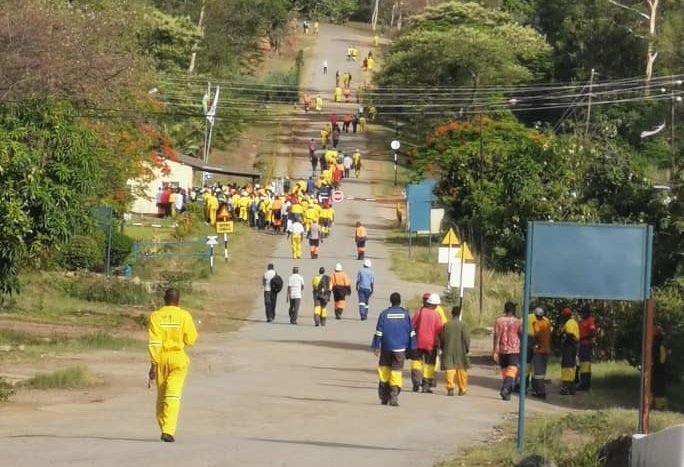
Renco Mine day shift workers have today (December 13) gone on a sit in industrial action in protest over delayed November 2021 salaries and their annual bonus.
The strike comes barely a month after they staged another demo on November 23 demanding their October salaries.
The demo was stopped after some deliberations between workers representatives and management that resulting in some resolutions being passed.
However, the resolutions are not fulfilled up to now and this has prompted workers to mull another demonstration.
“We went on strike on November 23 and the workers’ committee and management came up with resolutions which were lucrative and we went back to work. However, the resolutions have not been met up to now.
“They had promised to pay November salaries by weekend (November 27-28) and December salaries a week before Christmas, but they are yet to pay the November salaries up to now,” said a source.
When contacted for comment Renco Mine General manager Tsanangurai Dube said he could not comment on the matter before hanging up.
Rio Zim Public Relations Manager Dr Wilson Gwatiringa also said he could not give a comment on the matter.
“I have no comment on that matter, I cannot comment,” said Gwatiringa
Another source said they are also calling for the dismissal of the Human Resources Manager Joel Siziba whom they accuse of not listening to their concerns.
“In November we were also striking against Siziba whom we want fired. He is incompetent and does not listen to our concerns on general working issues. The management had promised to call him for hearing and give the verdict the following week but up to now nothing has materialized,” said the source.
Workers on a sit in industrial action
The workers said they were willing to work but the company was letting them down and had a habit of not paying workers well every year end.
They also accuse the mine of giving much attention to Cam and Motors, its other company in Kadoma at their expense.
“It has become a trend that from September to December they do not pay workers on time every year. We are production-oriented workers and are willing to work but how can we work when we are hungry, we have no energy.
“They are investing a lot in Cam and Motors Mine in Kadoma thereby neglecting us here but are producing a lot,” said the source
Last year Renco Mine made headlines after giving workers two 300 ml drinks as bonus for meeting their monthly production target.
The government of Zimbabwe has on record encouraged the general citizenry to ensure total conformity to the World Health Organisation (WHO) rules and regulations meant to curtail the spread of the pandemic.
Great strides have been made in trying to ensure that the spread of the deadly virus is kept under constant check including lockdown measures to minimise movement of people, arrest and fining of people who do not adhere to safety rules like masking up among other measures.
Masvingo Teachers’ College of late recorded more than 150 cases of the new variant called Omicron among student teachers at the tertiary institution after the variant was detected in neighboring Botswana and South Africa.
A few days later, the country’s vice president who is also the Health minister had the guts to address a crowd of residents in Masvingo during the third anniversary of the national cleanup campaign.
A month ago, a huge crowd turned up for the commissioning of the Amarula plant in Mwenezi by President Emmerson Mnangagwa in what looked like a political rally.
Then the question that comes to mind is: Is this call to adhere to the rules and regulations spelt out by WHO rhetoric or not?
There seems to be lack of sincerity on part of our leadership when it comes to the issue of gathering crowds as there seems to be selective definition of such gatherings going along lines of subjectivity at the expense of objectivity.
Just in the wake of the high number of cases being recorded in Masvingo, was it not advisable for the minister of Health to avoid gathering people in the area which seems to be a hotspot for the new Omicron variant.
The complacency that has been doing rounds at the lips of most people seems to be extending even to the executive who should take charge and play a leading role after all.
The situation at most if not all banking halls in Masvingo, is not pleasant at all as people jostle to get their 13th cheque and the exposure to the variant of the people in the queues should be a cause for concern for the country’s leadership.