Home Blog Page 542

Who will nurture Copa Coca Cola talent?

0

…football
clubs urged to embrace junior policy

Clayton Shereni

Football
clubs and national teams in Europe are envied throughout the world for their
consistency in sport development support through the several early talent- identification
practices they have put in place.
Their
unwavering support for young players is evident in the creation of football academies
and partnerships with tournament organisers and sponsors.
In
Zimbabwe, football clubs, academies and junior national teams have a chance to
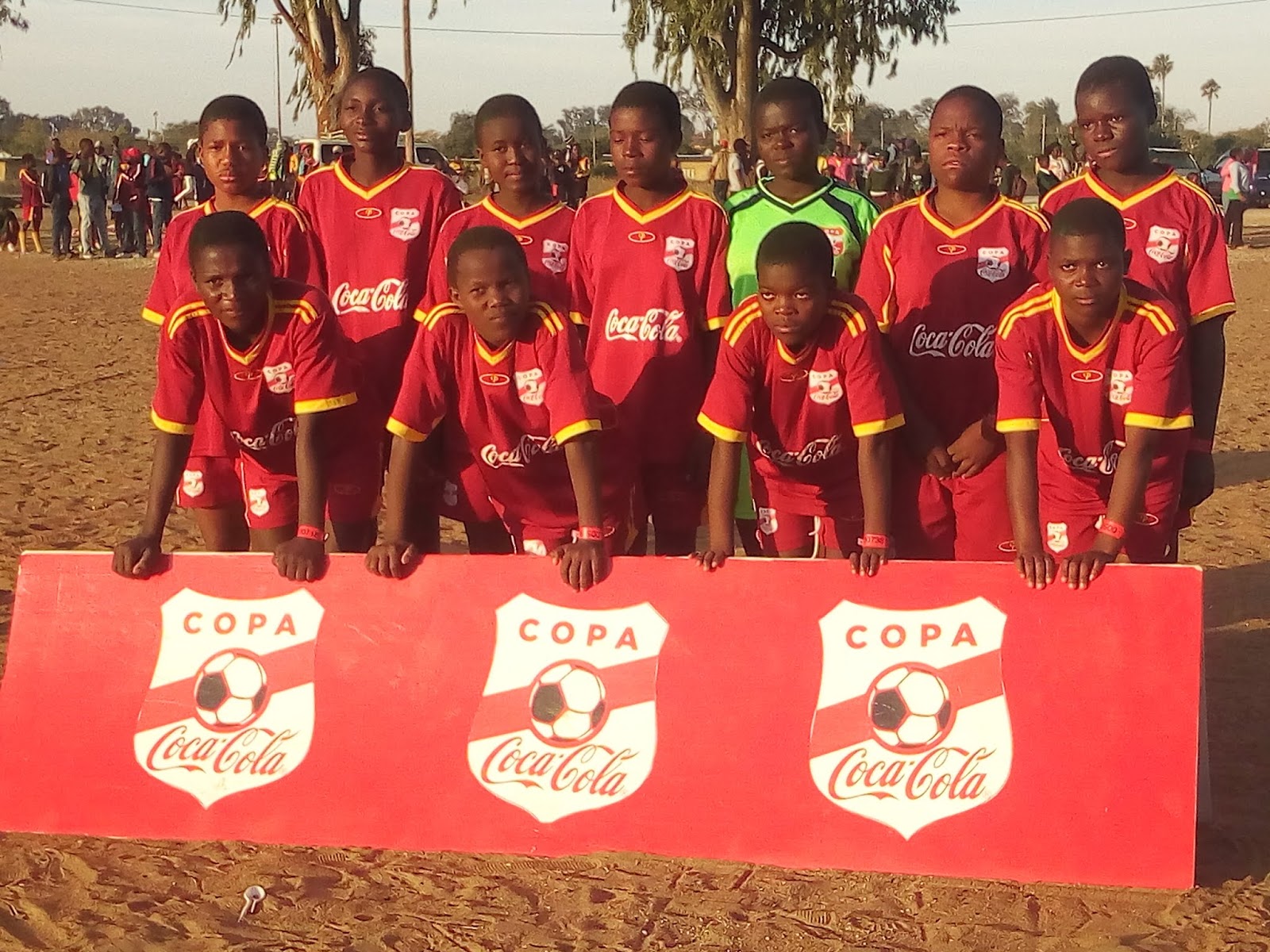
scout for fresh, raw talent at the prestigious Copa Coca Cola schools soccer
tournament which is held annually.
For
the past 31 years, football-loving high school pupils have found succor in the
country’s largest schools tournament; a platform for them to showcase their
talent of the world’s most beautiful game.
The
tournament has been going on for the past 31 years and nine years for boys and
girls football players respectively.
The
tournament has so far lived up to expectations; with organisers inviting the
Premier Soccer League (PSL) and academies to scout for talent at this year’s edition
of the tournament.
Meanwhile,
the local football mother body Zimbabwe Football Association (Zifa) has made
calls to local clubs to adopt a junior policy and sign young football stars in
their squads.
Football
clubs in the country are, however, not doing enough in terms of promoting young
talent but are rather going for ripe and ready 19 and 20 year-olds.
Looking
at the history of some of the country’s biggest players, it can be seen that
Copa Coca-Cola played a part in their growth.
Players
like Peter Ndlovu, Hardlife Zvirekwi, Artwell Mukandi and Kaizer Chiefs
talisman Khama Billiat owe part of their success to the tournament.
Speaking
to TellZim News after this year’s tournament which was held in Kadoma from July
11-13, former Warriors defender John Phiri, who was among the invited guests,
applauded the organisers and sponsors for developing future stars.
He
said clubs had of late failed to take the opportunity and partner Copa
Coca-Cola in efforts to develop future football stars.
“Copa
Coca Cola is developing these young stars and the clubs should come, identify
and nurture talent being exhibited here so that we create an opportunity for
these players to grow. They are aiming to play at the highest level so there
should be professional coaches teaching these boys and girls some techniques,”
said Phiri.
National
Association of School Heads (NASH) head-in-charge of football Tranos Mbwirire said
football clubs in the country must intensify their efforts to introduce junior
policies at their clubs in order to improve football standards in the country.
“The
problem with most of our big teams in the country is they don’t have any junior
policy. They always go for tried and tested players but it is high time they come
up with new strategies. If we pull together, we would go a long way in
developing soccer in Zimbabwe,” said Mbwirire.
This
year’s tourney was star-studded, with both boys and girls players giving
outstanding performances in their respective categories.
In
the boys category, Prince Edward were crowned champions after beating
Rusununguko with a goal to nil to win the trophy for the first time after four
attempts in which they always lost in the finals.
The
center of attraction in the finals was PE’s midfielder Alvin Dube who scored
the decisive goal and was later named player of the tournament
Another
notable player in the boys’ category was Rusununguko striker Dylan Gumbe who
was instrumental in his side’s superb run up to the final match of the
tournament although he missed a scoring chance from the penalty spot in the
finals.
Prince
Edward shot stopper and goalkeeper of the tournament Ronald Uraya proved to be
a future star by showcasing a solid performance.
The
girls’ category was won by Mpopoma High School; a team which had some of the
most talented players with noticeable potential to play for the Mighty Warriors
in the near future.
Other
notable players from other teams were midfielder Bethel Kondo of Nyamauru High and
Nataly Mbavha of Mwenezi High.
These
are just but a few picks from the vast talent pool that this year’s Copa
Coca-Cola tournament presented.
The
ball is now in the coat of local clubs and academies in major cities to take
advantage of this talent and develop it.

Zanu PF Cllr brutalises rival’s minor son

Courage Dutiro
Masvingo
Rural Ward 30 Zanu PF Councillor Sungano Matakanure is in trouble with the law
after she allegedly brutalised her 2018 primary election rival’s nine-year-old
son.
The
councillor is said to have carried out the savage attack with the connivance of
some her supporters in the ruling party.
Magistrate
Patience Madondo ordered Matakanure, of Tokwane area, to return to court on
July 26 for further hearing.
It
is the State’s case that on November 14, 2018, at around 15:00hrs, Matakanure
and six other villagers assaulted the boy with open hands and fists.
The
court heard the boy was brought to Matakanure’s home by Priscila Tizirai who
had seen him allegedly trying to rape one of the villagers’ daughter.
The
villagers gathered at Matakanure’s home and summoned the boy’s father where an
argument began after he noticed that his son’s legs were tied by a rope.
The
court also heard that Matakanure and the other villagers also assaulted the
boy’s father with open hands, sticks and fists.
In
defending herself, Matakanure said the father of the boy was cooking stories
against her because she defeated him in the primary elections.
“I
was not at home at the time in question. We are from the same political party
but this man is framing stories against me out of bitterness since I defeated
him in our party primary elections in 2018,” said Matakanure.
Another
villager who also faces assault charges claimed that she was being maliciously
implicated since she relates well with the councillor.

Elections threaten to tear ZSDA apart

0

                                                Edmore Veterai
Beatific
Gumbwanda
CHIREDZI
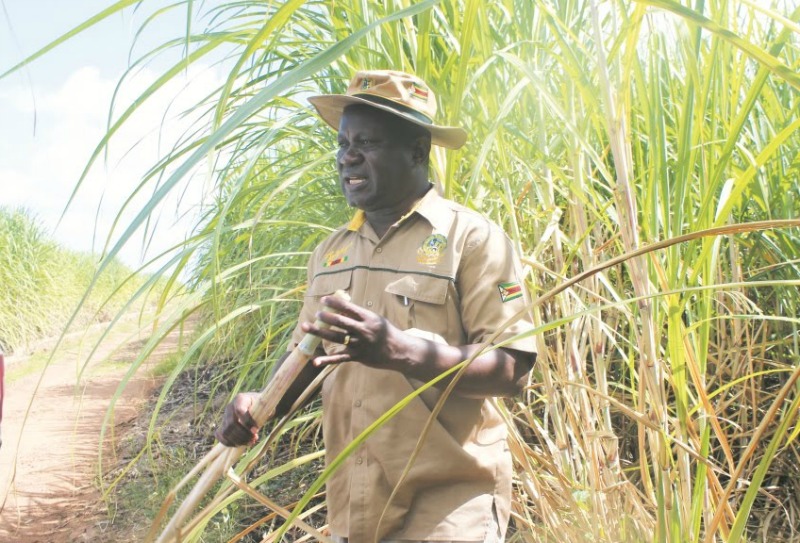
Serious fissures have emerged within the Zimbabwe Sugarcane Development
Association (ZSDA) after a disputed election in which former chairperson Edmore
Veterai was walloped by Elisha Tamirepi for the top post.
The
election to choose the association’s new executive was held recently at
Porepore Hall in Mkwasine and Veterai has refused to accept defeat and is said
to be leading a parallel executive.
Tensions
started in April this year when the Tamirepi camp sought out a court order to
bar an election which they said was being conducted under a dark cloud which
would favor the Veterai camp.
Last
week, Tamirepi polled 70 votes against Veterai’s 60 with the latter refusing to
accept the results saying they are null and void.
“We
will not accept the result because it is a product of a fraudulent
process.  The elections were rigged and
people without identification documents were being allowed to vote,” said
Veterai.
Veterai
also said that the association has formally split into two respectable groups,
with one led by him and the other by Tamirepi.
“ZSDA
has formally split into two respectable working teams. One team is led by
Tamirepi and the other team is led by Veterai. We have established a team of
ten, five from the Tamirepi group and five from the E.G Veterai group.
“Next
week they will seat down to take stock of ZSDA inventory and equitably and
proportionately recognize each contribution on residues,” said Veterai.
The
election was convened by Chiredzi Rural District Council chairperson, Edward
Matsilele.
ZSDA
which had a membership of about 135 farmers is likely to face an exit from the
Zimbabwe Sugar Sales (ZSS) board, where an association should have a minimum of
100 farmers.

Command Agriculture farmers cry foul

0

Stephen Ephraem
CHIPINGE – Farmers who were contracted
under the Command Maize Programme in Chipinge East are crying foul over
exorbitant charges by transporters and mobile money agents when they deliver
their produce to Chipinge Grain Marketing Board (GMB) depot.
This came out at
an area agricultural show that was held at Muzite Primary School where a record
of over 76 communal farmers from Muzite and Gwenzi communal lands exhibited
their agricultural produce.
“We are being
fleeced by transporters who are charging between $7 and $15 per 50kg bag of
maize from here to town. The charges are too high considering that people here
do not have enough resources owing to Tropical Cyclone Idai which affected us
in March this year,” said one farmer Simba Mahaka.
Nancy Tafataona indicated
that farmers were also being swindled by mobile money agents who are charging
30 percent to get access to cash.
“This area is so
remote that whenever one tries to get cash, mobile money agents deduct
additional charges. We wish if GMB could consider paying us with cash,” said
Tafataona.
Chipinge East
Agritex Supervisor one Musinaki expressed concern over the high transport costs
and percentages in accessing cash.
“It’s true that
transporters are charging high prices to ferry maize to GMB. They cite poor
roads from Gwenzi and Muzite as well as black market fuel prices as factors
that makes them charge high fares.
“As for mobile
money agents, they are taking advantage of the cash crunch in the country so
whoever has hard cash dictates the pace.
“The exorbitant
charges have a negative effect on maize deliveries to GMB. If unregistered
buyers come and flash hard cash to the farmers, they might be tempted to
deliver the Command maize to them since the farmer would do away with transport
charges and mobile money charges. Something must be done as soon as possible
before the situation goes out of hand,” said Musinaki.

Negovano School in severe water rationing

0

….MEDRA
pledges to help find solution
Anymore Magawa
BIKITA –
Negovano Primary School in Bikita South is experiencing a severe shortage of
water which has seen teachers at times sharing a bucket of water per day,
TellZim News can reveal.
Speaking
at a ceremony held at the school to handover furniture donated by Methodist
Development Relief Agency (Medra), Negovano Primary School head Stanley Pepukai
said the water shortages were affecting teaching and learning.
“Due
to continuous drought in this area, we are experiencing critical water
shortages for domestic use. We have got only one borehole here at school and it
cannot provide enough water for our staff members.
“We
are now practicing water rationing. We have 37 teachers here but the borehole
produces 30 buckets in the morning and another 30 in the evening. This is
having a severe negative impact on our quest to improve the teaching and
learning experience,” said Pepukai.
In
response, Medra promised to work with the school and the community in order to
improve conditions for both teachers and pupils.
This
organization donated 200 chairs for pupils, one rocking chair for the school
head, desks, five chairs for teachers, 1 530 A4 exercise books, 200 A5 exercise
books, 536 pencils, 150 rulers, 407 ever sharp pens, 35 infant school beds and
junior satchels among other things.
Medra
national director Clever Tavaziva said their wish was to help the needy as a
way of spreading the word of God.
“We
are involved in many developmental projects which include borehole drilling to
secure clean water, and toilet construction to avoid diseases like cholera.
“In
our next visit, we are going to spend some days here painting some structures
at this school and doing some renovations if possible,” said Tavaziva.
In
an interview with TellZim News, Bikita District Schools Inspector (DSI) James
Mahofa said they had approached various stakeholders to help schools affected
by Cyclone Idai in the district.
“We
have approached various stakeholders like the Infrastructural Development Bank
(IDBZ), Medra, Fenix Trust,” Mahofa said.
He
encouraged parents to contribute towards improving learning environment for
their children.
“We
urge parents to play their role and help develop the school so as to create
better learning conditions for the pupils,” said Mahofa. 

Man fatally stabbed at church all night prayer

0

Diana Gondongwe

An
all-night prayer turned into an all-night of mourning and anguish for the
Guuriro family after their relative Clever was fatally stabbed to death over an
argument of poorly prepared food.
Clever
Guuriro was stabbed by Tinos Madyenembwa after Guuriro and his friend
Simbarashe Gumbochuma complained about poorly prepared food.
Masvingo
provincial police spokesperson Chief Inspector Charity Mazula confirmed the
incident and urged people to always seek a third party when they are having a
misunderstanding.
“I
can confirm that a man was stabbed to death in Muchakata at a church gathering
and we urge people to solve their differences amicably and find an elderly
person to intermediate in order to save lives,” said Mazula.
Guuriro
and Gumbochuma went to an all-night prayer at Mutupo Madondo’s homestead in Mutumwapavi
Village under Chief Shumba.
Gumbochuma
and Guuriro were served food by a 14-year-old boy and they complained about the
poorly cooked relish saying it looked and tasted like cooked human hair.
The
boy went on to tell the people who had cooked the food and they were not happy
about the comments that were made by the two.
Upon
realising that the boy had reported them to the cooks, Guuriro and Gumbochuma
went after the boy and started beating him.
The
boy managed to flee and reported to his elder brother Moses Gundiro who was
with Madyenembwa who then confronted Guuriro and Gumbochuma.
The
four got into a heated argument and a brawl ensued resulting in Madyenembwa
drawing a knife and stabbed Guuriro on the left side of the abdomen.
The
wounded Guuriro ran managed to run to his father whom he told what had happened
before collapsing and dying.
The
case was reported to the police and Madyenembwa was arrested and is in police
custody.

Chivi villagers mull demo against Murowa Diamonds

0

                                               
…mining company accused of flagrant
violation of villagers’ rights
Diana
Gondongwe
CHIVI
Villagers in Chivi
Rural District Council (RDC) Ward 20 are not happy with Murowa Diamonds’
operations which they say are extending to school grounds and other unsuitable
places thereby creating a big hazard in the community.
Villagers say the company is violating their rights
through its ‘grossly irresponsible’ diamond prospecting and mining work.
Many people in the area claim that when the company
arrived in March 2018, villagers were told that only feasibility studies to
determine whether or not mining was sustainable were being done, nothing more
and nothing less.
“When they came, Murowa’s people never engaged the
community in an honest manner and there is a lot that they are hiding. We were
told they will only be taking samples for six months or so but now they have
been mining for over a year. The reality is they are already mining and the
community is not benefiting in any way.
“As a matter of fact, their mining activities
disrupted our way of life and now we have to live with many health hazards. As
a community, we want a meeting with the company so that they clearly explain their
operations and how they intend to involve us and deal with the risks they have
created for the community,” said Tinashe Mkandi, a villager in the area.
The Zimbabwe Environment Lawyers Association (ZELA)
held a meeting with villagers and advised them to desist from signing any
papers they did not understand as they could be tricked into signing agreement
forms with the mine.
During the meeting, villagers stated that Murowa
Diamonds’ main operations were situated barely 50 metres from St Simon’s Zhara
Primary School classrooms. They said they were not happy with this because the mining
activities were noisy and distractive to school pupils.
“The mine is barely 50 meters away from our primary
school. How will our children concentrate in all that noise from the drilling?”
said one villager who refused to be identified.
Residents also lamented that the company was now
mining in school grounds and was using the school’s boreholes.
Some villagers said they suspected that the school
head, Lazarus Ivhurinosara could be working in cahoots with the diamond mine in
return for favours known only to him.
Ivhurinosara was given a letter from the residents’
lawyers stating that parents wanted to know if he had any agreement with Murowa.
“Our clients told us that Murowa Diamonds is mining
on school grounds (and is) making a lot of noise to pupils thereby making their
learning difficult. Our clients instructed us to demand to know from you what
type of arrangement you have with Murowa Diamonds,” reads part of the letter
from Matutu and Mureri Legal Practitioners.
Villagers also claim that some of their domestic
animals (turkeys and cattle) died after they 
drank waste water from the mining operations.
Ward 20 Councillor Alec Nhundu said that the
community had engaged lawyers and was now waiting to be advised on the way
forward.
The community was supposed to have a meeting with mine
officials on July 17 but mine officials later called the community’s lawyers
asking for a postponement. They, however, did not give any reason why they
wanted a postponement and neither did they suggest a date more convenient to
them.
The villagers say they are ready to demonstrate if
that is what it will take to force the company to the negotiation table.

Another empty threat?


…We are going to flood the streets: Sithole

..MDC
youth leader defends Sikhala

…says
streets will be ‘our second home’

Courage Dutiro

The
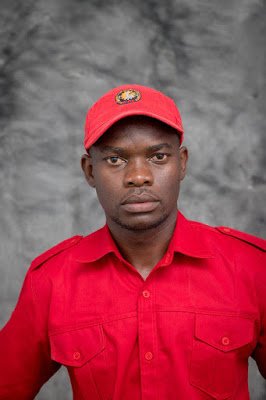
Movement for Democratic Change (MDC) national youth leader Obey Sithole has
said young people in the party will soon flood the streets in protest against
bad governance which he claimed had resulted in the current severe economic
difficulties.
Speaking
to TellZim News after MDC vice chairperson and Zengeza West MP Job Sikhala was granted
bail by the Masvingo High Court on Monday July 14, Sithole said the party’s
youth were going to ‘make the streets our second home’ in order to send a
message to President Emmerson Mnangagwa.
Sithole
strongly condemned Mnangagwa’s government which he said understood no other
language but street demonstrations.
“It
is indeed true that as a party, we are going to flood the streets; accepting
the streets of Zimbabwe as our second home because it is time for us to utilise
our constitutional rights as enshrined in the constitution.
“We
are going to simply put that constitutional provision into practice. So as a
party, we are going to stage several massive demonstrations to send a clear
message because we are sick and tired of the poor governance we face at the
hands of Zanu PF,” Sithole said.
He
said government would be making a big mistake to assume that people were afraid
of demonstrating.
“We
have rights and we will make use of those rights as given to us by the
country’s constitution. No repression will defeat the people’s lawful rights,”
said Sithole.
Zanu
PF national political commissar Victor Matemadanda recently warned that violent
protests will be met by deadly force from the army.
On
Sikhala’s RTGS5000 dollar bail, Sithole said it was clear that the state was
out to intimidate people through unjustifiable arrests.
“Sikhala
did not commit any crime. What he only did was to amplify the voice that resonates
with the people of Zimbabwean,” said Sithole.
Sikhala
was arrested in connection with statements he made in Bikita to the effect that
the opposition will overthrow Mnangagwa’s government before the 2023 elections.
.

A Level question and Answers

0


Mhuri Muneni
Question: Discuss the
characteristics of prophets in Islam.
Belief in
Allah’s messengers is one of the articles of the Islamic Faith. This means that
Muslims strongly believe in the existence of Prophets as stressed in the Quran.
There are specific characteristics expected of a true Muslim prophet as
discussed in the paragraphs hereunder.
A true Muslim
prophet must be a monotheist. R. A.B Ewbank posited that a monotheist is
someone who believes, worship and preaches about the one and only true God. Muslims
believe in Allah and his Oneness, therefore all Muslim prophets are
monotheists. In Islam every prophet shares the same core beliefs about Allah,
Day of Judgment and they all castigate idolatry. Muhammad the last prophet of
Allah taught that all prophets who came before him taught about the same God
who gave him the revelations, Moses also taught about the Oneness of Allah. Many
prophets of Islam serve as vessels to inform human beings about the
eschatological consequences of falling to adhere to Allah’s message.
In addition to
the above, an Islamic prophet must be morally upright. J. Hayes posited that
moral obligation is an attribute for every prophet of God. This means that
every prophet of God must be morally good. Islam as a religion is said to be
the perfect way of life in which every believer must surrender or submit
themselves to Allah. This logically implies that they must be morally
acceptable. Prophets have to live an exemplary life; they are compelled to have
compassionate and tender hearts like Ibrahim.
Moral
uprightness is a characteristic that every Muslim prophet must have. Jesus (Isa)
is a very good example of a prophet who lived a life of moral uprightness.
Another
characteristic of a Muslim prophet is righteousness. True Islamic prophets are God
fearers. They have to leave a life free from sins and other satanic practices.
Ibrahim is such an example of a righteous man. Allah’s messengers are supposed
to be clean in terms of evil practices. Islam teaches that prophets are
protected by Allah from committing sins as shown in Quran surah4,ayah69 .They are
unlike ordinary human beings in the sense that they live under the will and
command of Allah (Bajapai, N: 2017).
Prophetic
typologies shared by all prophets include prophetic lineages. Ibrahim was the
great messenger of Allah and from his lineage Allah chose his prophets, the
Qur’an teaches that Allah is all knowing thus he chose His messengers from the
Ibrahimic lineage. Prophets like, Jacob, Isaac, Moses, Aaron and Muhammad were
from the same lineage of Ibrahim, therefore, their prophetic lineage is one of
the characteristics of prophets in Islam.
More so, a
prophetic call is another characteristic of the Islamic prophets. Marara
postulates that a call is an important signature of a true prophet. This means
that real prophets have to receive a call from God. Islamic prophets are
supposed to receive a call or a revelation from Allah (Rapoport,Y: 2005).One
good example being that of Muhammad who received his revelation at the age of
40 years at the Hira caves and he even tried to resist the call but the will of
Allah was fulfilled, logically one can infer that a call is another
characteristic of the Islamic prophets.
Another
characteristic of an Islamic prophet is that they should be able to perform
signs and wonders. Muslim prophets according to Sayyid, M (2017) performed
several miracles a characteristic that differentiated them from ordinary
people. They did this through the inspiration of the spirit of Allah. It is
stated in the Quran that throughout their lives, Moses(Musa) and Jesus (Isa)
performed a lot of miracles. Moreso they had Divine books attributed to them, Jesus
had the
Injil (gospels), Muhammad, the Qur’an and
Moses the Tawrat (Torah)
Another
important attribute of an Islamic prophet is that of being faithful. As
servants of Allah, Muslim prophets are supposed to be faithful to their Master
and the subjects they serve (Shaurya. S 2017). They are Allah’s messengers hence
they need to be reliable people. Muhammad was such a character just like Isaac
and Aaron as revealed by the Quran. More so an Islamic prophet is supposed to
uphold social justice in the communities they serve. Islam claims to be a
peaceful religion which is against any form injustice upon Allah’s creation
therefore Allah’s messengers need to have such traits. They should be all
loving, avoiding segregation as well as assisting the need.
The prophets are
the best creatures with the best manners including truthfulness, honest and
extreme intelligence. It is impossible for Muslim prophets to lie, betray and
be stupid. They are preserved from repulsive diseases and they are against
blasphemy. They are protected to vileness, lustfulness and foolishness.
However,
prophets remain human beings they should be respected, believed in but they
should not be worshiped or be compared to Allah because Allah does not share
the same attributes with His creation.
The
author is a teacher at Errymaple High school Zvishavane. He holds a Bachelor of
Arts Degree in Philosophy and Religious, Post Graduate Diploma in Education.

Shungu na Mutitima (Mosi oa Tunya) – The Smoke that Thunders

0

Elizabeth Duve Dziva
Among the most essential African natural heritage which we have
benefited from despite our cultural narrowness is Mosi Oa Tunya, widely known
with the colonial name, Victoria Falls. The renowned waterfall is one of the
most awe inspiring views on planet earth and   the
largest waterfall in the world which is located on Zambezi river, the fourth
largest river in Africa and on the boarders of Zambia and Zimbabwe named after
Queen Victoria of England by a Scottish missionary and famous explorer David
Livingstone who is said to have “discovered” the falls in 1855.
Of course the latter was probably the first white man to
publish about the mighty falls to the outside world, but it is rather biased to
agree to the fact that he “discovered” the falls. Apparently, before Livingstone‘s
encounter, the majestic falls had always been a religious centre for the people
native to the area. This is despite the Euro centric ideology that Africans had
sacral fear of the falls hence would only worship from afar. The Tokoleya (Tonga
or BaTonga and the Leya or Baleya) people of Bantu origins, the Lozi, Makololo,
Nambya and the Ndebele are native to Victoria Falls.
Archaeological evidence suggests that the area has been
occupied from around 3 million years ago. 
The falls, fondly called Shungu Na Mutitima by the Tonga and later
aManzaThunqayo by the Ndebele migrants from Zululand is a roaring machine. Apparently,
the noise of the falls can be heard from a distance of 40kilometers, the mist
from the falling water rises to over 400meters and the falls can be seen from a
distance of 50km.
Before the dawn of overpractised and exaggerated modernization
and Christianity which turned the shrine into a plain park, the area was a
sacred and essential element of the Tokoleya culture. Victoria Falls formed an integral
part of their religious life. The most important religious aspect of the
Victoria Falls is that of the Chekausiye (Insikautshiye) which is also called
the Nyami Nyami by other ethnic groups associated with the falls. The snake was
believed to be the Zambezi River God or the Zambezi snake spirit which had a
direct link with the BaTonga Gods (Barimo).
The BaTonga often depict the snake as male and according to
oral tradition, it had a strong relationship with the inhabitants of the
valley. Long ago, the inhabitants of the area would go and worship during
difficult times like drought, famine and. However, due to the modern custody of
such natural heritage sites, the custom of using the falls as a shrine has
since vanished. Most probably, the slow bleeding of every aspect from socio
economic to political system is due to the demise of such norms.
It is beyond reasonable doubt that Shungu Na Mutitima (Mosi
Oa Tunya) is African heritage and needs not only to be enjoyed and devoured by
both indigenous and foreign tourists but also to be safeguarded. There is need
to cherish such natural wonders, the history and the romance as sacred
heritage, for our children and our children’s children. An intensive effort to
preserve our heritage is an essential link to our cultural, educational, aesthetic,
inspirational and economic legacies, all of the things that factually make us who
we are.
The striking Victoria Falls is a legendary site, apart from
being the world’s greatest sheet of falling water; it’s got exceptional
geological and geomorphological features and active land formation. It is also
a UNESCO world heritage site and one of the Seven Wonders of the World. The Victoria
Falls mist sustains a perennial rain forest. Victoria Falls lies along the
Zambezi River, one of the largest rivers in Africa which flows 1,687 miles across
Zambia, Angola, Namibia, Botswana, Zimbabwe and Mozambique until it reaches the
Indian Ocean.
The falls are also located within and close to some major
national parks namely the Mosi Oa Tunya National Park, the Victoria Falls
national park, the Zambezi national park, Matetsi Safari area, Kazuma pan national
park and the Hwange national Park. It also has the moon bow which is the
reflection of the moon on the waters of the falls which can be enjoyed at
night. It also has the lunar rainbow, and the devil’s pool, more so tones of
water which have been estimated to 6million cubic liters fall to the ground
every minute. Above all, According to David Livingstone, the breathtaking falls
are a majestic sight, extraordinary enough to be “gazed by angels in their
flight”
Our nation has diverse and extremely rich cultural heritage.
It is a source of pride for us as Africans. We need not look any further for inspiration,
communication and an opportunity for self identity than natural wonders like
Mosi Oa Tunya
Elizabeth Duve Dziva is an Archaeological
and cultural heritage practitioner presently teaching at Errymaple College in
Zvishavane, the views in this article are solely those of the author in her own
capacity and do not necessarily represent the views of any organization. Email:
duveelizabeth@gmail.com