
By Staff Reporter
MASVINGO – After spending a week in remand prison, Masvingo land developers and businessmen Godard Dunira (57) and Ephraim Gwanongodza (59) were granted bail by Regional Magistrate Innocent Bepura on Thursday, October 24, following a bail hearing that drew significant public attention.
The courtroom remained closely packed throughout the three days the accused appeared in court – during their initial appearance and the two subsequent days of their bail application hearing. The proceedings attracted people from all walks of life, including family members, friends, local politicians, and media representatives, all closely following the high-profile case.
The two, who are facing fraud charges for allegedly orchestrating a land scam involving the illegal sale of stands on a property known as the Remainder of Victoria Ranch, were released under strict bail conditions.
Magistrate Bepura ordered the accused to pay US$200 bail each and to adhere to several conditions, including reporting every Friday at Masvingo Central Police Station between 6 AM and 6 PM.
They are also required to reside at their given addresses, refrain from committing similar offences, and are prohibited from interfering with state witnesses.
The duo was remanded out of custody until October 29 for their next court appearance.
The bail ruling came after a lengthy hearing where the state, represented by prosecutor Innocent Mudzingwa, had opposed bail, arguing that the accused were likely to interfere with witnesses if released.
Defence lawyers had countered that their clients were of fixed abode and had been cooperating with police throughout the investigation.
Masvingo Businessmen Dunira, Gwanongodza granted bail

Dunira, Gwanongodza bail hearing deferred to Thursday
Two Masvingo land developers and businessmen, Godfrey Dunira (57) and Ephraim Gwanongodza (59), have been remanded in custody to Thursday October 2, 2025 for a bail ruling after their application was heard before Regional Magistrate Innocent Bepura. The two are facing fraud charges for allegedly orchestrating a land scam by selling residential and business stands on a piece of land known as the Remainder of Victoria Ranch.
The state, led by prosecutor Innocent Mudzingwa, opposed the bail application during a hearing that dragged for almost two hours. The defence lawyer argued that the duo were of fixed abode and had been cooperating with the police since the beginning of the investigation, which meant they deserved bail. However, the state maintained its opposition, arguing that the accused were likely to interfere with witnesses if released.
After hearing arguments from both sides, the court adjourned and Magistrate Bepura later made the decision to postpone the case to Thursday for his ruling on the bail application.
The court heard that the accused are shareholders of Ravajik Investments Private Limited, a company they formed in 2005. While Ravajik was allocated part of LOT A of Victoria Ranch for development, the complainant in this case, ShinePlus Holdings, was allocated 50 hectares of the adjacent Remainder of Victoria Ranch by the Ministry of Local Government, Public Works and National Housing in 2019. ShinePlus is represented by its Managing Director, Charles Junior Mushinga (39).
According to court papers seen by TellZim News, the accused persons sold stands to home seekers. They allegedly prepared a layout plan for the Remainder of Victoria Ranch, the land legally owned by ShinePlus and began pegging and selling stands. Payments ranging from US$2,000 to US$7,500 totaling US$1 million, were collected from various stand buyers.
The matter came to light in September 2025 when Shineplus visited the area and discovered structures on the piece of land. The matter was reported to the police, leading to the arrest of the two.
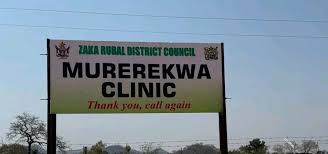
Zaka RDC commissions Murerekwa Clinic after 18 years
By Simon Masore
ZAKA – September 3 marked a significant milestone in Zaka district with the commissioning of Murerekwa Clinic, whose construction work started in 2007, by Minister of Local Government and Public Works, Daniel Garwe.
The clinic stands as a beacon of hope for the local community, particularly residents of Ward 08 and surrounding areas who previously had to travel long distances to access healthcare services.
The clinic’s construction began in 2007, initiated by the community’s determination to improve their healthcare.
During the commissioning ceremony, Minister Garwe emphasized the crucial role of councilors in driving development, stating they are the first point of contact for community needs, which then cascade to MPs and the President. He praised the clinic’s fully stocked pharmacy and encouraged people to utilize the facility for regular blood pressure checks.
“I went into the pharmacy, it’s fully stocked, and I got my BP checked. I urge you all to make sure you get checked before you go,” said Garwe.
Minister of State for Provincial Affairs and Devolution, Ezra Chadzamira, also present at the event, jokingly suggested that nurses remove family planning pills to boost the birth rate in the area.
“I have told the nurses to remove all family planning medication in the clinic. We want to make sure we have more children like the sand of the sea. Even the elderly who had given up childbirth, please go and try to utilize this clinic,” said Chadzamira.
Council Chair Fungai Maregedze highlighted the clinic’s benefits, stating it would significantly reduce the distance people travel to access healthcare facilities, especially pregnant women.
Chief Ndanga Born Wilson Makono expressed gratitude to the community for initiating the project and to the council for taking it over, acknowledging the role of MPs in contributing to the clinic through CDF.
“Nowadays, death is mainly caused by BP. We hear someone has collapsed here, another there, but I believe it’s going to be a thing of the past. You now have to come and get your BP checked before you go for a beer drink because you have your own clinic,” said Chief Ndanga.
The completion of Murerekwa Clinic will positively impact approximately 7,323 people, reducing their travel time and costs associated with accessing healthcare services. The clinic is set to benefit people drawn from Ward 08 of Zaka and parts of wards 7, 9, 23, and 34, where several residential stands have been established.
The nearest health facilities were previously Jerera Satellite Clinic (12km) in Ward 19, Gumbo Clinic (10km) in Ward 23, Musiso Hospital (14km) in Ward 19, and Nemauku Clinic (10km) in Ward 34, which were difficult to access due to bad terrain and flooding during the rainy season.
Works at the clinic began in 2007, with the community playing a leading role in mobilizing resources, supported by the Salvation Army Church, CDF, Zaka RDC, and Devolution funds. With the clinic now operational, the community can access essential healthcare services, improving their overall well-being and quality of life.
Over the years, numerous individuals and organizations contributed to the project, including Pastor Captain Zakiyo and Mhembere, former MP. Paradzai Chakona, former Councillor C. Majoni, Coordinator Ward Development Mai Mashanje, Committee led by Joseph Dakwa.
The Ndava family who donated US$450, Mr. James Makiya who donated 100 bags of cement, Ward 8 village heads who donated 8 bags each, former MP Chakona who donated 450 bags, 111 IBR sheets through CDF in 2017.
The District Development Fund 9DDF) provided three builders in 2019, Mr Ziki donated all window frames for the clinic block, Mrs. Madondo 18 door frames, and former MP Davison Svuure donated 50 bags of cement and deformed bars.
The sitting MP who is also the Deputy Minister of Agriculture donated David Marapira provided US$600 for construction of toilets, he also drilled and solarized clinic borehole among other things.
Notable acknowledgement also goes to Mr. Mudziviro who is caretaker since 2013 to date, Councillor Tererai Tererai, Mr Makomeke and the late Cllr Chipato, Mrs Jaricha, and Colonel
Other families that played a role include the Makomeke, and Mudzuri families as well as village heads who raised initial funds where each village in Ward 8 donated 8 bags of cement.
The local authority also commissioned a fire tender, four vehicles, one for the engineer and the other for the planner as well as motorbikes and cellphones for councilors.
MP calls for introduction of weighbridge system on major roads

By Virginia Njovo
In the pre-dawn darkness along the Harare-Beitbridge highway, the deep groan of an overloaded truck echoes through the night. Its suspension sags underweight far beyond legal limits, its tires bulging against tarmac that shows fresh cracks despite recent repairs. This scene plays out daily across Zimbabwe’s road network, but one parliamentarian is determined to change it.
On September 2, 2025, Hon. Discent Bajila, Member of Parliament for Emakhandeni-Luveve Constituency, rose in the National Assembly to present a motion that could transform how Zimbabwe protects its road infrastructure.
Speaking to TellZim News, Bajila said his proposal calls for a nationwide network of weighbridges to finally curb what he described as “the persistent problem of overloading, which has become synonymous with haulage trucks in Zimbabwe.”
“This motion is of great national importance as unchecked overloading accelerates the deterioration of road infrastructure, shortens the lifespan of our highways, and increases maintenance costs.
“By enforcing proper weight limits, the motion seeks to preserve public investment in roads, enhance transport safety, and promote sustainable infrastructure development for the benefit of all citizens,” said Bajila.
In his motion, the parliamentarian emphasized the urgent need for action, stating that “unchecked overloading accelerates the deterioration of road infrastructure, shortens the lifespan of our highways, and increases maintenance costs.” He further stressed that the motion sought to “preserve public investment in roads, enhance transport safety, and promote sustainable infrastructure development for the benefit of all citizens.”
“Introduce comprehensive weight restrictions for goods vehicles on all major highways and suburban roads, distinguishing between road classifications and their respective load-bearing capacities. Establish clear procedures for the measurement and enforcement of these weight restrictions, including the mandatory use of weighbridges and portable weighing scales.
He also proposed the introduction of penalties for non-compliance with the stipulated weight restrictions.
“There should be penalties sufficiently deterrent to discourage overloading and mandate the display of maximum permissible vehicle weights on all goods vehicles, in a form, manner, and position as may be prescribed by regulation,” said Bajila.
The motion comes amid growing alarm over truck-related accidents and road damage. The MP’s proposal recalled several recent tragedies attributed to overweight vehicles.
In July 2025, a severely overloaded haulage truck transporting mining equipment lost control and overturned on the Masvingo-Beitbridge Highway, spilling its cargo and blocking this vital trade route for 18 hours.
Preliminary investigations allegedly revealed the vehicle was carrying nearly 40% above its legal weight limit.
In August, the along-Chirundu Highway, an overloaded timber truck experienced brake failure while descending a steep incline, resulting in a multi-vehicle collision that claimed three lives and injured several others. Witnesses reported seeing the truck’s rear axle smoking from strain before the accident.
In May 2025, along the Bulawayo-Victoria Falls Road near Hwange, an alleged overloaded coal truck overturned while attempting to avoid a pothole, scattering burning coal across the roadway and causing a bush fire that took hours to contain.
The existing weighbridge at Birchnough Bridge, one of the few operational weighing stations in the country, has repeatedly recorded trucks exceeding weight limits by up to 50%.
Similar problems have been reported at the Beitbridge weighbridge, where despite regular checks, many transporters continue to overload vehicles, especially during nighttime hours when enforcement is reduced.
Transport industry insiders describe a system where overloaded vehicles have become the norm rather than the exception saying companies would want to reduce costs by having many trips or more trucks.
“There’s tremendous pressure to move more cargo for less money. Many companies turn a blind eye to weight limits because it’s profitable in the short term – even if it destroys roads in the long term as well as the vehicles involved,” said one truck driver who asked to remain anonymous.
Hon. Bajila’s motion specifically highlighted how overloaded vehicles were destroying the nation’s infrastructure investment, noting that the situation required immediate legislative intervention.
He called for comprehensive measures that would introduce weight restrictions and establish clear enforcement procedures across all major transport routes.
The Emakhandeni-Luveve legislator’s proposal includes strategic weighbridge placement at all major border posts including Beitbridge, Chirundu, Forbes, and Nyamapanda, in addition to expanding existing facilities at Birchnough Bridge.
It also calls for establishing critical domestic checkpoints on national highways and along mining and agricultural export routes.
The proposed system would mirror successful models in neighboring countries where weighbridges have reduced road damage by up to 40% while improving road safety statistics.
For communities along Zimbabwe’s trucking routes, the motion brings hope for safer roads and reduced maintenance costs.
Dunira, Gwanongodza appear in court
By TellZim Reporter
Two Masvingo land developers and businessmen, Godhati Dunira (57) and Ephraim Gwanongodza (59), have been remanded in custody and will return to court tomorrow, September 30, after their initial appearance before Magistrate Tafadzwa Miti on fraud charges. They are accused of allegedly orchestrating a land scam by selling residential and business stands on a piece of land known as the Remainder of Victoria Ranch.
The court heard that the accused are shareholders of Ravajik Investments Private Limited, a company they formed in 2005. While Ravajik was allocated part of LOT A of Victoria Ranch for development, the complainant in this case, ShinePlus Holdings, was allocated 50 hectares of the adjacent Remainder of Victoria Ranch by the Ministry of Local Government, Public Works and National Housing in 2019. ShinePlus is represented by its Managing Director, Charles Junior Mushinga, aged 39.
According to court papers seen by TellZim News, the accused persons sold stands to home seekers. They allegedly prepared a layout plan for the Remainder of Victoria Ranch, the land legally owned by ShinePlus and began pegging and selling stands. Payments ranging from US$2,000 to US$7,500 totaling US$1 million,were collected from various victims.
The matter came to light in September 2025 when Shineplus visited the area and saw structures on the piece of land. The matter was reported to the police, leading to the arrest of the two.
268 Mwenezi families living on unserviced stands

By Virginia Njovo
Some 268 families from Mwenezi living in Orewood suburb have been said to be living without basic water or sewer services, a situation that has forced them to use illegal septic tanks.
The development was revealed in the 2024 Auditor General’s report, seen by TellZim News, in which it was noted that Mwenezi Rural District Council had sold unserviced stands to the residents.
“On sewer and reticulation, the council allocated two hundred and sixty eight unserviced stands to beneficiaries in Orewood High density suburb. As a result, residents were using septic tanks and blair latrines which was against local government regulations which prohibit the use of septic tanks in such areas. In addition, the area was not connected to water reticulation system and residents had no access to safe water,” reads a part of the document.
The office of the Auditor General recommended that council should service the stands and the management responded saying that funds had been allocated towards servicing.
“There is a risk that residents may be exposed to disease outbreaks. Council should service the stands. The management’s response was that council has allocated funds for servicing the stands. Mwenezi RDC will collaborate with ZINWA to accelerate the piped water supply to Orewood high density suburbs,” reads a part of the report.
Mwenezi RDC was also fingered for operating without critical policies which is contrary to the Public Finance Management Act.
“Council was operating without policies such as asset management policy, debt management policy. This was contrary to the Public Finance Management Act (Chapter 22:19) section 50, which requires every public entity to adhere to and implement the principles of sound corporate governance. The risk is lack of guidance and inconsistency in the council’s operations,” reads a part of the letter.
The management said policy drafts were in place for most of the policies including asset management policy.
“It is agreed that Mwenezi RDC has no such policies in place. However, management is currently working on a number of policies including the one observed most of which are at draft stage. Management is committed to having an asset management policy, finance policy, ICT policy, risk management policy, recruitment of students on attachment policy and debt management policy.”
The local authority was said to be in arrears on the payment of salaries of which it noted that council management will in the future, try to meet all salary obligations if funds permit.
“The council was not generating enough cash flows to cover all its financial obligations. As a result, the council was three months in arrears on the payment of salaries and related deductions such as NSSA, pension, life assurance and medical aid. Out of total payables of ZWL$8.9 million, ZWL$8.2 million related to salaries. The risk is that service delivery may be compromised due to low staff morale,” reads the report.
The province’s councils also shared critical failures that appear epidemic in nature including violation of international accounting standards by using incorrect exchange rates, potentially distorting financial statements by billions.

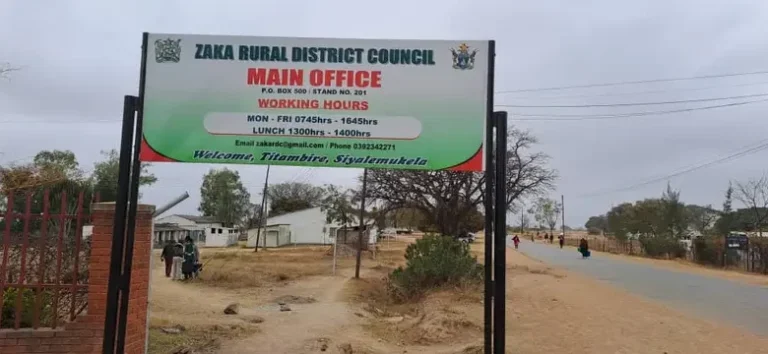
Deep-rooted factionalism rock Zaka RDC over senior job appointment
By Staff Reporter
A vicious power struggle between Zaka Rural District Council (RDC) Chairperson Fungai Maregedze and the Chief Executive Officer (CEO) David Majaura has exploded into the open, triggered by a fiercely contested and allegedly rigged hiring process for the position of Executive Officer (EO) for Housing and Social Services.
The scandal has laid bare profound divisions within the council, pitting elected officials against administration and revealing a tangled web of political influence.
The controversy centres on Clever Khumalo, a candidate from the council’s own social services department, who initially topped the interviews. His victory was short-lived. Councillors on the Human Resources committee, allegedly loyal to Chairperson Maregedze and unhappy that their preferred third-place candidate had lost, successfully pushed for the entire process to be nullified.
Khumalo refused to comment when he was contacted by TellZim News and reffered all questions to Majaura or Maregedze.
Majaura failed to answer his cell and Maregedze did not respond to questions send to her over the matter.
A full council meeting on August 8 ratified this decision, resolving that “a second round of interviews be conducted for the post in August 2025 with the same candidates,” according to official minutes seen by TellZim News.
However, in a move that breached the council’s own resolution, an additional, previously unvetted candidate was mysteriously added to the shortlist.
Highly placed sources within the council allege this candidate was given an unfair advantage as her responses were almost similar to the answer transcript.
“We suspect that the new candidate had seen the answer sheet because her answers were verbatim. She seemed to have crammed the script, reciting it to the dot without missing a comma,” said the source.
Unsurprisingly, the new candidate emerged victorious in the second round, demoting Khumalo to second place. The result ignited immediate fury among a faction of councillors, who are now crying foul and demanding the results be annulled.
“This is a clear case of rigging. We used to blame management for not implementing our resolutions, but now it is us violating our own word. How can we ever hold the administration accountable after this? It sets a dangerous precedent,” fumed a councillor who spoke on condition of anonymity.
The councillors argue that the inclusion of the new candidate was unlawful and are threatening legal action if the outcome is not overturned.
The contentious hiring stands in stark contrast to other recent recruitment processes at the RDC, which proceeded without incident.
Takudzwa William Kativhu was selected as the Human Resources and Administration Clerk, Trust Mtisi as the District Engineer, and Jephison Chikuni as the EO for Agriculture and Natural Resources.
This scandal is merely the latest battle in a long-running war between Chairperson Maregedze and CEO Majaura. Their feud, which has paralyzed development in the district, stems from Maregedze’s accusations that Majaura is incompetent and obstructive, while Majaura counters that the chairperson is overstepping her governance role to interfere in daily administration.
Critics, however, see a larger pattern of nepotism and a bid for total control. Maregedze’s husband, Clemence Chiduwa, is a powerful political figure being the Zanu PF Zaka DCC chairperson, sitting MP for Zaka South, and a former finance minister.
Many allege that Maregedze’s ascent to the council chairmanship and her current attempts to influence key appointments are part of a strategy to consolidate her husband’s political and economic influence over the entire district, turning the RDC into a family enterprise.
Masvingo Airport only open for chartered flights

By Andrew Zhou
The Airports Company of Zimbabwe (ACZ) has clarified that one of the company’s airports in Masvingo province, Masvingo Airport remains operational, but was currently limited to chartered flights with a maximum passenger capacity of 50.
Speaking during a media engagement meeting at the airport on 24 September 2025, ACZ Public Relations and Communications Manager, Tonderai Mangombe, dismissed claims that the airport was non-functional. He explained that while commercial airlines were not yet flying to Masvingo, the airport continued to serve smaller charter services.
“The airport is working. It accommodates chartered flights, mostly with capacities of up to 50 passengers. What people should understand is that the absence of commercial flights does not mean the airport is closed,” said.Mangombe
He added that ACZ has set its sights on transforming Masvingo Airport into a hub that fully supports the province’s tourism and economic activities. Plans were already on the table to attract investors for expansion, including the construction of a five-star hotel and a modern motel near the airport to facilitate even international flights.
Mangombe noted that the development would not only boost passenger traffic but also strengthen Masvingo’s position as a key gateway to tourism attraction places such as the Great Zimbabwe Monuments, Lake Mutirikwi, and Gonarezhou National Park.
“The airport is ready for expansion, and we are calling upon investors to come on board so that we unlock its full potential. With proper infrastructure in place, Masvingo has the capacity to be a top tourist destination like Victoria Falls,” he added.
The expansion plan comes after tourism stakeholders have long called for improved air connectivity to Masvingo, arguing that it would make the province more accessible to both domestic and international visitors.
After 43 years of service, ailing ex-councillor finally gets promised vehicle

By Virginia Njovo
CHIVI – Jephias Chimhaka, a ZANU PF councilor who served as Ward 10 councillor in Chivi North for 43 years,potentially making him one of the longest-serving councillors in Zimbabwe’s history was finally gifted a Ford Ranger double cab on September 22, 2025, a vehicle he had first requested back in 2021 when his health deteriorated and he could no longer walk to serve his community effectively.
The 79-year-old, who served from 1980 until stepping down in 2023 due to severe swelling in his legs, received the vehicle from the party through the Ministry of Local Governance in Harare, long after he had given up hope.
Expressing deep gratitude, Chimhaka said the vehicle would ease the mobility struggles that had plagued his final years in office.
“I am so grateful for this gift. I struggled to travel due to health issues, and this shows I have not been forgotten after serving the nation with passion and perseverance. I asked for a vehicle in 2021 when I could no longer walk the ward, but it never came. To receive it now, when I least expected it, touches my heart,” said Chimhaka
His dedication to public service began early. During the liberation struggle, he served as a branch chairperson, coordinating support for fighters, later becoming district chairperson before being elected councilor in 1980.
Throughout his leadership, Chimhaka championed development in Ward 10. He negotiated with the Rural Electricity Fund (REA) to supply power to Chisenga Primary School, Taru Primary School, and Zvamapere Secondary School.
He also played a key role in establishing Zvamapere Secondary School, the sole secondary school in the ward, and facilitated renovations at Hlanga, Chisenga, Taru, and Chigapa Primary Schools.
In healthcare, he initiated the construction of Zvamapere Clinic, which, once completed, will serve 32 villages.
For years, the community relied on Takavarasha Clinic, nearly 15 kilometres away, and Chivi District Hospital for referrals.
“People in my community struggled for a long time without a central primary healthcare facility. I managed to facilitate the establishment of a clinic at Zvamapere Business Centre, though it remains unfinished,” said Chimhaka.
He urged current leaders to collaborate closely with village heads to ensure sustainable development.
“I advise today’s leaders to work hand-in-hand with village heads, as they are the immediate custodians of their communities,” he said.
Chimhaka’s legacy reflects a lifetime of service, marked by tangible improvements in education, health, and infrastructure—a record that may well stand as the longest uninterrupted council service in Zimbabwe.
Woman scalds man’s privates with boiling water over beer bottle
By Ndinatsei Mavodza
CHIVI – In a shocking act of brutality, a 25-year-old Chivi woman was arrested for attempted murder after she deliberately poured a pot of scalding boiling water over a man’s body, targeting his stomach and genitals, all over a dispute concerning an empty beer bottle.
The vicious attack, which has left the local community reeling, unfolded on the morning of September 17, 2025, at the George Magura Bar in Chiwadza Business Center.
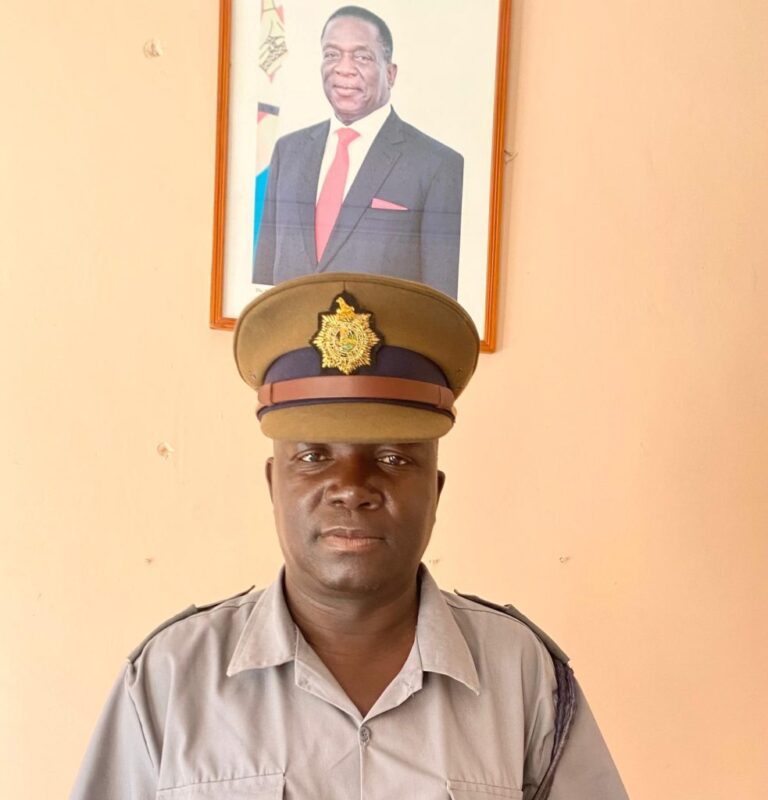
Masvingo provincial police spokesperson Inspector Kudakwashe Dhewa confirmed the gruesome details of the assault, which left the victim with serious injuries. The case was reported to ZRP Chivi on September 19, leading to the suspect’s arrest the following day.
Sources privy to the incident said the altercation began when Charity Chaka confronted Kamurai Tachi, who was peacefully drinking beer with a friend, demanding the return of a single empty bottle he had taken the previous day.
Report indicate that Tachi assured Chaka that a friend would return the bottle, but this seemingly mundane exchange quickly spiraled into violence.
In a fit of rage, Chaka allegedly slapped Tachi, who retaliated with a slap of his own and went away.
In a premeditated act of revenge, Chaka returned to the bar around 8:30 AM armed with a pot of boiling water. As Tachi stood at the bar, she launched her attack, dousing him in the scalding liquid. The water caused severe burns to his stomach and, most disturbingly, his private parts.
The victim was rushed to Chivi Hospital for emergency treatment, where he is currently recovering from the traumatic injuries.
The incident has sparked outrage and fear, serving as a brutal reminder of how a trivial disagreement can escalate into a life-altering violent crime.