Home Blog Page 377

Gold medal-winning wheelchair tennis player seeks sponsorship

0

Kimberly Kusauka

Disability does not mean inability for 21-year-old Masvingo Wheelchair Tennis Association (MWTA) tennis player Frank Musa who appeals for well-wishers to help him realize his dream of playing on the international scene.
The gold medalist Musa said he is looking for a sponsorship package that will help cater for all the expenses incurred when playing at international tournaments.
Muza boasts of a career experience spanning for a decade after he started playing wheelchair tennis in 2010 before participating at the 2012 Danhiko Paralympic games in Harare where he won a silver medal and played in Mutare where he got a gold medal in the same year.
Muza said so far he has played six games where he won four gold medals and two silver medals and was supposed to participate in the 2020 Tokyo Paralympic games that were suspended due to Covid-19.
“So far I played six games, of which four are gold medals while two are silver medals. I was supposed to participate in the Paralympic games in Tokyo, Japan last year but games were called off because of Covid-19 pandemic,” said Musa.
The talented tennis player vowed not to be fazed when playing on the international scene should the opportunity be presented.
“I am not afraid to play the game even in a foreign land, the game is in my blood but for now I am pleading with any well-wishers to help me secure rackets and a wheelchair for training,” said Musa.
He also said he holds an Ordinary Level certificate with average passes since he always focused on sports.
“I wrote my ‘O’ Levels but the results did not come out well since it is difficult for someone talented especially in sport and arts to pass with bright colors in academics,” said Musa.
Musa is the last born in a family of five where there are two girls and three boys and their parents separated.
MWTA coach Gundai Hondo said Musa is talented and was supposed to represent the nation at the Paralympic games in Japan after he won a gold medal in Danhiko Paralympic games played in Harare.
“Musa is a talented boy and I have trained him since he was a little boy. He has proven to be the best and was supposed to represent the nation in 2020 Paralympic games which were supposed to be played in Japan but were disturbed by Covid-19.
“We are pleading with well-wishers to sponsor him with money so that he gets all the equipment he needs for his training as he wish to play as an individual in international games to display his talent,” said Hondo.

GZU donates small grains to drought-prone communities

0

Melinda Kusemachibi

Great Zimbabwe University (GZU) through part of their research fair has embarked on distribution exercise of fertilizers and traditional grains to various districts in Masvingo Province.
The donations are part of the university’s corporate social responsibility after a workshop conducted at GZU Hebert Chitepo Law School under the theme: Heritage based research and innovation for modernising and industrialising Zimbabwe.
GZU Dean of the Gary Magadzire School of Agriculture Xavier Poshiwa said the seed donation programme would go a long way in enhancing research being carried out on traditional grains in dry land areas.
“It is in line with government policy of modernizing agriculture. We want to promote agro-innovations, new ways of doing things, processing, come up with different products and services to serve communities in dry regions where there is more evaporation than precipitation. We have started with two wards per district.
“We did what we call mapping as we ask farmers what they want to grow depending with their hectares. Under this programme, we gave farmers inputs so that upon harvesting we can have raw materials to process in our grain processing plant. Very soon, you will see our products in the market that is our idea. We are growing together with farmers, teaching them proper ways of farming,” said Poshiwa.
He also said their mission is to substitute the growing of maize with small grains that are drought tolerant.
“We want to come up with different grains which we call traditional grains. Our programme is centered on promotion, processing, production of traditional grains.
“Farmers in dry lands want to grow maize but they fail year after year that is why we introduced traditional grains to avoid crop failure. We are in a drive to promote traditional grains,” he added.
Poshiwa went on to say the main idea is to promote development in dry lands of Masvingo province.
“The main objective of the Agro-innovations in dry lands programme is to, on one hand, promote innovation, research and d Dry land are present in each continent, covering over 40% of the earth and are home to more than two billion people.
“They are key to global food and nutrition security for the whole planet, with up to 44% of the world’s cultivated systems located in dry lands. Dry lands across the globe are being affected by the changing climate development that will guarantee food security, job creation and promote a healthy ecosystem in dry lands. On the other hand, it is to ensure that adequate and appropriate heritage based Science and Technology infrastructure is established and utilized to support rural industrialization for improved quality of life for rural inhabitants,” said Poshiwa.
GZU drew inspiration from the realisation that small-scale farmers in the country and the entire Sub-Saharan Africa region face problems to ensure food security due to the semi-arid nature of their areas and thus established the Innovation centre.
The centre will play a key role in ensuring food security for the region at large improve agriculture innovation for economic transformation through harnessing community knowledge for sustainability, natural science and production.

VISET facilitates Support People’s Budget Campaign

Kimberly Kusauka

Vendors Initiative for Social Economic Transformation (VISET) recently facilitated the launch of Support People’s Budget Campaign (SPBC) in partnership with Zimbabwe Coalition on Debt and Development (ZIMCODD) with the aim to strengthen citizen agency among women and youth informal traders as well as fostering dialogue in pursuit of their community development’s needs.
The SPBC launched in Harare on November 10, 2021 and was attended by Socio-Economic Champions (SOCHAMPS), representatives from residents associations, students, graduate street vendors, urban planners and gender activists based in Harare, Chitungwiza and Goromonzi.
VISET Executive Director Samuel Wadzai said it was a platform for informal traders to share their ideas on what should be included in the budget and coming up with a monitoring framework.
“Basically it was a platform for informal traders to share their ideas on what should be included in the budget.
“We are going to come up with a monitoring frame work on the implementation of whatever is going to be presented as the budget, to see if it is going to be done in the manner in which it would have been presented, so that we are able to question and hold them accountable,” said Wadzai.
ZIMCODD Programmes Manager John Maketo said the campaign is strategic for people in informal sector since they are the majority and contribute 70 percent of the total population so their needs have to be addressed by national budget.
“The campaign is very strategic to people in the informal sector since they contribute 70 percent of the total population and we have over 80 percent unemployment rate in the country. The national budget must have specific protection mechanisms so that informal traders are not criminalised, giving reference to Covid-19 induced lockdowns where they were condemned to poverty, hunger and their children could not go to school.
“We are still living with the Covid-19 hence the budget must respond to emergencies such as natural disasters, climate change induced disasters, so informal traders should be prioritized because they do not have pensions, insurances and medical aid support or savings as they live from hand to mouth,” said Maketo.
ZIMCODD has been involved in the fight against corruption in Zimbabwe both at national and regional level from the broader perspective of illicit financial flows with corruption being cited as both a source and a facilitator of such flows from Africa and Zimbabwe in particular.

MoPSE finalizes sign language infant education syllabus

0

Rutendo Chirume

The Ministry of Primary and Secondary Education (MoPSE) has finished the construction of sign language syllabus for the infant level as part of efforts to implement learning of the language in schools six years after signing of the Sign Language Bill in 2015.
MoPSE Learner’s welfare director Kwadzanayi Nyanungo told Parliament on November 5, 2021, of the plans to make the teaching and learning of sign language mandatory in schools.
“You will also be happy to know that our ministry has already finalized infant education syllabus in sign language to ensure that sign language is taught as a language on its own right.
“Sign language should be examined and we are now proceeding with junior school up to secondary education syllabus so that anyone can learn sign language like any other language,” said Kwadzanayi.
However a Masvingo parent Prudence Hove raised concern over the need for schools to take that step seriously saying schools do not have enough resources to cater for students with special needs.
“If you go to Rujeko Primary School in Masvingo Urban, you will find that all students with different forms of disabilities are put in one class despite having various forms of disability. Children like that need special care according to each child’s level of disability,” said Hove.
When asked on the progress of policy implementation in schools, MoPSE Director of Information and Advocacy Taungana Ndoro said sign language is available in Zimbabwe just like any other language and is not mandatory.
“In Zimbabwe it is a language just like any official one and not mandatory. Yes it is available but not mandatory,” said Ndoro.
Despite the fact that sign language is recognized as one of the official languages in Zimbabwe, nothing much has been done to ensure that schools provide suitable infrastructure and even human resources to teach sign language at schools.
In Masvingo, Henry Murray is the only institution catering for the deaf and there is virtually no progress towards learning of sign language is accessible as a language in other schools.
Contacted for comment, Masvingo Provincial Education Director (PED) Shylatte Mhike said they wish there were sign language teachers in schools so that they could enroll leaners with such special needs.
“We do not have enough teachers in Masvingo province otherwise we would have been enrolling deaf students at any school. Henry Murray is the only school in Masvingo that we have that is offering sign language and it is sad because some of these kids never get an opportunity to acquire proper education. However, as a ministry we are working on the progress,’’ said Mhike.
Sign language is one of the 16 official languages in Zimbabwe.
Education Amendment Act of 2020 states that it is obligatory for every registered school to provide infrastructure, subject to availability of resources, suitable for use by learners with disabilities.

Mwenezi Sub Catchment Council donates 150 bags of Cement for dam rehabilitation

0

Cephas Shava

Mwenezi Sub Catchment Council (MSCC) has stretched its helping hand by donating 150 bags of cement towards the rehabilitation of Zvomupungu Dam, a local water reservoir, swept away more than a decade ago at the height of the 2004’s cyclone Eline.

Addressing the district’s heads of departments at a handover occasion graced by the District Development Coordinator (DDC) Rosemary Chingwe on Tuesday, November 2, at the MSCC’s Rutenga offices, the Sub Catchment Council vice chairperson, Boniface Someka said they managed to purchase 150 bags of cement after receiving a request from the community of Zvomupungu area of Mwenezi West’s ward 14.

“We were approached by the Zvomupungu community requesting for assistance with regards to their dam that was destroyed some years back. As Mwenezi Sub Catchment council, we have so far managed to gather 150 bags of cement which will go towards the rehabilitation of the dam,” said Someka.

DDC Chingwe who expressed gratitude over the Sub Catchment Council’s gesture said the rehabilitation of Zvomupungu dam would go a long way in helping the local communities that had been in a fix for too long.

“The community of Zvomupungu’s livestock has on several occasions been hit by motor vehicles while crossing the highway looking for sewage waters here in Rutenga. Also, before the sweeping away of the dam, the community used to do productive gardening and other initiatives but this had been put to halt. It is our hope that as soon as the dam is rehabilitated, the community’s livelihood is definitely going to expeditiously change for the better, “said Chingwe.

One of the beneficiaries, also secretary for Zvomupungu dam, Sekayi Masare told TellZim News that villagers are more than ready to play a leading role in the dam’s rehabilitation process  as the water body  has been the only key water source for the two local schools and several surrounding  villages.

“The community has already gathered 12 bags of cement, sand and stones which will be used during the rehabilitation. We are more than ready to see the success of the project as the dam is the only water body which, before being swept away years back, was used by several villagers and the local schools for gardening and drinking by their livestocks,” said Masare.

In an interview, area councillor Admire Matutu confirmed that Zvomupungu dam, besides directly benefiting 11 villages; there are 10 other villages that indirectly benefit from the dam.

722 bags of cement are needed to ensure the complete rehabilitation of the dam.

A consensus was reached for the community to kick start the project with the available donated cement, such that those who will be able to later on chip in with more assistance will find them progressing.

‘Forex auction rates unrealistic’

Courage Dutiro

The country’s foreign currency (forex) auctioning system introduced in an attempt to tackle the ever-rising inflation rate that is ravaging the country’s economy has unrealistic exchange rates, experts have said.
Kenneth Mureya an economic analyst said the economy of the country seems to be controlled by parallel (black) market exchange rates other than market forces resulting in abnormal exchanges.
“The reason why black market seem to be controlling the economy of this country is that our auction rate is not realistic. A simple sign showing that the market is not in equilibrium state are long queues for the US $50 that the Reserve bank of Zimbabwe (RBZ) has allowed for an individual to access from banks or bureau de change facilities,” said Mureya.
In Masvingo, this is witnessed by long queues that are usually at Bureau de changes and banks dotted around the city, where the US $50 is said to be usually accessed by black market money changers at the expense of ordinary citizens such as pensioners and civil servants.
Mureya also said the government should abandon the Zimbabwean currency to subdue the financial instability.
“Zimbabwe must for now leave the Zimbabwean dollar and join the Rand union which is not very strong as compared to the American dollar (USD) to at least stabilize the financial sector, though this comes with its drawbacks,” said Mureya.
Another economic analyst Vince Musewe said because of what happened in 2008, Zimbabweans now have lost trust in local currency, banks and have more trust in the USD.
“Zimbabwe receives about US $1 billion per annum on remittances from the diaspora. This money once it leaves the banking sector does not go back, people take their money and go to the streets and change it at a higher rate than they will get at the bank.
“In 2008 people lost a lot of money, there is fear of loss that is ingrained in the brains of Zimbabweans. There is always a distrust of local currency and more trust in US$, people are using US$ not only for transactions but also as a store of value,” said Musewe.
During the period 2007 -08 citizens would sleep at banks or wake up during the wee hours of the morning to get money at banks.
Musewe also said the auction-rate has done its work on arresting the rate of increase on parallel market because companies can go there and buy forex cheaper than they will from the streets but some people still go to the auction platforms and then resale it on the streets.
Also in Masvingo, it is alleged that some top Zanu Pf youth league members are among the impetuous people who are playing part in fueling the forex black market in the country’s oldest city.
As of November 16, 2021, the official government’s exchange rate was at ZW$105 to US$1.
It was also reported recently that RBZ boss Dr John Mangudya blamed social media for the instability of exchange rate.
When Bond notes were introduced in 2016, government said the two currencies US$ and ZW$ were at par.
As at November 5, 2021 shops at Mucheke rank were rating USD 1 to 180 ZW$, with illegal money changers operating outside most of Masvingo’s big supermarkets exchanging USD 1 to ZW$140 and USD 1 was going for 140 Rtgs (mobile money popularly referred to as Ecocash) on November 08.
Masvingo Consumer Council of Zimbabwe (CCZ)Regional Officer Ndumiso Mgutshini told TellZim News that the monthly breadbasket of a normal family in Masvingo is slightly above forty-one thousand (ZW$41 000)
Recently war veterans were arrested in Harare after they demonstrated against their monthly pensions which are currently pegged at ZW$ 16 000.
Prosper Chitambara an economist said the unrealistic nature of the formal forex exchange rate is driving the depreciation of the local currency.
“The auction rate does not fully reflect those market dynamics in terms of rising demand and limited supply of foreign currency. Therefore, what would be seen is the significant depreciation of the Zimbabwean dollar on the black market that contributed to the widening of black-market premium rates.
“I think there is need for further liberalization of the forex auction market with respect to the exchange rate determination so that at least there is a greater involvement of market forces of demand and supply in terms of price discovery or the exchange rate determination on the auction market,” said Chitambara.
Collen Jonasi an economic analyst also said RBZ should increase the quantity of USD in its weekly auctions to avert the shortages.
“I urge RBZ to improve the amount of USD available for allotment at its weekly auctions. They should up their game in mobilising USD because there is still a shortage and as a result firms go to the black market to fill the gap,” said Jonasi.

Is November still sacred ?

0

Melinda Kusemachibi

Known in African Traditional Religion practices and customs as ‘Mwedzi Wembudzi’, literally, the month of the goat or Mwedzi weBenzi (month of the fool), folks who believe in its sacredness hold that any contravention of the custom is taboo.
Carrying out any activity that it is deemed an abomination could bring bad fortune (death, accidents) to the land and its people while it is also believed that people should not marry during the month of November.
November or Mbudzi is a month in which no ceremonies or rituals may be done. If one intends to have a ceremony or event in this month, a spirit medium will have to intercede on their behalf. Even traditional courts close off.
It is believed that transgressors bring bad luck upon themselves. Weddings for instance, held in November are said to end in divorce as punishment for this abomination, with other ceremonies such as lobola negotiations, biras and tombstone unveilings largely prohibited.
In short, nothing, happens on the cultural front during the month of November, contrary to what the proliferation of other religious practices have brought in the current era.
Traditionalists concur that during this month the spiritual realm will be resting.
A traditionalist Sekuru Takura Tongwe of Zaka highlighted that rituals are not allowed to be done in November month.
“The month November ‘mwedzi wembudzi’ in shona is so sacred that all rituals and everything on socio-cultural front has to come to a standstill. The socio-economic aspects of everyone’s existence are believed to be linked to the spiritual world,” said Tongwe.
Paramount Chief Nemauzhe born Nelson Murandu from Chivi South said they still maintain the sacredness of the month and called for the upholding of such values and norms related to the African culture.
“Here in Chivi especially in my area, we still maintain the sacredness of this month. We call upon the younger generation to learn from our culture for the preservation of our values, customs and norms.
“What really happens is that we may have challenges as chiefs of having officers to enforce the upholding of such aspects of our culture. It might not necessarily be a matter of following different religious sects but as long as we are there, all the people in our communities should abide and seek the blessing of Chiefs and even approval if they can go ahead with such,”
He also said they also do not carry out any form of rituals during the month and even other related activities are suspended as well.
Mauka village head Phinias Kuchakanya indicated that partaking in any form of cultural ceremony during the month of November is a taboo.
“I would not accept bride in November, it is culturally wrong. In our village we do not do any rituals or allow couples to get married since it is taboo,” said Kuchakanya.
The traditional calendar of the Shona is based on the movement of the moon. Hence, the Shona calendar has 13 months in a year. The Shona believe that ancestral spirits rest during the month of November, known as mwedzi we mbudzi. During this month everything with links to the spiritual and ancestral world of Zimbabwean tradition temporarily ceases to function because ancestors will be resting
Today many people take the precision of traditional calendars for granted, unaware of the significance and impact of doing so. The African traditional calendar is based on the Earth’s rotation around the Moon.
The basics are that in November people don’t marry, they don’t perform traditional rites and so forth. But what has not been explained is: why is this so? And when does the traditional November start and end?
According to African tradition, this is the month that the ancestors do not deal with earthly issues but deal with Musiki, God, on various issues tabled before the ancestors during the course of the year.
However, Chief Murinye real name Ephias Munodawafa said he does not believe in anything about sacredness.
“I do not even know, I only heard about it when Negomo served Tsvangirai summons for marrying someone in November. To me that’s when the issue was popularized. In Masvingo it is something that was not popular at all. Nothing was exempted from being done just because of November. Anyway, let me say also hasten to say I am an Adventist and l do not believe in that,” said Munodawafa.
Assemblies of God Church Pastor Kimion Tagwirei said there is nothing taboo about marrying in November.
“Biblically, there is nothing spiritual or taboo about November month. On November 6, 2021 we had a wedding of one of our congregants in Bulawayo. November was just culturally declared sacred but biblically it has no sacredness thus all Christians who believe and subscribe to the Bible taken it like any other month. There is nothing wrong evil or taboo in marrying in November. It is viewed as wrong culturally by those who profess and propel culture,” said Tagwirei.
Should there be a violation, it is made good only by penance. In 2012, the late MDC leader Morgan Richard Tsvangirai was found culpable by Chief Negomo, Lucious Chitsinde, of breaking customary laws that prohibit families from performing marriage rites in the “sacred” month of November.
His marriage to Locadia Karimatsenga did not last and those who maintain this traditional custom think that the break up was due to Tsvangirai having broken customary codes.

MCC decommissions contaminated Hillside borehole

Kimberly Kusauka

Masvingo City Council (MCC) has decommissioned the Hillside borehole after water tests found out that the water was contaminated, which the city fathers felt posed a ticking health bomb to residents.
Masvingo Acting Chief Environmental Officer Ngonidzashe Mapamula said when such a case is reported the Ministry of Health and Child Care (MoHCC) together with the city’s Engineering department take measures and samples to determine whether the water is clean and safe as well as ensuring that the problem is rectified.
“Hillside borehole is a project that we did with Christian Care, but if you move a short distance you see another borehole which we decommissioned because it was consistently producing samples showing that the water was not safe for human consumption.
“As for the remaining and functioning borehole we took samples together with the Engineering department and from the tests that we recently did, results showed that the water is safe for human consumption,” said Mapamula.
He said there are other plans to address water supply problems that will be done in due process.
“There are other things that need to be done in the near future but it needs the Town Clerk and the Engineer to comment on that, but in terms of health all that I have said is what takes place nationally not only in Masvingo,” said Mapamula.
Continuous power supply problems have also been one of the major contributors to the city’s water problems as the power outages have been blamed for the inconsistent pumping processes at Bushmead Water Works.
In June council said they were going to install an alternative (solar) power source at Bushmead Water Works, a project that is still in the pipeline.
Masvingo has been experiencing perennial water challenges in recent years due to the ever-growing population which is way above its pumping capacity and as of now they have resorted to water rationing.
The city has also witnessed the creation and expansion of suburbs which has come as a burden to the local authority as it struggles to cope with service delivery demands especially refuse collection and liquid waste management.
Sewer reticulation has also been a headache for the city fathers while the delayed Mucheke Trunk Sewer project is in progress and expected to be in operation by 2023.

Shot in the arm for Una Una

0

Fredrick Moyo

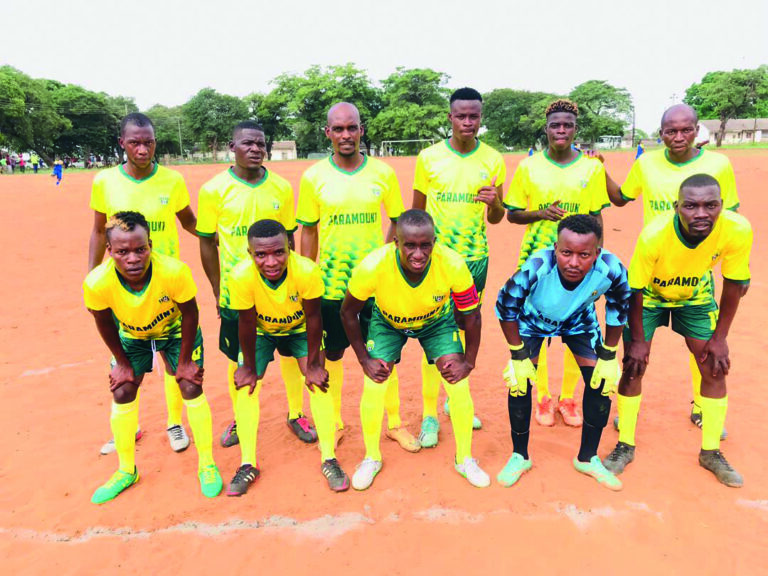
Masvingo United (Una Una) received a timely boost in their preparation for the coming Division 1 soccer season as they received 18 tracksuits, soccer jerseys, warm up and training bibs that were availed November 11, 2021 at Mucheke stadium.
Two individuals Topgear Mashoko and Godfrey Kurauone donated to the team maroon-coloured away kits with socks, green and orange bibs.
They also promised to provide match and training gear.
Speaking to TellZim News Masvingo United sponsor, Topgear Mashoko said he has a desire and wish that the team plays in the top fight league and that is what motivated him.
“What motivated me to give a helping hand to Masvingo United is that as a person who grew up loving and playing soccer, I saw it fit to give a helping hand and my wish and desire is that we have premier league in Masvingo that we grew up watching and following,” said Mashoko.
Club Chairperson and former Masvingo City Mayor, Hubert Fidze said the team is a community team and by that it has many sponsors and the donations will boost spirits in the dressing room and kindly appreciate the gesture.
“Masvingo United is a community team, it has many sponsors or donors, and we rely on the community.
“This donation we received today will boost the moral of the players and I would like to thank Mr Mashoko for the kind gesture and has promised to bring in more,” said Fidze.
He also added that they spoke with another sponsor who promised to give a helping hand.
“We also have another individual whom we recently contacted and said he will support us again with another kit,” he added.
Fidze also said he would convene a press conference and reveal the team’s budget to the community that will have auditors to manage the accounts.
“We are going to call for a press conference and reveal our budget to the community so that everyone knows where we are coming from and where we are going. This time around we are coming up with team auditors that will help us with the team’s books.
“What I want as chairperson is to have transparency, accountability, to be trusted by the community and all tenets of good governance in terms of running an institution like this club,” said Fidze.
Una Una head coach Ezekiel Mutoda also appreciated the kind gesture by the sponsors for the team.
“We are really happy with the donations as this will boost our morale as a team and we expect more, so that we perform well,” said Mutoda.
Masvingo united team captain and highly rated centre back Douglas Zvauya thanked the sponsors for coming in handy on behalf of the team which he said motivates the players.
“I would like to thank the sponsors for the donations that we received today on behalf of the team as this give us motivation,” said Zvauya.
Una Una shot stopper Henry Chitando also thanked the gesture from the sponsors.
Masvingo United has upped preparations as they await the resumption dates from the football mother board Zimbabwe football Associations (ZIFA).
Meanwhile, the Zimbabwe Premier Soccer league (ZPSL) kicked off last week after almost two years of absence.
The Platinum boys, Platinum Fc, Ngezi Platinum, Manica Diamonds, Black Rhinos, Chicken Inn, Herentals, and Bulawayo Chiefs are the only teams that managed to collect maximum points.
Meanwhile Bulawayo giants Highlanders, struggling Whawha Fc, newly promoted Tenax and Bulawayo City are in the relegation zone after their first matches.

ZHOCD youth introduces devolution cup in Masvingo

0

Kimberly Kusauka

Zimbabwe Heads of Christian Denominations (ZHOCD) youths have introduced a Devolution Cup tournament in Masvingo province comprising of various disciplines like wheelchair tennis, basketball, netball, and tennis.
The inaugural tournament was held at St Don Bosco Primary School in Mucheke on November 6, 2021, where the churches engaged in sporting activities to bring social cohesion and community participation in devolution projects.
ZHOCD Coordinator Pastor Admire Mupwanyiwa said the tournament is the beginning of brighter days for Masvingo youths and pointed out that the next round for teams that did not get time to play on November 6, would be played for November 13.
“This is the first game and we will have the second game this Saturday before the final. We took participants from the Catholic Commission of Justice and Peace (CCJP), Evangelical Fellowship of Zimbabwe (EFZ), Zimbabwe Council of Churches (ZCC), Union for Development of Apostolic and Zionist Churches in Zimbabwe, Africa (UDAVIZA) and persons with disabilities (PWDs).
“We have soccer, tennis, netball, basketball, and wheelchair tennis players of which some teams have already played, while the remaining will play this Saturday.
“As ZHOCD we are having church bodies coming together under a theme called Strengthening the role of the church in social cohesion and civic participation in devolution and developmental processes,” said Mupwanyiwa.
He said the tournament is a form of an awareness campaign against drug abuse, child marriages and increased crime rates among youths.
“This tournament is meant to raise awareness against child marriages, drug abuse and increased crime rates among youths.
“We are hoping that these games will open doors for sponsorship since we are using funds from our own pockets,” said Mupwanyiwa.
Technical Officer for ZHOCD Cup Tournament who is also Masvingo provincial chairperson for Wheelchair Tennis Association Moses Chitombo said the tournament is awarding youths an opportunity to display their talents.
“We are happy with this tourney because it allows our youths to showcase their talents in different disciplines which include wheelchair tennis and netball,” said Chitombo.
Sportsperson Reverend Elias Murairwa said they are launching the devolution cup in sports through the tournament and he has already identified the best players whom he is going to select to be in the provincial team.
“We have launched the devolution programme in sports and we have high hopes that this tournament will take us far. When I was moving around observing different disciplines, I managed to pick the best players who will form the core of our provincial team,” said Murairwa.
The next game will be played on November 13 at St Don Bosco Primary School.