Home Blog Page 579

Secondary education now more expensive than university education

0

Gift Gwindingwe

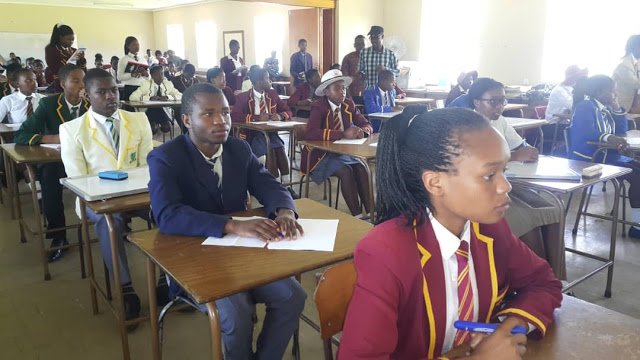
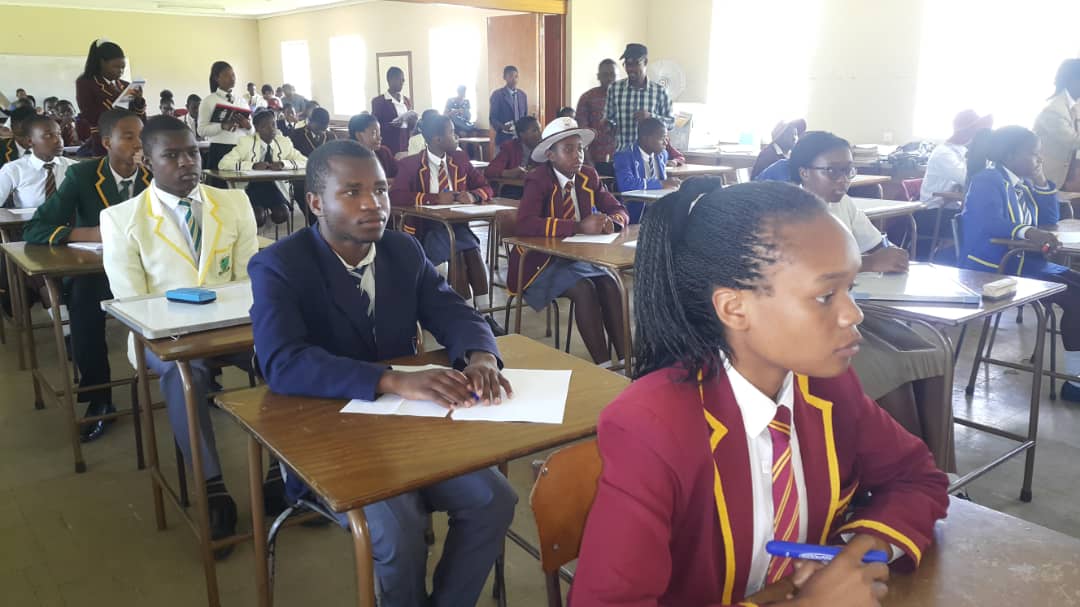
With the cost of living soaring almost daily and the majority of the population redundant, education has become one of the dearest forms of investment to have burdened the common man. With the cost of living sky rocketing and going beyond the reach of many, educational resources such as books, uniforms and fees are becoming too dear to secure for the generality.
Most boarding schools this year are charging between $800-00 and $1200-00 termly in fees. Working with the maximum, it means $1200-00 x 3 =$3600-00 yearly. This is minus uniform fee for form ones which ranges between $300-00 and $500-00. On top of that, most boarding schools create monthly visits where parents/guardians visit their children with groceries purportedly to supplement boarding food. Translated to monetary value these visits cost not less than $300-00 monthly including transport: $300-00 x 3 = $900-00 termly. Multiplied by 3 it gives $2700-00 yearly. $2700-00 in food plus $3600-00 in fees gives a parent a maximum bill of $6300-00 per annum.
Upon graduating after Advanced level, the child proceeds to University to undertake advanced academic and/or professional qualifications. A university has two semesters. At $700-00 at most for an undergraduate per semester, the tuition translates to $1400-00 per year. Food and accommodation added, the student ends up paying between $2000-00 and $2500-00 per annum.
A master’s student pays nearly $100-00 per semester which translates to $2000-00 per year. Even if the cost of other resources such as lap tops (which are bought at the beginning of the first semester first year), at colleges/universities, the high school learners bear a heavier weight than a master’s student. The university student is likely to bear a cost of $3000-00 yearly, all other resources considered.
Considering the above estimate figures ($6300-00 yearly for a form 1 learner and $3000-00 yearly for a masters student), the agonizing conclusion is that it takes two masters students to equate with one form 1 learner at an ordinary boarding school.
Now many questions abound! The tenacity of the fact is that well begun is half done. A well catered for learner is likely to begin well and end highly. This ideal, juxtaposed with the harsh realities of the economy, makes one wonder how the struggling parent community should fairly provide for their loved children. What then does it mean? Is it a re-invented bottle-necking system whereby those who cannot afford quality secondary education should go for quantity but under-provided upper top education? How will learners meet and compete favourably at the apex when their bases are that different?
Or, another unfavourable but fundamental question: which charges are favourable and upon which benchmark?
Many questions of similar nature point to the priorities that our ministers in the Ministry of Primary and Secondary Education have been taking: an imbalanced grooming of learners. It has always been baffling the mind! Let us reminisce from as close back as the Chigwedere era: school uniforms! That is what we remember him most for! How did this thrust on similar school uniforms aim to balance the exposure of learners to same or equal education facilities? Now, so recent is the new/updated curriculum. The tasks and projects can well be remembered for choking learners more than they enlightened them!
The most basic point is access. Access is made possible through some of the resources like fees. Affordability of education the base is what is basic.

The writer is a school head and PhD candidate.

Chombwe water scheme to be resuscitated

0

…project first in line to receive devolution funds

CHIVI – The Chombwe piped water project which stopped working in 2008 will soon be resuscitated for the benefit of thousands of families in the semi-arid Chivi district, it has been learnt.
Many people took part in a recent tour of the Tokwe weir in Tugwane River and the Chombwe Hill which hosts the storage tanks.
The people who took part in the tour include the Minister of State for Masvingo Provincial Affairs; Ezra Chadzamira, Chivi RDC chairperson Godfrey Mukungunugwa, Chivi North MP Matthias Tongofa as well as representatives from the District Development Fund (DDF) and Rural Electrification Agency REA (Rea).
Traditional leaders including Chief Chivi, Chief Nemauzhe and Headman Madyangove also graced the occasion.
The purpose of the tour was to get an fuller appreciation of the massive water project that was built in 1972 and served around 10 000 families with potable water until it stopped working 11 years ago due to many factors including mismanagement.
Stakeholders now agree that the project has to be urgently brought back to life and expanded so that it can supply 6 000 more families across wards 6,7, 9, 12 and 30 with water to drink and to start projects.
Speaking at the event, Chadzamira said the project will be the first beneficiary of government’s $31 million devolution budgetary allocation for Masvingo province.
“Chivi is the first district to come up with a livelihoods project this year. Other districts are still struggling to identify their own so I say well done to Chivi. Chombwe will receive part of the devolution money and I am pleased because the rural district council has also set aside $160 000 for this project. MPs will contribute through their Constituency Development Fund (CDF). We have to agree on the timelines so that this plan does not fail. I want to come back and commission this project in a few months’ time,” said Chadzamira.
He praised Mukungunugwa for identifying the project, saying the Muzhwi-Mushandike Canal will also benefit from the money, while the Lands department will identify suitable places to set-up new irrigation schemes.
Headman Madyangove, who stood up to speak on behalf of Chief Chivi, said he was pleased by the prospect of clean piped water making its way into the area once again.
“People and animals here desperately need water. I am happy water is coming and I hope this will not be empty talk. The people want action; all the important people I see here give me confidence that the work will be done. I thank the leadership of the province and the district for working together in this project.
“I also want to urge people to look after public property. There is no gain in breaking pipes and stealing parts. This is our project which we must protect,” he said.
In his remarks, Mukungunugwa said he was humbled by the response the project had received from many important officeholders.
“This is a first for us as Chivi district. The project has received endorsement from all the relevant offices and it is up to all of us to work together to make it a success. There is no other way for us; drilling boreholes is a waste of resources because few places have enough underground water to last us a season,” said Mukungunugwa.
The project, which was initiated in the early 1970s by then Headman Madyangove; Zishe Kranos Nyambi with the help of development partners, draws water from Tugwi River and the pipes run to outlying areas across a distance of around 30km via Chombwe Hill.

Zanu PF youths force down bread price

0

Upenyu Chaota


MASVINGO – Shop owners last week went into an overdrive raising the price of bread from $1.50 to between $3 and $4 even though the wholesale price had not changed, prompting the Zanu PF youth league led by provincial chairperson Brian Munyoro to intervene and force the prices down.
The shortage of bread has seen many shop owners at Sisk business centre and at Mucheke Bus Terminus cashing in on the crisis by charging exorbitant prices.
 Baker’s Inn regional manager Admire Vhoko said the price hikes were mind boggling.
Members of the Zanu PF youth league took it upon themselves and engaged Vhoko who told them that their recommended retail price remained unchanged.
They then took Vhoko to Sisk and to the shops at the bus terminus where they forced shops to reduce the price of Baker’s Inn bread, much to the delight of ordinary people who also felt the price hikes were unjustified.
Munyoro said some shop owners were trying to sabotage President Emmerson Mnangagwa by unnecessarily hiking prices to make people angry and revolt against Zanu PF.
“The youth league is the last line of defence and we will rise to the occasion when we see selfish people trying to go against our party. We will not tolerate that and this is why we have decided to rescue our people from these saboteurs.
“We are not trying to control prices but we are doing the right thing because there was an outcry by our people caused due to commercial greed.
“How can a loaf, which has a recommended retail price of $1.50 be sold at $4? That is pure day light robbery and it should stop forthwith,” said Munyoro.
The provincial youth league boss also took time to address shoppers that if the price of bread is hiked they should report to the police.
“The situation in the country is tense and someone wakes up and think of adding fuel to the fire while we are busy working to find a solution to the crisis. The President made it clear that all economic saboteurs will be dealt with and we have taken the first step,” said Munyoro.
Zanu PF national youth league boss Pupurai Togarepi once said his youths were under an instruction to confiscate all overpriced goods from all shops.

HVPSFA donation makes a difference Chiredzi Gen Hospital

0


Members of HVPSFA shared some good moments with children
 at Chiredzi District Hospital


Anesushe Mamhute


CHIREDZI – Chiredzi District Administrator (DA) and chairperson of the Civil Protection Committee, Lovemore Chisema was recently full of praises for the Hippo Valley Productive Sugarcane Association (HVPSFA) which he said had taken more interest in the welfare of less fortunate members of society.
This was after the association sourced $3 000 worth of groceries and other goods as a Christmas gift to child patients admitted at Chiredzi General Hospital.
The hospital is hard-hit by shortages of drugs, food, equipment and space for patients, a factor that makes it a critical charity case in the whole district.
HVPSFA’s donation came as the pediatric section of the hospital face other problems of its own, making the provision of effective treatment of children all the more difficult.
Among many other things, the association donated bathing buckets, bathing and washing soaps, toothpaste, toothbrushes, sugar, soft drinks and snacks.
Chisema, who was the guest of honour at the handover ceremony, hailed the association for the gesture and challenged other organisations and individuals to commit their own time and resources towards the improvement of welfare among the needy.
“Doctors treat but God heals. As an association, HVPSFA has contributed towards the healing process of these children while they are still in the hospital and when they get discharged.
“We appreciate this act of generosity and care for the wellbeing of others. It is not the duty of only non-governmental organisations to provide this kind of assistance. All members of society should bear this noble responsibility,” said Chisema.
HVPSFA chairperson, Marius Dzinoreva said the organisation always found pleasure in doing acts of kindness to the less fortunate and will continue to work hard to do more.
“We agreed as an association that we must prepare a special gift to the children admitted in the hospital so that they too could have a reason to smile. This is in accordance with the teachings of the Bible which requires us to love others the same way we love ourselves,” Dzinoreva said.
HVPSFA draws its membership from the many indigenous sugarcane farmers who acknowledge the importance of working together to advance their interests while helping each other to be better farmers.

The importance of public relations in school environment

0

With Cabnson Magaya

Public Relations can be defined as, “The planned and sustained effort to establish and maintain goodwill and mutual understanding between an organization and its publics”.
Public Relations constitute an important and integral part of the head’s or administrator’s responsibilities (Chung 1988:42). If this critical area is neglected, the very people who are best served by the institution may develop resentment and hostility towards it. Poor public relations can destroy an organization or create unnecessary suspicion and friction that may lead to reduced inefficiency.
Many well-intended and well-planned programmes have totally or partially failed because of poor public relations. Other programmes may be regarded as mere foolishness by the would-be participants.
The school, as an institution has both internal and external publics. Relationships between the school and its publics are important to the all-round growth and development of both pupils (Musanzi 1982:237). The school is a planned social institution which acts as an instrument of society for teaching the young. The interests of both adults and children converge with those of parents and activities in the school.
The school should, therefore, have good public relations. It needs to be in close relationship with the community because of the moral, and financial and material support which the community gives to the school.

What a school head should know
One important role of an informed and dynamic and goal-oriented school head is to create and maintain good, lasting and favorable relations between his/her school and various individuals and groups that it relates with. It is essential that the school head should know the clientele well in order to be able to design and use suitable communication and media means for each and every one of them.

Getting to know people requires humility. The head should take time and trouble to find out what the society is really like. The head can do this by establishing a dialogue through regular meetings with smaller and larger groups.
Public relations are based on the general opinion built up round your institution. People trust an organization with a good reputation and a good track record and are prepared to support it. Building up a good reputation is, therefore, a very important aspect of sound administration and management. Institution must, therefore, be friendly and welcoming in order to operate effectively. There is a famous Chinese saying which states, “A person without a smiling face should not open a shop.”
The public image of an institution is created not only by the appearance of the buildings and its surrounds but particularly by the appearance behavior of its representative. Some institutions cultivate an image of being close to the people by having officers dress like ordinary people and speaking the people’s language. People who serve clients are, therefore, expected to put the interest of the clients first (Stewart 1991).

Categories of publics
When we talk about publics, we must remember that we have both internal and external publics. Charity begins at home. It is therefore important that the head and the entire staff should treat one another well just as they respect and treat the external publics well.

Tips on how a school head can win support through public relations
The following suggestions are applicable to both teaching and non-teaching staff.
1. Respecting them
2. Keeping them well-informed about what is going on by ensuring that they have access to circulars, vacancy circular minutes etc.
3. Engendering in them a sense of belonging and pride in the school.
4. Making them committed to their assigned roles
5. Knowing their competencies and weaknesses so that you can assign roles and responsibilities accordingly.
6. Carefully guiding, directing and counselling them when they make mistakes.
7. Being sensitive and supportive to their needs although always maintain a firm business like but fair atmosphere.
8. Involving them in planning and decision-making
9. Allowing plenty of opportunity for exchange of views
10. Communicating and explaining things clearly; people should know what they are supposed to do and what is expelled of them.
11. Being accessible, professional and open so that your staff regard you as a source of inspiration and leadership.
12. Delegating duties and responsibilities as fairly and equitably as possible to your staff and acknowledging them and praising achievement and excellence.
N.B Avoid inappropriate and unprofessional use of human and material resources
13. Making sure that your staff’s confidential issues and documents are treated as such.
14. Creating a sense of oneness which makes the staff feel trusted and secure.
15. Treating your team evenly and avoiding favoritism.

In the Zimbabwe education system, it is the human resources that consume most investment. Most of the funds budgeted for the Ministry of Primary and Secondary Education are channeled towards the payment of salaries. It is therefore imperative that we create and maintain the conditions and atmosphere in which people are motivated and work for a sense of purpose (Kemp and Nathan, 1989).

Pupils
The head should instill a feeling of belonging and pride with the school in the pupils
This can be done by:
a. Creating a fatherly/motherly, warm but consistently business-like relationship with the pupils.
b. Being sympathetic, approachable, sensitive, helpful, loving and respectful and yet retaining firmness and fairness
c. Making effective but simple, reasonable and humane school rules
d. Creating school programmes that are engaging, challenging, realistic and meaningful.
e. Involving pupils in power sharing and decision-making; have an effective use of the prefects system etc.
f. Meting corrective and not punitive punishment
g. Knowing pupils individually and being able to solve the individual problems
h. Setting reasonably high but attainable goals and making resources available for their realization
i. Communicating with them all the time about the happenings in the school; you must realise that pupils have enormous energy, which if not tapped and used positively, can work against a school

The Community
The community includes individuals and groups such as local traders, local church leadership politicians and parents. The head should, therefore, be sensitive to various opinions. The head can promote mutual understanding between the school and community for the development of the school.
a. Inviting a large cross section of the community to school functions like Open Days, Concerts, Prize Giving Days etc. Organising meetings particularly when there is food and drinks.
b. Keeping the community informed of all the school activities by holding regular parent meeting.
c. Informing the community on the various projects in the school through the School Development Committees (SDC)
d. Being honest, accountable and transparent in the use of school funds.
e. Involving the community in appropriate functions
f. Making the school facilities available to the community with the permission of the responsible authorities. These facilities can be used for educational and social purposes such as
(i) Parents meetings
(ii) Games
(iii) Lending furniture for important like weddings and funerals. Ensure that the damaged items are replaced.
g. Being accessible to all the sections of the community and members of the public. Never develop an attitude which will discourage people from approaching you.
h. Inviting the responsible authority, provincial and district officials to evaluate school projects.
i. Inviting responsible authorities, provincial and district officials to school functions.

Other Government Ministries
The head needs the assistance and co-operation of the other government ministries in order to run and properly develop the school. The assistance is usually free and the benefit can be substantial e.g.
Agritex – Advises on agricultural activities in the school
Health and Child Care – Advises on school hygiene, health, safety and child welfare.
Social Welfare – Assists needy children through BEAM. Assists destitute pupils and children suffering from all sorts of abuse
Police – Maintains peace and security
Local government, rural and urban development – Assists in improving access roads and safe drinking water

Correspondence
The head should attend to all the written correspondence prompty. Advice from district and regional office should be sought. All the issues raised by the public should be attended to

The Media
The school head should be helpful to reporters and other media personnel who may visit the school. The head should, however, avoid discussing policy issues with the press as they are prerogatives of the provincial and head offices.

Visitors
Welcome people to school and demonstrate courtesy, be cheerful, have understanding, be tactful and co-operative (Ozigi 1997). You should, however, be careful of people who may lead you to act against the regulations and policy of your employer. Be honest with people and make the official position clear so that you are not misunderstood.

Other strategies for establishing good public relations
• Meet callers promptly
• Greet people in a genuinely pleasant manner with a smile
• Speak clearly in a pleasant voice
• Show interest in the callers business
• Be patient and tolerant
• Treat all callers as important people
• Use their names when known
• Give attention to visitors especially when they are made to wait a while before seeing the person they called to see.

Image of the school
You should try to build up a good image of your school by:
1. Ensuring that the reception area is properly maintained and manned. You should set a good example of courtesy and helpfulness
2. Ensure that the staff and pupils should be suitably dressed
3. Maintained that all those who have access to the telephone should use it well

Conclusion 
Public relations aims among other things to develop a good name for an organisation by ensuring that policies, products and services are acceptable to members and the public. When well conducted, public relations builds understanding and goodwill which in turn leads to public confidence. This is good for schools and any other institution or organisations.
The writer is a retired educationist who served in the Ministry of Education for over 40 years. He was a teacher (1966-1974), school head at Nhamwi St Stanislaus School (1975-1984), DEO Chivi North (1985-1987), Chivi District Staffing Officer (1987-1993), Zaka Education Officer (1993-1996), Chivi Education Officer (1996-1999), Gutu DEO (1999-2008) and Reformed Church in Zimbabwe (RCZ) Education Secretary (2008-2015). 

Maternity services at Chiredzi Hospital deteriorate

0

Beatific Gumbwanda


CHIREDZI – The Minister of State for Masvingo Provincial Affairs, Ezra Chadzamira has begged private individuals to come forward and help revamp the health sector, saying government on its own could not do the job as it is broke.
Chadzamira recently toured Chiredzi General Hospital and came face-to-face with poor service delivery, shortage of equipment and overcrowding. In the male ward, doctors were using gloves improvised from plastics.
An average of 20 expectant mothers at the hospital sleep on the floor on a daily basis.
 “The maternity ward is overcrowded but the drug situation is stable. I think as a matter of urgency, we need to engage local stakeholders so that they can assist in the construction of other buildings,” said Chadzamira.
“The government is making maximum efforts to sure drugs are available. Currently we are being served with only two doctors, while five are on strike. We were supposed to have seven doctors,” he said.
On the day of the tour, 53 women were in the maternity ward while the hospital has only 35 beds. A total of 18 expecting mothers were sleeping on floor.
Ambulances at Chiredzi General Hospital are all down, and a teenage girl who was struck by lightning in Lyonnais last year died as she could not be transported to the hospital, a distance of only three kilometres.

Chibi High School does it again

0

…enters 10th year of 100% pass rate at ‘A’ level 

Chibi High School, which is one of the top performing schools in the country both in academic and non-academic disciplines, has this year recorded its tenth year achieving a hundred percent pass rate in Zimsec Advanced Level exams.
The school, which has over 80 pupils getting 10 points and above in the 2018 Zimsec exams has, according to the head, Bonface Machingauta, continued to soar in terms of quality results.
“For the past 10 years, we have been getting a hundred percent pass rate each year, but this year I am very happy that we have managed to achieve our best in terms of the quality of the results,” Machingauta said.
“Most of our students performed exceptionally well despite all the hardships of late 2018 which affected all of us in one way or the other,” said Machingauta.
Machingauta said he was confident Chibi High School will continue shining and raising its flag high as the beacon of quality education.
A total of 15 students scored between 15 and 24 points, while a total f 69 students managed to attain between 10 to 24 points.

Pamushana makes history

0
Johnson Madhuku

…as 71 candidates score 15 points … Madhuku legacy lives on

Tiyani Hahlani 


MASVINGO – The 2018 Zimsec ‘A’ level examinations results have marked yet another milestone after 71 candidates attained 15 points.
Data released by the national examination body confirm this massive feat for this Reformed Church in Zimbabwe (RCZ)-run school which has always been known for its academic and sporting prowess.
Speaking TellZim News, Pamushana High head Raymond Ndega said he was very happy with the results, which he attributed to the team work at the school.
“I am celebrating this achievement which is largely a result of the systems that I found in place. I am still new at the school but I must say that I found a great team that is hard working. They supported me throughout these few months and I am grateful. The remarkable ‘A’ level results will spur us to do even better,” said Ndega.
He praised his predecessor, Johnson Madhuku for leaving behind an efficient system that produces tangible results.
In his remarks, Madhuku said he was also pleased that Pamushana High School was forging ahead as a school of repute.
“I am excited that the school is doing well. What we worked for all these years is really paying off. I am glad that the school is becoming better and the team in charge is fully capable. We are here to work together for the good of our school in our respective capacities,” Madhuku said.
Sciences teacher Hlamalani Chauke’s had 29 children attaining some of the best marks in the exams.
The children got an As in Pure Maths, Chemistry, Statistics, Geography, Computer Science and a B in Physics.

School heads attack Zimsec for bungling cover ups

0


TellZim Reporter


MASVINGO – Some school heads in the province have attacked Zimsec for belatedly sending questionnaires to schools, saying it was a self-serving exercise meant to cover up for a job badly done.
School heads who spoke to TellZim News recently said Zimsec was trying to cover up the mistakes it made during the November 2018 exams.
One head said in the questionnaire sent to schools before the beginning of the current school term, Zimsec asked if schools had science laboratories and also enquired about their preparedness for exams written in November 2018.
“How can they ask about our preparedness for exams that have already been written? They were supposed to ask us those questions before the exams. It doesn’t make sense now,” said one head.
Another school head accused Zimsec of doing a shoddy job and trying to cover up its mistakes when it is already too late.
“They asked if we had science teachers at our schools when they know very well that the ministry released science teachers after the exams. At my school, we had no science teacher and we only got one after the exams,” said another head.
Another school head said he was offended that Zimsec asked about the cost of apparatus and if the schools managed to buy all the requirements needed for exams.
“I think this exercise was supposed to be done towards exams and Zimsec would have been able to assess our level of preparedness. Some schools did not have enough equipment but they are supposed to compete with well-resourced schools,” said the head.
TellZim News recently reported on many anomalies that marred the recent exams including questions that required the used of dangerously concentrated chemicals.

Tips on cucumber farming

0

by Vengai Defu

This article talks about the Avanos hybrid cucumber called Moanalisa which is very much viable in the Zimbabwean horticultural markets.
Though commonly thought to be a vegetable, cucumber is actually a fruit.
Moanalisa is a short green hybrid cucumber with excellent plant vigour, early fruit set and high fruit yields. It provides more fruits than other types and makes it a more profitable variety to farmers. It weighs between 250grams to 300grams per fruit.
Moanalisa has a good and high level of resistance to most of the cucurbit diseases and viruses including downy mildew, powdery mildew, angular leaf spot and cucumber mosaic viruses.
It reacts very well to organic fertilizers such as cattle and chicken manure or well decomposed compost. The farmer may use 1-10 tonnes organic manure per hectare in combination with granular fertilizers.
Compound C fertiliser can be applied at 600-800 kg per hectare before planting and ammonium nitrate at 400kg per hectare at seven days interval starting at day 15 day after planting until early fruiting stage.
All these granular fertilizers are available in all Farm and City Centre branches nation-wide and other farming hardwares at affordable prices.
For a farmer to get maximum yields, the plant should be kept free from pests and blights. During early stages, chemicals such as copper oxychloride, dithane M45 and mancozeb should be applied to avoid fungal and blights infection.
 At flowering stage, lybaycide, kontakill or malathion 50ec should be applied to do away with disease caused by fruit flies. During this period trellicing is very essential to avoid the fruits getting in contact with the ground.
Moreover, the field should be kept free of weeds as they consume nutrients that should be consumed by the plants.
Most importantly, adequate supply of water is a pre-requisite for good yields and quality fruit which the super markets need. In irrigated areas, farmers are advised to use drip irrigation than overhead.

For more information on farming, contact Mr Vengai Defu at 039-2264246 or 0772 137 202 or visit him at Masvingo Farm and City Centre in.
Vengai Defu is Masvingo Farm and City Centre branch manager