
Home Blog Page 59

Vehicles at rank, vendors at flea market, Zaka RDC decongests Jerera

Staff Reporter

In a bold move, Zaka Rural District Council (RDC) recently took significant strides in transforming its Central Business District (CBD) after successfully relocating pirate vehicles from illegal loading bays scattered around the growth point.
The local authority managed also to remove all vendors from the CBD to the new market behind the Rank and removed all hailers outside shops leaving the CBD less congested.
Zak RDC Chief Executive officer David Majaura said they used an oppotunity after the government gave an order to councils to clear the CBD of vendors from undesignated places.
“After the government announcement, we made some stakeholder engagements including vendor committees, transporters committees, business owners and the law enforcement agents especially ZRP which gave us support.
They are still supporting us even now to enforce compliance since at times some vendors get back after hours especially at Bilcro,” said Majaura.
He said they went on to provide trading sites and they local authority was still putting up essential amenities like water and ablution facilities among others.
“After the stakeholder engagement, we provided trading sites where we are putting essential amenities and we have seen positive results and improved orderliness.
He said on vending they managed to control of trading, ensuring that no banned or illicit drugs and substances are sold as well as reduction of unfair competition between formal and informal traders.
He added that the move also saw improved waste management practices, working places for informal traders, improved revenue for council translating into improved service delivery.
Speaking to TellZim News, Zaka ward 19 (Jerera) councilor Albert Mazvanya concurred with Majaura and said the move was bearing fruits as the local authority was getting revenue from commuters who pay for using the rank.
“Council managed to move all vehicles to the rank which was now being used by buses only with Kombis and other pirate vehicles using illegal bays dotted around the growth point.
“The move has increased revenue inflow as all the vehicles pay to use the rank. It has also decongested the CBD where pirate taxis were always running around picking and dropping off people at undesignated places,” said Mazvanya.
He however said they were yet to provide sheds and propers stall for vendors for them to be able to collect rates from them and said the local authority was working on that.
The development could be emulated by town and city councils like Masvingo City which has been failing to move traffic to Mucheke Rank for a very long time.
Council also failed to move vendors from shop verandas who are making them impassable at times.

Digital Citizenship: Key skills and Best Practices for Learners

By Langton Chikaka

In today’s digital milieu, learners are consistently interacting with technology . In consequence, it is quintessential for learners to be in sync with digital citizenship skills which will enable them to navigate the online terrain responsibly and effectively. Digital citizenship is a concept which helps teachers, technopreneurs and parents
to understand what learners should know to use technology. This is so much if one considers the growth of Bring Your Own Device (BYOD) in our schools and the growing need to talk about responsible use of technology.

The Concept Digital Citizenship
Digital citizenship can be referred to as digital ethics or simply digital wellness. It is an increasingly vital concept in this interconnected age. Digital citizenship encompasses the norms of appropriate and responsible behavior when using technology and indudes everything from online ethics and safety to managing one’s digital footprint The learner should have the ability to protect private information online, mitigate risks associated with cyberthreats and utilizing infomation and media in a responsible, respectful, knowledgeable and legal way.

Key skills on Digital Citizenship
Being a good digital citizen involves a user with a set of skils that everyone, from teachers to children, needs to have in order to use technology appropriately.
In today’s digital milieu, learners are constantly interacting with technology.To be in syne with digital citizenship landscape, learners need skills which will enable them to navigate the online terrain responsibly and effectively. Digital citizenship is a concept which helps teachers, technopreneurs
and parents to understand what learners should know to use technology. This is so much so if one considers the growth of Bring your own Device (BYOD) in our schools and the growing need to talk about responsible use of technology.
For a learner to survive well in a digital world, they need to have the following skills:

  1. Digital literacy
    Learnes need to understand technology and its applications. Those learners with a full understanding of technology know how to use digital tools and platforms and can navigate with relative ease the digital environment.
  2. Online safety
    Learners need real guidance an how to protect personal information and avoid online threats and scams. The online safety training can help students understand cyber bullying and online harassment.
  3. Digital etiquette
    Digital etiquette, also known as netiquette, refers to a set of rules and guidelines governing online behavior and communication. It encompasses norms and expectations for online interaction using social media, online forums and email.
  4. Digital etiquette is important to learners in that it:
    • promotes respectful online interactions
    • helps learners understand online norms and expectations,
    • encourages responsible digital behaviour
    • enhances digital literacy and citizenship
  5. Critical thinking
    This skill is essential for digital citizenship as it enables learners to:
    • analyse onene content and arguments
    • assess aline risks and benefits
    • evaluate digital tools and platfoms make infamed choices about online activities
    Best Practices

In today’s digital era, schools are called upon to do everything possible to promote digital citizenship which is crucial for learners to navigate the online milieu responsibly. In order to achieve this, several best practices can be implemented.


1. Modeling responsible behaviour
Learners, teachers and technopreneurs must all demonstrate respectful online interactions and responsible digital behavior which sets a positive example for others to follow.


2. Setting clear expectations
Establishing clear quidelines and policies helps learners understand expectations and consequences of online actions


3. Encouraging Critical Thinking
Teaching critical evaluation of online stuff and promoting media literacy enables learners lo make informed decisions


4. Digital footprint management

This is the process of controlling and managing an individual’s online presence and digital trail. It involves being cautious of the information shared online, monitoring online activity and taking steps to maintain a positive and professional digital reputation. The following moves can be super helpful :
• using strong passwords and enabling two factor authentication
• being cautious when sharing personal data or infor online
• regularly reviewing and updating online profiles
• Using privacy settings to control who can see online information
Challenges of digital citizenship
Keeping up with evolving technology ..
. Addressing cyberbullying and online harassment

  • Ensuring digital equity and access
    Conclusion
    Digital citizenship is extremely important for learners to thrive in the moden digital world . By developing key skills and adopting best practices, learners can become responsible digital citizens promoting a positive and safe online community.

Farmers urged to shift to climate-resilient farming

By Virginia Njovo

Ministry of Lands, Agriculture, Fisheries, Water and Rural Development Permanent Secretary Professor Obert Jiri, has called on Zimbabwean farmers to embrace climate-resilient agriculture to ensure food security amid changing climate patterns.
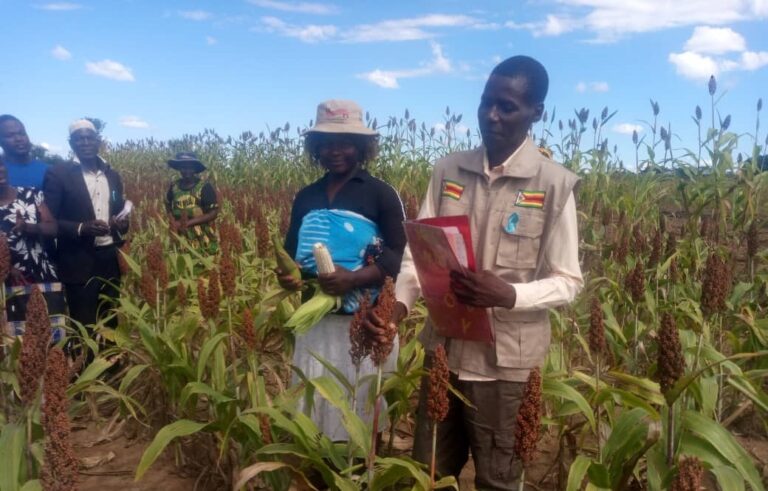
Speaking during a tour of irrigation projects at Pikinini Jawanda in Mwenezi recently, Prof Jiri urged farmers to move away from traditional seasonal farming and adopt irrigation-based, year-round agricultural practices.
“I encourage all farmers in Zimbabwe to adopt climate-proof agriculture to mitigate the effects of drought, especially in semi-arid regions like Mwenezi. Farmers here traditionally rely on small grains, yet they have the opportunity to diversify using water from Manyuchi Dam, which has the capacity to irrigate up to 5 000 hectares,” said Prof Jiri.
To support long-term success, Prof Jiri called on all government departments to assist agricultural cooperatives from the provision of inputs to technical guidance and marketing support
“I urge all government entities to support farming cooperatives with inputs and training to ensure the sustainability of these projects for future generations,” said Jiri.
He also encouraged farmers to treat agriculture as a business and take full advantage of available support services such as Agritex officers.
“You must be self-motivated. This is a business, and with proper dedication, you can succeed. Use the resources and expertise around you,” he said.
Pikinini Jawanda Irrigation Scheme Chairperson Chizivano Shava thanked the government and its development partners for empowering local farmers through irrigation infrastructure.
“We are thankful that we can now use water from Manyuchi Dam. For years we watched production thrive at Mwenezana Estates because we had no capacity. Now we are fully equipped to run our own scheme and improve our livelihoods,” said Shava.
The 156ha Pikinini irrigation scheme has 300 plot holders of which 177 are males while 123 females. Currently the farmers planted beans and are preparing for winter wheat.
Climate-resilient agriculture also known as climate-proof farming involves adapting farming practices to withstand the effects of climate change. It includes growing drought tolerant crops, using environmentally sustainable methods, and improving soil health to boost productivity and resilience at household level.
The visit to Mwenezi was part of a broader tour by a delegation from the Government of Zimbabwe and the United Nations Development Programme (UNDP) to assess Green Climate Fund (GCF)-supported irrigation projects in Masvingo Rural and Chivi Districts.
The projects fall under the ‘Building Climate Resilience of Vulnerable Agricultural Livelihoods in Southern Zimbabwe’ programme and include Pikinini Jawanda and Chizumba in Mwenezi, Zvinyaningwe in Masvingo Rural, and Bwanya, Nyahwanda, and Bindamombe schemes in Chivi.

Zimbabwe’s women face devastating birth injuries amid healthcare crisis

By Beverly Bizeki

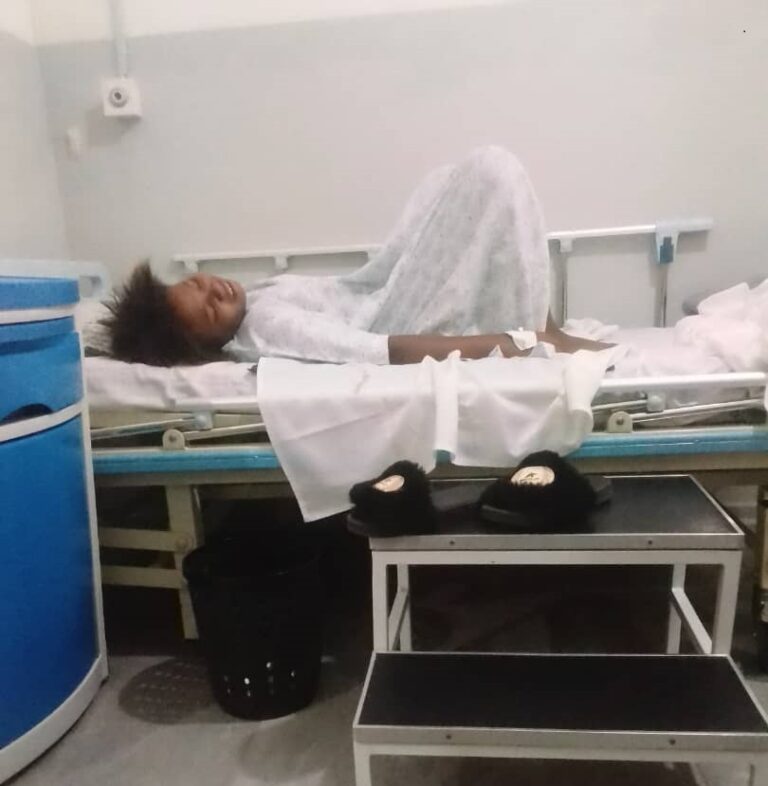
For 13 years, Tarisai Madondo (not real name) struggled silently with a condition so stigmatized that she could not discuss openly with anyone and felt she was going through it all alone. Obstetric Fistula left her devastated, ostracizing her from normal life, without a job to fend for herself and her family.
Madondo said she could not do basic things like travelling for long distances or going to work because she felt embarrassed by the incontinence resulting from the birth injury.
“13 years ago, I was injured during childbirth, and to make matters worse, the baby died during delivery. To add salt to injury, my husband left, which relegated me to a life of suffering alone since I could not afford treatment.
“Relatives eventually weaned me off due to the financial burden that came with this condition. I cannot work due to incontinence because I have to make frequent visits to the bathroom to change sanitary wear. Travelling takes a toll on me due to the shame of soiling my seat whenever I do, and I have always suffered in silence due to the stigma,” said Madondo.
The desire to get treatment saw Madondo crossing borders into neighbouring South Africa, which was all in vain as she could not be treated for free because of her status as a foreigner. A whopping R140 000 was then required for surgery, so she had no choice but to return home without any relief.
“The corrective surgery is free for South African citizens but for foreigners they said it was a drain on their doctors. After hearing about the programme here a donation was made to fund my trip to Masvingo to get treatment. I was shocked when I got to the ward and found it full with people seeking treatment for the same condition when I thought I was the only one with this condition,” said Madondo.
Madondo’s experience reflects a crisis affecting thousands of Zimbabwean women facing the brunt of a failing health system resulting in injuries caused by prolonged, obstructed labour without timely care.
Speaking at the International Day to End Fistula commemorations at Mashoko Mission Hospital, in Bikita recently, Ministry of Health and Child Care Deputy Minister Sleiman Kwidini acknowledged the scope of the problem and the need for nationwide intervention with six hospitals capacitated to conduct surgical repairs.
“MoHCC has so far capacitated six hospitals to conduct surgical repairs for obstetric fistula, these are Mashoko Christian, Chinhoyi Provincial, Mutambara Mission, Chidamoyo Mission, and United Bulawayo Hospitals.
“From 2015, over 1 800 women have benefitted from surgical repair of fistula. No woman should suffer in silence. It is our duty to stand together and ensure that our healthcare systems are equipped, our communities are educated and our women feel valued and supported,” said Kwidini.
United Nations Population Fund (UNFPA), a key partner in the campaign’s Country Representative represented by Peter Mukasa said obstetric fistula was more than a health crisis and reflected broader structural inequalities.
“The presence of obstetric fistula reflects broader health inequalities and health care systems constraints as well as wider challenges facing women and girls such as poverty, gender inequality, lack of schooling, child marriage and teenage pregnancies all of which impede the wellbeing of women and girls.
“Ending fistula cannot be viewed in isolation. It demands a comprehensive approach investing in resilient health systems to strengthen maternal health services and safe and dignified childbirth for every woman, ensuring adequate funding for prevention and treatment as well as socioeconomic reintegration of survivors.
“For UNFPA, ending fistula remains one of our highest priorities and we will continue to accelerate efforts, both in our own work and within the United Nations system. I would like to reaffirm UNFPA’s commitment to working with all partners towards zero maternal deaths in Zimbabwe,” said Mukasa.
Fistula Foundation Programs Director representing Atermidis a key partner, Bwalya Chomba stressed the organisation’s mission to stay focused on what matters most, surgical repairs.
“With each surgery we provide we know that it can help change one woman’s world forever and we know that the ripple effect of a restored health on both her family and community is profound. Nothing has been more important to our success than deciding to focus on one critical and measurable outcome which is repair surgeries for women injured in childbirth. We resist the urge to be all things to all people supporting only those activities that directly enable the treatment of women with fistula. Our bottom line is always the number of women we are able to help,” said Chomba.
Since 2009 the Fistula Foundation has supported fistula treatment for over 100 000 surgeries at more than 150 sites in 35 countries in Sub Saharan Africa and South East Asia of which Zimbabwe is one of them. Zimbabwe joined this network in 2015 when MoHCC partnered with UNFPA, Women and Health Alliance International (WAHA) now Artemedis to launch the country’s first fistula camp at Chinhoyi.
Since then the programme has grown with camps now hosted at multiple hospitals with over 800 women having undergone corrective surgeries.
According to the World Health organisation, there are between 50 000 and 100 000 women who develop obstetric fistula each year worldwide. The injury occurs when complications during labour and delivery leading to a hole forming between the birth canal and the bladder or rectum.
The injury often results in uncontrollable leakage of urine or faeces causing physical, emotional and psychological suffering.

Community demand action over mentally ill teacher

By Staff Reporter

Despite promises of action from the District School Inspector, a mentally ill teacher continue to pose a threat to leaners and the community of Nyahombe in Chivi sparking outrage and frustration among parents who demand immediate action to ensure their children’s safety.
It’s almost seven months after the parents complained over the teacher At Nyahombe secondary school in ward 29 of Chivi but no action has been taken to address the situation.
Contacted by TellZim News over the issue last year, Chivi District Schools Inspector (DSI) Evershine Ndongwe said they had forwarded his papers to the Public Service Commission
However, when TellZim reached out to him on the progress, Ndongwe said they wanted to transfer him to a school near Chibi Mission Hospital but were yet to find a vacancy.
‘We intent to put him close to Chivi Hospital but we are yet to find a place. If he gets mediation he will be fine that no one would suspect that he is ill. If he had found a relative to stay with him monitoring him to make sure he takes his medication would also help since he separated from wife,” said Ndongwe.
However, parents alleged that he was related to some official who was protecting him at the district office that’s why he was not being retired.
Contacted for comment, Ministry of Primary and Secondary Education Director of Communications and advocacy Taungana Ndoro said he would look into the matter.
The parents’ concerns extend beyond the school premises, saying the teacher’s behavior was not only limited to the classroom. He is said to have a habit of roaming around the community, frequenting areas where women bathe, sparking fears that he may eventually commit a serious offense, such as rape.
“We are afraid that one day he would attack and injure one leaner and we also fear that he would sexually attack women as he is often seen in areas where woman bath. He also goes into communities acting like an apostolic sect prophet,” said one parent.
Parents continue to fear for their children’s safety, as the teacher’s behavior remains unpredictable and violent. They worry that one of their children may retaliate and injure him, which could lead to further escalation.
“He likes provoking children and you know these youngsters, we are afraid that some may attack and injure him. If the government has no money to retire him, they should at least continue paying him even if he is not working, we don’t mind as long as he is removed from the community especially at school,” said another parent

Masvingo red flagged over veld fires

By Virginia Njovo

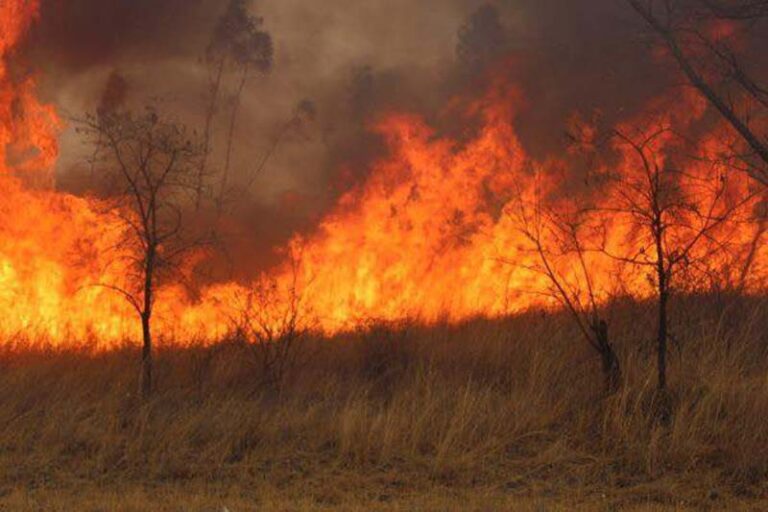
Masvingo Province has been classified as higher risk of veld fires in the 2025 fire season, mainly due to an increase in biomass resulting from above-normal rainfall received in the rainy season.
Gutu and Masvingo Rural districts expected to be the most affected compared to others who have relatively lower chances.
This came out during the National Fire Week Launch in Gutu on May 28 wherr Environmental Management Agency (EMA) Environmental Officer for Planning and Monitoring, Wilfred Muchono said the rainy season’s lush growth has created ideal conditions for wildfires.
“The 2024–2025 farming season brought normal to above-normal rainfall, leading to an accumulation of biomass. This increases the risk of veld fires, so extra caution is necessary. Several strategies are being employed to mitigate the danger,” said Muchono.
Muchono urged landowners and land users to adopt fire prevention measures such as creating nine-meter-wide fireguards and repurposing dry vegetation.
“During this period, fire should only be seen in the kitchen, anywhere else becomes a punishable offense. Biomass can be baled for poultry bedding, thatching, or even sold as part of a new business venture,” said Muchono.
Masvingo Provincial Environmental Manager Milton Muusha emphasized that the National Fire Week Launch (NFWL) was not just ceremonial but a crucial moment to evaluate preparedness at all levels.
“The NFWL is the engagement of all stakeholders in veldfire Management to ensure availability of adequate capacity to manage fires, these include local communities, local governance structures including local authorities, traditional leaders and development partners.
“It also provides awareness at the outset, the launch is a platform to immediately and widely disseminate information about the dangers of veldfires, their causes and the importance of prevention hence it is time to take stock of villages, wards, districts and provincial preparedness to the upcoming fire season,” said Muusha.
Gutu District, which contains large resettlement areas with dense, unmanaged vegetation, is among the most vulnerable. To prepare for the season, Gutu Rural District Council Chairperson Charles Mannie said they had acquired a fire tender using Constituency Development Funds.
“As the most affected district, we have procured a fire tender using funds from CDF to prepare for the season. With this new fire tender and planned awareness campaigns, we are stepping up our readiness to fight veld fires in the upcoming season,” said Mannie.
Despite the current concerns, veld fire incidents in Masvingo have been declining over the past three years, suggesting that awareness campaigns were having a tangible impact with statistics showing that in 2022, 82,664.10 hectares burned, 2023: 37,460.75 hectares (a 54.7% decrease) and in 2024 (as of October 11): 15,332.45 hectares burned.

Zaka’s ward 27 struggles with poor network coverage

Staff Reporter

Residents of Zaka Ward 27 are facing significant challenges due to poor network coverage, which hinders their access to information and communication.
Speaking to TellZim News, local ward councilor Ernest Mandava appealed to the responsible authorities to erect a network tower on Fumure Mountain, which he said would provide coverage for the entire ward.
“I appeal to the responsible authorities to erect a booster in Fumure Mountain. That could cover the whole ward and other areas due to its location and height.
“If erected at its summit, it would have a very large coverage because of its height and relieve the challenge we face as a ward,” said Manadava.
He said people were relying on booster from Renco Mine which is in Masvingo District and Chivamba though in Zaka, it was shielded by some mountains in between making it hard to provide network for the whole ward.
“Currently, residents rely on boosters from Renco Mine and Chivamba, which are far away and unreliable. Two potential sites, including Fumure Mountain, were identified long ago, but no action has been taken so far,” said Mandava.
He said the poor network coverage had a significant impact on local schools and business centers, which require reliable internet connectivity to operate effectively.
The councilor noted that internet connectivity was a major challenge, forcing people to travel to higher ground to access the internet, leaving many behind in terms of access to information.
“We are lagging behind in terms of access to information and communication due to the poor network coverage. We urge the responsible authorities to prioritize the erection of a network tower on Fumure Mountain, which would greatly improve our connectivity and enable us to participate fully in the digital economy,” said Mandava.
The situation is not unique to the area and Zaka alone as several areas in rural areas face the same predicament.
In Masvingo South, people from Guwa area said they were also facing connectivity challenges saying bureaucracy and greedy by traditional leaders who wanted payment was costing the area.
“There were prospects that a tower was going to be erected at Guwa mountain back then around 2019 prior to COVID era. As part of the process apparently on the consultative stages, some elders had their reservations of traditional significance of the mountain, hence the project was abandoned,” said a source who refused to be named.
Masvingo South legislator Tanatsiwa Mukomberi said the traditional leader impasse but said it was later approved and Econet promised to erect one in 2024 but the promise was yet to see the light of the day.
“At first the traditional leaders blocked the move but it was later approved. Econet promised us that they were going to erect one booster in 2024 but they failed so I will follow up on it.
However, we also applied to NetOne and we are still processing the paperwork,” said Mukomberi

Land bonanza for civil servants, war veterans

By Rangarirai Shanyurai

Civil servants and war veterans are set to benefit from discounts on land purchase under the government’s recently launched land distribution programme, aimed at promoting economic empowerment and recognizing the contributions of these key groups.”
The government of Zimbabwe launched the major land redistribution initiative, offering major discounts with flexible 20-year payment terms.
Speaking at the Leadership Success Series and Land Tenure Implementation Program held at Masvingo Polytechnic on May 23, business mogul and philanthropist Kudakwashe Tagwirei revealed that government had 10 million hectares of land for redistribution under the A1 and A2 farming schemes.
“The government of Zimbabwe has acquired 10 million hectares that will be redistributed to citizens. A1 farmers will receive six hectares, covering residential and farming land, while A2 farmers will receive up to 200 hectares,” said Tagwirei.
In Masvingo, land is priced at US$500 per hectare, putting the standard six-hectare A1 plot at US$3 000. However, Tagwirei said civil servants and other qualifying groups will receive layered discounts.
“If you’re a civil servant with over 10 years of service, you’ll get a discount of two and half percent to five percent. Because Masvingo is in Region 3, there’s an additional two percent discount. Those who pay in cash will receive a further 15% discount,” said Tagwirei.
As a result, civil servants will pay just US$2 340 for a six-hectare plot, while non-civil servants will pay US$2 490.
To ease affordability, citizens will be allowed to pay in annual installments over 20 years, with civil servants paying US$273 per year and others US$288 per year.
War veterans will enjoy even steeper subsidies with the first five hectares priced at just US$10 per hectare, while the sixth hectare costs the standard US$500. They also qualify for the additional 15 percent discount.
Tagwirei said the initiative was aimed at boosting productivity and ownership among ordinary Zimbabweans.
“The President understands that people are struggling financially and has made it possible to pay for land over two decades,” he said.

Masvingo woman appeals for US$25k to send critically ill daughter to India

By TellZim Reporter

A desperate Masvingo woman is appealing for urgent financial assistance to the tune of US$25 000 to send her 13-year-old daughter to India for life-saving treatment after local doctors said they could no longer offer any medical solutions for her rare intestinal condition.
Chantelle Adams said her daughter, Laurah Kayla Adams, had been battling serious gastrointestinal complications for four years, including two rare diseases, intestinal neuronal dysplasia and leiomyopathy, disorders affecting the nerves and muscles of the intestines.
Laurah began suffering from chronic constipation after she had her appendix removed in 2021. Despite multiple medications, tests, and hospital stays, doctors were initially unable to determine the exact cause of her condition.
It was not until August 2024, after a barium enema and a biopsy conducted at St. Anne’s Hospital in Harare, that the family received a diagnosis. But by then, doctors said the diseases had caused irreversible damage to Laurah’s intestines and there was no surgical treatment available in Zimbabwe.
“The doctors told me they can only manage her symptoms. They said all the surgical procedures they had considered earlier were no longer possible because her intestines, colon, and rectum are no longer functional,” said Chantelle.
The family’s last consultation on May 14 with pediatric surgeon confirmed the severity of the situation.
“The doctor said her abdomen was severely distended and she was pale due to blood loss. He confirmed again that no surgery can be done locally, and her condition continues to deteriorate,” said Chantelle.
Chantelle said there was now a 95 percent risk that Laurah’s intestines may rupture. A theatre review by a local doctor in April showed that bowel washouts were no longer effective due to new blockages.
Facing no further options locally, Adams is seeking financial support to take Laurah to India for treatment. She has secured a quotation from an Indian medical facility and has compiled related travel and accommodation expenses.
“I just want to try and give my daughter a fighting chance. She wants to be a surgeon when she grows up. Here, the doctors have given up. But I can’t give up on her too.”
The family is appealing to well-wishers, corporates, and donors to assist in raising the required funds. Supporting documents, including medical reports and cost breakdowns, are available upon request.
She said her finances were drained in the past four year battle with the life threatening illness and said she had been trying to reach out to many for help but nothing materialized.
Adams said she tried to reach the President of Zimbabwe, some business people like Chivhayo and Tagwirei but she couldn’t reach them and her hope was that someone hears her distress call despite others discouraging her to go public with the plea.
She said she will remain undeterred and was willing to do whatever it takes nomatter how uncomfortable it makes her as long as there was little hope.

Anyone willing to help can contact her directly at +263 773 965 277.
Those willing to contribute can send cash via EcoCash on the same number with the name Chantelle Ebrahim or send to her bank Chantelle Ebrahim First Capital Bank, M 50903602526

Security agent blocks opposition MP’s engagement meeting

TellZim News Reporter

A Central Intelligence Officer (CIO) in Chiredzi is alleged to have obstructed Chiredzi Central Constituency Member of Parliament, Ropafadzo Makumire from carrying out his engagement soccer tournament at Chishamiso Stadium recently despite the meeting having been explicitly approved by both the Zimbabwe Republic Police (ZRP) and Tongaat Hulett Zimbabwe (THZ) TellZim News reports.
The MP recently held an interface meeting at Chishamiso Stadium in Hippo Valley to engage the electorate and the event included various sporting activities, such as soccer and netball.
However, the activities were disrupted when the officer, Tinashe Muyambo, parked his black Toyota GD6 at the centre of the stadium drinking beer with his friends for about three hours.
Makumire confirmed the incident to TellZim News and condemned Muyambo’s disruptive behaviour and went on to thank the Zimbabwe Republic Police (ZRP) and the Central Intelligence Office for their quick intervention in handling the situation.
“The situation instilled fear within the community due to this individual’s presence. Many residents were understandably upset and felt the need to take action, but we intervened to maintain peace.
“It is important to acknowledge the police and officials from the president’s office who swiftly removed him from the ground. We hold the office of the President to a higher standard and do not accept such behaviour. This situation must be addressed to restore confidence in our community. The programme was intended to engage with the community to discuss pressing issues and provide feedback to the people,” said Makumire.
The meeting had been sanctioned by the Zimbabwe Republic Police to begin at 0900 hours and end at 1730 hours, but the meeting started later at 1200 hours due to Muyambo’s actions.
Hippo Valley Community Services Officer, Brawl Chikandiwa had written to Makumire giving him permission to hold the interface meeting at Chishamiso Stadium with some set guidelines including informing the police and maintaining cleanliness.
“I write to inform you that your request has been granted. You are free to use the requested; however, you are advised to make arrangements to inform and avail ZRP for peace and security and ensure the highest level of cleanliness during and after use,” wrote Chikandiwa.
Muyambo had been Makumire’s critic way before he was transferred from Chikombedzi to Chiredzi Office and his behaviour retards development.
There has been delays in the construction of Melbourne Government Primary School, where Makumire channelled part of his Constituency Development Fund (CDF) to pay for labour which is allegedly being attributed to political interference.