
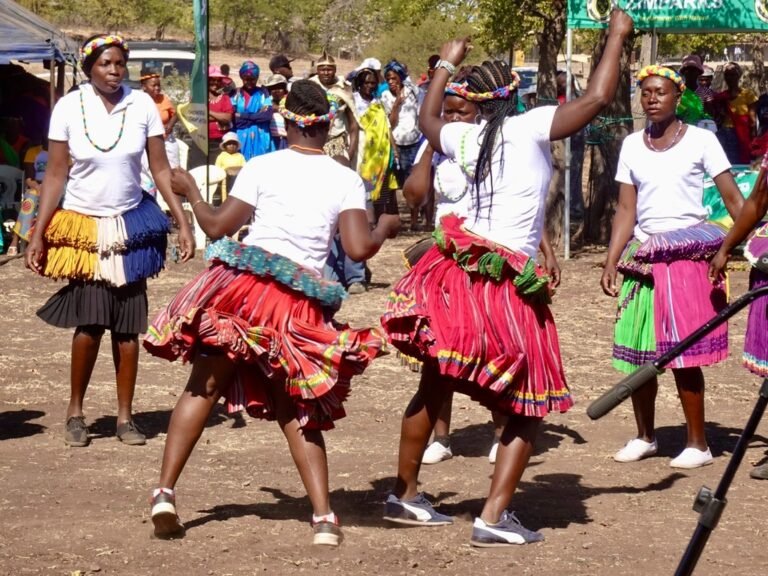
By Beatific GumbwandaThe second edition of the Budula Festival is set to make a bold statement when it unfolds within the Great Limpopo Transfrontier Conservation Area (GLTFCA) corridor, in Mhlanguleni, expanding far beyond its inaugural roots to celebrate the full tapestry of Tsonga/Shangaan heritage while deepening community ownership of conservation on the 27th of June 2026.Organised within the GLTFCA framework, the festival has quickly established itself as more than a cultural gathering. The event organiser Herbert Pikhela said purpose of the festival ran deeper than entertainment.“This event serves as a transboundary community-driven platform within the Great Limpopo Transfrontier Conservation Area, connecting the diverse communities and stakeholders from Zimbabwe, South Africa, and Mozambique to exchange knowledge, best practices, and collaborative livelihoods and conservation efforts. It is for communities living in or adjacent to protected areas in the GLTFCA,” said Pikhela Last year’s inaugural edition centred largely on the iconic Xibelani dance. This year, the festival has grown considerably in scope. Pikhela explained that while the Xibelani remains the festival’s cultural anchor, the programme now encompasses a much wider embrace of VaTsonga identity.“The Xibelani dance remains the Budula Festival brand and remains a unit of the GLTFCA cultural heritage,” he said. “We are growing the festival to represent the key aspects of our culture, the cuisines, agriculture, conservation, as well as safeguarding the indigenous knowledge which facilitated a symbiotic relationship between the local communities and natural resources.”To entrench the festival’s legacy among younger generations, schools have been incorporated into key programme areas, including the Xibelani showcase itself.A defining thread running through this year’s programme is the central role of women in VaTsonga society. The choice of activities, Xibelani dance, Lowveld drums, food and cookery demonstrations, and cultural exhibitions, is deliberately deliberate in this regard.“Women play a critical role in the VaTsonga society. They are central to the welfare of the home and the safeguarding of critical aspects of the VaTsonga cultural heritage.“The Xibelani dance celebrates the resilience of the VaTsonga women in the face of hardships, human-wildlife conflict, climate change, domestic violence, farming, family, and livestock care after men have emigrated to work locally and abroad. The dance, the drums, the food remind us of the role of women in the sustainable development of the GLTFCA communities. We are celebrating the resilient Tsonga woman,” added Pikhela. There will also be food demonstrations and exhibitions, which will run concurrently with other programme activities, giving participants diverse engagement choices throughout the day.Last year’s edition was graced by Zimbabwe Parks and Wildlife Management Authority Director General Professor Edson Gandiwa as guest of honour. This year, the festival is set to attract an even more prominent official presence.Pikhela said the ministers responsible for Tourism and Hospitality Industry, Environment, Climate and Wildlife, as well as the Masvingo State Minister for Provincial Affairs and Devolution, have been proposed as keynote speakers.“Aligned with the national whole-of-government approach, their involvement highlights their critical roles in advancing community conservation within the GLTFCA framework. This integrated approach emphasises inclusive growth, sustainable development, and ecological resilience as key pillars of Zimbabwe’s developmental agenda,” said Pikhela.Pikhela also highlighted that Budula’s trans boundary identity, it draws its name from Mahlanga, the confluence of rivers that bind Zimbabwe, Mozambique, and South Africa at their shared borders. This year, that symbolism is matched by tangible cross-border participation.“Chief Makuleke and Mahonisi from South Africa have confirmed their participation. Together, they will be leading a team of 15 to Zimbabwe. Details from the Mozambique side were still being finalised.Among the groups showing the most notable growth in participation from last year are traditional leadership, community members, government departments and ministries, schools, and exhibitors, a sign that the festival’s grassroots appeal is widening.The Budula Festival carries a strategic conservation agenda. By bringing together communities, governments, traditional leaders, conservation organisations, private sector players, and the diplomatic community, the festival functions as an informal but powerful platform for advancing community buy-in for trans frontier conservation.“Community connectivity and exchange of knowledge and conservation best practices,” Pikhela said, summarising what the festival contributes to the GLTFCA’s broader goals.This year’s edition also places emphasis on community resilience through diversified livelihoods, indigenous food processing, and sustainable agricultural practices, themes that connect directly to the practical realities facing communities living on the edges of protected areas.While this year’s edition remains a single-day event, Pikhela confirmed that organisers are already planning a significant expansion.“The 2027 edition will revert to four days, two full festival days and two travelling days,” he said.This signals confidence in the festival’s growth trajectory and its ambition to become a fixture on Zimbabwe’s cultural and conservation calendar
Disabled Zimbabweans demand quota in parliament, senate, local authorities
By Staff Reporter
MASVINGO – Persons with disabilities have made a bold call for a quota system in all arms of government, including local authorities, Parliament, and the Senate, saying their voices and representation remain marginalised in decision-making structures.
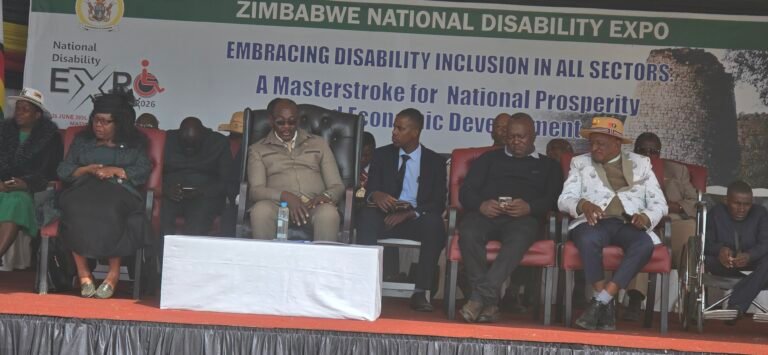
The demand was made during the official opening of the Zimbabwe National Disability Expo held at Mucheke Open Grounds on Friday, June 26, 2026.
The event was presided over by Vice President Kembo Mohadi, who stood in for President Emmerson Mnangagwa.
Speaking at the event, the Special Advisor on Disability Issues in the Office of the President and Cabinet, Rossy Mpofu, called on the President to take advantage of the Constitutional Amendment Bill Number 3 (CAB3), which, among other things, seeks to allow the President to nominate 10 senators of his choice, and ensure that 50 percent of those appointees come from the disabled constituency.
“Our President, people with disabilities are appealing for a quota in the House of Assembly, a quota for youth, women. In the Senate, the 10 that would be appointed by the President, we need 50 percent,” said Mpofu.
She also appealed to the President for 10 vehicles to be allocated to the 10 provincial chairpersons for the disabled in the 10 provinces. She said that because of their disability, it was difficult for them to mobilise their people for meetings and for those with disabilities to travel and meet their leaders.
The vehicles, she said, would allow the chairpersons to travel to rural areas and other corners of the province to engage their members.
Senator Anna Shiri, who represents persons with disabilities, echoed the same sentiments, saying they wanted a person with disability in the youth quota and more representation in the Senate through the CAB3.
“The Senators who are going to be appointed by the President, I am confident that the President, fulfilling his mantra of leaving no one behind, all those with expertise will get into the Senate to add more expertise to develop our country,” said Shiri.
She also urged persons with disabilities to pursue education, own homes, marry, and live full lives like any other citizen.
Masvingo Minister of State for Provincial Affairs and Devolution Ezra Chadzamira said Masvingo was honoured to host the expo and stressed that inclusion of persons with disabilities was no longer an issue of charity but a crucial pillar for development.
“We are honoured to host this important national event in Masvingo Province, a province that remains committed to inclusive and people-centred development. This principle compels us to ensure that persons with disabilities are fully included in development processes and are afforded equal opportunities to participate in and benefit from socio-economic transformation. This year’s theme, ‘Embracing Disability Inclusion in all Sectors,’ is a masterstroke for national prosperity and economic development, which calls us to shift our collective mindset. Disability inclusion is no longer just a matter of charity or social welfare; it is a fundamental pillar of robust national economies and social growth,” said Chadzamira.
In his address, Vice President Kembo Mohadi said people with disabilities were supposed to be included in decision-making processes, saying nothing meaningful about them could be achieved without their full participation.
“Most importantly, persons with disabilities must be active participants and leaders in decisions that affect their lives. Their voices, experiences, and aspirations must inform policy design, implementation, monitoring, and evaluation. Nothing about persons with disabilities should be decided without their meaningful participation,” said Mohadi.
He said the Second Republic remained unwavering in its commitment to building an inclusive, prosperous, and resilient Zimbabwe.
“Through Vision 2030, we seek to create a nation where every citizen has opportunities for self-actualisation, economic empowerment, and social advancement. Through NDS2, we are laying the foundations for inclusive growth and sustainable development. Through our alignment with Agenda 2063 and the Sustainable Development Goals, we are contributing to the broader aspirations of Africa and the global community,” said Mohadi.
Mnangagwa dumps National Disability expo for Matemadanda burial
… Expo turns into Zanu PF rally
By Staff Reporter
MASVINGO – What was supposed to be a national event celebrating disability inclusion was turned into a Zanu PF campaign rally on Friday, as the Zimbabwe National Disability Expo at Mucheke Open Grounds was hijacked by ruling party slogans, songs, and symbolism, with the entire programme resembling a party gathering rather than a development platform.
Although Zanu PF regalia was limited, the atmosphere was unmistakably political, with every aspect of the event resembling a party rally.
Known Zanu PF members acted as ushers, directing people where to sit and managing the crowd, while chicken slices and drinks were distributed at the entrance by party youths.
The programme was conducted amidst Zanu PF songs performed by Chief Shumba, with chants of “2030” and “CAB 3” dominating the proceedings.The expo, which was supposed to be presided over by President Emmerson Mnangagwa, was instead officiated by a frail-looking Vice President Kembo Mohadi, who delivered the President’s speech in a voice so low that many in attendance could hardly hear what he was saying.
Mnangagwa was forced to skip the event to preside over the burial of national hero Victor Matemadanda at the National Heroes Acre in Harare. Matemadanda, Zimbabwe’s Ambassador to Mozambique and Eswatini, was declared a national hero after his death last week.
Masvingo People with Disabilities Chairperson Charles Mugwamba led the political chants, shouting “VaMnangagwa vanenge vachingotonga” (Mnangagwa will continue to rule) and rallying support for CAB 3.
Zanu PF Provincial Chairperson Robson Mavhenyengwa was given the closing remarks, a clear indication that the event had been turned into a party programme.
Despite the political overtone, Masvingo Minister of State for Provincial Affairs and Devolution Ezra Chadzamira used the platform to highlight development milestones achieved in the province under the Second Republic.
He said through Rural District Councils, the province has integrated accessibility audits into the construction of over 200 completed devolution projects, ensuring newly built clinics, maternal wards, and primary schools feature ramps and wider access points.
He also said the province had established specialized agricultural Village Business Units directly at disability institutions, including Jairos Jiri Centre, Copota School for the Blind, Henry Murray School, and Mukume School in Mwenezi.
These solar-powered, commercially structured units enable persons with disabilities to engage in high-yield farming and value addition.
“As a nation, we are guided by Vision 2030, as envisioned by you, Your Excellency. As Masvingo Province, we are contributing towards this national vision through our aspiration of attaining a USD$8 billion provincial economy by 2030. Achieving these development milestones requires the participation of every citizen, including persons with disabilities. Inclusive development is therefore not only a social imperative but also an economic necessity,” said Chadzamira.
He said he was encouraged by the participation of exhibitors from various sectors showcasing technologies, products, services and innovations that promote accessibility, independence, productivity and inclusion.
“This Expo provides an invaluable platform for learning, networking, sharing experiences and strengthening partnerships. I encourage all participants to engage actively, exchange ideas and identify practical interventions that will accelerate disability inclusion across all sectors of government and society,” he added.
Despite the political theatrics, persons with disabilities used the platform to make their demands known. Special Advisor on Disability Issues in the Office of the President and Cabinet Rossy Mpofu called on the President to ensure that 50 percent of the 10 senators to be appointed under CAB 3 come from the disabled constituency.
Senator Anna Shiri, who represents persons with disabilities, echoed the same sentiments, expressing confidence that the President, “fulfilling his mantra of leaving no one behind,” would ensure that persons with disabilities are included in the Senate through CAB 3.
“The Senators who are going to be appointed by the President, I am confident that the President, fulfilling his mantra of leaving no one behind, all those with expertise will get into Senate to add more expertise to develop our country,” said Shiri.
In his address delivered on behalf of the President, Mohadi reaffirmed the government’s commitment to disability inclusion, describing it as “a constitutional imperative, a developmental necessity and a human rights obligation”.
He announced a Presidential Empowerment Package comprising 50 goats under the Presidential Goat Scheme, 60 pigs, residential stands, agricultural land, and farming and mining equipment to be distributed to persons with disabilities across all ten provinces.
“The mantra, ‘Disability is Not Inability,’ must transcend rhetoric and become a lived reality in every sector of our society,” read the speech. “Nothing about persons with disabilities should be decided without their meaningful participation,” said Mohadi.
The expo, which ran from June 24 to 26 under the theme “Embracing Disability Inclusion in All Sectors: A Masterstroke for National Prosperity and Economic Development,” brought together over 500 exhibitors, development partners, and delegates from across Zimbabwe and neighbouring countries.
Gutu dominates inaugural NICAZ Provincial Games
By Tadiwa Shunje
MASVINGO – The National Independent Colleges Association in Zimbabwe (NICAZ)
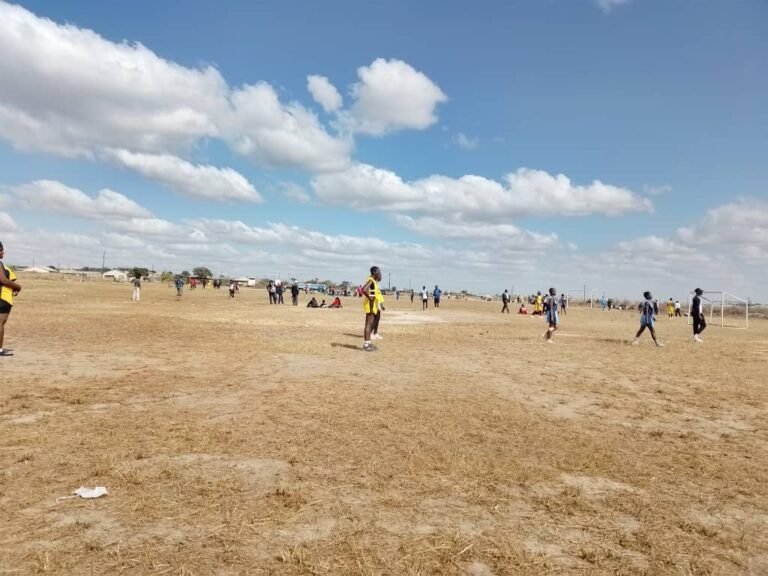
successfully hosted its inaugural provincial ball games in Gutu, drawing 68 teams from across
Masvingo Province’s six districts, with Gutu District emerging as the top performer by winning
at least five titles at the event held at Fambisai Christian Academy on June 19, 2026.
The games brought together independent colleges from across Masvingo Province, with six
districts, Masvingo, Bikita, Chivi, Zaka, Gutu and Chiredzi represented, except for Mwenezi.
Teams competed in 13 sporting codes, including soccer, girls’ soccer, netball, volleyball,
basketball, handball, and baseball, across three age groups: Under15, Under17, and Under20.
NICAZ Masvingo Provincial Chairperson and Zaka’s Pecom Academy Director Sarah Munemo
said the tournament was successfully held and attracted strong participation from schools across
the province.
She said 68 teams from 32 colleges took part in the competition, showcasing sporting talent and
competing for qualification to the national finals.
“The provincial games were successfully held in Gutu with participation from 32 colleges and 68
teams competing in different sporting disciplines. The games went well, and we are now busy
preparing for the national games as a province,” said Munemo.
Gutu’s dominance was spearheaded by hosts Fambisai Christian Academy, which won the
Under17 and Under20 netball titles as well as the boys’ and girls’ Under17 volleyball
competitions. Royal Priest Wood added to the district’s success by winning the Under15 netball
title.
Other notable performers included Perseverance College, also from Gutu, which won the boys’
and girls’ Under17 basketball titles as well as the Under16 and Under20 soccer divisions.
Masvingo Urban secured victories in boys’ handball and both the boys’ and girls’ Under17 soccer
categories, while Chivi claimed the girls’ handball title.
Munemo said the provincial champions would now represent Masvingo Province at the NICAZ
National Games in Harare.
“The qualifiers will represent Masvingo Province at the NICAZ National Games on July 8 in
Harare and preparations for the national tourney are currently underway,” she said.
The games marked a significant milestone for NICAZ, which was formed after independent
colleges broke away from NASH.
Munemo said the event was not only about competition but also about participation and
discipline and thanked the directors for the support they gave to the colleges despite financial
constraints.
“We are not looking at the numbers, but we are looking at the participation of those various
colleges from the districts. I want to thank the directors, financial resources were constrained, but
they managed to pull the ends together and make the day successful,” she said.
She also praised the high level of discipline displayed throughout the tournament, saying it was
all excitement and no form of violence was recorded.
“We never had an incident of violence. We never had any disruption. What we really noticed
was the excitement among the students, they were so excited and happy, and we hope to
maintain the same in all our future events,” Munemo said.
Munemo thanked college directors for their support despite financial constraints.
“Financial resources were constrained, but they managed to pull the ends together and make the
day successful,” she said.
She noted that the Ministry of Primary and Secondary Education had recommended that colleges
be divided into five clusters under NICAZ for the coordination of sports.
“Right now, as we speak, we are busy putting every end into order. Districts, provincials will be
talking of district,” she said.
The quality of competition, she said, was impressive and the association plans to grow the event
next year by inviting stakeholders and talent scouts.
“We want to go abroad as districts. Right now, we are going to the Ministry of Primary and
Secondary Education, the provincial office, the districts. We are going to grow bigger and better
with time. Next year, it will be a bigger event,” Munemo said.
Zaka was represented by Pecom Academy and Victorious College while Chiredzi was
represented by Verengai Academy and Rufaro Academy.
Gutu was represented by Royal Academy, Living Pool College, Fambisayi Academy, and
Perseverance College.
Masvingo Urban was represented by Berylyn Academy, Southern City Academy, Wisedel
Academy, Destinygate Academy, Vision Academy, Evalasting academy, and Vulturesvale
Academy.
Chivi was represented by Good Hope, Marvelous, OakWood Academy, Blessed Academy, and
Good Shepherd College.
Masvingo youths demand safe abortion access, free sanitary pads, contraceptives

By Tadiwa Shunje
MASVINGO – Youths have called for increased access to safe abortion services, free sanitary
pads, and easier access to emergency contraceptives, arguing that restrictive laws and high costs
are contributing to cases of baby dumping, unsafe abortions, and teenage pregnancies among
young people.
The calls were made during a Parliamentary Youth Caucus dialogue held at Mucheke Hall on
June 23, 2026, under the SADC-PF Sexual and Reproductive Health Rights (SRHR), HIV and
AIDS and Governance Project.
The event brought together students, youth leaders, civil society organisations and local
authorities to discuss challenges affecting adolescents and young people.
Speaking at the event, youths said challenges affecting young people and urged policymakers to
consider reforms to expand access to reproductive health services.
One of the participants, Acknowledge Mawere from Bikita, said women and girls seeking
abortions should not be criminalized, adding that the lack of safe and legal options was forcing
some to resort to unsafe practices or abandon newborn babies.
He cited a recent case in Bikita District, Chikuku area, where a baby was reportedly dumped,
saying such incidents highlight the need for a review of abortion laws.
“Just recently, there was a case in Chikuku, Bikita, where a baby was found abandoned in a
toilet. These are the realities we are facing. Some may argue that abortion is murder, but sex is
also considered a sin, just as abortion is. If a person does not want a pregnancy, they should be
allowed to terminate it because no sin is greater than the other.
“Those who want to abort should be free to do so, and those who don’t want to should not.
People often resort to unsafe abortions because they don’t have access to these services. In
contrast, others carry unwanted pregnancies to term and end up abandoning babies out of fear,”
said Mawere.
Another participant, Fadzai Makuwere, said while abortion may not be acceptable to some, the
reality of young people’s sexual activity meant safe abortion access should be considered.
“It may seem unacceptable to some people, but we are living in a generation where many young
people are already sexually active. When an unwanted pregnancy occurs, they should be able to
go to a hospital and access safe abortion services because we have lost many young lives through
unsafe abortions.
“Unwanted pregnancies resulting from mistakes should be terminated safely if the individual
chooses to do so. We often tell young people to abstain from sex, but the reality is that
abstinence is not always effective. As parents, we failed it, so it’s unrealistic to expect young
people to achieve what we ourselves have struggled to achieve,” said Makuwere.
Other speakers also called for improved access to condoms and emergency contraceptives,
saying contraceptives should be freely available in communities and not only at institutions and
beer halls.
One youth, Bridget Marima, called for the distribution of free sanitary pads, particularly in
remote areas where some girls struggle to afford menstrual hygiene products, saying that some
girls were forced to use pieces of cloth during menstruation due to a lack of sanitary wear.
“My wish is that young girls from rural areas have access to free sanitary pads. Condoms are
given free, but you have to buy sanitary wear, which then causes children to use pieces of
clothes. These practices are said to be other causes of cervical cancer, all because they don’t have
money to buy those pads,” said Marima.
One of the panelists, and Glenview South MP, Tsitsi Tawomhera commented on the issue,
saying while pads and condoms cannot be placed in the same category because sex is a choice
while menstruation is natural, she acknowledged the point and said government should distribute
pads.
“We noticed that many people complain about the issue of pads and condoms, saying condoms
are given free whereas you have to buy pads. These two things can’t be placed in the same
category because sex is something you decide to do while menstruation is by nature. But I have
taken the point that the government should distribute pads because it’s something we as women
did not choose. We will represent the issue,” said Tawomhera.
Another participant from Mucheke Vocational Centre called for easier access to emergency
contraceptives, commonly known as morning-after pills, as part of efforts to reduce teenage
pregnancies and sexually transmitted infections.
“We need morning-after pills to be free in schools just like condoms. We only have access to
condoms, but what about morning-after pills? We don’t have that US$3 to buy morning-after
pills, which may end up causing unwanted pregnancies. So let those pills be offered just like
condoms in schools,” said the participant.
In terms of condoms, youths called for distribution of condoms everywhere, even in taxis, not
only in schools or hospitals.
Participants also urged the government to prioritise youth-friendly reproductive health services
and ensure that young people have access to accurate information on family planning and
contraceptive options.
My Age Africa, an organization that has been actively advocating for policy reforms, previously
called for the need to address misconceptions around safe abortion laws and ensure young
women understand family planning and birth control.
My Age Africa also highlighted that young people who seek condoms are very few compared to
those who seek morning-after pills, indicating a need for more education so that young people
can make informed choices.
3 dead, 5 injured in Mutare-Masvingo highway crash
By Yvonne Mangani
MASVINGO – Three people died on the spot, and five others were injured when a Toyota Runx failed to yield and was hit by an oncoming Toyota Granvia at the 200km peg along the Mutare-Masvingo Highway on Friday, June 21, at around 4:10 pm.
Police said the accident occurred when Shepherd Kachasi (27), who was driving the Runx with three passengers on board, attempted to turn right in front of oncoming traffic. Prosper Rusike (71) was driving the Granvia with four passengers towards Masvingo when the collision happened. The Granvia struck the Runx on the rear passenger side.
Masvingo Provincial Police Spokesperson Inspector Kudakwashe Dhewa confirmed that all three passengers in the Runx died instantly. The deceased have been identified as Lilian Muzvanyi (39), Isaiah Svikiro (46), and one other passenger whose identity is yet to be established.
All five injured victims, including the Granvia driver who was in a serious condition, were taken to Masvingo Provincial Hospital for treatment.
Inspector Dehwa urged motorists to exercise caution and consider other road users, especially when turning across busy highways.
The bodies of the deceased were taken to Masvingo Provincial Hospital mortuary for post-mortem examinations and the identification of the third victim.
Villagers fear losing heritage as gold rush forces Renco Mine to surface
By Staff Reporter
RENCO Mine – For more than 50 years, Renco Mine operated underground, coexisting
peacefully with locals who lived and farmed on the surface. But the recent gold rush that drew
thousands of people from across Masvingo province and beyond has forced the company to shift
focus to surface mining, a move that villagers now fear will strip them of a mountain that
sustained them for generations.
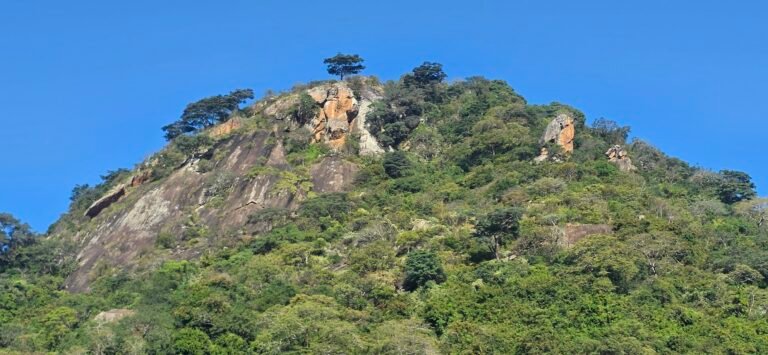
The mountain, which cleaves Chiponda and Muvango villages, is not just a landmark, it is
central to the survival of surrounding communities.
Its summit was a flatland where children scraped together a football pitch. Its sloping sides were
adventure rails where youngsters would strip bark from mutondo trees to sled down the rocks.
A famous rock called Svimborume faces Chiponda Village, and from an scenic outcrop above it,
one could see Muzenda, Chitorido, Muchibwa, and the sprawling farmlands of Mushawasha.
Headman Muchibwa Maseko Manyise confirmed to TellZim News that mine representatives had
visited his palace to notify them of the intention to fence off parts the mountain.
The communication prompted villagers from Chiponda, Muvango, Muzondo, Ruchicha,
Chinoda, Muzenda and other surrounding areas to gather at Muchibwa Business Centre to
discuss the way forward.
The surface mining plan raises a host of challenges. Locals fear environmental hazards, dust, and
chemicals that could affect surrounding villages.
The mountain serves as grazing land, a source of firewood, a hunting ground for small animals,
and a place to harvest, mopane worms, madora (Predominatly found in Mopane trees in other
areas) but largely found in Mutondo trees in Nyajena and gather mushrooms during the rainy
season.
People also get poles for fencing, kraals, and tree bark ropes for different domestic purposes.
Fencing off the mountain would cut off access to these vital resources.
Beyond the economic concerns, the mountain holds deep religious and spiritual significance.
Forefathers were buried there. Local leaders say they used the mountain for spiritual activities,
including appeasing their ancestors. According to tradition, the mountain together with other
surrounding mountains, was used since the establishment of the mine to appeal to the ancestors
to release the gold. For decades, there was unity and harmony between the mine and the locals.
That harmony, villagers fear, is now at risk.
The mine previously attempted open, cast mining on another mountain close to Chebundi but
was stopped after allegedly violating some graves. That forced the company to shift its focus to
the eastern mountain, Chebundi.
The need was necessitated by the gold panners who were allegedly making a killing on the
mountain, and the mine felt it was losing revenue from its own claim.
However, locals argue that the mine should remain underground and allow the community to
benefit from the surface gold.
During the meeting, concerns were also raised about the mine’s use of drones to monitor areas,
particularly in Muvango down to Mutirikwi River. Villagers claim the drones fly over bathing
spots in streams, exposing naked women, an intrusion they find deeply offensive.
Some locals accused the newly appointed Chief Nyajena of allowing the mine to fence off the
mountain, saying there were people among them who were siding with the mine.
“The reason why they are so adamant is that they got permission from the chief. He is the one
who signed a document to allow them to fence the mountain,” said one villager.
However, contacted by TellZim News, Chief Nyajena, born Last Dzivakwe, said that was not
true. He said he never signed anything and claimed that his forefathers were also buried in the
mountain, so any harm to the mountain also affects him.
“I never signed anything, nor have I been contacted by the mine about this. I actually heard about
it from Headman Muchibwa, so there is no way I can be accused of allowing the mine to fence
the mountain.
What people forget is that the other part of the mountain is in Muvango Village. Muvango is
from the Mupandasekwa house, so our forefathers were also buried in that mountain,” said Chief
Nyajena.
He said under normal circumstances, if he had authorised that, he would be getting backlash
from his clansmen, the Muvangos, because that would desecrate their ancestors. The chief also
said he had no much power over the mine because it has its claims but he only interferes when
operations affect locals.
“Remember, Muvango is not from the Muchibwa house, so they are my clansmen, and I don’t
think if I had authorised that, they would be smiling at me now,” he said.
He also said from his understanding, the mine had no intention of fencing off the whole
mountain, but only some sections where they were operating. He said that was part of an
agreement they had when they sat down at some point with the Muchibwas.
“From my understanding, they are following what we agreed with them together with Headman
Muchibwa and other local leaders. We told the mine to fence all the areas they operate from so
that animals won’t wander into their operating sites,” said the chief.
Contacted for comment, Renco Mine General Manager Tapiwa Katiyo referred questions to the
Head of Corporate Affairs Executive at Rio Zim Limited, Wilson Gwatiringa, who concurred
with Chief Nyajena, saying they were fencing their areas of operations.
“What I know is that we are fencing some areas that are within the mine’s claim and where we
are operating,” said Gwatiringa.
Tales of mountains being devoured by mining are common in areas like Shurugwi, where hills
that stood for generations have been eaten away.
The thought of Chebundi suffering the same fate is a painful one for locals. The mountain also
serves as a sanctuary for wildlife, leopards and baboons that often cross to Chebundi from
Munguma Mountain for safety would lose their refuge.
Another fear is displacement. Some villagers, especially from Muvango and Chiponda, live very
close to the mountain and could be affected before excavations even begin.
If the project moves forward and they are forced to leave, will they be compensated enough to
start afresh? What will happen to the remains of their ancestors in the mountain and at its foot?
At the meeting, villagers resolved to select representatives to engage the mine. They demanded
that the company approach them properly, notify them of the plans, and outline measures to help
locals.
They called for a win-win negotiation. Some proposed that the mine set up mills and allow
organised panning, where local panners would mill their ore and sell to the mine, a model similar
to Tongaat Hulett’s arrangement with outgrower sugarcane farmers in Chiredzi.
Others insisted the mine should remain underground and allow the community to benefit from
the surface gold, arguing that the mountain has been their source of livelihood long before the
mine arrived.
“The mine has been underground for 50 years, and we have coexisted peacefully. Why change
now? Let them stay underground and allow us to benefit from the surface gold,” said one
villager.
The gold rush has already spread along the mountain range, eastward in Chiponda and westward
to Maramba and Nyajena.
Bikita Minerals doubles school nutrition drive, reaches 10,000 learners

By Staff Reporter
Bikita Minerals has doubled its school nutrition programme, reaching nearly 10,000 learners
across 17 primary schools in Bikita District this year – up from about 5,000 in 2022, after
distributing 14,000 kilograms of fortified Maheu during the second term of 2026.
The mining company reaffirmed its commitment to community development, saying nutrition
was the foundation for learning.
In its statement, Bikita Minerals said the programme was part of its continued dedication to
supporting local education, improving student welfare, and delivering sustainable community
development.
What started in 2022 with support for about 5,000 learners has now doubled. Nearly 10,000
pupils are benefiting this year, with Hozvi Primary School added to the programme as the
company pushes its socio-economic footprint deeper into vulnerable communities.
School heads and local leaders say the results were showing up in attendance registers and in
children’s concentration. The programme also runs alongside the Government’s national school
feeding scheme, adding another layer of relief for households stretched thin.
Ward 12 Councillor Brighton Mushekwa welcomed the consistency of the support, saying the
development was making a difference in the community.
“This initiative is making a tangible difference in our communities. Proper nutrition is essential
for effective learning, and by supporting our schools, Bikita Minerals is investing in the future of
our children. We are grateful for the company’s consistency and willingness to partner with
communities in addressing real needs that affect learners every day,” said Mushekwa.
Bikita District Schools Inspector James Mahofa confirmed Bikita Minerals’ input, saying the
mine was complementing the government and ministry’s efforts by providing a wash-down to the
school feeding programme that is already in schools. He said the Maheu was also nutritious,
making it part of a needed balanced diet.
“Bikita Minerals is doing a great job there. They are complementing our efforts. The drink is
nutritious, and after eating a hot meal, learners won’t just drink water, they now have a wash
down of Maheu,” said Mahofa.
Bikita Minerals, known for lithium extraction in the district, says the Maheu drive reflects a core
belief: long-term progress starts with human capital. The company is now exploring ways to
scale the model further through partnerships in health, education, and infrastructure.
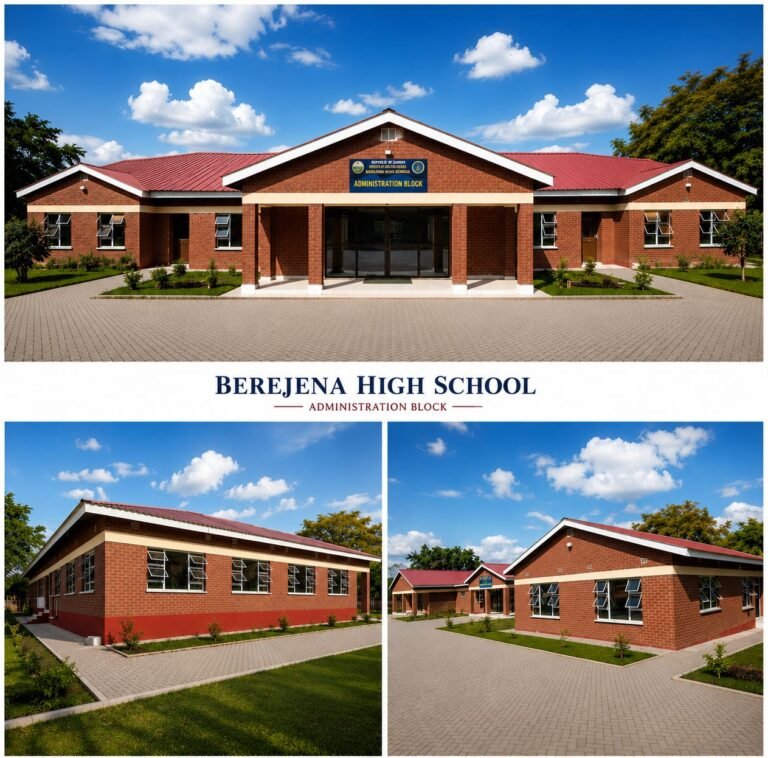
Berejena High commissions modern administration block
By TellZim Reporter
Roman Catholic Church-run Berejena High School has officially commissioned a new state-
of-the-art administration block, marking a significant milestone in the institution’s efforts to
improve its learning environment.
The commissioning ceremony, held on June 18, 2026, attracted several distinguished guests
from the Roman Catholic Church, the education sector, and local government. Among those
in attendance were Bishop Rt. Rev. Raymond Mupandasekwa, Masvingo Diocese Education
Secretary Sister Anna Bondeka, Vicar General Father Chagweda, Chivi District Schools
Inspector (DSI) Dr. Evershine Ndongwe, school officials, parents, learners, and members of
the community.
Speaking during the ceremony, Bishop Mupandasekwa urged both learners and staff to
make full use of the new facility and ensure that it translates into improved academic
performance.
“The construction of this beautiful administration block is not an end in itself. It should inspire
both learners and teachers to aim higher and work harder so that Berejena High School
continues to excel academically,” said Bishop Mupandasekwa.
He challenged the school community to improve its Zimbabwe School Examinations Council
(ZIMSEC) Ordinary and Advanced Level results and strive to match the standards set by
leading Catholic institutions such as Silveira High School.
The Bishop also commended the school’s choir for its impressive performances throughout
the year. Although the choir did not make it into the top five during the recently held CASA
competitions at Bondolfi, he praised the learners for their dedication and encouraged them to
continue working hard.
Masvingo Diocese Education Secretary Sister Anna Bondeka addressed issues of child
safeguarding and discipline, emphasizing the importance of creating a safe and conducive
learning environment.
She encouraged learners to maintain high standards of discipline and respect, noting that
good character is just as important as academic excellence.
“A disciplined learner is better positioned to succeed both in school and in life. We must all
work together to ensure that our schools remain safe places where every child can thrive,”
she said.
Berejena High School Head Raymond Gopo expressed gratitude to the Church and all
stakeholders who contributed to the construction of the new facility. He said the
administration block would significantly improve the school’s operations and provide a more
professional working environment for staff.
He said the school currently boasts an 80 percent pass rate and pledged to improve results
in future examinations.
“We are grateful for this development and remain committed to raising our academic
standards. Our target is to continue improving until we achieve excellence at both O-Level
and A-Level,” he said.
The newly commissioned administration block features spacious offices, modern ablution
facilities and boardrooms, and other amenities designed to enhance efficiency and service
delivery.
School authorities expressed confidence that the modern facility will help create a conducive
environment for administration while supporting the school’s vision of attaining outstanding
academic results in the years ahead.
Family of nine escapes death in Bikita house inferno

By Tadiwa Shunje
MASVINGO-A 23-year-old man from Muchaendepi Village under Chief Ziki in Bikita appeared
before the Masvingo Magistrates Court facing attempted murder charges after allegedly setting
fire to a family house occupied by nine family members including his parents, who narrowly
escaped death.
The accused appeared before Magistrate Bepura and pleaded not guilty to the charge and the
matter was deferred to June 29 for continuation of trial.
Prosecutor Liberty Hove told the court that on November 7, 2025, the accused allegedly
requested petrol at around 3:00 PM, claiming that his vehicle had broken down.
The State alleges that he later used the petrol to make inflammable devices before returning at
about 9:00 PM and setting fire to a two-roomed house belonging to his father, Lazarus Mugarwe.
The court heard that at the time of the incident, Mugarwe and his wife were sleeping in one room
while their children were asleep in another room.
As the blaze spread through the house, Mugarwe’s wife reportedly managed to escape and rushed
to the room where the children were sleeping. Upon reaching the room, she allegedly discovered
that the door had been locked from the outside. She unlocked it and rescued the children before
the flames could reach them.
According to the State, the accused moved away from the scene after starting the fire and
shouted words to the effect that he had fixed the family and that although they were not dead, the
conflict between them was not yet over.
The fire destroyed all household property and cash valued at US$754.
In his defense, the accused denied the allegations and told the court that longstanding disputes
existed between him and his family.
“We have issues before where i tried to discipline my younger brothers but my mother told me
that I had no child among them to discipline, that’s why they are accusing me,” he said.
He further claimed that on the day of the alleged offence he had been at Jecheche Business
Centre and only returned home late.