Home Blog Page 115

50 animals die of anthrax in Gonarezhou National Park

By Tatiana Mhararira

50 animals have been recorded to have died of anthrax in Gonarezhou National Park in Chiredzi District and the responsible authorities are said to be on high alert to prevent the deadly diseases spilling to domestic animals.
The Chief Director in the Department of Veterinary Services, Dr Pious Makaya confirmed the death of 50 animals and said no livestock had been lost in areas surrounding the park and vaccination is underway.
“So far I can confirm that there is no livestock that has been lost and the Department of Veterinary Services has mobilized 30 000 doses of anthrax vaccines. We are currently vaccinating all the cattle along the Gonarezhou game park fence,” Dr Makaya.
He said the parks department was picking up all carcasses to avoid them being devoured by other animals further spreading the diseases.
“By August 27, 2024, 29 buffaloes, one elephant, 18 kudus, one nyala, two impala, two baboons and one zebra had succumbed to the disease.
“ZimParks is on the ground picking all carcasses to avoid consumption and further spread by predators,” said Makaya.
Dr Makaya said anthrax was not a diseass for animals only as it can also affect humans and urged people to get meat from trusted outlets.
“Anthrax can affect humans and the main symptoms in livestock are sudden death and bleeding from natural openings without blood clotting.
“Members of the public are urged to buy meat from registered abattoirs and should not buy from vendors and unregistered places,” said Dr Makaya.
Masvingo Provincial Veterinary Officer, Dr Krammer Manyetu said due to El Nino drought animals were left with little or no grazing area in Regions four and five that caused animals in the area to be at high risk of anthrax
“Livestock and wildlife have tried to reach very little grazing close to the soil resulting in swallowing bacteria as they try to graze in dry regions,” said Dr Manyetu.

ZiG: Another horse bolts from the stable

….shops dump ZiG official rate for two-tier pricing system
…ZiG is a disaster – Biti
. . .analysts say it is a failed experiment

By Beverly Bizeki/ Perpetua Murungweni

Just like other Zimbabwean currencies introduced since the year 2000, the Zimbabwe Gold (ZiG) currency is already showing signs of instability barely half a year after its introduction, with many shops ditching the official rating for a two-tier pricing system making it cheaper to buy using the United States Dollar (USD).
Confidence in the new currency is slowly waning, with the black market exchange rate almost doubling the official bank rate, despite efforts by authorities to thwart illegal forex dealing and currency surpluses when the ZiG was introduced earlier this year.
While the ZiG inflation is officially at 1.5 percent, Zimbabwe’s currency confidence continues to plummet – a common story since the introduction of bearer cheques, which was an attempt to combat hyperinflation that had hit the country in the early 2000s.
Exchange rate instability rearing its ugly head
When the ZiG was introduced on April 6, 2024, it was being traded at 13.42 to the USD and is currently at 14.72 interbank rate. The black market rate is now almost double the official interbank rate, with illegal forex dealers trickling back to the streets.
Most traders in the informal sector are rejecting ZiG payments, while some local retail shops are fleecing consumers by displaying goods in inflated ZiG prices, which do not match the official bank rate.
A quick survey by this publication in local supermarkets including Pick n Pay, Spar and N. Richards Supermarkets gave some discounts when one buys with USD$ and this, technically, means their ZiG prices are equivalent to the black market rates though they say to be using the official interbank rate.
Supermarkets such as Nyaningwe supermarkets have completely ditched the ZiG and are only trading in USD$ for months now. Similarly, the informal sector, also, is largely using the USD as the main currency, rejecting the ZiG which has remained elusive in the sector.
Smaller grocery shops like Goshen General Dealer in Masvingo are using an exchange rate of US$1 to ZiG20 while others like Pivot Grocery Shop are using US$1 to ZiG16.
Other shops only display prices in ZiG and not in USD, which has been described by consumers as a way to silently inflate prices out of the sight of authorities who themselves seem to not know the official bank rate at any given time.
Customers buying in USD in some of these shops are being given incentives like discounts, which has adverse effects on the ZiG.

Failed currency experiment

Analysts say the introduction of the ZiG, though timely, was marred with errors that battered its strength, and it ended up being a failed experiment.
Zimbabwe Confederation of Public Sector Trade Unions (ZCPTSU) Secretary General David Dzatsunga said ZiG, compared to previous local currencies endured, but its scarcity has made the US$ to continue dominating, which is not a good sign.
“Looking at the ZiG relative to previous local currency initiatives by the monetary authorities, it has so far shown greater endurance and resilience leading to a greater stability and predictability to the economy that had been ravaged by runaway inflation.
“Conversely however, the ZiG has been scarce resulting in depressed consumer spending, as disposable incomes have remained low leaving the majority of workers reeling and gasping for breath. More needs to be done to make ZiG the currency of choice as the US$ still dominates transactions, especially in the informal sector which is entirely dollarized,” said Dzatsunga.
Collen Jonasi, a local economist said the ZiG currency started out well, until recently when strong economic fundamentals that should underpin its performance started showing that they had not been applied effectively.
“The ZiG showed signs of endurance from the time it was introduced until recently when we saw it losing value quietly and rapidly, especially on the parallel market. Price stability has also been another aspect that we realized from the introduction of the ZiG until recently when prices have suddenly increased at a somewhat steady rate.
“The strength and performance of a currency is underpinned by strong economic fundamentals such as confidence and production. As long as are still not in place, we may expect to see some instability of the ZiG. Additionally, once confidence is created or restored, the ZiG can start to perform the store-value function which it cannot perform at the moment as economic agents still prefer to restore their value in USD,” said Jonasi.
Dr prosper Chitambara however said the ZiG had displayed some resilience, blaming the mismatch in supply and demand of foreign currency for the depreciation of Zimbabwe’s local currency.
“The ZiG has been characterized by real stability although recently we have seen the widening of the black market premium or depreciation of the ZiG on the alternative market. This is being caused largely by the mismatch in demand for foreign exchange and supply on the interbank market.
“Most business people are failing to have their full foreign exchange requirements being met at the interbank market so it is causing them to then seek recourse on the alternative market. There is a huge numbers of willing buyers which is not being met by willing sellers. We have foreign exchange in our banking sector but most people are not selling their foreign currency and that is one of the challenges that we have. There has been a significant improvement in forex inflows but most people are just holding onto their USD hence the mismatch is creating the widening of the black market premium,” said Dr Chitambara.
Former Minister of Finance, Tendai Biti said the introduction of the ZiG was not only ill-timed but the currency itself was ill-fated like the RTGS, saying there has been a ZiG-induced depression on the market due to people’s lack of confidence in the currency.
“ZiG is a disaster; it should have not been introduced at all. The premium on the parallel market is over 100 percent as it is being traded at around US $1 as to ZiG 27 when the official exchange rate is around US$1 as to ZiG 13. Moreover, the ZiG is not available because you cannot get it in any bank or anywhere else so it is a disaster. Since its introduction there has been a ZiG-induced depression in the market, evidenced by the economy not moving,” Biti said.
Biti also added that it had become clear that foreign currency or gold reserves which were said to be backing the ZiG were not there, which is why the ZiG is on a free fall, and could see people losing money again due to a local currency.

Civil servants agonize ZiG salaries

Civil servants, who receive parts of their salaries in local currency bemoaned the unstable exchange rates that are eroding the value of their income as they end up not getting the true value of what they earn.
One teacher who spoke anonymously for fear of victimization said prices for basic commodities increase nearly every month, and they end up stuck between a rock and a hard surface, with needs that require only foreign currency payments on one hand, while on the other hand mostly groceries can be bought using ZiG.
“Every month, when I receive my salary, shops increase prices of goods. Some shops refuse to accept the local currency, while others use black market exchange rates.
“Another challenge is paying school fees. With schools now opening, most schools only accept 20percent of the fees in ZIG, requiring the remaining amount to be paid in USD. It is hard because I cannot buy USD on the black market because I will be arrested, but still, my children have to pay fees in USD,” she said.
By the prediction of analysts, if confidence in the ZiG keeps declining at the rate it is, by the end of the year its value will have plummeted, and with the country reportedly battling low reserve inflows in gold and foreign currency, the fate remains in the hands of government to practice strong monetary discipline.

ZiG hard cash elusive

Nearly six months after the introduction of the ZiG, bigger notes of the new currency are still foreign in the market, with the general populace hardly having access to them save for the coins and the ZiG10 notes which are used as change in many instances.
Consumers who spoke to this publication said they do not have confidence in the ZiG because they simply have not yet touched the notes months after they went into circulation.
Perpetua Mvura Hungomwa from Sikato Farm in Masvingo peri-urban said there were few times she used ZiG notes, saying she only saw the ZiG10 note when it was given to her as change in public transport.
“Here in Sikato it’s rare to see the ZiG, unless you travel into town, and you only get it as change when you have bought something worth half a US$1. The currency is yet to reach our hands,” said Mvurahungomwa.
Dr Chitambara said the unavailability of the hard currency was resulting in higher demand for USD compared to the new currency.
“Challenges in the availability of the ZiG have resulted in the strengthening of the demand for USD which might explain the depreciation of the ZiG. In a normal monocurrency economy, shortages of a currency should prop up its value, but in a dual currency it’s a different situation.
“This might also be the reason why illegal forex dealers might be trickling back to the streets,” said Dr Chitambara.

Bootlickers, time to wrap up 3rd term talk

0

Ladies and gentlemen, I hope you can now see that climate change is no longer just rhetoric, it is now a reality. We have been wearing jerseys since March and now the year is almost over tichingotonhorwa. What kind of winter is this that does not end like Zimbabwe’s problems? When you think it’s getting warmer, you wake the next morning to cloudy skies, just like that imaginary government department that oversees Zimbabweans’ suffering. When you think we are gravitating towards some resemblance of stability, chotokala futi. I believe in that department workers are rated by how much harder they can make the ordinary Zimbabwean’s life. I came across someone who was celebrating getting their passport smoothly, and instead of joining in the celebration, my heart broke at the level our country has put us—celebrating a traveling document should be recorded in history books, kunyora chaiko kuti we once lived in hell. That’s where you see some people thinking that is normal—normalizing the abnormal like the good old zvikuvatavata the whole country has been made to be. Have you guys seen the ZiG prices in shops? That will tell you that kwatiri kubva ndokwatiri kuenda. I think by now Gidza Gono and Panodhuva Mangundya are watching gleefully as yet another one bites the dust. Mushayazano zvamuwana before he even got time yekubatanidza, kkkk. Inonzi Zimbabwe iyi Chitovawee. Coming to think of it, the failure of the ZiG is no one but the government’s fault as usual. They spend like they have an endless well of wealth somewhere, on useless things futi. I hear inflows of the foreign currency and gold are weakening drastically, and the reserves that were shown to Baba Two by Second John Chapter Zigi that time hameno kana achiriko, with how they have been spending Willy nilly. Scott with his scandals may not be bringing in lots of gold like he used to. Saw him dancing like a chidhelele and thought he either must have been high or there is something wrong with him mentally because mmmm, its not make sure behaviour wise. Maybe it’s true that mushini unombomhanya. He is now busy sponsoring football forgetting that he is the country’s gold mafia gang leader, maybe someone should remind him that a whole currency is basing on him. With the lack of discipline in government spending, I foresee the USD getting muscular by the day in this teapot country, and probably kutozorishaya. I shouldn’t probably be optimistic, the Gold Mafia may save us, because they have to rule the country ka, and they should keep selling us dreams. But also that depends on the state Baba Two wants to leave the country when he steps down in 2028, because he may watch it burn so the next person on the helm takes the blame. These politicians are clever about their legacies, and if you think Mapombi is bluffing, look at what happened with Bhobho. By the time he died, people were already sympathising with him, kutomuti better devil, Robert chaiye wemalong and short sleeves, weJune 27 2008. The very same Bob who ordered the killing and maiming of opposition members. Even the same opposition he tortured for years had embraced him, so that might happen with Baba Two, never say never. I think when people suffer too long they are always looking for the next person to blame, and objectivity anenge ava mahwani.
Hey you bootlickers, ehe imi vanatumburatigoche who are pushing for ED’s third term, I think it is high time you wrap up all this hullabaloo about him clinging to power beyond 2028. Listening to his tone on that interview in China, you could hear that he is now annoyed by the subject manje. Listen, I wouldn’t run the risk of believing that he will never change his mind on that, or whether it’s sincere or not, but haa imi, hanzi handichadi kani. Chiiko nemi nhaimi? You are busy fighting and blaming each other kuno nyasi kumaSero for not supporting a third bid the very person involved is saying he doesn’t want, munopenga here imi? Do you want to rule for him? Do you want to force him? What sort of I want to go rest do you understand nhai vanaMusorobhangu? Paradza heeey, although apo! I’m especially irritated by Zanu yeMasvingo because you are the once who started this madness. He even said he knows the exact date he is going to leave office, but you coconut heads still sing the same stupid tune. VanaMavhenyengwa you are soiling your chairmanship’s legacy, and I sincerely hope the damage is not already done yet. Don’t be on the record for endorsing nonsense. Let him go and rest like he wants, and we also get to taste Chandaizment’s rule, though I have everyone’s fear that he will be too militant. That tirade with striking medical professional that time still sends shivers down my spine, when he told doctors that they were nothing but skilled rebharas. Now imagine him as president, without ED who he seems to fear, out of the picture. The sad part is we haven’t really seen the role a former president plays as we never got the chance; Bob left office achimhanyiswa, and he was almost of no use except to Dr Gire and the likes of Jonono, his nephew Zhuwawo, Savior nanaMzembi. The difference with Bhobho however is that none of his sons could appear to want to retain power unlike mapatya aBaba Two. We saw boy boy with daddy in China, to make sure that they recognize him as well ikoko. Chete we are not so sure about our friends from the east’s loyalty between Baba Two and Kedha, remember the latter went there looking like he has been boiled alive and came back looking brand new that time. I bet that took a lot of resources, loyalty and care from the Chinese, and that’s when he came back showing Marry all colours of his cruelty. Whatever happened there, we don’t know. At some point I thought he was just going to drop and die, thinking it was all artificial wanike makisimusi arikutodyanana paya. One thing is for sure though; China is an all-weather friend to both ED and Kedha, because they share the same ideology of a one party state like Mavhima said here in Masvingo sometime ago, the ‘five star ironclad’ friendship China wants from Zimbabwe, like it said to Baba Two ipapa.
We really miss the drama rekuZanu veduwee. Havambonyatsopindana hard here timbonakirwa, kkkkkk. If only the bootlicking Shefus could stop with this third term nonsense and focus on who will succeed ED we can have some excitement in politics. Mapombi misses some factionalism action please, not kurumirana muvhu that you are doing. Not going to the press behind each other’s backs like cowards. Nyatsopindanai maopen foot paite action.
Anyway, let me go ndinokanga maputi angu for lunch, if you see me these days I’m glowing because of eating tomatoes, akazara here at Chitima. Cabbages and tomatoes are in excess so I’m eating heavy menu. Before I go, pane akambonzwawo kuti Charle Munganasa ari kuita sei kuZBC here, nothing has changed so far, mukamuona tell him kuti Masvingo misses him. Did anyone ever hear about Runaidha since I last asked about her? Wherever she is, I hope she is reminiscing shooting that plane off the skies, kkkk. Also greet Mphoko when you see him, tell him it could have been him at the helm with ED in China and Kembo wemabhebhi in Indonesia, unfortunately it was Mkwenyana. Until next week, mboko imboko!

Council turns down three private school proposals

By Beverly Bizeki

Masvingo City Council has turned down three request proposals for change-of-use of residential stands to private colleges on the basis that they did not meet the minimum required sizes for institutional stands.
The development comes at a time when there is critical shortage of both primary and secondary schools in the city, with private, and mostly unregistered, schools now absorbing some of the learners.
Council’s Public Works and Planning Committee minutes dated August 24 revealed that most of the applications did not meet the required minimum sizes, with the standard size for a secondary school being 6.5ha.
“Council has resolved to recommend that the application by Mr Adriel Pururu for change of use on stand number 6622 Mugagao Street Mucheke, Masvingo from residential to institutional (Private College) be turned down on the basis that the stand measures 649 square metres and therefore does not meet the minimum stand size requirements institutional use.
“That the application by Great Zimbabwe Realtors for change of use on stand number 9126 and 9126B, Production, Brigade Street, Chesvingo, Masvingo from residential to institutional (private college) be turned down on the basis that the stand measures 800 square metres and therefore does not meet the minimum stand size requirements for institutional use.
“That the application by Jayden Family Trust for change of use on stand number 6542 Batsire Street, Masvingo from residential to institutional (secondary school) be turned down on the basis that the stand measures 450 square metres and therefore does not meet the minimum stand size requirements of a secondary school site +/- 6.5ha,” read part of the minutes.
Commenting on the committee recommendations in a Full Council Meeting held recently, ward 10 councilor Sengerai Manyanga said there was need for council to be fair in issuing operational licenses saying there were other schools already operating with the same sizes as the ones turned down.
Manyanga further said it was only ideal for council to avail stands for institutions than just closing the schools without giving them an option to regularize and operate legally.
“There are some colleges that have stand sizes as the ones turned down that we all know of operating across the city. How about we just treat everyone the same? They are operating with council licenses so if we are going to turn down other requests we must close the ones already operating. We are city fathers and must treat people equally.
“We should create institutional stands since we have seen that residents have an interest. We must enforce the closing down of these schools so that if they are interested they can come and get the proper stands. The public works committee must work to avail these stands quickly,” said Manyanga.
Ward 9 councilor Benard Muchokwa seconded Manyanga and said council was shooting themselves in the foot by displaying double standards as there were schools already operating illegally with council not doing anything about it.
“We have a lot of schools operating without meeting our standards, does this mean council is not aware of it? We are not doing our part and we are not being honest with what we do as council. If the schools are operating illegally why are we not closing them down?” asked Muchokwa.
Private colleges mushrooming in the city have become a cause for concern, with some lacking basic amenities like proper ablution facilities. These colleges, some of which are alleged to operate only at night are said to have up to 500 learners each, despite operating in a small space.

Desecration, climate change threaten sacred Nemamwa water source

By Virginia Njovo

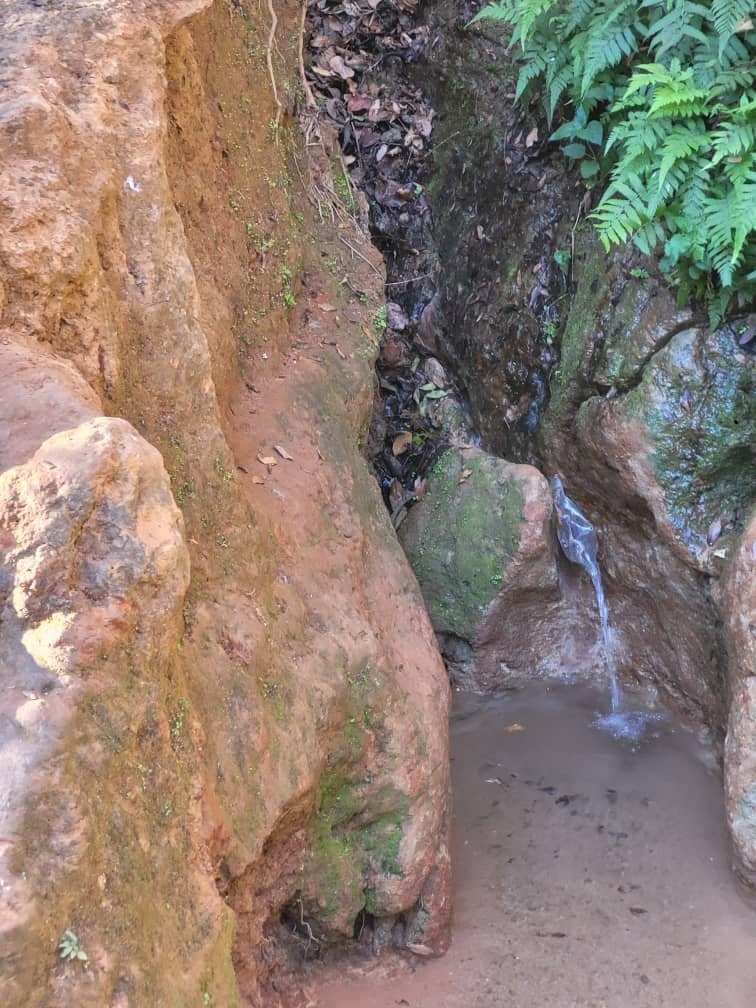
For decades villagers from seven villages in Masvingo rural have relied on a unique type of spring for water for domestic use, which is believed to be sacred, but is now being threatened by climate change as it is drying up.
The spring is the sole water source for Makwari, Tore, Muzamani, Chinorumba, Togarepi, Tevera and Rufetu villagers, although it is located in Makwari Village, with some villagers walking approximately three kilometres to fetch water.
The Manwa people used to fetch water from the spring, known as Machakawa, which used to have a number of nipple-like outlets letting out visibly clean water from an earthen boulder, like modern water taps, the only difference being that the water continuously comes out.
Speaking to TellZim News, Makwari Village head Tava Matambo said apart from climate change, the water source was also being threatened by people who were violating the traditional rites observed at the spring over the years.
He said this was mainly done by those who were not originally from the area who were desecrating the place by not following the traditional rites.
“We have a problem of people who are desecrating the place and these are mainly those who came from other places and settled here. This angers the ancestors, leading to the drying up of the water source,” said Matambo.
He said some of the rites include going there barefooted, avoiding the use of scented soap and avoiding the use of metal or plastic containers.
“There are various regulations when it comes to this sacred place. People are not allowed to go there wearing shoes, they are not allowed to use metal containers as well as taking photos at the place. This will anger the spirits of the land and we have noticed a difference since 2012 and if people continue violating the regulations then it may be closed for good,” added Matambo.
Chinorumba village head, Murambiwa Chinorumba said the place was protected by a sacred python, together with some marine spirits believed to be harmless to those who observe the regulations.
“There is a python (shato) which is seen at Machakawa and it doesn’t harm anyone; actually it’s rare to see it, as its only purpose is to protect the spring with the help of the marine spirits that only harm those who don’t follow the rules,” said Chinorumba.
He also added that at one point they tried to drill a borehole near the Machakawa spring and the machinery got stuck underground.
“There is a time when well-wishers came to drill a borehole near the spring believing they could get water easily but they failed as the drilling machine got stuck underground, taking them three days to retrieve it. They later got to the water table but after a day, only mud was coming out of the borehole. Since then, the community only relies on Machakawa as their source of water,” added Chinorumba.
Tore Village Head, James Manwa said that apart from those who were breaking the rules, climate change also contributed in the depreciation of Machakawa.
“For generations, this sacred water source has been a place of heritage and cultural significance; the crystal clear waters are believed to possess mystical properties, drawing pilgrims from far and wide. Climate change however is now affecting this sacred site,” said Manwa.
“Warmer temperatures are altering the water’s chemical composition and changes in precipitation patterns are affecting the water flow. Increased evaporation and droughts are also threatening the water’s very existence,” said Manwa.
Machakawa is believed to be source to perennial Munzviru River which is key for economic activities downstream like gardening, commercial brick molding and other domestic uses.

Quelia-bird free season to boost winter wheat harvest

0

By Tatiana Mhararira

Masvingo Province is set to meet its winter wheat target as the province has had no reports of marauding quelea birds which are a major threat to wheat farming.
The province has about 2 926.77 hectares under winter wheat for the 2024/2025 season and is expecting a yield of 17 500tonnes.
In an interview with TellZim News, Ministry of Lands, Agriculture, Fisheries and Rural Development Provincial Director Caleb Mahoya said there were no reports for the marauding quelia birds in the province yet.
“So far we have not received reports on any area which has been affected by quelia birds,” said Mahoya.
Provincial Agriculture Specialist Jonas Chinyavada said they had came up with several ways to curb the quelia birds in the province including the use of drones for thick clustered bushes if need arises.
“We are working with Parks and Wildlife nets team to control feasible birds mainly in the Lowveld where sugar cane and acacia trees are found.
“For trees with five metres and above, boom sprayers have been used, with Mushandike Irrigation Scheme utilizing the method. Drones have been used for areas with thick clustered bushes,” said Chinyavada.
Chinyavada said the department had conducted trainings with farmers on ways to prevent quelia birds and use of indigenous methods.
“Trainings have been done on the identification of quelia birds and a quick robust system has been activated as alarms are raised throughout the province. We urge farmers to use indigenous methods such as whistling and banging bells,” said Chinyavada.
As the winter wheat grows towards harvesting, farmers have been advised to take heed of the advice given to them by Agritex officers as well as some indigenous practices which they know so as to maximise their harvests.

Cholera still a threat in Chiredzi

By Beatific Gumbwanda

CHIREDZI-Though the government recently declared that the country is now cholera free, the Ministry of Health and Child Care (MoHCC) is still on high alert in Chiredzi as major causes and key drivers of cholera are still active in the district.
The ministry has so far managed to administer 84 454 oral cholera vaccinations across the district. This was revealed during MoHCC cholera sensitization meeting with journalists at Chiredzi General Hospital where it was highlighted that the ministry was on high alert despite having not recorded any case in a few weeks.
Speaking during the sensitization meeting, Chiredzi District Health Promotion Officer, David Maziva said they were still vigilant because the major drivers of cholera were still there in the district.
“We have not recorded any cholera case over the past few weeks and we are still on high alert because we don’t know when the disease will strike again.
“We still have low water and sanitation coverage in the district. There is poor access to clean water, some people are still drinking from unprotected water sources like canals and using sugarcane fields as toilets.
“We are still holding cholera awareness campaigns and making efforts to improve on water and sanitation. New boreholes are being drilled by various stakeholders, like in Mkwasine, the Mkwasine Management Committee was forthcoming as it helped in drilling some boreholes,” said Maziva.
District Nursing Officer (DNO) Leonard Bhasera said vaccine acceptance was high and even the apostolic sect members, who do not usually seek medical attention, came in numbers without being forced.
“Acceptance of Oral Cholera Vaccination was high because many people experienced the deadliness of the disease. We had an overwhelming support from the community as we managed to exhaust all the vaccines we were allocated,” said Bhasera.
He also urged those who received the Oral Cholera Vaccines to continue exercising hygiene as well as drinking from safe spots.
“Those who were vaccinated should continue exercising hygiene and drinking from protected water sources. Food should be cooked thoroughly and eaten whilst hot,” added Bhasera.
Chiredzi, which last experience life threatening cholera cases in 2008, was one of the major cholera hotspots this year, recording a sizeable number of cholera confirmed deaths.

CBAP trains communal farmers on forest regeneration

By Virginia Njovo

Community Based Aid Programme (CBAP), recently trained farmers in Zimuto area on forest regeneration, aimed at restoring deforested areas using natural methods.
Zimuto area falls under Region IV in the Southern part of Zimbabwe, known for having a variety of vegetation species as well as being a game ranching area but had been ravaged by deforestation and climate change.
The reforestation drive is aimed at restoring the lush canopy of destroyed forests by the local farmers as well as maintaining the remaining vegetation as they conduct their farming activities.
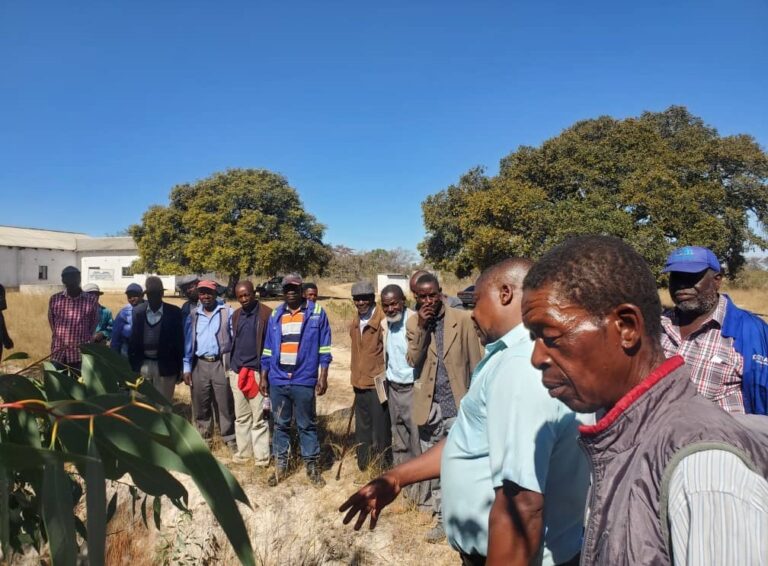
Facilitating the training at Zimuto Township on August 19, 2024, CBAP director Samuel Mhungu said they had a vision of a greener tomorrow which involved maintaining the remaining natural trees in Masvingo Rural District Council (RDC), starting with Wards 1, 2, and 19.
“We are training traditional leaders, with the goal of making them lead their communities in the thinning process, so as to restore forests and reduce carbon emissions, ultimately improving oxygen levels,” said Mhungu.
The group presentations at the training revealed that in 1980, the Zimuto area was known for growing wheat and rice in its wetlands, which today is non-existent as there are no more wetlands left.
They also pointed out that due to deforestation, there was no more game left in the area, which was previously known for a variety of wild animals.
Chief Zimuto’s representative at the training Fortune Shawarira said they welcomed the regeneration project since they also had the desire to have their old identity of where they were known for agricultural production.
“This natural regeneration project is a valuable initiative because of its goals and objectives in restoring the pride of Zimuto. Zimuto was historically known for traditional rice production in our wetlands (deketa), which no longer exist today. Our area was also renowned for its diverse game meat, attracting people from various places to come and hunt. However we nolonger have wild animals here.
Reforestation is a complementary approach to protection and maintaining the earth’s forests. In Zimbabwe landscapes, forests are highly degraded while in some cases they have been completely cleared.

Masvingo Christian Academy knocked out of Mai Hondo Tourney

0

By Rangarirai Shanyurai

Masvingo Christian Academy under 16 footballers were knocked out in the group stages at the Mai Hondo Memorial Tournament on August 31, 2024 in Mutare after losing 0-1 to Bright Star.
Masvingo Christian Academy Chairperson Takesure Hlupo cited age cheating as the major result of the team’s exit from the tournament and emphasized need for fair play also addressing issues related to cheating in such tournaments.
“It was a learning curve and we would not compromise on our values by cheating and that was the major reason why we were eliminated in the group stages.
“The tournament was good, though I feel much still needs to be done regarding cheating. We ended up drawing followers because of our correct young football players. To us it was not about winning but showcasing young football talents,” said Hlupo.
He said though they were knocked out early in the tournament, the team got exposure and got a soccer kit.
“On a positive note, by participating in the tournament, we received a complete set of jerseys, socks and two balls,” said Hlupo.
Commenting on the age cheating, Mai Hondo Youth Sport Trust spokesperson Tapiwa Mbutsa said the vetting process was done properly and one team was disqualified.
“We implemented a vetting exercise prior to the tournament where we required various documents and engagements with schools to prevent age cheating. Vetting is an ongoing process that takes places before, during and after the tournament and we take a zero tolerance stance on age cheating.
“We even disqualified City Strikers team which had gone through the qualifiers using an over-aged player.
La Sakubva lifted the boys’ soccer trophy while Nyamauru won the girls soccer while St Joseph primary won the girls netball.

FC Wangu Mazodze tastes first defeat

0

By Tatiana Mhararira

FC Wangu Mazodze well known as ‘Kingdom Boys’ in soccer circles tasted its first defeat against Triangle United FC nicknamed ‘Sugar Sugar Boys’ at Gibbo Stadium in Triangle recently.
The Kingdom Boys, who had never gotten any lose this season received their shocking defeat by the Sugar Sugar boys and lost with a goal to nil ending their unbeaten streak.
FC Wangu Mazodze expected to recover after Triangle players scored the first goal but that was the end result of the match.
Speaking to TellZim News, FC Wangu Mazodze Spokesperson Blessing Kwesha said the match against Triangle United FC was one of the difficult matches leading to their first loss.
“Our game against Triangle United FC left a bitter taste in our mouths. After going for 20 games without testing defeat this match left our legion of fans hurt, but definitely we will bounce back.
“I congratulate Triangle United FC. The game could have gone either way, the players had scoring chances which they failed to utilize or we had to accept defeat,” said Kwesha.
Kwesha said in the upcoming match they expect a win from the Kingdom Boys.
“The team’s upcoming match against Great Zimbabwe University FC is our chance to get back to our winning streak. We won’t take this game lightly as GZU FC has proven from their last encounter against Chiredzi Stars FC that they can be a pain in the neck.
“They are riding on winning emotions so we will be alert. The Kingdom Boys are in their best condition we expect nothing but a win,” said Kwesha.
FC Wangu Mazodze, coach John Nyikadzino said he was not impressed with the loss but was happy with the performance the boys showcased on the pitch.
”Like any other coach I was not happy with the result but the boys showed outstanding performance as they considered a goal trying to respond to get the equalizer but failed.
“Losing a game is part of football but we are now looking forward to our next game. What is important to us is to win and remain on top of the log,” said Nyikadzino.
Nyikadzino said it was important to make of such loses to learn and develop.
“After the loss against Triangle it is important for players to develop game by game. The players’ previous performance though l wasn’t expecting the outcome. I want the players to develop from the way they displayed against Triangle FC,” said Nyikadzino.
The Kingdom Boys are currently the log leaders with 51 points. The Sugar Sugar Boys are on second position with 38 points. Their next game in Mucheke Stadium is against GZU FC which has 11 points.