Home Blog Page 498

ED Gutu visit – Zinara loses thousands in one day

…as
motorists use Mnangagwa rally as password for tollgate free entry

Brighton Chiseva
MASVINGO – President
Emmerson Mnangagwa’s recent visit to Gutu saw the Zimbabwe National Road
Administration (Zinara) losing thousands of dollars in a single day as hundreds
of vehicles were given free passage at a tollgate along Masvingo-Mutare Rd near
Roy business centre.
All
vehicles passing through the Roy tollgate to President Mnangagwa’s Gutu rally
where he lead a clean-up campaign only had to wave the national flag or Zanu PF
regalia to gain free entry.
Buses,
lorries, omnibuses and cars passed in their hundreds without paying a cent
while some unscrupulous road users took advantage of the loophole to dupe the
Zinara officials even when they were not going to the rally.
In
one of the two incidents witnessed by this reporter, a Zupco bus approached the
tollgate and one young man disembarked and approached the officers and told
them that he was a Zanu PF youth chairperson and had two buses under him.
Over
40 buses drawn from Zupco, schools and colleges passed through the tollgate
while a similar number of lorries and omnibuses gained free passage with
hundreds of small cars following suit.
Zinara
personnel manning the tollgate had a list of buses and vehicles which were not
supposed to pay the toll fees but every other person who claimed to be going to
the rally was exempted from paying.
Masvingo
tollgates controller, David Vunganai said it was common knowledge that vehicles
that pass through a tollgate should pay tollgate fees before referring all
questions to Zinara public relations officer Connie Muraicho.
Muraicho
requested that questions be submitted in written format but had not responded
to them by the time of going to print.
Meanwhile,
it has also been established that all Zanu PF vehicles bought in the run-up to
the 2018 elections do not pay tollgate fees.

Legal perspectives: Unpacking Amendment Bill II

0


with Fidelicy Nyamukondiwa

The date 20 May 2013 is
a memorable day in the history and jurisprudence of Zimbabwe. This is the day
the 2013 Constitution of Zimbabwe breathed life, a milestone which saw the 1980
Lanchester House Constitution being thrown into the trash bin. On this date, Zimbabwe
adopted a Constitution which was to become one of the best, not only in Africa
but in the World. In 2017, the first amendment to this Constitution was made. On
31 December 2019, the Constitution of
Zimbabwe Amendment (No.2) Bill, 2019
aimed to amend the 2013 Constitution
for the second time was gazetted.
This editorial is not
mearnt to analyze, criticize, condemn, applaud nor commend any of the Bill’s proposed
amendments. It seeks to shed light on the Constitution amendment process. Its
main purpose is to interpret/simplify the Constitutional Bill for all and
sundry.

How is the Constitution
amended?
The Constitution can be
amended through what is known as a Constitutional Bill. The Speaker of
Parliament must first give notice of an intention to make such amendment. This
is essentially what was done through the Constitution
of Zimbabwe Amendment (No.2) Bill
[General Notice 2186 of 2019].Immediately
after a notice is made, the Parliament must invite members of the public to
express their views on the proposed amendments .Such views can be expressed by
making written submissions to the Parliament or by participating in public
meetings organised by the Parliament.  The
Parliament has since set the public meeting dates and venues. The meetings will
be held from 29 March to 4 April 2020.
After notice is given
and after the public is given an opportunity to express their views, the Bill must
be presented and debated in Parliament. This can only be done after 90 days of
the date of notice.  The Bill in question
will therefore be considered by Parliament only after 16 April 2020.
Members of both the
National Assembly and the Senate must vote to pass the Bill. It must be passed by
the affirmative votes of two-thirds of the membership of
each
House. If passed, it must thereafter be transmitted to the President for assent
and signature. There are some types of amendments which must be subjected to a
national referendum before being transmitted to the President for assent. However,
none of the Bill’s proposed amendments require a national referendum.  

The
proposed amendments.
Every Bill has what are
known as clauses. A clause is a distinct section or provision in a legal
document or instrument. The 2019 Constitution Amendment Bill has 27 clauses. It is however not correct to say there are 27 proposed amendments.
 Clause
1 for instance, sets out the name (short title) of the Bill. To conveniently
unpack the Bill, I shall classify the proposed amendments and make use of
thirteen numbered headings as following;
1.      The
running mate concept.
In terms of the current
system, only the President is voted for in an election. Soon after assuming
office, the president picks and appoints two Vice Presidents of choice.
In the event
of the President ceasing to hold office for any reason, the Vice-President (VP)
who last acted as President will take over until the ruling political party
nominates a successor.
The 2013 Constitution
introduced what is known as the running mate concept. This concept entails that
a presidential candidate must pick and specify two persons who will be his/her
first and second VPs in the event of winning the election. This means that if a
citizen votes for a President, he/she will be simultaneously voting for two
named VPs. Simply expressed, two aspiring VPs will run together with the
presidential candidate on a joint ticket. 
They will be his/her running mates in the election race.  The running mate concept demands that
if an
elected President, for any reason, ceases to hold office before the end of the
term, the first VP will take over as President until the next presidential election.
It must be noted that when
the 2013 Constitution became operational, the running mate concept was lawfully
suspended for 10 years. This means that the running mate concept is set to
become operational in the 2023 harmonized election. Clauses 2 to 9 of the Bill
seeks to remove this running mate concept from the Constitution. This means that
if the bill is passed, assented and signed into law, we will continue using the
current system which allows the president to pick and appoint VPs after winning
the election.
2.      Appointment
of Ministers and Deputy Ministers
Ministers are
ordinarily appointed from within the Parliament, that is from amongst Senators and Members of the National Assembly.
 The Constitution allows the
President to appoint a maximum of five Ministers and Deputy Ministers from
outside Parliament. These must be chosen for their professional skills and
competence. The non-parliamentary ministers are allowed to sit and speak in Parliament
but cannot vote therein. Clause 10 of the Bill seeks to increase the number of
such ministers from five to seven.

3.      Women
and Youths in Parliament.
There
currently exist what is known as a Party-list system of proportional
representation. In terms of this system, 60 parliamentary seats are reserved
for women.  Six women are elected from
each of the 10 provinces of Zimbabwe. Each political party is allowed to field
women candidates to contest for the 60 seats. In terms of the Constitution, this
special provision to reserve seats for women was scheduled to run for the first
two parliaments after 20 May 2013. This means that, there shall be no seats
reserved for women in the 2023 harmonised elections. Clause 11 of the Bill
seeks to extend the party list system for two additional parliaments. This
means that if the Bill sails through, 60 women seats will be reserved in the
2023 elections and again in the next elections.
Clause 11 also
proposes to introduce a similar
party-list system which
will see 10 parliamentary seats being reserved for youths. The Constitution
define ‘Youths’ as people aged between the ages of fifteen and thirty-five.  Youths aged between twenty one and thirty-five
will be eligible for election. In terms of the proposal, one youth member will be
chosen from each province.

4.      Delimitation
of Electoral boundaries
Delimitation in this
context means the setting of electoral boundaries, that is to say the division
of wards and constituencies. In terms of the current system, such boundaries
are divided by ZEC, soon after the national census which is held after 10 years.
Clause 12 of the Bill seeks to remove the 10 year period and the aspect of the
delimitation being done after a population census. ZEC will have a discretion
to determine when to set the electoral boundaries.
5.      Promotion
of Judges.
For the avoidance of
doubt, the Bill does not seek to amend the process of appointing ‘a person’ as
a High Court or Labour Court Judge. The Bill proposes to amend the manner in
which already sitting Judges are promoted. A judge is normally promoted through
an appointment to a superior court.  The
hierarchy is arguably as following; Labour Court, High Court, Supreme Court and
or Constitutional Court. The current system mandates that a judge be subjected
to a public interview before promotion. Clause 13 of the Bill proposes that the
President be  allowed to promote sitting
judges without subjecting them to the public interview process.
6.      Tenure
of Judges.
In terms of the
Constitution, all judges must automatically retire upon reaching 70 years of
age. If the Bill is to be passed and signed into law, judges and acting judges
of the Supreme Court and Constitutional Court will be allowed to extend tenure
for a maximum of five, one year periods. Put differently, Supreme Court and
Constitutional Court Judges will be able to serve as judges until they attain
75years if they so wish. The judge so wishing will have to submit a medical
report confirming that he/she is still mentally and physically fit to remain in
office. The Bill proposes that the report be submitted to the President who
will have to consult the Judicial Service Commission (JSC) in determining the
‘application’ for extension.
7.      Appointment
of Prosecutor General.
The current system entails
that the Prosecutor General (PG), that is to say the head of the National Prosecuting
Authority (NPA) is appointed through a public interview process conducted by
the JSC. The JSC first advertises the post after which the public and the President
nominates candidates. Those nominated will be subjected to public interviews.
The JSC then prepares a list of the best three candidates. The President then
picks the PG from that list …Clause 19 proposes that the President be allowed
to appoint the PG without advertisement of the post, nominations nor the public
interview process. What the president ought to do in terms of the Bill is to
seek advice from the JSC.

8.      Removal
of the Prosecutor General
The current system
provides that the PG is removed from office due to ‘gross misconduct’ among other factors. The Bill proposes ‘serious misconduct’ in place of ‘gross misconduct’. The current system
provides that the appointment of a tribunal to determine the suitability of the
PG is recommended by the JSC. The Bill seeks to introduce a system in which the
President considers the appointment of a tribunal on his/her own initiative.
The Constitution
provides that in determining whether or not a PG must be removed, the President
must act on the recommendation of the tribunal. If the Bill is to be passed,
the President will no longer be mandated to act on the Tribunal’s recommendations.
The current system provides that at least one of the members of the tribunal be
a lawyer chosen by the Law Society of Zimbabwe. The Bill disregards the latter
provision.
9.      Chief
Secretary to the Office of the President and Cabinet.
Clause 16 proposes to
insert a new section in the Constitution which will make provision for the
appointment and role of the Chief Secretary to the Office of the President and
Cabinet and his or her deputies. The Chief Secretary will be appointed by the President
and will be the most senior member of the Public Service. The terms of office
and conditions of service such as the salary of the Chief Secretary and his or
her deputies will be fixed by the President.

10.  The
ZHRC & Office Public Protector.
There used
to be an office of the Ombudsman before it was later renamed to Public Protector
(PP). The Constitution abolished this office and conferred its powers to the
Zimbabwe Human Rights Commission (ZHRC). Clause 18 of the Bill proposes to recreate
the PP’s office. The President will appoint the PP and his/her deputy after
consulting the JSC and the Parliament’s Committee on Standing Rules and Orders.
A Public official or institution may at times act in a
manner which results in injustice. The office of the PP will be responsible for
investigating such injustices in cases where there would be no court remedies
for the aggrieved person. The PP will also take over functions of the ZHRC in
the investigation and administration of justice in cases involving public
officers or public institutions.
Clause 17 proposes that
the ZHRC takes over some investigations instituted by the PP and further
proposes that it refers some investigations to the PP.
The Bill proposes that there be an Act of parliament
which may confer additional functions of the PP or exempt some public officials
and institutions from being investigated by the PP.

11.  Provincial
& Metropolitan councils.
The Bill seeks to remove members of Parliament from the
membership of provincial councils and merge the provisions relating to
provincial and metropolitan councils. Members of Parliament will no longer be
council members. This means that a member of parliament who is elected to a council
will cease to be such.

12.  Parliament
Control over Fiscal Obligations.
To allow the Parliament
to control fiscal obligations that impose heavy burdens on the country, the
Constitution provides that an agreement which is not an international treaty
but which has been concluded by the President with one or more foreign
organisations or entities and which imposes fiscal obligations on the country is
not binding on the country until it has been approved by Parliament. The Bill
seeks to reduce Parliament’s control by using the term ‘international organisation’ in place of ‘foreign organisation’.
13.  Minor
Amendments
Chapter 10 of the
Constitution makes provision for the Civil Service which is responsible for
administering the country. Clause 15 of the bill proposes to change the description
and name of the Civil Service to ‘Public
Service’
. Clause 27 provides for the substitution of the term ‘Civil Service Commission’. It proposes that
it be referred to as the ‘Public Service
Commission’
.

Conclusion.
As long as the
Constitution amendment procedure set out in section 328 of the Constitution is
strictly followed, nothing ought to stop the Constitution of Zimbabwe Amendment (No.2) Bill, 2019 from being
passed into law. So far, everything seem
to have been done above board. The Parliament has since opened the floor for
citizens to make written submissions regarding the Constitutional Bill. The
dates and venues for public meetings have since been set. Those who wish to
criticize, condemn, applaud or commend the Bill have an opportunity to
peacefully do so during these public meetings. It is hoped that this editorial
will be a handy tool for academics, lawyers, politicians, students, journalists
or concerned citizens who wish to analyse the Bill.
Fiat
Justitia Ruat Caelum!

Fidelicy Nyamukondiwa writes in his
personal capacity. Contactable on 0785827154

nhanyams@yahoo.com
  https://twitter.com/FidelNyams

Chipinge self-taught artist’s talent takes him to Europe

0


Edwin Hlatywayo

Knowledge Mhlanga

CHIPINGE – For several years, a man struggled
to get his works of art recognised but to no much avail  until luck finally came knocking on his door.
Edwin Hlatywayo’s works of art have now transformed his
homestead in Chipinge into some sort of a unique gallery.
Hlatywayo does not have any formal training in art but he has
been making his own name through self-practice since he was in primary school.
He has now become a recognized artist who is currently on a
tour of Germany and Switzerland for a series networking and exchange programmes
in arts and music.
From Germany, he will proceed to Switzerland for similar
initiatives with artists from other countries.
Hlatywayo is an all-rounder artists who does drawings,
paintings, handicrafts, designing, 
writing and reciting poetry, singing, dancing, making musical
instruments like the mbira, weaving and hair-dressing.
Very few had appreciated his work until Crista Zella, a
German national, identified his talent and decided to promote him.
She began by making him a part-time arts teacher at her Mutare-based,
German-funded Bongai Shamwari Early Childhood Centre in Chikanga.
As time went, his works took him to exhibitions at Paiyapo
Arts Development Centre and Ndau Festival of Arts.
He became a member of the Paiyapo committee, a position that
enabled him to visit many events of artistic expression in the district.
As a writer, he is featured in Ngano Dzekanyi, a Ndau folktale
book and he has also written several poems.
In Germany, the artist is holding several painting
exhibitions and live performances in poetry and Mbira music alongside three
Mutare-based artists.
Hlatywayo said his wish was to learn and inspire other people
back at home through his hard work.
He said it was heartbreaking that his talent was appreciated
more foreigners than his own countrymen, some of whom dismissed him at the
Harare-based National Arts Gallery.
He, however, had the greatest praise for Paiyapo Arts and
Heritage Development Centre director Phillip Kusasa whom he said had always
supported him.

RCU VC Maravanyika adds another feather to his cap

0
Prof Maravanyika

Staff Reporter
MASVINGO– Reformed Church University (RCU) vice chancellor Professor
Obert Maravanyika has added another feather to his cap following his
appointment as a new fellow of the Zimbabwe Academy of Sciences (ZAS) recently.
Maravanyika was appointed alongside National
University of Science and Technology (Nust) vice chancellor Professor Mqhele Dlodlo,
University of Zimbabwe’s (UZ) vice chancellor Professor Paul Mapfumo, Bindura University
of Science Education (Buse) pro-vice chancellor Professor Wilson Parawira, Dean
of Science Maud Mucheweti of UZ, Lupane State University (LSU) vice chancellor
Professor Pardon Kuipa and vice chancellor for Midlands State University (MSU)
Professor Victor Muzvindizwa.
Maravanyika was appointed in special
recognition to the work he is doing in the social sciences and education.
On his part he said he was happy with the
recognition saying it was an honour to be recognised for the hard work he has
done towards the improvement of education in Zimbabwe.
“I am happy with the appointment, this shows
that we are doing good work that people appreciate. I am happy to be among the
top scholars in the country,” said Prof Maravanyika
He said he started his work in the social
sciences and humanities in the 1980’s soon after independence.
To be a fellow with ZAS one has to be among the
top scholars in the country.
He is the only professor to have led two
universities namely Masvingo State University now Great Zimbabwe University and
now running the RCU as vice chancellor.
Maravanyika wrote a number of publications in
his area and has wrote a paper on the education policy in Zimbabwe which is now
a reference document.
He also led the project that led to the
formation of the Better Schools Programme in Zimbabwe (BSPZ) which most
districts have a centre of and Maravanyika said it was one of his major
contributions in education in Zimbabwe that led to his recognition.


Nurtwell Investments bring iconic Itel brand to Masvingo

0
Some of the products marketed by Nurtwell


Staff Reporter
MASVINGO
Nurtwell Investments, the distributors of Itel products, have opened a shop in
Masvingo giving technology junkies a wide range of choices to choose from.
Nurtwell
Investments is housed at the Masvingo Trade Centre in the first floor.
The
shop offers a wide range of Itel, Tecno, Kgtel and Infinix smartphones. The
shop is inclusive and can accommodate customers from all backgrounds. Those
with deep pockets have a wide range to choose from and those with low budgets
have a range to choose from a well.
Run
by a youthful entrepreneur James Poshai, Nurtwell Investments has become the go
to shop if one wants to satiate their appetites and desires for technological
gadgets.
They
also provide wrist watches for both sexes, laptops, bond paper, cell phone
accessories among others.
Poshai
said he decided to open the shop and sell the phones at a cheaper price for a
quick return and make sure that every person can afford a phone which has
turned out to be a basic commodity.
“The
economic situation is not sparing anyone, we are all suffering but people need cell
phones for communication, so to make sure that everyone afford a phone.
“We
sell a wide range of cell phones from the simplest to the sophisticated ones,
we have reasonable the prices which guarantee consumer satisfaction.
“We
have realised that in business it’s not all about making huge profits at the
expense of others and profits are not made from overcharging while the stock
remains,” said Poshai
The
shop also sell HP laptops and printers, headphones, Bluetooth speakers, rechargeable
bulbs, torches, solar lamps and adaptors.

Zaka DSI praises Uebert Angel’s helping hand

0
Samson Chidzurira

Triader Chipunza
ZAKA – The District Schools Inspector (DSI) here has praised
the humanitarian gesture from prominent preacher Uebert Angel and his wife
Beverly of Spirit Embassy-Good News Church after they adopted all pupils at
Bota Primary School and paid all their fees for 2020.
The Uebert
Angel Foundation paid full fees for the 1 026 pupils at Bota Primary School under
the foundation’s Adopt a School programme.
Zaka DSI
Samson Chidzurira described the gesture by the Eubert Angel Foundation as very
generous and will go a long way in ensuring that every child has access to
education.
“This is
something which we pray to happen often so that our children will all be accorded
equal access to education.
“The Eubert
Angel Foundation has brought hope upon all the pupils at Bota Primary School
and now it is up to the pupils to study and not let the generous gesture go in
vain.
“Parents have
been struggling to raise money and we have been receiving reports of many
pupils dropping out but this year everyone will be in school at Bota Primary
School,” said Chidzurira.
The ”Adopt a
School” programme earlier this year also paid the whole year’s school fees for
the 797 pupils at Kadyamadore Primary School in Chikwaka communal lands in
Mashonaland East province.
A total of 78
students at tertiary institutions are also benefiting through the programme.

Through the eyes of a sculptor

0


Symbolism of the soapstone birds at Great Zimbabwe

Elizabeth
Duve Dziva
Over the years,
interest in and understanding of African symbols and their meanings has greatly
increased with contemporary research doing much to destroy earlier myths,
correct distortions and add knowledge of Africa’s vast, varied and thrilling past.
The soapstone birds at
Great Zimbabwe mean much more than any description of the relics found at the prehistoric
city of theVaShona. Apart from their aesthetic appearance, the soapstone birds
are visibly symbolic that even the settler government that ruled the country
for 90 years could not resist their powerful symbolism.
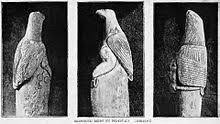
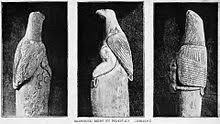
A total of seven
soapstone birds were found in and around the monument. It still remains a
controversial issue as to which bird is represented by the carvings. Some want
to believe that it represents the bateleur eagle (chapungu) while some want to
believe that it represents the fish eagle (hungwe shirichena). Both birds are
significant in the African religion. Both bird’s physical representation
symbolises communication between the state and spirits of the land, a
relationship vital to humanity.  The bateleur
eagle flies to greater heights than any other bird hence the VaShona developed
a belief that it was a messenger of God.
During the liberation
struggle, appearance of the bateleur eagle would warn and signal danger to the
freedom fighters. Divergently, the fish eagle (hungwe shirichena), is of
religious significance not only in totemism. Its vitality extends to royalty at
Great Zimbabwe. Symbolic are also the crocodile and chevron motifs on the birds
which are equally associated with sacredness and royalty.
All, except one bird
which is the national emblem of Zimbabwe were taken to South Africa, German and
Austria at the end of the 19th century. The one which was exported
to South Africa is still in the collection in Groote Schuur Museum. Reports are
that it was found in Cecil John Rhodes’ bedroom. The former president of
Zimbabwe Robert Mugabe is quoted saying “totemless people” referring to white
men but Cecil John Rhodes became the first and last unique white men as it is
orally reported that he had fallen in love with the soapstone bird that he made
it his personal totem.  Consequently, a replica
was made to represent the former and place in the bird gallery at Great
Zimbabwe Museum.
Matenga is quoted
saying the birds are an ideogram symbolising historical continuity of a strong
spirituality from ancient to modern times. They are an icon of sovereign
nationhood inscribed on the National Coat of Arms. One of the birds is on the
national flag and an emblem of the collective will to build the nation through
spiritual, socio political and economic endeavor. The birds are not just antique
collection as they constitute a living tradition that is valuable to
Zimbabweans.
Regardless of the value
of the soapstone birds depicted beyond reasonable doubt, descendants of the Sculptors
have turned a blind eye to the spirituality associated with the birds. They
have rather been placed in galleries for foreigners to view in exchange for
money. Surprisingly, that has not in any way improved the economy, a sign that
there is something amiss.  It is time
Zimbabweans decolonise their minds and value what needs be valued.
Elizabeth
Duve Dziva is an Archaeologist and cultural Heritage practitioner. The views in
this article are solely hers and do not represent those of any organization. Email
duveelizabeth@gmail.com

Homeless mentally-challenged kills ‘would-be rapist’

0

Star Matsongoni
MASVINGO –
A pregnant mentally-challenged woman commonly known as Saru is in police custody
on allegations of murdering a 45-year-old man who allegedly tried to rape her.
Saru
is said to have stabbed Ndara Kageze Musitapa twice on the chest on February
28, 2020, at LC Pharmacy along Robert Mugabe Road.
Sources
said Musitapa forced himself into Saru’s blankets on the pavement at LC
Pharmacy at the New Market Centre Complex.
Musitapa
is said to have engaged in a heated argument with Saru at around 22:00hrs with
the accused telling him to get out of her blankets.
Musitapa
is said to have tried to force himself onto Saru and a fight broke out. Saru is
said to have reached out for her knife which she used to stab Musitapa twice on
the left side of his chest.
After
the fight, Saru went to the complex’s security guard and told him that she had
killed a man but was not taken seriously.
Saru
then went to alert a Fawcett security guard at N. Richards supermarket who then
went with her to confirm her story.
The
security guard found the victim dead in Saru’s blankets and a police report was
made leading to the arrest of the accused.
Masvingo
provincial police spokesperson Chief Inspector Charity Mazula referred all
questions to the national police spokesperson Assistant Commissioner Paul Nyathi
who could not be immediately reached for comment.
Saru
is said to have given birth less than one year ago and the baby is said to be
under the care of the Social Welfare department.

Gutu High on STEM drive

0

TellZim
Reporter
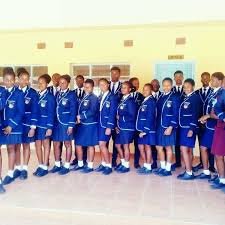
Gutu High School, which one of the
oldest mission schools in the country and was recently appointed the district computer
centre is continuously improving its infrastructure to match some of the best
in the country.
With a well-equipped computer library
and about 60 percent of their lower sixth enrolment being science pupils, the
school is fast becoming the biggest STEM learning centres in Masvingo province.
This year alone, Gutu High has two of
their pupils going abroad to further their studies in robotics, which is a
great feat considering the school’s thrust to enhance science education.
Gutu High head Mirirai Mutanda said
the school is making deliberate efforts to enhance science education to meet
international standards and that is reflected in both enrolment and teacher
recruitment.
“We have one of the biggest science
labs in the province which is well-equipped and because of that we have a
deliberate thrust to teach sciences. We were recently made the district
computer centre because of our quest to enhance STEM subjects at our school.
“We have 42 permanent staff members
and 11 student teachers and about 90 percent of our teaching staff is comprised
of science teachers,” said Mutanda.
The school used to have only one
class per each science subject class at A’ level but this year we have two
classes per each subject, making over half of their total enrolment science
learners.
Gutu High School’s O and A’ Level
percentage pass rate has been on a continuous improvement for the past three
years, with some of their pupils breaking national records.
The school is also known for
representing the district in public speaking and quiz competitions, and in 2019
they came first in the Reformed Church in Zimbabwe (RCZ) quiz tournament.
In 2018 the school won three
provincial Postal and Telecommunications Regulatory Authority of Zimbabwe
(Potraz) letter-writing prizes, following stellar performances by three pupils
in the competitions.
The school then received 10 laptops,
bronze, silver and gold medals and text books valued at US$600. The winner of
the first prize got US$300, text books and a certificate, second winner got US$200,
text books and a certificate while the third winner got US$100, text books and
a certificate.

EFF Zim attacks ED, Chamisa for failing to inspire hope

0

Nyashadzashe Mambure


The
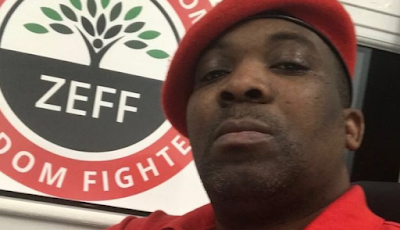
little known opposition party Economic Freedom Fighters Zimbabwe (EFF) Zim has
slammed President Mnangagwa and MDC’s Nelson Chamisa, labeling both of them
failures who cannot inspire people in the country at all levels.
In
a statement, EFF Zim president Innocent Ndibali said Chamisa’s MDC, which runs
many urban local authorities, has failed the people while President Mnangagwa’s
government which runs the central government has failed the country at large.
Ndibali
said Chamisa and President Mnangagwa should equally take the blame for running
down the country which has a lot of potential.
“It
is not surprising that Zanu PF and MDC are silent on the issue of coronavirus
because between them, they have destroyed all the health infrastructure needed
to respond to the coronavirus.
“MDC
has destroyed the capacity and ability of local authorities they have run for
20 years through corruption and incompetence with Zanu PF failing to govern at
national level.
“MDC
and Zanu PF are two peas in a pod and the only difference is that one is a
failure at local level while the other is a failure at a national and global
scale,” said Ndibali in a statement.
Ndibali
said that EFF Zim has great concern for the people of Zimbabwe and called on
leaders to come together and put the country first in the face of a hopeless
situation.
“Chamisa
and Mnangagwa are busy planning for 2023 while we have a situation which if not
prepared for will wipe out the voters which are being targeted.
“Who
will be voting in 2023 if coronavirus hits the country? If the virus can wipe
out thousands in China which is way ahead of us in terms of development and
technological advancement, how many will die in Zimbabwe which is centuries
behind?
“This
is the narrative which our political leaders should be pushing rather than
major on minors,” said Ndibali.