Home Blog Page 517

Food aid for Zanu PF supporters only, says MP Musikavanhu

…. ‘MDC people will not get Mnangagwa’s food’
Moses Ziyambi
Zanu PF Chiredzi West Member of Parliament (MP) Farai
Musikavanhu has defended his stance to deny opposition MDC members and
supporters access to government-run food aid scheme, saying people who did not
‘respect’ President Emmerson Mnangagwa did not deserve to benefit.
Musikavanhu triggered a storm when he appeared in an
amateurish social media video addressing a small crowd of party supporters.
In the video, Musikavanhu vows to prevent MDC supporters and
Tongaat Hullett Zimbabwe employees that did not subscribe to the
government-aligned Zimbabwe Federation of Trade Unions (ZFTU) from benefitting
from the programme.
He was referring to agricultural inputs that had been brought
by Mnangagwa during his visit to Chiredzi earlier in the week.
Musikavanhu’s utterances come when the country is expecting
the United Nations (UN) special rapporteur on food.
When contacted for further clarity on what he really meant,
Musikavanhu said he was unapologetic about his stance regarding the programme.
“Yes, I cannot work with MDC leaders on a scheme involving
the President’s inputs. How do you expect me to work with people who do not
show respect for the President?” said Musikavanhu.
When asked how ordinary people in Chiredzi West and sugarcane
workers had shown disrespect for Mnangagwa, Musikavanhu could not provide a
satisfactory answer except say the media could go to his constituency and make
an assessment of how he related with the people.
“You can go there and talk to them and find out how I work with
them. I have made clear that I cannot work with MDC leaders on the programme,”
said Musikavanhu, who is a former top executive at Tongaat Hulett Zimbabwe.
When asked if he would allow ordinary MDC supporters and
members to benefit from the programme, Musikavanhu said he could not promise as
he was not responsible for policy-making in the party.
In the video clip which has since gone viral on social media,
Musikavanhu tells the sugarcane employees who are members of the Zimbabwe
Sugarcane Milling Industry Workers Union (ZSMIWU) that they should affiliate
with the pro-government Zimbabwe Federation of Trade Unions (ZFTU) and shun the
Zimbabwe Congress of Trade Unions (ZCTU)!
“You know ZCTU belong to the MDC right? Being the umbrella
body? And you know ZFTU belongs to Zanu PF right? Being the umbrella body? I
therefore cannot be with you if you say you do not like ZFTU; that would be
giving the party and President Mnangagwa a hard time. As workers, the union we
have here is under the federation so if you say ZSMIWU is not under ZFTU, you
are saying down with Zanu PF!
“We must be clear with one another because we are receiving
President Mnangagwa’s food. We have an MDC councillor here but he will not have
a bite on this one. This food that I have brought here will not be given to an
MDC person!
“When you are in ZSMIWU, you are mixed with those MDC
scumbags as workers, but here we are doing Zanu PF business. Stop corrupting
the party because of your greed for positions in ZSMIWU. I myself will never
sell-out the Zanu PF party. I actually quit my job so that I could represent
you,” Musikavanhu is seen saying!
Ward 18 Chiredzi Rural District Council is represented by
Gilbert Mutubuki of MDC who released a statement criticising Musikavanhu for
politicising food aid and inputs purchased using taxpayers’ money.
I am worried with Chiredzi West MP F Musikavanhu’s utterance
over the weekend. He is clueless about how to represent our Constituency. We
are going to respond by approaching the office of the DA and PA. We are also
going to take legal action against Musikavanhu. I will represent anyone in my
Ward despite of his or her political affiliation,” said Mutubuki.

Rautenbach’s guards brutalise Mwenezi villager

0


Cephas Shava

MWENEZI – Eight
men who are employed as game scouts at controversial businessmen Billy
Rautenbach’s Zimbabwe Bio Energy (ZBE) recently left a Mwenezi villager
hospitalised and nursing some gruesome scars after they severely assaulted him,
some of them using gun butts.
The
victim, James Sibanda of Village 16 Edenvale under Chief Chitanga recently
appeared at the Mwenezi Magistrates’ Court where he pleaded guilty to a charge
of cutting a piece of flesh off a giraffe which he had found dead in the ZBE
conservancy.
After
noticing that Sibanda was visibly in unbearable pain during trial magistrate
Honest Musiiwa strongly condemned the actions of Sibanda’s assailants before
advising him to file a police report. For his own offence, Sibanda was fined
$50 or alternatively to spend 10 days behind bars.
Speaking
to TellZim News after his court hearing, Sibanda said he entered the ZBE
conservancy with the intention of fetching some water. He said while on his way
to the water point, he noticed a dead giraffe and decided to take a piece of
meat from its carcass.
“When
I was still at the scene, eight of Rautenbach’s guards arrived and they began
to assault me all over the body. Some of them were even using gun butts, booted
feet and fists. They inflicted scars all over my body including on my head.  
I
was admitted at Neshuro District Hospital and the doctor advised me to come
back to receive further treatment. I am feeling the pain all over the body. I
am also enduring sleepless nights owing to severe pain in my ribs,” Sibanda
said.
Rautenbach’s
guards are accused of acting with impunity, instigating some of the worst human
rights violation against villagers.
Section
53 of the country’s constitution says no person should be subjected to any form
of torture and degrading punishment.
Of
late, several cases of brutality implicating Rautenbach’s ZBE guards’ have been
reported but no arrest were made despite victims being able to clearly identify
the perpetrators.
    

Media call for liberal regulatory framework

0

Felix Matasva
MUTARE – The country’s restrictive media regulatory framework is
not conducive for investigative journalists to do their work in the fight against
corruption, Manica Post editor Hatred Zenenga has said.
Zenenga expressed the views while
presenting on how investigative journalism could help fight corruption during an
investigative journalism workshop convened by Transparency International
Zimbabwe (TIZ) on November 15.
Zenenga said the continued delays
in aligning the Access to Information and Protection of Privacy Act (Aippa) and
Public Order and Security Act (Posa) was unhelpful.
“It has taken a long time for
Aippa and Posa to be realigned to the new constitution. We know that these laws
work against the free operation of investigative journalism. Steps are being
taken but it’s happening slowly, and journalists cannot freely work in such a restrictive
environment,” he said.
Zenenga also criticised the Official
Secrets Act (Osa) saying much of the law’s provisions were hindering the media
from freely exercising its investigative duties.
He added that there was need for
the country to revisit its media regulatory framework and media syllabuses in
tertiary institutions so as to match current trends in investigative
journalism.
“Training institutions do not
have investigative journalism as a module at undergraduate level. It emerged
recently at master’s level but I think it should be included at undergraduate
level so as to equip young journalists with investigative skills,” said
Zenenga.
TIZ programmes officer, Tashinga
Zamba said the criminal justice system was being compromised by serious corruption
hence the need to liberalise the media regulatory environment.
“We have realised that there
are loopholes in the justice sector but for us to fully know about that,
journalists should be allowed full freedom to do their work,” said Zamba.
The Zimbabwe Anti-Corruption
Commission (ZACC) has been criticised for allegedly working at the pleasure of
ruling party politicians.
The much-criticised Freedom of
Information Bill, Zimbabwe Media Commission Bill and Cybercrimes Bill are the
three bills with which government wants to repeal Aippa.

Masvingo secures land for new dumpsite

0

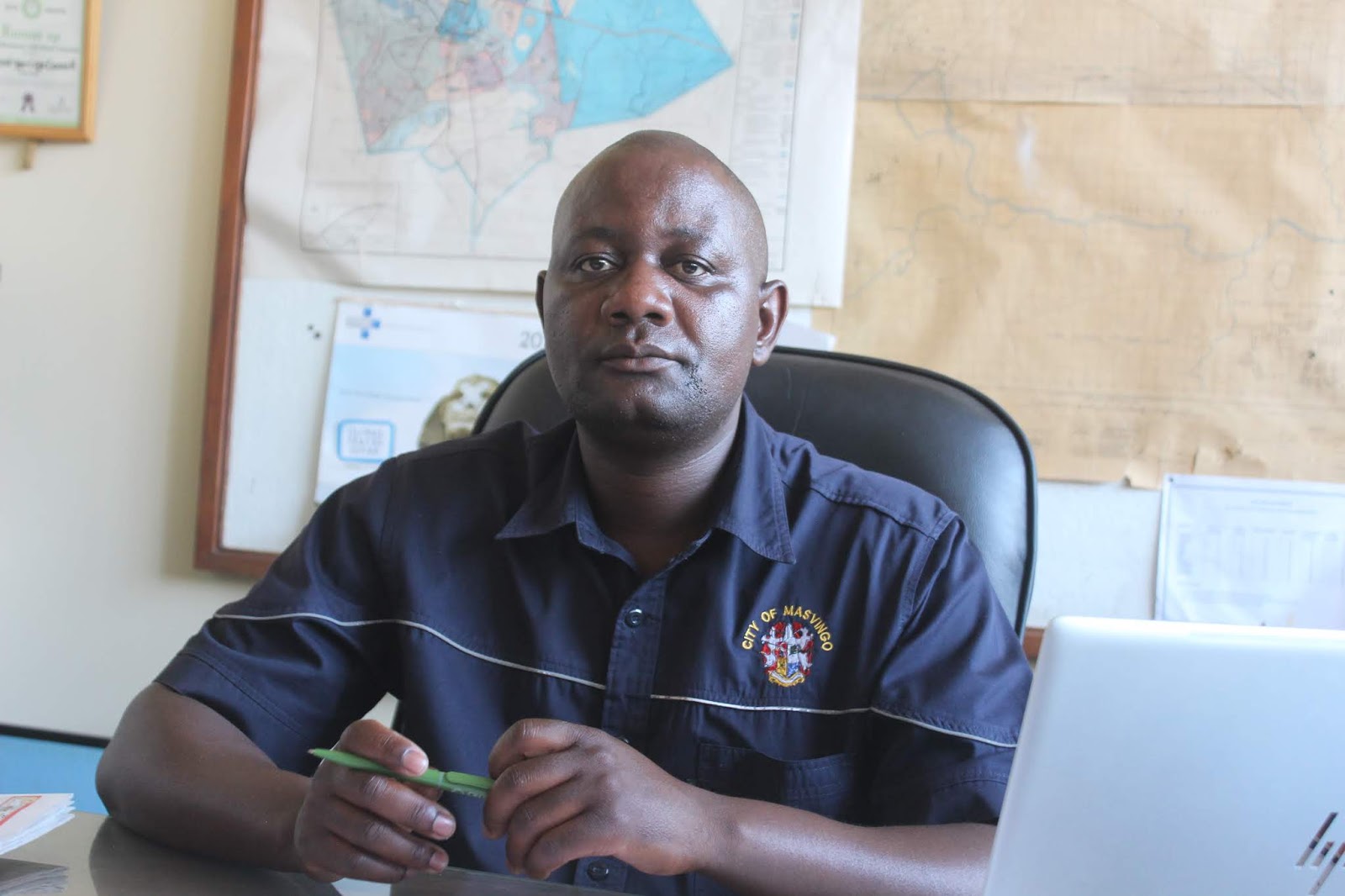
                                                    Acting town clerk Edward Mukaratirwa
 Star Matsongoni
Masvingo
City Council has secured land for a new dump site to replace the current one
which is inside the two residential areas of Runyararo West and Victoria Ranch.
Residents
have always complained about the discomfort of hosting a stinky dumpsite in the
midst of residential areas.
City of Masvingo
Mayor Collin Maboke recently told TellZim News the land was now available and that
they were waiting for all the paper work to be done.
“I want
to thank the Minister of State for Masvingo Provincial Affairs Ezra Chadzamira for
working very hard for us to get the piece of land onto which we can build a new
dumpsite.
“We are
only waiting for the papers to be processed but the land is already there 10
kilometers from the residential area further down Victoria Ranch,” said Maboke.
Maboke
said the dumpsite was long budgeted for and the only thing that had been delaying
the whole process was unavailability of land.
He pleaded
with the land developers not to give people stands close to the dump site
again.
“I am asking
the land developers not to allocate residential stands close to the dumpsite
again like what they did in the past. We never thought there will be houses
when we decided on the area of the current dumpsite,” said Maboke.


Bodies decompose at Chikombedzi Hospital as mortuary shuts down

0

Cephas Shava
CHIKOMBEDZI
A serious health crisis is brewing at the Free Methodist Church (FMC)-run Chikombedzi
Mission Hospital as corpses are being left to spend several hours in the wards since
the mortuary is no longer functional.
The
hospital is no longer accommodating any bodies in the mortuary which has since
been shut down. Those that die while admitted at the institution are just
covered with blankets and made to remain in the wards until their relatives collect
them.
The
body of the late Mwenezi Zanu PF Ward 15 Cllr, Edson Chauke spent the whole of Sunday,
November 17, night and much of the following day in the ward after his death at
around 18:00htrs.
The
body was only collected by his family around 17:00hrs the following day,
meaning it spend close to 24hrs in the ward.
Ward
13 Mwenezi East Cllr Takura Mudavose, who was part of a team which visited the
hospital to collect the body of their colleague, said he was shocked by what he
witnessed at the hospital.
He
said they just found Chauke’s body on the hospital bed covered with blankets
and in the initial stages of decomposition in the sweltering heat.
“It
was revolting to find our colleague’ decomposing body covered still in the ward
in his ward. Had we delayed a little bit, it was going to be something else.
Just imagine with this weather his dead body spent close to 24 hours in the hospital
ward,” said Mudavose.
A
nurse at the institution told TellZim News that they had completely shut down
the mortuary service for reasons she could not disclose.
“The
truth of the matter is that we no longer have a mortuary here. When we realise
that a patient is no longer responding to treatment we urge relatives to ferry
them home. We also advise people to collect their dead relatives’ bodies as
soon as possible,” said the nurse who spoke on condition of anonymity.
It
is understood machinery in the mortuary has broken down while the rolling
electricity blackouts are not helping the matter.
Locals
who spoke to TellZim News said the hospital used to be one of the best treatment
centres which has, however, now turned into a pale shadow of its former self.
The
Mission Hospital, besides servicing thousands of people within Chikombedzi, is
also a referral centre of several people around the borders of Mwenezi and
Chiredzi districts.
The
hospital was built by FMC missionaries beginning in 1947 and was closed in the
mid-1970s after being turned into a Rhodesian military camp. It was reopened
after independence in 1981, and has become a referral hospital with 14 rural health clinics that rely on
it for referral services.


An examination of the value of history in the updated carriculum 2015 – 2022

0

Tatenda
Freeman Murenjekwa
The
Ministry of Primary and Secondary Education (MOPSE) guided by the Curriculum
Framework for Primary and Secondary Education (CFPSE) 2015-2022 thrived to make
history a real, crucial, interesting and life-oriented subject. The updated
curriculum championed the ‘new’ history approach which propagated active
participation of learners, skills development, the cultivation of the sense of
time, space and society, development of wisdom, mental training value ,
heritage value, vocational value and training in resolving contemporary social
and individual problems among others. For many years, learners shun history
because of its teaching and learning methods such as dictating notes, note
taking, use of big words which often confuse learners and the way learners were
regarded as passive recipients of the teachers’ knowledge and wisdom. Although
the relevance of history in the updated curriculum 2015-2022 has been secured,
the subject still have certain drawbacks which continue to hinder its place in
schools relating to lack of teaching and learning resources to implement the
‘new ‘history concept and stiff competition from heritage studies. Terms
including History and curriculum are going to be defined and a brief background
to be highlighted as the discussion progresses.
Moyo
and Modiba (2013) defined History as an unending dialogue between the present
and the past. Carr (1987) referred to History as a continuous process of
interaction between the historian and his facts and unending dialogue between
the present and the past. Gondo et al (2019) defined Curriculum as a
specification about the practice of teaching which involves pragmatic efficacy
of the learners’ experience. Aggarwal (2008) notes that curriculum is the pivot
and the hub which all activities in the school revolve. Drawing from the above,
history can therefore be defined as an inquiry into the past, present and
future. Curriculum can also be referred to as a guideline to the process of
teaching and learning.
For
many years, the traditional teaching style or specifically teacher oriented
instruction has been dominant in the teaching and learning of history in
schools. The teaching and learning of history was thus known to be
characterized by the dictating of notes, note-taking and use of big words which
often confuse learners and this created boredom on the part of learners. The
teaching and learning methods employed using rote-learning have almost driven
the subjects into the dustbins of history. The relevance of history in and
outside the school seem to have reached critical stages. Steele (1976) notes
that most learners regarded history as a useless subject that would not benefit
them in real life situation. Mapetere (2013) argues that the ’Old’ History was
the transmission of facts to memory without personal processing of information
on the part of the student-knowledge out there. Dwarko (2007) also indicates
that some parents hold a perception that history offers very slim opportunities
for employment to the extent that they threaten to withdraw their helping hand
to children who happen to dream of pursuing History in life. History was thus
regarded as an abstract subject which was premised on the cram and pass
principle. Mapetere (2013) notes that the child was expected to memorize facts
and reproduce them when required. The teaching and learning methods employed in
history before the updated new curriculum has driven the subject into
disrepute.
The
concept of ‘leaning by doing’ or experiencing which forms the basis for history
teaching and learning in the updated curriculum 2015-2022 propagated its
relevance. The ‘new’ history approach which diverted its course from
rote-learning and or banking concept and advocate for a more practical way of
learning restored the value of history. Dwarko (2007) argues that the
pedagogical practices such as lecture method which does not engage learners
makes History a boring and abstract subject. 
Mapetere (2013) pointed out that in the teaching of history, pupils
should be allowed to discover more than to simply get information from the
teacher. He further notes that the ‘new’ history approach departs from the
concept of generalizing things, dictating notes thus when teaching about Great
Zimbabwe state, field trips should be organized so that learning by
experiencing takes precedence. This can be supported by the Chinese adage which
says, “What I hear, I forget and what I see, I remember.” Learning by doing
gives students the zeal to study history and pursue it to tertiary level. Douch
in Steele (1976) notes that children should not see history as a film in which
they are spectators but see it as a play in which they are actors. The updated
curriculum being the champion of learning by doing strives to avoid boredom on
the part of learners thus keeping history alive. According to Mapetere (2013),
methods like role-play, simulations and drama will helps learners to be players
in History and not spectators. Sugrue (1997) notes that the process of learning
by doing gives learners more central role and this will learners adherence to
their learning. In this regard, one can say the updated curriculum restored the
value of history in schools.
The
new curriculum 2015-2022 championed the development of skills which empowered
History and secured its place in the heart and minds of the learners as well as
the classroom practitioner. Kochhar (1984) notes that History is a subject
which has gone into disrepute because of its dead uniformity and frozen and
fixed account of facts. The new curriculum fosters the ‘new’ History approach
which focusses on the development of the learners’ skills. Mapetere (2013)
argues that skills of selection, analysis, evaluation and empathy which are
central to the ‘new ‘History approach can be used in economics, politics and
even in family life decisions. In this regard, the new history approach tried
to cement the existence of History in the 21st century. Dickson and
Lee (1986) argue that the aim of the new history approach was to consciously
improve pupils’ thinking abilities. Mapetere (2013) argues that guiding
questions should be provided to pupils to help them in researching notes and
that way they may exercise skills of selection, analysis and summarizing. The
capacity to develop these skills played a significant role in making history
real and interesting. Coltham and Fines (1971) mentioned several skills and
abilities developed through the process of studying history including
vocabulary acquisition, analysis, and synthesis, judgment and evaluation as
well as communication skills. Brooks et al (1993) notes that historical study
encourages people to become articulate, especially through group discussions
and places great emphasis upon the basic skills.  There is an urgent necessity of uplifting the
teaching and learning of history. Kochhar (1984) argues that the use of
audio-visual aids can add zest, interest and vitality to any learning situation
and make history a living subject. Brooks et al (1993) pointed out that History
no longer deals with the old bankrupt stock of rote learning and historical
literacy today encompasses a wide range of skills as well as the acquisition of
and understanding of knowledge. Therefore
[M1] ,
the place of history under the confines of the new updated curriculum has been
secured since it is premised on the development of skills.
The
place of history in schools has also been cemented by the vast job
opportunities the subject offers. Prima facie, History has been regarded as a
dead subject which is useless and void in life. Reiner (1961) notes that a
historical scholar is both a research worker and historian. Aggarwal (2008)
notes that the aim of history is to foster vocational value. He further argues
that history provides various openings for persons well qualified in the
subject and they can work as archivists, curators, political journalists,
foreign and military correspondents, teachers in schools, colleges and
universities. The new curriculum lubricated the path for history to be
recognized as a living subject thus through field trips learners will be able
to see opportunities offered by history and will help learners to develop a
positive attitude towards the subject. Gosh (1951) argues that history makes
the boy thoughtful, critical and of a discerning judgment-qualities that he
will need every day of his life when he enters the world. Skills development
helps to emancipate history from mere rejection. The vast job opportunities yet
and yet to be discovered as a result of the updated curriculum 2015-2022 makes
history a subject with substance.
Although
the updated curriculum 2015-2022 has managed to foster the relevance of
history, the subject continued to battle for its survival as a result of lack
of teaching and learning resources. The new curriculum advocated for the use of
Information Communication Technology (ICT) in the teaching and learning
process. Taruvinga and Moyo (2000) discovered that the new history approach has
not meant much to history teaching due to resource unavailability. They further
argue that the economic challenges facing the country is making it a dream to
organize a trip to Great Zimbabwe monuments. The use of ICT by history students
in particular seems to be a mirage given the rate of power-cuts in the country.
In this regard, the place of history in the updated curriculum seem to be
hindered by resource unavailability. Given the above, one can say the new
curriculum 2015-2022 was adopted on an uneven ground.
The
value of history in the updated curriculum has been infringed by stiff
competition emanating from heritage studies. The updated curriculum has fused
some components of history within the study of heritage which makes History a
silent subject crying for its survival in the background. The lower classes as
directed by the new curriculum are now partaking heritage studies in place of
history. However Heritage studies can be referred to as modified History given
the shock of wave that left history almost drowned. Basing on the above, the
place of History in the updated curriculum has been curtailed as a result of
stiff competition from heritage studies.
The
discussion has highlighted that the new curriculum 2015-2022 has largely
secured a place for the study of History given its focus on learning by doing
and experimenting, development of skills and its promises on the vast job
opportunities offered by history. The Ministry of Primary and Secondary
Education oriented new curriculum managed to divert the teaching and learning
of history from rote learning, dictating notes and note- taking. The
traditional teaching style often caused boredom on the part of learners and
makes history to be labelled a dead and abstract subject. The new curriculum
came in as a panacea to promote the relevance of history in this 21st
century. The major tenants of the updated curriculum which includes learning by
experimenting has managed to retrieve the learner’s interests in the subject
and help learners to develop skills of analyzing, evaluating, summarizing,
selection and empathy which are central to the new history approach. Although
the new curriculum has managed to empower history in as far as its relevance is
concerned, history still has certain drawbacks which hinder its recognition in
the 21st century such as lack of teaching and learning resources as
a result of economic constrains and also stiff competition from heritage
studies which makes history to cry in the background for its rescue. The
updated curriculum propagated the value of history.
REFERENCES
Aggarwal.
J.C. (2008). Teaching of History: A
practical approach
(.4th
Ed).vikas publishing house. New Delhi.
Brooks,
Aris. M and Perry.I.S. (1993).The
effective teaching of History,
Longman .London.
Carr.E.H.
(1987). What is History? Hammond
sworth .Penguin.
Coltham.C
and Fines.J. (1971). Educational
objectives for the study of History
. The Historical Association.
Dickson.
A and Lee. P. (1986). History teaching
and historical understanding
. Heinemann. London
Dwarko.
D.A. (2007). History- the ailing subject: the need for revival in the 21st
century. In Amenumey. D.E.K. Challenges
of education in Ghana in the 21st century
. Woeli publishing
services. Accra
Gondo
Reniko et al. (2019). Issues surrounding the updated Secondary school
curriculum in Zimbabwe, European Journal
of Social Sciences Studies
, Vol. 4. (2)
Kochhar.S.K.
(1984). Teaching of History. Sterling
publishers. New Delhi
Mapetere.K.
(2013). The New History concept.
Greener Journal of Educational research. Vol.3. (3)
Modiba.M
and Moyo. N. (2013). “Who does the
history curriculum want you to be?” Representation, school history curriculum
in Zimbabwe
, Yesterday and today, No.10
Reiner.G.J.
(1961). History: Its purpose and method.
Evans Brothers limited. London
Steele.
(1976). Developments in History teaching.
Somerset .Open books
Sugrue.I.
(1997). Complexities of teaching Child
centered perspectives
.the Falmer press. London
Taruvinga.
C.R and Moyo. C.L. (2000). Interactive
and conditions of History in secondary school
. Zimbabwe Open University.
Harare


Rabies-infected ox terrorises Bikita villagers

0

…78 years old granny battles for life after attack

Mukai
Musimwa

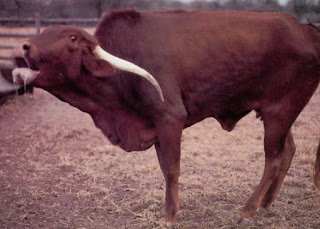
A 78-year-old Bikita granny is battling for her life
at Mpilo Hospital in Bulawayo after she was gored by a raging ox which was
later confirmed to have been infected by rabies.
Most
people associate rabies only with snarling mad dogs, foaming at the mouth but
livestock are also susceptible to the maddening virus.
The
rabies virus can infect all warm-blooded animals and is always fatal. Caused by
a virus that affects the nervous system, it is transmitted by saliva of an
infected animal – usually via a bite, by saliva coming in contact with mucous
membranes (eyes, nose or mouth) or an opening in the skin.
On
the fateful day, Angeline Zendere was at her home alone when her neighbour’s ox
got into her yard to feed on the dry maize stalks.
Zendere,
who is said to have been in her kitchen hut, got out to chase the cattle away
but one of the cattle charged and viciously attacked her.
 “She was in her kitchen when a herd of cattle
entered her yard to feed on the dry maize stalks. The maize stalks are reserved
for her own livestock so she got out to drive the other cattle away.
“Just
a few steps from her kitchen hut, an ox charged at her and started attacking
her, injuring her badly. The ox hooked her with its horns and threw her into
the air and picked her up again numerous times. She was trampled on until she
lost consciousness. The ox belonged to her neighbour,” said a source privy to
the developments.
Zendere’s daughter-in-law is said to have rushed to
the rescue with a wooden log but the cattle is said to have charged at her as
well.
“The daughter in law was visiting and she saw the
whole incident and rushed to the rescue with a wooden log. The log could not do
her any good as she was also attacked by the mad ox. She was fortunate enough
to fall onto the ground on the first attack and the ox failed to pick her up
with its horns.
“As the ox attacked the daughter in law, she screamed
for help from neighbours who alerted other people,” said the source.
The source told TellZim News that the ox charged at
the group of villagers who were armed with axes and they fought back until they
killed it.
Zendere and her daughter-in-law were taken to a clinic
at Nyika growth point where the in-law was treated and discharged while Zendere
was immediately transferred to Masvingo Provincial Hospital.
Zendere was later transferred to Mpilo Hospital in
Bulawayo where she is said to be admitted in the Intensive Care Unit (ICU).
Staff from the district Veterinary Services Department
arrived at the scene when the villagers had already killed the ox.
Masvingo provincial veterinary head, Ernest Dzimwasha,
as was expected, professed ignorance on the matter saying he had not received a
report.
“You are telling me for the first time. I have not
received a report on that,” said Dzimwasha, who was recently criticised for
sleeping on duty at a time the province was losing hundreds of cattle to
tick-borne diseases.

Reshuffle the presidium Cde President

0

Kana chinhu chaora chinenge choda kuraswa or to be
buried. Even nyama chaiyo kana yaora don’t try to wash it because munokuvara
nemudumbu iko kusina mvura kudai. Chinhu chaora ichi. I hope vane nzeve dzekunzwa,
those with ears have heard. Ini hangu Mapombi you may call me a mad woman but I
think I can run this country better than those smartly dressed and fancy
useless people occupying high offices. There is no worse curse than being led
by muscles without brains. To a hammer, everything suddenly become nails kkkk.
Tiri munhamo hama dzangu. After all has been said and done, it will eventually
boil down to the issue of brains. There is a drought of that in those offices
gentlemen and fellow ladies. They have the brains in their big heads but I am
sure they have gone on a sabbatical. Or vanorwadziwa nekufunga so they rarely
refer to their brains. Ko hapana pauchaita chinhu chinokurwadza when there are
easy options.
I heard the destruction boys, brother Mthuli and
Panonetsa Mangudya, saying they are going to introduce a new currency or notes
hameno ikoko. I have said most of the people in those high offices do not have
brains but I do not think that is the challenge with these boys. They have some
of the best brains in the country but I am sure there is something that is
seriously wrong. If you listen to Mthuli talk you can actually tell that the
brother makes sense but there is always disaster at the end of the tunnel. Ini
ndichikura my teacher whom we nicknamed Chipaku paku or Chamatototo would tell
me not to associate myself with dull people. I thought that was a bit rude but
ndakazoona kuti the man had a lot of wisdom. He said if you are sharp and you
surround yourself with dull people one of two things will happen. Chipaku paku
said it’s either the dull people will change you or you will change the dull
people but the former is the most likeliest outcome.
Now I am beginning to see the wisdom yaitaurwa
nemuchinda uyu. Brother Mthuli haangamboiti anything chinemusoro because by
association the man is already very dull. What do you expect brother Mthuli to
do when he is surrounded by the likes of Matemadanda who are all muscle with a
pea sized brain? Baba vebenzi havana mufaro. I think brother Mthuli has the best
brains in Zanu PF but mazivanhu akamutenderedza ndiwo mazitofo chaiwo. Instead,
they have roped brother Mthuli into the same band wagon and are now all singing
from the same hymn book. This is why we see brother Mthuli and Panonetsa vachiita
the same thing which was done by Gono gore riya and they expect a different
result. New currency is not the solution iwe Mthuli naPanonetsa. But mamwewo
mazita tangai mafunga musati mapa vana because nditwo twuvanhu twunozotinetsa
mangwana. What does Mthuli even mean kkkkk. Hanzi Dambudzo, Panonetsa, Dugish,
Guvheya, Chafungamoyo, Gudzameso ahhhh vanhu vanovhunduka ka.
Don’t expect miracles because of the new currency or
notes whatever you choose to call it. Gono takambomuudza akazotipinza muna
taisireva nekuda kwekuoma musoro. Kana chinhu chaora chaora you have to get rid
of it and move on. I do not know who advised these guys to print this new
money. It will not solve anything but may add to the problem. What we want is a
solution kwete kuita madzana mbwanana madzeketembwe amuri kutiitira aya varume
imi. I say varume imi because hakuna mukadzi ane hushingi hwekupaza nyika
kudai. Zvinogonekwa nevarume chete izvi. Vana Mthuli and Dambudzo and all those
guys with hinting names. They say the problem with Zimbabweans is that we see
only negatives so let us wait and see tione kuti new currency iyi inobuda sei. Mapombi
anenge akati zete zvake kuno kuChitima watching from the terraces. Maybe
tinomhanyira kushora zvinhu zvichizobuda zvakanaka kkkk. But we all know the
truth hedu. Chakachenjedza ndechakatanga. But I have faith in Mthuli’s new
deputy, the Zaka East man. Ko finance yakapihwawo kuno Masvingo. Wezhira
wakarangarirwa. I hope mukoma Chiduwa you will not be corrupted by these no
brainers. Go and dilute vana Mthuli ivawo and show them that Masvingo ine
uruzvi.
Cabinet reshuffle iyi handina kunatsa kuoina mushe.
Maybe ndakaona list isiri complete because hapana kana change yandakaona ini
other than kungoita recycle the same old, tired useless old guard. It’s a matter
yekumboti shamwari wanyanya kuba uri ipapo chimbobva unoba uri pamwe patsva
pauri pambouyawo pabe mumwe kkkk. Zanu PF will never change varume. The more
you think you can change it that is when it changes you. Ask Chamisa kkkk.
Handiti maimbomuona achimira mufuel and bank queues in solidarity with the
suffering masses but ikozvino muchambomuona. Saka munoti haasi kuwana fuel and
cash here. Even Dambudzo achangopinda handiti takanzwa kuti akaramba pay yake
cash yauya iri musaga achiti anonomirawo muqueue kubank sevamwe. Zvino ukaona
salary youya iri musaga iiiiih pakaoma kkkk. It means varume vari kuripwa
kugara zvavo. Ikozvino hanzi you will withdraw money till you lose appetite for
it. But why ED. Handiti you withdraw mari kana unayo. The people do not have
the money to withdraw. Ndimi mega munadzo mari kwamuri ikoko.
Reshuffling iyi it missed the target. Hanzi fish
inoora from the head so we need to remove the head first. The head ndiyo
Dambudzo. Imagine a rotten fish head telling other parts of the fish that maora
or mabanana andinodya ini Mapombi kuno kuChitima achiudza mamwe ari on sale
kuti maora kkkkk what an irony. We need a complete reshuffle gentlemen and that
can only happen if we start with the rotten head. The only reshuffle which will
bring meaningful change to this country is shuffling the whole presidium. Ko
kana munhu atadza anosiya basa. Remember even Mugabe once reshuffled this man.
Hatidi cabinet reshuffle, we want presidium reshuffle. General Chiwenga has
been down and out for over six months now but he is still the VP why, Mohadi is
equally useless but he is still the VP why. Even the number 1 is really
performing like our bond note currency but he is reshuffling others why? The
top three guys needs reshuffling as a matter of urgency. Mapombi has said
enough regai ndinokanga hangu maputi angu for lunch. Mboko imboko.  

We know people are suffering— Chinamasa

0


Patrick Chinamasa
 Heather
Buzuzi
MUTARE—
Zanu PF national secretary for finance and politburo member Patrick Chinamasa
has said that his party knows that the masses are suffering but announced that
they are working on a raft of measures to make sure that they rescue people
from the economic hardships.
Chinamasa said he
understands why some people are beginning to get frustrated with the current
economic situation but called on calm while President Emmerson Mnangagwa led
administration delivers the change the country needs.
Addressing an
Indigenization Breakfast meeting at Holiday Inn last week, Chinamasa said when
the ‘new dispensation’ was ushered in, there were high expectations across the
political divide for immediate change.
“We know people
are suffering but joy is on the horizon. Very soon we will be looking back with
a sigh of relief that we have done it.
“The country was
in a mess when the new dispensation took and we understand that people had
their own expectations as to what should happen in the country. We all want a
better country for everyone but that does not come over night.
“We won’t work
miracles to turn around the economy but we will take those baby steps until we
get there,” said Chinamasa.
Chinamasa called
on the Zimbabwean people to give President Mnangagwa some time to impelement
his vision which will bring in a better country for everyone.
“The President has
a vision and we must all support it. Negativism will only affect us together so
let us put our hands together and work for our country.
“This is the only
country we have so we must guard and protect it jealously. Vision2030 is a
reality and we must all embrace and support it,” said Chinamasa.
  
On indegenisation,
Chinamasa said people’s contributions are welcome to make sure that they come
up with a law that serves their interests.
“Our President is a listening man that is why we
want to listen to people’s contributions so that we can review our policy on
indigenization and economic empowerment,” said Chinamasa.

We cannot afford fuel, says Masvingo City Council as it fails to collect refuse

0


Masvingo Mayor Collen Maboke
 Star
Matsongoni
The Masvingo City Council has literally told residents
to co-exist with garbage as it says its refuse collection compactors have been
grounded due to the unaffordability of fuel which has now reached souring
levels of about $18 per litre against the budgeted $1.50.
In an interview with TellZim News soon after the
presentation of the 2020 city budget, Finance Committee chairperson Babylon
Beta said the city council is no longer able to buy fuel because it has gone
beyond their reach.
He said the council had a budgeted allocation of $1.50
per litre of fuel but the current prices have made it difficult for the council
to operate.
“We know the situation is critical because we are
unable to collect refuse in most residential areas. Many areas have gone for
close to a month without having their refuse collected and this is because we
cannot afford to new fuel prices.
“The little fuel we are able to get we prioritise the
city centre. The council is in the process of acquiring two more refuse
compactors because the existing ones have seen better days and are always
breaking down,” said Beta.
Beta said they tried to address the fuel challenges in
the supplementary budget but it was only approved in October so the tariff
changes will only take effect starting November.
“The supplementary budget was going to address all the
challenges which the council is facing at the moment because there were some
tariff adjustments but it took time to be approved. Now that it has been
improved, the changes will start taking effect in November,” said Beta.
Residents have since threatened to take their bins to
the council offices and dump them there as a way of protesting against the
collapsing service delivery.
Some people have already started emptying their bins
on open spaces creating another crisis which would need the council to
intervene.